Browse our range of reports and publications including performance and financial statement audit reports, assurance review reports, information reports and annual reports.
Corporate
ANAO Corporate Plan 2026–27
Published
Wednesday 22 July 2026

Contact
Please direct enquiries through our contact page.
The ANAO Corporate Plan 2026–27 updates the previous corporate plan and outlines how we intend to deliver against our purpose over the next four years (2026–27 to 2029–30). The corporate plan is the ANAO’s primary planning document — it outlines our purpose; our strategic priorities; our operating context; and the priorities, activities and performance measures by which we will be held to account.
Auditor-General’s introduction
As Auditor-General for Australia, I am pleased to present the Australian National Audit Office (ANAO) Corporate Plan 2026–27.
The ANAO’s work strengthens public value and trust for people in Australia. By delivering independent assurance and evidence-based, insightful reporting, we support the work of the Parliament and help to improve public sector performance.
Established under the Auditor-General Act 1997, the Auditor-General is an independent officer of the Parliament. This independence underpins the credibility and impact of our work, enabling us to provide impartial assurance and support effective parliamentary oversight.
In 2026–27, the ANAO will continue to support the Parliament, working closely with the Joint Committee of Public Accounts and Audit (JCPAA), by delivering audit and assurance work that is timely, relevant and accessible. Our engagement will support well-targeted audit priorities, effective scrutiny of government administration, and sound decision-making across the Australian public sector.
This corporate plan sets out the ANAO’s strategic intent, including our vision and three strategic priorities: impact where it matters; performance through innovation; and inspire and develop our people. In 2026-27, we will continue to progress these priorities and strengthen our core services — including financial statements audits, performance statements audits and performance audits — while managing our resources sustainably and positioning the ANAO to respond effectively to a changing environment.
This year marks the ANAO’s 125th year of operation. This milestone is an opportunity to celebrate our longstanding role in supporting accountability, transparency and performance. It also highlights the importance of continuing to develop our methods and capability so that we remain effective, relevant and future-focused — while maintaining the independence, quality and integrity that underpin our work.
This plan should be read together with the Annual Audit Work Program 2026–27, which sets out the ANAO’s planned audit coverage across a multi-year forward program of potential activity. I look forward to continuing to work with the Parliament and the public sector to strengthen accountability, transparency and public administration for the benefit of all Australians.
Statement of preparation
As the accountable authority of the Australian National Audit Office under the Auditor-General Act 1997, I present the ANAO Corporate Plan 2026–27. The plan covers the period 2026–27 to 2029–30, as required under paragraph 35(1)(b) of the Public Governance, Performance and Accountability Act 2013.
Dr Caralee McLiesh PSM
Auditor-General for Australia
22 July 2026
Our role, mandate and independence
Our purpose and mandate
The Australian National Audit Office’s purpose is to support accountability and transparency in the Australian Government sector through independent reporting to the Parliament, and thereby contribute to improved public sector performance.
The ANAO delivers this purpose under the Auditor-General’s mandate, in accordance with the Auditor-General Act 1997, the Public Governance, Performance and Accountability Act 2013 and the Public Service Act 1999. The executive arm of government is accountable to the Parliament for the use of public resources and the administration of legislation. The Auditor-General provides independent assurance and insight on whether these responsibilities are being discharged in line with the Parliament’s intent.
Under the Auditor-General Act 1997, the Auditor-General’s functions include conducting financial statements audits, performance audits, performance statements audits and other assurance activities, and reporting directly to the Parliament on matters that warrant attention.
Independence, quality and integrity are fundamental to the effective exercise of this mandate. They underpin confidence in the objectivity and reliability of the ANAO’s assessment of the performance and accountability of Australian Government entities.
The Auditor-General’s functions are a key component of the accountability and integrity framework, and form part of the core business of Australian public sector entities. The Act establishes requirements for entities to engage with the Auditor-General in carrying out these functions.
The ANAO supports the Auditor-General in this role. Information about the purpose, values and organisational structure of the ANAO is available on the ANAO website.
Our programs
The key activities the ANAO undertakes to achieve its purpose are shown in Figure 1.
Figure 1: ANAO programs and key activities
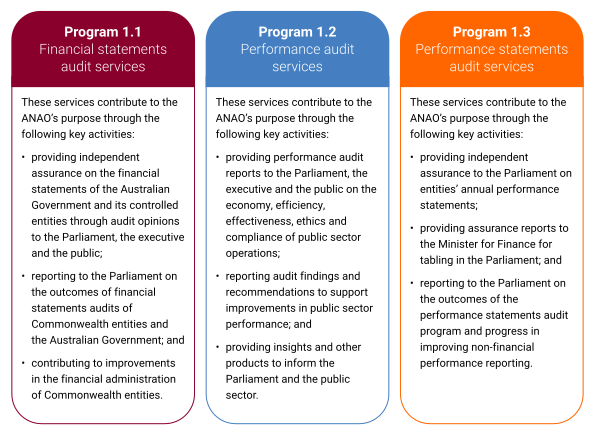
Together, these programs provide the Parliament with independent assurance and insight into the performance, integrity and stewardship of Australian Government activity.
Independence, quality and integrity
The Governor-General, on the recommendation of the Joint Committee of Public Accounts and Audit (JCPAA) and the Prime Minister, appoints the Auditor-General for a term of 10 years. The Auditor-General is established as an independent officer of the Parliament under the Auditor-General Act 1997, and is not subject to direction in selecting, conducting or prioritising audits.
This independence ensures that audit work is conducted objectively and free from external influence, political pressure or conflicts of interest. Audit quality is supported by the ANAO Quality Management Framework and Plan 2026–27, which balances efficiency with the need to meet professional standards and quality requirements.
The quality management framework and plan set out the ANAO’s quality objectives and the processes used to respond to identified quality risks arising from the nature of our work. An audit quality report is published annually, supporting transparency and accountability.
The ANAO’s integrity framework and annual integrity reporting arrangements further support ethical decision-making and assist in identifying and managing risks related to integrity, fraud and misconduct. This reinforces trust in the ANAO’s work.
Strategic planning framework
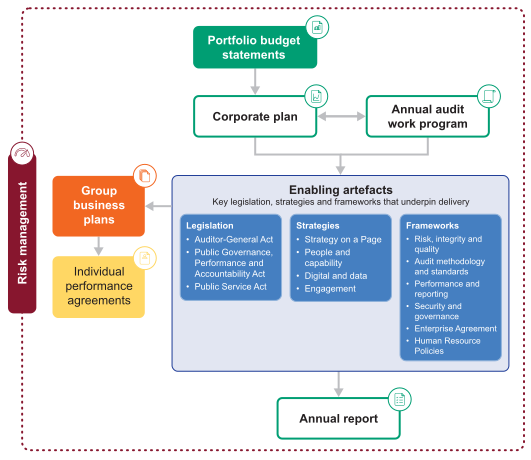
The ANAO’s strategic planning framework operates within the Commonwealth Performance Framework established under the PGPA Act. The ANAO's framework translates its purpose, mandate and strategic intent into clear priorities, delivered through planned work and assessed through transparent public reporting (see Figure 2).
The corporate plan is the ANAO’s primary planning document and, consistent with the PGPA Act and the Portfolio Budget Statements 2026–27, covers the period 2026–27 to 2029–30. It sets out what the ANAO seeks to achieve over the forward years, the environment and risks it faces, and how performance will be measured.
The annual audit work program (AAWP) sits alongside the corporate plan as a companion document and is a distinctive feature of the ANAO’s strategic planning framework. The AAWP sets out the Auditor-General’s planned audit coverage across a multiyear forward program of potential audit activity. Refreshed annually, the AAWP informs the Parliament, the public sector and the public of proposed audit activity. Final selection and timing of audits is determined by the Auditor-General, based on risk, the Parliament’s priorities, materiality and auditability as well as available resources.
Together, the corporate plan and the AAWP guide delivery across the organisation, with priorities flowing into group business plans and individual performance agreements. The ANAO reports on its activities and performance through its annual report, as required under the PGPA Act.
Figure 2: ANAO strategic planning framework
Governance
The ANAO’s governance framework gives effect to the strategic planning framework by supporting accountable decision-making, transparency and effective risk management (Figure 3). Our governance committees play a central role in overseeing the implementation of strategy and the management of organisational performance.
Figure 3: ANAO governance committees
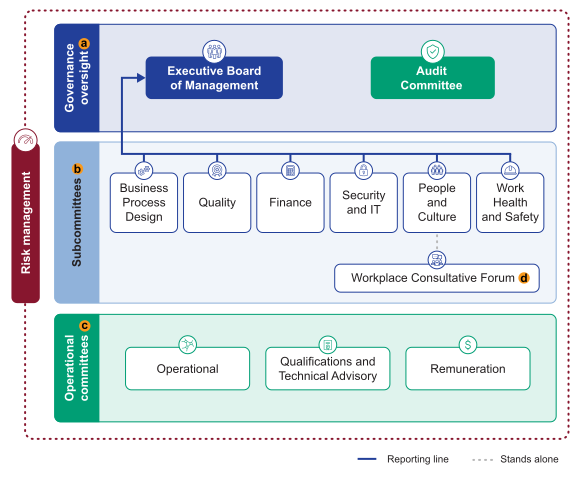
Note a: Governance oversight: The Executive Board of Management (EBOM) oversees the ANAO’s governance committees and supports the Auditor-General to meet statutory responsibilities as the accountable authority under the PGPA Act. An independent Audit Committee also provides advice to the Auditor-General.
Note b: Subcommittees: Subcommittees support EBOM by providing targeted oversight of key areas, strengthening organisational accountability, transparency and risk management.
Note c: Operational committees: Operational committees support the ANAO through advice, oversight and decision-making on key operational, remuneration and audit technical matters.
Note d: Workplace Consultative Forum: The Workplace Consultative Forum is a consultative body of the People and Culture Committee, providing a structured forum for consultation and resolution of workplace relations matters.
Statement of strategic intent
Our vision
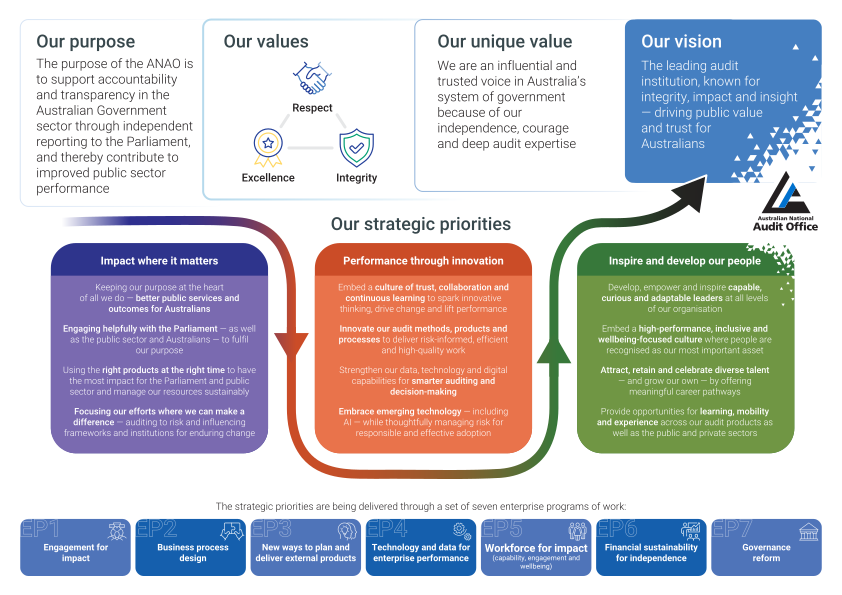
The leading audit institution, known for integrity, impact and insight — driving public value and trust for Australians.
What this means in practice
We are recognised for:
- Influential and timely reporting on what matters to Australians We focus our work on areas of greatest value to the Parliament and public, providing evidence-based insights that support transparency, accountability, and sustainable improvement.
- Audits that are constructive and the catalyst for positive change We conduct high-quality audits with openness, rigour and professionalism. We understand context and engage constructively to support learning and improvement across the public sector.
- Early insight into emerging risks We identify and communicate emerging risks and systemic vulnerabilities, enabling timely insight and helping prioritise action where it matters most.
- Contemporary practices We continuously evolve our methods, skills and use of data and technology to remain productive, effective, relevant and future-focused.
- Curious, capable and connected people We foster an inclusive, high performing and collaborative culture that values professional expertise and diverse perspectives — supporting wellbeing and enabling our people to do their best work.
Our unique value
We are an influential and trusted voice in Australia’s system of government because of our independence, courage and deep audit expertise.
Our values
Our work is underpinned by the ANAO’s values:
- Respect
- Excellence
- Integrity
These values guide how we exercise our mandate and how we pursue our strategic priorities.
Strategy on a page
The ANAO has articulated its strategic priorities for delivering on our purpose and progressing towards our vision. The three strategic priorities are:
- Impact where it matters — keeping our purpose at the heart of all we do, ensuring our work supports the Parliament and contributes to meaningful improvement across the public sector.
- Performance through innovation — focusing on how we improve by embracing change, using data and technology wisely, and finding smarter ways to deliver high-quality audit work.
- Inspire and develop our people — recognising that everything we achieve depends on the capability, diversity and wellbeing of our workforce.
We are delivering our strategic priorities through a set of seven organisational programs of work:
- Engagement for impact – Position the ANAO as a trusted and influential partner by strengthening our relationships and engagement across the Parliament, public sector, profession and Australian community.
- Business process design – Embed risk-informed, enterprise-wide and integrated business processes across our audit business, including planning, prioritisation and resource allocation, to improve organisational performance and agility.
- New ways to plan and deliver external products – Evolve our products and delivery models to respond to emerging risks, deliver relevant and timely assurance, and maximise impact.
- Technology and data for enterprise performance – Leverage data, technology (including artificial intelligence) and digital capability to drive innovation, productivity and excellence in audit delivery.
- Workforce for impact (capability, engagement and wellbeing) – Attract, develop and retain a capable, engaged and adaptable workforce, supported to thrive and deliver impact.
- Financial sustainability for independence – Develop and implement sustainable funding arrangements and practices that secure the resources and financial foundations needed to maintain the ANAO's independence and long-term effectiveness.
- Governance reform – Enhance governance frameworks and systems, and ensure decision-making occurs at the appropriate level to support accountability, transparency and organisational performance.
Strategy on a page
Operating context
Environment
In 2026–27, the ANAO operates within a complex and evolving external environment shaped by parliamentary, public sector, economic, technological and workforce-related factors. This includes the priorities of the 48th Parliament; increasing complexity in the operations of the Australian Public Service; fiscal constraints and rising community expectations; geopolitical developments affecting the global economic and security outlook; heightened cyber and security risks; and the rapid development of emerging technologies and artificial intelligence.
Broader societal factors — including declining trust in institutions — alongside changes affecting the audit profession, a multigenerational workforce and sustained competition for skilled practitioners, also influence how the ANAO delivers its mandate.
The ANAO also operates within a constrained budget environment, which continues to shape the scale and composition of its work program. In 2026–27, the ANAO will deliver its mandated financial statements audit program. To achieve this, the ANAO will not expand its performance statements audit work and will maintain a historically low number of performance audits — between 38 and 42 — below the expectation of 48 audits set by the Parliament.
The Joint Committee of Public Accounts and Audit (JCPAA), in its statement on the 2026–27 Budget, noted the importance of a sustainable funding model for the ANAO to support its independence and the delivery of an enduring and robust audit program. The ANAO will continue to engage constructively with government on its funding arrangements.
Parliamentary environment
The ANAO operates within a parliamentary and legislative environment characterised by strong expectations for accountability, transparency and scrutiny of executive government. In the 48th Parliament, there continues to be sustained parliamentary interest in assurance on the stewardship of public resources, lawfulness, service delivery, major program implementation, and entity financial and non-financial performance.
The ANAO supports this scrutiny through its full program of audit and assurance work. Financial and performance statements audits provide assurance over Commonwealth entity reporting and support confidence in annual reporting to the Parliament. The quality of non-financial performance reporting continues to be a growing area of parliamentary interest as entities mature their performance frameworks. Performance audits provide independent assessment of the efficiency, effectiveness, economy and ethics of government activity and remain of strong interest to the Parliament, in particular in areas where public expenditure, delivery complexity and community impact are significant, including in the portfolios of Defence, Health, Disability and Ageing; and Social Services.
The Joint Committee of Public Accounts and Audit (JCPAA) is the ANAO’s primary parliamentary relationship. The JCPAA has statutory responsibilities for reviewing reports of the Auditor-General, determining the audit priorities of the Parliament, and reviewing the ANAO’s budget, including making recommendations to the Parliament and the Prime Minister regarding the ANAO’s funding position. The JCPAA has long supported the independence of the Auditor-General, including through recommendations to strengthen the Auditor-General Act 1997.
The JCPAA has maintained an active program of inquiries into Auditor-General reports and broader matters of public administration, demonstrating continuing parliamentary interest in audit findings and system-wide accountability issues. These inquiries provide an important mechanism through which the Parliament examines the performance, governance and administration of Australian Government entities, and are a central focus of the ANAO’s work to assist parliament.
In addition to its engagement with the JCPAA, the ANAO supports parliamentarians, parliamentary committees and committee secretariats more broadly, providing information, briefings and advice when called upon to assist the Parliament in its scrutiny function. The ANAO will continue to monitor changes in parliamentary committee arrangements, including the establishment of the new Joint Committee on Defence, and build its understanding of how best to support emerging committee priorities.
Public sector environment
Economic, technological and societal pressures are shaping how the public sector delivers outcomes and how it is governed, resulting in a more demanding environment for public administration.
The public sector faces global uncertainty, supply chain disruptions, rising community expectations, increased reliance on new technologies, the need for fiscal restraint and improved productivity, and an ongoing imperative to build and maintain trust in public administration, including advancing reconciliation with First Nations peoples.
Delivering government’s priorities during this term of parliament will require the public service to manage complexity with effective governance, strategic planning, risk management, and stakeholder engagement. These capabilities will be needed across multiple dimensions of public sector administration, including policy advice, information technology, records and data management, procurement, regulation, grants and other funding, and asset management. In this environment, weaknesses in governance, controls or practices can have wider consequences for performance and public trust if they are not identified early and managed carefully.
Getting the basics right — including lawfulness and integrity — remains fundamental to achieving intended outcomes and continues to be a focus for audit.
The public’s expectation of better services, together with the ongoing need for efficiency, requires thoughtful use of technology and artificial intelligence in government services. Security, privacy and the ethical storage and use of data remain essential considerations. These developments create new risks and opportunities for government entities that shape both audit topic selection and the continued evolution of audit approaches. Entities must manage the risks of adopting new technologies alongside the risks of failing to adopt them.
In this environment, the ANAO focuses on providing independent assurance and insights to enable sound public administration. Our work is intended to be fair, constructive and useful — helping entities understand risks, strengthen governance and controls, and improve performance while maintaining independence. We engage transparently and professionally with entities to promote learning and improvement, consistent with our role in assisting the Parliament.
Workforce and audit profession
The audit profession and the ANAO’s workforce are influenced by technological change, labour-market conditions and professional and ethical expectations, which shape how audit and assurance work is conducted.
The ANAO’s workforce comprises people with diverse qualifications, experience, knowledge and skills. While the majority of staff are auditors, the ANAO’s effectiveness as a contemporary audit office relies on a multidisciplinary workforce, including expertise in areas such as data and analytics, information technology, professional standards, policy, governance, human resources and corporate support. The public audit profession continues to adapt to increasing complexity in public administration, changes in government activity and advances in technology. Expectations of auditors remain high, requiring sustained professional judgement, strong analytical skills and the highest standards of integrity and independence.
In addition to financial statements audits and performance audits, the ANAO delivers performance statements audits, which represent a relatively new and developing stream of public sector audit. As entities continue to mature their performance reporting, these audits require specialised capability, strong professional judgement and a detailed understanding of legislative and policy requirements. The development of this capability within the ANAO and the broader audit profession remains an important consideration in a constrained labour market.
Advances in technology, including the increasing use of data analytics and emerging tools such as artificial intelligence, are changing how audit evidence is obtained, analysed and assessed. These developments create opportunities to enhance audit efficiency and insight, while increasing the importance of robust methodology, sound professional judgement and quality assurance to ensure audit conclusions remain appropriate and trusted.
The broader audit profession continues to face strong competition for skilled practitioners, reflecting sustained demand for assurance and transparency across both the public and private sectors. As a result, the ANAO must continue to grow and develop capability internally through exposure to audit work, mentoring and professional development, and supporting high standards of quality and judgement. In particular, performance audit capability is developed primarily through practical experience rather than formal prequalification pathways.
The nature of audit work — including its complexity, rigour and exposure to areas of high public interest — places sustained demands on the ANAO’s workforce. In this environment, supporting staff wellbeing and maintaining a sustainable working environment are important for employee experience and retention, audit quality and organisational performance. This requires a continued focus on workload management, professional support, and fostering a culture that values wellbeing alongside high performance.
In this environment, the ANAO contributes to the development of contemporary audit practice, strengthens connections across the profession, and supports its workforce to adapt to change in ways that sustain capability, audit quality, relevance and impact.
Capability
Capability underpins the ANAO’s ability to undertake its key activities and deliver its mandate. Investing in a skilled and engaged workforce, and supporting that workforce with contemporary technology, systems and processes are essential to delivering high-quality audit and assurance work. This section outlines the people- and technology-related capabilities required to support the ANAO’s work program and how these capabilities are sustained in a complex and evolving operating environment.
Investing in our people
The ANAO’s ability to deliver high-quality audit and assurance work depends on the capability, judgement and professionalism of its people. Audit work involves complex subject matter across financial, performance and governance matters, often in areas of significant public interest. Sustaining this capability is critical to the ANAO’s ability to exercise its mandate independently, maintain audit quality and support confidence in public sector accountability.
The ANAO requires capability across audit, leadership and corporate domains to operate effectively. This includes strong technical audit capability, supported by transferable skills — such as critical thinking, leadership and relationship management — that enable effective work across audit products and engagements. It also includes specialist corporate and enabling capabilities, such as data analytics, systems assurance and information management, which support informed assurance over increasingly complex public sector activities.
These priorities are supported through the ANAO’s People Strategy and workforce planning arrangements, which focus on strengthening capability, engagement and wellbeing to support retention and workforce sustainability.
Skills, knowledge and behaviours
The ANAO invests in developing its people to support delivery of the audit program and to sustain capability over time. Delivering the ANAO’s mandate requires maintaining strong technical audit capability supported by leadership and effective engagement with audited entities and stakeholders. This includes developing capable and adaptable leaders at all levels of the organisation, who maintain the highest integrity standards and contemporary practices, including through the use of technology.
Learning at the ANAO is continuous and focused on practical workplace application. Through the ANAO Academy, the ANAO supports the development of audit, leadership and stakeholder engagement capability, reflecting current operational needs and the skills required to adapt to emerging assurance demands, including the responsible use of digital technologies such as artificial intelligence. The ANAO Academy is supported by the ANAO Faculty, which brings together representatives from across business groups to help ensure learning remains relevant, consistent and grounded in contemporary practice.
The ANAO is also supported by the Performance Statements Expert Advisory Panel, which provides strategic advice on the performance statements audit program. The panel supports the ongoing development of audit methodology and contributes to improving the quality and reliability of performance reporting across the Commonwealth, with insights informing the ANAO’s approach to audit delivery and capability in this area.
A key focus for 2026–27 is strengthening leadership capability, including leadership of people, work and stakeholder relationships. Values-based leadership supports professional standards across the ANAO and fosters a culture of high performance and inclusion.
Engagement and wellbeing
Auditing is demanding work and requires discipline, resilience and strong analytical skills. Sustaining workforce capability therefore depends on effective engagement, inclusion and wellbeing in a professional environment characterised by complex and varied audit work programs, cyclical peaks and troughs, tight timeframes and high expectations.
In 2026–27, the ANAO will continue to foster a connected workplace that supports collaboration, professionalism and a shared sense of purpose. Maintaining connection across teams, audit products and roles supports consistent ways of working, knowledge sharing and organisational culture, particularly in an environment requiring both depth and breadth of expertise across the audit program. The ANAO will also continue to strengthen communication and engagement to support clarity, connection and resilience throughout the audit cycle.
The ANAO will continue to prioritise wellbeing and a positive employee experience, guided by the ANAO Census Action Plan 2025–26. Actions to support wellbeing, inclusion and engagement are central to sustaining performance, retaining capability and supporting staff through the demands of audit work.
The ANAO will foster a respectful, inclusive and culturally safe workplace to empower our people and create a working environment where our staff feel valued, connected and able to contribute their best.
Investing in our technology, systems and processes
Technology, systems and processes are critical enablers of the ANAO’s work. Keeping pace with rapid technological change remains central to our future performance, as it shapes how government entities operate, how evidence is generated, and how assurance can be delivered effectively, securely and at scale.
In 2026–27, the ANAO will progress the implementation of the ANAO’s Digital Strategy, which sets out the organisation’s ambition to be a data-enabled organisation with a strong digital culture and mindset. The strategy supports collaboration, learning and innovation through a prioritised portfolio of initiatives that strengthen enterprise capability, improve organisational performance, and enable secure and sustainable operations. This includes continued modernisation of audit systems that are near end of life, increased use of automation and analytics, and uplift in digital and data capability across the organisation.
Strengthening data and digital capability is central to smarter auditing and decision-making. The ANAO will continue to use approved artificial intelligence and other emerging technologies where they enhance audit quality and productivity. Building on earlier trials, including a trial of Microsoft Copilot, the ANAO will responsibly scale the use of artificial intelligence in areas such as evidence review, analysis and drafting, supported by strong governance, clear accountability and appropriate human oversight with ‘humans in the loop’. Training, guidance and controls will support responsible adoption, including the management of confidentiality, bias, transparency and documentation requirements.
As a custodian of sensitive information, the ANAO will continue to carefully prioritise its resources to strengthen its security environment, with a focus on cyber resilience and effective data governance. Ongoing improvement activities are guided by the ANAO’s Security Improvement Plan and are essential to maintaining trust, integrity and confidence in the ANAO’s audit work and operations.
The ANAO will also continue to adapt its audit approaches to reflect the increasing digitisation of public sector activity and evidence. Maintaining capability to audit cybersecurity, information governance and emerging technologies, including artificial intelligence, enables the ANAO to provide assurance over how entities manage digital risks, while sharing insights and better practice to support improved decision-making and public sector performance.
Approach to commissioning audit work
The Auditor-General’s independence informs the ANAO’s approach to commissioning audit work. The ANAO recognises the intent of the Australian Public Service (APS) Strategic Commissioning Framework to build APS capability by requiring core government work to be undertaken by APS employees.
To deliver against the Auditor-General’s mandate, the ANAO uses a mix of in-house audit teams as well as private sector audit firms to achieve the quality expected by the Parliament and timeliness required under the Public Governance, Performance and Accountability Act 2013 (PGPA Act).
All audit work conducted by private sector firms is subject to robust oversight, requiring contractors to adhere to ANAO auditing standards, and quality assurance, independence, integrity and security arrangements equivalent to those applied to in-house teams. All audit opinions and signing responsibilities remain with the Auditor-General.
Cooperation, relationships and engagement
Maintaining productive relationships and engagement with a range of stakeholders is essential to the ANAO’s work. These relationships support parliamentary oversight, strengthen public sector administration, enhance audit quality and capability, and reinforce public trust, while preserving the independence of the Auditor-General.
Parliament
The ANAO’s primary relationship is with the Australian Parliament and the ANAO’s key interaction with the Parliament is through the Joint Committee of Public Accounts and Audit (JCPAA). We engage closely with the Parliament to support its oversight of executive government, guided by our parliamentary engagement strategy. The strategy emphasises the importance of reflecting parliamentary priorities and providing the Parliament with system-level insights on public administration, as well as ensuring our services are evidence-based, timely and represent value for money.
Engagement with the JCPAA includes briefings, submissions and assistance with inquiries, including appearances at public hearings. To support parliamentary scrutiny across all policy and portfolio areas, the ANAO also engages with the Parliament more broadly through committee appearances, submissions and briefings, including tailored portfolio briefings on ANAO work ahead of Senate estimates. Through consultation with the JCPAA on the annual audit work program, the ANAO takes account of the Parliament’s audit priorities.
In its relationship with the Parliament, the ANAO serves as a trusted and independent source of assurance and insight. It supports parliamentary scrutiny and decision-making by delivering audits that assess the proper use of public resources and identify opportunities to improve public administration. The ANAO’s engagement with the Parliament is accessible, responsive and professional, consistent with the Auditor-General’s role as an independent officer of the Parliament.
Australian Government
The ANAO supports the Australian Government by providing briefings, on request, on the work that we do. The Auditor-General also provides ministers with reports on important matters that arise through the conduct of financial statements audits, including on financial and other frameworks where audits provide opportunities for improvement. All ministers are provided information on the ANAO’s annual audit work program. These interactions support understanding of the ANAO’s role, work program and audit findings, while maintaining the independence of the Auditor-General and the ANAO’s role as an officer of the Parliament.
Public sector entities
The ANAO engages with Australian Government entities to maximise the impact of its audit work, while maintaining independence and objectivity in all interactions. Engagement with secretaries, agency heads, audit committee members and framework owners — the entities responsible for the frameworks that govern the management and use of public money by public servants — supports shared understanding of systemic risks, emerging issues and opportunities for improvement across public administration.
As the public sector auditor, the ANAO communicates audit-based insights on better practice and areas for improvement, including through Insights publications. The Auditor-General engages with accountable authorities, and the ANAO shares relevant insights with the public service, contributing to ongoing uplift in public sector capability and performance. We see significant value in direct engagement, and we hold forums twice a year to promote and strengthen public sector governance — the Audit Committee Chairs Forum and the Financial and Performance Reporting Forum — as well as present at, and participate in, discussions in cross-entity and individual entity events.
The ANAO also engages with the Department of Finance and other owners of public sector governance and accountability frameworks that we audit against— including the Public Governance, Performance and Accountability Act 2013, Public Service Act 1999, Commonwealth Procurement Rules, Commonwealth Grants Rules and Principles, and Protective Security Policy Framework. Our work seeks to identify whether entities are complying with both the requirements and the intent of these frameworks. We will continue to work with framework owners when our audits highlight potential gaps in frameworks or opportunities to strengthen their administration.
Integrity system
The Auditor-General is a member of the Integrity Agencies Group, which brings together leaders of Commonwealth integrity bodies to share insights, coordinate activity where appropriate, and collectively support the ongoing development of integrity frameworks. Through this cooperation, the Auditor-General and the ANAO contribute to strengthening integrity across the Australian public sector.
Participation in the group enables the Auditor-General to share observations and findings from the ANAO’s audit work that may be relevant to other agencies within the integrity system. In turn, the ANAO benefits from improved visibility of broader trends, risks and developments across areas such as public sector ethics, fraud and corruption prevention, risk management and integrity system maturity. This cooperation strengthens the ANAO’s capacity to focus audit effort on emerging integrity risks and to influence improved public sector administration.
Collaboration with integrity agencies complements the ANAO’s formal accountability to the Parliament and supports a strong system of checks and balances within government. It also reinforces integrity as a core value of the ANAO and a key enabler of its strategic intent. Through ongoing engagement with integrity peers, the ANAO contributes to a more connected, informed and resilient public sector and supports trust in government.
Public auditing peers and the audit community
The ANAO plays an active role within the national, regional and international public sector audit community. Engagement with public auditing peers and the wider audit profession supports knowledge exchange, capability development and continuous improvement in audit practice, while upholding independence and professional standards.
The ANAO contributes to regional and international public audit cooperation through its participation in the International Organization of Supreme Audit Institutions (INTOSAI), the Pacific Association of Supreme Audit Institutions (PASAI) and the Asian Organization of Supreme Audit Institutions (ASOSAI). The Auditor-General supports regional audit practice through membership of the PASAI Governing Board and works collaboratively with Australasian peers through the Australasian Council of Auditors-General (ACAG). These engagements support the exchange of audit knowledge and experience and contribute to the ongoing development of audit methodology and staff and organisational capability.
The ANAO also supports peer-to-peer institutional capacity development in the Indo-Pacific through participation in initiatives such as the Papua New Guinea Institutional Partnerships Program (PIPP) and the Australia–Indonesia Partnership for Economic Development (Prospera). These programs provide opportunities for bilateral engagement with the Papua New Guinea Auditor-General’s Office and the Audit Board of Indonesia (BPK), contributing to stronger audit capability, public financial management and governance outcomes across the region.
In addition, the ANAO maintains important relationships with private sector audit firms and professional bodies to support audit delivery, promote high standards and strengthen the auditing profession through our public sector audit leadership. Private sector audit firms engage in audit work on behalf of the Auditor-General and operate under the ANAO’s auditing standards, quality management framework and independence, integrity and security requirements. All audit opinions and signing responsibilities are retained by the Auditor-General.
The ANAO also engages with professional bodies such as CPA Australia, Chartered Accountants Australia and New Zealand (CA ANZ), and the Institute of Public Administration Australia (IPAA). On an issues basis the ANAO engages with standard-setters including the Australian Accounting Standards Board (AASB), the Auditing and Assurance Standards Board (AUASB) and the Financial Reporting Council (FRC), which have been merged into a single entity called External Reporting Australia (ERA) that will take operational effect later in 2026.
Through engagement with public audit peers and the broader audit community, the ANAO contributes system-wide insights on emerging risks and public administration themes, supports collective capability uplift, and strengthens trust in public sector auditing in Australia and the Indo-Pacific region.
Risk oversight and management
The ANAO has established and maintains systems of risk oversight, management and internal control to support delivery of its mandate and to protect its independence, audit quality and reputation. Risk management enables the ANAO to understand the risks that could affect achievement of its outcomes, while also identifying opportunities to strengthen capability, improve resilience and increase the impact of its work in a complex and highly scrutinised environment. These arrangements are embedded in day-to-day operations and formalised through the Risk Management Framework 2025–2027 and enterprise risk register. The ANAO promotes a positive and transparent risk culture, supported by strong leadership and clear accountability, to encourage early identification and escalation of risks, informed decision-making and continuous improvement.
In 2025 the ANAO undertook a comprehensive update of the enterprise risk register, to strengthen the connection between risk, strategy, performance and the operating environment. This review sharpened the ANAO’s understanding of the threats and opportunities that could affect delivery of its mandate. It also informed refinement of risk appetite and tolerance settings to support disciplined decision making, resilience and sustained impact.
The ANAO Executive Board of Management provides active oversight of enterprise risks, drawing on regular assessment of internal and external factors. Oversight is supported through ongoing monitoring, structured reporting and escalation arrangements, enabling timely consideration of emerging risks and pressures.
In 2026–27, the ANAO will continue to focus risk oversight and monitoring on key areas identified in the revised enterprise risk register. These include risks relating to independent reporting, budget pressures on audit delivery, workforce capability and capacity, protection of sensitive information, investment in contemporary auditing tools, and delivery of high-quality audits in emerging areas such as climate-related disclosures and the use of artificial intelligence and advanced technologies.
Consistent with its mandate, the ANAO maintains a low risk appetite for risks that could compromise audit quality, independence, reputation or parliamentary confidence, and a medium risk appetite where innovation and change may enhance efficiency and effectiveness.
Key enterprise risks and how they are managed
Table 1 outlines the ANAO’s eight key enterprise risks and how the ANAO manages those risks.
Table 1: The ANAO’s enterprise risks
|
Enterprise risk |
How the ANAO manages the risk |
|
The Auditor-General leads a system of preventative and detective controls, including advocacy and formal engagement with the Parliament, targeted action on legislative and resourcing matters, and ongoing monitoring through environmental scanning. |
|
The ANAO manages this risk through strong quality assurance and senior oversight of audit work, disciplined work program governance, proactive engagement with the JCPAA and key stakeholders, and transparent decision-making on audit coverage, delivery and resource allocation. |
|
The ANAO’s preventative and mitigative controls span workforce attraction and retention, capability development, wellbeing and culture, workforce planning, infrastructure and change management. |
|
The ANAO manages this risk through disciplined quality architecture that combines standardised audit methodologies, layered review and escalation processes, independent quality monitoring and remediation, and targeted capability and resourcing to support evidence-based audit conclusions and confidence in the Auditor-General’s reporting to the Parliament. |
|
Various controls clarify the ANAO’s legislative authority, equip audit teams to address concerns early, and reinforce constructive and professional engagement with entities. |
|
The ANAO manages this risk through integrated financial and performance governance that links funding, work program planning and resource prioritisation to sustainably deliver its mandate. This includes active engagement with external stakeholders, disciplined budget oversight, financial planning and forecasting, maintenance of the financial control framework, and alignment between available resources, audit coverage and organisational priorities. |
|
The ANAO manages this risk through an integrated integrity and conduct framework that promotes safe, professional and ethical behaviour, clear accountability and early intervention across the workforce, including employees, contractors and service providers. These controls support a professional culture that protects the ANAO’s reputation, strengthens trust in its work and supports staff to uphold the standards expected of an independent public sector audit institution. |
|
The ANAO’s layered security and governance approach covers technology, artificial intelligence, information management, personnel security, physical security and third-party assurance, supported by preparedness, detection, response and recovery arrangements. |
Climate risk and opportunity
Climate change has the potential to affect the ANAO’s operating environment over time, including through physical impacts and the transition to a net zero economy. The ANAO recognises climate-related risk and opportunity as important organisational considerations and assesses these within its broader risk oversight and management arrangements.
Climate-related risks and opportunities are considered across the ANAO’s functions, operations, assets and enabling services, and are integrated with existing risk management, business continuity and corporate planning processes.
Audit and assurance arrangements
The ANAO maintains a system of risk oversight, management and internal control supported by both internal and external assurance mechanisms.
As provided for under the Auditor-General Act 1997, an Independent Auditor is appointed by the Governor-General on the recommendation of the Prime Minister, with the approval of the Joint Committee of Public Accounts and Audit (JCPAA). The Department of the Prime Minister and Cabinet is responsible for the selection process. The Independent Auditor audits the ANAO’s financial statements and may conduct performance audits of the ANAO, providing assurance to the Parliament over its operations and reporting. The ANAO also requests that the Independent Auditor audit its performance statements, providing additional assurance over non-financial performance information.
This is complemented by an internal audit function, outsourced by the ANAO, that delivers a risk-based program of reviews of governance, risk management and internal controls. The internal audit program is overseen by the ANAO Audit Committee, which provides independent advice to the Auditor-General, as the accountable authority, on the appropriateness and effectiveness of these arrangements, and monitors the implementation of agreed audit actions.
Activities and performance
The ANAO’s purpose is to support accountability and transparency in the Australian Government sector through independent reporting to the Parliament, and thereby contribute to improved public sector performance.
The ANAO’s performance measurement framework focuses on:
- the benefits of our work (effectiveness and impact); and
- what we deliver (outputs) and how well we deliver it (quality and efficiency).
The Auditor-General’s functions are delivered through three programs:
- Program 1.1 – Financial statements audit services
- Program 1.2 – Performance audit services
- Program 1.3 – Performance statements audit services
The ANAO also has shared performance measures across programs 1.1, 1.2 and 1.3. These programs contribute to our purpose through their impact on parliamentary scrutiny and public sector performance.
Each program comprises key activities that contribute to achieving our purpose. The performance measures assess whether our work has achieved its intended impact, using a mix of qualitative and quantitative indicators. Reporting against these measures provides a comprehensive account of performance, including how our activities support the Parliament and contribute to improved public sector performance, while maintaining high standards of audit quality.
The ANAO’s annual performance statements are audited by the ANAO’s Independent Auditor at the request of the Auditor-General.
Changes to performance measures since the portfolio budget statements
Since our Portfolio Budget Statements (PBS) 2026–27, we have made minor changes to our performance measures.
We have split measure 1 in the PBS into measures 1 and 2 in this corporate plan, and adjusted the numbering of the reporting mechanisms for those two measures. As a result, measures 2 to 11 in the PBS have become measures 3 to 12 in the corporate plan.
In this corporate plan, we have made minor editorial changes to the wording of some performance measures, reporting mechanisms and targets to enhance clarity. These changes do not materially affect the intent of the measures, reporting mechanisms or targets.
The measurement and assessment of the performance measures outlined in our 2026–27 corporate plan will be published in our 2026–27 annual performance statements.
Shared performance measures across programs 1.1, 1.2 and 1.3
The ANAO recognises that performance information should provide insight into not only what we do and how well we do it, but also the impact of our work.
To support this, the ANAO has established shared performance measures across all programs that focus on two key dimensions of impact: parliamentary scrutiny (measure 1) and public sector performance (measure 2). Together, these two measures reflect the ANAO’s role in supporting the Parliament and contributing to improvements in public administration.
The ANAO’s primary function is to support the Parliament in exercising its important accountability functions. Measure 1 focuses on the extent to which ANAO work informs and supports parliamentary scrutiny, including its relevance to parliamentary priorities and the confidence placed in ANAO reporting.
The ANAO also contributes to improved public sector performance. Measure 2 focuses on the extent to which ANAO findings and recommendations influence changes to frameworks, systems and practices across the public sector, including actions taken by entities and framework owners in response to audit insights.
These shared measures provide a structured approach to assessing the impact of ANAO activities across its programs and support transparent performance reporting.
Measure 1
Contribution to the Parliament’s scrutiny of the public sector
Type
Effectiveness (impact)
Method
The ANAO measures the impact of its work on parliamentary scrutiny through a combination of:
- analysis of how its work is used by the Parliament;
- consideration of parliamentary audit priorities;
- feedback from the Joint Committee of Public Accounts and Audit (JCPAA); and
- assurance over audit quality and compliance with professional standards.
Why do we measure this?
To determine whether the ANAO’s work supports effective parliamentary scrutiny of the Australian Government sector, and contributes to maintaining the confidence and trust of the Parliament.
Target
2026–27
Achieved
2027–28
Achieved
2028–29
Achieved
2029–30
Achieved
Reporting mechanisms: The ANAO has identified two reporting mechanisms, with defined targets, to assess relevant means by which it supports impact on parliamentary scrutiny. The ANAO considers these mechanisms to be a reasonably complete and appropriate set for assessing this measure.
To achieve measure 1, the ANAO must meet all targets outlined in the reporting mechanisms.
|
Reporting mechanism 1 |
|||
|
Qualitative analysis of the use of ANAO products by the Parliament. Feedback from the JCPAA indicates the ANAO has contributed to improved public sector accountability and transparency and improved public sector administration through its reports and services to the Parliament. Assessment of the ANAO’s consideration of the audit priorities of the Parliament as determined by the JCPAA. |
|||
|
2026–27 |
2027–28 |
2028–29 |
2029–30 |
|
Achieved |
Achieved |
Achieved |
Achieved |
|
Reporting mechanism 2 |
|||
|
The ANAO’s independent quality assurance program indicates that audit opinions and conclusions are appropriate and support the integrity of our audit reports |
|||
|
2026–27 |
2027–28 |
2028–29 |
2029–30 |
|
Achieved |
Achieved |
Achieved |
Achieved |
Measure 2
Contribution to public sector performance
Type
Effectiveness (impact)
Method
The ANAO measures the impact of our work through:
- changes agreed to and implemented in audited entities as a result of our work; and
- feedback received from entity surveys on the impact of our audits.
Why do we measure this?
To determine whether the ANAO’s work contributes to improved public sector performance through changes to frameworks, systems and practices in Commonwealth entities.
Target
2026–27
Achieved
2027–28
Achieved
2028–29
Achieved
2029–30
Achieved
Reporting mechanisms: The ANAO has identified four reporting mechanisms, with defined targets, to assess relevant means by which it supports impact on public sector performance. The ANAO considers that the mechanisms identified are a reasonably complete and appropriate set of mechanisms to assess the overall measure.
To achieve measure 2, the ANAO must meet all targets of the outlined reporting mechanisms.
|
Reporting mechanism 1 |
|||
|
Percentage of moderate or significant findings from mandated financial statements audits and the performance statements audits that are agreed to by audited entities |
|||
|
2026–27 |
2027–28 |
2028–29 |
2029–30 |
|
90% |
90% |
90% |
90% |
|
Reporting mechanism 2 |
|||
|
Percentage of moderate or significant findings from mandated financial statements audits and the performance statements audits that are addressed by audited entities within 24 months of reporting |
|||
|
2026–27 |
2027–28 |
2028–29 |
2029–30 |
|
Financial statements audits – 90% Performance statements audits – 70% |
Financial statements audits – 90% Performance statements audits – 70% |
Financial statements audits – 90% Performance statements audits – 70% |
Financial statements audits – 90% Performance statements audits – 70% |
|
Reporting mechanism 3 |
|||
|
Percentage of performance audit recommendations agreed to by audited entities and implemented within 24 months of a performance audit report being presented |
|||
|
2026–27 |
2027–28 |
2028–29 |
2029–30 |
|
Agreed – 90% Implemented – 70% |
Agreed – 90% Implemented – 70% |
Agreed – 90% Implemented – 70% |
Agreed – 90% Implemented – 70% |
|
Reporting mechanism 4 |
|||
|
Percentage of positive feedback received from entity surveys on the impact of audits |
|||
|
2026–27 |
2027–28 |
2028–29 |
2029–30 |
|
70% |
70% |
70% |
70% |
Program 1.1 – Financial statements audit services
Key activities
The financial statements audit services program audits the annual financial statements of all Commonwealth entities and the consolidated financial statements of the Australian Government.
These services contribute to the ANAO achieving its purpose through the following key activities:
- providing assurance on the fair presentation of the financial statements of the Australian Government and its controlled entities through independent audit opinions for the Parliament, the executive and the public;
- presenting two reports each year on the outcomes of financial statements audits of Commonwealth entities and the consolidated financial statements of the Australian Government — providing the Parliament with independent examination of public sector financial reporting; and
- contributing to improvements in the financial administration of Commonwealth entities.
Measure 3
Percentage of mandated financial statements audit reports issued
Type
Output; quantitative
Method
The percentage of mandated financial statements audit reports issued (to entities requiring an audit opinion). The source for this performance measure is the ANAO’s end-of-year financial statements report tabled in December, which includes the percentage of mandated financial statements audit reports issued.
Why do we measure this?
Under the Auditor-General Act 1997, the Auditor-General’s functions include the mandatory auditing of the annual financial statements of Commonwealth entities, Commonwealth companies and their subsidiaries, and the consolidated financial statements. This measure reports on the percentage of those reports issued.
Target
2026–27
100%
2027–28
100%
2028–29
100%
2029–30
100%
Measure 4
Percentage of mandated financial statements audit reports issued in time to meet entity annual reporting timeframes
Type
Quantitative
Method
The number of mandated financial statements audit reports issued (to entities requiring an audit opinion) within three months of the end of the financial year, divided by the total number of entities requiring an audit opinion
Why do we measure this?
In line with the requirements set out in the Public Governance, Performance and Accountability Act 2013, the ANAO aims to finalise financial statements audit reports within three months of the financial-year-end reporting date. Timely reporting supports entities to report on their financial performance through annual reports to the Parliament.
Target
2026–27
85%
2027–28
85%
2028–29
85%
2029–30
85%
Measure 5
Average cost of a financial statements audit does not increase by more than the CPI from the prior year
Type
Efficiency; quantitative
Method
The average cost of mandated financial statements audits for the audit cycle completed in that financial year, compared to the average cost of mandated financial statements audits for the audit cycle completed in the previous financial year, adjusted for movement in the Consumer Price Index (CPI) in the relevant period
Why do we measure this?
Delivering cost-effective audits is one way the ANAO can demonstrate the efficient use of taxpayer resources in our work. This measure captures the average cost of delivering mandated financial statements audits and allows comparison over time.
Target
2026–27
Average cost of a financial statements audit does not increase by more than CPI from the prior year
2027–28
Average cost of a financial statements audit does not increase by more than CPI from the prior year
2028–29
Average cost of a financial statements audit does not increase by more than CPI from the prior year
2029–30
Average cost of a financial statements audit does not increase by more than CPI from the prior year
Measure 6
Number of independent reports delivered on financial statements audit services
Type
Output; quantitative
Method
The number of independent reports delivered on the financial statements audit services
Why do we measure this?
Measuring the number of independent reports delivered on financial statements audit services (through the reports Audits of the Financial Statements of Australian Government Entities for the Period Ended 30 June … and Interim Report on Key Financial Controls of Major Entities) tracks the ANAO’s twice-yearly reporting to the Parliament on audit outcomes and key findings, supporting parliamentary scrutiny and transparency in public sector financial reporting.
Target
2026–27
2
2027–28
2
2028–29
2
2029–30
2
Program 1.2 – Performance audit services
Key activities
The performance audit services program audits and reports on public sector performance by delivering performance audit reports and related products to inform the Parliament, the executive government and the public.
Performance audit services contribute to the ANAO achieving its purpose by examining all or part of an entity’s operations to assess economy, efficiency, effectiveness, ethics, and compliance with legislative and policy requirements. Performance audit reports set out findings and recommendations arising from this work and are tabled in the Parliament. Entities indicate their agreement to implement ANAO recommendations in the audit report, thereby informing the Parliament of the improvements they intend to make as a result of ANAO audits. Performance audit work also informs the development of other products, including insights and information reports.
Measure 7
Number of performance audit reports and related products presented to the Parliament or published by the Auditor-General
Type
Output; quantitative
Method
The number of performance audit reports and related products presented to the Parliament or published by the Auditor-General
Why do we measure this?
Under the Auditor-General Act 1997, the Auditor-General’s functions include conducting performance audits of Commonwealth entities and Commonwealth companies and their subsidiaries (sections 17, 18,18B). The Auditor-General may also present any other report on any matter for tabling in the Parliament (section 25 of the Act). This measure reports on the number of those reports presented to the Parliament against the targets established in the ANAO’s portfolio budget statements. It also includes other products presented to the Parliament or published by the Auditor-General, including Insights publications.
Target
2026–27
Between 38 and 42 audit and other reports
Three Insights publications
2027–28
Between 38 and 42 audit and other reports
Three Insights publications
2028–29
Between 38 and 42 audit and other reports
Three Insights publications
2029–30
Between 38 and 42 audit and other reports
Three Insights publications
Measure 8
Average cost of a performance audit does not increase by more than the CPI from the prior year
Type
Efficiency; quantitative
Method
The average cost of all performance audits completed in a financial year, compared to the average cost of performance audits completed in the previous financial year, adjusted for movement in the Consumer Price Index (CPI) in the relevant period
Why do we measure this?
Delivering cost-effective audits is one way the ANAO can demonstrate the efficient use of taxpayer resources in our work. This measure captures the average cost of delivering performance audits and allows comparison over time.
Target
2026–27
Average cost of a performance audit does not increase by more than CPI from the prior year
2027–28
Average cost of a performance audit does not increase by more than CPI from the prior year
2028–29
Average cost of a performance audit does not increase by more than CPI from the prior year
2029–30
Average cost of a performance audit does not increase by more than CPI from the prior year
Program 1.3 – Performance statements audit services
Key activities
The performance statements audit services program provides assurance to the Parliament that an entity’s annual performance statements have been prepared, in all material respects, in accordance with the requirements of Division 3 of Part 2-3 of the Public Governance, Performance and Accountability Act 2013.
The Commonwealth Performance Framework does not currently require audited entities to include the performance statements audit report in their annual report, unlike financial statements audit opinions. The ANAO therefore provides the Auditor-General’s independent assurance reports on entities’ annual performance statements to the Minister for Finance for tabling in the Parliament.
The ANAO also tables an end-of-year report reflecting on the outcomes of the performance statements audit program for the financial year. This report provides the Parliament with an independent perspective on progress in improving non-financial performance reporting across the Australian Government.
Measure 9
Percentage of performance statements audit reports issued
Type
Output; quantitative
Method
The percentage of performance statements audit reports issued. The Auditor-General agrees the performance statements audits to undertake each year following a request from the Minister for Finance.
Why do we measure this?
Under section 15 of the Auditor-General Act 1997, the Auditor-General’s functions include auditing annual performance statements of Commonwealth entities in accordance with the Public Governance, Performance and Accountability Act 2013. This measure reports on the percentage of those reports issued as agreed under the request from the Minister for Finance.
Target
2026–27
100%
2027–28
100%
2028–29
100%
2029–30
100%
Measure 10
Percentage of performance statements audit reports issued in time to meet entity annual reporting timeframes
Type
Quantitative
Method
The percentage of performance statements audit reports issued within three months of the end of the financial year, divided by the total number of entities requiring an audit opinion
Why do we measure this?
The ANAO aims to issue performance statements audit reports within three months of the financial-year-end reporting date. The issue of timely audit reports supports entities to include audited annual performance statements in their annual reports to the Parliament.
Target
2026–27
85%
2027–28
85%
2028–29
85%
2029–30
85%
Measure 11
Average cost of a performance statements audit does not increase more than the CPI from the prior year
Type
Efficiency; quantitative
Method
The average cost of performance statements audits for the audit cycle completed in that financial year, compared to the average cost of performance statements audits for the audit cycle completed in the previous financial year, adjusted for movement in the Consumer Price Index (CPI) in the relevant period
Why do we measure this?
Delivering cost-effective audits is one way the ANAO can demonstrate the efficient use of taxpayer resources in our work. This measure captures the average cost of delivering performance statements audits and allows comparison over time.
Target
2026–27
Average cost of a performance statements audit does not increase more than CPI from the prior year
2027–28
Average cost of a performance statements audit does not increase more than CPI from the prior year
2028–29
Average cost of a performance statements audit does not increase more than CPI from the prior year
2029–30
Average cost of a performance statements audit does not increase more than CPI from the prior year
Measure 12
Number of independent reports delivered on performance statements audit services
Type
Output; quantitative
Method
The number of independent reports delivered on the performance statements audit services
Why do we measure this?
Measuring the number of independent reports delivered on performance statements audit services (through the report Performance Statements of Major Australian Government Entities) demonstrates the ANAO’s delivery of this assurance role and supports transparency and accountability in how entities report on their performance to the Parliament.
Target
2026–27
1
2027–28
1
2028–29
1
2029–30
1