Browse our range of reports and publications including performance and financial statement audit reports, assurance review reports, information reports and annual reports.
Corporate
ANAO Integrity Report 2025–26
Published
Thursday 19 November 2026

Contact
Please direct enquiries through our contact page.
Integrity is a core value of the Australian National Audit Office (ANAO) — critical in sustaining the confidence of Parliament, strengthening public trust in government, and delivering quality audit products. Maintaining strong institutional integrity is essential to the operations and reputation of the ANAO.
The ANAO Integrity Framework provides an overarching structure to the integrity control system, supporting our institution’s integrity. The Framework serves to assist in ethical decision-making and risk, fraud and misconduct management.
Beyond its control system, the ANAO maintains an enduring focus on promoting integrity as a value that is embedded in our work and culture. The ANAO recognises that integrity demands quality not only in our products but also in the behaviours of our people.
The ANAO Integrity Advisor supports the effective and ongoing application of the Integrity Framework by providing advice to staff regarding integrity matters and increasing integrity awareness across the organisation. The Integrity Advisor reports annually to the ANAO Executive Board of Management on actions taken under the Framework. The Auditor-General publishes the ANAO Integrity Report to provide increased transparency of the measures we undertake to maintain a high-integrity culture in the ANAO.
2025–26 Integrity Snapshot
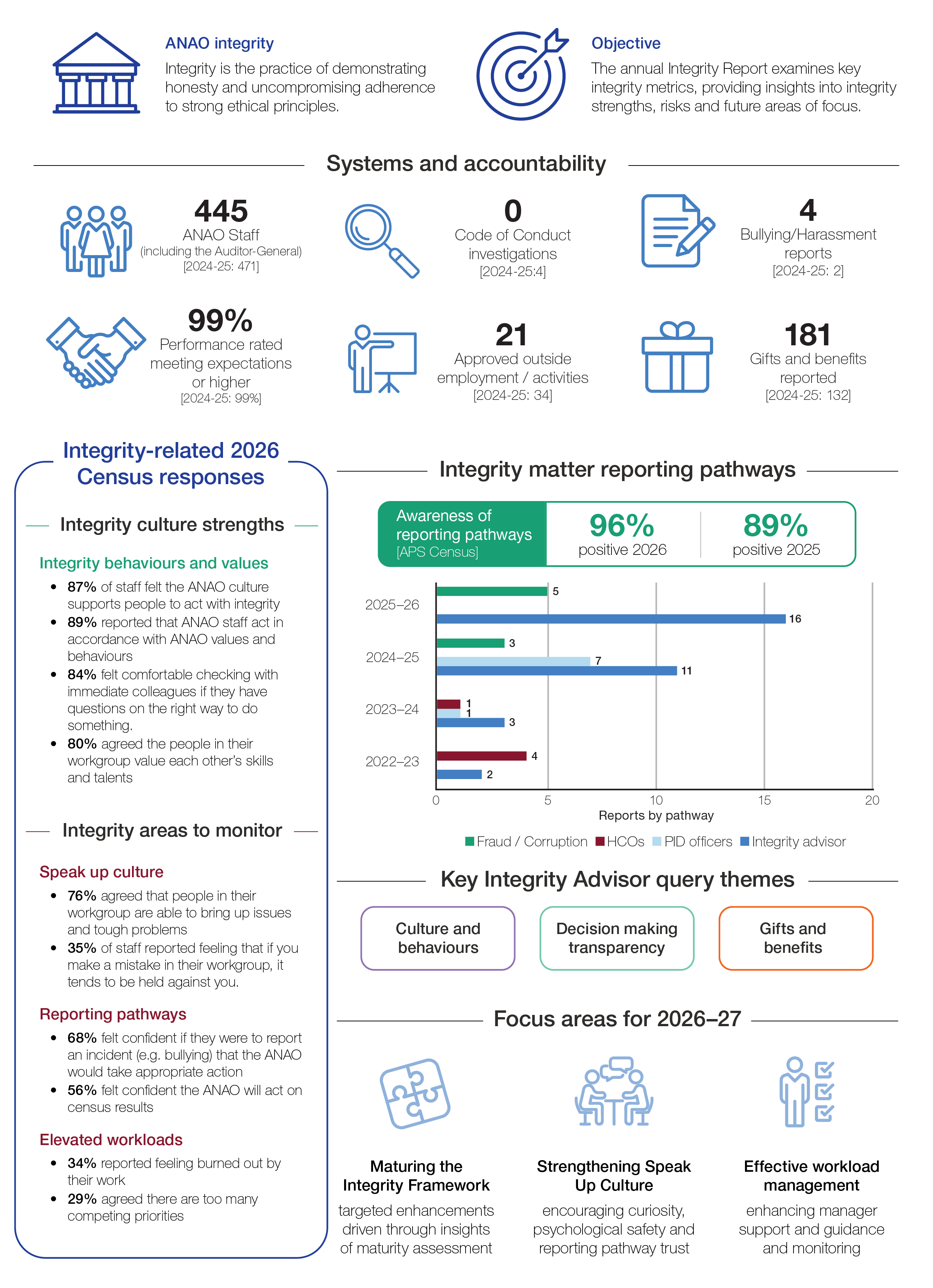
1. ANAO Integrity at a Glance
1.1 Integrity in the APS is fundamental to public trust, effective governance and the delivery of outcomes in the public interest. It is reflected not only in what public sector agencies do, but how they do it — through accountability, transparency, ethical decision-making and a culture where people understand, act on, and are accountable for their responsibilities.
1.2 The Australian National Audit Office (ANAO) plays an important role in strengthening integrity across the public sector through independent reporting to the Parliament and contributing to improved public sector performance.
1.3 As an integrity agency, the ANAO supports accountability and transparency, contributes to improved public sector performance, and demonstrates the high ethical standards expected of the entities it audits. Maintaining integrity, credibility and independence is critical to the ANAO’s mandate, reputation and effectiveness. These qualities sustain the confidence of Parliament, strengthen public trust in government and support the delivery of high-quality audit products.
1.4 Consistent with the Commonwealth Integrity Strategy, the ANAO views integrity as a multi-layered concept shaped by systems, culture and accountability. Our Integrity Framework contextualises this for the ANAO and is designed to assist in improving governance practices and ethical decision making; and supporting risk, fraud and misconduct management.
1.5 Integrity is a core ANAO value. The ANAO fosters a pro-integrity culture through systems designed to support integrity; education, support and access to advisors, including the Integrity Advisor, Harassment Contact Officers (HCOs) and Public Interest Disclosure (PID) Officers, who help staff apply expected integrity behaviours in all aspects of their work; and holding ourselves to account through reporting.
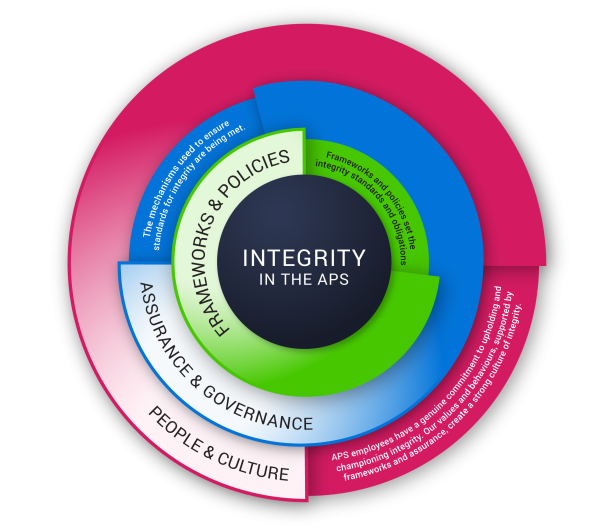
Source: APSC | Integrity in the APS
1.6 The ANAO monitors and matures its integrity arrangements through reporting against key integrity metrics, consideration of staff survey insights, and undertaking periodic maturity assessments. This supports evidence-based decision making on where to focus effort, strengthen controls and sustain a culture where integrity is valued, understood and demonstrated.
2. 2025–26 Integrity Report
The Integrity Advisor reports annually to the ANAO Executive Board of Management (EBOM) on actions taken under the Integrity Framework. The report analyses integrity-related metrics and matters arising during the year to provide insight into the health of the ANAO’s integrity culture, the effectiveness of integrity controls, emerging trends, and areas of potential integrity risk or vulnerability requiring further attention.
2.1 The annual Integrity Report provides a comprehensive assessment of ANAO integrity for the period 1 July 2025 to 30 June 2026. The 2025–26 Report is organised against the three integrity pillars of the Integrity Framework – accountability, culture and systems – to demonstrate how the ANAO maintains oversight, supports expected behaviours and strengthens the controls that protect our institutional integrity.
2.2 To provide context to the figures and metrics throughout the report, ANAO staff numbers decreased in 2025–26, with a headcount of 445 ongoing employees as at 30 June 2026 (30 June 2025: 471). This included 12 graduates participating in the ANAO’s graduate program.
Integrity Environment
2.3 The ANAO operates in a dynamic public sector environment shaped by higher expectations of integrity and public value, evolving government priorities, fiscal pressures, and rapid social and technological change. These conditions are changing the nature, volume and complexity of our work, highlighting the imperative of embedding ethical behaviour as the norm in our systems, culture and leadership.
2.4 The ANAO has continued to proactively respond to strategic and operational challenges, and while maintaining a strong focus on our role as an integrity agency, has remained attentive to developments across the APS. Where appropriate and consistent with our mandate, this has included adopting APS better practice, such as implementing the DRIVE model – the APS Secretaries Charter of Leadership Behaviours.
2.5 During 2025–26, parliamentary scrutiny regarding KPMG placed a spotlight on practices within the auditing profession, highlighting significant risks to integrity, confidentiality, and public confidence. As a contracted provider of financial statement audit services to the ANAO, the KPMG admissions and associated allegations present a direct risk to the ANAO. The ANAO’s contracted service providers are required to comply with all contractual, independence and confidentiality requirements. This includes confidentiality obligations established under the Auditor-General Act 1997 that restricts the use and disclosure of information obtained while performing audit activities and supports the integrity of the ANAO’s information-gathering and reporting functions. Further information on the ANAO’s information-gathering powers, confidentiality obligations and reporting approach is available in the Audit Practice Insights report, Information-gathering, Confidentiality and Reporting.
2.6 Consistent with its approach to monitoring risks that may affect its mandate and operations, the ANAO assessed the potential impact of the matter for its arrangements with KPMG, as well as considering broader procurement and contracting implications. In response to the heightened risk environment, the ANAO obtained additional assurances from KPMG regarding firm arrangements to meet its integrity, independence, and confidentiality obligations. The ANAO also reviewed risks associated with its procurement and contracting arrangements and undertook a review of its assurance framework for contracted audit work to assess whether additional safeguards were required. Recommendations arising from this review have been implemented, or are being implemented as at 30 June 2026, to further strengthen the ANAO’s oversight of contracted audit activities.
2.7 Further supporting our work, senior ANAO officers regularly engage across the sector to highlight better practice, share insights, and work collaboratively with peer integrity institutions to strengthen public sector integrity capability. Examples in 2025–26 included:
- Australian public sector engagement through the Integrity Agencies Group (IAG) and the Australasian Council of Auditors-General (ACAG)1, and reporting against sector reform initiatives, including the APS Integrity Taskforce recommendations.
- Support for audited entities governance, through targeted engagement forums that share insights from the audit program. This includes the Audit Committee Chair Forum to support audit committees in meeting their obligations under the PGPA Act and Rules, and Financial and Performance Reporting Forum to strengthen understanding of good reporting practices and emerging issues.
- Ongoing international partnerships and peer office engagement, including with the Papua New Guinea Office of the Auditor-General, the Audit Board of the Republic of Indonesia, and the Board of Audit and Inspection of Korea.
- Active membership in International Organization of Supreme Audit Institutions (INTOSAI) forums, including the Pacific regional chapter, the Pacific Association of Supreme Audit Institutions (PASAI). The ANAO engages across the range of forums, events and through integrity capability building activities – such as facilitating IntoSAINT assessments - to promote transparent, accountable, effective and efficient use of public sector resources, and to share insights across SAIs.
Accountability
2.8 The integrity accountability pillar considers the governance, reporting and oversight arrangements that support the ANAO’s integrity environment. Clear accountability strengthens trust, reinforces robust systems and supports a culture where mistakes are surfaced and addressed openly.
2.9 The ANAO’s governance framework supports the organisation to uphold public sector principles and values, including legislative requirements for accountability, leadership, transparency, integrity, efficiency and risk management. The framework ensures that our operations remain compliant with relevant laws, standards and directions. This supports effective management of the organisation to achieve its purpose and meet public and community expectations of probity, accountability and transparency.
2.10 The EBOM supports the Auditor-General in achieving the ANAO’s purpose, supported by six subcommittees and three operational committees. In 2025–26, no integrity issues were escalated to EBOM by its subcommittees. Across the year, EBOM and its’ subcommittees maintained oversight of integrity-related risks and controls as part of governance and risk management responsibilities. This included consideration of Code of Conduct and behavioural matters, speak-up culture, fraud and corruption, conflicts of interest, and confidentiality, and was informed through results of biannual compliance surveys, ANAO pulse and APS surveys, and assurance program insights.
2.11 The importance of integrity in all aspects of the ANAO’s work and operations was further emphasised in regular Auditor-General all-staff messages. This included messaging related to upholding integrity, independence, confidentiality, professional scepticism and ethical conduct as essential foundations for undertaking our work and maintaining confidence in public sector auditing.
Integrity Reporting
2.12 Integrity reporting continued to support effective oversight of the ANAO’s integrity environment and the ongoing maturity of its Integrity Framework. The ANAO’s 2024-25 Integrity Report was endorsed by EBOM and published in November 2025, providing a consolidated assessment of integrity indicators, risks and organisational safeguards. It additionally summarised the ANAO’s first maturity assessment against the Commonwealth Integrity Maturity Framework, undertaken in October 2025.
2.13 A mid-year integrity report was presented to EBOM in March 2026, providing an interim assessment of integrity risks, vulnerabilities and safeguards. The report informed ongoing improvements to the Integrity Framework and highlighted the importance of leadership, psychological safety and a strong speak-up culture in supporting organisational integrity.
Actions under the Integrity Strategy and Plan
2.14 The 2024–25 Integrity Report set out the Integrity Strategy for 2025–26. This included actions to fulfil the Integrity Advisor role to support the effective application of the Integrity Framework and increase integrity awareness across the ANAO. The status of these actions as at 30 June 2026 is outlined in table 2.1 below.
Table 2.1: 2025–26 Integrity Strategy Activities
|
Action |
Status |
Comments |
|
Annual review and update of the Integrity Framework. |
● |
The annual Framework review was brought forward to align with key ANAO corporate publications and completed in June 2026. The ANAO Integrity Framework 2026–27 was published on 22 July 2026. |
|
Prepare a mid-year Integrity Report to provide EBOM with timely and regular reporting on integrity matters. |
● |
2025–26 mid-year integrity report tabled with EBOM on 18 March 2026. |
|
Support awareness of Integrity Framework, Integrity Advisor and staff responsibilities through:
|
● |
The Integrity Advisor attended multiple forums and presented on a range of integrity topics, including delivery of:
|
|
Undertake maturity assessment of the ANAO Integrity Framework against the Commonwealth Integrity Maturity Framework. |
● |
A maturity assessment against the Commonwealth Integrity Maturity Framework was undertaken in October 2025 with a result summary included in the 2024–25 Integrity Report. While the Integrity Advisor intended to conduct a further assessment in 2026, this has been deferred and is expected to occur in early 2027. ANAO Integrity Framework maturity is considered in this report in section 3. |
|
Using the results of the maturity assessment, and based on risk, engage with existing risk infrastructure to continuously embed integrity in Enterprise Risk considerations. |
● |
Engagement occurred across a range of enterprise activities, including review of internal policies and procedures, and to support enterprise risk management and control activities. |
|
Support Auditor-General engagement with APS Integrity Agencies, where appropriate, to share ANAO insights and support cross-agency initiatives. |
● |
As an ongoing activity, this included:
|
Reporting pathways
2.15 Supporting a pro-integrity, speak-up culture, ANAO staff have access to multiple pathways for reporting integrity-related matters, including their supervisors, SES officers, Harassment Contact Officers (HCOs), Public Interest Disclosure Officers (PID), the Human Resource Advisory team, and the Integrity Advisor.
2.16 Positively, ANAO 2026 APS census results reported an increased awareness of available reporting pathways compared to 2025 results, as outlined in table 2.2. However, the census results and other reporting pathway metrics discussed below indicate variability in both the reporting pathways accessed and staff confidence that concerns would be addressed appropriately. These highlight potential areas for further examination.
Table 2.2: Integrity reporting pathways
|
Integrity reporting |
2026 Resultsa |
2025 Resultsb |
|
I am aware of the options available to report integrity related matters in the ANAO |
96% positive (370 staff) 2% neutral (7 staff) 2% negative (7 staff) |
89% positive (388 staff) 9% neutral (39 staff) 2% negative (9 staff) |
|
If I were to report an incident (for example, WHS, bullying or harassment), I am confident the ANAO would take appropriate action |
68% positive (261 staff) 21% neutral (79 staff) 12% negative (45 staff) |
66% positive (288 staff) 21% neutral (92 staff) 13% negative (56 staff) |
Note a: The 2026 APS Census included responses from 385 ANAO staff (92 per cent response rate). The number of staff included in brackets in the tables is an estimated number and was calculated from the percentage results from the overall ANAO responses. Rounding may impact the accuracy of these numbers.
Note b: The 2025 APS Census included responses from 436 ANAO staff (93 per cent response rate).
2.17 Confidence in reporting pathways may be undermined where confidentiality requirements limit communication about outcomes, creating opportunities for speculation, misinformation and unmet expectations regarding organisational responses. Anecdotal staff feedback indicates that individual perceptions regarding the independence of available support officers may also affect confidence in, and willingness to access, some reporting pathways, particularly where close working relationships may give rise to concerns about impartiality.
Integrity Advisor Queries
2.18 The Integrity Advisor noted an increase in ANAO staff seeking support in 2025–26, with 16 staff seeking guidance or support on a range of integrity-related matters. Increased engagement compared to 2024–25 (11) reflects ANAO staff awareness and commitment to upholding high ethical standards, particularly regarding behaviours perceived to be inconsistent with ANAO and APS values and expectations. Integrity aspects consulted on are outlined in figure 2.1 below.
Figure 2.1: 2025-26 Integrity topics raised with Integrity Advisor
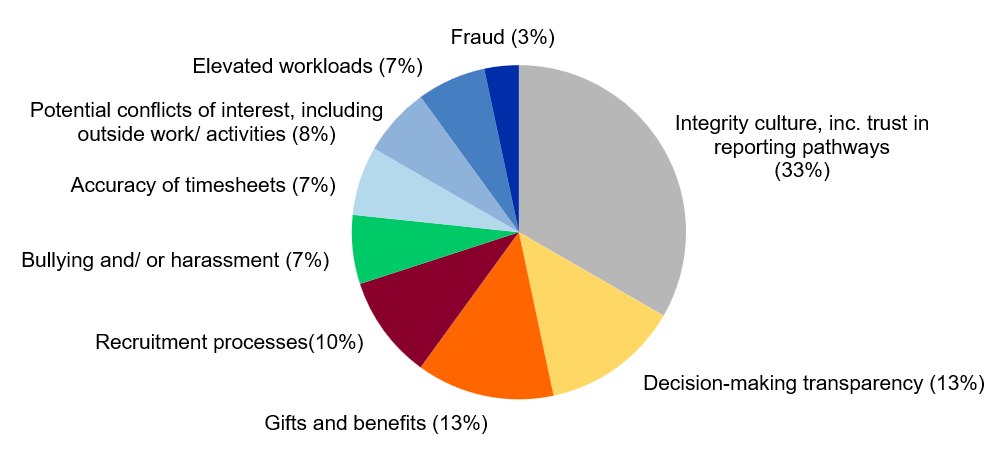
2.19 Individual contacts with the Integrity Advisor may include discussion of multiple integrity related topics. In 2025–26, topics related to integrity culture represented the highest number of queries and included discussion of behaviours perceived to be not in line with ANAO and APS values, fear of speaking up, and trust in reporting pathways.
2.20 While staff retain responsibility for reporting integrity matters, trends and emerging integrity vulnerabilities identified through Integrity Advisor queries are regularly communicated to the ANAO Executive to inform monitoring and response activities. In 2025–26, this included:
- consultation on in-flight projects or reviews to ensure integrity perspectives are considered;
- quarterly thematic discussions with the Auditor-General; and
- through integrity reporting to EBOM.
Harassment Contact Officers
2.21 ANAO staff can additionally seek support and guidance from Harassment Contact Officers (HCOs). HCOs are ANAO officers who are a supportive and informed point of contact for employees for a range of matters, including harassment, bullying or discrimination related concerns. HCOs do not act as a mediator or investigator; however, offer confidential support, information and guidance on ANAO policies, procedures and available support mechanisms.
2.22 Nil integrity related matters were raised with the HCOs in 2025–26 (2024–25: nil).
2.23 Several factors may contribute to lower staff engagement with HCOs, in addition to the reporting pathway challenges outlined above. Other factors considered include the visibility of HCOs in integrity and wellbeing activities and communications, and the potential impact of the name transition from Diversity and Inclusion Officers to HCOs under the Enterprise Agreement 2024–27.
2.24 Notably, the ANAO’s enhanced focus on wellbeing, including prevention and early intervention during 2025–26 increased availability of a range of staff support, including a broader range of wellbeing resources, alongside monthly onsite access to EAP counsellors. Utilisation of EAP services (both onsite and virtually) increased to 12.5 per cent2 (2024–25: 9.5 per cent). Positively, this may suggest a maturing culture in which seeking support is increasingly viewed as a normal and proactive part of maintaining wellbeing and alongside the ANAO’s prevention and proactive issue management focus, potentially reducing HCO enquiries.
HR Advisory team support for people matters
2.25 The ANAO’s HR Advisory team provides advice to the Executive, managers and staff on a range of people matters, including matters related to flexible working arrangements, and balancing team workloads and wellbeing.
2.26 Proactive monitoring and support from the HR Advisory team is aimed at preventing matters from developing into formal cases. Regular Group Executive Director (GEDs) discussion on core people metrics and HR data, as well as the introduction of a HR Workforce dashboard providing real-time insights, has supported early visibility of integrity-related people risks. Complemented by an increase in managers engaging with the HR Advisory team earlier to seek support for employees before issues escalate, it has supported a reduction in the number of formal case matters during 2025–26, contributing to an overall de-escalation in employee relations matters.
2.27 In 2025–26, employee wellbeing, workforce sustainability, and succession planning were key areas of identified risk. Wellbeing-related matters remained the largest proportion of the ANAO’s caseload, with cases increasingly complex and often requiring ongoing management over extended periods. Managers frequently sought guidance on enabling workplace flexibility arrangements, including remote work and managing peak workload demands across teams, as well as support for employee wellbeing matters related to mental health and ongoing medical conditions, particularly where leave entitlements had been exhausted. Strengthening succession planning will be a key focus of the forward People Strategy, supported through 2026-27 workforce planning activities, which will also consider effective workload management and wellbeing impacts.
2.28 Despite improvement in employee experience indicators across most groups, workforce capability, retention of high-performing staff, and access to meaningful development opportunities remain areas of risk. To support workforce agility, career development and retention in a constrained fiscal environment, the ANAO introduced a short-term mobility register pilot, enabling staff to build skills and experience while addressing temporary capability needs across the organisation. Opportunities in 2025–26 ranged from two weeks to six months. The ANAO will continue to strengthen its focus on purposeful mobility and identifying barriers that may be perceived to impact development and career opportunities in 2026-27.
2.29 To support consistent and effective people management, the ANAO updated a range of HR policies, guidelines and factsheets throughout 2025–26. These updates reinforced expectations for leadership, behaviours and culture, clarifying individual responsibilities and alignment with ANAO values. This included implementing the SES Performance Leadership Policy, aligned with the APSC SES Performance Leadership Framework, to emphasise behavioural expectations alongside delivery.
2.30 Management capability-building activities further supported managers and supervisors, including learning sessions on holding effective performance conversations, expectation setting, coaching and developing staff, supporting a neurodiverse workforce, and promoting employee wellbeing and resilience.
Fraud and Corruption
2.31 Monitoring fraud and corruption is vital to protecting public funds and services, maintaining trust, and ensuring ethical conduct across sectors. The ANAO enforces a zero-tolerance approach, taking all reasonable steps to prevent, detect, and respond to fraud and corruption. Regular monitoring helps identify and address non-compliant or illegal behaviour, prevent recurrence, and reinforce accountability by demonstrating that employees and contractors are held responsible for their actions.
2.32 In 2025–26, staff reported five instances of potential fraud or corruption (2023–24: three). The five potential instances were reported via the six-monthly compliance survey, assessed in line with ANAO policy, and resulted in no incidents of fraud or corruption being identified. No investigations were in progress as at 30 June 2026.
Disclosures under the Public Interest Disclosure (PID) Scheme
2.33 Changes to the number of public interest disclosures between years may indicate broader integrity concerns within an agency. Where themes occur, it may highlight the need for reformed integrity practices in relation to that area.
2.34 Nil PIDs were received by ANAO Authorised Officers in 2025–26 (2024–25: seven). Considered alongside the 2024 Commonwealth Integrity Survey results, the 2026 APS census results in table 2.3 may suggest under-reporting of suspected corrupt conduct, potentially influenced by staff confidence in available reporting processes and associated safeguards against detrimental action.
Table 2.3: 2026 ANAO Census results: corruption
|
Corruption |
2026 |
2025 |
2024a |
|
Excluding behaviour reported to you as part of your duties, in the last 12 months have you observed a public official in your agency engaging in behaviour that you would consider to be viewed as corruption? |
Yes: 2% (8 staff) No: 94% (362 staff) Not sure: 4% (15 staff) Would prefer not to answer: 0 |
Yes: 1% (4 staff) No: 97% (423 staff) Not sure: 1% (5 staff) Would prefer not to answer: 1% (4 staff) |
Yes: 2% (8 staff) No: 96% (384 staff) Not sure: 1% (4 staff) Would prefer not to answer: 1% (4 staff) |
|
Did you report the potentially corrupt behaviour? |
The response for this question was not provided in the survey results for anonymity reasons |
||
Note a: The 2024 APS Census included responses from 400 ANAO staff (93 per cent response rate).
2.35 To ensure ANAO staff are aware of the PID requirements, their obligations, and pathways to report fraud and corruption, Authorised Officers provided annual refresher training via service group technical updates and business group meetings to all ANAO staff.
Misuse of credit cards
2.36 Credit cards present agencies with options to purchase goods and services with increased efficiency, including reduced administrative costs and increased flexibility, particularly where official travel is required. However, credit card use can expose agencies to risks of inappropriate or unauthorised expenditure, and controls to manage risks, including monitoring of use, are essential.
2.37 In 2025–26, there were 11 instances of misuse of ANAO corporate credit cards identified (2024–25: 13). A slight decrease compared to the prior year and overall, these instances represent less than 0.1 per cent of total credit card transactions.
2.38 Each instance was investigated, with all incidents found to be inadvertent. The Chief Finance Officer contacted those staff who misused their credit card, reminded them of their obligations when using the card, and ensured that the amounts associated with the misuse of the credit cards were repaid into the ANAO’s bank account. All instances were reported to the EBOM.
Conflicts of interest
2.39 Conflicts of interest and independence are managed by intersecting ANAO processes. Proactive conflict of interest management supports ethical conduct, mitigates corruption risks and promotes fair and objective decision-making. As part of its proactive integrity culture, the ANAO supports all staff to identify, declare, mitigate and manage potential, perceived and actual conflicts of interest in their work, including threats to independence for auditors.
Personal interest disclosures
2.40 The Auditor-General, SES officers acting for more than three months, and other key employees with comparable responsibilities (as determined by the Auditor-General) must annually provide a written declaration of their own and immediate family interests that may give rise to a real or apparent conflicts of interest, consistent with section 13 of the Public Service Act 1999. Staff are also expected to monitor and promptly declare any changes in interests, roles or responsibilities throughout the year.
2.41 In September 2025, all 35 required SES officers and seven other key personnel completed declarations for review by the Deputy Auditor-General. Staff self-identified relevant interests and proposed management strategies for approval, with no potential conflicts requiring escalation for further management.
Independence declarations
2.42 Independence in audit work is managed through the ANAO independence policy, set out in the ANAO Audit Manual. The Auditor-General, Deputy Auditor-General, ANAO audit staff and in-house audit contractors must complete a declaration of independence before participating in audit, review, assurance or information report work. Any actual, perceived or potential threats are declared to the responsible Engagement Executive and managed through appropriate safeguards, such as removing staff from specific audit work or applying additional review.
2.43 The ANAO monitors compliance with independence requirements through its quality assurance program, with results reported to the responsible Engagement Executive, EBOM and the Quality Committee, and published in the annual Audit Quality Report.
2.44 While audit service providers manage staff independence through their own internal processes, firms must also confirm audit-specific independence compliance with legislative, ANAO policy and APES 110 requirements, and obtain ANAO approval before undertaking non-assurance services for entities audited on the ANAO’s behalf.
Gifts and benefits
2.45 Maintaining public trust requires ANAO staff to uphold high standards of integrity, accountability and independence. This includes avoiding gifts, benefits, hospitality or bribes that could influence, or be perceived to influence, their work. Consistent with the Auditor-General’s Instructions and Financial Management Procedures, offers should generally be declined, with limited exceptions, such as cultural gifts received from international delegations or hosts.
2.46 To support transparency, staff must report all gifts and benefits offered, whether accepted or refused, within 10 business days via the gifts and benefits register. Approval from the Deputy Auditor-General or COO is required to retain any gift or benefit. The register, including gifts and benefits offered to the Auditor-General, is published monthly on the ANAO website, while the Auditor-General’s official expenses are voluntarily disclosed every six months.
Table 2.4: Gifts and benefits reported
|
Treatment |
2025–26 |
2024–25 |
|
Retained |
173 |
114 |
|
Declined at point of offer |
8 |
16 |
|
Returned to sender |
0 |
2 |
|
Total |
181a |
132 |
Note a: Variations between this report and published ANAO website data reflect reporting methodology. This report captures individual gift items, whereas website reporting may consolidate gifts provided to multiple staff or multiple items received on the same occasion.
2.47 Of the 173 gifts and benefits retained, 136 were gifts or souvenirs from peer audit office delegations, received during international conferences, official visits, and capacity building activities. These items were accepted as cultural gifts or were provided to all attendees or presenters at conferences. Other items retained included items that provided benefits to the ANAO, such as attendance at sector events relevant to ANAO work; and low value, unsolicited items, such as conference refreshments or collateral.
2.48 While no integrity risks were identified in reported gifts and benefits, the ANAO is progressing a review of its gifts and benefits policy. The review includes assessment against the APSC’s Gifts and Benefits Guidance to ensure ANAO processes meet or exceed the minimum standard requirement. There is particular focus on improving clarity on reporting requirements and to reduce overreporting of items that fall outside requirements (e.g. hospitality provided as part of paid conference attendance).
Outside employment or activities
2.49 The ANAO supports staff participation in external employment, professional activities and volunteer work where these activities do not conflict with the performance of their official duties. Such activities may provide broader professional experience and contribute to both individual development and organisational capability.
2.50 To support integrity, accountability and transparency, ANAO staff must obtain prior approval before undertaking outside employment or other external activities, unless specifically exempt under policy. Approval is sought from the Deputy Auditor-General to ensure potential conflicts of interest are appropriately managed.
2.51 As at 30 June 2026, the ANAO had 21 approvals recorded for staff undertaking outside employment or activities. This is a decrease compared to 2024–25 (34), with approvals including voluntary activities with state or territory emergency services or community organisation, defence reserve service, and casual work in private businesses.
2.52 The decrease does not indicate an integrity risk. This considers the ANAO reviewed its outside employment and conflict of interest processes for non-SES staff and incorporated related requirements into new starter materials to support the early identification and assessment of potential conflicts and outside employment arrangement, a lower rate of recruitment in 2025-26, and a substantive number of approvals in 2024-25 related to staff working for Australian Electoral Commission during in the 2025 federal election.
Culture
2.53 The culture pillar considers how the ANAO builds integrity awareness and capability and fosters a pro-integrity environment. Our organisational culture shapes behaviour, ethical decision-making, tolerance of misconduct and willingness to speak up, and is reinforced through values-driven leadership.
Values and behaviours
2.54 The ANAO reinforces expected behaviours through clear leadership commitment and tone from the top. Leaders are expected to model integrity, respect and accountability in line with the ANAO and APS Values, DRIVE framework, and Code of Conduct. This is further reinforced through regular all-staff communications reinforcing that how work is done is as important as what is delivered.
2.55 Table 2.5 brings together APS Census results on the ANAO’s integrity culture. While results remain consistently positive overall, responses indicate some variation in how integrity-related behaviours are experienced across workgroups.
Table 2.5: Census results related to integrity culture
|
Question |
2026 result |
2025 Result |
2024 result |
|
Working at the ANAO |
|||
|
The culture in my agency supports people to act with integrity |
87% positive (335 staff) 8% neutral (31 staff) 5% negative (19 staff) |
88% positive (384 staff) 8% neutral (35 staff) 4% negative (17 staff) |
88% positive (352 staff) 6% neutral (24 staff) 6% negative (24 staff) |
|
Staff in the ANAO act in accordance with the ANAO values and behaviours |
89% positive (343 staff) 9% neutral (34 staff) 2% negative (8 staff) |
87% positive (384 staff) 10% neutral (44 staff) 3% negative (13 staff) |
89% positive (356 staff) 8% neutral (32 staff) 3% negative (12 staff) |
|
Questions related to ANAO Integrity Principles |
|||
|
The people in my workgroup demonstrate stewardship |
77% positive (297 staff) 18% neutral (69 staff) 5% negative (19 staff) |
77% positive (336 staff) 17% neutral (74 staff) 6% negative (26 staff) |
83% positive (332 staff) 12% neutral (48 staff) 5% negative (30 staff) |
|
My supervisor invites a range of views, including different to their own |
86% positive (331 staff) 9% neutral (35 staff) 5% negative (19 staff) |
84% positive (366 staff) 10% neutral (44 staff) 6% negative (26 staff) |
85% positive (340 staff) 8% neutral (32 staff) 7% negative (28 staff) |
|
I receive the respect I deserve from my colleagues at work |
81% positive (312 staff) 14% neutral (54 staff) 5% negative (19 staff) |
81% positive (353 staff) 14% neutral (61 staff) 5% negative (17 staff) |
82% positive (328 staff) 15% neutral (60 staff) 3% negative (12 staff) |
|
188 |
168 |
168 |
168 |
Formal reports and ANAO investigations
2.56 Effective monitoring and response to Code of Conduct, bullying, harassment and discrimination matters helps address inappropriate behaviour, prevent recurrence, and reinforces accountability for breaches of the Code and ANAO expectations. The ANAO has a zero-tolerance approach for behaviours that do not align with the ANAO values and APS Code of Conduct, which is consistently reiterated through staff communications. Where allegations are made, each claim is investigated.
Table 2.6: 2025–26 formal reports and ANAO investigations
|
Type |
2025–26 |
2024–25 |
2023–24 |
Change |
|
Bullying, harassment reports |
4 |
2 |
3 |
▲ |
|
Discrimination reports |
0 |
0 |
1 |
- |
|
Code of Conduct investigations |
0 |
4 |
0 |
▼ |
2.57 While no new Code of Conduct investigations commenced in 2025-26, four investigations that commenced in 2024–25 were finalised. These cases related to staff not behaving in accordance with ANAO values, APS Code of Conduct, and non-compliance with ANAO corporate policies and procedures. Investigation outcomes included sanctions for three employees and termination of employment of one employee. The sanctioned cases demonstrate how errors in judgement (for example, cutting corners during periods of stress/ high workload) can raise integrity concerns, and the importance of modelling leadership accountability.
2.58 Following investigation, the four bullying and/or harassment matters reported in 2025–26 were managed though intervention methods such as counselling, mediation and/ or giving formal direction.
2.59 The ANAO additionally considers the APS census results in assessing staff application of expected integrity behaviours. The 2026 APS Census results related to perceived bullying, harassment and discrimination indicate that incidents for ANAO staff are slightly below the APS rate, however, any incidence remains unacceptable.
Table 2.7: 2026 ANAO Census results – discrimination, bullying and harassment
|
|
2026 results |
2025 Results |
2024 Results |
|
Discrimination |
|||
|
During the last 12 months and in the course of your employment, have you experienced discrimination on the basis of your background or a personal characteristic? |
Yes: 6% (23 staff) No: 94% (362 staff) |
Yes: 6% (26 staff) No: 94% (410 staff) |
Yes: 7% (28 staff) No: 93% (372 staff) |
|
Did this discrimination occur in your current agency? |
Yes: 86% (20 staff) No: 14% (3 staff) |
Yes: 92% (24 staff) No: 8% (2 staff) |
Yes: 85% (24 staff) No: 15% (4 staff) |
|
Did you report the discrimination? |
I reported it: 29% (7 staff) It was reported by someone else: 0 I did not report: 71 % (16 staff) |
I reported it: 25% (7 staff) It was reported by someone else: 0 I did not report: 75% (19 staff) |
Not included in 2024 census |
|
Bullying and harassment |
|
||
|
During the last 12 months, have you been subjected to harassment or bullying in your current workplace? |
Yes: 7% (27 staff) No: 88% (339 staff) Not sure: 5% (19 staff) |
Yes: 7% (31 staff) No: 89% (388 staff) Not sure: 4% (17 staff) |
Yes: 6% (24 staff) No: 89% (356 staff) Not sure: 5% (20 staff) |
|
Types of harassment or bullying experienced (3 highest responses): |
Verbal abuse: 56% Work task interference: 44% Inappropriate or unfair workplace policy application: 32% |
Interference with work tasks: 52% Verbal abuse: 48% Deliberate exclusion from work-related activities: 34% |
Interference with work tasks: 42% Inappropriate or unfair application of work policies or rules: 33% Verbal abuse: 25% |
|
Did you report the harassment or bullying experienced? |
I reported the behaviour in accordance with my agency’s policies and procedures: 28% (8 staff) It was reported by someone else: 4% (1 staff) I did not report the behaviour: 68% (18 staff) |
I reported the behaviour in accordance with my agency’s policies and procedures: 45% (14 staff) It was reported by someone else: 3% (1 staff) I did not report the behaviour: 52% (16 staff) |
I reported the behaviour in accordance with my agency’s policies and procedures: 17% (4 staff) It was reported by someone else: 8% (2 staff) I did not report the behaviour: 75% (18 staff) |
|
181 |
166 |
166 |
168 |
2.60 The ANAO introduced pulse surveys through the 2025–26 Census Action Plan to provide real-time insights into integrity culture, leadership and wellbeing. The March 2026 Pulse Survey showed generally positive perceptions of supervisor and SES leadership, team support and psychological safety. Areas for ongoing attention included awareness of Census Action Plan progress, career development and progression, workload and wellbeing pressures, and engagement with diversity and inclusion initiatives. Results are informing ongoing actions to further strengthen leadership capability, psychological safety and wellbeing.
Integrity awareness – speak up culture
2.61 A range of integrity awareness activities were delivered in 2025–26 to strengthen the ANAO’s pro-integrity and speak-up culture. Integrity Awareness Week remained the ANAO’s flagship initiative, featuring an executive-led dialogue on integrity in practice that reinforced the Integrity Framework, ANAO values, and individual and collective responsibility for integrity. Discussion themes highlighted the importance of trust, psychological safety and leadership behaviour in supporting staff confidence to raise concerns, particularly during periods of pressure, change and uncertainty.
2.62 Additionally, targeted speak-up culture activities, including facilitated discussions using the Australian Public Service Commission’s (APSC) 4Cs resources, further supported staff reflection on individual and manager responsibilities.
2.63 In the 2026 APS Census results, staff generally reported support for speak-up behaviours within their immediate workgroups, including feeling comfortable confirming correct work practices and in valuing one another as individuals. However, the results also indicate that confidence in speaking up is lower than expected in parts of the ANAO, which is of particular concern as an integrity agency. Considered alongside evidence suggesting that some inappropriate behaviour goes unreported, this highlights the need for continued efforts to strengthen psychological safety and confidence in raising concerns without fear of adverse consequences.
Table 2.8: Census results related to Speak Up Culture
|
|
2026 Results |
2025 results |
|
|
People in my work group are comfortable checking with each other if they have questions about the right way to do something. |
84% positive (323 staff) 12% neutral (46 staff) 4% negative (15 staff) |
89% positive (388 staff) 11% neutral or negative (48 staff) |
|
|
The people in my workgroup value others’ individual skills and talents. |
80% positive (309 staff) 13% neutral (51 staff) 6% negative (24 staff) |
81% positive (353 staff) 12% neutral (53 staff) 7% negative (30 staff) |
|
|
The people in my work group are able to bring up problems and tough issues. |
76% positive (293 staff) 15% neutral (58 staff) 9% negative (34 staff) |
79% positive (344 staff) 13% neutral (57 staff) 8% negative (35 staff) |
|
|
If you make a mistake in my workgroup, it tends to be held against you. |
65% positivea (250 staff) 20% neutral (77 staff) 15% negative (58 staff) |
63% positivea (275 staff) 23% neutral (100 staff) 14% negative (61 staff) |
|
|
200 |
180 |
180 |
|
Note a: Question is reverse scored. % of respondents who disagreed or strongly disagreed with the statement.
Exit survey results
2.64 Exit surveys provide an important opportunity to identify integrity concerns, as departing staff may feel more able to raise issues through exit processes. However, a desire to preserve workplace relationships or future employment opportunities with the ANAO may also result in lower participation rates and underreporting of concerns. In 2025–26, 34 of 65 departing staff completed an exit survey, a response rate of 52.3 per cent, down from 66.3 per cent in 2024–25. For exit survey respondents, the main reasons provided for separation were promotion or transfer to another government agency (22 per cent), limited growth opportunities (17 per cent), and dissatisfaction with management or leadership (11 per cent).
2.65 Recognising its size and fiscal constraints, the ANAO views departures for promotion and broader career opportunities positively. However, exiting staff feedback also identified concerns about leadership, psychological safety, organisational culture, and perceived fairness and transparency of decisions related to recruitment, career progression and development opportunities.
2.66 With a tighter fiscal environment, internal mobility and development were a focus in 2025–26, including the establishment of the internal mobility register pilot. However, staff feedback suggests support for mobility opportunities varies across the ANAO, with reports of staff not being released for opportunities or being discouraged from applying due to delivery pressures in a resource-constrained environment. Further work is required to strengthen understanding of the benefits of purposeful mobility and to achieve more consistent access across the ANAO.
2.67 Leadership capability was also a focus for uplift in 2025–26. This included refreshing the SES performance framework and delivering leadership learning activities, such as the EL2 conference, which reinforced expectations for courageous and accountable leadership, role-modelling expected behaviours, and creating psychologically safe environments where staff feel able to speak up. The impact of these initiatives will be realised over time as they are embedded in leadership practice and workplace culture.
Awards and recognition
2.68 The ANAO awards system recognises and rewards people whose behaviours and contributions align with the ANAO values of integrity, excellence, and respect, and assist the ANAO to achieve its objectives. This includes formal ANAO awards such as the Auditor-General’s Australia Day Awards and the Auditor-General’s Outstanding Achievement Awards.
2.69 In 2025–26, award recipients included staff who demonstrated ANAO integrity principles and professionalism with a focus on commitment to assisting staff and colleagues.
Systems
2.70 The systems pillar considers the controls, processes and tools that help staff meet integrity expectations and support the ANAO to manage operational, people, security, procurement and performance risks.
Probation and Performance management
2.71 The HR Advisory team supports managers to apply the performance management framework, with a focus on effective performance management from commencement with the ANAO.
APS and EL staff
2.72 In 2025–26, 14 APS staff undertook a probation period (excluding graduates). Probation status as at 30 June 2026 is provided in table 2.9.
Table 2.9: Probation status
|
Probation status |
30 June 2026 |
|
Successful completion of probation |
9 |
|
On active probation |
3 |
|
Departed during probation period |
2 |
|
Total |
14 |
2.73 High completion rates for performance agreements and regular performance conversations indicate strong alignment between employees and managers on deliverables, behaviours, development needs and career goals. Regular review is an important integrity safeguard, supporting early identification and management of risks such as misconduct, fraud and underperformance, while reinforcing accountability for both outcomes and behaviours.
2.74 The ANAO performance management cycle runs from 1 November to 31 October and is mandatory for most employees3. For the cycle ending 31 October 2025, 378 staff had performance agreements in place, with 99 percent of staff assessed as meeting expectations or above.
Table 2.10: Performance ratings for performance cycle ended 31 October 2025.
|
|
Performance rating |
||||
|
Classification broadband |
Substantially exceeds expectations |
Exceeds expectations |
Meeting expectations |
Not meeting expectations |
Total |
|
ANAO bands 4 and 5 (EL1 and EL2) |
21 |
70 |
96 |
0 |
187 |
|
ANAO bands 1 to 3 (APS 1-6) |
12 |
64 |
112 |
3 |
191 |
|
Total |
33 |
134 |
208 |
3 |
378 |
|
Proportion of total eligible staff |
8.73% |
35.45% |
55.03% |
0.79% |
100% |
|
152 |
107 |
105 |
105 |
105 |
58 |
2.75 Early identification and timely management of performance and behavioural concerns are critical to addressing underperformance. Managers are supported to set clear expectations, hold regular performance conversations and intervene before formal assessment stages, complemented by active HR monitoring through GED and SES discussions. As at 30 June 2026, four underperformance cases were being monitored.
2.76 In 2026–27, the ANAO will release a new Performance Management Policy and Managing for Improved Performance Guide to provide managers with clearer, practical guidance to manage performance conversations and processes in a timely, consistent and effective way.
SES performance
2.77 Commencing November 2025, the ANAO implemented the refreshed SES Performance Leadership Framework. The framework aligns SES performance expectations with ANAO and APS values, the Code of Conduct, and the Secretaries’ Charter of Leadership behaviours (DRIVE model).
2.78 Leadership behaviours became an explicit consideration in SES performance discussions, recognising that how results are achieved is as important as what is achieved. This supports accountability for fostering inclusive, respectful and high-performing workplaces that reflect the ANAO’s values of integrity, respect and excellence.
2.79 Reflecting employee perceptions of SES behaviours, positively, 2026 census results saw the SES index score rise 2 percentage points to 77. Areas of strength included SES managers creating an effective delivery environment, encouraging innovation and creativity, and promoting cooperation within and between agencies. However, variation occurred in results related to the SES working as a team, and in effectively communicating direction and priorities for the ANAO. These areas will remain an ongoing focus for the ANAO.
Completion of mandatory learning and development
2.80 The ANAO’s mandatory training program supports integrity and public trust by ensuring staff understand the ethical standards, legal obligations and public sector expectations in delivery of their work. It also reinforces the ANAO’s commitment to integrity, accountability and transparency, and supports ongoing uplift in integrity awareness and capability.
2.81 On commencement, all staff complete the ANAO Induction Learning Pathway, including mandatory eLearning modules, to support lawful, ethical and safe work practices. New starters are required to complete mandatory training within one month of commencing at the ANAO, with annual refresher training required for all staff.
Table 2.11: ANAO mandatory training program overview
|
All staff (commencement and annual refresher) |
Additional new starter modules |
Cohort Specific |
|
Values and Code of Conduct Work Health and Safety Protective Security Performance Management Introduction to Risk in the Commonwealth Diversity and Inclusion |
ANAO Induction Records Management E-Hive Introduction APS Induction – Integrity in the Australian Public Service APS Fraud and Corruption AI in Government fundamentals |
First Nations Cultural Competency Privileged User Training – assigned to staff with privileged system access |
2.82 The ANAO manages compliance through established communications, staff tracking and follow-up processes, including commencement and refresher reminders, staff module access via the Learning Management System, performance management communications, biannual compliance surveys, monthly HR Workforce Dashboard reporting to the Executive, and individual follow-up where required.
Workload management
2.83 The 2019 IntoSAINT assessment and prior year reporting has identified elevated workloads, reliance on external expertise and outsourcing arrangements as integrity vulnerability-enhancing factors for the ANAO. Considered alongside staff leave usage and accrual patterns, these factors may indicate emerging integrity risks associated with workforce sustainability and effective performance management and support.
Table 2.12: 2025 census results – workgroup capability and capacity
|
Question |
2026 responses |
2025 Responses |
2024 Responses |
|
What best describes your current workload? (Relates to ‘Elevated workloads’ in the IntoSAINT assessment) |
17% well above capacity (65 staff) 42% slightly above capacity (162 staff) |
17% well above capacity (74 staff) 40% slightly above capacity (174 staff) |
23% well above capacity (91 staff) 38% slightly above capacity (151 staff) |
|
My workgroup has the appropriate skills, capabilities and knowledge to perform well (Relates to ‘Need for external expertise’ in the IntoSAINT assessment) |
76% positive (293 staff) 14% neutral (54 staff) 10% negative (38 staff) |
77% positive (336 staff) 10% neutral (44 staff) 14% negative (61 staff) |
76% positive (306 staff) 10% neutral (41 staff) 13% negative (53 staff) |
|
My workgroup has the tools and resources we need to perform well (Relates to ‘Outsourcing’ in the IntoSAINT assessment) |
55% positive (212 staff) 25% neutral (96 staff) 19% negative (73 staff) |
58% positive (253 staff) 22% neutral (96 staff) 20% negative (87 staff) |
63% positive (252 staff) 19% neutral (76 staff) 18% negative (72 staff) |
2.84 The ANAO’s 2019 IntoSAINT assessment report4 linked elevated workloads as a risk to effective performance management. Comparatively, census results between 2024 and 2026 indicate staff perceptions of workload remain similar. While this continues to be an area closely monitored, positively, 2026 census responses related to immediate supervisors improved, with all questions responded to with an 80 per cent positive rating or higher. There were also slight positive increases in responses to questions on provision of supervisor feedback to improve performance (80 per cent) and supervisor investment in staff development (82 per cent). These responses suggest that despite consistent reporting of elevated workloads, performance management and support has not been compromised.
2.85 There has been a continued decline in positive staff perceptions that their work group has the resources needed to deliver its work. In previous years, analysis linked this to higher turnover rates, and reliance on external expertise and outsourcing, with indicators suggesting some staff perceive external resources were being prioritised over investment in building internal capability. In 2025–2026, turnover decreased to 12 per cent alongside investment in building internal capability and mobility opportunities, suggesting other factors may now be contributing to these perceptions. Other indicators point to competing priorities, weakness in planning processes, limited audit cost visibility and inefficiencies in decision-making, including multiple approval layers and delegations perceived as unnecessarily high. The ANAO will run pulse surveys again in 2026–27, and staff perceptions related to the effectiveness of activity prioritisation, planning, and decision making may be areas for further investigation.
2.86 High overtime, flex or TOIL balances may indicate excessive workload pressures, ineffective working, or performance concerns, with potential integrity implications. Accumulated flex balances across ANAO groups will vary based on peak work periods. Managing excess balances supports sustainable workloads, reduces stress and burnout risk, and helps maintain effective supervision and performance.
2.87 As at 30 June 2026, one APS employee had exceeded flex thresholds, and 24 employees had accrued more than 40 days of annual leave. The HR Advisory team is supporting managers to reduce these balances sustainably. TOIL for executive level employees (EL1 and EL2) is currently managed in agreement between managers and employees in line with Enterprise Agreement and ANAO policy. While current system constraints impede TOIL reporting comparable to flex leave, staff feedback indicates there may be inconsistent policy understanding and application occurring across groups and between teams. This may be an area for further investigation.
Protective security
2.88 Under the Protective Security Policy Framework (PSPF) and aligned with the Public Governance, Performance and Accountability Act 2013 (PGPA Act), the ANAO reports annually on its protective security maturity. In October 2025, it self-assessed its systems as effective, with the latest Essential Eight maturity assessment also assigning an effective5 rating
2.89 The current threat environment remains high, reflecting a complex risk landscape shaped by emerging technologies, deteriorating international conditions and supply chain risks. With a low tolerance for security risks, the ANAO continues to strengthen the effectiveness of its security controls through governance oversight, pre-employment screening, security clearances, access controls, monitoring, mandatory training and ongoing staff communications. The ANAO is additionally conducting an enterprise security risk assessment that considers the PSPF and threat environment, alongside an assessment of ICT controls alignment with the Information Security Manual.
2.90 ANAO staff are aware of, attentive to, and know where to report security threats, evidenced by the majority of security incidents being self-reported and staff reporting unusual situations.
2.91 In 2025–26, the ANAO progressed further security improvements through its Digital Strategy, including cyber security enhancements and strengthened governance for emerging technologies such as artificial intelligence. This supports and enables the ANAO to strengthen integrity through the secure, ethical and accountable use of information and technology.
Procurement
2.92 Commonwealth entities must comply with the Commonwealth Procurement Rules, including reporting contracts over $10,000 on AusTender within 42 days. Monitoring this requirement supports compliance, record keeping and early identification of procurement process issues.
2.93 In 2025–26, the ANAO registered 55 contracts and 47 variations within the 42-day reporting timeframe. Three contracts and five variations were reported outside the required timeframe, inclusive of two technical breaches caused by a known AusTender system limitation. The ANAO is seeking to eliminate late reporting through daily procurement activity reviews, with all instances reported to EBOM for oversight. No procurement complaints were received in 2025–26.
2.94 Work also progressed to strengthen and mature procurement and contract management practices, including clearer governance and accountabilities, improved early engagement, more consistent planning and contract management discipline, and development of a Procurement and Contract Management Framework, noting some strategic initiatives were affected by resourcing constraints.
3. 2025–26 maturity assessment
Assessing the maturity of the ANAO’s Integrity Framework offers a structured evaluation of our capabilities, processes, and systems to identify strengths and weaknesses, benchmark against best practices, and guide strategic improvements. Drawing on the evidence presented in section 2, this section outlines ANAO integrity maturity considerations and actions taken in 2025–26.
3.1 Throughout 2025–26, the ANAO continued to strengthen the processes and controls that support the ANAO Integrity Framework. In October 2025, the ANAO undertook its first self-assessment against the Commonwealth Integrity Maturity Framework, building on insights from the 2019 IntoSAINT baseline assessment. The self-assessment considered the ANAO’s maturity against eight integrity principles drawn from key Commonwealth laws, policies and procedures.
3.2 The 2025 self-assessment concluded that the ANAO has a mature, well-embedded and proactive approach to integrity, underpinned by strong leadership commitment, clear values-based expectations, robust controls, and proactive monitoring. To assess maturity, the analysis considered environmental factors, the results of other, regularly undertaken maturity assessments (such as enterprise risk and PSPF assessments), issues raised through ANAO governance committee discussion, and integrity metrics analysis, including the ANAO APS Census results.
3.3 Supporting this assessment, insights from the 2026 Integrity Awareness Week executive panel discussion demonstrated maturity in staff understanding and application of integrity principles. The discussion reinforced integrity as a lived culture that is demonstrated through everyday behaviours, sound judgement and accountability. Key themes included the importance of trust and psychological safety, particularly as ethical perfection is impossible; in enabling the courage to speak up and learn from mistakes; and the need to balance fearless, evidence-based work with respect, curiosity and constructive relationships — both internally and with audited entities. Integrity was also framed as a shared responsibility, supported by clear frameworks, open communication and ongoing reflection.
3.4 The maturity assessment also identified opportunities to further strengthen ANAO integrity practices. This included enhancements to integrity awareness and communications across the employee lifecycle, maintaining a continued focus on integrity risks associated with sustained, elevated workloads, and more structured contract management and contract risk oversight practices across the contract lifecycle.
3.5 Actions in 2025-26 to address these opportunities included:
- enhancements to integrity awareness and communication - delivered through Integrity Advisor communications on public sector developments, development of staff integrity testimonials, facilitated speak-up culture learning sessions, and refreshed integrity resources available via the ANAO intranet, including release of the new APS Integrity learning module.
- continued focus on integrity risks associated with sustained, elevated workloads – through EBOM and subcommittee oversight of time-charging, wellbeing, WHS and quality indicators, alongside resource alignment and the sequencing of priorities and strategic initiatives within workforce and financial constraints.
- implementing systematic contract management and contract risk oversight practices – through strengthening procurement governance and engagement practices, development of guidance materials, improving accountability and responsibility clarity, and supporting consistency in planning and contract management across the ANAO. Further supporting contract management, the ANAO continued developing its Procurement and Contract Management Framework in 2025-26, a key initiative to strengthen procurement and contract management maturity. The framework is expected to improve governance, clarify accountabilities, support better planning and contract management, and strengthen compliance with Commonwealth procurement requirements.
3.6 Integrity and ethics remain central to the ANAO’s mandate, operations and audit work, as reflected in the ANAO Corporate Plan 2026–27. In 2026–27, the ANAO will continue to strengthen integrity maturity across its frameworks, processes and capabilities, supporting independence, professionalism, high ethical standards and continuous improvement, aligned with the ANAO’s strategic priorities.
4. Conclusion
4.1 The ANAO is satisfied that integrity arrangements under the Integrity Framework are operating effectively. The report demonstrates effective governance, reporting and oversight arrangements are in place; complemented through proactive integrity awareness and capability-building activities, and generally effective systems and controls across key integrity risk areas.
4.2 Analysis of the 2025–26 integrity indicators indicate that the ANAO’s integrity vulnerabilities primarily relate to cultural factors. While the ANAO considers it has mature integrity systems and governance in place, the integrity system’s effectiveness depends on a culture that promotes psychological safety, ethical leadership, accountability, and confidence to speak up, ask questions, and raise concerns
4.3 This assessment considers:
- Accountability: The ANAO’s governance, reporting and oversight arrangements support transparency, reinforce responsibility for integrity outcomes and enable emerging risks to be identified and escalated through established channels.
- Culture: Staff continue to demonstrate a strong commitment to integrity and the ANAO values. However, indicators and qualitative insights also identify risks related to poor behaviours going unchallenged and/ or unreported, inconsistency in policy application, a perceived lack of fairness in decision-making, and distrust of some reporting mechanisms. These factors are detrimental to a pro-integrity, speak up culture that, if not addressed, could evolve into significant integrity matters.
- Systems: Core systems and controls remain effective, with targeted opportunities to strengthen workforce sustainability, performance management support, procurement and contract management, security controls and integrity capability.
4.4 The report identifies key areas requiring continued Executive focus. This includes strengthening staff confidence in reporting pathways and processes, enhancing psychological safety to embed a speak up culture, effective management of workloads, greater consistency in organisational policy application, and maturing procurement and contract management processes.
4.5 In 2026–27, the ANAO will continue to strengthen integrity maturity through risk-based strategies and plans that supports accountability, enables a pro-integrity culture and enhances the systems that enable staff to meet integrity expectations and deliver high-quality audit work. This work will occur through a range of corporate and group activities, including activities under the Corporate Plan, the Integrity Strategy and Plan 2026–27, and the People Strategy Action Plan 2026–27.
Footnotes
1 ACAG members include Auditors-General of all audit jurisdictions within Australia, New Zealand, Fiji and Papua New Guinea.
2 The reported EAP utilisation rate of 12.5 per cent is based on the number of EAP engagements relative to the number of staff eligible to access the service. As some individuals may use the EAP more than once, the figure should not be interpreted as the percentage of staff who accessed the EAP
3 Graduates, non-ongoing employees engaged for less than six months, employees on probation and casual employees are not required to participate in the ANAO Performance and Career Development program and have alternate processes to manage staff performance, including probation reporting.
4 IntoSAINT is a self-assessment methodology developed by the International Organisation of Supreme Audit Institutions (INTOSAI) and is designed for Supreme Audit Institutions (SAIs) to analyse integrity risks and assess the maturity of SAI integrity management systems. The 2019 assessment provides a baseline for ANAO integrity reporting.
5 An Essential Eight assessment evaluates an organization’s implementation of the eight baseline cybersecurity mitigation strategies developed by the Australian Signals Directorate (ASD) to protect against cyber threats. To achieve an effective rating, organisations must at minimum meet maturity level two requirements (maturity level zero through to maturity level three) for each Essential Eight component.