Browse our range of reports and publications including performance and financial statement audit reports, assurance review reports, information reports and annual reports.
Performance audit (Auditor-General Report No. 43 of 2012–13)
Published: Wednesday 12 June 2013
Published
The objective of the audit was to assess the efficiency and effectiveness of the establishment, implementation and administration of the general component of the Local Jobs stream of the Jobs Fund, with a particular focus on the establishment of program objectives and the extent to which approved grants have demonstrably contributed to the cost-effective achievement of those objectives.
Entity
Department of Education, Employment and Workplace Relations
Contact
Please direct enquiries relating to reports through our contact page.
Performance audit (Auditor-General Report No. 26 of 2013–14)
Published: Wednesday 23 April 2014
Published
The objective of the audit was to assess the effectiveness of the Department of Human Services' management of Medicare compliance audits.
Entity
Department of Human Services
Contact
Please direct enquiries relating to reports through our contact page.
Performance audit (Auditor-General Report No. 5 of 2010–11)
Published: Wednesday 15 September 2010
Published
The objective of the audit was to assess DoHA's effectiveness:
- in undertaking PIP program planning, program monitoring and review; and
- with Medicare Australia, in ensuring PIP program delivery to general practices and their medical practitioners.
In undertaking the audit, the ANAO considered the 12 incentives that comprised the PIP up to August 2009. The three most recently introduced incentives at the time of audit fieldwork, namely, Domestic Violence, GP Aged Care Access and eHealth incentives, were examined in greater detail and formed case studies to support audit analysis. The ANAO also sought views on the program administration from industry, including from general practices directly through an online survey.
With regard to accreditation of general practice, the audit scope did not include an assessment of the Standards nor the work of the bodies that undertake accreditation of general practices. The ANAO's focus on general practice accreditation related to DoHA's management of program entry criteria.
Entity
Department of Health and AgeingMedicare Australia
Performance audit (Auditor-General Report No. 5 of 2000–01)
Published: Wednesday 23 August 2000
Published
The ANAO undertook an audit of the framework and systems that Industry, Science and Resources had in place to prevent, control, monitor, detect and investigate fraud. The objective of the audit was to assess the effectiveness of these arrangements in relation to departmental administrative functions and program operations.
Entity
Department of Industry Science and Resources
Performance audit (Auditor-General Report No. 38 of 2013–14)
Published: Thursday 12 June 2014
Published
The objective of the audit was to assess the establishment of the National Offshore Petroleum Safety and Environmental Management Authority and the effectiveness of its regulatory function.
Entity
National Offshore Petroleum Safety and Environmental Management Authority
Contact
Please direct enquiries relating to reports through our contact page.
Performance audit (Auditor-General Report No. 5 of 2013–14)
Published: Tuesday 15 October 2013
Published
The objective of the audit was to assess the effectiveness of the Australian Taxation Office’s administration of the personal services income regime.
Entity
Australian Taxation Office
Contact
Please direct enquiries relating to reports through our contact page.
Performance audit (Auditor-General Report No. 53 of 2003–04)
Published: Thursday 17 June 2004
Published
The overall objective of the audit was to assess CrimTrac's progress in achieving the key deliverables it was established to provide, given that the agency had been in operation for some three years. The Australian Government provided $50 million for the implementation of CrimTrac, with an expectation that significant progress would be made within the first three years. The audit further examined whether CrimTrac had progressed the key deliverables efficiently and effectively, and whether the data either held by CrimTrac, or accessed through CrimTrac, for matching purposes is secure.
Entity
CrimTrac
Performance audit (Auditor-General Report No. 41 of 2001–02)
Published: Monday 15 April 2002
Published
New transactional banking arrangements for FMA agencies came into effect on 1 July 1999. The audit reviewed selected agencies' implementation and ongoing management of contractual banking arrangements; agencies' tendering for the procurement of banking services; and identified practises that have improved administrative arrangements. The audit examined Finance's role in planning and implementing the new arrangements as well as implementation in the Australian Customs Service (Customs) the Department of Transport and Regional Services (DTRS), the Department of Education, Science and Training (DEST), and the Department of Immigration and Multicultural and Indigenous Affairs (DIMIA).
Entity
Department of Finance and Administration
Performance audit (Auditor-General Report No. 40 of 2011–12)
Published: Friday 8 June 2012
Published
The objective of the audit was to assess the effectiveness of the ATO's management of its interpretative assistance activities for SMSFs.
Entity
Australian Taxation Office
Performance audit (Auditor-General Report No. 10 of 1998–99)
Published: Monday 19 October 1998
Published
The audit reviewed the processes involved in the sale of one-third of Telstra. The objectives in auditing the sale were to assess the extent to which the Government's sale objectives were achieved; assess the effectiveness of the management of the share offer; assess whether the sale arrangements adequately protected the Commonwealth's interests; and facilitate improved administrative arrangements for future share offers.
Entity
Across Agency
Performance audit (Auditor-General Report No. 57 of 2002–03)
Published: Wednesday 25 June 2003
Published
The audit reviewed the Australian Taxation Office's administration of the payment of tax by non-residents. The audit objectives were to:
- provide Parliament with assurance about how efficiently and effectively the ATO administers the payment of tax in respect of non-residents;
- identify any scope for more effective and efficient administration of the function; and
- identify any opportunities for the cost-effective collection of additional revenue.
Entity
Australian Taxation Office
Performance audit (Auditor-General Report No. 25 of 2009–10)
Published: Thursday 15 April 2010
Published
The objective of the audit was to assess the effectiveness of security awareness and training arrangements at selected Australian Government organisations, including whether they addressed selected security issues from the PSM.
Entity
Attorney-General's Department; CrimTrac; Department of Finance and Deregulation; Department of Health and Ageing; National Archives of Australia; National Gallery of Australia
Performance audit (Auditor-General Report No. 11 of 2012–13)
Published: Tuesday 27 November 2012
Published
The objective of this audit was to assess the efficiency and effectiveness of the establishment, implementation and administration of the quarantined heritage component of the Local Jobs stream of the Jobs Fund. A particular focus was on the establishment of program objectives and the extent to which approved grants have demonstrably contributed to the cost-effective achievement of those objectives. The audit approach has been influenced by recent audits of grants administration which have emphasised the importance of transparent and accountable grant decision-making processes to the cost effective achievement of stated program objectives, and having regard for recent government decisions to enhance the framework applying to the administration of grants.
Entity
Department of Sustainability, Environment, Water, Population and Communities
Performance audit (Auditor-General Report No. 49 of 1997–98)
Published: Monday 29 June 1998
Published
The objectives of the audit were to assist the Department in the timely identification of any deficiencies in the evaluation of responses from suppliers and options for addressing the deficiencies. The objectives were to:
- test the Department's adherence to Commonwealth Procurement Guidelines for open and effective competition and to legislative and other Government specified requirements; and
- provide a report to the Parliament, the Government and other interested parties on the probity of the evaluation process.
The scope of the audit was restricted to considering the processes employed by the Department in the selection of hearing devices for use under the voucher scheme.
Entity
Department of Health and Family Services
Performance audit (Auditor-General Report No. 19 of 2009–10)
Published: Friday 18 December 2009
Published
The objective of the audit was to assess how effectively DHS (including CSA), FaHCSIA and Centrelink managed the implementation of stage one of the CSSR and the Improving Compliance program.
Entity
Department of Human Services; Department of Families, Housing, Community Services and Indigenous Affairs; Centrelink
Performance audit (Auditor-General Report No. 26 of 2010–11)
Published: Wednesday 9 February 2011
Published
The objective of the audit was to assess the effectiveness of DHS' management of the tender process for a replacement BasicsCard to support the delivery of the income management scheme.
In conducting the audit, the Australian National Audit Office (ANAO) assessed the following five key areas of the replacement BasicsCard procurement process, which are described in the Department of Finance and Deregulation's (Finance) Guidance on the Mandatory Procurement Procedures :
• planning for the procurement;
• preparing to approach the market;
• approaching the market;
• evaluating tender submissions; and
• concluding the procurement, including contract negotiation.
Entity
Department of Human Services
Performance audit (Auditor-General Report No. 35 of 2001–02)
Published: Monday 11 March 2002
Published
The Australian Taxation Office (ATO) established a task force in 1996 to develop a greater understanding of the factors involved and to devise a coordinated approach in dealing with the cash economy. The objective of the performance audit was to report to Parliament on the ATO's progress in addressing the cash economy, including its monitoring and reporting of outcomes. The audit focused on the ATO's implementation of its Cash Economy Task Force recommendations in the light of the tax reform that has taken place over the last two years.
Entity
Australian Taxation Office
Performance audit (Auditor-General Report No. 32 of 2002–03)
Published: Wednesday 5 March 2003
Published
This is the third audit report undertaken by the ANAO in response to a request made by the Senate in the Senate Order for Departmental and Agency Contracts, which requires all Financial Management and Accountability Act 1997 (FMA Act) agencies to place on the Internet, lists of contracts of $100 000 and more by the tenth day of the Spring and Autumn sittings of Parliament. It relates to the audit of the contract information to be listed on the Internet by the tenth day of the Autumn 2002 sitting. The audit involved a desktop review of all FMA Act agencies' Internet listings; and a detailed review in six selected agencies, of the process for making the Internet listings, and the policies and practices for determining and identifying whether contracts contained either confidential provisions and other requirements of confidentiality.
Entity
Across Agency
Performance audit (Auditor-General Report No. 54 of 2013–14)
Published: Thursday 26 June 2014
Published
The objective of the audit was to assess the extent to which agencies have arrangements to establish and use multi-use lists to support value for money, efficiency and effectiveness in procurement.
Entity
Across Agencies
Contact
Please direct enquiries relating to reports through our contact page.
Performance audit (Auditor-General Report No. 53 of 2013–14)
Published: Thursday 26 June 2014
Published
The audit objective was to assess the effectiveness of the Department of Health’s management of the National Medical Stockpile.
Entity
Department of Health
Contact
Please direct enquiries relating to reports through our contact page.
Performance audit (Auditor-General Report No. 49 of 2004–05)
Published: Thursday 2 June 2005
Published
The objectives of the audit were to:determine whether entities had established effective internal control frameworks and processes to mitigate the risks associated with FBT obligations and transactions;assess whether the internal control frameworks and processes supported the payment of FBT and the reporting of reportable fringe benefit amounts (RFBAs) on employee payment summaries in accordance with the legislation;identify sound and better practices in the administration, management and operation of systems for collecting, collating, calculating, reporting and remitting FBT; and as necessary, recommend improvements in the controls and practices relating to the administration of FBT in the audited entities.
Entity
Commonwealth Scientific and Industrial Research Organisation; Department of Defence; Australian Taxation Office
Performance audit (Auditor-General Report No. 1 of 2006–07)
Published: Wednesday 30 August 2006
Published
The objective of the audit was to assess the effectiveness of AGD's administration of grants provided under the Respondents Scheme. The audit considered the context within which the Respondents Scheme operates and focused on assessing the administration of the scheme including its financial management within AGD.
Entity
Attorney General's Department
Performance audit (Auditor-General Report No. 6 of 2009–10)
Published: Monday 28 September 2009
Published
The Senate Order for Departmental and Agency Contracts (the Senate Order/the Order) was introduced in June 2001. The Order is one of several measures that the Senate introduced in recent years, to improve public knowledge of information on procurement and the expenditure of public funds. The main principle that underpins the Senate Order is that the Parliament's and public's access to this information should not be restricted by the inclusion of confidential information in contracts unless there is a sound basis for doing so. Public knowledge of information on contracted goods and services delivered to the government, can lead to better results for the Australian Government and the public. The Senate Order requirements have been amended over time to improve agency reporting, for example, on grants.
Entity
Across Agencies
Performance audit (Auditor-General Report No. 21 of 2002–03)
Published: Wednesday 11 December 2002
Published
The audit examined whether the Department of Health and Ageing had the performance information necessary to administer the Australian Health Care Agreements. A strong focus of the audit was accountability for performance given the significant size of Commonwealth financial assistance, more than $29.6 billion over 5 years, provided to the States and Territories for the provision of health care services.
Entity
Department of Health and Ageing
Performance audit (Auditor-General Report No. 59 of 2003–04)
Published: Wednesday 30 June 2004
Published
The objective of this audit was to provide an independent assurance on the effectiveness of Defence's management of the acqusition of armoured infantry mobility vehicles (IMV) for the Australian Defence Force (ADF). The audit sought to identify the initial capability requirements; analyse the tendering and evaluation process; and examine the management of the project by Defence. As such, this was not an audit of contractor performance, but of the formation and contract management of the aquisition project by Defence.
Entity
Department of Defence
Performance audit (Auditor-General Report No. 30 of 1998–99)
Published: Friday 15 January 1999
Published
The audit reviewed the use and operation of performance information in service level agreements between Centrelink and three agencies; the Department of Social Security, the Department of Education, Training and Youth Affairs and the Department of Employment, Workplace Relations and Small Business. The objective of the audit was to establish whether the performance assessment framework specified in the agreements enabled the adequate assessment of achievements under purchaser/provider arrangements entered into by DSS, DEETYA and Centrelink.
Entity
Department of Education Training and Youth Affairs; Centrelink; Department of Social Security
Performance audit (Auditor-General Report No. 38 of 1997–98)
Published: Tuesday 24 March 1998
Published
The objectives in auditing the sale were to assess the extent to which the Government's sale objectives were achieved; review the efficiency of the management of the sale process; assess whether the sale arrangements adequately protected the Commonwealth's interests, including minimising ongoing Commonwealth risk; and identify principles of sound administrative practice to facilitate improved arrangements for future trade sales, particularly the later phases of airport sales.
Entity
Department of Transport and Regional Development; Office of Asset Sales and IT Outsourcing
Performance audit (Auditor-General Report No. 29 of 2003–04)
Published: Friday 20 February 2004
Published
The audit objective was to assess the effectiveness of the National Health and Medical Research Council's governance and administrative systems. In order to achieve this objective, the audit addressed three criteria to determine whether the Council had: identified its legislated responsibilities and monitored its legislative compliance; a sound corporate governance framework to support the performance of its legislated functions; and established robust administrative systems to support the performance of its legislated functions.
Entity
National Health and Medical Research Council; Department of Health and Ageing
Performance audit (Auditor-General Report No. 16 of 2013–14)
Published: Wednesday 29 January 2014
Published
The objective of the audit was to assess the effectiveness of the administration of the Smart Grid, Smart City Program, including the establishment, implementation and ongoing management of the program.
Entity
Department of the Environment; Department of Industry
Contact
Please direct enquiries relating to reports through our contact page.
Performance audit (Auditor-General Report No. 39 of 2011–12)
Published: Thursday 7 June 2012
Published
The objective of the audit was to assess the effectiveness of the design and management of the National Solar Schools Program (NSSP), including demonstrated progress towards achieving the program's objectives.
Entity
NO-DEPTS-LISTED
Performance audit (Auditor-General Report No. 27 of 2010–11)
Published: Thursday 10 February 2011
Published
The audit examined key aspects of the first four tenders for the RtB program. These tenders provided coverage across the Basin and resulted in expenditure in excess of $1 billion. The 2008–09 tenders included the largest single purchase under the program—$303 million to Twynam Agricultural Group. The audit also examined the Commonwealth's contribution to the purchase of Toorale station, the only purchase outside a tender process.
Entity
Department of Sustainability, Environment, Water, Population and Communities
Performance audit (Auditor-General Report No. 23 of 2002–03)
Published: Friday 20 December 2002
Published
Physical Security Arrangements in Commonwealth Agencies, No.23 2002-2003 Protective security involves the total concept of information, personnel, physical, information technology and telecommunications security. The Commonwealth's Protective Security policy is outlined in the Protective Security Manual (PSM). It provides specific guidance to agencies on the protection of the Commonwealth's assets, personnel and clients from potential security threats. This audit evaluated the protective security policies and practices of seven Commonwealth agencies to determine whether they had established an appropriate physical security control framework based on the principles outlined in Part E of the Commonwealth's Protective Security Manual. The ANAO also examined whether agencies had considered the risks of, and developed an appropriate policy statement on, the physical security arrangements for employees who work from home.
Entity
Across Agency
Performance audit (Auditor-General Report No. 28 of 2009–10)
Published: Wednesday 21 April 2010
Published
During the preparation of the ANAO's Planned Audit Work Program 2006–07, JSCEM suggested that the ANAO consider a possible performance audit into the efficiency and effectiveness of the AEC's management of elections. JSCEM's suggestion was considered in the planning and preparation for this performance audit, which focuses primarily on the AEC's administration of the CEA in the lead-up to and conduct of the 2007 general election.
Entity
Australian Electoral Commission
Performance audit (Auditor-General Report No. 39 of 2007–08)
Published: Thursday 5 June 2008
Published
The objective of this follow-up audit is to examine DEEWR's implementation of the six recommendations made in the ANAO's 2003 report. This audit has had regard to the issues underlying the recommendations, and new administrative issues affecting their implementation.
Entity
Department of Education, Employment and Workplace Relations
Performance audit (Auditor-General Report No. 33 of 2005–06)
Published: Thursday 2 March 2006
Published
The objective of this follow-up audit was to examine the ATO's implementation of the 20 recommendations in: The Administration of Petroleum Excise Collections (Audit Report No.17, 2001(02); and The Administration of Tobacco Excise (Audit Report No. 55, 2001(02), having regard to any changed circumstances, or new administrative issues, affecting implementation of those recommendations. The audit also aimed to identify scope for improvement in the ATO's administration of petroleum and tobacco excise. Follow-up audits are recognised as an important element of the accountability processes of Commonwealth administration. The Parliament looks to the Auditor-General to report, from time to time, on the extent to which Commonwealth agencies have implemented recommendations of previous audit reports. Follow-up audits keep the Parliament informed of progressive improvements and current challenges in areas of Commonwealth administration that have previously been subject to scrutiny through performance audits.
Entity
Australian Taxation Office
Performance audit (Auditor-General Report No. 32 of 1999–2000)
Published: Thursday 17 February 2000
Published
Industry levies play a significant role in the provision of many public services and fund a range of activities undertaken by regulatory bodies such as the Australian Prudential Regulation Authority (APRA), through to financing reform of the Australian waterfront labour force. The objectives of this audit were to assess:
- the coverage, revenue and expenses of non-primary industry levies;
- the effectiveness of selected entities' financial management of non-primary industry levies; and
- areas of better administrative practice relating to the financial management of non-primary industry levies.
Entity
Across Agency
Performance audit (Auditor-General Report No. 11 of 2004–05)
Published: Thursday 14 October 2004
Published
This audit focused on the implementation of the Revised Government Foreign Exchange Risk Management Policy. Overall, the audit found the implementation of the Revised Policy with all CAC Act entities was not complete and important elements of the Revised Policy have not been adequately implemented. ANAO made five recommendations aimed at improving the compliance of GGS entities with the revised Policy, central agency consideration of entities' requests for exemption and enhancing the reporting made to Government. Finance and other entities agreed with all the recommendations.
Entity
Department of Finance and Administration
Performance audit (Auditor-General Report No. 7 of 2002–03)
Published: Monday 16 September 2002
Published
In 1997-98, the ANAO audited the Child Support Agency (CSA), making 12 recommendations to improve its operational performance. A related report by the Joint Committee of Public Accounts and Audit supported the general findings of the ANAO audit and reinforced three ANAO recommendations in its own report. The audit examined client service in the CSA by following-up the CSA's implementation of the recommendations contained in these two previous reports and more broadly assessing whether the CSA had improved the management and delivery of its client service sine the previous ANAO audit.
Entity
Department of Family and Community Services
Performance audit (Auditor-General Report No. 14 of 2012–13)
Published: Tuesday 18 December 2012
Published
The audit objective was to assess the effectiveness of FWO’s administration of education and compliance services in relation to the Fair Work Act 2009.
Entity
Office of the Fair Work Ombudsman
Speeches and papers
Published: Friday 20 September 2002
Published
Mr P.J. Barrett (AM) - Auditor-General for Australia, presented at the CPA Australia's Government Business Symposium, Melbourne
Performance audit (Auditor-General Report No. 40 of 2000–01)
Published: Monday 28 May 2001
Published
The Department of Immigration and Multicultural Affairs (DIMA), administers the Commonwealth's settlement programs, which seek to assist migrants and refugees to participate in Australian society. Provision of English language training to newly arrived migrants and refugees has been a long standing and significant part of this settlement support, with some 1.5 million new arrivals assisted in this way since 1948. The objective of the audit was to examine DIMA's management of the Adult Migrant English Program Contracts, focusing on performance outcomes; strategic contract management and coordination; program expenditure, with emphasis on contract funding arrangements; and whether contract monitoring and performance information adequately support effective program management. The ANAO made six audit recommendations aimed at improving program performance management and reporting; strategic management and coordination; management of financial risks; and monitoring of contractor performance, which were all accepted by DIMA.
Entity
Department of Immigration and Multicultural Affairs
Performance audit (Auditor-General Report No. 42 of 2013–14)
Published: Wednesday 18 June 2014
Published
The objective of the audit was to assess the effectiveness of Agriculture’s and Customs’ arrangements for the targeting and screening of incoming international mail to identify prohibited and restricted goods.
Entity
Department of Agriculture, Australian Customs and Border Protection Service
Contact
Please direct enquiries relating to reports through our contact page.
Performance audit (Auditor-General Report No. 46 of 2011–12)
Published: Wednesday 20 June 2012
Published
The objective of the audit was to assess the effectiveness of the Department of Agriculture, Fisheries and Forestry’s administration of the Northern Australia Quarantine Strategy. The ANAO examined whether the department had established effective:
- administrative and governance arrangements to support NAQS;
- processes for identifying biosecurity risks and conducting scientific activities to address identified risks;
- arrangements for managing the quarantine aspects of Torres Strait border movements; and
- public awareness activities that reflect identified biosecurity risks and support the program’s objectives.
Entity
Department of Agriculture, Fisheries and Forestry
Performance audit (Auditor-General Report No. 22 of 2000–01)
Published: Thursday 14 December 2000
Published
The objective of this audit was to establish whether Defence has developed sound fraud control arrangements that are consistent with better practice and fulfil its responsibilities for the protection of public property, revenue, expenditure, and rights and privileges from fraudulent exploitation.
Entity
Department of Defence
Performance audit (Auditor-General Report No. 28 of 2005–06)
Published: Tuesday 31 January 2006
Published
The objective of this performance audit was to assess agencies' financial management of, and accountability for, the use of net appropriation agreements to increase available appropriations.
Entity
Across Agencies
Performance audit (Auditor-General Report No. 7 of 2010–11)
Published: Wednesday 22 September 2010
Published
The audit objective was to assess the appropriateness of the use and reporting of confidentiality provisions in Australian Government contracts. This included assessing compliance with the Order and following up on the implementation of recommendations made in previous Senate Order audits.
The audit involved three components:
- an examination of a stratified random sample of 150 contracts listed as containing confidentiality provisions from material and small agencies across the Australian Government to determine whether confidentiality provisions were used and reported appropriately;
- an examination of all FMA Act agencies' calendar year 2009 contract listings, and ministers' letters of advice, to assess compliance with the requirements of the Order, and check reported instances of excluded contracts; and
- a follow-up of the implementation of previous audit recommendations relating to the administration of the Senate Order in four agencies. The selected agencies were the: Australian Agency for International Development (AusAID); Department of Families, Housing, Community Services and Indigenous Affairs (FaHCSIA); Department of Agriculture, Fisheries and Forestry (DAFF); and the Federal Court of Australia (Federal Court). The selected agencies were audited in one of the ANAO's previous five audits of Senate Order compliance.
Entity
NO-DEPTS-LISTED
Performance audit (Auditor-General Report No. 49 of 2013–14)
Published: Tuesday 24 June 2014
Published
The audit objective was to assess the effectiveness of physical security arrangements in selected Australian Government agencies, including whether applicable Australian Government requirements are being met.
Entity
Australian Crime Commission, Geoscience Australia, Royal Australian Mint
Contact
Please direct enquiries relating to reports through our contact page.
Performance audit (Auditor-General Report No. 7 of 2000–01)
Published: Tuesday 29 August 2000
Published
The audit objective was to examine the administrative effectiveness of the ATO's use of AUSTRAC data. The audit reviewed the use of AUSTRAC data across three of the ATO Business Service Lines (BSLs) namely, Large Business and International (LB&I), Small Business (SB) and Individuals Non Business (INB). These are the most significant BSLs in terms of revenue collection. The audit focussed on the ATO's use of AUSTRAC data at the strategic and operational levels and its management of AUSTRAC data. Aspects examined include the ATO's relationship with AUSTRAC as well as training, data quality, data privacy and security issues.
Entity
Australian Taxation Office
Performance audit (Auditor-General Report No. 6 of 2000–01)
Published: Wednesday 23 August 2000
Published
The objective of the audit was to assess the framework and systems that DHAC has in place to prevent, control, monitor, detect and investigate fraud. The ANAO concluded that DHAC had taken appropriate steps to protect Commonwealth resources under its administration from fraudulent misappropriation by developing a sound fraud control framework, the effectiveness of which is illustrated by the relatively low incidence of reported fraud in the department over the last few years. The framework also includes key elements for preventing and dealing with fraud in line with the Commonwealth's Fraud Control Policy.
Entity
Department of Health and Aged Care
Annual report
Published: Tuesday 30 September 2014
Published
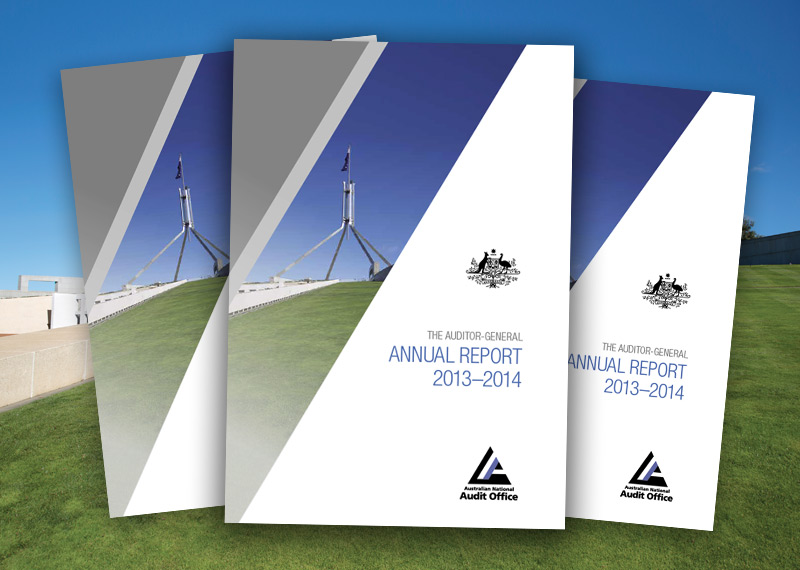
This annual report documents the performance of the Australian National Audit Office (ANAO) in the financial year ending on 30 June 2014. It addresses the Requirements for Annual Reports for Departments, Executive Agencies and FMA Act Bodies approved by the Joint Committee of Public Accounts and Audit in May 2014; the performance measures set out in the outcome and programs framework in the 2013–14 Portfolio Budget Statements; section 28 of the Auditor-General Act 1997; and other annual reporting requirements provided for in legislation.
Performance audit (Auditor-General Report No. 36 of 2002–03)
Published: Tuesday 1 April 2003
Published
The objective of the performance audit was to review the progress in the delivery of contractual commitments for Industry Development (ID) for the five contracts awarded under the IT Outsourcing Initiative. In particular, the audit examined the effectiveness of the monitoring by DCITA of achievement against contractual commitments for ID; assessed the impact of changes to the IT outsourcing environment on the management and monitoring of ongoing ID obligations; and identified practices that have improved administrative arrangements.
Entity
Department of Communications, Information Technology and the Arts
Performance audit (Auditor-General Report No. 39 of 2013–14)
Published: Thursday 12 June 2014
Published
The objective of the audit was to examine the application of the Australian Taxation Office's Compliance Effectiveness Methodology in evaluating the effectiveness of key compliance activities and shaping the development of strategies to promote voluntary compliance.
Entity
Australian Taxation Office
Contact
Please direct enquiries relating to reports through our contact page.
Performance audit (Auditor-General Report No. 13 of 2008–09)
Published: Tuesday 16 December 2008
Published
The audit objective was to assess how well agencies manage their websites. Particular attention was given to the audited agencies' website purposes, risk management and planning, policies, content management procedures, and performance monitoring and reporting. These elements provide the framework for the design, implementation and operation of websites.
Entity
Australian Bureau of Statistics; Department of Agriculture, Fisheries and Forestry; Department of Foriegn Affairs and Trade
Performance audit (Auditor-General Report No. 30 of 2004–05)
Published: Wednesday 2 March 2005
Published
The objective of this audit was to assess ARPANSA's management of the regulation of Commonwealth radiation and nuclear activities to ensure the safety of their radiation facilities and sources.
Entity
Australian Radiation Proctection and Nuclear Safety Agency
Performance audit (Auditor-General Report No. 4 of 2000–01)
Published: Monday 14 August 2000
Published
This report summarises audit and other related activities of the Australian National Audit Office in the period January to June 2000.
Entity
Audit Activity Report
Annual report
Published: Tuesday 7 October 2003
Published
This annual report documents the performance of the Australian National Audit Office (ANAO) in the financial year ending on 30 June 2003. It includes a comment by the Auditor-General; an overview of the report; a report on performance; details about management and accountability, and the financial statement for the year.
Annual report
Published: Thursday 7 September 2006
Published
This annual report documents the performance of the Australian National Audit Office (ANAO) in the financial year ending on 30 June 2006. It includes highlights and areas of focus for the coming year; a forward by the Auditor-General; an overview of the report; a report on performance; details about management and accountability, and the financial statement for the year.
Performance audit (Auditor-General Report No. 50 of 2003–04)
Published: Friday 4 June 2004
Published
The objectives of the audit were to assess whether DOTARS had developed and implemented an appropriate framework and procedures to administer lessee obligations entered into as part of the 1997 and 1998 leasehold sales of 17 Federal airports. In particular, the audit sought to: - review DOTARS' monitoring of lessee compliance with the Airport Leases and supporting sale documentation; - examine the effectiveness of the framework and procedures developed by DOTARS to administer lessee development commitments; and assess the impact of changes in the aviation environment on the management and monitoring of lessee obligations.
Entity
Department of Transport and Regional Services
Performance audit (Auditor-General Report No. 43 of 2007–08)
Published: Tuesday 24 June 2008
Published
The objectives for the audit of the third tranche sale of Telstra shares were to:
- assess the extent to which the Government's sale objectives were achieved, including maximising overall value for money;
- assess the effectiveness of the management of the sale; and
- identify principles of sound administrative practice to facilitate potential improvements in any future asset sales.
Entity
Department of Finance and Deregulation
Performance audit (Auditor-General Report No. 2 of 2004–05)
Published: Thursday 15 July 2004
Published
This audit examined DIMIA's administration of onshore compliance under rhe Migration Act 1958 (Cth) as amended (the Act). In particular, it focused on whether DIMIA had implemented appropriate onshore compliance strategies in regard to people who enter Australia lawfully but whose presence becomes unlawful through: - the expiry of their visa; or - a breach of visa conditions and cancellation of their visa.
Entity
Department of Immigration and Multicultural and Indigenous Affairs
Performance audit (Auditor-General Report No. 18 of 1999–2000)
Published: Monday 15 November 1999
Published
Government service delivery through the Internet presents both significant opportunities and challenges in the delivery of on-line services. Depending on the level of sophistication of the application, the Internet allows Commonwealth agencies to publish information, interact with clients in the exchange of information, and/or transact business electronically. The over-all objective of this audit was to determine Commonwealth agencies' preparedness to achieve the Government's goal of all appropriate services being Internet-deliverable by 2001. The audit sought to assess:
- the extent to which agencies considered that they would be able to achieve that goal;
- what type of services agencies were delivering or planning to deliver on the Internet; and
- whether agencies had identified barriers and possible solutions to that delivery.
Entity
Across Agency
Performance audit (Auditor-General Report No. 11 of 2009–10)
Published: Tuesday 17 November 2009
Published
The objective of the audit was to assess the effectiveness of Defence's procurement and contract management for the provision of Garrison Support Services.
Entity
Department of Defence
Performance audit (Auditor-General Report No. 9 of 2012–13)
Published: Thursday 1 November 2012
Published
The objective of the audit was to assess the management and effectiveness of DCO’s delivery and coordination of support services to ADF families, in particular support services provided when an ADF member is seriously injured or ill, or dies in service.
Entity
Department of Defence, Department of Veterans' Affairs
Performance audit (Auditor-General Report No. 34 of 1999–2000)
Published: Thursday 16 March 2000
Published
In late 1996, the Government announced its commitment to establish new facilities for the National Museum of Australia and the Australian Institute of Aboriginal and Torres Strait Islander Studies on Acton Peninsula in Canberra. The objectives of the audit were to examine the project's compliance with the Commonwealth Procurement Guidelines for the procurement of public works and effectiveness of the project's management.
Entity
Department of Communications, Information Technology and the Arts
Performance audit (Auditor-General Report No. 32 of 2008–09)
Published: Tuesday 19 May 2009
Published
The objective of the audit was to review Defence's management of the HQJOC Project's tender process, including probity management, for the construction of the joint operation headquarters in order to provide assurance that the policy principles for the use of private financing had been followed.
Entity
Department of Defence
Performance audit (Auditor-General Report No. 6 of 2010–11)
Published: Tuesday 21 September 2010
Published
The objective of the audit was to assess the implementation of the Australian Taxation Office's Client Contact – Work Management – Case Management system (CWC). The audit examined four key areas that included:
- progress of the CWC against the endorsed Change Program business case;
- improvements to the productivity and efficiency of tax administration as a result of the implementation of the CWC;
- improvements to client experiences when dealing with the Tax Office as a result of the implementation of the CWC; and
- effects of the CWC implementation, including additional benefits achievable beyond its current capacity to further improve tax administration.
Entity
Australian Taxation Office
Performance audit (Auditor-General Report No. 37 of 2011–12)
Published: Thursday 31 May 2012
Published
The objective of the audit was to examine the effectiveness of CSP’s feedback management system. CSP’s performance was assessed against the following criteria:
- CSP has appropriate channels to collect customer feedback;
- CSP effectively manages and resolves complaints; and
- CSP accurately reports on customer feedback, and analyses the information to improve aspects of child support administration.
Entity
Department of Human Services
Performance audit (Auditor-General Report No. 51 of 2012–13)
Published: Monday 24 June 2013
Published
The objective of the audit was to assess the effectiveness of the Australian Taxation Office’s management of its property portfolio.
Entity
Australian Taxation Office
Contact
Please direct enquiries relating to reports through our contact page.
Performance audit (Auditor-General Report No. 26 of 2007–08)
Published: Thursday 28 February 2008
Published
The objective of the audit was to assess DAFF's implementation and administration of the three forest industry assistance programs under the TCFA. Particular emphasis was given to the:
- implementation of the programs and ongoing governance arrangements;
- promotion of the program and the development of program guidelines;
- assessment of applications and approval of funding; and
- management of funding agreements.
Entity
Department of Agriculture Fisheries and Forestry
Performance audit (Auditor-General Report No. 25 of 1998–99)
Published: Friday 18 December 1998
Published
The audit reviewed the sale of DASFLEET, a business unit of the Department of Administrative Services, which provided passenger and general commercial vehicle leasing, rental and fleet management and maintenance services. The objectives of the audit were to review the efficiency and effectiveness of the management of the sale.
Entity
Department of Finance; Office of Asset Sales and Information Technology Outsourcing
Performance audit (Auditor-General Report No. 47 of 2000–01)
Published: Thursday 7 June 2001
Published
Quarantine policies and operations are the responsibility of the Department of Agriculture, Fisheries and Forestry - Australia (AFFA). The objective of this audit was to assess AFFA's management of plant and animal quarantine services, and the implementation and impact of the Government Response (1997) to the Quarantine Review Committee Report. The audit in particular assessed the setting of quarantine priorities through assessing and managing risk; management of the continuum of quarantine operations; and management of Import Risk Analyses to deliver and review quarantine policies. Stakeholder consultation and advisory processes were also assessed in addressing these issues. A key issue examined was the effectiveness of AFFA quarantine operations in international mail and airports preventing the entry of quarantinable material. The ANAO made eight recommendations aimed at improving operational risk based resource allocation; pre-border management of quarantine risk; the effectiveness of quarantine operations at the Australian border; and priority setting and transparency of the IRA process. AFFA agreed to all eight ANAO recommendations.
Entity
Agriculture Fisheries and Forestry - Australia Department of Agriculture
Annual report
Published: Wednesday 19 September 2007
Published
This annual report documents the performance of the Australian National Audit Office (ANAO) in the financial year ending on 30 June 2007. It includes highlights and areas of focus for the coming year; a forward by the Auditor-General; an overview of the report; a report on performance; details about management and accountability, and the financial statement for the year.
Performance audit (Auditor-General Report No. 9 of 2006–07)
Published: Thursday 26 October 2006
Published
The objective of the audit was to provide an independent assurance on the effectiveness of Defence and DMO's management of the acquisition of the ASLAV capability to Army. The audit examined the initial capability requirements and approval process, the contract negotiation process, and the management of the Project and Contracts by DMO.
Entity
Department of Defence; Defence Materiel Organisation
Performance audit (Auditor-General Report No. 55 of 2012–13)
Published: Wednesday 26 June 2013
Published
The objective of the audit was to assess the effectiveness of the Department of Education, Employment and Workplace Relations’ management of the Australian Government’s contribution to the Covenant. The scope of the audit is the Australian Government’s role in the initial establishment of the Covenant and its ongoing contribution through other employment programs.
Entity
Department of Education, Employment and Workplace Relations
Contact
Please direct enquiries relating to reports through our contact page.
Performance audit (Auditor-General Report No. 44 of 2002–03)
Published: Friday 23 May 2003
Published
The objective of the audit was to determine whether the controls and measures employed by FaCS and Centrelink to deliver Parenting Payment Single (PPS) payments were effective and efficient. To achieve this, the audit focused on four key areas. These were:
- the quality of performance measures used by FaCS and Centrelink;
- the effectiveness of FaCS' methodology for estimating the levels of risk of incorrect payment to PPS customers and the impact of these incorrect payments on the integrity of program outlays;
- the correctness of Centrelink's processing of reassessments; and
- the improvements to preventive controls such as training, guidance material, and the Quality On-Line system.
Entity
Department of Family and Community Services; Centrelink
Performance audit (Auditor-General Report No. 15 of 1998–99)
Published: Tuesday 24 November 1998
Published
The objective of this audit was to examine the efficiency and administrative effectiveness of processes the Australian Customs Service uses to screen incoming and outgoing mail. It also considers the involvement of other stakeholders such as Australia Post and Australian Quarantine Inspection Service.
Entity
Australian Customs Service
Speeches and papers
Published: Sunday 29 February 2004
Published
Mr P.J. Barrett (AM) - Auditor-General for Australia, presented at the MBA Governance Students at Macquarie University Graduate School of Management
Performance audit (Auditor-General Report No. 29 of 2009–10)
Published: Wednesday 21 April 2010
Published
The objective of the audit was to assess the effectiveness of AGD's arrangements for coordinating the development of the National Identity Security Strategy.
The ANAO's assessment was based on the following criteria:
- governance arrangements for the NISS;
- progress, to date, of the six NISS elements; and
- AGD's administrative arrangements for developing the NISS.
Entity
Attorney-General's Department
Performance audit (Auditor-General Report No. 8 of 2007–08)
Published: Wednesday 3 October 2007
Published
The objective of the audit was to determine whether the POI information recorded by Centrelink accords with relevant policy and thereby effectively supports informed decision-making regarding eligibility for the payment of various benefits to Centrelink customers
Entity
Centrelink; Department of Human Services
Performance audit (Auditor-General Report No. 33 of 1998–99)
Published: Tuesday 9 March 1999
Published
This report summarises audit and other related activities of the Australian National Audit Office in the period July to December 1998.
Entity
Audit Activity Report
Performance audit (Auditor-General Report No. 42 of 2002–03)
Published: Wednesday 7 May 2003
Published
The audit examined the Aged Care Standards and Accreditation Agency Ltd's management of the residential aged care accreditation process. The audit focused on the Agency's implementation of a process to meet its legislative responsibilities, its business operations, people management, budgeting practices, use of information, and its quality assurance processes.
Entity
Aged Care Standards and Accreditation Agency Ltd
Performance audit (Auditor-General Report No. 20 of 2009–10)
Published: Wednesday 3 February 2010
Published
The objective of the audit was to examine key aspects of the NBN RFP process, including:
- the background to and conduct of the RFP process;
- management of key risks associated with the process and outcome; and
- stakeholder consultations.
Entity
Department of Broadband, Communications and the Digital Economy
Performance audit (Auditor-General Report No. 19 of 2005–06)
Published: Thursday 1 December 2005
Published
The objective of this audit was to assess the effectiveness of the actions taken by AQIS and BA to strengthen the administration of quarantine. The audit focussed on progress in implementing the recommendations from the previous ANAO audit, and recommendations made in the JCPAA's inquiry. (The audit did not address four JCPAA recommendations that were either not supported by the Government, or were policy matters for the Government to consider. See Appendix 1.)
Entity
Department of Agriculture Fisheries and Forestry; Biosecurity Australia
Performance audit (Auditor-General Report No. 37 of 2000–01)
Published: Wednesday 23 May 2001
Published
The audit reviewed the Australian Taxation Office's use of audit of individual taxpayers as part of its approach to encouraging taxpayer compliance. The objective of the audit was to examine the use of audit as an element of the compliance management function within the Individuals Non-Business line of the ATO.
Entity
Australian Taxation Office
Performance audit (Auditor-General Report No. 7 of 2005–06)
Published: Thursday 25 August 2005
Published
The audit focussed on the systems and processes OGTR has established for both receiving and assessing applications under the Act, and also for ensuring compliance with the statutory requirements through monitoring and inspection. The audit objective was to form an opinion on the discharge by OGTR of selected functions entrusted to it under the Act. The audit assessed the practices of OGTR against the following principal criteria: Assessment of applications under the Act: Whether OGTR has established systems and procedures for the management and assessment of applications under the Act. Ensuring compliance—monitoring, inspection and enforcement activities: Whether OGTR has established systems and procedures for ensuring compliance with the requirements of the Act. Performance management: Whether OGTR manages selected aspects of its work efficiently and effectively. The audit did not seek to form an opinion on the appropriateness of the chosen structure of the regime for regulating gene technology or the merit of the scientific judgments involved. The audit methodology included discussions with representatives from agencies that co-ordinate aspects of the co-operative regulatory regime for gene technology across Australian jurisdictions, with various other stakeholders and users of the regime, as well as with officers of OGTR, along with examination of OGTR documents and files.
Entity
Department of Health and Ageing
Performance audit (Auditor-General Report No. 34 of 2008–09)
Published: Wednesday 20 May 2009
Published
The objective of the audit was to assess the administrative effectiveness of the Tax Office's strategies to address serious non-compliance. In conducting the audit, the ANAO examined the Tax Office's management framework and arrangements to deter, detect and deal with fraud and serious evasion.
Entity
Australian Taxation Office
Performance audit (Auditor-General Report No. 2 of 2003–04)
Published: Wednesday 13 August 2003
Published
The Audit Activity Report: January to June 2003 summarises the activity and outputs of the Australian National Audit Office for the second half of the 2002-03 reporting year. The Report outlines the key findings of performance and financial control audits, and summarises audits tabled and better practice guides published during January to June 2003.
Entity
Australian National Audit Office; Parliament
Performance audit (Auditor-General Report No. 13 of 2005–06)
Published: Tuesday 18 October 2005
Published
The objective of the audit was to assess the administrative effectiveness of the ATO's management of GST compliance in the large business market segment. In conducting the audit the ANAO examined three key areas: governance - ILEC's corporate planning and reporting arrangements relevant to the management of GST compliance in the large business market segment; assessing and identifying compliance risks- how ILEC collects information relating to the large business market segment and how it uses this information to support risk identification and assessment; and managing compliance- compliance planning and the products and processes used by ILEC to manage GST compliance in the large business market segment and evaluating compliance outcomes to support future compliance planning and the targeting of GST compliance risks. In undertaking the audit, the ANAO took account of the findings of previous reviews, in particular the LCCP Review.
Entity
Australian Taxation Office
Performance audit (Auditor-General Report No. 47 of 1998–99)
Published: Tuesday 15 June 1999
Published
The objectives of the audit were to form an opinion on the management of Commonwealth agencies' compliance with the Commonwealth's energy efficiency requirements and to identify areas for better practice in energy management. The audit focussed on:
- the implementation of the Energy Policy by Commonwealth Agencies; promulgation and coordination of energy use targets;
- energy and associated reporting by Commonwealth agencies;
- identification, examination and analysis of systemic and procedural impediments to achieving the Energy Policy; and
- development and discussion of ways to address these impediments.
Entity
Department of Industry, Science and Resources; Australian Greenhouse Office
Performance audit (Auditor-General Report No. 12 of 2004–05)
Published: Tuesday 19 October 2004
Published
The ANAO Audit Report No. 51 of 2001/02, Research Project Management, Commonwealth Scientific and Industrial Research Organisation, assessed the effectiveness of CSIRO in administering research projects to deliver required results. The audit made nine recommendations designed to improve project management in CSIRO. The purpose of this follow-up audit was to assess the extent to which CSIRO has implemented the recommendations of the previous audit and of the JCPAA.
Entity
Commonwealth Scientific and Industrial Research Organisation
Performance audit (Auditor-General Report No. 22 of 2009–10)
Published: Thursday 11 February 2010
Published
The objective of the audit was to assess how effectively Geoscience Australia provides geoscientific and geospatial information and services to assist the Australian Government and key stakeholders. Particular emphasis was given to:
- the collection and management of geoscientific and geospatial data and information, including accessibility;
- the provision of products and services; and
- governance arrangements.
The ANAO examined a number of datasets and product and service projects to assess Geoscience Australia's performance in providing geoscientific and geospatial information and services.
Entity
Geoscience Australia
Performance audit (Auditor-General Report No. 49 of 2009–10)
Published: Thursday 24 June 2010
Published
The objective of the audit was to assess whether Defence is effectively managing the delivery of health services to ADF personnel in Australia (chiefly Garrison Health Services).
Entity
Department of Defence
Performance audit (Auditor-General Report No. 20 of 2012–13)
Published: Tuesday 5 February 2013
Published
The objective of the audit was to assess the effectiveness of the Australian Fisheries Management Authority’s administration of its Domestic Fishing Compliance Program.
Entity
Australian Fisheries Management Authority
Performance audit (Auditor-General Report No. 62 of 2002–03)
Published: Monday 30 June 2003
Published
The objectives of the audit was to examine the effectiveness and efficiency of DIMIA's decision-making processes and management systems for delivering the parent and partner aspects of the family stream of the Migration Program.
The family stream of Australia's Migration Program enables the reunion of immediate family members of Australian citizens, permanent residents or eligible New Zealand citizens. It consists of four main categories;
- Partner;
- Child;
- Parent; and
- Other family.
Entity
Department of Immigration and Multicultural and Indigenous Affairs
Performance audit (Auditor-General Report No. 9 of 2001–02)
Published: Thursday 16 August 2001
Published
The audit examined some key aspects of HRD in relation to Centrelink's Customer Service Officers (CSOs). The objective of the audit was to determine whether Centrelink had appropriate systems and strategies in place to ensure that its CSOs had access to the skills and knowledge necessary to meet expected levels of performance and customer service.
Entity
Centrelink
Performance audit (Auditor-General Report No. 4 of 2002–03)
Published: Monday 19 August 2002
Published
The report summarises the audit and other related activities of the ANAO in the period January to June 2002. Key issues arising from performance audits tabled in this period are summarised. Appendix 1 of the Activity Report provides a short summary of each of the audits tabled between 1 January 2002 and 30 June 2002.
Entity
Audit Activity Report
Performance audit (Auditor-General Report No. 4 of 2011–12)
Published: Wednesday 31 August 2011
Published
The audit objective was to assess the effectiveness of DEEWR’s and FaHCSIA’s administration of the Australian Government’s responsibilities under Element 1 of the National Partnership Agreement on Indigenous Economic Participation (including the NT Jobs Package).
Entity
Across Entities
Performance audit (Auditor-General Report No. 20 of 1996–97)
Published: Wednesday 11 December 1996
Published
The focus of the audit was to examine recent selected property sales within the portfolios owning the majority of Commonwealth property, ie. those of Defence, Administrative Services and Veterans' Affairs. The approach taken in the audit was to select property sales from each of the three agencies and review the files and transactions related to those sales. The sales were evaluated against criteria which included establishment of sales timetables, sales methods, and completion processes such as the criteria for the selection of tenders and accountability. The objectives of the audit were to assess departments' management of the sale process associated with selected property sales with regard to:
- the extent to which the individual property sale objectives were achieved;
- how departments managed the sales to ensure that the Commonwealth received fair value;
- whether the departments' sale arrangements adequately protected the Commonwealth's interests, including minimising ongoing Commonwealth risk; and
- identifying principles of better practice employed by agencies in connection with these sales.
Entity
Department of Administrative Services; Department of Defence; Department of Veterans' Affairs
Performance audit (Auditor-General Report No. 13 of 2010–11)
Published: Thursday 28 October 2010
Published
The Civil Aviation Safety Authority (CASA) is responsible for regulating aviation safety in Australia, the safety of Australian aircraft operating overseas as well as for regulating and administering Australia's airspace. In September 2008, the Senate Committee on Rural and Regional Affairs and Transport presented a report on the Administration of the Civil Aviation Safety Authority and related matters. That report made three recommendations, one of which requested an Australian National Audit Office (ANAO) audit of CASA's implementation and administration of the regulation of aircraft operators' Safety Management Systems (SMS'). ANAO agreed to this request with the objective of the audit being to assess CASA's implementation and administration of an SMS approach to regulating aircraft operators.
An SMS is a systematic approach to managing safety, which encompasses organisational structures, accountabilities, policies and procedures. Amendments to the Convention on International Civil Aviation (commonly referred to as the Chicago Convention) made in 2006 require that contracting states regulate the SMS' of aircraft operators. As a contracting state to the Chicago Convention, Australia is required to mandate that aircraft operators implement an SMS.
Entity
Civil Aviation Safety Authority
Performance audit (Auditor-General Report No. 44 of 1999–2000)
Published: Tuesday 16 May 2000
Published
The audit reviewed the management of the first round of Job Network contracts, which focused on Job Matching, Job Search Training and Intensive Assistance. The objective of the audit was to assess the efficiency and effectiveness of the Department of Employment, Workplace Relations and Small Business's management of the first round of employment services contracts. A key part of this examination was to assess the Department's level of confidence that the program was meeting government objectives based on performance and management information.
Entity
Department of Employment, Workplace Relations and Small Business
Performance audit (Auditor-General Report No. 17 of 2012–13)
Published: Tuesday 29 January 2013
Published
The objective of the audit was to assess the effectiveness of the design and implementation of the EEIG program. The focus of the audit was the preparation for, and conduct of, the first funding round of the program.
Entity
Department of Climate Change and Energy Efficiency
Performance audit (Auditor-General Report No. 45 of 2009–10)
Published: Thursday 17 June 2010
Published
The objective of the audit was to assess whether Defence effectively managed the procurement process for services related to the recruitment of personnel to the ADF and the introduction of a new service provider.
Entity
Department of Defence
Performance audit (Auditor-General Report No. 42 of 1999–2000)
Published: Wednesday 10 May 2000
Published
The audit reviewed the effectiveness and probity of the policy development processes and implementation of improved access to Magnetic Resonance Imaging services. The objective of the audit was to examine and report on the effectiveness and probity of the processes involved in:
(a) the development and announcement of the proposal to improve access to Magnetic Resonance Imaging (MRI) services announced in the 1998 Budget, including negotiation with the diagnostic imaging profession; and
(b) the registration of 'eligible providers' and 'eligible equipment' to enable the payment of claims for MRI services on the Medicare Benefits Schedule
Entity
Across Agency
Performance audit (Auditor-General Report No. 26 of 2003–04)
Published: Friday 6 February 2004
Published
The audit examined aspects of financial management in the Health Insurance Commission (HIC). The audit objective was to examine the effectiveness of the HIC's internal control structures, as well as its financial management framework and processes, in order to form an opinion on their ability to support HIC Commissioners and managers to make informed decisions on the efficient and effective use of Commonwealth resources.
Entity
Health Insurance Commission
Performance audit (Auditor-General Report No. 37 of 2004–05)
Published: Thursday 10 March 2005
Published
The objectives of this audit were to examine the management of business support service contracts in selected agencies to: assess the effectiveness of business support service contract management in the transition, ongoing management and monitoring and succession planning stages of the contract management lifecycle; and identify examples of better practice and opportunities for improvement for individual agencies and Australian Government agencies more broadly.
Entity
Australian Industrial Registry; ComSuper; Family Court of Australia; IP Australia; Department of Finance and Administration
Performance audit (Auditor-General Report No. 23 of 2007–08)
Published: Thursday 21 February 2008
Published
The objective of the audit was to assess whether selected regulatory agencies have cost recovery procedures and practices which comply with the Government's guidelines. To address this objective, the audit assessed the management of cost recovery against the following criteria:
- regulatory agencies have clear and consistent cost recovery procedures to identify their activities and costs, and set fees and levies;
- regulatory agencies have effectively implemented their cost recovery procedures;
- regulatory agencies regularly monitor and review their cost recovery activities; and
- regulatory agencies regularly report on their cost recovery.
Entity
NO-DEPTS-LISTED
Performance audit (Auditor-General Report No. 48 of 1997–98)
Published: Monday 22 June 1998
Published
The objective of the audit was to assess the efficiency, effectiveness and accountability of data management by government agencies. The audit focused mainly on data collected by departments and agencies from non-departmental organisations and institutions.
Entity
Across Agency
Speeches and papers
Published: Tuesday 3 December 2002
Published
Mr P.J. Barrett (AM) - Auditor-General for Australia, presented at the Department of Finance and Administration's Learning Centre Lecture Series
Performance audit (Auditor-General Report No. 18 of 2013–14)
Published: Wednesday 5 February 2014
Published
The objective of the audit was to assess the effectiveness of the Bureau of Meteorology’s implementation of the Improving Water Information Program.
Entity
Bureau of Meteorology
Contact
Please direct enquiries relating to reports through our contact page.
Performance audit (Auditor-General Report No. 33 of 2011–12)
Published: Tuesday 22 May 2012
Published
The objective of the audit was to assess the effectiveness of DFAT's implementation of biometric technology to meet international requirements for enhanced passport security. In particular, the audit examined whether:
- Australian ePassports meet international requirements, and coordination with Australian stakeholders is effective;
- Australian biometric passport technology is fit for purpose and has enhanced passport security;
- personal data on the passport microchip is secure and DFAT maintains an appropriate focus on both protecting privacy and client satisfaction; and
- arrangements are in place to evaluate the effectiveness of the ePassport and to monitor risks.
Entity
Department of Foreign Affairs and Trade
Performance audit (Auditor-General Report No. 15 of 2008–09)
Published: Thursday 18 December 2008
Published
The objective of the audit was to assess the effectiveness of AIMS administration of its co investment research program.
Entity
Australian Institute of Marine Science
Performance audit (Auditor-General Report No. 33 of 1999–2000)
Published: Monday 13 March 2000
Published
The objective of the performance audit was to assess the administrative effectiveness of DIMA's business entry program against the background of the Business and Temporary Entry program objective, with particular regard to whether:
- the existing performance management mechanisms and compliance monitoring strategies support the achievement of program outcomes and outputs;
- the quality of decision-making;
- business processes facilitate prompt visa decision-making consistent with program objectives; and
- decision-making support mechanisms promote robust and timely decision-making.
Entity
Department of Immigration and Multicultural Affairs
Performance audit (Auditor-General Report No. 27 of 2000–01)
Published: Friday 22 December 2000
Published
The audit was undertaken in the Training and Youth Division TYD) of the Department of Education, Training and Youth Affairs. The objective of the audit was to determine whether the application of Business Processing Reengineering(BPR) principles would identify improvements to the business processes of the TYD. The TYD was used in this audit to illustrate the application of BPR as a tool for agencies to identify efficiencies and enhance program effectiveness.
Entity
Department of Education, Training and Youth Affairs
Performance audit (Auditor-General Report No. 16 of 1998–99)
Published: Monday 23 November 1998
Published
The primary objective of the audit was to assess the economy, efficiency and effectiveness of DoTRD's implementation of Annex 17 in the Australian aviation environment. The ANAO concluded that DoTRD has established a regulatory regime which ensures Australia's compliance with the standards embodied in Annex 17. However, there are areas where Australia's aviation security regime can be strengthened even further including; developing a more robust approach to risk management, developing a longer-term perspective to DoTRD's planning structure, development of proactive alliances with aviation regulators in neighbouring countries in the Asia-Pacific region, further improvement of the airport audit process, development and implementation of an evaluation strategy, development of a formal transparent approach to enforcement.
Entity
Department of Transport and Regional Services
Performance audit (Auditor-General Report No. 46 of 2009–10)
Published: Tuesday 22 June 2010
Published
The objective of the audit was to assess the Child Support Agency's effectiveness in managing the implementation of the Building a Better Child Support Agency program.
Entity
Department of Human Services
Performance audit (Auditor-General Report No. 22 of 2002–03)
Published: Thursday 12 December 2002
Published
The audit theme was financial management and accountability. The audit concluded that six of the eight organisations had satisfactory payment of accounts processes and that GST administration control frameworks had been implemented. Payment of accounts processes could be improved by greater use of information technology whereas using risk management; formalising the BAS preparation procedures; and increasing monitoring and review procedures could improve GST administration.
Entity
Across Agency
Speeches and papers
Published: Friday 12 March 2004
Published
Mr P.J. Barrett (AM) - Auditor-General for Australia, presented to the Institute of Chartered Accountants of India
Speeches and papers
Published: Monday 19 May 2003
Published
Mr P.J. Barrett (AM) - Auditor-General for Australia, presented at the 2nd Annual New Directions in Australian Auditing Accounting Standards Conference
Performance audit (Auditor-General Report No. 16 of 2002–03)
Published: Monday 4 November 2002
Published
A Business Support Process audit of the administration of grants in small to medium organisations was undertaken across six Commonwealth organisations to assess whether agencies had implemented appropriate risk management strategies for grant programs; evaluate whether grants had been administered in accordance with the appropriate legislation, Commonwealth guidance, and other accepted internal controls; and to recommend improvements in the controls and practices relating to grants administration.
Entity
Across Agency
Performance audit (Auditor-General Report No. 32 of 1998–99)
Published: Monday 8 March 1999
Published
The purpose of the audit was to assess whether management of parliamentary workflow by the agencies reviewed was efficient and effective and to identify elements of good practice. In assessing agency effectiveness and efficiency, the audit focussed on issues of client service such as timeliness, quality and cost. It considered also the governance framework and accountability arrangements relevant to parliamentary workflow, as well as more operational considerations including the use of information technology, development of relevant management information and suitable benchmarking processes.
Entity
Centrelink; Department of Defence; Department of Family and Community Services; Department of Health and Aged Care