Browse our range of reports and publications including performance and financial statement audit reports, assurance review reports, information reports and annual reports.
Performance audit (Auditor-General Report No. 24 of 2007–08)
Published: Tuesday 26 February 2008
Published
The audit objective was to determine whether DIAC's biometrics program had appropriate:
- business review processes (including a business case);
- authorisation;
- business and IT governance arrangements; and
- IT project management and systems development arrangements.
Entity
Department of Immigration and Citizenship
Insights: Audit lessons

Published: Wednesday 13 December 2017
Published
This edition of audit insights draws together key learnings from Australian National Audit Office (ANAO) performance audit reports tabled in the Parliament of Australia from July to September 2017. It provides insights into entities’ operational implementation of government policies and frameworks, drawing on a number of common findings and key learnings on policy and program design, governance, performance and impact measurement, and risk management.
Contact
Please direct enquiries through our contact page.
Financial statement audit (Auditor-General Report No. 16 of 2014–15)

Published: Thursday 18 December 2014
Published
This report complements the interim phase report published in June 2014 (Audit Report No.44 2013–14), and provides a summary of the final audit results of the audits of the financial statements of 251 Australian Government entities, including the Consolidated Financial Statements for the Australian Government.
Entity
Across Entities
Contact
Please direct enquiries relating to reports through our contact page.
Performance audit (Auditor-General Report No. 45 of 2011–12)
Published: Wednesday 20 June 2012
Published
The audit objective was to assess the effectiveness of DoHA’s administration in supporting the creation and development of health infrastructure from the HHF, including DoHA’s support for the Health Minister and the HHF Advisory Board.
Entity
Department of Health and Ageing
Performance audit (Auditor-General Report No. 17 of 2023–24)

Published: Thursday 22 February 2024
Published
The objective of this audit was to examine whether the Department of Finance (Finance) has implemented a selection of agreed parliamentary committee and Auditor-General recommendations.
Entity
Department of Finance
Contact
Please direct enquiries through our contact page.
Financial statement audit (Auditor-General Report No. 51 of 2006–07)

Published: Wednesday 27 June 2007
Published
This report presents the results of the interim phase of the 2006–07 financial statement audits of all portfolio departments and other major General Government Sector (GGS) agencies that collectively represent 95 per cent of total GGS revenues and expenses.
Entity
NO-DEPTS-LISTED
Financial statement audit (Auditor-General Report No. 48 of 2005–06)

Published: Thursday 22 June 2006
Published
The focus of this report is on the year end results of the financial statement audits of all general purpose reporting entities for the 2005–06 financial year. Financial management issues (where relevant) arising out of the audits and their relationship to internal control structures are also included in this report.
Entity
Across agency
Performance audit (Auditor-General Report No. 1 of 2015–16)

Published: Wednesday 8 July 2015
Published
The objective of the audit was to assess the effectiveness of the administration of procurement initiatives to support opportunities for Indigenous Australians.
Entity
Department of Defence; Australian Taxation Office; Department of Human Services; Department of Employment; Department of Industry and Science; and Department of Education and Training
Contact
Please direct enquiries through our contact page.
Performance audit (Auditor-General Report No. 22 of 1998–99)
Published: Tuesday 15 December 1998
Published
The audit reviewed six budget-funded agencies (Australian Customs Service, Australian Taxation Office, Centrelink, Department of Defence, Department of Education, Training and Youth Affairs, and Department of Immigration and Multicultural Affairs) and two off-budget entities (Airservices Australia and Reserve Bank of Australia). The ANAO also examined the Office for Government Online's (OGO, formerly the Office of Government Information Technology, or OGIT) whole-of-government coordination of the Commonwealth's Year 2000 efforts.
Entity
Australian Customs Service; Australian Taxation Office; Centrelink; Department of Defence; Department of Education, Training and Youth Affairs; Department of Immigration and Multicultural Affairs
Performance audit (Auditor-General Report No. 29 of 2024–25)

Published: Monday 31 March 2025
Published
The objective of the audit was to assess the effectiveness of the Department of Finance’s and selected entities’ implementation of the Australian Government’s campaign advertising framework.
Entity
Department of Finance; Australian Electoral Commission; Attorney‐General’s Department; Department of Health and Aged Care
Contact
Please direct enquiries through our contact page.
Performance audit (Auditor-General Report No. 19 of 2022–23)

Published: Thursday 6 April 2023
Published
The objective of this audit was to assess the effectiveness of procurement complaints handling by the Australian Communications and Media Authority, the Department of Finance, the Department of Industry, Science and Resources and the Reserve Bank of Australia.
Entity
Across Entities
Contact
Please direct enquiries through our contact page.
Speeches and papers
Published: Monday 13 September 1999
Published
Mr P.J. Barrett (AM) - Auditor-General for Australia, presented at the 'Ensuring Accountability and Ethics with Corporate Governance in the Public Sector' - IIR Conference, Canberra
Financial statement audit (Auditor-General Report No. 46 of 2018–19)
Published: Thursday 13 June 2019
Published
This report focuses on the results of the interim audits, including an assessment of entities’ key internal controls, supporting the 2018–19 financial statements audits. It examines 26 entities, including all departments of state and a number of major Australian government entities. The entities included in the report are selected on the basis of their contribution to the income, expenses, assets and liabilities of the 2017–18 Consolidated Financial Statements of the Australian Government (CFS). Significant and moderate findings arising from the interim audits are reported to the responsible Minister(s), and all findings are reported to those charged with governance of each entity.
Entity
Across Entities
Contact
Please direct enquiries through our contact page.
Performance audit (Auditor-General Report No. 23 of 2017–18)

Published: Tuesday 19 December 2017
Published
The objective of the audit was to assess whether the contractual arrangements that have been put in place for the delivery of the Moorebank Intermodal Terminal (MIT) will provide value for money and achieve the Australian Government’s policy objectives for the project.
Entity
Moorebank Intermodal Company Limited; Department of Infrastructure and Regional Development; Department of Finance
Contact
Please direct enquiries relating to reports through our contact page.
Financial statement audit (Auditor-General Report No. 32 of 2021–22)
Published: Thursday 9 June 2022
Published
This report is the first of the two reports and focuses on the results of the interim audits, including an assessment of entities’ key internal controls, supporting the 2021–22 financial statements audits. This report examines 25 entities, including all departments of state and a number of major Australian government entities. The majority of entities included in the report are selected on the basis of their contribution to the income, expenses, assets and liabilities of the 2020–21 Consolidated Financial Statements.
Contact
Please direct enquiries through our contact page.
Performance audit (Auditor-General Report No. 37 of 2003–04)
Published: Tuesday 30 March 2004
Published
The Australian Customs Service (Customs) is responsible for managing the integrity of Australia's border. The Australian maritime border is the 200 nautical mile Exclusive Economic Zone (EEZ) around Australia's 37 000 kilometre coastline. The National Marine Unit (NMU) contributes to customs' Civil Maritime Surveillance and Response program. It has eight 35 - metre Bay Class vessels (known as Australian Customs Vessels or ACVs) that are capable of maintaining a strategic presence around the Australian coast. The audit examined the administrative effectiveness of the NMU's surveillance and response operations. Particular emphasis was given to the following areas:
- strategic and tactical taskings;
- crew operations;
- crew training;
- asset management; and
- governance arrangements.
Entity
Australian Customs Service
Financial statement audit (Auditor-General Report No. 42 of 2023–24)
Published: Thursday 20 June 2024
Published
The ANAO prepares two reports annually that provide insights at a point in time to the financial statements risks, governance arrangements and internal control frameworks of Commonwealth entities, drawing on information collected during our audits.
This report is the first of the two reports and focuses on the results of the interim financial statements audits, including an assessment of entities’ key internal controls, supporting the 2023–24 financial statements audits. This report examines 27 entities, including all: departments of state; the Department of Parliamentary Services; and other Commonwealth entities that significantly contribute to the revenues, expenses, assets and liabilities within the 2022–23 Australian Government Consolidated Financial Statements (CFS). The National Indigenous Australians Agency is also included in this report given the role it plays working across government with indigenous communities and stakeholders.
Entity
Across Entities
Contact
Please direct enquiries through our contact page.
Performance audit (Auditor-General Report No. 22 of 2016–17)

Published: Wednesday 19 October 2016
Published
The objectives of the audit were to:
- assess the effectiveness of the ongoing administration of the Australian Government’s campaign advertising framework; and
- assess the effectiveness of the selected entities’ administration in developing advertising campaigns and implementing key processes against the requirements of the campaign advertising framework applying at the time, and relevant legal and government policy requirements.
Entity
Department of Finance; Department of the Treasury; Department of Education and Training; Department of Immigration and Border Protection
Contact
Please direct enquiries relating to reports through our contact page.
Performance audit (Auditor-General Report No. 41 of 2018–19)
Published: Wednesday 29 May 2019
Published
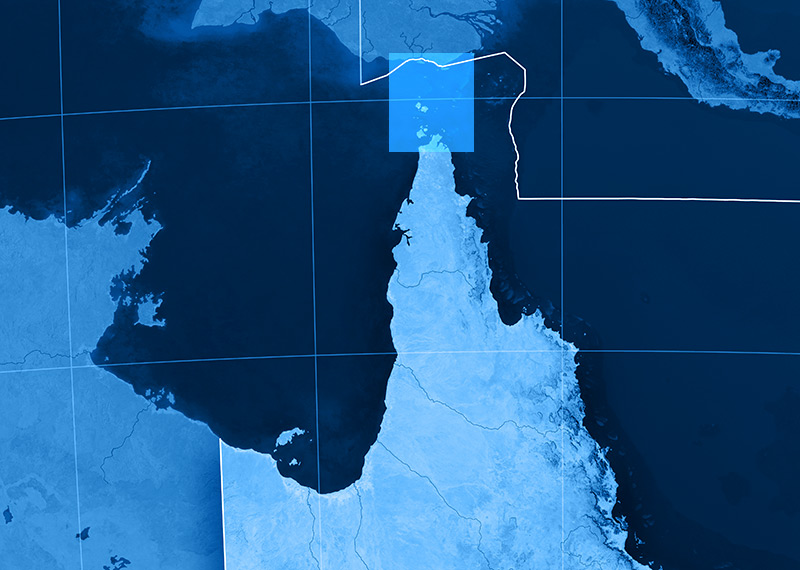
The objective of the audit was to assess the effectiveness of the coordination arrangements of key Australian Government entities operating in Torres Strait.
Entity
Across entities
Contact
Please direct enquiries through our contact page.
Financial statement audit (Auditor-General Report No. 56 of 2004–05)

Published: Friday 24 June 2005
Published
This report presents the results of the interim phase of the 2004-2005 financial statement audits. The audits have encompassed a review of governance arrangements related to entities' financial management responsibilities, and an examination of internal control, including information technology system controls for all portfolio departments and other major General Government Sector entities as at 31 March 2005. An examination of such issues is designed to assess the reliance that can be placed on internal controls to produce complete and accurate information for financial reporting purposes. All ANAO findings have been reported to entities and summary reports provided to the relevant Minister(s).
Entity
Across Agency
Financial statement audit (Auditor-General Report No. 38 of 2019–20)
Published: Thursday 28 May 2020
Published
This report focuses on the results of the interim financial statements audits, including an assessment of entities’ key internal controls, supporting the 2019–20 financial statements audits. This report examines 24 entities, including all departments of state and a number of major Australian government entities. The entities included in the report are selected on the basis of their contribution to the income, expenses, assets and liabilities of the 2018–19 Consolidated Financial Statements (CFS). Significant and moderate findings arising from the interim audits are reported to the responsible Minister(s), and all findings are reported to those charged with governance of each entity.
Contact
Please direct enquiries through our contact page.
Performance audit (Auditor-General Report No. 39 of 2021–22)

Published: Tuesday 21 June 2022
Published
The objective of the audit was to assess the effectiveness of the Department of Foreign Affairs and Trade’s overseas crisis management and response arrangements in meeting the government’s objectives for returning Australians from overseas in response to the COVID-19 global pandemic.
Entity
Department of Foreign Affairs and Trade
Contact
Please direct enquiries through our contact page.
Financial statement audit (Auditor-General Report No. 8 of 2022–23)
Published: Wednesday 14 December 2022
Published
This report complements the Interim Report on Key Financial Controls of Major Entities financial statement audit report published in June 2022. It provides a summary of the final results of the audits of the Consolidated Financial Statements for the Australian Government and the financial statements of Australian Government entities for the period ended 30 June 2022.
Entity
Across Entities
Contact
Please direct enquiries through our contact page.
Financial statement audit (Auditor-General Report No. 33 of 2016–17)

Published: Monday 23 January 2017
Published
This report complements the interim phase report published in August 2016, and provides a summary of the final results of the audits of the Consolidated Financial Statements for the Australian Government and the financial statements of Australian Government entities.
Entity
Across Entities
Request for audit
Responded: Tuesday 2 July 2024
Response provided
The Auditor-General wrote to the Minister for Finance on 21 June 2024 to advise of the outcomes of the 2023–24 annual performance statements audit program, and a proposal for expanding the program of audits in 2024–25 and the following two financial years. The Minister for Finance responded on 2 July 2024 supporting the proposal. The Minister for Finance's full response is provided below.
Contact
Please direct enquiries through our contact page.
Performance audit (Auditor-General Report No. 4 of 2020–21)

Published: Monday 31 August 2020
Published
The objective of this audit was to assess the extent to which entities’ establishment and use of ICT related procurement panels and arrangements supported the achievement of value for money outcomes.
Entity
Across Entities
Contact
Please direct enquiries through our contact page.
Corporate

Published: Thursday 20 November 2025
Published
Integrity is a core value of the Australian National Audit Office (ANAO) — critical in sustaining the confidence of Parliament, strengthening public trust in government and delivering quality audit products. Maintaining strong institutional integrity is essential to the operations and reputation of the ANAO.
The ANAO Integrity Framework provides an overarching structure to the integrity control system, supporting our institution’s integrity. The Framework serves to assist in ethical decision-making and risk, fraud and misconduct management.
Beyond its control system, the ANAO maintains an enduring focus on promoting integrity as a value that is embedded in our work and culture. The ANAO recognises that integrity demands quality not only in our products but also in the behaviours of our people.
The ANAO Integrity Advisor supports the effective and ongoing application of the Integrity Framework by providing advice to staff regarding integrity matters. The Integrity Advisor is responsible for increasing integrity awareness across the organisation and for reporting annually to the ANAO Executive Board of Management on actions taken under the Framework. The Auditor-General publishes the ANAO Integrity Report to provide increased transparency of the measures we undertake to maintain a high-integrity culture in the ANAO.
Contact
Please direct enquiries through our contact page.
Financial statement audit (Auditor-General Report No. 58 of 2003–04)

Published: Wednesday 30 June 2004
Published
This report updates the ANAO's assessment of audit findings relating to major entity internal control structures, including governance arrangements, information systems and control procedures through to March 2004. The findings summarised in this report arise from the interim phase of the financial statement audits of major Australian Government entities for 2003/2004. Examinations of such findings are designed to assess the reliance that can be placed on control structures to produce complete, accurate and valid information for financial reporting purposes.
Entity
Across Agency
Financial statement audit (Auditor-General Report No. 40 of 2020–21)
Published: Wednesday 2 June 2021
Published
This report is the first in the series of reports for the 2020–21 financial year and focuses on the results of the interim audits, including an assessment of entities’ key internal controls, supporting the 2020–21 financial statements audits. This report examines 25 entities, including all departments of state and a number of major Australian government entities. The entities included in the report are selected on the basis of their contribution to the income, expenses, assets and liabilities of the 2019–20 Consolidated Financial Statements.
Contact
Please direct enquiries through our contact page.
Performance audit (Auditor-General Report No. 12 of 2007–08)
Published: Thursday 1 November 2007
Published
The objective of the audit was to assess the effectiveness of the Tax Office's compliance approach for high risk income tax refunds in the individuals and micro enterprises market segments. The audit examined three key areas:
management and organisational arrangements relating to high risk income tax refund processes;
processes and procedures for identifying high risk income tax refunds, and the processes and tools used to evaluate and verify taxpayers' entitlements to income tax refunds; and
information technology systems, processes and controls supporting the processing of income tax returns and refunds.
Entity
Australian Taxation Office