Browse our range of reports and publications including performance and financial statement audit reports, assurance review reports, information reports and annual reports.
Performance audit (Auditor-General Report No. 3 of 1999–2000)
Published: Thursday 22 July 1999
Published
All persons, other than Australian nationals, are required to hold a visa to enter and stay in Australia. This audit's focus is on the entry component of the visa process and specifically the Electronic Travel Authority (ETA). The ETA is an electronically-stored authority for travel, which facilitates the entry of tourists and short-term business travellers from countries where the risk of non-compliance with visa conditions is low, that is, in countries classified as ‘low risk'. The objective of the performance audit was to assess the administrative effectiveness of the ETA.
Entity
Department of Immigration and Multicultural Affairs
Performance audit (Auditor-General Report No. 41 of 2003–04)
Published: Thursday 15 April 2004
Published
The objective of the audit was to examine DVA's implementation of the Repatriation health card system, which aims to ensure that veterans can obtain health care through community-based providers and facilities.
Entity
Department of Veterans' Affairs
Performance audit (Auditor-General Report No. 17 of 2004–05)
Published: Wednesday 15 December 2004
Published
The objective of the Australian National Audit Office (ANAO) was to examine and report on the planning and corporate governance for the new regional delivery model of the National Action Plan for Salinity and Water Quality (NAP) program, jointly administered by the Department of Agriculture, Fisheries and Forestry and the Department of the Environment and Heritage (the Agencies)
Entity
Department of Agriculture Fisheries and Forestry; Department of the Environment and Heritage
Performance audit (Auditor-General Report No. 21 of 2007–08)
Published: Thursday 7 February 2008
Published
The objective of this audit was to assess and report on the administration of the regional delivery of NHT 2 and the NAP.
The scope of the audit encompassed both Environment and DAFF, including the Joint Team of staff from both departments working together under a common management structure for the delivery of both programs. The audit focused on:
- the implementation of the regional delivery arrangements;
- governance and financial management for regional delivery; and
- monitoring, evaluation and reporting on the programs' performance.
Entity
Department of the Environment, Water, Heritage and the Arts; Department of Agriculture, Fisheries and Forestry
Performance audit (Auditor-General Report No. 32 of 2009–10)
Published: Wednesday 28 April 2010
Published
The objective of the audit was to assess the effectiveness of OPO's management of the overseas owned estate. In particular, the audit examined whether:
- sound arrangements are in place to effectively plan and oversight the management of the overseas estate;
- OPO effectively manages owned property on a day-to-day basis;
- the condition of the overseas owned estate is adequately maintained by structured and systematic repair and maintenance arrangements; and
- OPO has appropriate information to facilitate the effective management of the owned estate, and appropriately consults with stakeholders.
Entity
Department of Foreign Affairs and Trade
Performance audit (Auditor-General Report No. 26 of 2021–22)
Published: Tuesday 10 May 2022
Published
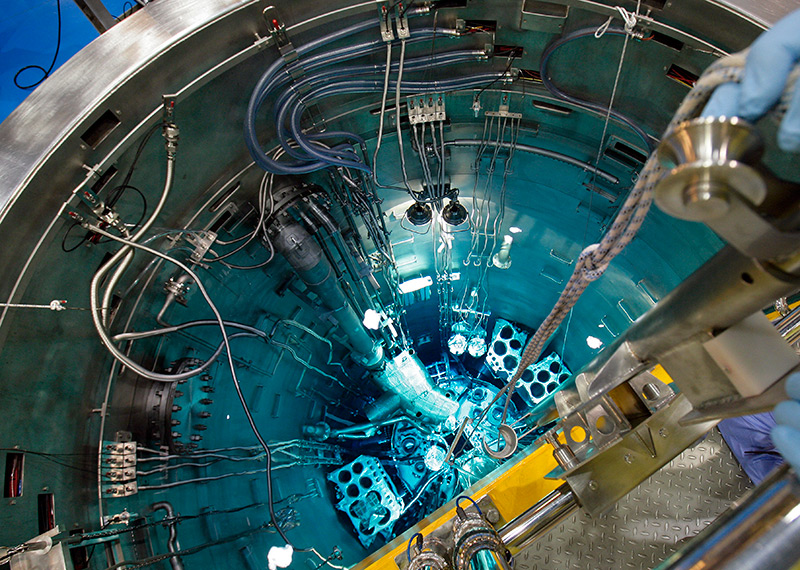
The audit examined the effectiveness of the Australian Nuclear Science and Technology Organisation’s management of assets involved in the manufacture, production and distribution of nuclear medicines.
Entity
Australian Nuclear Science and Technology Organisation
Contact
Please direct enquiries through our contact page.
Performance audit (Auditor-General Report No. 17 of 2021–22)

Published: Thursday 17 February 2022
Published
The objective of this audit was to assess the effectiveness of the Department of Finance and selected entities’ implementation of the Australian Government’s campaign advertising framework.
Entity
Across Entities
Contact
Please direct enquiries through our contact page.
Performance audit (Auditor-General Report No. 13 of 1998–99)
Published: Thursday 12 November 1998
Published
The objective of the audit was to form an opinion on the administrative effectiveness, efficiency and accountability of the Department of Health and Aged Care's delivery of health services to the Aboriginal and Torres Strait Islander population.
Entity
Department of Health and Aged Care
Performance audit (Auditor-General Report No. 4 of 2019–20)

Published: Wednesday 31 July 2019
Published
The objective of the audit was to assess whether the contract for the acquisition of the Civil Military Air Traffic Management System demonstrably represents value for money.
Entity
Airservices Australia; Department of Defence
Contact
Please direct enquiries through our contact page.
Performance audit (Auditor-General Report No. 59 of 2003–04)
Published: Wednesday 30 June 2004
Published
The objective of this audit was to provide an independent assurance on the effectiveness of Defence's management of the acqusition of armoured infantry mobility vehicles (IMV) for the Australian Defence Force (ADF). The audit sought to identify the initial capability requirements; analyse the tendering and evaluation process; and examine the management of the project by Defence. As such, this was not an audit of contractor performance, but of the formation and contract management of the aquisition project by Defence.
Entity
Department of Defence
Speeches and papers
Published: Friday 30 November 2001
Published
Mr P.J. Barrett (AM) - Auditor-General for Australia, presented to the Institute of Public Administration Australia
Speeches and papers
Published: Saturday 21 August 2004
Published
Mr P.J. Barrett (AM) - Auditor-General for Australia, Address to the Challenge of Change : Driving Governance and Accountability CPA Forum 2004
Performance audit (Auditor-General Report No. 4 of 2004–05)
Published: Monday 2 August 2004
Published
The audit assessed whether Centrelink effectively manages customer debt, excluding debt relating to Family Tax Benefit, consistently across its network, ensuring integrity of payments made on behalf of the Department of Family and Community Services (FaCS). The audit assessed five components of Centrelink's debt management processes, including administration, prevention, identification, raising and recovery.
Entity
Centrelink
Speeches and papers
Published: Thursday 18 October 2001
Published
Mr P.J. Barrett (AM) - Auditor-General for Australia, presented to the Senior Staff of the Board of Audit - Tokyo, Japan
Performance audit (Auditor-General Report No. 1 of 2007–08)
Published: Tuesday 17 July 2007
Published
The objective of the audit was to assess the effectiveness of management of the procurement of a major, replacement capability for the Australian Defence Force (ADF) by the DMO, and Defence. The audit reviewed the initial capability requirements and approval process; analysed the acquisition agreements for elements of the project; and examined the interim through-life support arrangements being put in place to support the capability.
Entity
Department of Defence; Defence Materiel Organisation
Speeches and papers
Published: Saturday 6 April 2002
Published
Mr P.J. Barrett (AM) - Auditor-General for Australia, presented at a Laboratory for Politicians and Top Managers from Different Public Institutions in Europe
Performance audit (Auditor-General Report No. 15 of 2002–03)
Published: Tuesday 29 October 2002
Published
The audit reviewed the extent to which the Department of Health and Ageing (Health) had implemented the recommendations of Audit Report No. 13 of 1998-1999, Aboriginal and Torres Strait Islander Health Program, taking account of any changed circumstances or new administrative issues identified as impacting the implementation of these recommendations.
Entity
Department of Health and Ageing; Aboriginal and Torres Strait Islander Commission
Speeches and papers
Published: Tuesday 26 February 2002
Published
Mr P.J. Barrett (AM) - Auditor-General for Australia, presented at the Australian Government Solicitor Seminar
Performance audit (Auditor-General Report No. 38 of 1996–97)
Published: Tuesday 24 June 1997
Published
The objective of this audit was to assess the effectiveness of the action taken by the Australian Institute of Marine Science in response to the recommendations contained in 'External Funds Generation', Audit Report No.48, 1991-92.
Entity
Australian Institute of Marine Science
Performance audit (Auditor-General Report No. 22 of 2000–01)
Published: Thursday 14 December 2000
Published
The objective of this audit was to establish whether Defence has developed sound fraud control arrangements that are consistent with better practice and fulfil its responsibilities for the protection of public property, revenue, expenditure, and rights and privileges from fraudulent exploitation.
Entity
Department of Defence
Performance audit (Auditor-General Report No. 13 of 2000–01)
Published: Wednesday 4 October 2000
Published
The audit examined a range of issues in relation to the development of certified agreements in the APS with particular emphasis on the link between improved pay and conditions and increased productivity, and the funding of agreements. The objectives of the audit were to:
- provide an overview of the range of wage outcomes included in the first round of APS certified agreements;
- identify the administrative arrangements agencies have in place to measure any improvements in productivity that were linked to pay increases;
- determine how agencies funded their certified agreements;
- review the reporting and accountability arrangements agencies have in place to monitor progress and to evaluate the outcomes of their certified agreements;
- determine the extent to which agencies complied with the employment terms and conditions outlined in their certified agreements that contributed to paying for their agreement or measuring and/or assessing improvements in productivity; and
- examine the role of central coordinating agencies in reviewing agencies' certified agreements.
Entity
Across Agency
Performance audit (Auditor-General Report No. 9 of 2012–13)
Published: Thursday 1 November 2012
Published
The objective of the audit was to assess the management and effectiveness of DCO’s delivery and coordination of support services to ADF families, in particular support services provided when an ADF member is seriously injured or ill, or dies in service.
Entity
Department of Defence, Department of Veterans' Affairs
Performance audit (Auditor-General Report No. 6 of 1996–97)
Published: Thursday 12 September 1996
Published
The objectives for the audit were to examine Commonwealth guarantees, indemnities and letters of comfort in relation to:
- the potential size of the Commonwealth's exposure to these instruments;
- the extent to which the overall exposures of the Commonwealth are managed and monitored;
- the adequacy of administrative reporting arrangements;
- areas of better administrative practice relating to their management; and
- to raise agencies' awareness of appropriate risk management and accountability practices in relation to these instruments.
The audit set out to quantify the Commonwealth's exposure to guarantees, indemnities and letters of comfort.
Entity
Across Agency
Performance audit (Auditor-General Report No. 1 of 1997–98)
Published: Tuesday 26 August 1997
Published
This report is an information document summarising the audit activities of the ANAO in the period January to June 1997.
Entity
Audit Activity Report
Speeches and papers
Published: Thursday 12 August 1999
Published
Mr P.J. Barrett (AM) - Auditor-General for Australia, presented at the Health Insurance Commission Senior Management Group
Speeches and papers
Published: Tuesday 1 May 2001
Published
Mr P.J. Barrett (AM) - Auditor-General for Australia, presented at the IIR Conference 'Risks in Outsourcing in the Public Sector'
Performance audit (Auditor-General Report No. 35 of 2009–10)
Published: Tuesday 18 May 2010
Published
The objective of the audit was to assess the effectiveness of the Tax Office's administration of the Superannuation Co-contribution Scheme.
The audit reviewed five key areas: governance arrangements; information technology systems and controls; co-contribution processing; compliance approaches; and communication with clients.
Entity
Australian Taxation Office
Performance audit (Auditor-General Report No. 62 of 2002–03)
Published: Monday 30 June 2003
Published
The objectives of the audit was to examine the effectiveness and efficiency of DIMIA's decision-making processes and management systems for delivering the parent and partner aspects of the family stream of the Migration Program.
The family stream of Australia's Migration Program enables the reunion of immediate family members of Australian citizens, permanent residents or eligible New Zealand citizens. It consists of four main categories;
- Partner;
- Child;
- Parent; and
- Other family.
Entity
Department of Immigration and Multicultural and Indigenous Affairs
Performance audit (Auditor-General Report No. 13 of 2011–12)
Published: Tuesday 22 November 2011
Published
The objective of the audit was to assess the effectiveness of DIT’s and Centrelink’s1 administration of TFES.
[1] From 1 July 2011, Centrelink became a master program within DHS.
Entity
Department of Infrastructure and Transport, Department of Human Services
Performance audit (Auditor-General Report No. 10 of 2017–18)

Published: Wednesday 27 September 2017
Published
The audit objective was to assess the effectiveness of the design process and monitoring arrangements for the National Innovation and Science Agenda by the relevant entities.
Entity
Department of the Prime Minister and Cabinet; Department of Industry, Innovation and Science; Innovation and Science Australia
Contact
Please direct enquiries relating to reports through our contact page.