Browse our range of reports and publications including performance and financial statement audit reports, assurance review reports, information reports and annual reports.
Performance audit (Auditor-General Report No. 5 of 2023–24)

Published: Tuesday 5 September 2023
Published
The objective of this audit was to examine whether compliance with trade measurement in Australia is being effectively administered.
Entity
Department of Industry, Science and Resources
Contact
Please direct enquiries through our contact page.
Performance audit (Auditor-General Report No. 52 of 2013–14)
Published: Wednesday 25 June 2014
Published
The audit objective was to assess the Department of Defence’s progress in delivering Multi-Role Helicopters (MRH90 aircraft) to the ADF through AIR 9000 Phases 2, 4 and 6, within approved cost, schedule and performance parameters.
Entity
Department of Defence; Defence Materiel Organisation
Contact
Please direct enquiries relating to reports through our contact page.
Performance audit (Auditor-General Report No. 36 of 2023–24)

Published: Wednesday 12 June 2024
Published
The objective of this audit was to assess the effectiveness of the Australian Digital Health Agency’s (ADHA) procurement relating to My Health Record system infrastructure.
Entity
Australian Digital Health Agency
Contact
Please direct enquiries through our contact page.
Performance audit (Auditor-General Report No. 10 of 2022–23)

Published: Thursday 19 January 2023
Published
The objective of the audit was to assess whether the Department of Health and Aged Care has effectively managed the expansion of telehealth services during and post the COVID-19 pandemic.
Entity
Department of Health and Aged Care
Contact
Please direct enquiries through our contact page.
Performance audit (Auditor-General Report No. 12 of 2020–21)

Published: Monday 12 October 2020
Published
The audit objective was to assess the effectiveness to date of the Department of Defence’s procurement and contract management of the Offshore Patrol Vessel program.
Entity
Department of Defence
Contact
Please direct enquiries through our contact page.
Performance audit (Auditor-General Report No. 46 of 2007–08)
Published: Friday 27 June 2008
Published
The audit objective was to examine if ACMA is, in respect of commercial broadcasting services, effectively discharging its regulatory responsibilities under the BSA. The audit examined ACMA's:
- monitoring of commercial broadcasters' compliance with the BSA;
- addressing non compliance with, and enforcement of, the BSA;
- collection of broadcast licence fees; and
- monitoring and reporting of its regulatory performance in respect of commercial broadcasting.
Entity
Australian Communications and Media Authority
Performance audit (Auditor-General Report No. 20 of 2023–24)

Published: Wednesday 27 March 2024
Published
The objective of this audit was to assess whether the design and implementation of the Australian Apprenticeships Incentive System by the Department of Employment and Workplace Relations is effective.
Entity
Department of Employment and Workplace Relations
Contact
Please direct enquiries through our contact page.
Performance audit (Auditor-General Report No. 9 of 2010–11)
Published: Wednesday 29 September 2010
Published
On 3 February 2010, Senator Christine Milne wrote to the Auditor General raising concerns about DEWHA's administration of the Green Loans program and requesting a performance audit of the program. Issues raised included: uncapped assessor numbers; problems with the delivery of the program; the quality of assessor training and assessments provided to households; the lack of an audit facility within the program; and equitable access to work under the program.
In light of Senator Milne's request and other concerns in relation to the administration of the program, the Auditor-General agreed on 25 February 2010 to conduct a performance audit of the program. The objective of the audit was to examine key aspects of the establishment and administration of the Green Loans program by DEWHA and the program's transition to DCCEE. Particular emphasis was given to the program's three main elements:
- training, registration and contracting of assessors;
- scheduling, conduct, and reporting of home sustainability assessments, and the associated payments to assessors; and
- provision of green loans to householders, and the associated payments to participating financial institutions.
The audit also examined the extent to which steps had been taken by DEWHA and DCCEE to assess whether the Green Loans program was achieving its objectives.
Entity
Department of the Environment, Water, Heritage and the Arts; Department of Climate Change and Energy Efficiency
Performance audit (Auditor-General Report No. 24 of 2014–15)
Published: Thursday 26 February 2015
Published
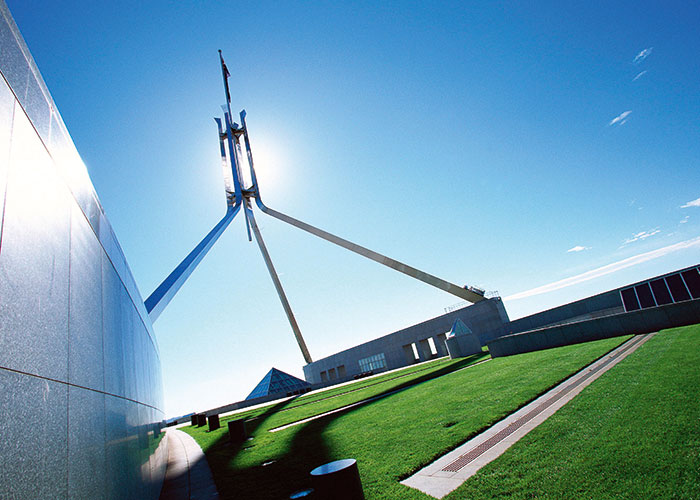
The objective of the audit was to assess the effectiveness of the Department of Parliamentary Services’ management of assets and contracts to support the operations of Parliament House.
Entity
Department of Parliamentary Services
Contact
Please direct enquiries relating to reports through our contact page.
Performance audit (Auditor-General Report No. 23 of 2003–04)
Published: Thursday 29 January 2004
Published
The audit sought to assess how well the Australian Taxation Office (ATO) manages aggressive tax planning. We did this by exploring the nature of aggressive tax planning and the ATO's approach to its management. In the latter context, we looked at:
- the ATO's previous experience with aggressive tax planning and action on previous significant external reviews, particularly dealing with mass marketed investment schemes;
- strategy and operations, intelligence gathering and use; and the identification and management of promoters given their significant role in aggressive tax planning.
Entity
Australian Taxation Office
Performance audit (Auditor-General Report No. 18 of 2022–23)

Published: Thursday 6 April 2023
Published
The audit objective was to examine the appropriateness of the Department of Infrastructure, Transport, Regional Development, Communications and the Arts’ approach to acquiring, managing, and leasing Australian contemporary art in the Artbank collection.
Entity
Department of Infrastructure, Transport, Regional Development, Communications and the Arts
Contact
Please direct enquiries through our contact page.
Performance audit (Auditor-General Report No. 12 of 2002–03)
Published: Monday 21 October 2002
Published
The IIF program is designed to redress the low level of provision in Australia of high risk venture capital for small new technology - based companies commercialising research and development. The objective of the audit was to determine whether the IIF program was being effectively managed by the Industry Research and Development (IR&D) Board and the Department of Industry, Tourism and Resources to achieve the program objectives. The audit focused on corporate governance arrangements for program administration, the selection process to award licences, the safeguards to protect the Commonwealth's financial interests, management of licence agreements, and program performance management. The audit also examined program results to date from available data.
Entity
Department of Industry, Tourism and Resources; Industry Research and Development Board
Performance audit (Auditor-General Report No. 4 of 2020–21)

Published: Monday 31 August 2020
Published
The objective of this audit was to assess the extent to which entities’ establishment and use of ICT related procurement panels and arrangements supported the achievement of value for money outcomes.
Entity
Across Entities
Contact
Please direct enquiries through our contact page.
Performance audit (Auditor-General Report No. 13 of 2023–24)

Published: Wednesday 7 February 2024
Published
The objective of this audit was to assess the efficiency of the Department of Foreign Affairs and Trade’s delivery of passport services through the Australian Passport Office.
Entity
Australian Trade and Investment Commission; Department of Finance; Department of Foreign Affairs and Trade
Contact
Please direct enquiries through our contact page.
Performance audit (Auditor-General Report No. 17 of 2022–23)

Published: Monday 3 April 2023
Published
The objective of this audit is to assess the effectiveness of the design and implementation of the Department of Agriculture, Water and the Environment’s cultural reform program prior to the July 2022 Machinery of Government changes.
Entity
Department of Agriculture, Fisheries and Forestry
Contact
Please direct enquiries through our contact page.
Performance audit (Auditor-General Report No. 52 of 2011–12)
Published: Tuesday 26 June 2012
Published
The objective of this audit was to examine the effectiveness of DMO’s implementation of its Gate Review process for major Defence capital acquisition projects.
Entity
Department of Defence
Performance audit (Auditor-General Report No. 32 of 2007–08)
Published: Thursday 8 May 2008
Published
The objective of the audit was to assess the completeness and reliability of the estimates reported in Tax Expenditures Statement 2006 (TES 2006). That is, the audit examined the development and publication of the detailed statement of actual tax expenditures required by Division 2 of Part 5 of the CBH Act. The development and publication of aggregated information on projected tax expenditures included in the Budget Papers pursuant to Division 1 of Part 5 of the CBH Act was not examined.
Entity
Department of Treasury
Performance audit (Auditor-General Report No. 10 of 2025–26)

Published: Thursday 4 December 2025
Published
The objective was to assess the effectiveness of Australian Securities and Investments Commission’s regulation of registered company auditors.
Entity
Australian Securities and Investments Commission
Contact
Please direct enquiries through our contact page.
Performance audit (Auditor-General Report No. 57 of 2010–11)
Published: Tuesday 28 June 2011
Published
The objective of the audit was to report on the effectiveness of Defence’s approach to the acceptance into service of Navy capability, and to identify where better practice may be used by CDG, DMO and Navy.
Entity
Department of Defence; Defence Materiel Organisation
Performance audit (Auditor-General Report No. 42 of 2014–15)

Published: Thursday 4 June 2015
Published
The objective of this audit was to assess the effectiveness of Finance’s administration of travel entitlements provided to Parliamentarians.
Entity
Department of Finance
Contact
Please direct enquiries relating to reports through our contact page.
Performance audit (Auditor-General Report No. 43 of 2012–13)
Published: Wednesday 12 June 2013
Published
The objective of the audit was to assess the efficiency and effectiveness of the establishment, implementation and administration of the general component of the Local Jobs stream of the Jobs Fund, with a particular focus on the establishment of program objectives and the extent to which approved grants have demonstrably contributed to the cost-effective achievement of those objectives.
Entity
Department of Education, Employment and Workplace Relations
Contact
Please direct enquiries relating to reports through our contact page.
Performance audit (Auditor-General Report No. 20 of 2012–13)
Published: Tuesday 5 February 2013
Published
The objective of the audit was to assess the effectiveness of the Australian Fisheries Management Authority’s administration of its Domestic Fishing Compliance Program.
Entity
Australian Fisheries Management Authority
Performance audit (Auditor-General Report No. 5 of 2001–02)
Published: Tuesday 7 August 2001
Published
The audit was conducted in response to a November 2000 resolution of the Senate that the Auditor-General examine all expenditures and entitlements accruing to Parliamentarians in 1999-2000. The objectives of the audit were to:
- provide assurance to the Parliament regarding the administration by Finance, the chamber departments and the portfolio departments of all expenditures and entitlements accruing to Parliamentarians, including Ministers, in 1999-2000;
- assess the administrative and control structures governing expenditures and entitlements accruing to Parliamentarians and Ministers in 1999-2000; and
- identify opportunities to improve the current framework.
Entity
Across Agency
Performance audit (Auditor-General Report No. 3 of 2005–06)
Published: Thursday 28 July 2005
Published
The objective of the audit was to provide an independent assurance on the effectiveness of the management of the upgrade of the M113 fleet for the Australian Defence Force (ADF). The audit sought to identify the initial capability requirements and approval process; analyse the contract negotiation process; and examine the management of the project and contracts.
Entity
Department of Defence
Request for audit
Responded: Wednesday 23 September 2015
Response provided
The Auditor-General (A/g) responded on 23 September 2015 to correspondence from Alannah MacTiernan MP on 7 September 2015 regarding the Perth Freight Link Project in Western Australia.
Contact
Please direct enquiries relating to requests for audit through our contact page.
Performance audit (Auditor-General Report No. 49 of 2011–12)
Published: Monday 25 June 2012
Published
The objective of the audit was to assess the effectiveness of ASIO’s arrangements for providing timely and soundly based security assessments of individuals to client agencies.
Entity
Australian Security Intelligence Organisation
Performance audit (Auditor-General Report No. 22 of 2023–24)

Published: Wednesday 17 April 2024
Published
The objective of this audit was to assess the effectiveness of the Australian Taxation Office’s (ATO) management of transfer pricing for related party debt.
Entity
Australian Taxation Office
Contact
Please direct enquiries through our contact page.
Performance audit (Auditor-General Report No. 46 of 2005–06)
Published: Wednesday 14 June 2006
Published
The objective of this follow-up audit was to review FaCSIA's progress in implementing the recommendations of Audit Report No.17 1999–2000. The focus was whether FaCSIA had maintained or improved its oversight, coordination and administration of the CSHA for both the 1999 CSHA and the 2003 CSHA, in line with the recommendations and findings identified in the previous ANAO audit.
Entity
Department of Families Community Services and Indigenous Affairs
Information report (Auditor-General Report No. 37 of 2021–22)

Published: Monday 20 June 2022
Published
The objective of this information report is to provide transparency and insights on the governing boards of Commonwealth entities and companies and the membership of these boards.
Entity
Across Entities
Contact
Please direct enquiries through our contact page.
Performance audit (Auditor-General Report No. 9 of 2006–07)
Published: Thursday 26 October 2006
Published
The objective of the audit was to provide an independent assurance on the effectiveness of Defence and DMO's management of the acquisition of the ASLAV capability to Army. The audit examined the initial capability requirements and approval process, the contract negotiation process, and the management of the Project and Contracts by DMO.
Entity
Department of Defence; Defence Materiel Organisation