Browse our range of reports and publications including performance and financial statement audit reports, assurance review reports, information reports and annual reports.
Financial statement audit (Auditor-General Report No. 15 of 2015–16)

Published: Thursday 17 December 2015
Published
This report complements the interim phase report published in June 2015, and provides a summary of the final audit results of the audits of the Consolidated Financial Statements for the Australian Government and the financial statements of 253 Australian Government entities.
Entity
Across Entities
Performance audit (Auditor-General Report No. 31 of 2002–03)
Published: Wednesday 5 March 2003
Published
This audit followed up the ANAO's 2000 performance audit report on retention of military personnel (Audit Report No.35 1999-2000 Retention of Military Personnel), which focused on examining whether ADF personnel management practices to retain personnel were commensurate with the cost of recruiting and training new personnel, or whether more cost- effective steps could be taken to reduce the separation rates of desirable personnel. The objective of the follow-up audit was to assess Defence's implementation of recommendations made in the original audit report and their effectiveness in helping Defence control the flow of trained personnel from the Services.
Entity
Department of Defence
Performance audit (Auditor-General Report No. 45 of 2004–05)
Published: Friday 27 May 2005
Published
The audit focuses on DMO's equipment acquisition and support, at the system program management level. The objective of the audit was to assess the adequacy of Defence's capital equipment project definition, approval, acquisition and logistics support management. The SPOs subject to audit are:Aerospace Systems Division's Tactical Fighter Systems Program Office (TFSPO), which is responsible for acquisition and logistics support management of the Air Force's F/A-18 and Hawk 127 fleets and associated equipment. TFSPO is located at Williamtown, NSW; Land Systems Division's Track Manoeuvre Systems Program Office (TMSPO), which is responsible for the acquisition and logistics support management of Army's Leopard Tanks and M113 Armed Personnel Carrier fleets. TMSPO is located in Melbourne;Electronic and Weapon Systems Division's Over-the-Horizon Radar Systems Program Office (OTHRSPO), which is responsible for acquisition and logistics support management of the Jindalee Operational Radar Network (JORN) and Jindalee OTHR systems. OTHRSPO is located within the Defence Science and Technology Organisation (DSTO) precinct at Edinburgh, South Australia; and Maritime Systems Division's Fast Frigate Guided System Program Office (FFGSPO), which is responsible for the support and upgrade of the Navy's FFG fleet. FFGSPO is located at Garden Island, Sydney.In view of the significant role that DMO's SPOs play in managing major capital equipment acquisition projects, the audit includes a case study of the $1.448 billion Fast Frigate Guided (FFG) Upgrade Project. A high level of audit assurance is not able to be provided on the FFG Upgrade Project given deficiencies in the FFGSPO information management systems and deficiencies in the level of design and development disclosure provided to SPO personnel by the FFG Upgrade Prime Contractor. The ANAO was unable to access appropriate audit evidence on the financial expenditure associated with the FFG Upgrade Project, and the Project's approved Equipment Acquisition Strategy.
Entity
Department of Defence
Performance audit (Auditor-General Report No. 44 of 2017–18)

Published: Tuesday 29 May 2018
Published
The audit objective was to review the effectiveness of the Department of Defence’s (Defence) arrangements for delivering selected non-platform sustainment.
Entity
Department of Defence
Contact
Please direct enquiries relating to reports through our contact page.
Performance audit (Auditor-General Report No. 49 of 2003–04)
Published: Monday 31 May 2004
Published
The audit objective was to provide independent assurance to the Parliament on the effectiveness of Australian Public Service organisations in the use and management of the HRIS to satisfy mandatory reporting requirements, as well as provide meaningful information to management. The audit also considered the use of employee self service facilities offered by the HRIS, which has the capacity to provide staff with access to their personal information, reduce manual processing and streamline processing.
Entity
Australian Sports Commission; Australian Securities and Investments Commission; Attorney-General’s Department; Department of Education, Science and Training
Performance audit (Auditor-General Report No. 58 of 2001–02)
Published: Monday 17 June 2002
Published
The audit sought to assess the efficiency of Defence property management; provide assurance that probity and compliance requirements are being met; and make practical recommendations for enhancing property operations. It focused on Infrastructure Division's property management, with recognition that other areas manage certain property service contracts, such as those for electricity supply and cleaning.
Entity
Department of Defence
Performance audit (Auditor-General Report No. 41 of 2000–01)
Published: Tuesday 29 May 2001
Published
Causes and Consequences of Personnel Postings in the Australian Defence Force The audit arose from a Defence Efficiency Review (1997) recommendation that Defence could make savings on the large volume of postings it made every year. The audit examined the posting process and sought to provide assurance that Defence had identified and examined salient postings issues and was addressing them effectively.
Entity
Department of Defence
Speeches and papers
Published: Monday 17 May 1999
Published
Mr P.J. Barrett (AM) - Auditor-General for Australia, presented at the Public Seminar Series, Graduate Program in Public Policy, 'Democratic Governance: Improving the Institutions of Accountability', The Australian National University
Performance audit (Auditor-General Report No. 27 of 2014–15)

Published: Tuesday 10 March 2015
Published
The objective of the audit was to examine the effectiveness of the Department of Defence’s planning, budgeting and implementation of an electronic health records solution for Defence personnel.
Entity
Department of Defence
Contact
Please direct enquiries relating to reports through our contact page.
Major projects report (Auditor-General Report No. 15 of 2012–13)

Published: Wednesday 19 December 2012
Published
The objective of this report is to provide comprehensive information on the status of selected Major Projects, as reflected in the Project Data Summary Sheets prepared by the DMO, and the Statement by the Chief Executive Officer (CEO) of the DMO, and including the ANAO’s review of the preparation of the PDSSs by the DMO.
Entity
Defence Materiel Organisation
Performance audit (Auditor-General Report No. 14 of 2022–23)

Published: Thursday 23 February 2023
Published
The objective of this audit was to examine the effectiveness of the Department of Home Affairs’ management of its public communications and media activities.
Entity
Department of Home Affairs
Contact
Please direct enquiries through our contact page.
Financial statement audit (Auditor-General Report No. 44 of 2014–15)

Published: Friday 5 June 2015
Published
This report outlines the ANAO’s assessment of the internal controls of major entities, including governance arrangements, information systems and control procedures. The findings summarised in this report are the results of the interim phase of the financial statement audits of 23 major General Government Sector entities that represent some 95 per cent of total General Government Sector revenues and expenses.
Entity
Across Entities
Contact
Please direct enquiries relating to reports through our contact page.
Audit Matters
Published: Friday 13 December 2024
Published
Welcome to the second edition of the ANAO’s quarterly Audit Matters newsletter. The purpose of Audit Matters is to provide updates on the ANAO’s work and provide insights on what we are seeing in the Australian Government sector.
Audit Matters complements the range of reports we table in the Parliament as well as our insights products and events and seminars. I hope you find it useful and please forward it on to your colleagues, and encourage them to sign-up for future editions.
It’s no secret that a federal election is due to happen. No doubt your minds will turn to your entities’ preparedness for this event now or in the near future. At the time the election is called, I’ll write out to entities to help people understand how the ANAO operates during an election period.
Rona Mellor PSM, Deputy Auditor-General
Contact
Please direct enquiries through our contact page or subscribe to receive the email version of Audit Matters in the future.
Performance audit (Auditor-General Report No. 28 of 2000–01)
Published: Wednesday 7 February 2001
Published
The report summarises the audit and other related activities of the ANAO in the period June to December 2000. It provides a consolidated report of the ANAO's integrated audit products tabled during the period. Key issues examined in the ANAO's performance audit activity in the period were:
- risk management in a corporate governance framework;
- outsourcing and asset sales;
- contract management;
- service delivery;
- data management/management information systems; and
- legislative implementation.
The report also summarised the results of a report summarising the final results of the audits of the financial statements of Commonwealth entities; and dealt with issues regarding financial management issues, controls and processes arising from the financial audit activities conducted during the period.
Entity
Audit Activity Report
Performance audit (Auditor-General Report No. 1 of 2011–12)
Published: Tuesday 12 July 2011
Published
The objective of the audit is to assess the effectiveness of the ADF’s mechanisms for learning from its military operations and exercises. In particular, the audit focused on the systems and processes the ADF uses for identifying and acting on lessons, and for evaluating performance. The ANAO also examined the manner in which information on lessons is shared within the ADF, with other relevant government agencies, and with international organisations. Reporting to Parliament was also considered.
Entity
Department of Defence
About

Updated: Thursday 27 March 2025
Updated
The Auditor-General is an independent officer of the Australian Parliament and has discretion in the performance or exercise of Auditor-General functions or powers. In exercising the mandated and discretionary functions and powers, the Auditor-General is not subject to direction from anyone in relation to: whether or not a particular audit is to be conducted; the way in which a particular audit is to be conducted; or the priority to be given to any particular matter. The Auditor-General must, however, have regard to the audit priorities of the Parliament, as determined by the Joint Committee of Public Accounts and Audit (JCPAA).
Contact
Please direct enquiries through our contact page.
Performance audit (Auditor-General Report No. 45 of 2022–23)
Published: Thursday 29 June 2023
Published
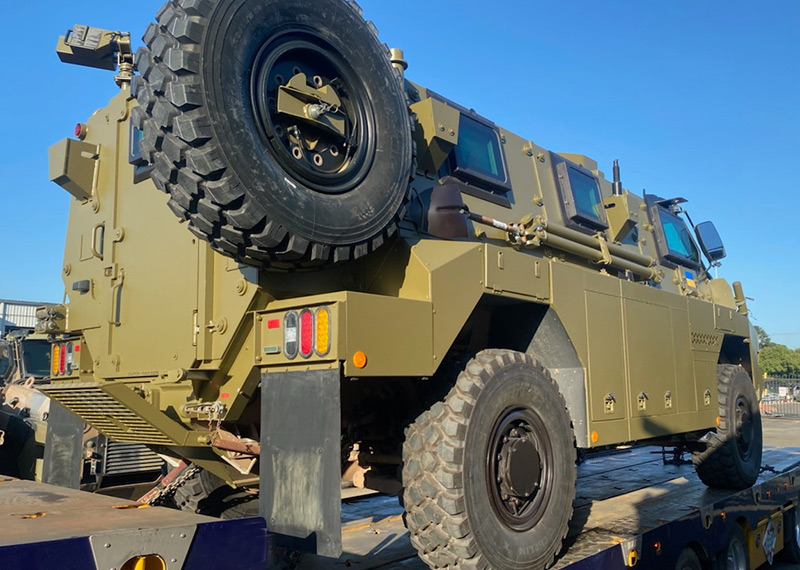
The objective of this audit was to examine the effectiveness of the Department of Defence’s development and implementation of Australia’s approach to providing military assistance to the Government of Ukraine.
Entity
Department of Defence
Contact
Please direct enquiries through our contact page.
Performance audit (Auditor-General Report No. 33 of 2000–01)
Published: Monday 7 May 2001
Published
The objective of the ANAO audit was to identify possible areas for improvement in the Australian Defence Force's management of its Reserve forces. The audit focused on major aspects of the Reserves including roles and tasks, force structure, capability, training, individual readiness, equipment, facilities, recruitment, retention, conditions of service and administration. The audit covered the Australian Naval Reserve, the Australian Army Reserve and the Royal Australian Air Force Reserve. However, due to its size and cost, the Army Reserve was a major focus of the audit activity.
Entity
Department of Defence
Performance audit (Auditor-General Report No. 43 of 2023–24)

Published: Friday 21 June 2024
Published
The objective of this audit was to assess the effectiveness of the Australian Public Service Commission's (APSC) administration of statutory functions relating to upholding high standards of integrity and ethical conduct in the Australian Public Service (APS).
Entity
Australian Public Service Commission
Contact
Please direct enquiries through our contact page.
Financial statement audit (Auditor-General Report No. 16 of 2014–15)

Published: Thursday 18 December 2014
Published
This report complements the interim phase report published in June 2014 (Audit Report No.44 2013–14), and provides a summary of the final audit results of the audits of the financial statements of 251 Australian Government entities, including the Consolidated Financial Statements for the Australian Government.
Entity
Across Entities
Contact
Please direct enquiries relating to reports through our contact page.
Financial statement audit (Auditor-General Report No. 33 of 2016–17)

Published: Monday 23 January 2017
Published
This report complements the interim phase report published in August 2016, and provides a summary of the final results of the audits of the Consolidated Financial Statements for the Australian Government and the financial statements of Australian Government entities.
Entity
Across Entities
Performance audit (Auditor-General Report No. 36 of 2005–06)
Published: Tuesday 2 May 2006
Published
The objective of the audit was to assess the effectiveness of management of the procurement of a major, new capability for the ADF by the DMO and Defence. The audit reviewed the initial capability requirements and approval process; analysed the contract negotiation process; and examined management of the Acquisition and Through-Life-Support Contracts. Coverage of the audit extended from development of the concept for the requirement, to acceptance of deliverables in the period prior to the award of the Australian Military Type Certificate (see shaded area of Figure 1). The audit fieldwork was undertaken during the delivery phase of the Project, following delivery of ARH numbers 1, 2 and 5.
Entity
Department of Defence; Defence Material Organisation
Performance audit (Auditor-General Report No. 34 of 2017–18)

Published: Tuesday 17 April 2018
Published
The objective of the audit was to assess the effectiveness of Defence’s implementation of the First Principles Review.
Entity
Department of Defence
Contact
Please direct enquiries through our contact page.
Performance audit (Auditor-General Report No. 6 of 2013–14)
Published: Wednesday 30 October 2013
Published
The objective of the audit was to examine the effectiveness of Defence’s implementation of reforms to capability development since the introduction of the two-pass process for government approval of capability projects and government’s acceptance of the reforms recommended by the Mortimer Review. The scope of this audit included the requirements phase and, to a limited extent, the acquisition phase of major capability development projects, focusing upon changes flowing from the major reforms.
Entity
Department of Defence
Contact
Please direct enquiries relating to reports through our contact page.
Performance audit (Auditor-General Report No. 34 of 1996–97)
Published: Tuesday 27 May 1997
Published
The objective of the audit was to assess the efficiency and effectiveness of the provision of health services to the Australian Defence Force Regular forces. Audit criteria were developed which examined health services policy and strategic planning, resource management, the tri-Service provision of medical, dental and other health care, the operation of and planning for major medical facilities, health care management information systems, occupational health and safety and the supply of health materiel.
Entity
Department of Defence
Performance audit (Auditor-General Report No. 25 of 2004–05)
Published: Tuesday 1 February 2005
Published
The audit examined the relationship between the strategic guidance and capabilities provided by Army, through analysis of the Army capability management and reporting framework. The objectives of the audit were to: Assess Army capability management and reporting processes; determine whether these processes efficiently and effectively manage resources to provide Army capability; and accurately indicate the capability provided by Army.
Entity
Department of Defence
Performance audit (Auditor-General Report No. 38 of 2001–02)
Published: Tuesday 19 March 2002
Published
The audit reviewed the planning and management of the Australian Defence Force deployments to East Timor, including the support of those deployments. The audit focused on planning for the deployments and the role of Australia as the lead nation in the International Force in East Timor (INTERFET); and financial, personnel, logistic and other systems used to deploy and sustain Australia's military presence in East Timor.
Entity
Department of Defence
Performance audit (Auditor-General Report No. 45 of 2003–04)
Published: Thursday 29 April 2004
Published
The objective of the current audit was to assess Army's progress in implementing the ANAO recommendations and to examine and assess any developments in relation to AIRN since the 1999?2000 audit report and the 2001 JCPAA report. Army updated AIRN policy in 2001 and 2004, and the ANAO has assessed, where appropriate, the implementation of the 1999?2000 audit recommendations for these two policy reissues.
Entity
Department of Defence
Performance audit (Auditor-General Report No. 19 of 2014–15)

Published: Thursday 5 February 2015
Published
The audit objective was to assess the effectiveness of the Department of Defence's management of the disposal of specialist military equipment.
Entity
Department of Defence
Contact
Please direct enquiries relating to reports through our contact page.
Speeches and papers
Published: Thursday 18 October 2001
Published
Mr P.J. Barrett (AM) - Auditor-General for Australia, presented to the Senior Staff of the Board of Audit - Tokyo, Japan
Annual report
Published: Tuesday 30 September 2014
Published
This annual report documents the performance of the Australian National Audit Office (ANAO) in the financial year ending on 30 June 2014. It addresses the Requirements for Annual Reports for Departments, Executive Agencies and FMA Act Bodies approved by the Joint Committee of Public Accounts and Audit in May 2014; the performance measures set out in the outcome and programs framework in the 2013–14 Portfolio Budget Statements; section 28 of the Auditor-General Act 1997; and other annual reporting requirements provided for in legislation.
Speeches and papers
Published: Wednesday 26 April 2000
Published
Mr P.J. Barrett (AM) - Auditor-General for Australia, presented an Occasional Paper
Annual report
Published: Monday 30 September 2013
Published
This annual report documents the performance of the Australian National Audit Office (ANAO) in the financial year ending on 30 June 2013. It addresses the Requirements for Annual Reports for Departments, Executive Agencies and FMA Act Bodies approved by the Joint Committee of Public Accounts and Audit in June 2013; the performance measures set out in the outcomes and programs framework in the 2012–13 Portfolio Budget Statements; section 28 of the Auditor-General Act 1997; and other annual reporting requirements set out in legislation.
Speeches and papers
Published: Monday 3 February 2003
Published
Mr P.J. Barrett (AM) - Auditor-General for Australia, presented to the Australasian Council of Public Accounts Committees (ACPAC)
Financial statement audit (Auditor-General Report No. 48 of 2005–06)

Published: Thursday 22 June 2006
Published
The focus of this report is on the year end results of the financial statement audits of all general purpose reporting entities for the 2005–06 financial year. Financial management issues (where relevant) arising out of the audits and their relationship to internal control structures are also included in this report.
Entity
Across agency
Performance audit (Auditor-General Report No. 3 of 2000–01)
Published: Monday 31 July 2000
Published
This audit is a follow-up to ANAO Audit Report No.31 1995-96 Environmental Management of Commonwealth Land: Site Contamination and Pollution Prevention (‘the original audit'). The objectives of the follow-up audit were to determine: the extent to which Defence has implemented the agreed recommendations contained in the original audit (relating to its environmental management and the management of unexploded ordnance (UXO) on non-Commonwealth land) and; the effectiveness of the implemented recommendations in improving the environmental management of Commonwealth land.
Entity
Department of Defence
Annual report
Published: Wednesday 30 September 2015
Published
This annual report documents the performance of the Australian National Audit Office (ANAO) in the financial year ending on 30 June 2015. It addresses the Requirements for Annual Reports for Departments, Executive Agencies and Other Non‑corporate Commonwealth Entities approved by the Joint Committee of Public Accounts and Audit in June 2015; the performance measures set out in the outcome and programs framework in the 2014–15 Portfolio Budget Statements; section 28 of the Auditor‑General Act 1997; and other annual reporting requirements set out in legislation.
Performance audit (Auditor-General Report No. 11 of 2003–04)
Published: Tuesday 4 November 2003
Published
Annual Performance Reporting, No 11 2003-04 The audit reviewed the 2001-02 annual reports of the departments of : Communications, Technology and the Arts; Education, Science and Training; Employment and Workplace Relations; Immigration and Multicultural and Indigenous Affairs and the Australian Customs Service. The objectives of this audit were to determine whether agencies had: established a sound annual reporting performance information framework; developed arrangements to ensure performance information is accurate and coherent; and appropriately analysed performance information in their annual reports.
Entity
Across Agency
Performance audit (Auditor-General Report No. 52 of 2003–04)
Published: Tuesday 15 June 2004
Published
The objective of this audit was to follow up DVA's implementation of the recommendations in Audit Report No. 44, 2000-01, Information Technology in the Department of Veterans' Affairs. The ANAO made two recommendations in the report (the second having five parts). The recommendations addressed the monitoring of IT changes; IT performance information; information systems model documentation; and the facilitation of the interpretation of performance information.
Entity
Department of Veterans' Affairs
Performance audit (Auditor-General Report No. 52 of 2016–17)

Published: Tuesday 23 May 2017
Published
The audit objective was to assess the effectiveness of the management of underperformance in the Australian Public Service (APS) and identify opportunities for improvement.
Entity
Across Entities
Contact
Please direct enquiries relating to reports through our contact page.
Performance audit (Auditor-General Report No. 6 of 2018–19)

Published: Tuesday 11 September 2018
Published
The objective of the audit was to assess the effectiveness and value for money of Defence’s acquisition of light protected vehicles, under Defence project Land 121 Phase 4.
Entity
Department of Defence
Contact
Please direct enquiries through our contact page.
Performance audit (Auditor-General Report No. 19 of 2006–07)
Published: Thursday 25 January 2007
Published
The objective of this audit was to determine whether Health adequately assessed the State and Territory Governments' compliance with their obligations under the terms of the AHCAs. In conducting the audit, ANAO addressed the following criteria:
- if Health assessed whether the States and Territories were adhering to the AHCAs clause 6 principles that all eligible persons had equitable access to free public health and emergency services on the basis of clinical need within an appropriate period;
- if Health assessed whether the States and Territories were increasing their own source funding at the rate specified in the AHCAs; and
- if Health assessed whether the States and Territories were meeting the performance reporting requirements set out in the AHCAs.
Entity
NO-DEPTS-LISTED
Performance audit (Auditor-General Report No. 52 of 2014–15)
Published: Thursday 25 June 2015
Published
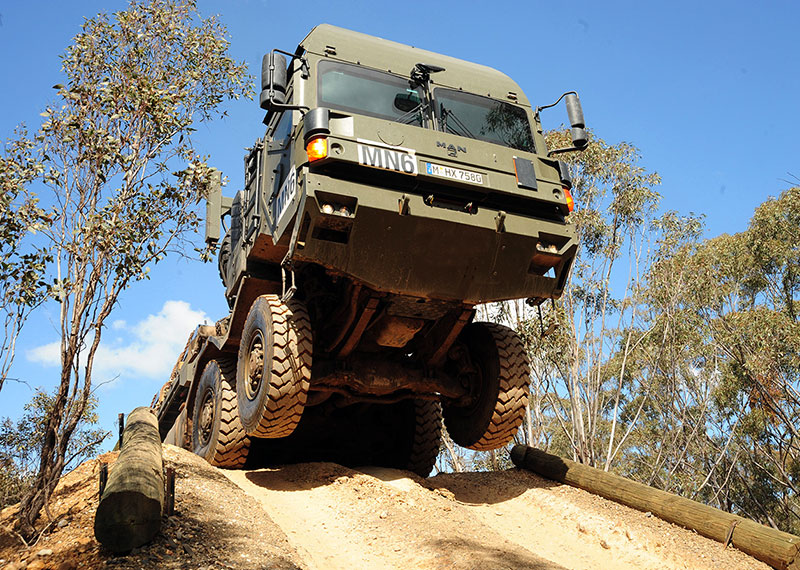
The audit objective was to assess the effectiveness of Defence’s management of the acquisition of medium and heavy vehicles, associated modules and trailers for the Australian Defence Force.
Entity
Department of Defence; Defence Materiel Organisation
Contact
Please direct enquiries relating to reports through our contact page.
Performance audit (Auditor-General Report No. 22 of 2019–20)

Published: Tuesday 14 January 2020
Published
The audit objective was to examine the effectiveness of the Department of Defence's administration of the Future Submarine Program to date.
Entity
Department of Defence
Contact
Please direct enquiries through our contact page.
Performance audit (Auditor-General Report No. 4 of 2000–01)
Published: Monday 14 August 2000
Published
This report summarises audit and other related activities of the Australian National Audit Office in the period January to June 2000.
Entity
Audit Activity Report
Performance audit (Auditor-General Report No. 18 of 2010–11)
Published: Wednesday 8 December 2010
Published
The objective of the audit was to assess the administrative effectiveness of FaHCSIA's management of the GBM initiative, and the extent to which the initiative has contributed to improvements in community engagement and government coordination in the Northern Territory.
The audit focused on FaHCSIA's management of the GBM initiative under the NTER. The audit scope did not include additional functions assigned to some GBMs in the Northern Territory under the National Partnership Agreement on Remote Service Delivery (the National Partnership Agreement), or to Australian Government staff with similar roles and functions supporting the implementation of the National Partnership Agreement in Queensland and Western Australia.
Entity
Department of Families, Housing, Community Services and Indigenous Affairs
Performance audit (Auditor-General Report No. 48 of 2016–17)

Published: Thursday 27 April 2017
Published
The objective of this audit was to assess the effectiveness of Defence’s design and implementation of arrangements to select a preferred Strategic Partner for the Future Submarines Program.
Entity
Department of Defence
Contact
Please direct enquiries relating to reports through our contact page.
Performance audit (Auditor-General Report No. 28 of 1999–2000)
Published: Thursday 3 February 2000
Published
This report summarises audit and other related activities of the Australian National Audit Office in the period July to December 1999.
Entity
Across Agency
Performance audit (Auditor-General Report No. 2 of 2003–04)
Published: Wednesday 13 August 2003
Published
The Audit Activity Report: January to June 2003 summarises the activity and outputs of the Australian National Audit Office for the second half of the 2002-03 reporting year. The Report outlines the key findings of performance and financial control audits, and summarises audits tabled and better practice guides published during January to June 2003.
Entity
Australian National Audit Office; Parliament
Major projects report (Auditor-General Report No. 20 of 2011–12)

Published: Tuesday 20 December 2011
Published
The objective of this report is to provide a formal conclusion on the review of the Project Data Summary Sheets by the Auditor-General, including comprehensive information on the status of projects as reflected in the PDSSs prepared by the DMO.
Entity
Defence Materiel Organisation
Performance audit (Auditor-General Report No. 14 of 2000–01)
Published: Thursday 26 October 2000
Published
The general objectives of the audit were to:
- obtain and report quantitative and qualitative benchmarks of performance in the public sector; and
- compare the public sector benchmarks with equivalent international data to identify better practices and highlight opportunities for improvement.
In relation to internal audit, given the three-year duration of the study, these generic objectives have been extended to include an analysis of trends in internal audit over the past three years.
Entity
Across Agency
Performance audit (Auditor-General Report No. 52 of 2011–12)
Published: Tuesday 26 June 2012
Published
The objective of this audit was to examine the effectiveness of DMO’s implementation of its Gate Review process for major Defence capital acquisition projects.
Entity
Department of Defence
Performance audit (Auditor-General Report No. 38 of 2003–04)
Published: Wednesday 31 March 2004
Published
In April 2002, the ANAO tabled Audit Report No.40 2001-02 Corporate Governance in the Australian Broadcasting Corporation ( the 2002 audit). In August 2003, the ABC submitted a report to the Joint Committee of Public Accounts and Audit (JCPAA) on its progress in implementing the recommendations from the 2002 audit and the JCPAA report. This follow-up audit examined the ABC's implementation of recommendations from both reports, using the ABC's progress report as its base.
Entity
Australian Broadcasting Corporation
Performance audit (Auditor-General Report No. 56 of 2002–03)
Published: Wednesday 25 June 2003
Published
The objective of the audit was to report to Parliament on the progress Defence has made since June 2001 in implementing appropriate strategies for recruiting, developing and retaining skilled IT personnel. The audit focused on management of specialist information system skills and did not examine skills needed by users of information systems, although the latter is of obvious importance for overall performance. In June 2001, the Joint Committee of Public Accounts and Audit (JCPAA), after reviewing the ANAO's Audit Report No. 11 Knowledge System Equipment Acquisition Projects in Defence, commented that its major concern about Defence's ability to develop a knowledge edge with adequate coherence, centred on Defence's ability to recruit, develop and retain skilled individuals needed in all parts of the DIE. The JCPAA recommended that the ANAO conduct an audit of Defence's strategies for recruiting, developing and retaining skilled IT personnel.
Entity
Department of Defence
Performance audit (Auditor-General Report No. 45 of 2009–10)
Published: Thursday 17 June 2010
Published
The objective of the audit was to assess whether Defence effectively managed the procurement process for services related to the recruitment of personnel to the ADF and the introduction of a new service provider.
Entity
Department of Defence
Performance audit (Auditor-General Report No. 33 of 1998–99)
Published: Tuesday 9 March 1999
Published
This report summarises audit and other related activities of the Australian National Audit Office in the period July to December 1998.
Entity
Audit Activity Report
Performance audit (Auditor-General Report No. 4 of 2002–03)
Published: Monday 19 August 2002
Published
The report summarises the audit and other related activities of the ANAO in the period January to June 2002. Key issues arising from performance audits tabled in this period are summarised. Appendix 1 of the Activity Report provides a short summary of each of the audits tabled between 1 January 2002 and 30 June 2002.
Entity
Audit Activity Report
Major projects report (Auditor-General Report No. 13 of 2009–10)

Published: Tuesday 24 November 2009
Published
The objective of this report is to provide information, prepared by both the ANAO and DMO, on the performance of major projects as well as providing the Auditor-General’s formal conclusion on the review of the Project Data Summary Sheets (PDSSs) prepared by DMO and contained in this report.
Entity
Defence Materiel Organisation
Financial statement audit (Auditor-General Report No. 58 of 2003–04)

Published: Wednesday 30 June 2004
Published
This report updates the ANAO's assessment of audit findings relating to major entity internal control structures, including governance arrangements, information systems and control procedures through to March 2004. The findings summarised in this report arise from the interim phase of the financial statement audits of major Australian Government entities for 2003/2004. Examinations of such findings are designed to assess the reliance that can be placed on control structures to produce complete, accurate and valid information for financial reporting purposes.
Entity
Across Agency
Speeches and papers
Published: Friday 23 August 2002
Published
Mr P.J. Barrett (AM) - Auditor-General for Australia, presentation to Macquarie University