Browse our range of reports and publications including performance and financial statement audit reports, assurance review reports, information reports and annual reports.
Performance audit (Auditor-General Report No. 51 of 2003–04)
Published: Friday 11 June 2004
Published
The objectives of this performance audit were to: - review the governance and accountability framework for the Scheme, and - assess the efficiency and effectiveness of Treasury's implementation and management of that framework.
Entity
Department of the Treasury
Performance audit (Auditor-General Report No. 43 of 2013–14)
Published: Wednesday 18 June 2014
Published
The objective of the audit was to assess the effectiveness of the Department of the Environment’s regulation of proponents’ compliance with Part 9 of the Environment Protection and Biodiversity Conservation Act 1999.
Entity
Department of the Environment
Contact
Please direct enquiries relating to reports through our contact page.
Speeches and papers
Published: Friday 22 November 2019
Published
The Auditor-General, Grant Hehir, delivered a presentation to the 15th Biennial Australasian Council of Public Accounts Committees (ACPAC) Conference held at Parliament House, Canberra, on 7 November 2019. The presentation was titled Maintaining Trust in the Parliamentary Process — PACs and Officers of the Parliament.
Contact
Please direct enquiries through our contact page.
Performance audit (Auditor-General Report No. 29 of 2006–07)
Published: Wednesday 7 March 2007
Published
The objective of the audit was to assess the implementation and administration of the movement limit and the Slot Management Scheme at Sydney Airport.
The scope of the audit included the development and administration of the SADM Act. The scope also included the development and administration of the relevant legislative instruments and determinations, particularly those which put in place the monitoring and compliance frameworks that support the legislation.
Entity
NO-DEPTS-LISTED
Performance audit (Auditor-General Report No. 41 of 2001–02)
Published: Monday 15 April 2002
Published
New transactional banking arrangements for FMA agencies came into effect on 1 July 1999. The audit reviewed selected agencies' implementation and ongoing management of contractual banking arrangements; agencies' tendering for the procurement of banking services; and identified practises that have improved administrative arrangements. The audit examined Finance's role in planning and implementing the new arrangements as well as implementation in the Australian Customs Service (Customs) the Department of Transport and Regional Services (DTRS), the Department of Education, Science and Training (DEST), and the Department of Immigration and Multicultural and Indigenous Affairs (DIMIA).
Entity
Department of Finance and Administration
Performance audit (Auditor-General Report No. 27 of 2010–11)
Published: Thursday 10 February 2011
Published
The audit examined key aspects of the first four tenders for the RtB program. These tenders provided coverage across the Basin and resulted in expenditure in excess of $1 billion. The 2008–09 tenders included the largest single purchase under the program—$303 million to Twynam Agricultural Group. The audit also examined the Commonwealth's contribution to the purchase of Toorale station, the only purchase outside a tender process.
Entity
Department of Sustainability, Environment, Water, Population and Communities
Performance audit (Auditor-General Report No. 17 of 2005–06)
Published: Tuesday 29 November 2005
Published
The objective of the audit was to assess the ATO's administration of the LMR. Specifically, the audit sought to: examine and report on aspects of LMR governance; assess the systems, processes and controls used by the ATO to capture and process LMR data reported by providers; examine the mechanisms and strategies the ATO uses to gain assurance that providers are complying with LMR legislation; and assess the mechanisms and strategies the ATO uses to promote awareness of, and enable access to, the LMR.
Entity
Australian Taxation Office
Performance audit (Auditor-General Report No. 16 of 2013–14)
Published: Wednesday 29 January 2014
Published
The objective of the audit was to assess the effectiveness of the administration of the Smart Grid, Smart City Program, including the establishment, implementation and ongoing management of the program.
Entity
Department of the Environment; Department of Industry
Contact
Please direct enquiries relating to reports through our contact page.
Speeches and papers
Published: Friday 9 April 1999
Published
Mr P.J. Barrett (AM) - Auditor-General for Australia, presented at the National Public Sector Accountants Conference, Adelaide
Performance audit (Auditor-General Report No. 10 of 2012–13)
Published: Tuesday 13 November 2012
Published
The objective of the audit was to assess the Department of Health and Ageing’s (DoHA’s) implementation and ongoing management of the Aged Care Complaints Scheme and the effectiveness of DoHA’s complaint management systems in supporting service delivery and regulatory outcomes.
Entity
Department of Health and Ageing
Speeches and papers
Published: Wednesday 21 April 2010
Published
Mr Ian McPhee - Auditor-General for Australia, presented at the CPA Australia - CFO Public Sector Lunch
Performance audit (Auditor-General Report No. 16 of 2008–09)
Published: Monday 22 December 2008
Published
The objective of the audit was to assess the adequacy and effectiveness of the BCM practices and procedures within the Tax Office in preparing for, or responding to, disruptions to ‘business as usual' operations.
Entity
Australian Taxation Office
Performance audit (Auditor-General Report No. 1 of 2013–14)
Published: Thursday 8 August 2013
Published
The objective of the audit was to assess the effectiveness of the design and implementation of the Liveable Cities Program, including the assessment and approval of applications.
Entity
Department of Infrastructure and Transport
Contact
Please direct enquiries relating to reports through our contact page.
Performance audit (Auditor-General Report No. 21 of 2017–18)

Published: Wednesday 13 December 2017
Published
The objective of the audit was to examine the effectiveness of the Australian Taxation Office’s use of settlements to resolve taxpayer disputes.
Entity
Australian Taxation Office
Contact
Please direct enquiries relating to reports through our contact page.
Annual report
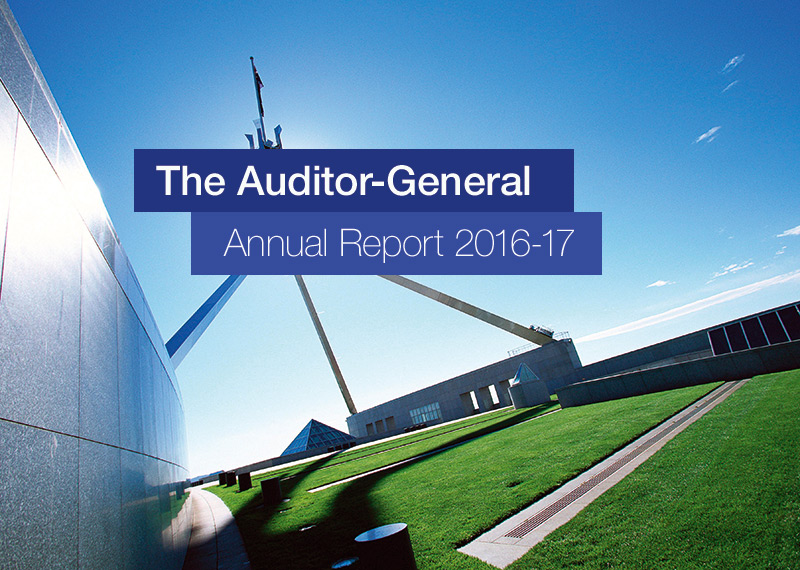
Published: Monday 4 September 2017
Published
This annual report documents the performance of the Australian National Audit Office (ANAO) in the financial year ending on 30 June 2017. The report addresses all applicable obligations under the Public Governance, Performance and Accountability Act 2013 (PGPA Act); the Public Governance, Performance and Accountability Rule 2014 (PGPA Rule); the Auditor-General Act 1997; the performance measures set out in the outcome and programs framework in the ANAO’s 2016–17 Portfolio Budget Statements (PBS) and the ANAO 2016–20 Corporate Plan and annual reporting requirements set out in other relevant legislation.
Contact
Please direct enquiries relating to annual reports through our contact page.
Performance audit (Auditor-General Report No. 11 of 2011–12)
Published: Thursday 3 November 2011
Published
The objective of the audit was to assess the effectiveness of FaHCSIA’s administration of the HAF. To address this objective, the Australian National Audit Office (ANAO) assessed FaHCSIA’s administration against a range of audit criteria, including the extent to which:
- assessment and approval processes were soundly planned and implemented, and were consistent with the requirements of the overarching financial management framework;
- appropriately structured funding agreements were established and managed for each approved grant; and
- the performance of the HAF, including each of the funded projects, was actively monitored and reported.
Entity
Department of Families, Housing, Community Services and Indigenous Affairs; Department of Sustainability, Environment, Water, Population and Communities
Speeches and papers
Published: Monday 17 May 1999
Published
Mr P.J. Barrett (AM) - Auditor-General for Australia, presented at the Public Seminar Series, Graduate Program in Public Policy, 'Democratic Governance: Improving the Institutions of Accountability', The Australian National University
Performance audit (Auditor-General Report No. 9 of 2010–11)
Published: Wednesday 29 September 2010
Published
On 3 February 2010, Senator Christine Milne wrote to the Auditor General raising concerns about DEWHA's administration of the Green Loans program and requesting a performance audit of the program. Issues raised included: uncapped assessor numbers; problems with the delivery of the program; the quality of assessor training and assessments provided to households; the lack of an audit facility within the program; and equitable access to work under the program.
In light of Senator Milne's request and other concerns in relation to the administration of the program, the Auditor-General agreed on 25 February 2010 to conduct a performance audit of the program. The objective of the audit was to examine key aspects of the establishment and administration of the Green Loans program by DEWHA and the program's transition to DCCEE. Particular emphasis was given to the program's three main elements:
- training, registration and contracting of assessors;
- scheduling, conduct, and reporting of home sustainability assessments, and the associated payments to assessors; and
- provision of green loans to householders, and the associated payments to participating financial institutions.
The audit also examined the extent to which steps had been taken by DEWHA and DCCEE to assess whether the Green Loans program was achieving its objectives.
Entity
Department of the Environment, Water, Heritage and the Arts; Department of Climate Change and Energy Efficiency
Performance audit (Auditor-General Report No. 58 of 2016–17)

Published: Monday 26 June 2017
Published
The objective of the audit was to examine the implementation of the annual performance statements requirements under the Public Governance, Performance and Accountability Act 2013 and the enhanced Commonwealth performance framework.
Entity
Department of Agriculture and Water Resources; Australian Federal Police; Department of Finance
Contact
Please direct enquiries relating to reports through our contact page.
Performance audit (Auditor-General Report No. 51 of 2012–13)
Published: Monday 24 June 2013
Published
The objective of the audit was to assess the effectiveness of the Australian Taxation Office’s management of its property portfolio.
Entity
Australian Taxation Office
Contact
Please direct enquiries relating to reports through our contact page.
Performance audit (Auditor-General Report No. 34 of 2008–09)
Published: Wednesday 20 May 2009
Published
The objective of the audit was to assess the administrative effectiveness of the Tax Office's strategies to address serious non-compliance. In conducting the audit, the ANAO examined the Tax Office's management framework and arrangements to deter, detect and deal with fraud and serious evasion.
Entity
Australian Taxation Office
Performance audit (Auditor-General Report No. 50 of 2005–06)
Published: Tuesday 27 June 2006
Published
The objective of the audit was to assess the framework being put in place to manage and account for aid funds provided under the AIPRD. In particular, the audit addressed: structures for oversighting the development and delivery of the AIPRD; planning and risk management (including those relating to fraud and corruption); financial management; and arrangements for ongoing monitoring and reporting. The audit focussed on the arrangements being established to monitor, evaluate and report on AIPRD implementation, rather than the management of activities and outcomes achieved. This reflects the fact that the long lead times associated with establishing such a large programme of assistance had meant that only limited activities were underway at the time of audit fieldwork. The ANAO anticipates undertaking an audit in the future of the management of activities and outcomes achieved, when more funds have been expended. It was not the purpose of this audit to examine Australia's immediate emergency and humanitarian response to the tsunami crisis.
Entity
Australian Agency for International Development; Department of Foreign Affairs and Trade
Performance audit (Auditor-General Report No. 3 of 2007–08)
Published: Thursday 19 July 2007
Published
The audit objective was to form an opinion on the effectiveness of DEST's planning, assessment, and Funding Agreements management for the Australian Technical Colleges programme. At the time of the audit fieldwork (prior to the 2007–08 Budget) the Government had announced the establishment of 21 of the then target of 25 colleges. After fieldwork was completed the Government announced its intention to fund an additional three colleges in three new regions.
The criteria for this audit were designed to test whether DEST's management of the programme complied with its plans, procedures and guidelines, with the Act, and better practices for grants administration. For these purposes, the ANAO focused on DEST's:
- planning for the implementation of the programme;
- assessment of proposals to establish and operate the colleges; and
- management of the Funding Agreements.
Entity
Department of Education, Science and Training
Performance audit (Auditor-General Report No. 28 of 2016–17)

Published: Monday 28 November 2016
Published
The audit objective was to assess whether the Department of Industry, Innovation and Science has effectively and efficiently administered the collection of North West Shelf royalty revenues.
Entity
Department of Industry, Innovation and Science
Contact
Please direct enquiries relating to reports through our contact page.
Performance audit (Auditor-General Report No. 54 of 2012–13)
Published: Wednesday 26 June 2013
Published
The audit objectives were to assess the effectiveness of:
- selected agencies’ administration in developing advertising campaigns and implementing key processes against the requirements of the Australian Government’s campaign advertising framework, and other key legal and administrative requirements; and
- the ongoing administration of the campaign advertising framework.
Entity
Across Entities
Contact
Please direct enquiries relating to reports through our contact page.
Performance audit (Auditor-General Report No. 3 of 2013–14)
Published: Thursday 15 August 2013
Published
The objective of the audit was to assess the adequacy of Defence’s processes, including compliance with the Financial Management and Accountability Act 1997 (FMA Act), the Financial Management and Accountability Regulations 1997 (FMA Regulations), and relevant Commonwealth and Defence procurement requirements, to select the capability solution recommended to the Government to satisfy the requirements of AIR 8000 Phase 2.
Entity
Department of Defence
Contact
Please direct enquiries relating to reports through our contact page.
Speeches and papers
Published: Monday 27 October 1997
Published
Mr P.J. Barrett (AM) - Auditor-General for Australia, presented to the National Public Sector Accountants Conference; Sydney
Performance audit (Auditor-General Report No. 22 of 2012–13)
Published: Thursday 21 February 2013
Published
The objective of the audit was to examine the effectiveness of the Department of Agriculture, Fisheries and Forestry’s administration of the Tasmanian Forests Intergovernmental Agreement Contractors Voluntary Exit Grants Program.
Entity
Department of Agriculture, Fisheries and Forestry
Performance audit (Auditor-General Report No. 14 of 2017–18)

Published: Tuesday 31 October 2017
Published
The objective of the audit was to assess the effectiveness of the transition of the Remote Jobs and Communities Programme to the Community Development Programme, including whether the Community Development Programme is well designed and administered effectively and efficiently.
Entity
Department of the Prime Minister and Cabinet; Department of Employment; Department of Human Services
Contact
Please direct enquiries relating to reports through our contact page.
Performance audit (Auditor-General Report No. 44 of 2005–06)
Published: Thursday 1 June 2006
Published
The objective of the audit was to examine how effectively Health manages the risk of PBS drugs not being used according to PBS subsidy conditions. The audit examined two areas: during listing, how Health identified and implemented measures to decrease the risks of PBS drugs being used outside subsidy conditions; and following listing, how Health confirmed that usage and expenditure on PBS drugs was consistent with estimates. The report examines selected approaches used by Health, which have evolved in recent years, to manage the risk of PBS drugs being used outside subsidy conditions. The report also acknowledges and describes the role of the expert committees. The scope of the audit was limited to PBS drugs for which Health pays a subsidy. The audit did not examine Health's role in educating consumers, prescribers, and other health professionals, or the implications of the Australia–United States Free Trade Agreement for the PBS. Additionally, the ANAO did not form an opinion on the success of Medicare Australia's compliance role. To form an opinion against the audit objective, the ANAO interviewed Health personnel, committee members and stakeholders, examined relevant documents and files, analysed drug usage and expenditure data, and attended a number of committee meetings. To assist the audit process, the ANAO selected a sample of eight drugs. The drugs were selected due to their high cost to the PBS and/or high usage, or because the drug has had a particularly interesting PBS history. The sample is not representative of all drugs on the PBS. In 2004–05, 15.3 million prescriptions were written for these eight drugs, with the Government subsidy totalling $1.05 billion.
Entity
Department of Health and Ageing
Performance audit (Auditor-General Report No. 62 of 2001–02)
Published: Wednesday 26 June 2002
Published
The objective of this benchmarking study of the finance function was to obtain and report on over time, quantitative and qualitative data, relating to finance function activities as they operate in Commonwealth organisations. Over the three year period of the study, the majority of participating Commonwealth organisations have shown an improvement in their quantitative and/or qualitative benchmark results across the range of finance function activities. The Report does not provide specific reasons for differences in performance. However, it does provide guidance as to some of the better practices that participating organisations, and the wider public sector, may wish to adopt, or adapt in order to achieve improved performance in the activities of the finance function.
Entity
Across Agency
Performance audit (Auditor-General Report No. 24 of 2011–12)
Published: Wednesday 8 February 2012
Published
The audit objectives were:
- to assess the effectiveness of the revised certification process in promoting compliance of government advertising campaigns (campaigns) with the March 2010 Guidelines on Information and Advertising Campaigns by Australian Government Departments and Agencies (2010 Guidelines);
- to assess the effectiveness of agency administration in developing campaigns and implementing key processes against the requirements of the campaign advertising framework;
- to assess the effectiveness of Finance’s administration of the campaign advertising framework; and
- to assess the effect on campaigns of an exemption from the 2010 Guidelines.
Entity
Across Agencies
Performance audit (Auditor-General Report No. 33 of 2008–09)
Published: Wednesday 20 May 2009
Published
The objective of the audit was to assess the effectiveness of the Tax Office's administration of the PRRT. The Australian National Audit Office (ANAO) identified four key areas for review: general administration; compliance; promoting certainty in administering the PRRT; and governance arrangements.
Entity
Australian Taxation Office
Performance audit (Auditor-General Report No. 35 of 2005–06)
Published: Tuesday 28 March 2006
Published
The objective of the audit was to assess the ATO's administration of activity statement HRRs. Specifically the audit sought to: examine aspects of ATO governance relevant to its administration of activity statement HRRs. This includes: ATO planning, the integration between Lines to administer HRRs; corporate risk management processes; and performance management; assess the ATO's methodology and practice to identify and, if necessary, correct activity statement HRRs; and identify and assess the Information Technology (IT) and manual systems, processes and controls used by the ATO to process HRRs resulting from the lodgement of activity statements.
Entity
Australian Taxation Office
Performance audit (Auditor-General Report No. 36 of 2012–13)
Published: Tuesday 21 May 2013
Published
The objective of the audit was to assess the effectiveness of the Commonwealth Environmental Water Office’s administration of environmental water holdings.
Entity
Department of Sustainability, Environment, Water, Population and Communities
Contact
Please direct enquiries relating to reports through our contact page.
Performance audit (Auditor-General Report No. 53 of 2011–12)
Published: Wednesday 27 June 2012
Published
To assess the extent to which agencies create, manage and dispose of records in accordance with key business, legal and policy requirements.
The agencies included in the audit were the: Australian Customs and Border Protection Service (Customs); Department of Immigration and Citizenship (DIAC); and the Department of the Treasury (Treasury). The audit also considered the Archives' response to Recommendation No. 1 from ANAO Audit Report No.6 2006, 07 Recordkeeping including the Management of Electronic Records, including whether they had clarified Australian Government records management requirements for agencies.
Entity
Across agencies
Performance audit (Auditor-General Report No. 23 of 2011–12)
Published: Tuesday 7 February 2012
Published
The objective of the audit was to assess the effectiveness of the Department of Climate Change and Energy Efficiency’s implementation and administration of the National Greenhouse and Energy Reporting Scheme.
Entity
Department of Climate Change and Energy Efficiency
Annual report
Published: Wednesday 14 September 2016
Published
This annual report documents the performance of the Australian National Audit Office (ANAO) in the financial year ending 30 June 2016. It addresses all applicable obligations under the Public Governance, Performance and Accountability Act 2013 and the Auditor-General Act 1997, the performance measures set out in the outcome and programs framework in the ANAO’s 2015–16 Portfolio Budget Statements and the ANAO’s 2015–19 Corporate Plan and annual reporting requirements set out in other legislation.
Contact
Please direct enquiries relating to annual reports through our contact page.
Performance audit (Auditor-General Report No. 41 of 2011–12)
Published: Thursday 14 June 2012
Published
The audit objective was to assess the effectiveness of DEEWR's administration of the National Partnership Agreement on Literacy and Numeracy (LNNP). The three high-level audit criteria used to form a conclusion examined the extent to which DEEWR:
- established sound administrative and payment arrangements consistent with government policy, including through its negotiation of bilateral agreements, implementation plans and reform targets;
- properly managed administrative and payment arrangements; and
- effectively monitored and reported on delivery and outcomes.
Entity
Department of Education, Employment and Workplace Relations
Performance audit (Auditor-General Report No. 35 of 2022–23)

Published: Wednesday 7 June 2023
Published
The objective of this audit was to assess the effectiveness of the governance of the Northern Land Council under the Aboriginal Land Rights (Northern Territory) Act 1976, Native Title Act 1993 and Public Governance, Performance and Accountability Act 2013.
Entity
Central Land Council
Contact
Please direct enquiries through our contact page.
Performance audit (Auditor-General Report No. 41 of 2002–03)
Published: Wednesday 7 May 2003
Published
Since 2000, there has been a requirement under the Environment Protection and Biodiversity Conservation Act 1999 (EPBC Act) for Commonwealth agencies to report annually on their environmental performance as well as their contribution to Ecologically Sustainable Development (ESD). The audit objective was to examine and report on the quality of Commonwealth agencies' annual reports on ESD and environment performance. The audit reviewed current practice in light of legal requirements, and provided examples of better practice.
Entity
Across Agency
Performance audit (Auditor-General Report No. 11 of 2012–13)
Published: Tuesday 27 November 2012
Published
The objective of this audit was to assess the efficiency and effectiveness of the establishment, implementation and administration of the quarantined heritage component of the Local Jobs stream of the Jobs Fund. A particular focus was on the establishment of program objectives and the extent to which approved grants have demonstrably contributed to the cost-effective achievement of those objectives. The audit approach has been influenced by recent audits of grants administration which have emphasised the importance of transparent and accountable grant decision-making processes to the cost effective achievement of stated program objectives, and having regard for recent government decisions to enhance the framework applying to the administration of grants.
Entity
Department of Sustainability, Environment, Water, Population and Communities
Performance audit (Auditor-General Report No. 3 of 2010–11)
Published: Tuesday 27 July 2010
Published
The objective of the audit was to assess whether the Strategic Projects component of the Regional and Local Community Infrastructure Program has been effectively designed and administered.
Entity
Department of Infrastructure, Transport, Regional Development and Local Government
Speeches and papers
Published: Wednesday 18 March 1998
Published
Mr P.J. Barrett (AM) - Auditor-General for Australia, presented at the Risk Management in the Public Sector Seminar
Performance audit (Auditor-General Report No. 9 of 2012–13)
Published: Thursday 1 November 2012
Published
The objective of the audit was to assess the management and effectiveness of DCO’s delivery and coordination of support services to ADF families, in particular support services provided when an ADF member is seriously injured or ill, or dies in service.
Entity
Department of Defence, Department of Veterans' Affairs
Performance audit (Auditor-General Report No. 8 of 2023–24)

Published: Monday 11 December 2023
Published
The objective of the audit was to assess whether the design and early implementation of the Australian Government’s response to Recommendation 86 of the Royal Commission into Aged Care Quality and Safety has been effective.
Entity
Department of Health and Aged Care; Aged Care Quality and Safety Commission
Contact
Please direct enquiries through our contact page.
Performance audit (Auditor-General Report No. 29 of 2008–09)
Published: Thursday 23 April 2009
Published
The objective of this performance audit of construction projects on the AusLink National Network was to assess the effectiveness of the administration by DITRDLG in working with the States to deliver the outcomes expected by the Government and the broader community. To inform the audit assessment, the methodology included examination of both Australian Government and State Government records as well as site inspections in relation to 21 projects being delivered in three States (New South Wales (NSW), Queensland and Tasmania). DITRDLG and the respective State road transport authorities were consulted in the selection of projects to be examined in detail.
Entity
Department of Infrastructure, Transport, Regional Development and Local Government
Performance audit (Auditor-General Report No. 28 of 2006–07)
Published: Thursday 22 February 2007
Published
The objective of the audit was to assess the effectiveness of the major elements of Centrelink's central, strategic level project management arrangements, as defined in the CPMF. It focused on how well:
- the CPMF supports better management and service delivery in Centrelink;
- the CPMF supports project managers and projects to comply with better project management principles, relevant legislation and guidelines; and
- Centrelink monitors project performance and encouraged the attainment of project objectives.
Entity
Centrelink
Performance audit (Auditor-General Report No. 3 of 2012–13)
Published: Wednesday 19 September 2012
Published
The objective of the audit was to assess the effectiveness of Regional Australia’s management of the design and implementation of the first application round of the RDAF program.
The establishment of a new infrastructure program to fund projects identified by Regional Development Australia committees in regional areas was one of the initiatives established to deliver on the Government's September 2010 agreement with the Independent Members for Lyne and New England. The program was to fund projects that support the infrastructure needs and economic and community growth of Australia’s regions.
Entity
Department of Regional Australia, Local Government, Arts and Sport
Performance audit (Auditor-General Report No. 46 of 2019–20)

Published: Thursday 25 June 2020
Published
Implementation of ANAO and Parliamentary Committee Recommendations — Education and Health Portfolios
The audit objective was to examine whether selected entities in the Health and Education portfolios implemented the Joint Committee of Public Accounts and Audit and other parliamentary inquiry report recommendations and agreed ANAO performance audit recommendations.
Entity
Across Entities
Contact
Please direct enquiries through our contact page.
Performance audit (Auditor-General Report No. 6 of 2006–07)
Published: Thursday 12 October 2006
Published
The objective of the audit was to assess the extent to which entities were meeting their recordkeeping responsibilities. In particular, the audit examined how effectively the entities were managing records that were created and stored electronically in corporate recordkeeping systems and in other electronic systems in accordance with recordkeeping requirements.
Entity
The Attorney General’s Department; The Australian Electoral Commission; The Department of the Prime Minister and Cabinet
Performance audit (Auditor-General Report No. 31 of 2019–20)

Published: Thursday 9 April 2020
Published
The objective of the audit was to assess whether Defence Housing Australia administers its functions efficiently and effectively, and in accordance with the Government Business Enterprise guidelines.
Entity
Defence Housing Australia; Department of Defence; Department of Finance
Contact
Please direct enquiries through our contact page.
Performance audit (Auditor-General Report No. 32 of 2005–06)
Published: Thursday 2 March 2006
Published
The objective of this audit was to assess DIMIA's management of the tender, evaluation and contract negotiation processes for the Detention Services Contract. Specifically, the audit considered DIMIA's processes for determining value for money based on the department's: evaluation of the request for tender, including the announcement of the preferred tenderer; negotiations with the successful and unsuccessful tenderers; and management of liability, indemnity and insurance.
Entity
Department of Immigration and Multicultural Affairs
Performance audit (Auditor-General Report No. 29 of 2022–23)

Published: Wednesday 31 May 2023
Published
The objective of this audit is to assess the effectiveness of the governance of the Anindilyakwa Land Council under the Aboriginal Land Rights (Northern Territory) Act 1976 and the Public Governance, Performance and Accountability Act 2013.
Entity
Anindilyakwa Land Council
Contact
Please direct enquiries through our contact page.
Performance audit (Auditor-General Report No. 37 of 2003–04)
Published: Tuesday 30 March 2004
Published
The Australian Customs Service (Customs) is responsible for managing the integrity of Australia's border. The Australian maritime border is the 200 nautical mile Exclusive Economic Zone (EEZ) around Australia's 37 000 kilometre coastline. The National Marine Unit (NMU) contributes to customs' Civil Maritime Surveillance and Response program. It has eight 35 - metre Bay Class vessels (known as Australian Customs Vessels or ACVs) that are capable of maintaining a strategic presence around the Australian coast. The audit examined the administrative effectiveness of the NMU's surveillance and response operations. Particular emphasis was given to the following areas:
- strategic and tactical taskings;
- crew operations;
- crew training;
- asset management; and
- governance arrangements.
Entity
Australian Customs Service
Performance audit (Auditor-General Report No. 14 of 2009–10)
Published: Wednesday 25 November 2009
Published
The audit objective was to assess the effectiveness of agencies' contract management by determining if they had sound practices and systematic approaches to this activity. Particular attention was given to each agency's:
- day-to-day management of individual contracts; and
- approach to managing its contract population.
Entity
Australian Federal Police; Austrade; Department of Foreign Affairs and Trade
Performance audit (Auditor-General Report No. 34 of 2015–16)

Published: Thursday 5 May 2016
Published
The objective of this audit was to assess the effectiveness of the administration of tobacco excise and excise equivalent goods.
Entity
Australian Taxation Office (ATO); Department of Immigration and Border Protection
Contact
Please direct enquiries relating to reports through our contact page.
Performance audit (Auditor-General Report No. 37 of 2017–18)

Published: Thursday 3 May 2018
Published
The objective of the audit was to assess the effectiveness of the Australian Broadcasting Corporation’s (ABC’s) management of complaints.
Entity
Australian Broadcasting Corporation
Contact
Please direct enquiries relating to potential audits through our contact page.
Performance audit (Auditor-General Report No. 30 of 2023–24)

Published: Tuesday 28 May 2024
Published
The objective of this audit is to assess the effectiveness of the Department of Climate Change, Energy, the Environment and Water's (DCCEEW) corporate plan as its primary planning document in accordance with the Public Governance, Performance and Accountability Act 2013.
Entity
Department of Climate Change, Energy, the Environment and Water
Contact
Please direct enquiries through our contact page.
Annual report
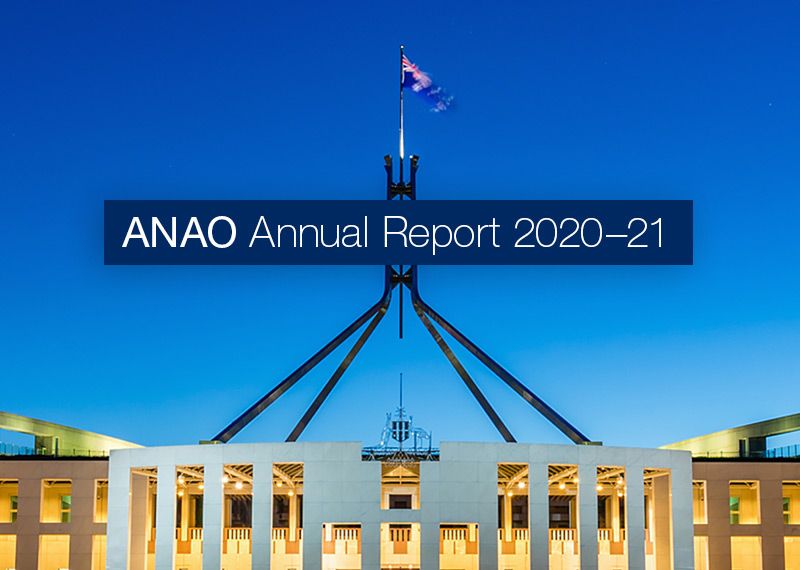
Published: Thursday 26 August 2021
Published
This annual report documents the performance of the Australian National Audit Office (ANAO) in the financial year ended 30 June 2021. The report addresses all applicable obligations under the Public Governance, Performance and Accountability Act 2013; the Public Governance, Performance and Accountability Rule 2014; the Auditor-General Act 1997; the performance measures set out in the outcome and programs framework in the ANAO’s Portfolio Budget Statements 2020–21 and the ANAO Corporate Plan 2020–21; and annual reporting requirements set out in other relevant legislation.
Contact
Please direct enquiries relating to annual reports through our contact page.