Browse our range of reports and publications including performance and financial statement audit reports, assurance review reports, information reports and annual reports.
Performance audit (Auditor-General Report No. 32 of 2017–18)

Published: Monday 19 March 2018
Published
The audit objective was to assess the effectiveness of the Department of the Environment and Energy’s design of the Threatened Species Prospectus.
Entity
Department of the Environment and Energy
Contact
Please direct enquiries through our contact page.
Performance audit (Auditor-General Report No. 28 of 2014–15)

Published: Wednesday 15 April 2015
Published
The audit objective was to assess the effectiveness of the Department of Immigration and Border Protection in delivering high quality interpreting services to its clients.
Entity
Department of Immigration and Border Protection; Department of Social Services
Contact
Please direct enquiries relating to reports through our contact page.
Performance audit (Auditor-General Report No. 40 of 2009–10)
Published: Wednesday 26 May 2010
Published
The audit objective was to assess the extent to which Australian Government agencies ensure that service providers are made aware of the core Australian Public Service (APS) Values and Code of Conduct and these arrangements are monitored.
Entity
Department of Agriculture, Fisheries and Forestry; Department of Education, Employment and Workplace Relations; Department of Health and Ageing; Department of Families, Housing, Community Services and Indigenous Affairs
Performance audit (Auditor-General Report No. 58 of 2016–17)

Published: Monday 26 June 2017
Published
The objective of the audit was to examine the implementation of the annual performance statements requirements under the Public Governance, Performance and Accountability Act 2013 and the enhanced Commonwealth performance framework.
Entity
Department of Agriculture and Water Resources; Australian Federal Police; Department of Finance
Contact
Please direct enquiries relating to reports through our contact page.
Performance audit (Auditor-General Report No. 26 of 2021–22)
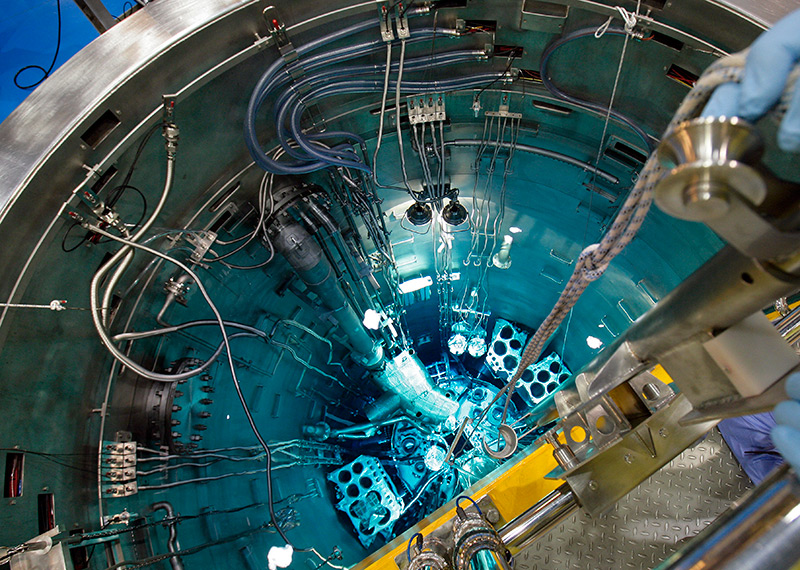
Published: Tuesday 10 May 2022
Published
The audit examined the effectiveness of the Australian Nuclear Science and Technology Organisation’s management of assets involved in the manufacture, production and distribution of nuclear medicines.
Entity
Australian Nuclear Science and Technology Organisation
Contact
Please direct enquiries through our contact page.
Performance audit (Auditor-General Report No. 48 of 2010–11)
Published: Thursday 16 June 2011
Published
The audit objective was to assess the effectiveness of monitoring arrangements (by the Accreditation Agency) and compliance activities (by DoHA) put in place to achieve residential aged care homes’ compliance with the Accreditation Standards and their other, related, responsibilities under the Act and its associated instruments.
The ANAO’s assessment considered whether:
— a sector-wide compliance strategy was in place and aligned with effective monitoring and compliance activities at the operational level;
— there was a clear articulation of the separat but complementary roles and responsibilities of DoHA and the Accreditation Agency; and
— performance information gathered by both agencies to support public reporting and business improvements was useful and enabled comparison of performance over time.
Entity
Department of Health and Ageing; Aged Care Standards and Accreditation Agency Ltd
Speeches and papers
Published: Thursday 11 August 2005
Published
Mr Mr Ian McPhee - Auditor-General for Australia, presented to the Public Sector Audit Network Group
Performance audit (Auditor-General Report No. 34 of 1997–98)
Published: Tuesday 24 March 1998
Published
The audit reviewed the Defence's $5.05 billion New Submarine Project which commenced in 1982 and involves design and construction of six Collins class submarines and associated supplies and services. The objectives of the audit were to assess project management by the Department's Project Office in the light of accepted better-practice project management techniques. It also aimed to derive lessons learnt and recommendations that could be applied to the Project and to similar Defence projects now and in the future. The audit follows a 1992 audit of the Project by the ANAO and a review by the Joint Committee of Public Accounts in 1995.
Entity
Department of Defence
Performance audit (Auditor-General Report No. 36 of 2022–23)

Published: Tuesday 13 June 2023
Published
The objective of this audit was to assess the effectiveness of the Australian Securities and Investments Commission's probity management.
Entity
Australian Securities and Investments Commission
Contact
Please direct enquiries through our contact page.
Speeches and papers
Published: Tuesday 1 May 2001
Published
Mr P.J. Barrett (AM) - Auditor-General for Australia, presented at the IIR Conference 'Risks in Outsourcing in the Public Sector'
Performance audit (Auditor-General Report No. 55 of 2016–17)

Published: Tuesday 20 June 2017
Published
The objective of the audit was to assess the effectiveness of the governance of the Northern Land Council in fulfilling its responsibilities and obligations under the Aboriginal Land Rights (Northern Territory) Act 1976, Native Title Act 1993 and Public Governance, Performance and Accountability Act 2013.
Entity
Department of the Prime Minister and Cabinet; Northern Land Council
Contact
Please direct enquiries relating to reports through our contact page.
Performance audit (Auditor-General Report No. 30 of 2022–23)

Published: Thursday 1 June 2023
Published
The objective of this audit was to assess the effectiveness of the Australian Prudential Regulation Authority's probity management.
Entity
Australian Prudential Regulation Authority
Contact
Please direct enquiries through our contact page.
Corporate
Published: Thursday 5 July 2018
Published
The ANAO Corporate Plan 2018–19 is the ANAO's key strategic planning document. It guides our operating environment and sets out how we will deliver on our purpose. The corporate plan is complemented by the annual audit work program which reflects the ANAO's audit strategy and deliverables for the coming year.
Contact
Please direct enquiries about our corporate plan through our contact page.
Performance audit (Auditor-General Report No. 4 of 2024–25)

Published: Monday 23 September 2024
Published
The objective of the audit was to assess the effectiveness of Australian Financial Security Authority’s (AFSA) management of conflicts of interest.
Entity
Australian Financial Security Authority
Contact
Please direct enquiries through our contact page.
Performance audit (Auditor-General Report No. 38 of 2022–23)

Published: Thursday 15 June 2023
Published
The objective of this audit was to assess the effectiveness of the Australian Competition and Consumer Commission's probity management.
Entity
Australian Competition and Consumer Commission
Contact
Please direct enquiries through our contact page.
Financial statement audit (Auditor-General Report No. 47 of 2017–18)
Published: Thursday 14 June 2018
Published
The Australian National Audit Office (ANAO) publishes two reports annually addressing the outcomes of the financial statement audits of Australian government entities and the Consolidated Financial Statements (CFS) of the Australian Government, to provide the Parliament of Australia with an independent examination of the financial accounting and reporting of public sector entities. This report focused on the results of the interim audit phase, including an assessment of entities’ key internal controls, of the 2017–18 financial statements audits of a range of entities including all departments of state and a number of major Australian government entities.
Entity
Across Entities
Contact
Please direct enquiries through our contact page.
Annual report
Published: Thursday 24 August 2023
Published
This annual report documents the performance of the Australian National Audit Office (ANAO) in the financial year ended 30 June 2023. The report addresses all applicable obligations under the Public Governance, Performance and Accountability Act 2013; the Public Governance, Performance and Accountability Rule 2014; the Auditor-General Act 1997; the performance measures set out in the outcome and programs framework in the ANAO’s Portfolio Budget Statements 2022–23 and in the ANAO Corporate Plan 2022–23; and annual reporting requirements set out in other relevant legislation.
Contact
Please direct enquiries through our contact page.
Performance audit (Auditor-General Report No. 23 of 2015–16)

Published: Thursday 25 February 2016
Published
The objective of the audit was to assess the effectiveness of the Australian Competition and Consumer Commission in managing compliance with fair trading obligations.
Entity
Australian Competition and Consumer Commission (ACCC)
Contact
Please direct enquiries relating to reports through our contact page.
Performance audit (Auditor-General Report No. 32 of 2011–12)
Published: Thursday 3 May 2012
Published
The audit objective was to assess the effectiveness of the Department of Veterans’ Affairs management of complaints and other feedback to support service delivery. The audit criteria were that DVA has:
- a well-designed framework for managing complaints and other feedback;
- effective processes and practices to manage complaints; and
- appropriately analysed complaints to inform service delivery.
Entity
Department of Veterans' Affairs
Performance audit (Auditor-General Report No. 21 of 2019–20)

Published: Wednesday 18 December 2019
Published
The audit assessed the effectiveness of the rural research and development corporations’ management of probity.
Entity
Across Entities
Contact
Please direct enquiries through our contact page.
Performance audit (Auditor-General Report No. 18 of 2024–25)

Published: Monday 16 December 2024
Published
The audit objective was to assess whether Tourism Australia’s procurement and contract management activities are complying with the Commonwealth Procurement Rules and demonstrating the achievement of value for money.
Entity
Tourism Australia
Contact
Please direct enquiries through our contact page.
Performance audit (Auditor-General Report No. 30 of 2013–14)
Published: Wednesday 7 May 2014
Published
The audit objective was to assess the effectiveness of the Therapeutic Goods Administration’s (TGA) application of the Code of Good Manufacturing Practice (Code of GMP) for prescription medicines.
Entity
Department of Health
Contact
Please direct enquiries relating to reports through our contact page.
Performance audit (Auditor-General Report No. 46 of 2011–12)
Published: Wednesday 20 June 2012
Published
The objective of the audit was to assess the effectiveness of the Department of Agriculture, Fisheries and Forestry’s administration of the Northern Australia Quarantine Strategy. The ANAO examined whether the department had established effective:
- administrative and governance arrangements to support NAQS;
- processes for identifying biosecurity risks and conducting scientific activities to address identified risks;
- arrangements for managing the quarantine aspects of Torres Strait border movements; and
- public awareness activities that reflect identified biosecurity risks and support the program’s objectives.
Entity
Department of Agriculture, Fisheries and Forestry
Performance audit (Auditor-General Report No. 33 of 1997–98)
Published: Monday 23 February 1998
Published
The objective of this audit was to assess the efficiency and effectiveness of the Commonwealth's management of the Great Barrier Reef as implemented by the Authority. This audit was undertaken because of the environmental significance of the Great Barrier Reef Region; its growing economic importance; recent changes to the Authority's budget arrangements; and because the Authority had not been subject to a performance audit since its establishment approximately 20 years ago.
Entity
Great Barrier Reef Marine Park Authority
Performance audit (Auditor-General Report No. 24 of 2014–15)
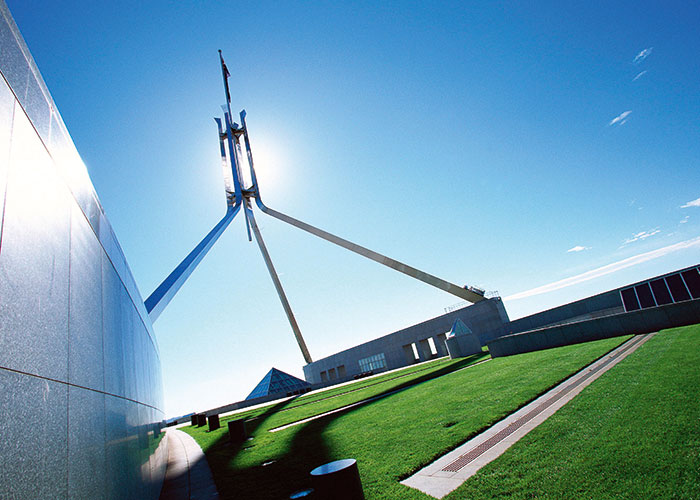
Published: Thursday 26 February 2015
Published
The objective of the audit was to assess the effectiveness of the Department of Parliamentary Services’ management of assets and contracts to support the operations of Parliament House.
Entity
Department of Parliamentary Services
Contact
Please direct enquiries relating to reports through our contact page.
Performance audit (Auditor-General Report No. 7 of 2015–16)

Published: Tuesday 10 November 2015
Published
The audit objective was to assess the effectiveness of the Department of the Environment’s and the Australian Customs and Border Protection Service’s management of compliance with the wildlife trade regulations under Part 13A of the Environment Protection and Biodiversity Conservation Act 1999.
Entity
Department of the Environment; Department of Immigration and Border Protection
Contact
Please direct enquiries relating to reports through our contact page.
Performance audit (Auditor-General Report No. 2 of 2017–18)
Published: Tuesday 11 July 2017
Published
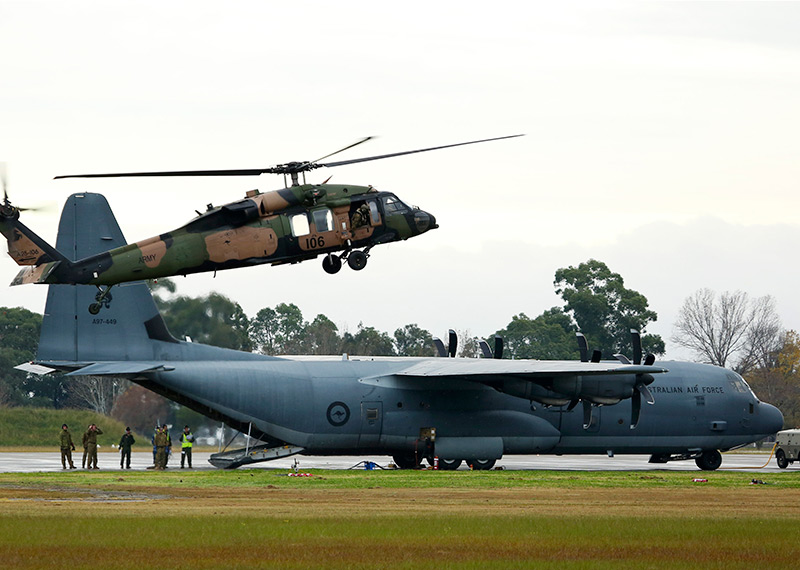
The objective of the audit was to assess whether Defence has a fit-for-purpose framework for the management of materiel sustainment.
Entity
Defence
Contact
Please direct enquiries relating to reports through our contact page.
Events and seminars
Published: Wednesday 21 February 2018
Published
The Audit Committee Chairs Forum is a joint initiative of the Department of Finance and the ANAO and includes the general government and non-general government sector Audit Committee Chairs. This communique covers the outcomes of the discussion at the forum on 14 December 2017 including updates from the Auditor-General and the ANAO, and from the Department of Finance.
Contact
Please direct enquiries relating to the audit committee chairs forum through our contact page.
Performance audit (Auditor-General Report No. 1 of 2012–13)
Published: Tuesday 21 August 2012
Published
The objective of the audit was to assess the effectiveness of the Department of Resources, Energy and Tourism’s administration of the Renewable Energy Demonstration Program (REDP), including progress towards achieving the programʹs objectives.
The audit examined whether the department had established effective arrangements to:
- implement REDP, including governance arrangements;
- assess applications for REDP funding assistance and recommend projects to the Minister for funding approval;
- negotiate funding agreements for approved projects; and
- monitor progress towards the achievement of the REDP objective.
Entity
Department of Resources, Energy & Tourism
Performance audit (Auditor-General Report No. 10 of 2007–08)
Published: Wednesday 17 October 2007
Published
The audit objective was to assess how four key departments: Education, Science and Training (DEST); Employment and Workplace Relations (DEWR); Families, Community Services and Indigenous Affairs (FaCSIA); and Health and Ageing (DoHA) are implementing the Government's policy objective for Indigenous service delivery.
Entity
NO-DEPTS-LISTED
Performance audit (Auditor-General Report No. 3 of 2007–08)
Published: Thursday 19 July 2007
Published
The audit objective was to form an opinion on the effectiveness of DEST's planning, assessment, and Funding Agreements management for the Australian Technical Colleges programme. At the time of the audit fieldwork (prior to the 2007–08 Budget) the Government had announced the establishment of 21 of the then target of 25 colleges. After fieldwork was completed the Government announced its intention to fund an additional three colleges in three new regions.
The criteria for this audit were designed to test whether DEST's management of the programme complied with its plans, procedures and guidelines, with the Act, and better practices for grants administration. For these purposes, the ANAO focused on DEST's:
- planning for the implementation of the programme;
- assessment of proposals to establish and operate the colleges; and
- management of the Funding Agreements.
Entity
Department of Education, Science and Training
Performance audit (Auditor-General Report No. 41 of 1999–2000)
Published: Friday 28 April 2000
Published
The Commonwealth has significant involvement in national emergency management arrangements through its roles in planning, coordination between agencies, operational response, financial support, education and training, public awareness and research activities. The objectives of this performance audit were to identify the Commonwealth's current emergency management arrangements; to provide assurance to Parliament concerning the adequacy of the arrangements; and to highlight areas for improvement.
Entity
Across Agency
Performance audit (Auditor-General Report No. 30 of 2002–03)
Published: Thursday 27 February 2003
Published
The Service Chiefs of Navy, Army and Air Force are accountable to the Chief of the Defence Force for the way that equipment is used by their Service. They are also accountable for the safety, fitness for service and environmental compliance of the equipment. The audit report deals with the way that the Service Chiefs are assured of the safety and suitability for service of the Australian Defence Force's (ADF's) ordnance systems. Ordnance systems include munitions such as missiles, shells and mines, and the auxiliary material necessary to aim, launch and guide munitions.
Entity
Department of Defence
Performance audit (Auditor-General Report No. 49 of 2018–19)

Published: Friday 21 June 2019
Published
The objective of this audit was to assess the effectiveness of the Director of National Parks’ management of Australia’s six Commonwealth national parks.
Entity
Department of the Environment and Energy; Director of National Parks
Contact
Please direct enquiries through our contact page.
Performance audit (Auditor-General Report No. 16 of 2013–14)
Published: Wednesday 29 January 2014
Published
The objective of the audit was to assess the effectiveness of the administration of the Smart Grid, Smart City Program, including the establishment, implementation and ongoing management of the program.
Entity
Department of the Environment; Department of Industry
Contact
Please direct enquiries relating to reports through our contact page.
Performance audit (Auditor-General Report No. 43 of 2008–09)
Published: Tuesday 23 June 2009
Published
The objective of the audit, in examining the construction of the CIIDC, was to assess:
- the adequacy of the planning and delivery processes for the project;
- the value-for-money achieved in the delivery of the project, including with regard to the suitability of the centre for its intended purpose; and
- the extent to which the Public Works Committee Act.
Entity
Department of Finance and Deregulation
Performance audit (Auditor-General Report No. 5 of 2024–25)

Published: Monday 21 October 2024
Published
The audit objective was to assess whether the Australian Government has established an appropriate framework for responding to crises.
Entity
Department of the Prime Minister and Cabinet; National Emergency Management Agency
Contact
Please direct enquiries through our contact page.
Performance audit (Auditor-General Report No. 42 of 2018–19)

Published: Thursday 30 May 2019
Published
The objective of this audit was to assess the effectiveness of the Australian Taxation Office’s (ATO’s) management of small business tax debt arising from compliance activities.
Entity
Australian Taxation Office
Contact
Please direct enquiries through our contact page.
Performance audit (Auditor-General Report No. 26 of 2008–09)
Published: Thursday 19 March 2009
Published
The audit objective was to assess the effectiveness of the Department of Health and Ageing's administration of health workforce initiatives in rural and remote Australia.
Entity
Deparment of Health and Ageing
Performance audit (Auditor-General Report No. 21 of 2024–25)

Published: Thursday 23 January 2025
Published
The objective of the audit was to assess whether the Bureau of Meteorology is effectively managing assets in its observing network.
Entity
Bureau of Meteorology
Contact
Please direct enquiries through our contact page.
Performance audit (Auditor-General Report No. 9 of 2003–04)
Published: Wednesday 22 October 2003
Published
The audit assessed whether Centrelink has effective Business Continuity Management and/or associated risk management procedures and plans in place that: minimise the likelihood of a significant business outage; and in the event of such an outage, minimise disruption of critical services to customers. The audit also assessed whether Centrelink services satisfy special community demands in times of emergency.
Entity
Centrelink
Performance audit (Auditor-General Report No. 6 of 2001–02)
Published: Thursday 9 August 2001
Published
This follow-up audit reviewed the operations of the Australian Fisheries Management Authority (AFMA) which is responsible for ensuring the sustainable use and efficient management of Commonwealth fisheries resources. The objective of this follow-up audit was to assess the extent to which AFMA addressed the issues that gave rise to the recommendations of ANAO Report No.32 1995-96, and the related recommendations of the House of Representatives Standing Committee Report 1997, that were supported by the Government.
The follow-up audit focussed on the key issues identified in the recommendations and grouped these in the themes of:
- strategic and performance management;
- management of the advisory process;
- implementation of fisheries management methods;
- managing AFMA's environmental responsibilities as they relate to Commonwealth fisheries
management; - compliance, monitoring and enforcement responsibilities; and
- management of information and research.
Entity
Australian Fisheries and Management Authority
Performance audit (Auditor-General Report No. 16 of 2022–23)

Published: Monday 27 March 2023
Published
The objective of this audit was to assess the effectiveness of the Department of Home Affairs' management of family-related visas.
Entity
Department of Home Affairs
Contact
Please direct enquiries through our contact page.
Performance audit (Auditor-General Report No. 26 of 2020–21)

Published: Thursday 17 December 2020
Published
The audit’s objective was to assess the effectiveness of the selection, contracting and ongoing management of investments by the Clean Energy Finance Corporation (CEFC) and the extent to which the CEFC is meeting its legislated objective.
Entity
Clean Energy Finance Corporation
Contact
Please direct enquiries through our contact page.
Annual report
Published: Thursday 25 August 2022
Published
This annual report documents the performance of the Australian National Audit Office (ANAO) in the financial year ended 30 June 2022. The report addresses all applicable obligations under the Public Governance, Performance and Accountability Act 2013; the Public Governance, Performance and Accountability Rule 2014; the Auditor-General Act 1997; the performance measures set out in the outcome and programs framework in the ANAO’s Portfolio Budget Statements 2021–22 and the ANAO Corporate Plan 2021–22; and annual reporting requirements set out in other relevant legislation.
Contact
Please direct enquiries through our contact page.
Performance audit (Auditor-General Report No. 32 of 2007–08)
Published: Thursday 8 May 2008
Published
The objective of the audit was to assess the completeness and reliability of the estimates reported in Tax Expenditures Statement 2006 (TES 2006). That is, the audit examined the development and publication of the detailed statement of actual tax expenditures required by Division 2 of Part 5 of the CBH Act. The development and publication of aggregated information on projected tax expenditures included in the Budget Papers pursuant to Division 1 of Part 5 of the CBH Act was not examined.
Entity
Department of Treasury
Performance audit (Auditor-General Report No. 4 of 2003–04)
Published: Thursday 28 August 2003
Published
The audit reviewed the efficiency and effectiveness of the Department of Health and Ageing's (Health's) planning and conduct of the review undertaken to determine the recommendation to the Government on whether or not to exercise the extension option available to the Commonwealth under the Plasma Fractionation Agreement with CSL Limited. The audit was undertaken in response to a recommendation of the Joint Committee of Public Accounts and Audit.
Entity
Department of Health and Ageing
Performance audit (Auditor-General Report No. 58 of 2001–02)
Published: Monday 17 June 2002
Published
The audit sought to assess the efficiency of Defence property management; provide assurance that probity and compliance requirements are being met; and make practical recommendations for enhancing property operations. It focused on Infrastructure Division's property management, with recognition that other areas manage certain property service contracts, such as those for electricity supply and cleaning.
Entity
Department of Defence
Performance audit (Auditor-General Report No. 4 of 2011–12)
Published: Wednesday 31 August 2011
Published
The audit objective was to assess the effectiveness of DEEWR’s and FaHCSIA’s administration of the Australian Government’s responsibilities under Element 1 of the National Partnership Agreement on Indigenous Economic Participation (including the NT Jobs Package).
Entity
Across Entities
Performance audit (Auditor-General Report No. 44 of 2022–23)

Published: Wednesday 28 June 2023
Published
This audit examined the effectiveness of the National Archives of Australia’s implementation of the Building Trust policy and selected entities’ management of information assets (records, information and data).
Entity
Australian National Maritime Museum; National Archives of Australia; Department of the Prime Minister and Cabinet
Contact
Please direct enquiries through our contact page.
Performance audit (Auditor-General Report No. 19 of 2023–24)

Published: Tuesday 27 February 2024
Published
The objective of this audit was to assess the effectiveness of the Department of Health and Aged Care’s (DHAC) performance management of the Primary Health Network program.
Entity
Department of Health and Aged Care
Contact
Please direct enquiries through our contact page.
Financial statement audit (Auditor-General Report No. 60 of 2016–17)
Published: Wednesday 28 June 2017
Published
The Australian National Audit Office (ANAO) publishes two reports annually addressing the outcomes of the financial statement audits of Australian government entities and the Consolidated Financial Statements (CFS) of the Australian Government to provide Parliament an independent examination of the financial accounting and reporting of public sector entities. This report focuses on the results of the interim audit phase, including an assessment of entities’ key internal controls, of the 2016–17 financial statements audits of 25 entities including all departments of state and a number of major Australian government entities.
Entity
Across Entities
Contact
Please direct enquiries relating to reports through our contact page.
Performance audit (Auditor-General Report No. 44 of 2004–05)
Published: Wednesday 25 May 2005
Published
The objective of the audit was to examine Defence's management of leases that have resulted from property sale and leaseback transactions. Leases subject to review were for a period of ten or more years and included the following six properties: the Defence Plazas in Sydney and Melbourne; the Hydrographic Office Wollongong; DNSDC Moorebank; Campbell Park Offices in Canberra; and ADC Weston Creek in Canberra. The audit examined the process for identifying the properties for sale and leaseback and the sale approval process. The audit sought to determine the basis on which the properties were proposed for sale and leaseback and the financial impact for the Government. The audit also reviewed the lease terms and conditions to determine whether they protect the Government's interests, and examined Defence's management of commitments arising from the leases.
Entity
Across Agencies
Performance audit (Auditor-General Report No. 43 of 2022–23)

Published: Wednesday 28 June 2023
Published
The objective of the audit was to assess the effectiveness of the NDIA’s management of assistance with daily life supports.
Entity
National Disability Insurance Agency
Contact
Please direct enquiries through our contact page.
Performance audit (Auditor-General Report No. 19 of 1999–2000)
Published: Monday 22 November 1999
Published
The audit reviewed the operations of the Civil Aviation Authority (CASA), which has prime responsibility for regulating aviation safety in Australia. The audit objectives were to assess the efficiency and effectiveness of the management systems and procedures used by CASA to ensure compliance with regulatory controls by Air Operator's Certificate holders operating passenger-carrying aircraft within High Capacity Regular Public Transport; Low Capacity Regular Public Transport and charter industry sectors; and Certificate of Approval holders. Aviation safety compliance includes entry control, surveillance and enforcement.
Entity
Civil Aviation Safety Authority
Performance audit (Auditor-General Report No. 19 of 2010–11)
Published: Thursday 9 December 2010
Published
The audit assessed FaHCSIA's management of AACAP and how the department monitors the contribution the program is making to the improvement of primary and environmental health, and living conditions, in remote Indigenous communities.
The audit examined program delivery under the 2006–2009 MoU, as well as the planning for the 2010 project under the variation to the 2006–2009 MoU. As part of the audit the ANAO considered:
- program strategy and implementation including the roles and responsibilities of the major stakeholders, community selection and scope of works (Chapter 2);
- the financial management of the program and the changing role of the Contracted Program Manager (Chapter 3); and
- performance measures, including FaHCSIA's performance reporting framework, and approach to monitoring and reporting performance against the stated program objectives (Chapter 4).
The audit focused on AACAP in so far as it relates to Indigenous community outcomes. It did not consider the program from the perspective of the Australian Defence Force capability building.
Entity
Department of Families, Housing, Community Services and Indigenous Affairs
Speeches and papers
Published: Wednesday 7 October 2020
Published
The fifteenth Commonwealth Auditor-General of Australia, Grant Hehir, has prepared a mid-term report reflecting on his first five years in the role. The report presents a description and analysis of the role and impact of audit, as well as analysis of the financial audit and performance audit work of the Australian National Audit Office (ANAO). The report concludes with coverage of ANAO continuous improvement activities across audit quality, better communication, transparency, efficiency and workforce capability.
Contact
Please direct enquiries through our contact page.
Performance audit (Auditor-General Report No. 34 of 2002–03)
Published: Monday 24 March 2003
Published
This audit followed up the ANAO's 1999 performance audit report on the Commonwealth's planning and response mechanisms to deal with exotic and new endemic pest and emergencies in the animal and plant sectors (Audit Report No 9 1999-2000 Managing Pest and Disease Emergencies). The previous audit made nine recommendations to improve planning and response strategies for emergencies; better coordination; diagnostic support; and appropriate monitoring and surveillance. The objective of the follow-up audit was to assess AFFA's implementation of the recommendations, and whether implementation of these recommendations, or appropriate alternative measures, has improved the Commonwealth's planning and response strategies for pest and disease emergencies. The ANAO also observed and assessed relevant parts of the September 2002 foot and mouth disease simulation, Exercise Minotaur.
Entity
Agriculture Fisheries and Forestry - Australia Department of Agriculture
Performance audit (Auditor-General Report No. 22 of 2015–16)

Published: Monday 22 February 2016
Published
The objective of the audit was to assess the effectiveness of the arrangements established by the Australian Antarctic Division (AAD), a division of the Department of the Environment, to support Australia’s Antarctic Program.
Entity
Department of the Environment
Contact
Please direct enquiries relating to reports through our contact page.
Performance audit (Auditor-General Report No. 49 of 2002–03)
Published: Tuesday 17 June 2003
Published
The audit reviewed the Australian Maritime Safety Authority's management of the navigation aids network, which is an important factor in shipping safety. The objectives of the audit were to determine whether AMSA's management of the network provides for the strategic needs of marine navigation in Australian waters, and whether AMSA's management was efficient and effective. The audit focused on AMSA's strategic planning, the management of revenue and expenditure to support the network, its contract management practices, and its accountability and performance reporting arrangements.
Entity
Australian Maritime Safety Authority