Browse our range of reports and publications including performance and financial statement audit reports, assurance review reports, information reports and annual reports.
Performance audit (Auditor-General Report No. 4 of 2014–15)

Published: Wednesday 5 November 2014
Published
The objective of the audit was to assess the adequacy and effectiveness of the Australian Electoral Commission’s implementation of those recommendations made in Report No. 28 2009–10 relating to:
- a more strategic approach to election workforce planning;
- the suitability and accessibility of polling booths and fresh scrutiny premises; and
- the transport and storage of completed ballot papers, in respect to matters not fully addressed in ANAO Audit Report No.31 2013–14.
Entity
Australian Electoral Commission
Contact
Please direct enquiries relating to reports through our contact page.
Performance audit (Auditor-General Report No. 52 of 2004–05)
Published: Monday 20 June 2005
Published
The objectives of the Australian National Audit Office's (ANAO) performance audit were to: examine the efficiency and effectiveness of agencies' procurement and management of legal services arrangements; determine adherence to Australian Government policy requirements; examine the effectiveness of the OLSC's monitoring of agencies' compliance with Government policy requirements; examine the OLSC's role in assisting agencies to comply with Government policy.
Entity
Across Entities
Performance audit (Auditor-General Report No. 26 of 2012–13)
Published: Thursday 28 February 2013
Published
The objective of the current audit was to assess the effectiveness of remediation arrangements put in place by Defence and the Defence Materiel Organisation (DMO) to resolve issues impacting on the achievement of the desired lightweight torpedo capability. It focuses on project management and contractual arrangements, and the progress made with platform integration and test and evaluation.
Entity
Department of Defence; Defence Materiel Organisation (DMO)
Annual report
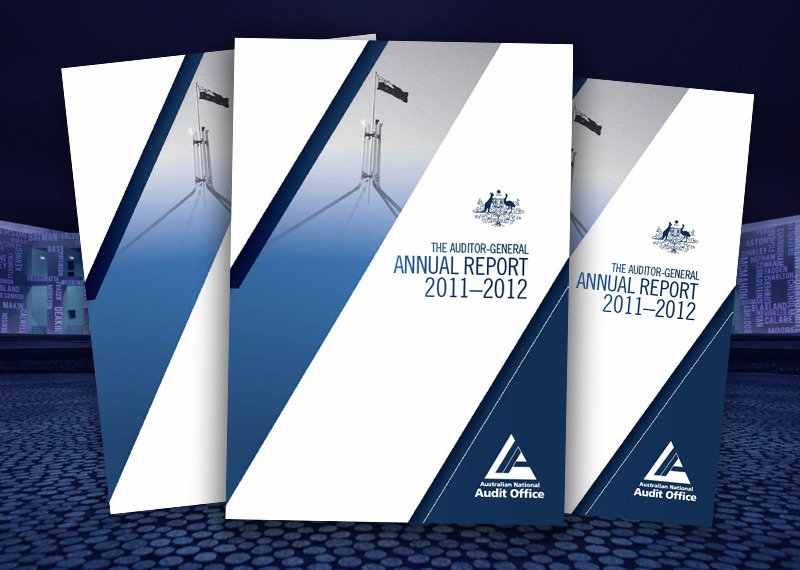
Published: Thursday 27 September 2012
Published
This annual report documents the performance of the Australian National Audit Office (ANAO) in the financial year ending on 30 June 2012. It presents an overview including the role and vision of the Office, a report on performance, details about management and accountability, and the financial results.
Annual report
Published: Thursday 26 September 2002
Published
This annual report documents the performance of the Australian National Audit Office (ANAO) in the financial year ending on 30 June 2002. It includes a comment by the Auditor-General on Audit independence and effectiveness; an overview of the Auditor-General’s role and responsibilities; a report on performance; details about management and accountability, and the financial statement for the year.
Speeches and papers
Published: Wednesday 18 March 1998
Published
Mr P.J. Barrett (AM) - Auditor-General for Australia, presented at the Risk Management in the Public Sector Seminar
Performance audit (Auditor-General Report No. 37 of 2009–10)
Published: Thursday 20 May 2010
Published
The objective of this audit was to review the effectiveness of Defence's and the DMO's management of the acquisition arrangements for JP 2070.
Entity
Department of Defence
Speeches and papers
Published: Thursday 20 November 2003
Published
Mr P.J. Barrett (AM) - Auditor-General for Australia, presented at the CPA Australia National Public Sector Convention, Perth
Performance audit (Auditor-General Report No. 6 of 2008–09)
Published: Tuesday 30 September 2008
Published
The objective of the audit was to assess whether Customs has implemented effective measures to control IUU fishing in the Southern Ocean. The audit examined Customs' management and coordination of enforcement operations in the Southern Ocean, with particular emphasis on:
- the approach to assessing and reporting SOMPR program performance, and whether outcomes are being met;
- coordination with other stakeholder agencies to meet program outcomes;
- the operational planning framework, management of human and physical resources and contract management; and
- the management of the deployment and operation of program maritime assets.
Entity
Australian Customs Service
Performance audit (Auditor-General Report No. 3 of 2006–07)
Published: Thursday 7 September 2006
Published
The objective of the audit was to examine the effectiveness of Defence's management of the procurement of Minor capital equipment for Army capability. In particular, the audit focussed on the identification and approval of capability requirements; the management of Army Minors Program funding and expenditure; and DMO management of procurement processes for Army Minor projects. The audit focused on projects included in the Program as at 1 July 2005. As at that date, 85 projects were listed. Case studies illustrating particular issues in the management of the Program are profiled throughout the report in the relevant section.
Entity
Department of Defence; Defence Materiel Organisation
Performance audit (Auditor-General Report No. 3 of 2013–14)
Published: Thursday 15 August 2013
Published
The objective of the audit was to assess the adequacy of Defence’s processes, including compliance with the Financial Management and Accountability Act 1997 (FMA Act), the Financial Management and Accountability Regulations 1997 (FMA Regulations), and relevant Commonwealth and Defence procurement requirements, to select the capability solution recommended to the Government to satisfy the requirements of AIR 8000 Phase 2.
Entity
Department of Defence
Contact
Please direct enquiries relating to reports through our contact page.
Performance audit (Auditor-General Report No. 5 of 1997–98)
Published: Friday 17 October 1997
Published
The objective of this audit was to ascertain whether Defence performance management strategies and practices contribute to the effective and efficient management of the supply chain. In particular, it focussed on examining the extent to which the latter demonstrate identified world-class practices.
Entity
Department of Defence
Performance audit (Auditor-General Report No. 37 of 2001–02)
Published: Friday 15 March 2002
Published
This was a follow-up of Audit Report No. 40 of 1997-98, Purchase of Hospital Services from State Governments. That audit examined the administration by the Department of Veterans' Affairs of the Purchase of Hospital Services from State Governments. The objective of this audit was to assess the extent to which the Department had implemented the nine recommendations of Report No. 40, taking account of any changed circumstances or administrative issues that the Department identified as affecting their implementation; and to offer continued assurance to the Parliament on the management of the purchase of hospital services.
Entity
Department of Veterans' Affairs
Performance audit (Auditor-General Report No. 6 of 2017–18)

Published: Tuesday 15 August 2017
Published
The audit objective was to assess how effectively the selected public sector entities manage risk.
Entity
Department of Employment; Department of Health; Australian Communications and Media Authority; Australian Fisheries Management Authority
Contact
Please direct enquiries relating to reports through our contact page.
Performance audit (Auditor-General Report No. 1 of 2007–08)
Published: Tuesday 17 July 2007
Published
The objective of the audit was to assess the effectiveness of management of the procurement of a major, replacement capability for the Australian Defence Force (ADF) by the DMO, and Defence. The audit reviewed the initial capability requirements and approval process; analysed the acquisition agreements for elements of the project; and examined the interim through-life support arrangements being put in place to support the capability.
Entity
Department of Defence; Defence Materiel Organisation
Major projects report (Auditor-General Report No. 17 of 2010–11)

Published: Tuesday 30 November 2010
Published
The objective of this report is to provide comprehensive information on the status of projects as reflected in the Project Data Summary Sheets (PDSSs) prepared by DMO, and a review by the ANAO.
Entity
Defence Materiel Organisation
Performance audit (Auditor-General Report No. 40 of 1996–97)
Published: Thursday 26 June 1997
Published
The ANAO's audit aims were to: examine the efficiency and effectiveness of DFAT's human resource management; and identify good practice, which could position the Department, and other APS agencies, to maximise opportunities afforded by the Government's emerging public sector reform agenda. The audit addressed a range of issues including the effectiveness of HR planning and forecasting, staff selection and deployment, performance management, and the fostering of relevant skills and knowledge.
Entity
Department of Foreign Affairs and Trade
Performance audit (Auditor-General Report No. 31 of 2004–05)
Published: Wednesday 9 March 2005
Published
Given the importance of customer feedback to Centrelink's business, the ANAO considered it timely to conduct a series of performance audits relating to Centrelink's customer feedback systems, particularly in relation to its delivery of the services then provided on behalf of FaCS. The overarching objective of this series of ANAO performance audits of Centrelink's customer feedback systems was to assess whether Centrelink has effective processes and systems for gathering, measuring, reporting and responding effectively to customer feedback, including in relation to customer satisfaction with Centrelink services and processes.
Entity
Centrelink
Performance audit (Auditor-General Report No. 33 of 2006–07)
Published: Wednesday 18 April 2007
Published
The objective of this follow-up audit was to review Centrelink's progress in implementing the findings and recommendation relating to Centrelink's Customer Charter from Audit Report No.32
2004–05, Centrelink's Customer Charter and Community Consultation Program. This audit covers Centrelink's Customer Charter only and does not follow-up on the findings and recommendation on the Community Consultation Program aspect of the 2004–05 audit report.
Entity
Centrelink
Events and seminars
Published: Friday 9 August 2024
Published
An Audit Committee Chairs Forum was held on Friday 12 July 2024. The text on this page is the communique from the forum.
Contact
For any enquiries, please contact External.Relations@anao.gov.au
Performance audit (Auditor-General Report No. 17 of 2003–04)
Published: Thursday 4 December 2003
Published
An ANAO audit of AQIS' cost-recovery systems was conducted in 2000-01 (Audit Report No 10, 2000-01), following a request from the Joint Committee of Public Accounts and Audit (JCPAA). That audit aimed to assess the efficiency and effectiveness of the management of AQIS' cost-recovery systems, and provide assurance to Parliament that cost-recoverable programs were identifying and recovering the full costs of services provided, without cross-subsidisation. The ANAO made six recommendations for improving the efficiency and effectiveness of AQIS cost-recovery systems. The JCPAA, at a subsequent hearing, made a further three recommendations. The objective of the follow-up audit was to assess AQIS' implementation of the ANAO and the JCPAA recommendations. The audit also aimed to determine whether implementation of these recommendations, or alternative actions taken to address the issues leading to the recommendations, had improved AQIS' management of its cost-recovery processes.
Entity
Australian Quarantine and Inspection Service
Events and seminars
Published: Friday 15 July 2022
Published
An Audit Committee Chairs Forum was held virtually on Friday, 15 July 2022. The text on this page is the communique from the forum.
Contact
For any enquiries, please contact External.Relations@anao.gov.au
Financial statement audit (Auditor-General Report No. 17 of 2025–26)

Published: Thursday 18 December 2025
Published
This report complements the Interim Report on Key Financial Controls of Major Entities published in May 2025. It provides a summary of the final results of the audits of the Consolidated Financial Statements for the Australian Government and the financial statements of Australian Government entities for the period ended 30 June 2025.
Entity
Across Entities
Contact
Please direct enquiries through our contact page.
Performance audit (Auditor-General Report No. 42 of 2016–17)

Published: Wednesday 15 March 2017
Published
The audit objective was to re-assess the three entities' compliance with the 'Top Four' mandatory strategies in the Australian Government Information Security Manual (ISM). The audit also aims to examine the typical challenges faced by entities to achieve and maintain their desired ICT security posture.
Entity
Australian Taxation Office; Department of Human Services; Department of Immigration and Border Protection
Contact
Please direct enquiries relating to reports through our contact page.
Performance audit (Auditor-General Report No. 37 of 2010–11)
Published: Tuesday 19 April 2011
Published
The objective of this audit was to examine the effectiveness of Defence’s management of explosive ordnance by the end users of this materiel in Air Force, Army and Navy (the Services). In particular, the focus was on the effectiveness of arrangements for the oversight and physical control of explosive ordnance once it is issued to Service units.
The audit reviewed Defence’s policies, procedures, processes and inventory management systems for explosive ordnance at the unit level in the ADF, from receipt and storage through to the use or return of explosive ordnance.The audit also examined the relationship between the management of explosive ordnance at the unit level and the Explosive Ordnance Services Contract and, where relevant, the regional Garrison Support Services (GSS) Contracts.
Entity
Department of Defence
Performance audit (Auditor-General Report No. 34 of 1997–98)
Published: Tuesday 24 March 1998
Published
The audit reviewed the Defence's $5.05 billion New Submarine Project which commenced in 1982 and involves design and construction of six Collins class submarines and associated supplies and services. The objectives of the audit were to assess project management by the Department's Project Office in the light of accepted better-practice project management techniques. It also aimed to derive lessons learnt and recommendations that could be applied to the Project and to similar Defence projects now and in the future. The audit follows a 1992 audit of the Project by the ANAO and a review by the Joint Committee of Public Accounts in 1995.
Entity
Department of Defence
Performance audit (Auditor-General Report No. 58 of 2002–03)
Published: Thursday 26 June 2003
Published
This was a follow-up of Audit Report No. 29 2000-01, Review of Veterans' Appeals Against Disability Compensation Entitlement Decisions. That audit examined the Department of Veterans' Affairs (DVA's) and the Veterans' Review Board's (VRB's) management of the review of decisions for disability compensation. The objective of this audit was to assess the extent to which DVA and the VRB had implemented the four recommendations of Report No.29 2000-01, taking into account any changed circumstances, or new administrative issues, affecting implementation of these recommendations.
Entity
Department of Veterans' Affairs; Veterans' Review Board
Performance audit (Auditor-General Report No. 55 of 2004–05)
Published: Thursday 23 June 2005
Published
The objective of the audit was to consider the status of workforce planning by APS agencies against the background of the ANAO's 2001 Better Practice Guide Planning for the Workforce of the Future, in light of there commendations made in the MAC Organisational Renewal 2001 and the Senate Finance and Public Administration References Committee report Recruitmentand Training in the Australian Public Service 2003. Workforce planning was defined as a continuous process of shaping the workforce to ensure it is capable of delivering organisational objectives now and in the future.
Entity
Across Entities
Performance audit (Auditor-General Report No. 16 of 2001–02)
Published: Friday 5 October 2001
Published
The Government introduced the Defence Reform Program (DRP) in 1997 to enable Defence's resources to be focused more efficiently and effectively on its core functions. The objective of the audit was to assess Defence's management and implementation of DRP and the extent to which it achieved savings for reinvestment in the operational capabilities of the ADF.
Entity
Department of Defence
Performance audit (Auditor-General Report No. 46 of 2016–17)

Published: Monday 10 April 2017
Published
The objective of this audit was to assess whether the OneSKY tender was conducted so as to provide value with public resources and achieve required timeframes for the effective replacement of the existing air traffic management platforms.
Entity
Airservices Australia; Department of Defence
Contact
Please direct enquiries relating to reports through our contact page.
Performance audit (Auditor-General Report No. 43 of 2010–11)
Published: Wednesday 25 May 2011
Published
The objective of the audit was to examine whether the UP and CPP services provided by the Australian Federal Police Protection Service are being managed effectively. In particular, the audit examined:
- whether the Protection function has been effectively integrated into the AFP, and sound arrangements are in place to strategically plan Protection services and manage risks;
- whether Protection staff have access to appropriate training and guidance; and
- the management arrangements for UP and CPP services.
Entity
Australian Federal Police
Performance audit (Auditor-General Report No. 11 of 2000–01)
Published: Friday 15 September 2000
Published
The audit reviewed Defence's higher-level management of its knowledge system equipment acquisition projects. These amount to $8.5b. The focus of the audit was on the opportunities for Defence to adopt a much more coherent and integrated approach to knowledge systems management prospectively rather than on emphasising current system compatibility issues.
Entity
Department of Defence
Performance audit (Auditor-General Report No. 46 of 2012–13)
Published: Tuesday 18 June 2013
Published
The objective of the audit was to assess the effectiveness of the Department of Veterans’ Affairs’ and the Department of Defence’s administration of the Australian Government’s $55 million support package announced in the May 2010 Budget for former F-111 fuel tank maintenance workers and their families. The audit examined the implementation of the 14 agreed recommendations in the Government Response to the 2009 Parliamentary Inquiry into the F-111 deseal/reseal issues, which formed the basis of the May 2010, F-111 support package.
Entity
Department of Veterans' Affairs; Department of Defence
Contact
Please direct enquiries relating to reports through our contact page.
Performance audit (Auditor-General Report No. 13 of 2000–01)
Published: Wednesday 4 October 2000
Published
The audit examined a range of issues in relation to the development of certified agreements in the APS with particular emphasis on the link between improved pay and conditions and increased productivity, and the funding of agreements. The objectives of the audit were to:
- provide an overview of the range of wage outcomes included in the first round of APS certified agreements;
- identify the administrative arrangements agencies have in place to measure any improvements in productivity that were linked to pay increases;
- determine how agencies funded their certified agreements;
- review the reporting and accountability arrangements agencies have in place to monitor progress and to evaluate the outcomes of their certified agreements;
- determine the extent to which agencies complied with the employment terms and conditions outlined in their certified agreements that contributed to paying for their agreement or measuring and/or assessing improvements in productivity; and
- examine the role of central coordinating agencies in reviewing agencies' certified agreements.
Entity
Across Agency
Performance audit (Auditor-General Report No. 40 of 2007–08)
Published: Wednesday 11 June 2008
Published
The objective of this audit was to assess the Tax Office's implementation of the nine recommendations of Audit Report No.19 2004–05 Taxpayers' Charter, having regard to any changed circumstances affecting the implementation of the recommendations. This involved an examination of the Tax Office's:
- systems and processes used to develop, maintain and update the Charter;
- strategic commitment to implementing the principles of the Charter;
- integration of Charter principles with its business processes;
- systems for resolving disputes according to Charter principles; and
- monitoring and reporting of its performance against commitments in the Charter.
Entity
Australian Taxation Office
Performance audit (Auditor-General Report No. 30 of 2001–02)
Published: Thursday 24 January 2002
Published
The audit reviewed Defence's management of the Test and Evaluation (T&E) aspects of its capital equipment acquisition program. The audit sought to identify, from Defence T&E practice, any barriers that might limit the efficiency and effectiveness of its T&E activities.
Entity
Department of Defence
Performance audit (Auditor-General Report No. 24 of 2006–07)
Published: Wednesday 7 February 2007
Published
The objectives of the audit were to:
- examine Customs' management of the CMR project; and
- determine whether the ICS and CCF met:
- project and operational objectives; and
- user capability and functionality requirements.
Particular emphasis was given to the following areas:
- the project management framework that supported the CMR project;
- implementation arrangements for the ICS; and
- ongoing operational arrangements.
After this audit commenced, Customs engaged Booz Allen Hamilton to undertake a separate review of the ICS. The purpose of that review was to provide Customs with a forward looking report on the lessons to be learned from the implementation of the ICS, its current status and the opportunities to enhance benefits for both Government and industry. The ANAO consulted closely with the Booz Allen Hamilton team and is supportive of the recommendations in their report, which was released in May 2006. The review made thirteen recommendations relating to the ongoing management and governance of the Cargo Management Re-engineering Program at both strategic and tactical levels.
Entity
Australian Customs Service
Speeches and papers
Published: Friday 20 September 2002
Published
Mr P.J. Barrett (AM) - Auditor-General for Australia, presented at the CPA Australia's Government Business Symposium, Melbourne
Performance audit (Auditor-General Report No. 12 of 2004–05)
Published: Tuesday 19 October 2004
Published
The ANAO Audit Report No. 51 of 2001/02, Research Project Management, Commonwealth Scientific and Industrial Research Organisation, assessed the effectiveness of CSIRO in administering research projects to deliver required results. The audit made nine recommendations designed to improve project management in CSIRO. The purpose of this follow-up audit was to assess the extent to which CSIRO has implemented the recommendations of the previous audit and of the JCPAA.
Entity
Commonwealth Scientific and Industrial Research Organisation
Performance audit (Auditor-General Report No. 26 of 2013–14)
Published: Wednesday 23 April 2014
Published
The objective of the audit was to assess the effectiveness of the Department of Human Services' management of Medicare compliance audits.
Entity
Department of Human Services
Contact
Please direct enquiries relating to reports through our contact page.
Audit manual
Updated: Tuesday 9 September 2025
Updated
The Performance Audit Services Group (PASG) volume of the ANAO Audit Manual applies to the performance audit activity performed by PASG in collaboration with the Systems Assurance and Data Analytics (SADA) group. Relevant policies and guidance from the PASG volume are also applied to assurance reviews performed by PASG. Policies and guidance in the PASG volume address the planning, execution and reporting stages of the performance audit process.
Contact
Please direct enquiries through our contact page.
Performance audit (Auditor-General Report No. 33 of 2005–06)
Published: Thursday 2 March 2006
Published
The objective of this follow-up audit was to examine the ATO's implementation of the 20 recommendations in: The Administration of Petroleum Excise Collections (Audit Report No.17, 2001(02); and The Administration of Tobacco Excise (Audit Report No. 55, 2001(02), having regard to any changed circumstances, or new administrative issues, affecting implementation of those recommendations. The audit also aimed to identify scope for improvement in the ATO's administration of petroleum and tobacco excise. Follow-up audits are recognised as an important element of the accountability processes of Commonwealth administration. The Parliament looks to the Auditor-General to report, from time to time, on the extent to which Commonwealth agencies have implemented recommendations of previous audit reports. Follow-up audits keep the Parliament informed of progressive improvements and current challenges in areas of Commonwealth administration that have previously been subject to scrutiny through performance audits.
Entity
Australian Taxation Office
Performance audit (Auditor-General Report No. 66 of 2001–02)
Published: Friday 28 June 2002
Published
The audit followed-up the ANAO's original audit report into the aviation safety regulatory activities of the Civil Aviation Safety Authority (CASA) (Audit Report No.19 1999-2000 Aviation Safety Compliance). The objective of the follow-up audit were to determine, in respect of issues addressed by the original audit recommendations, whether CASA has made satisfactory progress to improve its aviation safety surveillance and compliance activities; and whether the introduction of new strategies for further improvement is being appropriately managed.
Entity
Civil Aviation Safety Authority
Performance audit (Auditor-General Report No. 20 of 2003–04)
Published: Friday 19 December 2003
Published
The objective of the audit was to assess the Australian Agency for International Development's (AusAid) planning for, and management of, the delivery of aid to East Timor. The audit examined Australia's emergency and humanitarian response following the crisis in East Timor in 1999; AusAID's post-crisis strategy for assisting East Timor; coordination with overseas donors; and financial contributions to multilateral reconstruction assistance. Australia's bilateral assistance, comprising shorter-term transitional assistance and medium-term development assistance, was also examined.
Entity
Australian Agency for International Development (AusAID)
Performance audit (Auditor-General Report No. 45 of 2016–17)

Published: Thursday 30 March 2017
Published
The objective of the audit was to assess whether the procurement by the Department of the Environment and Energy of a replacement Antarctic icebreaking vessel will provide value with public resources.
Entity
Department of the Environment and Energy
Contact
Please direct enquiries relating to reports through our contact page.
Speeches and papers
Published: Friday 24 November 1995
Published
Mr P.J. Barrett (AM) - Auditor-General for Australia, presented to the ASCPA Annual Public Sector Accounting Convention, Canberra
Performance audit (Auditor-General Report No. 50 of 2013–14)
Published: Tuesday 24 June 2014
Published
The audit objective was to assess selected agencies’ compliance with the four mandatory ICT security strategies and related controls in the Australian Government Information Security Manual.
Entity
Across Agencies
Contact
David Gray, Executive Director - Phone (02) 6203 7377
Performance audit (Auditor-General Report No. 30 of 2014–15)

Published: Tuesday 21 April 2015
Published
The audit objective was to examine Defence’s administration of Materiel Sustainment Agreements (MSAs) and the contribution made by MSAs to the effective sustainment of specialist military equipment.
Entity
Department of Defence; Defence Materiel Organisation
Contact
Please direct enquiries relating to reports through our contact page.
Performance audit (Auditor-General Report No. 48 of 2008–09)
Published: Tuesday 30 June 2009
Published
The objective of this audit was to assess whether the strengthened two–pass approval process for major capital equipment projects is being implemented effectively.
Entity
Department of Defence
Performance audit (Auditor-General Report No. 18 of 2003–04)
Published: Wednesday 10 December 2003
Published
The Australian National Audit Office (ANAO) completed a performance audit of the ATO's use of AUSTRAC data in August 2000, titled The AustralianTaxation Office's Use of AUSTRAC Data, Audit Report No. 7 2000-2001. It found that the ATO had used AUSTRAC data to achieve a significant improvement in the collection of taxation revenue. The ANAO considered that the ATO could build on this success by using AUSTRAC data more effectively at both the strategic and operational levels. The audit made six recommendations. The ATO agreed with all recommendations. The objective of this follow-up performance audit was to assess the ATO's progress in implementing the recommendations of Audit Report No 7 2000-2001, The Australian Taxation Office's Use of AUSTRAC Data.
Entity
Australian Taxation Office
Performance audit (Auditor-General Report No. 28 of 2008–09)
Published: Wednesday 22 April 2009
Published
The objective of the audit was to examine the quality and integrity of DVA's income support records and to report on the effectiveness of the department's management of the data and how it impacts on service delivery.
Entity
Department of Veterans' Affairs
Performance audit (Auditor-General Report No. 31 of 2007–08)
Published: Tuesday 29 April 2008
Published
The objective of the audit was to assess whether APS agencies had sound approaches to recruitment, to assist in providing the workforce capability to deliver government programs effectively. Sound approaches to recruitment involve agencies:
- establishing and implementing strategic approaches to recruitment to address current and future workforce priorities and goals;
- managing and supporting recruitment activities through the provision of expert advice and support, legislative and procedural guidance material, and training for staff involved in recruitment activities;
- conducting recruitment activities effectively and in compliance with legislative and administrative requirements; and
- systematically monitoring and evaluating the effectiveness and efficiency of recruitment strategies, policies and activities.
Entity
NO-DEPTS-LISTED
Performance audit (Auditor-General Report No. 33 of 2020–21)

Published: Monday 29 March 2021
Published
The objective of this audit was to assess the efficiency and effectiveness of the Independent Parliamentary Expenses Authority’s administration of parliamentary expenses.
Entity
Independent Parliamentary Expenses Authority
Contact
Please direct enquiries through our contact page.
Audit manual
Updated: Tuesday 9 September 2025
Updated
The Financial Statements Audit Services Group (FSASG) volume of the ANAO Audit Manual applies to the financial statement audit activity performed by FSASG in collaboration with the Systems Assurance and Data Analytics (SADA) group. Relevant policies and guidance from the FSASG volume are also applied to other assurance work performed by FSASG. Policies and guidance in the FSASG volume address the planning, execution and reporting stages of the financial statement audit process.
Contact
Please direct enquiries through our contact page.
Audit manual
Updated: Tuesday 9 September 2025
Updated
The Performance Statements Audit Services Group (PSASG) volume of the ANAO Audit Manual applies to the performance statements audit activity performed by PSASG.
Contact
Please direct enquiries through our contact page.
Performance audit (Auditor-General Report No. 30 of 2006–07)
Published: Wednesday 14 March 2007
Published
The objectives of this follow-up audit were to:
- examine the ATO's implementation of the ten recommendations in The Australian Taxation Office's Management of its Relationship with Tax Practitioners (Audit Report No.19, 2002–03), having regard to any changed circumstances, or new administrative issues, affecting implementation of those recommendations; and
- identify scope for improvement in the ATO's management of its relationship with tax practitioners.
Follow up audits are recognised as an important element of the accountability processes of Commonwealth administration. Parliament looks to the Auditor General to report, from time to time, on the extent to which Commonwealth agencies have implemented recommendations of previous audit reports. Follow up audits keep Parliament informed of progressive improvements and current challenges in areas of Commonwealth administration that have previously been subject to scrutiny through performance audits.
Entity
Australian Taxation Office
Performance audit (Auditor-General Report No. 46 of 2002–03)
Published: Friday 6 June 2003
Published
Australian Industry Involvement Program. Department of Defence The audit examined the management by Defence of its Australian Industry Involvement (AII) Program. AII is the major program through which Defence gives effect to government policy on Australian industry. The objective of the audit was to assess the extent to which the AII Program has achieved its two policy objectives, which are to :
- develop and sustain strategically important capabilities in Australian industry to support Australian Defence Force operations and Defence capability development; and
- maximise Australian industry involvement in Defence's procurement of goods and services, consistent with the government procurement policy objective of achieving best value for money to the Commonwealth.
Entity
Department of Defence
Performance audit (Auditor-General Report No. 48 of 2003–04)
Published: Thursday 27 May 2004
Published
The objective of the performance audit was to report to Parliament our assessment as to how well the ATO manages and uses the AIIR data in taxation administration. The ANAO considered the following four key areas in addressing the audit objective. 1. Governance arrangements within the ATO, focussing on whole of ATO and whole-of-government aspects of the AIIR data, as distinct from solely business line applications. 2. Receipt of AIIR data and how well the ATO facilitates the collection of complete and valid AIIR data from investment bodies 3. Management of AIIR data through the construction by the ATO of valid entity records by using the AIIR data in conjunction with existing ATO client identification master files. 4: Use of the AIIR data on a systematic basis to inform active compliance activities.
Entity
Australian Taxation Office
Performance audit (Auditor-General Report No. 42 of 2005–06)
Published: Thursday 25 May 2006
Published
The follow-up audit assessed the extent to which the Australian Taxation Office (ATO), Department of Health and Ageing (Health), and Medicare Australia had implemented the six recommendations from Audit Report No.47 2001–02, Administration of the 30 Per Cent Private Health Insurance Rebate. The audit also looked at: the implementation of some of the major suggestions for improvement in the original audit; and the current validity of some of the positive major findings from that audit. The audit found that the ATO, Health and Medicare Australia have acted upon the recommendations contained in Audit Report No.47 2001–02 and, overall, the administration of the Rebate is currently being undertaken effectively.
Entity
Australian Taxation Office; Department of Health and Ageing; Medicare Australia
Performance audit (Auditor-General Report No. 10 of 2011–12)
Published: Thursday 3 November 2011
Published
The audit objective was to assess the effectiveness of DEEWR‘s administration of the initial phases of the NP ECE. The high-level criteria used to make this assessment were the appropriateness of DEEWR‘s:
- establishment of a sound foundation for implementation, including implementation plans, monitoring arrangements and an Indigenous strategy for universal access; and
- ongoing monitoring and support activities, including assessing progress reports, making payments, maintaining relationships, improving data quality and public reporting.
Entity
Department of Education, Employment and Workplace Relations