Browse our range of reports and publications including performance and financial statement audit reports, assurance review reports, information reports and annual reports.
Performance audit (Auditor-General Report No. 6 of 1998–99)
Published: Monday 31 August 1998
Published
This report summarises audit and other related activities of the Australian National Audit Office in the period January to June 1998.
Entity
Audit Activity Report
Performance audit (Auditor-General Report No. 3 of 2011–12)
Published: Tuesday 30 August 2011
Published
The objective of this audit is to examine the effectiveness of the TGA’s administration of complementary medicines regulation in Australia. The primary focus is on listed complementary medicines, which comprise about 98 per cent of these medicines.
Entity
Department of Health and Ageing
Performance audit (Auditor-General Report No. 2 of 2010–11)
Published: Friday 23 July 2010
Published
The objective of this performance audit was to assess the effectiveness of the conduct of the first National Infrastructure Audit and development of the Infrastructure Priority List.
Entity
Infrastructure Australia
Performance audit (Auditor-General Report No. 30 of 2013–14)
Published: Wednesday 7 May 2014
Published
The audit objective was to assess the effectiveness of the Therapeutic Goods Administration’s (TGA) application of the Code of Good Manufacturing Practice (Code of GMP) for prescription medicines.
Entity
Department of Health
Contact
Please direct enquiries relating to reports through our contact page.
Performance audit (Auditor-General Report No. 59 of 2001–02)
Published: Thursday 20 June 2002
Published
The overall objective of the audit was to assess AusAID's management of commercial contracts to deliver Australia's overseas aid program. To this end, the audit examined whether:
- there are sound supporting structures for contract management;
- AusAid effectively manages risks;
- contracts clearly define deliverables;
- services are delivered and payments are made in accordance with the contract;
- there are appropriate arrangements to manage contractor performance;
- strategies appropriately assess and allocate risk between AusAid and contractors; and
- contracts deliver the desired aid outcomes.
Entity
Australian Agency for International Development (AusAID)
Performance audit (Auditor-General Report No. 21 of 2001–02)
Published: Tuesday 20 November 2001
Published
The audit reviewed the policy advising functions of the Departments of Education, Training and Youth Affairs, Employment, Workplace Relations and Small Business, and Family and Community Services. The objective of the audit was to determine whether departmental quality management systems for policy advising were appropriate and the advice provided met expected standards for policy outputs.
Entity
Department of Education Training and Youth Affairs; Department of Employment Workplace Relations and Small Business; Department of Family and Community Services
Performance audit (Auditor-General Report No. 25 of 1997–98)
Published: Thursday 18 December 1997
Published
The main objectives of the audit were to examine and form an opinion on:
- the efficiency, economy and administrative effectiveness with which the Commonwealth planned and coordinated implementation of the gun buy-back scheme;
- the management of firearms surrender and destruction in the Australian Capital Territory by the Australian Federal Police; and
- the management of the competitive tendering process for the national public education campaign.
Audit criteria were developed which examined program policy and planning, coordination with and payment of funds to the States.
Entity
Attorney-General's Department
Performance audit (Auditor-General Report No. 29 of 2013–14)
Published: Wednesday 7 May 2014
Published
The objective of the audit was to assess the effectiveness of ARPANSA’s management of the regulation of Commonwealth nuclear, radiation facilities and sources, including ARPANSA’s compliance with its legislative requirements.
Entity
Australian Radiation Protection and Nuclear Safety Agency
Contact
Please direct enquiries relating to reports through our contact page.
Performance audit (Auditor-General Report No. 4 of 2010–11)
Published: Wednesday 28 July 2010
Published
The objective of the audit was to assess whether:
a) the AGD effectively manages the operation of the NSH; and
b) the AFP and ASIO have effective procedures in place to deal with incoming referrals from the NSH.
Entity
Australian Security Intelligence Organisation; Attorney-General's Department; Australian Federal Police
Performance audit (Auditor-General Report No. 8 of 1999–2000)
Published: Monday 23 August 1999
Published
The objective of this audit was to assess the systems put in place by Centrelink to protect data privacy. The audit reviewed the adequacy of the policies, procedures and the administrative framework associated with data privacy, and the computer systems that are used to store and disseminate data. The ANAO also examined compliance with legislative requirements.
Entity
Centrelink
Performance audit (Auditor-General Report No. 35 of 2002–03)
Published: Wednesday 26 March 2003
Published
The audit reviewed the Australian Customs Service (Customs) fraud control arrangements. The audit objective was to assess whether Customs has implemented appropriate fraud control arrangements consistent with the Commonwealth's Fraud Control Guidelines and the administrative effectiveness of these arrangements.
Entity
Australian Customs Service
Performance audit (Auditor-General Report No. 17 of 2002–03)
Published: Tuesday 5 November 2002
Published
The objective of the audit was to assess whether the controls employed by the Department of Family and Community Services (FACS) and Centrelink to ensure the correctness of payments made under the Age Pension program were effective and efficient. The ANAO focused on:
- business arrangements between FACS and Centrelink and the Business Assurance Framework;
- whether the source of error was correctly attributed in customer records assessed by FACS and Centrelink as containing an error in the 2000-01 Age Pension Random Sample Survey:
- the correctness of Centrelink's processing of reassessments, including Pensioner Entitlements Reviews, Customer Initiated Reassessments and automated reassessments: and
- progress in implementing the recommendations of previous ANAO audits concerning the preventive quality controls that underpin correct payments.
Entity
Department of Family and Community Services; Centrelink
Performance audit (Auditor-General Report No. 2 of 2020–21)

Published: Thursday 16 July 2020
Published
The objective of the audit was to examine whether strategic water procurements by the Department of Agriculture, Water and the Environment were conducted consistent with government policy, were supported by appropriate program design, were planned and executed appropriately, and achieved value for money.
Entity
Department of Agriculture, Water and the Environment
Contact
Please direct enquiries through our contact page.
Performance audit (Auditor-General Report No. 53 of 2016–17)

Published: Wednesday 31 May 2017
Published
The objective of the audit was to assess the effectiveness of Australian Government-funded aged care services delivered to Aboriginal and Torres Strait Islander people.
Please note: Aboriginal and Torres Strait Islander people should be aware that this website may contain images of deceased people.
Entity
Department of Health; Australian Aged Care Quality Agency
Contact
Please direct enquiries relating to reports through our contact page.
Performance audit (Auditor-General Report No. 41 of 2020–21)

Published: Thursday 3 June 2021
Published
The audit objective was to assess the effectiveness of the National Blood Authority’s management of the manufacture and supply of domestic fractionated blood plasma products.
Entity
National Blood Authority
Contact
Please direct enquiries through our contact page.
Performance audit (Auditor-General Report No. 29 of 2024–25)

Published: Monday 31 March 2025
Published
The objective of the audit was to assess the effectiveness of the Department of Finance’s and selected entities’ implementation of the Australian Government’s campaign advertising framework.
Entity
Department of Finance; Australian Electoral Commission; Attorney‐General’s Department; Department of Health and Aged Care
Contact
Please direct enquiries through our contact page.
Performance audit (Auditor-General Report No. 4 of 2020–21)

Published: Monday 31 August 2020
Published
The objective of this audit was to assess the extent to which entities’ establishment and use of ICT related procurement panels and arrangements supported the achievement of value for money outcomes.
Entity
Across Entities
Contact
Please direct enquiries through our contact page.
Annual report
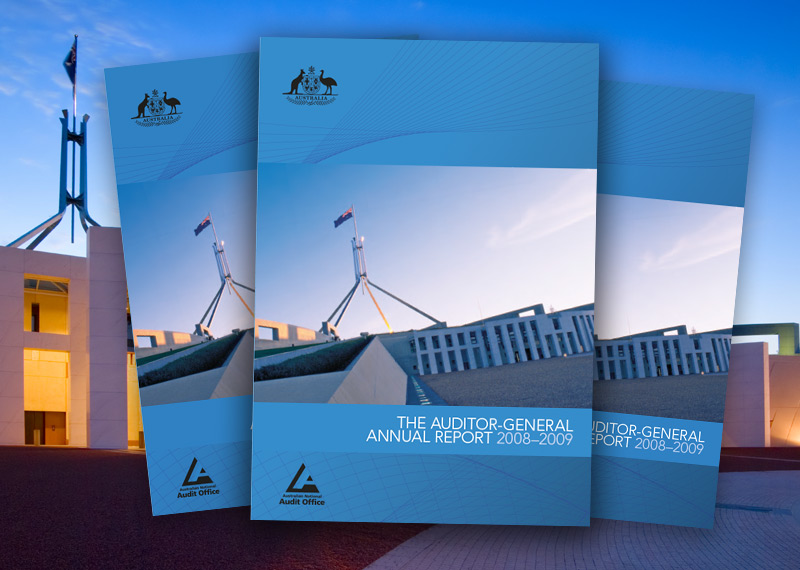
Published: Wednesday 16 September 2009
Published
This annual report documents the performance of the Australian National Audit Office (ANAO) in the financial year ending on 30 June 2009. It includes a foreword by the Auditor-General, an overview of the Office, a report on performance, details about management and accountability, and the financial results.
Performance audit (Auditor-General Report No. 13 of 1999–2000)
Published: Monday 11 October 1999
Published
The Department of Defence spends some $2.4 billion a year on major equipment acquisition projects. The audit objective was to assess Defence's arrangements for higher-level management of major equipment acquisition projects. The principal aim was to formulate practical recommendations that would both enhance Defence's management of major acquisition projects and provide a degree of assurance about its ongoing apparent capacity to do so efficiently and effectively.
Entity
Department of Defence
Performance audit (Auditor-General Report No. 43 of 2004–05)
Published: Tuesday 17 May 2005
Published
The objective of the audit was to form an opinion about DVA's management of the current and future demand for VHC services. To form an opinion, the Australian National Audit Office (ANAO) examined whether DVA:effectively planned the distribution of VHC resources; distributed VHC resources according to its planning; and monitored and evaluated how effectively it managed the demand for VHC services. To form an opinion against the audit objective, the ANAO interviewed DVA personnel, examined DVA documents, interviewed personnel at a selection of Agencies, Service Providers and stakeholders, and reviewed relevant literature.
Entity
Department of Veterans' Affairs
Performance audit (Auditor-General Report No. 51 of 2001–02)
Published: Thursday 23 May 2002
Published
The objective of this audit was to assess the effectiveness of CSIRO in administering research projects to deliver required results. In particular, the audit examined:
- structures for project management in CSIRO;
- the alignment of project with strategic objectives;
- the adequacy of project planning; and
- CSIRO's approach to assessing project outcomes.
Entity
Commonwealth Scientific and Industrial Research Organisation
Financial statement audit (Auditor-General Report No. 9 of 2023–24)
Published: Thursday 14 December 2023
Published
This report complements the Interim Report on Key Financial Controls of Major Entities financial statement audit report published in May 2023. It provides a summary of the final results of the audits of the Consolidated Financial Statements for the Australian Government and the financial statements of 243 Australian Government entities for the period ended 30 June 2023.
Entity
Across Entities
Contact
Please direct enquiries through our contact page.
Performance audit (Auditor-General Report No. 35 of 2003–04)
Published: Wednesday 24 March 2004
Published
This report covers a number of the discretionary compensation and debt relief mechanisms that are available to Commonwealth agencies, where individuals or entities have been disadvantaged by legislation, or actions by agencies or staff, or some other negative circumstances. It deals mainly with two legislative mechanisms, namely, act of grace payments and waivers of debt, and one administrative mechanism, the Compensation for Detriment caused by Defective Administration (CDDA) scheme. This report also briefly covers two other mechanisms, namely ex gratia payments and payments in special circumstances relating to Australian Public Service (APS) employment. The main objective of the audit was to assess whether the management of claims for compensation and debt relief in special circumstances was in accordance with relevant legislative requirements and Commonwealth guidelines, and whether the current administrative policies and procedures were adequate.
Entity
Across Agency
Performance audit (Auditor-General Report No. 19 of 1999–2000)
Published: Monday 22 November 1999
Published
The audit reviewed the operations of the Civil Aviation Authority (CASA), which has prime responsibility for regulating aviation safety in Australia. The audit objectives were to assess the efficiency and effectiveness of the management systems and procedures used by CASA to ensure compliance with regulatory controls by Air Operator's Certificate holders operating passenger-carrying aircraft within High Capacity Regular Public Transport; Low Capacity Regular Public Transport and charter industry sectors; and Certificate of Approval holders. Aviation safety compliance includes entry control, surveillance and enforcement.
Entity
Civil Aviation Safety Authority
Performance audit (Auditor-General Report No. 2 of 1996–97)
Published: Thursday 8 August 1996
Published
The objective of the audit was to examine the effectiveness of the management and control framework established by the Australian National Training Authority to assist its administration and achievement of its objectives. The ANAO's investigation was limited to an analysis of ANTA's internal administrative framework. The audit work focused on key components of the framework: planning, monitoring, and financial and control frameworks.
Entity
Across Agency
Performance audit (Auditor-General Report No. 13 of 2012–13)
Published: Tuesday 18 December 2012
Published
The objective of the audit was to assess the Australian Federal Police’s management of the delivery of policing services to the Australian Capital Territory.
Entity
Australian Federal Police
Performance audit (Auditor-General Report No. 41 of 2009–10)
Published: Wednesday 26 May 2010
Published
The audit objective was to assess whether agreements between Australian Government (Commonwealth) agencies reflect sound administrative practices. To meet this objective, the audit reviewed current government policy and a range of better practice guidelines, conducted interviews with agencies and examined cross-agency agreements, to formulate suitable audit criteria and subsequently develop better practice principles.
Entity
Across Entities
Performance audit (Auditor-General Report No. 1 of 2008–09)
Published: Tuesday 5 August 2008
Published
The objective of the audit was to assess the effectiveness of DFAT's employment and management of its LES at Australia's overseas missions. In particular, the audit examined arrangements for: planning and risk management; guidance and training; recruitment, engagement and employment of LES; and performance management.
Entity
Department of Foreign Affairs and Trade
Performance audit (Auditor-General Report No. 13 of 2005–06)
Published: Tuesday 18 October 2005
Published
The objective of the audit was to assess the administrative effectiveness of the ATO's management of GST compliance in the large business market segment. In conducting the audit the ANAO examined three key areas: governance - ILEC's corporate planning and reporting arrangements relevant to the management of GST compliance in the large business market segment; assessing and identifying compliance risks- how ILEC collects information relating to the large business market segment and how it uses this information to support risk identification and assessment; and managing compliance- compliance planning and the products and processes used by ILEC to manage GST compliance in the large business market segment and evaluating compliance outcomes to support future compliance planning and the targeting of GST compliance risks. In undertaking the audit, the ANAO took account of the findings of previous reviews, in particular the LCCP Review.
Entity
Australian Taxation Office
Performance audit (Auditor-General Report No. 34 of 1996–97)
Published: Tuesday 27 May 1997
Published
The objective of the audit was to assess the efficiency and effectiveness of the provision of health services to the Australian Defence Force Regular forces. Audit criteria were developed which examined health services policy and strategic planning, resource management, the tri-Service provision of medical, dental and other health care, the operation of and planning for major medical facilities, health care management information systems, occupational health and safety and the supply of health materiel.
Entity
Department of Defence
Performance audit (Auditor-General Report No. 25 of 2014–15)

Published: Thursday 5 March 2015
Published
The audit objective was to assess the effectiveness of the development and administration of the Fifth Community Pharmacy Agreement (5CPA), and the extent to which the 5CPA has met its objectives.
Entity
Department of Health; Department of Human Services; Department of Veterans' Affairs
Contact
Please direct enquiries relating to reports through our contact page.
Performance audit (Auditor-General Report No. 9 of 2012–13)
Published: Thursday 1 November 2012
Published
The objective of the audit was to assess the management and effectiveness of DCO’s delivery and coordination of support services to ADF families, in particular support services provided when an ADF member is seriously injured or ill, or dies in service.
Entity
Department of Defence, Department of Veterans' Affairs
Performance audit (Auditor-General Report No. 46 of 1997–98)
Published: Thursday 28 May 1998
Published
The objectives of this audit were to:
- provide assurance to the Parliament on the effectiveness of internal audit operations; and
- determine whether internal audit generally operates at, or near, recognised better practice.
The criteria used to measure internal audit effectiveness were based on four principles developed as part of the audit. These principles and criteria deal with the level of management support and authority; the use of a risk-focus to address client needs; the appropriate balance of skills and knowledge; and the use made of continuous improvement processes and measurement of performance effectiveness.
Entity
Across Agency
Other report (Auditor-General Report No. 8 of 2024–25)

Published: Thursday 24 October 2024
Published
The ANAO’s performance audit program is one of the main assurance functions of the Auditor-General. The purpose of this information report was to provide analysis of 2023–24 performance audits.
Entity
Across Entities
Contact
Please direct enquiries through our contact page.
Performance audit (Auditor-General Report No. 25 of 2023–24)

Published: Wednesday 1 May 2024
Published
The objective of this audit was to assess the effectiveness of NBN Co Limited’s (NBN Co’s) strategies to manage its transition from building to operating the national broadband network.
Entity
NBN Co Limited
Contact
Please direct enquiries through our contact page.
Insights: Audit lessons

Published: Monday 3 April 2023
Published
This edition of Audit Insights is targeted at Australian Government officials who have responsibility for overseeing or conducting procurements, including those who only do procurement occasionally. The aim is to communicate lessons from our audit work to make it easier for people working within the Australian public sector to apply those lessons. It is drawn from audit reports tabled in 2020–21, 2021–22 and 2022–23 into Australian Government procurements.
Contact
Please direct enquiries through our contact page.
Performance audit (Auditor-General Report No. 10 of 2022–23)

Published: Thursday 19 January 2023
Published
The objective of the audit was to assess whether the Department of Health and Aged Care has effectively managed the expansion of telehealth services during and post the COVID-19 pandemic.
Entity
Department of Health and Aged Care
Contact
Please direct enquiries through our contact page.
Performance audit (Auditor-General Report No. 34 of 2014–15)

Published: Thursday 30 April 2015
Published
The objective of the audit was to assess the effectiveness of the Attorney-General’s Department’s administration of the terms of the Natural Disaster Relief and Recovery Arrangements Ministerial determination.
Entity
Attorney-General's Department; Emergency Management Australia
Contact
Please direct enquiries relating to reports through our contact page.
Performance audit (Auditor-General Report No. 4 of 2022–23)

Published: Monday 12 September 2022
Published
The objective of the audit was to examine the effectiveness of the Department of Climate Change, Energy, the Environment and Water's implementation of the National Waste Policy Action Plan 2019.
Entity
Department of Climate Change, Energy, the Environment and Water
Contact
Please direct enquiries through our contact page.
Performance audit (Auditor-General Report No. 20 of 2016–17)

Published: Wednesday 19 October 2016
Published
The audit objective was to assess the departments of Health and Human Services’ administration, including oversight and monitoring arrangements, for the Indemnity Insurance Fund.
Entity
Department of Health; Department of Human Services
Contact
Please direct enquiries relating to reports through our contact page.
Performance audit (Auditor-General Report No. 13 of 2017–18)

Published: Thursday 19 October 2017
Published
The objective of this audit was to assess the effectiveness of controls being implemented and/or developed by the National Disability Insurance Agency (NDIA) to ensure National Disability Insurance Scheme (NDIS) access decisions are consistent with legislative and other requirements.
Entity
National Disability Insurance Agency; Department of Human Services
Contact
Please direct enquiries relating to reports through our contact page.
Performance audit (Auditor-General Report No. 5 of 2019–20)

Published: Thursday 1 August 2019
Published
The objective of this audit was to assess the effectiveness of the Australian Research Council’s (ARC’s) administration of the National Competitive Grants Program (NCGP).
Entity
Australian Research Council
Contact
Please direct enquiries through our contact page.
Performance audit (Auditor-General Report No. 27 of 2021–22)

Published: Thursday 12 May 2022
Published
The objective of the audit was to assess the effectiveness of administration of physical security in the revised Protective Security Policy Framework.
Entity
Attorney-General’s Department; Services Australia; Department of Social Services
Contact
Please direct enquiries through our contact page.
Performance audit (Auditor-General Report No. 40 of 2010–11)
Published: Tuesday 17 May 2011
Published
The objective of the audit was to assess whether Defence is effectively managing the EO Services Contract.
The audit focused mainly on Defence's contract management framework, including the arrangements to monitor the contractor’s performance in delivering services under the contract. The audit also examined the processes used by Defence to develop the current version of the contract and the extent to which the revised contract, as negotiated in 2006, provides an assurance of better value for money when compared to the original contract signed in 2001.
Entity
Department of Defence
Performance audit (Auditor-General Report No. 25 of 2006–07)
Published: Thursday 8 February 2007
Published
The objective of this follow-up audit was to assess the extent to which DOTARS had implemented the nine recommendations contained in the original audit.
Entity
NO-DEPTS-LISTED
Performance audit (Auditor-General Report No. 24 of 2004–05)
Published: Thursday 27 January 2005
Published
Medicare is Australia's universal health insurance scheme. Underpinning Medicare is one of Australia's largest and more complex computer databases the Medicare enrolment database. At the end of 2004 the Medicare enrolment database contained information on over 24 million individuals. This audit examines the quality of data stored on that database and how the Health Insurance Commission (HIC) manages the data.
Entity
Health Insurance Commission; Medicare Australia; Human Services
Performance audit (Auditor-General Report No. 36 of 2001–02)
Published: Wednesday 13 March 2002
Published
In view of the significant level of investment by Commonwealth agencies in the implementation and production of Financial Management Information Systems (FMISs), the ANAO, in conjunction with Gartner, undertook a benchmarking study within the Commonwealth budget sector with the objective of determining and reporting on FMIS:
- implementation and production costs; and
- implementation timeframes.
The benchmarking study also provides some data on resource support, size, volume and utilisation of the FMIS information. These data and metrics have significant implications for FMIS product selection. This study follows on from ANAO Audit Report No.12 'Selection, Implementation and Management of Financial Management Information Systems in Commonwealth Agencies', which was tabled in September 2001. That report provided details of the results of FMIS selections and implementations across the same eight Commonwealth budget sector agencies (the Commonwealth peer group) considered in this benchmarking study.
Entity
Across Agency
Performance audit (Auditor-General Report No. 50 of 2000–01)
Published: Friday 15 June 2001
Published
The ANAO concluded that DHAC's administration of the National Cervical Screening Program is generally sound. The ANAO found that the department has a key role in the Program by providing secretariat services and other support to the NAC, which provides policy advice to AHMAC, and by supporting initiatives to further develop the Program. Some areas of DHAC's administration of the Program provide examples of good practice. Related examples are the early identification of the need to monitor the Program, the early identification of possible data sources for monitoring, and the use of an independent body to provide advice, through the Australian Institute of Health and Welfare, on performance indicators and data sources. A further example is DHAC's administration of the provision of cervical screening funding assistance to the States and Territories through Public Health Outcome Funding Agreements, which complies with the principles for sound Specific Purpose Payments program administration advocated by the Joint Committee of Public Accounts and Audit in their Report 362. On the other hand, the ANAO has identified areas for improvement in quality assurance for the analysis of Pap smears by pathology laboratories.
Entity
Department of Health and Aged Care
Performance audit (Auditor-General Report No. 18 of 1997–98)
Published: Thursday 4 December 1997
Published
The objective of the audit was to determine the extent to which the new Commonwealth services delivery arrangements were implemented efficiently and effectively. The audit focussed on the establishment of Centrelink to deliver services on behalf of purchaser departments and the development of associated purchaser/provider arrangements.
Entity
Centrelink
Performance audit (Auditor-General Report No. 49 of 1997–98)
Published: Monday 29 June 1998
Published
The objectives of the audit were to assist the Department in the timely identification of any deficiencies in the evaluation of responses from suppliers and options for addressing the deficiencies. The objectives were to:
- test the Department's adherence to Commonwealth Procurement Guidelines for open and effective competition and to legislative and other Government specified requirements; and
- provide a report to the Parliament, the Government and other interested parties on the probity of the evaluation process.
The scope of the audit was restricted to considering the processes employed by the Department in the selection of hearing devices for use under the voucher scheme.
Entity
Department of Health and Family Services
Speeches and papers
Published: Wednesday 4 April 2001
Published
Address by Richard Rundle, Executive Director, Business Assurance Services, at the Security in Government 2001 Conference
Performance audit (Auditor-General Report No. 6 of 1999–2000)
Published: Monday 9 August 1999
Published
This report summarises audit and other related activities of the Australian National Audit Office in the period January to June 1999.
Entity
Audit Activity Report
Performance audit (Auditor-General Report No. 33 of 1998–99)
Published: Tuesday 9 March 1999
Published
This report summarises audit and other related activities of the Australian National Audit Office in the period July to December 1998.
Entity
Audit Activity Report
Performance audit (Auditor-General Report No. 42 of 1997–98)
Published: Monday 11 May 1998
Published
In the light of the concerns raised by the Leader of the Opposition and some other Members of Parliament about the allocation of financial assistance approved under the NHT, it was decided to undertake preliminary inquiries. The inquiries focussed on the transparency and rigour of the decision-making process for projects approved for NHT funding.
Entity
Across Agency
Performance audit (Auditor-General Report No. 9 of 2013–14)
Published: Thursday 7 November 2013
Published
The objective of the audit was to assess the effectiveness of the administration of the Australian Prudential Regulation Authority (APRA) financial industry levies.
Entity
Australian Prudential Regulation Authority; Department of the Treasury
Contact
Please direct enquiries relating to reports through our contact page.
Performance audit (Auditor-General Report No. 17 of 2012–13)
Published: Tuesday 29 January 2013
Published
The objective of the audit was to assess the effectiveness of the design and implementation of the EEIG program. The focus of the audit was the preparation for, and conduct of, the first funding round of the program.
Entity
Department of Climate Change and Energy Efficiency
Performance audit (Auditor-General Report No. 33 of 2011–12)
Published: Tuesday 22 May 2012
Published
The objective of the audit was to assess the effectiveness of DFAT's implementation of biometric technology to meet international requirements for enhanced passport security. In particular, the audit examined whether:
- Australian ePassports meet international requirements, and coordination with Australian stakeholders is effective;
- Australian biometric passport technology is fit for purpose and has enhanced passport security;
- personal data on the passport microchip is secure and DFAT maintains an appropriate focus on both protecting privacy and client satisfaction; and
- arrangements are in place to evaluate the effectiveness of the ePassport and to monitor risks.
Entity
Department of Foreign Affairs and Trade
Performance audit (Auditor-General Report No. 24 of 2007–08)
Published: Tuesday 26 February 2008
Published
The audit objective was to determine whether DIAC's biometrics program had appropriate:
- business review processes (including a business case);
- authorisation;
- business and IT governance arrangements; and
- IT project management and systems development arrangements.
Entity
Department of Immigration and Citizenship
Performance audit (Auditor-General Report No. 2 of 2001–02)
Published: Tuesday 10 July 2001
Published
Allegations were made to the Senate Economics References Committee that the Australian Taxation Office and Australian Customs Service (Customs) had failed to pursue several cases of detected sales tax fraud. The Committee believed that this alleged failure may have stemmed from coordination problems between the two agencies. The Committee requested the Auditor-General to investigate this matter and report his findings to the Parliament.
Entity
Australian Customs Service; Australian Taxation Office
Performance audit (Auditor-General Report No. 1 of 1999–2000)
Published: Tuesday 13 July 1999
Published
The audit reviewed the implementation of the purchaser/provider arrangements between the Department of Health and Aged Care and Centrelink. The objective of the audit was to determine the administrative effectiveness of the implementation of the service delivery arrangements between Centrelink and the Department by examining project planning for, and management of, the implementation, and the establishment of on-going purchaser/provider arrangements.
Entity
Centrelink; Department of Health and Aged Care