Browse our range of reports and publications including performance and financial statement audit reports, assurance review reports, information reports and annual reports.
Performance audit (Auditor-General Report No. 21 of 2014–15)

Published: Tuesday 10 February 2015
Published
The objective of the audit was to assess the effectiveness of the Department of Foreign Affairs and Trade’s delivery of services to Australians travelling or residing abroad.
Entity
Department of Foreign Affairs and Trade
Contact
Please direct enquiries relating to reports through our contact page.
Speeches and papers
Published: Thursday 25 May 2000
Published
Mr P.J. Barrett (AM) - Auditor-General for Australia, presented at the Government in Excellence Summit 2000 - Reinventing Government - A Manifesto for Achieving Excellence and Managing for Results; Singapore
Performance audit (Auditor-General Report No. 48 of 2010–11)
Published: Thursday 16 June 2011
Published
The audit objective was to assess the effectiveness of monitoring arrangements (by the Accreditation Agency) and compliance activities (by DoHA) put in place to achieve residential aged care homes’ compliance with the Accreditation Standards and their other, related, responsibilities under the Act and its associated instruments.
The ANAO’s assessment considered whether:
— a sector-wide compliance strategy was in place and aligned with effective monitoring and compliance activities at the operational level;
— there was a clear articulation of the separat but complementary roles and responsibilities of DoHA and the Accreditation Agency; and
— performance information gathered by both agencies to support public reporting and business improvements was useful and enabled comparison of performance over time.
Entity
Department of Health and Ageing; Aged Care Standards and Accreditation Agency Ltd
Speeches and papers
Published: Thursday 1 April 2004
Published
Mr P.J. Barrett (AM) - Auditor-General for Australia, Address to University of Canberra students participating in the Graduate Certificate in Performance Auditing
Performance audit (Auditor-General Report No. 40 of 2014–15)

Published: Wednesday 3 June 2015
Published
The audit objective was to assess the effectiveness of the Department of Veterans’ Affairs administration of the Repatriation Transport Scheme.
Entity
Department of Veterans' Affairs
Contact
Please direct enquiries relating to reports through our contact page.
Performance audit (Auditor-General Report No. 44 of 2012–13)
Published: Thursday 13 June 2013
Published
The objective of the audit was to assess the effectiveness of the Australian Taxation Office's (ATO) management and reporting of selected information relating to the goods and services tax and the fringe benefits tax.
Entity
Australian Taxation Office
Contact
Please direct enquiries relating to reports through our contact page.
Performance audit (Auditor-General Report No. 2 of 2007–08)
Published: Wednesday 18 July 2007
Published
The objective of this audit is to examine DIAC's implementation of the nine recommendations made in the earlier audit. The audit has also taken into account changed circumstances since the original audit. These include a heightened security environment after 11 September 2001 and the results of other relevant ANAO performance audit and financial statement work. The audit also examined ETA decision-making processes to gain assurance about its robustness in a changing risk environment. This issue came to attention in recent audits of visa management processes.
Entity
Department of Immigration and Citizenship
Performance audit (Auditor-General Report No. 53 of 2002–03)
Published: Monday 23 June 2003
Published
In January 2000, the ANAO published a Better Practice Guide (BPG) Business Continuity Management, Keeping the wheels in motion (the Guide). The Guide established that the objective of Business Continuity Management (BCM) is to ensure the uninterrupted availability of all key business resources required to support essential (or critical) business activities. This is achieved by organisations building resilience (controls and redundancy) into business operations to prevent, or minimise, the likelihood of business continuity risks occuring and, also, developing plans that minimise the impact should they occur. The primary objective of this audit was to examine BCM arrangements across four Commonwealth organisations, to assess whether their existing BCM frameworks ( or frameworks under development) exhibit the principles espoused in the Guide. At the Commonwealth - wide level, the ANAO considered the continuing relevance of the principles presented in the Guide.
Entity
Across Agency
Speeches and papers
Published: Thursday 11 April 2002
Published
Address by Richard Rundle, Executive Director, Business Assurance Services, at the Security in Government 2002 Conference
Speeches and papers
Published: Friday 21 June 2002
Published
Mr P.J. Barrett (AM) - Auditor-General for Australia, presented at the Senate Occasional Lecture Series
Performance audit (Auditor-General Report No. 39 of 2021–22)

Published: Tuesday 21 June 2022
Published
The objective of the audit was to assess the effectiveness of the Department of Foreign Affairs and Trade’s overseas crisis management and response arrangements in meeting the government’s objectives for returning Australians from overseas in response to the COVID-19 global pandemic.
Entity
Department of Foreign Affairs and Trade
Contact
Please direct enquiries through our contact page.
Speeches and papers
Published: Thursday 28 February 2002
Published
Mr P.J. Barrett (AM) - Auditor-General for Australia, Address to University of Canberra Students - Graduate Certificate in Performance Audit
Speeches and papers
Published: Tuesday 5 October 2004
Published
Mr P.J. Barrett (AO) - Auditor-General for Australia, presented at the UN Results Based Management Seminar
Performance audit (Auditor-General Report No. 46 of 2000–01)
Published: Wednesday 6 June 2001
Published
The objective of the audit was to report to Parliament on the ATO's management of its performance reporting within the outcomes and outputs framework and to identify potential areas for improvement in specifying, measuring, administering and reporting under that framework.
Entity
Australian Taxation Office
Performance audit (Auditor-General Report No. 1 of 2012–13)
Published: Tuesday 21 August 2012
Published
The objective of the audit was to assess the effectiveness of the Department of Resources, Energy and Tourism’s administration of the Renewable Energy Demonstration Program (REDP), including progress towards achieving the programʹs objectives.
The audit examined whether the department had established effective arrangements to:
- implement REDP, including governance arrangements;
- assess applications for REDP funding assistance and recommend projects to the Minister for funding approval;
- negotiate funding agreements for approved projects; and
- monitor progress towards the achievement of the REDP objective.
Entity
Department of Resources, Energy & Tourism
Performance audit (Auditor-General Report No. 30 of 2023–24)

Published: Tuesday 28 May 2024
Published
The objective of this audit is to assess the effectiveness of the Department of Climate Change, Energy, the Environment and Water's (DCCEEW) corporate plan as its primary planning document in accordance with the Public Governance, Performance and Accountability Act 2013.
Entity
Department of Climate Change, Energy, the Environment and Water
Contact
Please direct enquiries through our contact page.
Performance audit (Auditor-General Report No. 42 of 2019–20)

Published: Friday 19 June 2020
Published
The objective of this audit was to assess the effectiveness of the Department of Foreign Affairs and Trade's fraud control arrangements.
Entity
Department of Foreign Affairs and Trade
Contact
Please direct enquiries through our contact page.
Performance audit (Auditor-General Report No. 42 of 2007–08)
Published: Thursday 19 June 2008
Published
The objective of this follow-up audit was to examine Centrelink's progress in implementing the recommendations of the 2004–05 audit and the subsequent JCPAA inquiry.
Entity
Centrelink; Department of Employment, and Workplace Relations; Department of Families, Housing and Community Services and Indigenous Affairs
Performance audit (Auditor-General Report No. 22 of 2020–21)

Published: Thursday 10 December 2020
Published
The audit examined whether the COVID-19 National Medical Stockpile (NMS) procurement requirement was met through effective planning and governance arrangements.
Entity
Department of Health; Department of Industry, Science, Energy and Resources
Contact
Please direct enquiries through our contact page.
Insights: Audit lessons

Published: Monday 30 June 2025
Published
Governance of Data is targeted at Australian Government officials in information governance roles and those who use data to achieve organisational objectives.
Contact
Please direct enquiries through our contact page.
Performance audit (Auditor-General Report No. 39 of 2023–24)

Published: Monday 17 June 2024
Published
The objective of this audit was to assess the effectiveness of the evaluation of selected Australian Government pilot programs.
Entity
Department of Health and Aged Care; Department of Veterans’ Affairs; Department of Home Affairs
Contact
Please direct enquiries through our contact page.
Speeches and papers
Published: Monday 15 October 2007
Published
Mr Ian McPhee - Auditor-General for Australia, presented at the Australian Institute of Project Management, Hobart
Performance audit (Auditor-General Report No. 39 of 2003–04)
Published: Tuesday 6 April 2004
Published
The objective of this audit was to determine the progress made by the AEC in implementing the ANAO's recommendations, taking into account any changed circumstances, or new administrative issues, affecting implementation of those recommendations.
Entity
Australian Electoral Commission
Performance audit (Auditor-General Report No. 46 of 2010–11)
Published: Tuesday 31 May 2011
Published
The objective of the audit was to assess the effectiveness of DIAC’s management of the student visa program. Three key areas were examined in the audit: the processing of student visa applications; ensuring compliance with student visa conditions; and cooperation between DIAC and DEEWR.
Entity
Department of Immigration and Citizenship
Speeches and papers
Published: Friday 28 August 2009
Published
Mr Ian McPhee - Auditor-General for Australia, presented at the 2009 Brookes Oration Deakin Business School, Deakin University
Speeches and papers
Published: Tuesday 3 June 1997
Published
Mr P.J. Barrett (AM) - Auditor-General for Australia, presented to the Australian Taxation Office Staff Conference, Canberra
Performance audit (Auditor-General Report No. 39 of 2007–08)
Published: Thursday 5 June 2008
Published
The objective of this follow-up audit is to examine DEEWR's implementation of the six recommendations made in the ANAO's 2003 report. This audit has had regard to the issues underlying the recommendations, and new administrative issues affecting their implementation.
Entity
Department of Education, Employment and Workplace Relations
Performance audit (Auditor-General Report No. 43 of 2020–21)

Published: Tuesday 8 June 2021
Published
The objective of the audit was to assess the effectiveness of the Australian Federal Police’s framework to ensure the lawful exercise of powers in accordance with applicable legislation.
Entity
Australian Federal Police
Contact
Please direct enquiries through our contact page.
Performance audit (Auditor-General Report No. 44 of 2018–19)

Published: Thursday 6 June 2019
Published
The objective of this audit was to assess the effectiveness of the Export Finance and Insurance Corporation (Efic).
Entity
Export Finance and Insurance Corporation
Contact
Please direct enquiries through our contact page.
Performance audit (Auditor-General Report No. 23 of 2008–09)
Published: Wednesday 25 February 2009
Published
The audit focussed on performance information reporting by the submarine System Program Offices on reliability, safety systems and logistic support services. In the context of the sustainability arrangements, the audit considered combat system upgrades and personnel escape and rescue systems. Any arrangements that the Commonwealth may be considering regarding the potential sale of ASC were not within the scope of this audit.
Entity
Department of Defence
Performance audit (Auditor-General Report No. 10 of 2023–24)

Published: Monday 15 January 2024
Published
The objective of this audit was to assess the effectiveness of the Department of Climate Change, Energy, the Environment and Water's governance arrangements supporting the implementation of the Australian Government’s climate change commitments.
Entity
Department of Climate Change, Energy, the Environment and Water
Contact
Please direct enquiries through our contact page.
Performance audit (Auditor-General Report No. 8 of 2018–19)

Published: Tuesday 9 October 2018
Published
The objective of the audit was to assess whether effective arrangements have been established by Finance to achieve value for money outcomes for Commonwealth leased office property.
Entity
Department of Finance
Contact
Please direct enquiries through our contact page.
Speeches and papers
Published: Friday 26 February 2010
Published
Mr Ian McPhee - Auditor-General for Australia, presented at the Canberra Evaluation Forum, The Lobby, Canberra
Performance audit (Auditor-General Report No. 29 of 2024–25)

Published: Monday 31 March 2025
Published
The objective of the audit was to assess the effectiveness of the Department of Finance’s and selected entities’ implementation of the Australian Government’s campaign advertising framework.
Entity
Department of Finance; Australian Electoral Commission; Attorney‐General’s Department; Department of Health and Aged Care
Contact
Please direct enquiries through our contact page.
Speeches and papers
Published: Thursday 2 October 2014
Published
Mr Mr Ian McPhee - Auditor-General for Australia, presented at the 2014 National Conference of the Risk Management Institution of Australasia, Brisbane
Corporate

Published: Thursday 28 March 2024
Published
The Australian National Audit Office Enterprise Agreement 2024–2027 was approved by the Fair Work Commission (FWC) on 22 March 2024 and operates from 29 March 2024. The agreement will nominally expire on 28 February 2027. The signatories page of this agreement is available on the FWC website.
Contact
Please direct enquiries through our contact page.
Performance audit (Auditor-General Report No. 23 of 1999–2000)
Published: Monday 20 December 1999
Published
The objectives of this audit were to improve: the accountability of the Australian Taxation Office to Parliament and the Government by the provision of advice that follows up on the ATO's implementation of the previous ANAO Report; and on the recommendations of the then Joint Committee of Public Accounts arising from its consideration of that Report and the efficiency, effectiveness and equity of debt collection by the ATO.
Entity
Australian Taxation Office
Performance audit (Auditor-General Report No. 5 of 2024–25)

Published: Monday 21 October 2024
Published
The audit objective was to assess whether the Australian Government has established an appropriate framework for responding to crises.
Entity
Department of the Prime Minister and Cabinet; National Emergency Management Agency
Contact
Please direct enquiries through our contact page.
Performance audit (Auditor-General Report No. 44 of 1998–99)
Published: Thursday 27 May 1999
Published
The audit reviewed the efficiency and effectiveness of Defence's management of Naval Aviation Force (NAF) in achieving its required capability within budgeted resources. The objectives of the audit were to assess whether planning, management and resource allocation mechanisms and practices for NAF were conducive to achieving the latter's objectives in a cost-effective manner.
Entity
Department of Defence
Performance audit (Auditor-General Report No. 48 of 2006–07)
Published: Friday 22 June 2007
Published
The objective of this audit was to determine the extent to which selected agencies have implemented the two recommendations of the previous audit; and the appropriateness of advice provided by Finance and the ATO. To address this audit objective, the audit assessed:
- the roles of Finance and the ATO in clarifying: the interaction of the PB and SG Act; the ongoing role of the PB Act; and mechanisms to monitor Australian Government organisations' compliance with the PB Act;
- the extent to which Finance and the ATO have provided guidance and other support to assist Australian Government organisations manage and meet statutory superannuation obligations for eligible contractors; and
- whether Australian Government organisations have managed and met statutory superannuation obligations for contractors in past and current contracts.
Entity
NO-DEPTS-LISTED
Corporate
Published: Thursday 6 July 2023
Published
The ANAO Corporate Plan 2023–24 outlines how we intend to deliver against our purpose over the next four years (2023–24 to 2026–27). The corporate plan is the ANAO’s primary planning document – it outlines our purpose; the dynamic environment in which we operate; our commitment to building capability; and the priorities, activities and performance measures by which we will be held to account. The corporate plan is complemented by the annual audit work program, which reflects the ANAO’s audit strategy for the coming year.
This corporate plan was updated on 26 March 2024:
- organisational structure changes — ‘Professional Services and Relationships Group’ to ‘Professional Services Group’
- Measure 3 — change type from ‘Efficiency / Qualitative’ to ‘Efficiency / Quantitative’
- Measure 15, reporting mechanism 4 — replaced text to reflect updated JCPAA feedback process
- Measure 16, reporting mechanism 3 — replaced references to ‘insights’ with ‘lessons’
Contact
Please direct enquiries through our contact page.
Performance audit (Auditor-General Report No. 39 of 2002–03)
Published: Thursday 17 April 2003
Published
The Navy Operational Readiness audit examined the systems that Navy uses to manage readiness and concludes coverage of Navy: readiness organisation and management structures (as well as the interface between these systems and Defence enabling operations); management and maintenance of operational readiness (covering personnel, collective training and other components of operational readiness); and readiness performance information processes. The objective of the audit was to provide assurance to Parliament concerning the progress that Navy has made in the development of operational readiness management and evaluation systems and to identify areas for improvement in these systems.
Entity
Department of Defence
Performance audit (Auditor-General Report No. 46 of 2005–06)
Published: Wednesday 14 June 2006
Published
The objective of this follow-up audit was to review FaCSIA's progress in implementing the recommendations of Audit Report No.17 1999–2000. The focus was whether FaCSIA had maintained or improved its oversight, coordination and administration of the CSHA for both the 1999 CSHA and the 2003 CSHA, in line with the recommendations and findings identified in the previous ANAO audit.
Entity
Department of Families Community Services and Indigenous Affairs
Speeches and papers
Published: Saturday 21 August 2004
Published
Mr P.J. Barrett (AM) - Auditor-General for Australia, Address to the Challenge of Change : Driving Governance and Accountability CPA Forum 2004
Performance audit (Auditor-General Report No. 40 of 1999–2000)
Published: Wednesday 26 April 2000
Published
Tactical fighter operations (TFOs) form the basis of Australia's current military capability to ensure air superiority. Air superiority over the Australian territory and maritime approaches is an essential element in Australia's defence strategy. The audit objectives were to:
- assess whether the resources used to provide the F/A-18 tactical fighter force operational capability are managed cost-effectively; and
- identify areas for improvement in the coordination, planning and practices employed in administration of tactical fighter operations.
Entity
Department of Defence
Performance audit (Auditor-General Report No. 38 of 2021–22)

Published: Tuesday 21 June 2022
Published
The audit objective was to assess the effectiveness of the Department of Home Affairs’ administration and regulation of critical infrastructure protection policy.
Entity
Department of Home Affairs
Contact
Please direct enquiries through our contact page.
Performance audit (Auditor-General Report No. 35 of 2003–04)
Published: Wednesday 24 March 2004
Published
This report covers a number of the discretionary compensation and debt relief mechanisms that are available to Commonwealth agencies, where individuals or entities have been disadvantaged by legislation, or actions by agencies or staff, or some other negative circumstances. It deals mainly with two legislative mechanisms, namely, act of grace payments and waivers of debt, and one administrative mechanism, the Compensation for Detriment caused by Defective Administration (CDDA) scheme. This report also briefly covers two other mechanisms, namely ex gratia payments and payments in special circumstances relating to Australian Public Service (APS) employment. The main objective of the audit was to assess whether the management of claims for compensation and debt relief in special circumstances was in accordance with relevant legislative requirements and Commonwealth guidelines, and whether the current administrative policies and procedures were adequate.
Entity
Across Agency
Performance audit (Auditor-General Report No. 44 of 2021–22)

Published: Wednesday 29 June 2022
Published
The objective of the audit was to examine the effectiveness of Services Australia’s arrangements for the management of contractors.
Entity
Services Australia
Contact
Please direct enquiries through our contact page.
Performance audit (Auditor-General Report No. 4 of 2019–20)

Published: Wednesday 31 July 2019
Published
The objective of the audit was to assess whether the contract for the acquisition of the Civil Military Air Traffic Management System demonstrably represents value for money.
Entity
Airservices Australia; Department of Defence
Contact
Please direct enquiries through our contact page.
Performance audit (Auditor-General Report No. 43 of 2005–06)
Published: Wednesday 31 May 2006
Published
The overall objective of the audit was to assess whether the RSS Programme is effective and efficient in providing assurance on the levels of payment error and the resultant risks to the integrity of Australian Government outlays for payments administered by Centrelink. Specifically, the audit assessed whether: the RSS Programme meets the objectives outlined for it in the Portfolio Budget Statements under which funding was provided; there is an adequate methodology underpinning the RSS reviews; the RSS reviews are conducted effectively and efficiently, and adequate quality assurance mechanisms exist to assure the results obtained from the RSS reviews; and reporting by the agencies of the results of the RSS Programme is adequate and takes into consideration the issues identified in Audit Report No. 44 2002–03 Review of the Parenting Payment Single Program, and Audit Report No. 17 2002–03 Age Pension Entitlements.
Entity
Department of Family Community Services and Indigenous Affairs; Department of Employment and Workplace Relations; Department of Education Science and Training; Centrelink
Performance audit (Auditor-General Report No. 1 of 2019–20)

Published: Thursday 4 July 2019
Published
The objective of this audit was to assess the effectiveness of the management of cyber security risks by three government business enterprises or corporate Commonwealth entities. The entities selected for audit are ASC Pty Ltd, the Australian Postal Corporation and the Reserve Bank of Australia.
Entity
ASC Pty Ltd; Australian Postal Corporation; Reserve Bank of Australia
Contact
Please direct enquiries through our contact page.
Performance audit (Auditor-General Report No. 37 of 2000–01)
Published: Wednesday 23 May 2001
Published
The audit reviewed the Australian Taxation Office's use of audit of individual taxpayers as part of its approach to encouraging taxpayer compliance. The objective of the audit was to examine the use of audit as an element of the compliance management function within the Individuals Non-Business line of the ATO.
Entity
Australian Taxation Office
Performance audit (Auditor-General Report No. 5 of 2017–18)

Published: Tuesday 8 August 2017
Published
The audit objective is to examine the effectiveness of measures taken to strengthen the protection of Australia’s missions and staff overseas.
Entity
Department of Foreign Affairs and Trade
Contact
Please direct enquiries relating to reports through our contact page.
Speeches and papers
Published: Monday 13 September 1999
Published
Mr P.J. Barrett (AM) - Auditor-General for Australia, presented at the Defence and Strategic Studies Course, Australian Defence College, Canberra
Performance audit (Auditor-General Report No. 44 of 2020–21)

Published: Thursday 17 June 2021
Published
The audit objective was to examine the effectiveness of the Great Barrier Reef Marine Park Authority’s regulation of permits and approvals, including its implementation of recommendations from Auditor-General Report No.3 of 2015–16 Regulation of Great Barrier Reef Marine Park Permits and Approvals.
Entity
Great Barrier Reef Marine Park Authority
Contact
Please direct enquiries through our contact page.
Speeches and papers
Published: Monday 8 October 2001
Published
Mr P.J. Barrett (AM) - Auditor-General for Australia, presented at the Third ACAG Conference, Canberra
Speeches and papers
Published: Thursday 22 May 2003
Published
Mr P.J. Barrett (AM) - Auditor-General for Australia, presented to the Queensland Commonwealth Regional Heads Forum 15th Annual Government Business Conference
Performance audit (Auditor-General Report No. 37 of 2015–16)

Published: Thursday 5 May 2016
Published
The audit objective was to assess selected entities’ compliance with the four mandatory ICT security strategies in the Australian Government Information Security Manual (ISM).
Entity
Australian Federal Police (AFP); Australian Transaction Reports and Analysis Centre (AUSTRAC); Department of Agriculture and Water Resources; Department of Industry, Innovation and Science
Contact
Please direct enquiries relating to reports through our contact page.
Performance audit (Auditor-General Report No. 41 of 2018–19)
Published: Wednesday 29 May 2019
Published
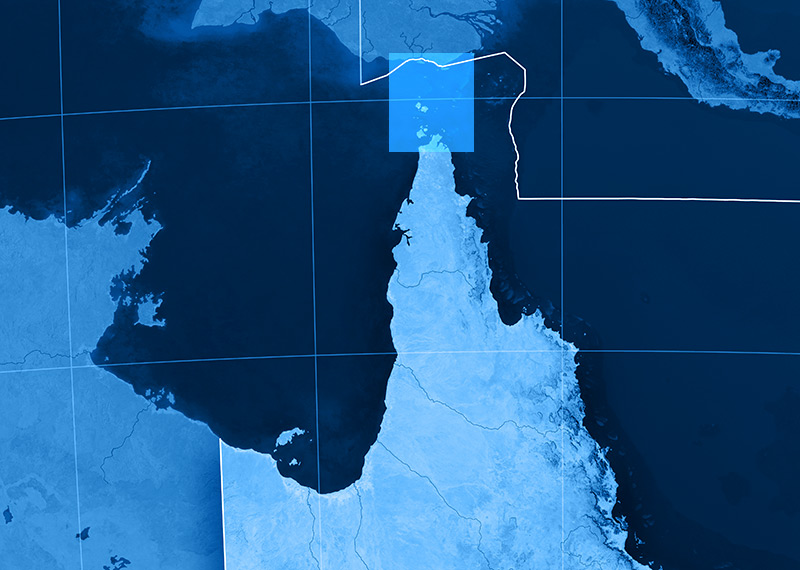
The objective of the audit was to assess the effectiveness of the coordination arrangements of key Australian Government entities operating in Torres Strait.
Entity
Across entities
Contact
Please direct enquiries through our contact page.
Speeches and papers
Published: Saturday 26 June 2004
Published
Mr P.J. Barrett (AO) - Auditor-General for Australia, an Occasional Paper