Browse our range of reports and publications including performance and financial statement audit reports, assurance review reports, information reports and annual reports.
Performance audit (Auditor-General Report No. 44 of 2003–04)
Published: Tuesday 27 April 2004
Published
The audit examined ATSIS' implementation of recommendations from Audit Report No.39, 1998-1999 National Aboriginal Health Strategy - Delivery of Housing and Infrastructure to Aboriginal and Torres Strait Islander Communities (the previous audit). In addition to assessing ATSIS' progress in implementing the recommendations of the previous audit, this follow-up audit examined ATSIS' performance reporting of the NAHS program, and concluded that the current level of aggregation of performance reporting makes it difficult to identify the particular contribution that the NAHS Program makes in improving services to Indigenous communities.
Entity
Aboriginal and Torres Strait Islander Services
Performance audit (Auditor-General Report No. 32 of 2009–10)
Published: Wednesday 28 April 2010
Published
The objective of the audit was to assess the effectiveness of OPO's management of the overseas owned estate. In particular, the audit examined whether:
- sound arrangements are in place to effectively plan and oversight the management of the overseas estate;
- OPO effectively manages owned property on a day-to-day basis;
- the condition of the overseas owned estate is adequately maintained by structured and systematic repair and maintenance arrangements; and
- OPO has appropriate information to facilitate the effective management of the owned estate, and appropriately consults with stakeholders.
Entity
Department of Foreign Affairs and Trade
Performance audit (Auditor-General Report No. 31 of 2006–07)
Published: Thursday 29 March 2007
Published
The objective of the audit was to assess and report on the administration of the Act by the department in terms of protecting and conserving threatened species and threatened ecological communities in Australia.
Entity
Department of the Environment and Water Resources
Performance audit (Auditor-General Report No. 59 of 2003–04)
Published: Wednesday 30 June 2004
Published
The objective of this audit was to provide an independent assurance on the effectiveness of Defence's management of the acqusition of armoured infantry mobility vehicles (IMV) for the Australian Defence Force (ADF). The audit sought to identify the initial capability requirements; analyse the tendering and evaluation process; and examine the management of the project by Defence. As such, this was not an audit of contractor performance, but of the formation and contract management of the aquisition project by Defence.
Entity
Department of Defence
Annual report
Published: Tuesday 28 September 2004
Published
This annual report documents the performance of the Australian National Audit Office (ANAO) in the financial year ending on 30 June 2004. It includes highlights and areas of focus for the year; an introduction by the Auditor-General; an overview of the report; a report on performance; details about management and accountability, and the financial statement for the year.
Annual report
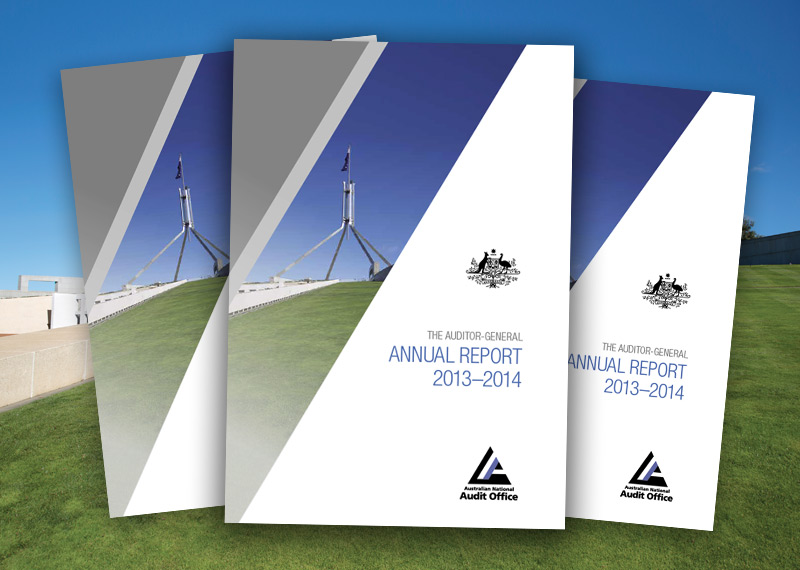
Published: Tuesday 30 September 2014
Published
This annual report documents the performance of the Australian National Audit Office (ANAO) in the financial year ending on 30 June 2014. It addresses the Requirements for Annual Reports for Departments, Executive Agencies and FMA Act Bodies approved by the Joint Committee of Public Accounts and Audit in May 2014; the performance measures set out in the outcome and programs framework in the 2013–14 Portfolio Budget Statements; section 28 of the Auditor-General Act 1997; and other annual reporting requirements provided for in legislation.
Performance audit (Auditor-General Report No. 36 of 2003–04)
Published: Thursday 25 March 2004
Published
The audit assessed the Commonwealth's administration of the two major elements of the Dairy Industry Adjustment Package; the Dairy Structural Adjustment Program (DSAP) and the supplementary Dairy Assitance Program (SDA). The audit addressed the implementation and delivery of the programs, governance arrangements and the management of the Dairy Structural Adjustment Fund.
Entity
Department of Agriculture Fisheries and Forestry; Dairy Adjustment Package
Performance audit (Auditor-General Report No. 46 of 2003–04)
Published: Thursday 20 May 2004
Published
The objective of the audit was to examine and report on the economy, efficiency and effectiveness of the courts' client service arrangements for family law clients. The audit also assessed the effectiveness of the coordination between the two courts, and of their administration of Primary Dispute Resolution (PDR) services.
Entity
Family Court of Australia; Federal Magistrates Court
Performance audit (Auditor-General Report No. 49 of 2011–12)
Published: Monday 25 June 2012
Published
The objective of the audit was to assess the effectiveness of ASIO’s arrangements for providing timely and soundly based security assessments of individuals to client agencies.
Entity
Australian Security Intelligence Organisation
Performance audit (Auditor-General Report No. 14 of 2012–13)
Published: Tuesday 18 December 2012
Published
The audit objective was to assess the effectiveness of FWO’s administration of education and compliance services in relation to the Fair Work Act 2009.
Entity
Office of the Fair Work Ombudsman
Performance audit (Auditor-General Report No. 55 of 2011–12)
Published: Thursday 28 June 2012
Published
The objective of the audit was to assess the effectiveness of the Department of Broadband, Communications and the Digital Economy’s administration of the Household Assistance Scheme.
Entity
Department of Broadband, Communications and the Digital Economy, Department of Human Services
Performance audit (Auditor-General Report No. 12 of 2012–13)
Published: Wednesday 5 December 2012
Published
The audit objective was to assess the effectiveness of the Department of Health and Ageing and the Australian National Preventive Health Agency in fulfilling the Commonwealth’s role in implementing the Council of Australian Government’s National Partnership Agreement on Preventive Health, to achieve the Agreement’s objectives, outcomes and outputs, including supporting all Australians to reduce their risk of chronic disease.
Entity
Australian National Preventive Health Agency; Department of Health and Ageing
Performance audit (Auditor-General Report No. 34 of 2012–13)
Published: Thursday 9 May 2013
Published
The objective of the audit was to assess the extent to which the Department of the Treasury and the Australian Taxation Office (ATO) have improved the management of tax expenditure estimates by implementing the six recommendations in the 2008 ANAO audit and the three recommendations made by the Joint Committee of Public Accounts and Audit (JCPAA) following its inquiry.
Entity
Department of the Treasury; Australian Taxation Office
Contact
Please direct enquiries relating to reports through our contact page.
Performance audit (Auditor-General Report No. 57 of 2003–04)
Published: Thursday 24 June 2004
Published
The audit objectives were to assess: the appropriateness of agencies' policies for dealing with requests for information in accordance with the FOI Act; and assess agencies' compliance with the provisions of the FOI Act, in relation to selected requests for information.
Entity
Australian Federal Police; Attorney-General’s Department; Department of Communications, Information Technology and the Arts; Department of Veterans’ Affairs; Australian Customs Service; Civil Aviation Safety Authority
Performance audit (Auditor-General Report No. 23 of 2012–13)
Published: Tuesday 26 February 2013
Published
The objective of this audit was to assess the effectiveness of the Australian Government Reconstruction Inspectorate, supported by the National Disaster Recovery Taskforce, in providing assurance that value for money is being achieved in recovery and reconstruction expenditure in Victoria.
Entity
Department of Regional Australia, Local Government, Arts and Sport
Speeches and papers
Published: Tuesday 3 December 2002
Published
Mr P.J. Barrett (AM) - Auditor-General for Australia, presented at the Department of Finance and Administration's Learning Centre Lecture Series
Performance audit (Auditor-General Report No. 34 of 2013–14)
Published: Thursday 29 May 2014
Published
The objective of this audit was to assess the effectiveness of arrangements for implementing and monitoring the implementation of ANAO performance audit recommendations in the Department of Agriculture and the Department of Human Services.
Entity
Department of Agriculture, Department of Human Services
Contact
Please direct enquiries relating to reports through our contact page.
Performance audit (Auditor-General Report No. 24 of 2012–13)
Published: Tuesday 26 February 2013
Published
The Preparation and Delivery of the Natural Disaster Recovery Work Plans for Queensland and Victoria
The objective of this audit was to assess the extent to which the disaster recovery work plans for Queensland and Victoria were prepared, and appropriate monitoring reports provided, in accordance with the relevant National Partnership Agreement (NPA).
Entity
Department of Regional Australia, Local Government, Arts and Sport
Performance audit (Auditor-General Report No. 24 of 2003–04)
Published: Saturday 31 January 2004
Published
A Special Account is a mechanism used to record amounts in the Consolidated Revenue Fund that are set aside for specified purposes. A total of $3.40 billion was reported as held in Special Accounts as of 30 June 2003, with $10.33 billion reported as credited to Special Accounts in 2002-03 and $10.06 billion in reported payments (debits) from these Accounts. The audit examined the establishment, management and abolition of Special Accounts by Commonwealth agencies, as well as compliance with legal requirements
Entity
Across Agency
Performance audit (Auditor-General Report No. 45 of 2005–06)
Published: Tuesday 13 June 2006
Published
The audit objective was to form an opinion on the adequacy of a select group of Australian Government agencies' management of Internet security, including following-up on agencies' implementation of recommendations from the ANAO's 2001 audit. The agencies audited were Australian Customs Service (ACS), Australian Federal Police (AFP), Australian Radiation Protection and Nuclear Safety Agency (ARPANSA), Department of Employment and Workplace Relations (DEWR), Department of Industry, Tourism and Resources (DITR) and Medicare Australia. Factors considered in selecting agencies were agency size based on funding levels, whether the agency was included in ANAO's 2001 audit (ACS, ARPANSA, and DEWR), whether the agency's ICT was managed in-house or outsourced, and the nature of the agency's website (that is, general or restricted access).
Entity
across agencies
Performance audit (Auditor-General Report No. 36 of 1996–97)
Published: Thursday 5 June 1997
Published
The audit covered major program elements within the Department of Primary Industries and Energy and Environment Australia that are managed:
- directly by DPIE or Environment Australia;
- through the One-Stop-Shop project assessment process administered by the States/Territories; or
- by non-government organisations.
The purpose of the audit was to examine and benchmark the administrative processes established for these programs. The primary focus of the audit was to draw on the best elements of past practice (particularly in relation to programs involving the One-Stop-Shop) and highlight any shortcomings so that the risks to program effectiveness and accountability could be addressed in the implementation of the Natural Heritage Trust.
Entity
Across Agency
Performance audit (Auditor-General Report No. 35 of 2012–13)
Published: Thursday 16 May 2013
Published
The audit objective was to assess whether Australian Government agencies were effectively controlling the use of credit cards for official purposes.
Entity
Australian Trade Commission; Department of the Prime Minister and Cabinet; Geoscience Australia
Contact
Please direct enquiries relating to reports through our contact page.
Major projects report (Auditor-General Report No. 9 of 2008–09)

Published: Thursday 27 November 2008
Published
This first Assurance Report on the status of selected Defence equipment acquisition projects, which has the support of the Parliament and the Government, represents a substantial step towards improving transparency and public accountability in major Defence procurement projects. It is the pilot of an annual Defence Materiel Organisation (DMO) Major Projects Report, and was developed in conjunction with the DMO. It covers the cost, schedule and capability progress achieved by nine DMO projects, which had an approved budget totalling $13.535 billion as at 30 June 2008.
This report is organised into three parts. Part 1 comprises an ANAO overview and Auditor–General's Foreword. Part 2 comprises the Major Projects Report prepared by DMO, including an overview reflecting DMO's perspective on their business and on the nine projects included in the. Part 3 incorporates the Auditor-General's Review Report, the statement by the CEO DMO, and the information prepared by DMO in the form of standardised Project Data Summary Sheets covering each of the nine pilot projects.
In the next 12 months, the ANAO will review 15 DMO projects planned for inclusion in the 2008-09 DMO Major Projects Report, with the number of projects rising to 30 projects in subsequent years. The ANAO will also work with DMO to refine the approach adopted for providing assurance on each project's progress toward achieving Final Operational Capability. The ANAO will also consider the inclusion of an analysis of each project's emerging trends, as appropriate, to complement DMO's intention to provide improved analysis of project management performance regarding all projects included in the Major Projects Report.
Entity
Defence Materiel Organisation
Performance audit (Auditor-General Report No. 47 of 2011–12)
Published: Friday 22 June 2012
Published
The objective of the audit was to assess the effectiveness of the implementation and administration of the Small Business Superannuation Clearing House.
Entity
Department of the Treasury; Department of Human Services; Australian Taxation Office
Performance audit (Auditor-General Report No. 53 of 2011–12)
Published: Wednesday 27 June 2012
Published
To assess the extent to which agencies create, manage and dispose of records in accordance with key business, legal and policy requirements.
The agencies included in the audit were the: Australian Customs and Border Protection Service (Customs); Department of Immigration and Citizenship (DIAC); and the Department of the Treasury (Treasury). The audit also considered the Archives' response to Recommendation No. 1 from ANAO Audit Report No.6 2006, 07 Recordkeeping including the Management of Electronic Records, including whether they had clarified Australian Government records management requirements for agencies.
Entity
Across agencies
Performance audit (Auditor-General Report No. 53 of 2006–07)
Published: Friday 29 June 2007
Published
The objective of the audit is to examine and report on the efficiency and effectiveness of AFP's administration and management of its overseas deployments. The audit specifically examines two deployments and focuses on strategic and operational planning and logistics. The audit examines a planned, long-term overseas deployment (as part of the Participating Police Force (PPF) within the Regional Assistance Mission to Solomon Islands (RAMSI)) and a crisis-driven deployment in response to a specific event (Disaster Victim Identification (DVI) assistance to Thailand following the Indian Ocean Tsunamis of 26 December 2004).
Entity
Australian Federal Police
Performance audit (Auditor-General Report No. 47 of 2012–13)
Published: Tuesday 18 June 2013
Published
The objective of the audit was to assess the effectiveness of the Australian Transaction Reports and Analysis Centre's (AUSTRAC) arrangements for processing financial intelligence, to assist domestic partner agencies and international counterparts in their operations and investigations.
Entity
Australian Transaction Reports and Analysis Centre (AUSTRAC)
Contact
Please direct enquiries relating to reports through our contact page.
Performance audit (Auditor-General Report No. 34 of 2011–12)
Published: Thursday 24 May 2012
Published
The objective of the audit was to assess the progress of the M113 Upgrade Project (Defence Project: Land 106), including progress in the development of operational capability resulting from the introduction of the upgraded vehicles into service. The high-level audit criteria used to assess the project’s progress and Defence’s effectiveness in administering the M113 Upgrade Project were:
- the degree to which the schedule for the production and delivery of upgraded M113 vehicles to Defence had been recovered in accordance with Defence’s response to the 2008–09 audit report and contractual requirements, as negotiated over the life of the contract;
- Defence’s measurement and allocation of the total cost of the upgrade project; and
- the development of capability arising from the upgrade project.
Entity
Department of Defence, Defence Materiel Organisation
Performance audit (Auditor-General Report No. 34 of 2000–01)
Published: Thursday 17 May 2001
Published
The Age Pension is a social security income support payment available to Australian residents and eligible Australians residing overseas who have reached Age Pension age and whose income and assets are under certain limits. In 1999-2000, approximately $14 billion was paid to approximately 1.7 million Age Pension recipients. Payment of Age Pension is made under the Social Security Law and in accordance with the Guide to the Social Security Law prepared by the Department of Family and Community Services (FaCS). FaCS has contracted Centrelink under a Business Partnership Agreement (BPA) to administer the payment of Age Pension to eligible customers. The objective of the audit was to assess the extent to which new claims for Age Pension had been assessed in compliance with the legislation and other relevant guidelines developed by Centrelink, and whether Centrelink employed appropriate mechanisms to help ensure such compliance. In particular, the ANAO sought evidence with respect to: payment at the right rate, from the right date, to the right person with the right product, for new claims assessed during the audit sample period (that is, in accordance with the working definition of accuracy within Centrelink); the accuracy of Centrelink?s own reporting on compliance, as reported to FaCS under the BPA; and the application of appropriate mechanisms to help ensure such compliance.
Entity
Centrelink
Performance audit (Auditor-General Report No. 30 of 2002–03)
Published: Thursday 27 February 2003
Published
The Service Chiefs of Navy, Army and Air Force are accountable to the Chief of the Defence Force for the way that equipment is used by their Service. They are also accountable for the safety, fitness for service and environmental compliance of the equipment. The audit report deals with the way that the Service Chiefs are assured of the safety and suitability for service of the Australian Defence Force's (ADF's) ordnance systems. Ordnance systems include munitions such as missiles, shells and mines, and the auxiliary material necessary to aim, launch and guide munitions.
Entity
Department of Defence
Performance audit (Auditor-General Report No. 39 of 2009–10)
Published: Monday 24 May 2010
Published
The objective of this audit was to examine the effectiveness of Medicare Australia's administration of the PBS. In assessing the objective, the audit considered three key areas:
- Medicare Australia's relationship with the PBS policy agency (DoHA) and service delivery policy agency (Department of Human Services (DHS));
- the management arrangements and processes underpinning Medicare Australia's delivery of the PBS (including the means by which Medicare Australia gains assurance over the integrity of the PBS); and
- how Medicare Australia undertakes its three main responsibilities relating to the delivery of the PBS, namely: approving pharmacies; approving authority prescriptions; and processing PBS claims.
Entity
Medicare Australia; Department of Human Services; Department of Health and Ageing
Performance audit (Auditor-General Report No. 40 of 2012–13)
Published: Thursday 30 May 2013
Published
The objective of the audit was to assess the effectiveness of the Department of Human Services' arrangements for engaging and managing External Collection Agencies to recover debts arising from Centrelink payments.
Entity
Department of Human Services
Contact
Please direct enquiries relating to reports through our contact page.
Performance audit (Auditor-General Report No. 32 of 2012–13)
Published: Tuesday 7 May 2013
Published
The objective of the audit was to assess the awarding of funding for the construction of the Adelaide Desalination Plant (ADP) against the requirements of the Commonwealth's grants administration framework, which includes the Government’s policy requirements for the approval of grants, with a particular focus on the assessments undertaken of each proposed grant in terms of the guidelines for the National Urban Water and Desalination Plan (NUWDP); and identify any potential improvements in grants administration practices.
Entity
Department of Sustainability, Environment, Water, Population and Communities; Department of Finance and Deregulation; Department of the Prime Minister and Cabinet
Contact
Please direct enquiries relating to reports through our contact page.
Performance audit (Auditor-General Report No. 25 of 2005–06)
Published: Tuesday 24 January 2006
Published
The audit objective was to examine the effectiveness and efficiency of ASIC's implementation of Australian financial services licences. In particular, the audit examined ASIC's planning for the introduction of financial services licences; the roles of the Department of the Treasury (Treasury) and ASIC in defining the effective scope of licensing; ASIC's assessment and processing of licence applications; and ASIC's supervision of licensees.
Entity
Australian Securities and Investment Commission
Performance audit (Auditor-General Report No. 51 of 2010–11)
Published: Tuesday 21 June 2011
Published
To examine the effectiveness of the Department of Health and Ageing’s administration of the Access to Allied Psychological Services Program.
Entity
Department of Health and Ageing
Performance audit (Auditor-General Report No. 27 of 2012–13)
Published: Tuesday 9 April 2013
Published
The audit objective was to assess the effectiveness of DIISTRE’s administration of the Research Block Grant schemes. The department’s performance was assessed against the following criteria:
- the schemes are effectively planned and administered;
- the processes and systems used for calculating and distributing funds reflect the allocation criteria specified for each scheme; and
- compliance with scheme guidelines is monitored and scheme performance and contribution to the broader goals of the RBG program is assessed.
Entity
Department of Industry, Innovation, Climate Change, Science, Research and Tertiary Education
Performance audit (Auditor-General Report No. 55 of 2012–13)
Published: Wednesday 26 June 2013
Published
The objective of the audit was to assess the effectiveness of the Department of Education, Employment and Workplace Relations’ management of the Australian Government’s contribution to the Covenant. The scope of the audit is the Australian Government’s role in the initial establishment of the Covenant and its ongoing contribution through other employment programs.
Entity
Department of Education, Employment and Workplace Relations
Contact
Please direct enquiries relating to reports through our contact page.
Performance audit (Auditor-General Report No. 45 of 2006–07)
Published: Tuesday 19 June 2007
Published
The objective of this performance audit was to assess the administration of the National Black Spot Programme. It was undertaken in a manner similar to the audit of the Roads to Recovery Programme. Specifically, the audit approach involved:
- examination of DOTARS records and discussions with officers in DOTARS and four of the State road transport authorities responsible for administering the Programme;
- analysis of project monitoring, reporting and payment arrangements; and
- selecting a sample of 45 LGA areas across four States so that ANAO could examine projects delivered with Commonwealth funding.
Entity
NO-DEPTS-LISTED
Performance audit (Auditor-General Report No. 42 of 2012–13)
Published: Thursday 6 June 2013
Published
The objective of the audit was to assess the effectiveness of the Department of Human Services' (DHS) administration of the shopfront co-location of DHS services.
Entity
Department of Human Services
Contact
Please direct enquiries relating to reports through our contact page.
Performance audit (Auditor-General Report No. 54 of 2011–12)
Published: Wednesday 27 June 2012
Published
The objective of the audit was to assess the effectiveness of the ATO’s administration of external debt collection arrangements.
Entity
Australian Taxation Office
Performance audit (Auditor-General Report No. 41 of 2009–10)
Published: Wednesday 26 May 2010
Published
The audit objective was to assess whether agreements between Australian Government (Commonwealth) agencies reflect sound administrative practices. To meet this objective, the audit reviewed current government policy and a range of better practice guidelines, conducted interviews with agencies and examined cross-agency agreements, to formulate suitable audit criteria and subsequently develop better practice principles.
Entity
Across Entities
Performance audit (Auditor-General Report No. 46 of 2012–13)
Published: Tuesday 18 June 2013
Published
The objective of the audit was to assess the effectiveness of the Department of Veterans’ Affairs’ and the Department of Defence’s administration of the Australian Government’s $55 million support package announced in the May 2010 Budget for former F-111 fuel tank maintenance workers and their families. The audit examined the implementation of the 14 agreed recommendations in the Government Response to the 2009 Parliamentary Inquiry into the F-111 deseal/reseal issues, which formed the basis of the May 2010, F-111 support package.
Entity
Department of Veterans' Affairs; Department of Defence
Contact
Please direct enquiries relating to reports through our contact page.
Performance audit (Auditor-General Report No. 40 of 2000–01)
Published: Monday 28 May 2001
Published
The Department of Immigration and Multicultural Affairs (DIMA), administers the Commonwealth's settlement programs, which seek to assist migrants and refugees to participate in Australian society. Provision of English language training to newly arrived migrants and refugees has been a long standing and significant part of this settlement support, with some 1.5 million new arrivals assisted in this way since 1948. The objective of the audit was to examine DIMA's management of the Adult Migrant English Program Contracts, focusing on performance outcomes; strategic contract management and coordination; program expenditure, with emphasis on contract funding arrangements; and whether contract monitoring and performance information adequately support effective program management. The ANAO made six audit recommendations aimed at improving program performance management and reporting; strategic management and coordination; management of financial risks; and monitoring of contractor performance, which were all accepted by DIMA.
Entity
Department of Immigration and Multicultural Affairs
Performance audit (Auditor-General Report No. 1 of 2012–13)
Published: Tuesday 21 August 2012
Published
The objective of the audit was to assess the effectiveness of the Department of Resources, Energy and Tourism’s administration of the Renewable Energy Demonstration Program (REDP), including progress towards achieving the programʹs objectives.
The audit examined whether the department had established effective arrangements to:
- implement REDP, including governance arrangements;
- assess applications for REDP funding assistance and recommend projects to the Minister for funding approval;
- negotiate funding agreements for approved projects; and
- monitor progress towards the achievement of the REDP objective.
Entity
Department of Resources, Energy & Tourism
Performance audit (Auditor-General Report No. 47 of 2003–04)
Published: Tuesday 25 May 2004
Published
In the current audit, the objectives were to provide assurance to the Parliament on the adequacy of the measures and plans instituted by Defence to ensure that the combat aircrew workforce meets military preparedness requirements in the future, and to identify possible areas for improvement.
Entity
Department of Defence
Performance audit (Auditor-General Report No. 30 of 2009–10)
Published: Thursday 22 April 2010
Published
Recent performance audit priority for the Australian National Audit Office (ANAO) in the Infrastructure, Transport, Regional Development and Local Government portfolio has been directed at the administration of funding for land transport. Accordingly, this audit is one of a series ANAO is undertaking of land transport funding programs. Four audits have already been completed, namely:
- ANAO Audit Report No. 31 2005–06, Roads to Recovery;
- ANAO Audit Report No. 45 2006–07, The National Black Spot Program;
- ANAO Audit Report No. 22 2007–08, Administration of Grants to the Australian Rail Track Corporation; and
- ANAO Audit Report No. 29 2008–09, Delivery of Projects on the AusLink National Network.
Entity
Department of Infrastructure, Transport, Regional Development and Local Government
Performance audit (Auditor-General Report No. 30 of 2005–06)
Published: Tuesday 28 February 2006
Published
The objective of the audit was to assess the ATO's strategies to address tax evasion in the cash economy, with emphasis on: the ATO's strategic focus; aspects of governance, management processes and compliance activities; and responses to the ANAO Report No.35 2001–02 ATO Progress in Addressing the Cash Economy.
Entity
Australian Taxation Office
Performance audit (Auditor-General Report No. 20 of 2005–06)
Published: Tuesday 6 December 2005
Published
The objective of this audit was to assess the Private Health Insurance Administration Council's (PHIAC's) administrative effectiveness as a regulator of private health insurance. In making this assessment, the Australian National Audit Office (ANAO) addressed the following criteria: whether PHIAC monitored compliance with its legislative requirements and analysed related data; whether PHIAC addressed and managed non-compliance with its legislative requirements; and whether PHIAC's governance and organisation supported the performance of its legislative functions. Although the Department of Health and Ageing (Health) also has a role in the regulation of the private health insurance industry under the National Health Act 1953 (Health Act), Health's regulatory activities were outside the scope of this audit.
Entity
Private Health Insurance Administration Council
Performance audit (Auditor-General Report No. 51 of 2012–13)
Published: Monday 24 June 2013
Published
The objective of the audit was to assess the effectiveness of the Australian Taxation Office’s management of its property portfolio.
Entity
Australian Taxation Office
Contact
Please direct enquiries relating to reports through our contact page.
Performance audit (Auditor-General Report No. 34 of 2003–04)
Published: Friday 5 March 2004
Published
In 1997, and subsequently in 1999, the Australian Government introduced two major spending packages with a total value of almost $1 billion. These spending packages were designed to address the challenges posed by the issue of climate change and to meet Australia's domestic and international commitments. Since its inception in 1998, the Australian Greenhouse Office has been responsible for the implementation of greenhouse related programs from these two major spending packages. The objective of the audit was to examine and report on the administrative efficiency and effectiveness of seven major programs administered by the Australian Greenhouse Office.
Entity
Australian Greenhouse Office
Performance audit (Auditor-General Report No. 45 of 2012–13)
Published: Monday 17 June 2013
Published
The audit objective was to assess the administrative effectiveness of the Department of Education, Employment and Workplace Relations(DEEWR), Department of Human Services (DHS) partnership arrangement in supporting the delivery of employment programs.
Entity
Department of Education, Employment and Workplace Relations; Department of Human Services
Contact
Please direct enquiries relating to reports through our contact page.
Performance audit (Auditor-General Report No. 39 of 2006–07)
Published: Thursday 24 May 2007
Published
The objectives of the audit were to assess:
- whether FaCSIA has effectively administered the distribution of funding for the Local Answers, VSEG, Reconnect and Minor Capital Upgrade programmes, including promoting the relevant schemes to potential applicants, developing application forms, handling and appraising applications, selecting recipients and making grant announcements;
- the pattern of approvals of grants to States/Territories and to electorates held by the Government and Opposition parties under the Local Answers and VSEG programmes; and
- whether FaCSIA administered eight one-off grants to community organisations provided as a result of Government commitments during the 2004 Federal Election campaign in line with relevant legislation and guidelines.
Entity
NO-DEPTS-LISTED
Performance audit (Auditor-General Report No. 6 of 2005–06)
Published: Thursday 18 August 2005
Published
The objective of this audit was to assess whether DEWR had implemented ESC3 and its computer system EA3000, efficiently and effectively. The primary focus is on the period of change from the previous employment services contract to ESC3 and the first full year of its operation, 2003-04. The scope of the audit was limited to the implementation of Job Network services under ESC3, the introduction of the supporting computer application, EA3000, and DEWR's use of modelling to estimate the effects of the APM. The audit did not test the effectiveness of the APM. DEWR has a plan to evaluate the new model. A separate, concurrent ANAO audit assessed DEWR's oversight of Job Network services to job seekers.
Entity
Department of Employment and Workplace Relations; Centrelink
Performance audit (Auditor-General Report No. 7 of 2013–14)
Published: Thursday 31 October 2013
Published
The objective of the audit was to assess the effectiveness of Australia’s arrangements to meet its treaty obligations under three selected treaties:
- International Convention on Civil Liability for Bunker Oil Pollution Damage 2001;
- Agreement between Australia and the International Atomic Energy Agency for the Application of Safeguards in connection with the Treaty on the Non-Proliferation of Nuclear Weapons of 1 July 1968 and Additional Protocol; and
- Convention on the Rights of the Child 1990.
Entity
Across Agencies
Contact
Please direct enquiries relating to reports through our contact page.
Performance audit (Auditor-General Report No. 44 of 2010–11)
Published: Thursday 26 May 2011
Published
The objective of the audit was to assess the effectiveness of AusAID’s management of tertiary training assistance.
Entity
Australian Agency for International Development
Performance audit (Auditor-General Report No. 48 of 2011–12)
Published: Friday 22 June 2012
Published
The objective of the audit was to examine the effectiveness of DVA's administration of mental health programs and services to support younger veterans.
Entity
Department of Veterans' Affairs
Performance audit (Auditor-General Report No. 33 of 2012–13)
Published: Wednesday 8 May 2013
Published
The objective of the audit was to assess the effectiveness of the Tax Practitioners Board's implementation and administration of the regulatory arrangements for tax practitioners under the Tax Agent Services Act 2009.
Entity
Australian Taxation Office; Tax Practitioners Board
Contact
Please direct enquiries relating to reports through our contact page.
Performance audit (Auditor-General Report No. 28 of 2012–13)
Published: Tuesday 23 April 2013
Published
The Australian National Audit Office has undertaken a pilot project to assess the status of the Australian Government performance measurement and reporting framework as a basis for implementation of a future program of audits of entities’ key performance indicators, and to develop a suitable audit methodology. This report presents a summary of the work completed to date.
Entity
Across Agencies
Performance audit (Auditor-General Report No. 36 of 2006–07)
Published: Wednesday 16 May 2007
Published
The audit objectives were to examine if:
- DCITA had effectively planned and administered the HiBIS and BC Stage 1 programs; and
- the programs had achieved their objectives.
The audit focused on DCITA's activities to support the planning, implementation, monitoring and reporting of HiBIS and BC Stage 1 programs.
Entity
NO-DEPTS-LISTED
Major projects report (Auditor-General Report No. 17 of 2010–11)

Published: Tuesday 30 November 2010
Published
The objective of this report is to provide comprehensive information on the status of projects as reflected in the Project Data Summary Sheets (PDSSs) prepared by DMO, and a review by the ANAO.
Entity
Defence Materiel Organisation
Performance audit (Auditor-General Report No. 52 of 2011–12)
Published: Tuesday 26 June 2012
Published
The objective of this audit was to examine the effectiveness of DMO’s implementation of its Gate Review process for major Defence capital acquisition projects.
Entity
Department of Defence
Performance audit (Auditor-General Report No. 18 of 2012–13)
Published: Wednesday 30 January 2013
Published
The objective of the audit was to assess the effectiveness of FaHCSIA’s administration of Communities for Children under the Family Support Program.
Entity
Department of Families, Housing, Community Services and Indigenous Affairs
Performance audit (Auditor-General Report No. 44 of 2012–13)
Published: Thursday 13 June 2013
Published
The objective of the audit was to assess the effectiveness of the Australian Taxation Office's (ATO) management and reporting of selected information relating to the goods and services tax and the fringe benefits tax.
Entity
Australian Taxation Office
Contact
Please direct enquiries relating to reports through our contact page.
Performance audit (Auditor-General Report No. 37 of 2012–13)
Published: Wednesday 22 May 2013
Published
The audit objective was to assess the effectiveness of the Department of Industry, Innovation, Science, Research and Tertiary Education’s (DIISRTE’s) administration of the Education Investment Fund grants program.
(DIISRTE was the department that had responsibility for the administration of the EIF grants program during the course of the audit. The recommendations and suggestions for improvement are, however, directed to the Department of Industry, Innovation, Climate Change, Science, Research and Tertiary Education because this department now has responsibility for the administration of the program).
Entity
Department of Industry, Innovation, Climate Change, Science, Research and Tertiary Education; Department of Education, Employment and Workplace Relations
Contact
Please direct enquiries relating to reports through our contact page.
Performance audit (Auditor-General Report No. 22 of 2012–13)
Published: Thursday 21 February 2013
Published
The objective of the audit was to examine the effectiveness of the Department of Agriculture, Fisheries and Forestry’s administration of the Tasmanian Forests Intergovernmental Agreement Contractors Voluntary Exit Grants Program.
Entity
Department of Agriculture, Fisheries and Forestry
Performance audit (Auditor-General Report No. 52 of 2012–13)
Published: Tuesday 25 June 2013
Published
The objective of the audit was to assess the effectiveness of the Australian Taxation Office’s administration of debt relief arrangements.
Entity
Australian Taxation Office
Contact
Please direct enquiries relating to reports through our contact page.
Performance audit (Auditor-General Report No. 36 of 2005–06)
Published: Tuesday 2 May 2006
Published
The objective of the audit was to assess the effectiveness of management of the procurement of a major, new capability for the ADF by the DMO and Defence. The audit reviewed the initial capability requirements and approval process; analysed the contract negotiation process; and examined management of the Acquisition and Through-Life-Support Contracts. Coverage of the audit extended from development of the concept for the requirement, to acceptance of deliverables in the period prior to the award of the Australian Military Type Certificate (see shaded area of Figure 1). The audit fieldwork was undertaken during the delivery phase of the Project, following delivery of ARH numbers 1, 2 and 5.
Entity
Department of Defence; Defence Material Organisation
Performance audit (Auditor-General Report No. 31 of 2000–01)
Published: Thursday 29 March 2001
Published
The audit reviewed the Department of Foreign Affairs and Trade's administration of consular services. It focussed on DFAT's travel advice to alert Australians to potential travel risks; case management systems to record and monitor action on more complex consular cases; performance information for the management of consular services; and contingency planning for major consular incidents. The audit also reviewed action taken by DFAT and other agencies to implement the recommendations of a 1997 Senate Committee report on consular services.
Entity
Department of Foreign Affairs and Trade
Performance audit (Auditor-General Report No. 25 of 2012–13)
Published: Wednesday 27 February 2013
Published
The objective of the audit was to assess the effectiveness of Defence’s monitoring of the implementation of ANAO and internal audit recommendations. The audit also examined a sample of ANAO and internal audit recommendations—reported as being complete by Defence—to assess the extent to which these recommendations had been implemented by Defence.
Entity
Department of Defence; Defence Materiel Organisation
Performance audit (Auditor-General Report No. 26 of 2003–04)
Published: Friday 6 February 2004
Published
The audit examined aspects of financial management in the Health Insurance Commission (HIC). The audit objective was to examine the effectiveness of the HIC's internal control structures, as well as its financial management framework and processes, in order to form an opinion on their ability to support HIC Commissioners and managers to make informed decisions on the efficient and effective use of Commonwealth resources.
Entity
Health Insurance Commission
Performance audit (Auditor-General Report No. 7 of 2002–03)
Published: Monday 16 September 2002
Published
In 1997-98, the ANAO audited the Child Support Agency (CSA), making 12 recommendations to improve its operational performance. A related report by the Joint Committee of Public Accounts and Audit supported the general findings of the ANAO audit and reinforced three ANAO recommendations in its own report. The audit examined client service in the CSA by following-up the CSA's implementation of the recommendations contained in these two previous reports and more broadly assessing whether the CSA had improved the management and delivery of its client service sine the previous ANAO audit.
Entity
Department of Family and Community Services
Performance audit (Auditor-General Report No. 14 of 2007–08)
Published: Thursday 15 November 2007
Published
The audit objective was to assess whether the Regional Partnerships Programme has been effectively managed by DOTARS, including the processes by which:
- applications are sought, received and assessed;
- Funding Agreements with grant recipients are developed and managed; and
- the achievement of project and programme outcomes is monitored and assessed.
Entity
Department of Transport and Regional Services
Performance audit (Auditor-General Report No. 38 of 2006–07)
Published: Wednesday 23 May 2007
Published
The audit objective was to assess the effectiveness of DoHA's management of CACPs in fulfilling the legislated objectives of the program.
Entity
NO-DEPTS-LISTED
Performance audit (Auditor-General Report No. 42 of 1999–2000)
Published: Wednesday 10 May 2000
Published
The audit reviewed the effectiveness and probity of the policy development processes and implementation of improved access to Magnetic Resonance Imaging services. The objective of the audit was to examine and report on the effectiveness and probity of the processes involved in:
(a) the development and announcement of the proposal to improve access to Magnetic Resonance Imaging (MRI) services announced in the 1998 Budget, including negotiation with the diagnostic imaging profession; and
(b) the registration of 'eligible providers' and 'eligible equipment' to enable the payment of claims for MRI services on the Medicare Benefits Schedule
Entity
Across Agency
Performance audit (Auditor-General Report No. 39 of 2012–13)
Published: Tuesday 28 May 2013
Published
The audit objective was to assess the effectiveness of AusAID’s management of infrastructure aid to Indonesia, with a particular focus on the Eastern Indonesia National Roads Improvement Project and the Indonesia Infrastructure Initiative.
Entity
Australian Agency for International Development (AusAID)
Contact
Please direct enquiries relating to reports through our contact page.
Performance audit (Auditor-General Report No. 9 of 2010–11)
Published: Wednesday 29 September 2010
Published
On 3 February 2010, Senator Christine Milne wrote to the Auditor General raising concerns about DEWHA's administration of the Green Loans program and requesting a performance audit of the program. Issues raised included: uncapped assessor numbers; problems with the delivery of the program; the quality of assessor training and assessments provided to households; the lack of an audit facility within the program; and equitable access to work under the program.
In light of Senator Milne's request and other concerns in relation to the administration of the program, the Auditor-General agreed on 25 February 2010 to conduct a performance audit of the program. The objective of the audit was to examine key aspects of the establishment and administration of the Green Loans program by DEWHA and the program's transition to DCCEE. Particular emphasis was given to the program's three main elements:
- training, registration and contracting of assessors;
- scheduling, conduct, and reporting of home sustainability assessments, and the associated payments to assessors; and
- provision of green loans to householders, and the associated payments to participating financial institutions.
The audit also examined the extent to which steps had been taken by DEWHA and DCCEE to assess whether the Green Loans program was achieving its objectives.
Entity
Department of the Environment, Water, Heritage and the Arts; Department of Climate Change and Energy Efficiency
Performance audit (Auditor-General Report No. 54 of 2012–13)
Published: Wednesday 26 June 2013
Published
The audit objectives were to assess the effectiveness of:
- selected agencies’ administration in developing advertising campaigns and implementing key processes against the requirements of the Australian Government’s campaign advertising framework, and other key legal and administrative requirements; and
- the ongoing administration of the campaign advertising framework.
Entity
Across Entities
Contact
Please direct enquiries relating to reports through our contact page.
Performance audit (Auditor-General Report No. 33 of 2000–01)
Published: Monday 7 May 2001
Published
The objective of the ANAO audit was to identify possible areas for improvement in the Australian Defence Force's management of its Reserve forces. The audit focused on major aspects of the Reserves including roles and tasks, force structure, capability, training, individual readiness, equipment, facilities, recruitment, retention, conditions of service and administration. The audit covered the Australian Naval Reserve, the Australian Army Reserve and the Royal Australian Air Force Reserve. However, due to its size and cost, the Army Reserve was a major focus of the audit activity.
Entity
Department of Defence
Performance audit (Auditor-General Report No. 25 of 2011–12)
Published: Thursday 9 February 2012
Published
The objective of the audit was to assess the effectiveness of the Project Wickenby taskforce in making Australia unattractive for international tax fraud and evasion by detecting, deterring and dealing with the abusive use of secrecy havens by Australian taxpayers.
Entity
Australian Taxation Office, Australian Crime Commission and Australian Federal Police
Performance audit (Auditor-General Report No. 49 of 2005–06)
Published: Monday 26 June 2006
Published
The objective of the audit was to assess whether DEWR's management and oversight of Job Placement and matching services is effective, in particular, whether: DEWR effectively manages, monitors and reports the performance of JPOs in providing Job Placement services; DEWR effectively manages the provision of matching services (including completion of vocational profiles and provision of vacancy information through auto-matching) to job seekers; Job seeker and vacancy data in DEWR's JobSearch system is high quality and is managed effectively; and DEWR effectively measures, monitors and reports Job Placement service outcomes.
Entity
Department of Employment and Workplace Relations
Performance audit (Auditor-General Report No. 57 of 2010–11)
Published: Tuesday 28 June 2011
Published
The objective of the audit was to report on the effectiveness of Defence’s approach to the acceptance into service of Navy capability, and to identify where better practice may be used by CDG, DMO and Navy.
Entity
Department of Defence; Defence Materiel Organisation
Major projects report (Auditor-General Report No. 13 of 2009–10)

Published: Tuesday 24 November 2009
Published
The objective of this report is to provide information, prepared by both the ANAO and DMO, on the performance of major projects as well as providing the Auditor-General’s formal conclusion on the review of the Project Data Summary Sheets (PDSSs) prepared by DMO and contained in this report.
Entity
Defence Materiel Organisation
Performance audit (Auditor-General Report No. 21 of 2003–04)
Published: Monday 22 December 2003
Published
Directly after the collapse of Ansett in September 2001, most of its estimated 15 000 employees faced the possibility of retrenchment The Government immediately announced the introduction of the Special Employee Entitlements Scheme for Ansett group employees (SEESA) to address two risks facing the employees:
- the risk-to a certain limit - of a shortfall in their payments of accrued employee entitlements from Ansett and,
- the risk of delay in their being paid.
The objective of the audit was to determine how efficiently and effectively the two key elements of SEESA were managed: DEWR's management of the mechanism for making SEESA payments and DOTARS' management of the associated Air Passenger Ticket Levy.
Entity
Department of Employment and Workplace Relations; Department of Transport and Regional Services
Major projects report (Auditor-General Report No. 20 of 2011–12)

Published: Tuesday 20 December 2011
Published
The objective of this report is to provide a formal conclusion on the review of the Project Data Summary Sheets by the Auditor-General, including comprehensive information on the status of projects as reflected in the PDSSs prepared by the DMO.
Entity
Defence Materiel Organisation
Major projects report (Auditor-General Report No. 15 of 2012–13)

Published: Wednesday 19 December 2012
Published
The objective of this report is to provide comprehensive information on the status of selected Major Projects, as reflected in the Project Data Summary Sheets prepared by the DMO, and the Statement by the Chief Executive Officer (CEO) of the DMO, and including the ANAO’s review of the preparation of the PDSSs by the DMO.
Entity
Defence Materiel Organisation
Major projects report (Auditor-General Report No. 12 of 2013–14)

Published: Tuesday 17 December 2013
Published
The objective of this report is to provide the Auditor-General’s independent assurance over the status of selected Major Projects, as reflected in the Project Data Summary Sheets (PDSSs) prepared by the DMO, and the Statement by the Chief Executive Officer (CEO) DMO. Assurance from the ANAO’s review of the preparation of the PDSSs by the Defence Materiel Organisation (DMO) is conveyed in the Auditor-General’s Independent Review Report, prepared pursuant to the endorsed Guidelines, contained in Part 3.
Entity
Defence Materiel Organisation
Contact
Michael White, Executive Director, Phone: (02) 6203 7393