Browse our range of reports and publications including performance and financial statement audit reports, assurance review reports, information reports and annual reports.
Performance audit (Auditor-General Report No. 24 of 2015–16)

Published: Tuesday 1 March 2016
Published
The audit objective was to assess the effectiveness of the Department of Social Services' administration of Early Intervention Services for Children with Disability.
Entity
Department of Social Services
Contact
Please direct enquiries relating to reports through our contact page.
Request for audit
Responded: Friday 11 December 2015
Response provided
The Auditor-General responded on 11 December 2015 to correspondence from Senator the Hon Doug Cameron on 30 October 2015 regarding systems and processes within the Department of Human Services (DHS) that go to the security of citizens' identity.
Contact
Please direct enquiries relating to requests for audit through our contact page.
Performance audit (Auditor-General Report No. 16 of 2003–04)
Published: Thursday 4 December 2003
Published
The objectives of the follow-up audit were to assess DFAT's implementation of the six recommendations made by the ANAO in the previous audit. It also sought to determine whether implementation of these recommendations, or alternative action, had improved DFAT's administration of consular services. The audit focused on management processes and supporting systems for the delivery of consular services. It also reviewed DFAT's implementation of recommendations of the Senate Foreign Affairs, Defence and Trade References Committee that were outstanding from the previous audit.
Entity
Department of Foreign Affairs and Trade
Request for audit
Responded: Thursday 18 April 2019
Response provided
The Auditor-General has responded to correspondence received from Senator Griff dated 11 April 2019, requesting that the Auditor-General provide as much detail as possible regarding the negotiation and awarding of contracts in the audit of the procurement of garrison support and welfare services.
Contact
Please direct enquiries relating to requests for audit through our contact page.
Performance audit (Auditor-General Report No. 2 of 2010–11)
Published: Friday 23 July 2010
Published
The objective of this performance audit was to assess the effectiveness of the conduct of the first National Infrastructure Audit and development of the Infrastructure Priority List.
Entity
Infrastructure Australia
Request for audit
Responded: Tuesday 2 July 2024
Response provided
The Auditor-General wrote to the Minister for Finance on 21 June 2024 to advise of the outcomes of the 2023–24 annual performance statements audit program, and a proposal for expanding the program of audits in 2024–25 and the following two financial years. The Minister for Finance responded on 2 July 2024 supporting the proposal. The Minister for Finance's full response is provided below.
Contact
Please direct enquiries through our contact page.
Performance audit (Auditor-General Report No. 2 of 2007–08)
Published: Wednesday 18 July 2007
Published
The objective of this audit is to examine DIAC's implementation of the nine recommendations made in the earlier audit. The audit has also taken into account changed circumstances since the original audit. These include a heightened security environment after 11 September 2001 and the results of other relevant ANAO performance audit and financial statement work. The audit also examined ETA decision-making processes to gain assurance about its robustness in a changing risk environment. This issue came to attention in recent audits of visa management processes.
Entity
Department of Immigration and Citizenship
Performance audit (Auditor-General Report No. 21 of 2016–17)

Published: Monday 17 October 2016
Published
The audit objective was to assess Defence’s implementation of the five recommendations in ANAO Report No.19 2014-15 Management of the Disposal of Specialist Military Equipment and the related recommendation in JCPAA Report 449 Review of Auditor-General's Reports Nos. 1-23 (2014-15).
Entity
Department of Defence
Contact
Please direct enquiries relating to reports through our contact page.
Performance audit (Auditor-General Report No. 19 of 2022–23)

Published: Thursday 6 April 2023
Published
The objective of this audit was to assess the effectiveness of procurement complaints handling by the Australian Communications and Media Authority, the Department of Finance, the Department of Industry, Science and Resources and the Reserve Bank of Australia.
Entity
Across Entities
Contact
Please direct enquiries through our contact page.
Request for audit
Responded: Tuesday 15 September 2015
Response provided
The Auditor-General (A/g) responded on 15 September 2015 to correspondence from Ms Michelle Rowland MP on 7 September 2015 regarding administration of the Mobile Black Spot Program.
Contact
Please direct enquiries relating to requests for audit through our contact page.
Insights: Audit lessons

Published: Wednesday 30 June 2021
Published
This edition of Audit Insights considers the approaches entities are taking to implement parliamentary and ANAO recommendations to improve public administration practices and outcomes. It updates and replaces the edition published in November 2019 and draws on audit reports released since then.
Parliamentary committee inquiries and ANAO performance audits identify risks to the successful delivery of outcomes and generally provide recommendations to address them. Tabling an agreed response to a parliamentary committee recommendation formalises government or entity commitment to the Parliament to implement the agreed action. Similarly, ANAO performance audit reports are prepared for presentation to Parliament and agreement to implement a recommendation made in an ANAO report is therefore a commitment to the Parliament.
Contact
Please direct enquiries through our contact page.
Corporate

Published: Thursday 31 July 2025
Published
Quality in the delivery of the ANAO’s audit services is critical in supporting the integrity of our audit reports and maintaining the confidence of the Parliament and public sector entities. The ANAO Corporate Plan 2025–26 is the ANAO's primary planning document. It outlines our purpose; the dynamic environment in which we operate; our commitment to building capability; and the activities and performance measures by which we will be held to account.
This Quality Management Framework and Plan complements the Corporate Plan. It describes the ANAO’s system of quality management and reflects the ANAO's responses to quality risks for the coming year.
The ANAO Quality Management Framework is the ANAO’s established system of quality management to provide the Auditor-General with reasonable assurance that the ANAO complies with the ANAO Auditing Standards and applicable legal and regulatory requirements, and reports issued by the ANAO are appropriate in the circumstances.
The Quality Management Strategy and Plan component of this document identifies the ANAO’s quality objectives and key responses to address identified quality risks and to provide the Auditor-General with confidence that those responses are implemented and operating effectively.
The ANAO reports on the audit quality indicators that measure the ANAO’s performance against target benchmarks in the annual Audit Quality Report published on the ANAO website. The Audit Quality Report also provides transparency with respect to the implementation and operation of the responses to address quality risks for each component of the ANAO’s system of quality management.
Contact
Please direct enquiries through our contact page.
Performance audit (Auditor-General Report No. 44 of 2012–13)
Published: Thursday 13 June 2013
Published
The objective of the audit was to assess the effectiveness of the Australian Taxation Office's (ATO) management and reporting of selected information relating to the goods and services tax and the fringe benefits tax.
Entity
Australian Taxation Office
Contact
Please direct enquiries relating to reports through our contact page.
Request for audit
Responded: Wednesday 4 March 2026
Response provided
The Auditor-General responded on 4 March 2026 to correspondence from Senator Andrew Bragg dated 4 February 2026, requesting that the Auditor-General expand the ANAO Audit into the Housing Australia Future Fund (HAFF).
Contact
Please direct enquiries through our contact page.
Performance audit (Auditor-General Report No. 17 of 2016–17)

Published: Tuesday 20 September 2016
Published
The objective of the audit was to assess the effectiveness of the design process for the Rural Research and Development for Profit Programme, including performance measurement and reporting arrangements.
Entity
Department of Agriculture and Water Resources; Department of the Prime Minister and Cabinet
Contact
Please direct enquiries relating to reports through our contact page.
Request for audit
Responded: Tuesday 16 December 2025
Response provided
The Auditor-General responded on 16 December 2025 to correspondence from the Hon David Littleproud MP dated 4 December 2025, requesting that the Auditor-General undertake a performance and financial audit of the Department of Agriculture, Fisheries and Forestry's biosecurity programs and activities since the 2023–24 Budget.
Contact
Please direct enquiries through our contact page.
Performance audit (Auditor-General Report No. 7 of 2004–05)
Published: Monday 9 August 2004
Published
The objective of the follow-up audit was to assess how well the ATO has implemented the recommendations of Audit Report No.3 of 2001-2002, The Australian Taxation Ofiice's Administration of Taxation Rulings. As part of the audit we also considered the ATO's progress in addressing the JCPAA's suggestions resulting from its review of Report No.3 of 2001-2002.
Entity
Australian Taxation Office
Performance audit (Auditor-General Report No. 28 of 2015–16)
Published: Thursday 28 April 2016
Published
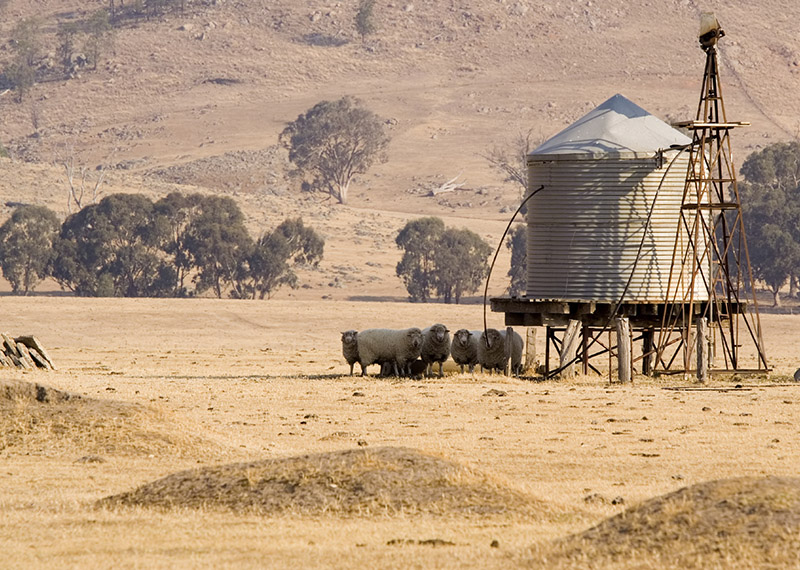
The objective of the audit was to assess the Department of Agriculture and Water Resources' establishment and administration of the Farm Finance and Drought Concessional Loans programs.
Entity
Department of Agriculture and Water Resources
Contact
Please direct enquiries relating to reports through our contact page.
Corporate
Published: Friday 1 November 2024
Published
The ANAO regards integrity as a core value of the organisation — critical in sustaining the confidence of Parliament, strengthening public trust in government and delivering quality audit products. Maintaining strong institutional integrity is critical to the operations and reputation of the ANAO.
The ANAO Integrity Framework provides an overarching structure to the integrity control system, supporting our institution’s integrity. The framework serves to assist in ethical decision-making and risk, fraud and misconduct management.
Beyond its control system, the ANAO maintains an enduring focus on promoting integrity as a value that is embedded in our work and culture. The ANAO recognises that integrity demands quality not only in our products but also in the behaviours of our people.
The ANAO Integrity Advisor supports the effective and ongoing application of the Integrity Framework by providing advice to staff regarding integrity matters. The Integrity Advisor is responsible for increasing integrity awareness across the organisation and for reporting annually to the ANAO Executive Board of Management on actions taken under the Framework. The Auditor-General publishes the ANAO Integrity Framework and annual Integrity Report to provide increased transparency of the measures we undertake to maintain a high-integrity culture in the ANAO.
Contact
Please direct enquiries through our contact page.
Corporate

Published: Thursday 20 November 2025
Published
The ANAO regards integrity as a core value of the organisation — critical in sustaining the confidence of Parliament, strengthening public trust in government and delivering quality audit products. Maintaining strong institutional integrity is critical to the operations and reputation of the ANAO.
The ANAO Integrity Framework provides an overarching structure to the integrity control system, supporting our institution’s integrity. The framework serves to assist in ethical decision-making and risk, fraud and misconduct management.
Beyond its control system, the ANAO maintains an enduring focus on promoting integrity as a value that is embedded in our work and culture. The ANAO recognises that integrity demands quality not only in our products but also in the behaviours of our people.
The ANAO Integrity Advisor supports the effective and ongoing application of the Integrity Framework by providing advice to staff regarding integrity matters. The Integrity Advisor is responsible for increasing integrity awareness across the organisation and for reporting annually to the ANAO Executive Board of Management on actions taken under the Framework. The Auditor-General publishes the ANAO Integrity Framework and annual Integrity Report to provide increased transparency of the measures we undertake to maintain a high-integrity culture in the ANAO.
Contact
Please direct enquiries through our contact page.
Request for audit
Responded: Tuesday 17 January 2017
Response provided
The Auditor-General responded on 17 January 2017 to correspondence from the Hon. Linda Burney MP on 5 January 2017 requesting that the Auditor-General conduct an audit of the Centrelink debt recovery and welfare integrity programs.
Contact
Please direct enquiries relating to requests for audit through our contact page.
Performance audit (Auditor-General Report No. 30 of 2009–10)
Published: Thursday 22 April 2010
Published
Recent performance audit priority for the Australian National Audit Office (ANAO) in the Infrastructure, Transport, Regional Development and Local Government portfolio has been directed at the administration of funding for land transport. Accordingly, this audit is one of a series ANAO is undertaking of land transport funding programs. Four audits have already been completed, namely:
- ANAO Audit Report No. 31 2005–06, Roads to Recovery;
- ANAO Audit Report No. 45 2006–07, The National Black Spot Program;
- ANAO Audit Report No. 22 2007–08, Administration of Grants to the Australian Rail Track Corporation; and
- ANAO Audit Report No. 29 2008–09, Delivery of Projects on the AusLink National Network.
Entity
Department of Infrastructure, Transport, Regional Development and Local Government
Performance audit (Auditor-General Report No. 24 of 2003–04)
Published: Saturday 31 January 2004
Published
A Special Account is a mechanism used to record amounts in the Consolidated Revenue Fund that are set aside for specified purposes. A total of $3.40 billion was reported as held in Special Accounts as of 30 June 2003, with $10.33 billion reported as credited to Special Accounts in 2002-03 and $10.06 billion in reported payments (debits) from these Accounts. The audit examined the establishment, management and abolition of Special Accounts by Commonwealth agencies, as well as compliance with legal requirements
Entity
Across Agency
Request for audit
Responded: Friday 22 April 2022
Response provided
The Auditor-General responded on 22 April 2022 to correspondence from Senator the Hon Eric Abetz dated 28 March 2022, requesting that the ABC’s defamation case payment be included as a topic in the ANAO’s Annual Audit Work Program 2022–23.
Contact
Please direct enquiries relating to requests for audit through our contact page.
Assurance review (Auditor-General Report No. 36 of 2019–20)
Published: Thursday 7 May 2020
Published
The Auditor-General undertook a limited assurance review of the Department of Finance’s reporting and administration of the Advances to the Finance Minister (AFM) for the Period 1 July 2019 to 24 April 2020.
Entity
Department of Finance
Contact
Please direct enquiries through our contact page.
Performance audit (Auditor-General Report No. 27 of 2018–19)

Published: Wednesday 20 February 2019
Published
The objective of the audit was to assess the effectiveness of arrangements for monitoring, evaluating and reporting progress towards Closing the Gap in Aboriginal and Torres Strait Islander disadvantage.
Entity
Department of the Prime Minister and Cabinet; Productivity Commission
Contact
Please direct enquiries through our contact page.
Performance audit (Auditor-General Report No. 43 of 2017–18)

Published: Tuesday 29 May 2018
Published
The objective of this audit was to examine the extent to which the Department of Infrastructure and Regional Development, now the Department of Home Affairs (the Department) has implemented the recommendations made by the ANAO in Audit Report #5 2016–17, Passenger Security Screening at Domestic Airports.
Entity
Department of Home Affairs
Contact
Please direct enquiries through our contact page.
Performance audit (Auditor-General Report No. 34 of 2016–17)

Published: Tuesday 24 January 2017
Published
The objective of this audit was to assess the effectiveness of the Department of Agriculture and Water Resources' implementation of the new biosecurity legislative framework.
Entity
Department of Agriculture and Water Resources
Contact
Please direct enquiries relating to reports through our contact page.
Performance audit (Auditor-General Report No. 54 of 2016–17)

Published: Thursday 1 June 2017
Published
The objective of the audit was to assess the selected entities’ progress in implementing the corporate planning requirements under the Public Governance, Performance and Accountability Act 2013 and related PGPA Rule 2014.
This audit assessed corporate plans for the 2016–17 reporting period, and complements the report published in August 2016 which assessed corporate plans for the 2015–16 reporting period.
Entity
Comcare; Department of Education and Training; Department of the Prime Minister and Cabinet; National Library of Australia
Contact
Please direct enquiries relating to reports through our contact page.
Performance audit (Auditor-General Report No. 49 of 2005–06)
Published: Monday 26 June 2006
Published
The objective of the audit was to assess whether DEWR's management and oversight of Job Placement and matching services is effective, in particular, whether: DEWR effectively manages, monitors and reports the performance of JPOs in providing Job Placement services; DEWR effectively manages the provision of matching services (including completion of vocational profiles and provision of vacancy information through auto-matching) to job seekers; Job seeker and vacancy data in DEWR's JobSearch system is high quality and is managed effectively; and DEWR effectively measures, monitors and reports Job Placement service outcomes.
Entity
Department of Employment and Workplace Relations
Performance audit (Auditor-General Report No. 28 of 2018–19)

Published: Thursday 21 February 2019
Published
The objective of the audit was to examine the extent to which the Department of Human Services (Human Services) has implemented the recommendations made by the Australian National Audit Office (ANAO) in Auditor-General Report No. 37 of 2014–15 Management of Smart Centres’ Centrelink Telephone Services; as well as Human Services’ performance against call wait time and call blocking metrics.
Entity
Department of Human Services
Contact
Please direct enquiries through our contact page.
Performance audit (Auditor-General Report No. 6 of 2011–12)
Published: Thursday 15 September 2011
Published
The audit objective was to assess the effectiveness of DEEWR’s administration of FWEIP. The three high level criteria that were used to make this assessment were the appropriateness of DEEWR’s:
- program planning and design;
- selection and engagement of providers; and
- program monitoring, reporting and evaluation.
Entity
Department of Education, Employment and Workplace Relations
Performance audit (Auditor-General Report No. 18 of 2016–17)

Published: Tuesday 27 September 2016
Published
The objective of the audit was to assess the appropriateness of the use and reporting of confidentiality provisions in a sample of Australian Government contracts.
Entity
Department of Defence; Department of Foreign Affairs and Trade; Department of Agriculture and Water Resources; Department of Health
Contact
Please direct enquiries relating to reports through our contact page.
Performance audit (Auditor-General Report No. 49 of 2017–18)

Published: Monday 25 June 2018
Published
The objective of this audit was to assess the appropriateness of the use and reporting of confidentiality provisions in a sample of Australian Government contracts.
Entity
Australian Electoral Commission (AEC); Great Barrier Reef Marine Park Authority (GBRMPA); Department of Home Affairs; Department of Infrastructure, Regional Development and Cities;
Contact
Please direct enquiries through our contact page.
Performance audit (Auditor-General Report No. 2 of 2008–09)
Published: Wednesday 6 August 2008
Published
The objective of this audit was to assess the effectiveness of Tourism Australia's governance arrangements, the management of its marketing contracts, and whether outcomes are being achieved. The audit reviewed Tourism Australia's:
- procurement processes for selecting service providers;
- management of service provider contracts; and
- governance framework including planning, performance management and reporting.
Entity
Tourism Australia
Performance audit (Auditor-General Report No. 37 of 2020–21)

Published: Wednesday 12 May 2021
Published
The objective of the audit was to assess the department’s: effectiveness in administering school funding; and implementation of recommendations made in Auditor-General Report No.18 2017–18 Monitoring the Impact of Australian Government School Funding and JCPAA Report 476: Australian Government Funding.
Entity
Department of Education, Skills and Employment
Contact
Please direct enquiries through our contact page.
Performance audit (Auditor-General Report No. 25 of 2015–16)

Published: Tuesday 15 March 2016
Published
The audit objective was to assess the effectiveness of the selected entities:
- management of the delivery of projects awarded funding under four programmes where ANAO has previously audited the application assessment and selection processes; and
- development and implementation of evaluation strategies for each of those programmes.
Entity
Department of Infrastructure and Regional Development; Department of Industry and Science; Department of Social Services
Contact
Please direct enquiries relating to reports through our contact page.
Performance audit (Auditor-General Report No. 1 of 1995–96)
Published: Monday 31 July 1995
Published
This is a report of an audit by the ANAO of the Australian Taxation Office's Income Matching System (IMS). The IMS is a computer-based system which identifies discrepancies between information in tax returns and external data. The main income types covered are dividends, interest, wages and salaries, pensions and benefits and prescribed payments. It also generates unmatched data and cases where assessments have not yet been issued.
Entity
Australian Taxation Office
Performance audit (Auditor-General Report No. 29 of 2007–08)
Published: Wednesday 23 April 2008
Published
The objective of the audit was to review the effectiveness of the department's administration of the PSPI. To achieve this, the ANAO considered the department's program planning and design, service delivery arrangements and monitoring, review and reporting activities. The decision which resulted in the replacement of ASSPA with PSPI was a policy decision of the Government and, thus, was beyond the scope of this audit.
Entity
Department of Education, Employment and Workplace Relations
Performance audit (Auditor-General Report No. 36 of 2006–07)
Published: Wednesday 16 May 2007
Published
The audit objectives were to examine if:
- DCITA had effectively planned and administered the HiBIS and BC Stage 1 programs; and
- the programs had achieved their objectives.
The audit focused on DCITA's activities to support the planning, implementation, monitoring and reporting of HiBIS and BC Stage 1 programs.
Entity
NO-DEPTS-LISTED
Performance audit (Auditor-General Report No. 49 of 2006–07)
Published: Monday 25 June 2007
Published
The objective of the audit was to assess the management practices undertaken by APS agencies to achieve value for money and transparency in dealing with contracts for non-APS workers. The focus of the audit was on circumstances where agencies had a significant reliance on a non-APS workforce to assist in achieving their core functions. Regular reporting by agencies of expenditure on non-APS workers was outside the scope of this audit.
Entity
NO-DEPTS-LISTED
Performance audit (Auditor-General Report No. 7 of 2010–11)
Published: Wednesday 22 September 2010
Published
The audit objective was to assess the appropriateness of the use and reporting of confidentiality provisions in Australian Government contracts. This included assessing compliance with the Order and following up on the implementation of recommendations made in previous Senate Order audits.
The audit involved three components:
- an examination of a stratified random sample of 150 contracts listed as containing confidentiality provisions from material and small agencies across the Australian Government to determine whether confidentiality provisions were used and reported appropriately;
- an examination of all FMA Act agencies' calendar year 2009 contract listings, and ministers' letters of advice, to assess compliance with the requirements of the Order, and check reported instances of excluded contracts; and
- a follow-up of the implementation of previous audit recommendations relating to the administration of the Senate Order in four agencies. The selected agencies were the: Australian Agency for International Development (AusAID); Department of Families, Housing, Community Services and Indigenous Affairs (FaHCSIA); Department of Agriculture, Fisheries and Forestry (DAFF); and the Federal Court of Australia (Federal Court). The selected agencies were audited in one of the ANAO's previous five audits of Senate Order compliance.
Entity
NO-DEPTS-LISTED
Performance audit (Auditor-General Report No. 1 of 2011–12)
Published: Tuesday 12 July 2011
Published
The objective of the audit is to assess the effectiveness of the ADF’s mechanisms for learning from its military operations and exercises. In particular, the audit focused on the systems and processes the ADF uses for identifying and acting on lessons, and for evaluating performance. The ANAO also examined the manner in which information on lessons is shared within the ADF, with other relevant government agencies, and with international organisations. Reporting to Parliament was also considered.
Entity
Department of Defence
Corporate
Published: Wednesday 10 July 2024
Published
Quality in the delivery of the ANAO’s audit services is critical in supporting the integrity of our audit reports and maintaining the confidence of the Parliament and public sector entities. The ANAO Corporate Plan 2024–25 is the ANAO's primary planning document. It outlines our purpose; the dynamic environment in which we operate; our commitment to building capability; and the activities and performance measures by which we will be held to account. This Quality Management Framework and Plan complements the Corporate Plan. It describes the ANAO’s system of quality management and reflects the ANAO's responses to quality risks for the coming year.
The ANAO Quality Management Framework is the ANAO’s established system of quality management to provide the Auditor-General with reasonable assurance that the ANAO complies with the ANAO Auditing Standards and applicable legal and regulatory requirements, and reports issued by the ANAO are appropriate in the circumstances.
The Quality Management Strategy and Plan component of this document identifies the ANAO’s quality objectives and key responses to address identified quality risks and to provide the Auditor-General with confidence that those responses are implemented and operating effectively.
The ANAO reports on the audit quality indicators that measure the ANAO’s performance against target benchmarks in the annual Audit Quality Report published on the ANAO website. The Audit Quality Report also provides transparency with respect to the implementation and operation of the responses to address quality risks for each component of the ANAO’s system of quality management.
Contact
Please direct enquiries through our contact page.
Performance audit (Auditor-General Report No. 42 of 2006–07)
Published: Tuesday 12 June 2007
Published
The objective of the audit is to assess the effectiveness of the ATO's administration of debt collection. Micro-business debt is a particular focus of attention. The three key areas examined are:
- strategies–especially the ATO's initiatives trialled in 2006;
- infrastructure–the IT systems, people, policy and processes and risk management framework supporting the collection of debt; and
- management and governance–planning, monitoring and reporting mechanisms and liaison with stakeholders.
The ANAO focused on the work of the campaigns area within the Debt Line, which has collection responsibility for 90 per cent of collectable debt cases and responsibility for other key, centralised functions such as reporting, quality assurance review, consistency and best practice, and the debt collection initiatives.
Entity
NO-DEPTS-LISTED
Performance audit (Auditor-General Report No. 3 of 2009–10)
Published: Tuesday 8 September 2009
Published
The focus of this audit was on those entitlements administered by Finance. Similar to the 2001-02 Audit Report, the audit scope did not include entitlements provided to persons employed under the Members of Parliament (Staff) Act 1984 (MOP(S) Act). It also did not examine the administration of entitlements provided through other agencies (such as Parliamentarians' salary and electorate allowance, which are paid by the Chamber Departments, and entitlements provided to Ministers by their home department).
Entity
Department of Finance and Deregulation
Performance audit (Auditor-General Report No. 9 of 2015–16)

Published: Tuesday 24 November 2015
Published
The audit objectives were to examine the effectiveness of Defence’s management of the test and evaluation (T&E) aspects of its major capital equipment acquisition program; and to report on Defence’s progress in implementing T&E recommendations made in the Senate Foreign Affairs, Defence and Trade References Committee’s August 2012 report, Procurement procedures for Defence capital projects.
Entity
Department of Defence
Contact
Please direct enquiries relating to reports through our contact page.
Request for audit

Responded: Thursday 1 August 2013
Response provided
The Auditor-General responded on 1 August 2013 to correspondence from Senator Nick Xenophon of 22 July 2013 on the By boat, no visa advertising campaign.
Contact
Please direct enquiries relating to requests for audit through our contact page.
Corporate
Updated: Tuesday 13 August 2024
Updated
The objective of the Risk Framework and associated programs of risk management activities is to support effective risk management across all ANAO operations.
The 2025–27 version of this publication is available here.
Contact
Any queries about risk management in the ANAO should be directed to the Senior Executive Director, Corporate Management Group through our contact page.
Performance audit (Auditor-General Report No. 46 of 2019–20)

Published: Thursday 25 June 2020
Published
Implementation of ANAO and Parliamentary Committee Recommendations — Education and Health Portfolios
The audit objective was to examine whether selected entities in the Health and Education portfolios implemented the Joint Committee of Public Accounts and Audit and other parliamentary inquiry report recommendations and agreed ANAO performance audit recommendations.
Entity
Across Entities
Contact
Please direct enquiries through our contact page.
Performance audit (Auditor-General Report No. 25 of 2021–22)

Published: Tuesday 3 May 2022
Published
The audit examined whether the Department of Home Affairs implemented all agreed recommendations from parliamentary committee and Auditor-General reports within the scoped timeframe.
Entity
Department of Home Affairs
Contact
Please direct enquiries through our contact page.
Performance audit (Auditor-General Report No. 40 of 2024–25)

Published: Tuesday 3 June 2025
Published
The audit objective was to assess whether selected entities effectively implemented agreed recommendations from Auditor-General Report No. 25 2019–20 Aboriginal and Torres Strait Islander Participation Targets in Major Procurements.
Entity
Across Entities
Contact
Please direct enquiries through our contact page.
Request for audit
Responded: Friday 18 May 2018
Response provided
The Auditor-General responded on 19 April 2017, and followed-up on 19 July 2017 and 18 May 2018, to correspondence from the Hon. Wayne Swan MP dated 27 March 2017, requesting that the Auditor-General conduct an investigation to examine the operation of the Northern Australia Infrastructure Facility (NAIF), its independence and the quality of the systems and analyses being implemented.
Contact
Please direct enquiries relating to requests for audit through our contact page.
Request for audit
Responded: Tuesday 27 June 2017
Response provided
The Auditor-General responded on 27 June 2017 to correspondence from Mr Andrew Wilkie MP dated 26 May 2017, requesting that the Auditor-General conduct an audit of Centrelink's automated debt recovery programs.
Contact
Please direct enquiries relating to requests for audit through our contact page.
Performance audit (Auditor-General Report No. 3 of 2025–26)

Published: Wednesday 8 October 2025
Published
The objective of the audit was to assess the effectiveness of the implementation of procurement reforms by the DTA and Finance following on from Auditor-General Report No.5 2022–23 Digital Transformation Agency’s Procurement of ICT-related services.
Entity
Digital Transformation Agency; Department of Finance
Contact
Please direct enquiries through our contact page.
Performance audit (Auditor-General Report No. 26 of 2009–10)
Published: Tuesday 20 April 2010
Published
The objective of this audit was to assess the effectiveness of the administration of specific climate change programs by the departments of the Environment, Water, Heritage and the Arts and Resources, Energy and Tourism. In undertaking this audit, particular emphasis was given to the implementation of good administrative practice and the extent to which the program objectives were being met. The audit followed four lines of inquiry:
- development of program objectives and assessment of program risks;
- assessment and approval of competitive grant applications;
- assessment and approval of rebate applications; and
- measurement and reporting of program outcomes.
Entity
Department of the Environment, Water, Heritage and the Arts; Department of Climate Change and Energy Efficiency; Department of Resources, Energy and Tourism
Performance audit (Auditor-General Report No. 31 of 2010–11)
Published: Thursday 24 February 2011
Published
The objective of the audit was to examine the Tax Office's administration of the Lost Members Register. In particular, the audit examined the Tax Office's governance arrangements for the LMR; its strategies for managing data quality; and its provision of access to LMR data. The audit also considered how the Tax Office's administration of the LMR has responded to recommendations made in the ANAO's earlier review (Audit Report No.17, 2005–06 Administration of the Superannuation Lost Members Register), relevant changes in funding and legislation supporting the LMR, as well as the Change Program.
Entity
Australian Taxation Office
Performance audit (Auditor-General Report No. 34 of 2003–04)
Published: Friday 5 March 2004
Published
In 1997, and subsequently in 1999, the Australian Government introduced two major spending packages with a total value of almost $1 billion. These spending packages were designed to address the challenges posed by the issue of climate change and to meet Australia's domestic and international commitments. Since its inception in 1998, the Australian Greenhouse Office has been responsible for the implementation of greenhouse related programs from these two major spending packages. The objective of the audit was to examine and report on the administrative efficiency and effectiveness of seven major programs administered by the Australian Greenhouse Office.
Entity
Australian Greenhouse Office
Performance audit (Auditor-General Report No. 45 of 2006–07)
Published: Tuesday 19 June 2007
Published
The objective of this performance audit was to assess the administration of the National Black Spot Programme. It was undertaken in a manner similar to the audit of the Roads to Recovery Programme. Specifically, the audit approach involved:
- examination of DOTARS records and discussions with officers in DOTARS and four of the State road transport authorities responsible for administering the Programme;
- analysis of project monitoring, reporting and payment arrangements; and
- selecting a sample of 45 LGA areas across four States so that ANAO could examine projects delivered with Commonwealth funding.
Entity
NO-DEPTS-LISTED
Performance audit (Auditor-General Report No. 13 of 2010–11)
Published: Thursday 28 October 2010
Published
The Civil Aviation Safety Authority (CASA) is responsible for regulating aviation safety in Australia, the safety of Australian aircraft operating overseas as well as for regulating and administering Australia's airspace. In September 2008, the Senate Committee on Rural and Regional Affairs and Transport presented a report on the Administration of the Civil Aviation Safety Authority and related matters. That report made three recommendations, one of which requested an Australian National Audit Office (ANAO) audit of CASA's implementation and administration of the regulation of aircraft operators' Safety Management Systems (SMS'). ANAO agreed to this request with the objective of the audit being to assess CASA's implementation and administration of an SMS approach to regulating aircraft operators.
An SMS is a systematic approach to managing safety, which encompasses organisational structures, accountabilities, policies and procedures. Amendments to the Convention on International Civil Aviation (commonly referred to as the Chicago Convention) made in 2006 require that contracting states regulate the SMS' of aircraft operators. As a contracting state to the Chicago Convention, Australia is required to mandate that aircraft operators implement an SMS.
Entity
Civil Aviation Safety Authority
Performance audit (Auditor-General Report No. 11 of 2011–12)
Published: Thursday 3 November 2011
Published
The objective of the audit was to assess the effectiveness of FaHCSIA’s administration of the HAF. To address this objective, the Australian National Audit Office (ANAO) assessed FaHCSIA’s administration against a range of audit criteria, including the extent to which:
- assessment and approval processes were soundly planned and implemented, and were consistent with the requirements of the overarching financial management framework;
- appropriately structured funding agreements were established and managed for each approved grant; and
- the performance of the HAF, including each of the funded projects, was actively monitored and reported.
Entity
Department of Families, Housing, Community Services and Indigenous Affairs; Department of Sustainability, Environment, Water, Population and Communities
Performance audit (Auditor-General Report No. 29 of 2021–22)

Published: Thursday 2 June 2022
Published
The objective of the audit was to examine the effectiveness of the Department of Social Services' administration of the Cashless Debit Card program, including implementation of the recommendations made in Auditor-General Report No.1 2018–19, The Implementation and Performance of the Cashless Debit Card Trial.
Entity
Services Australia; Department of Social Services
Contact
Please direct enquiries through our contact page.
Performance audit (Auditor-General Report No. 47 of 2010–11)
Published: Wednesday 8 June 2011
Published
The objective of the audit was to assess the effectiveness of CSIRO’s development and administration of selected National Research Flagships. In assessing CSIRO’s performance, the ANAO examined whether:
- mechanisms were in place to develop and implement the Flagships, within the context of the broader CSIRO change program;
- governance arrangements for Flagships incorporated sound oversight, planning and reporting arrangements; and
- periodic review activities were used to assess and improve the operation of the Flagships.
Entity
Commonwealth Scientific and Industrial Research Organisation
Performance audit (Auditor-General Report No. 22 of 2007–08)
Published: Thursday 14 February 2008
Published
The objective of this performance audit was to assess the effectiveness of the administration of grants made to the ARTC. The audit involved an examination of DOTARS' administration of the grant funding approved for, and paid to, the ARTC (in respect of both the grants paid for projects approved under legislation and the three special grants). It also involved consideration of the role of Finance and the Department of the Prime Minister and Cabinet (PM&C) in advising on the special grant funding and (in respect of Finance) the payment and reporting arrangements for the grants. The audit was conducted under Section 18 of the Auditor-General Act 1997.
Entity
Department of Infrastructure, Transport, Regional Development and Local Government
Performance audit (Auditor-General Report No. 22 of 2022–23)

Published: Tuesday 16 May 2023
Published
The objective of this audit was to examine whether the selected entities within the Attorney-General’s portfolio have implemented all agreed recommendations from parliamentary committee and Auditor-General reports within the scoped timeframe.
Entity
Australian Federal Police; Attorney-General’s Department; Commonwealth Director of Public Prosecutions
Contact
Please direct enquiries through our contact page.
Assurance review (Auditor-General Report No. 7 of 2020–21)
Published: Monday 14 September 2020
Published
The Auditor-General undertook a limited assurance review of the Department of Finance’s reporting and administration of the Advances to the Finance Minister (AFM) for the Period 1 August 2020 to 28 August 2020.
Entity
Department of Finance
Contact
Please direct enquiries through our contact page.
Performance audit (Auditor-General Report No. 13 of 2007–08)
Published: Thursday 1 November 2007
Published
This second audit report relating to SMSFs examines the effectiveness of the Tax Office's approach to managing SMSF compliance risks. Specifically the ANAO examined the processes the Tax Office uses to:
- identify the risks relevant to SMSFs not complying with their obligations under the SISA, including members accessing their superannuation early;
- mitigate SMSF compliance risks; and
- administer fund wind-ups.
Entity
Australian Taxation Office
Performance audit (Auditor-General Report No. 44 of 2020–21)

Published: Thursday 17 June 2021
Published
The audit objective was to examine the effectiveness of the Great Barrier Reef Marine Park Authority’s regulation of permits and approvals, including its implementation of recommendations from Auditor-General Report No.3 of 2015–16 Regulation of Great Barrier Reef Marine Park Permits and Approvals.
Entity
Great Barrier Reef Marine Park Authority
Contact
Please direct enquiries through our contact page.
Performance audit (Auditor-General Report No. 29 of 2015–16)

Published: Wednesday 4 May 2016
Published
The audit objective was to assess the effectiveness of selected departments’ implementation of deregulation initiatives.
Entity
Department of the Prime Minister and Cabinet; Department of Communications and the Arts; Department of Health; Department of Industry, Innovation and Science
Contact
Please direct enquiries relating to reports through our contact page.
Performance audit (Auditor-General Report No. 11 of 2010–11)
Published: Thursday 30 September 2010
Published
The objective of the audit was to assess how well agencies had implemented the CPGs and relevant FMA legislation when undertaking Direct Source procurement.
The audit examined whether selected agencies had developed a sound procurement framework; appropriately classified procurement methods when meeting external reporting requirements; implemented the CPGs and relevant legislation when Direct Sourcing; and established effective procurement monitoring and review arrangements.
The ANAO selected four FMA Act agencies to provide a cross-section of the 104 agencies that reported procurement activity in AusTender in
2008–09. The agencies selected for audit were:
- the Department of Families, Housing, Community Services and Indigenous Affairs (FaHCSIA);
- the Department of Innovation, Industry, Science and Research (Innovation);
- the Department of Veterans' Affairs (DVA); and
- the Australian Crime Commission (ACC).
The ANAO examined a stratified random sample of 645 procurements valued at $10 000 and over, across the four agencies. More detailed testing was undertaken for the 285 Direct Source procurements in the sample.
Entity
Across Agencies
Performance audit (Auditor-General Report No. 51 of 2016–17)

Published: Monday 22 May 2017
Published
The audit Administration of ABSTUDY and the audit Administration of Youth Allowance have been combined to table as one report titled Administration of ABSTUDY and Administration of Youth Allowance.
The objective of both audits was to assess the efficiency and effectiveness of the Department of Social Services’ and the Department of Human Services’ program administration.
Entity
Department of Social Services; Department of Human Services
Contact
Please direct enquiries relating to reports through our contact page.
Performance audit (Auditor-General Report No. 55 of 2004–05)
Published: Thursday 23 June 2005
Published
The objective of the audit was to consider the status of workforce planning by APS agencies against the background of the ANAO's 2001 Better Practice Guide Planning for the Workforce of the Future, in light of there commendations made in the MAC Organisational Renewal 2001 and the Senate Finance and Public Administration References Committee report Recruitmentand Training in the Australian Public Service 2003. Workforce planning was defined as a continuous process of shaping the workforce to ensure it is capable of delivering organisational objectives now and in the future.
Entity
Across Entities
Performance audit (Auditor-General Report No. 1 of 2009–10)
Published: Tuesday 4 August 2009
Published
In two letters dated 19 and 22 June 2009, the Prime Minister requested a performance audit of a range of matters relating to representations to the Treasury regarding automotive finance arrangements for car dealers. In response to these requests, the Auditor-General decided that ANAO would undertake a performance audit under section 18 of the Auditor-General Act 1997 (Auditor-General Act). The audit objective, based on the matters raised in the Prime Minister's correspondence and in the Parliament, was to examine and report on:
- any representations to the Treasury since October 2008 from all sources regarding automotive finance arrangements for car dealers, including any made in relation to John Grant Motors;
- the nature of these representations;
- the manner in which the representations were responded to by officials, having regard to any relevant standards and procedures; and
- any related administrative matters that came to attention.
Entity
Department of the Treasury; Department of the Prime Minister and Cabinet
Assurance review (Auditor-General Report No. 15 of 2020–21)
Published: Monday 16 November 2020
Published
The Auditor-General undertook a limited assurance review of the Department of Finance’s reporting and administration of the Advances to the Finance Minister (AFM) for the Period 26 September 2020 to 30 October 2020.
Entity
Department of Finance
Contact
Please direct enquiries through our contact page.
Assurance review (Auditor-General Report No. 3 of 2020–21)
Published: Thursday 13 August 2020
Published
The Auditor-General undertook a limited assurance review of the Department of Finance’s reporting and administration of the Advances to the Finance Minister (AFM) for the Period 27 June 2020 to 31 July 2020.
Entity
Department of Finance
Contact
Please direct enquiries through our contact page.
Performance audit (Auditor-General Report No. 15 of 2010–11)
Published: Thursday 18 November 2010
Published
The objective of the audit was to assess FSANZ's administration of its food standard functions, as specified in the Food Standards Australia New Zealand Act, 1991 (last amended 2007).
Particular emphasis was given to whether:
- FSANZ's performance management and reporting provided effective support and ensures accountability;
- FSANZ effectively administered its food standard development and variation function, including its stakeholder management; and
- FSANZ effectively monitored the implementation of its standards and coordinates relevant jurisdictions to address market failures.
Entity
Food Standards Australia New Zealand
Performance audit (Auditor-General Report No. 11 of 2020–21)

Published: Monday 28 September 2020
Published
The ANAO conducted separate audits of the Indigenous Advancement Strategy (IAS) Children and Schooling program and the Safety and Wellbeing program, the findings and conclusions of which are presented in this report. The objective of the audits was to assess the effectiveness of the Department of the Prime Minister and Cabinet’s and the National Indigenous Australians Agency’s administration of the IAS Children and Schooling and the Safety and Wellbeing programs.
Entity
National Indigenous Australians Agency
Contact
Please direct enquiries through our contact page.
Assurance review (Auditor-General Report No. 40 of 2019–20)
Published: Thursday 11 June 2020
Published
The Auditor-General undertook a limited assurance review of the Department of Finance’s reporting and administration of the Advances to the Finance Minister (AFM) for the period 25 April 2020 to 29 May 2020.
Entity
Department of Finance
Contact
Please direct enquiries through our contact page.
Insights: Audit lessons

Published: Thursday 20 March 2025
Published
Audit Lessons — Management of Corporate Credit Cards is intended for officials working in financial management or governance roles with responsibility for the management of corporate credit cards.
Contact
Please direct enquiries through our contact page.
Assurance review (Auditor-General Report No. 13 of 2020–21)
Published: Thursday 15 October 2020
Published
The Auditor-General undertook a limited assurance review of the Department of Finance’s reporting and administration of the Advances to the Finance Minister (AFM) for the Period 29 August 2020 to 25 September 2020.
Entity
Department of Finance
Contact
Please direct enquiries through our contact page.
Performance audit (Auditor-General Report No. 20 of 2008–09)
Published: Thursday 5 February 2009
Published
The second audit, which is the subject of this report, is a broader and more in-depth cross-portfolio audit. Its objective was to assess:
- the planning and delivery of capital works projects by proponent agencies;
- the extent to which projects have delivered on what was intended; and
- the extent to which proponent agencies have complied with the requirements of the Public Works Committee Act 1969 and approved procedures.
Entity
Across Agencies
Performance audit (Auditor-General Report No. 52 of 2005–06)
Published: Thursday 29 June 2006
Published
The audit objectives were to examine the extent to which selected TSB2 and TSI Response programs: are achieving or had achieved their objectives; and had been administered effectively by DCITA according to better practice principles. To evaluate this aspect, the audit assessed DCITA's compliance with the better practice principles outlined in the Administration of Grants Better Practice Guide (May 2002) produced by the Australian National Audit Office (ANAO). There are 19 separate principles covered under the broad areas of: Planning for effective grant programs; Selecting projects; Managing and monitoring funding deeds; and Evaluating and reporting grant program performance.
Entity
Department of Communications, Information Technology and the Arts
Performance audit (Auditor-General Report No. 10 of 2008–09)
Published: Tuesday 2 December 2008
Published
The objective of this audit was to assess whether the Scheme is being administered effectively by the department. The ANAO focussed on Program Year 1 of the Scheme, 2005–06, and examined DIISR's arrangements for:
- assessing the eligibility of entities to receive grants;
- assessing entities' claims for eligible expenditure;
- adhering to the funding limits for the Scheme when calculating and paying claims, and managing any debts that arise;
- and evaluating and reporting on whether the statutory objective of the Scheme is being met.
The audit did not examine the other components of the 2005–2015 industry assistance package; nor did it examine any of the programs delivered under the previous assistance package (2000–2005).
Entity
Department of Innovation, Industry, Science and Research
Performance audit (Auditor-General Report No. 27 of 2011–12)
Published: Tuesday 20 March 2012
Published
The objective of this audit was to assess the efficiency1 and effectiveness of the establishment, implementation and administration of the bike paths component of the Local Jobs stream of the Jobs Fund. A particular focus was on the establishment of program objectives and the extent to which approved grants have demonstrably contributed to the cost-effective achievement of those objectives. The audit approach has been influenced by recent audits of grants administration which have emphasised the importance of transparent and accountable grant decision-making processes to the cost effective achievement of stated program objectives, and having regard for recent government decisions to enhance the framework applying to the administration of grants.
As an economic stimulus program, efficiency was assessed with particular attention to whether the application, assessment, decision-making and funding agreement processes were undertaken in a timely manner. This emphasis was consistent with the criterion adopted by the Government for the design of the stimulus packages established in response to the global financial crisis (see further at paragraph 4.20 of the audit report).
Entity
Department of Regional Australia, Local Government, Arts and Sport and Department of Infrastructure and Transport
Assurance review (Auditor-General Report No. 1 of 2020–21)
Published: Wednesday 8 July 2020
Published
The Auditor-General undertook a limited assurance review of the Department of Finance’s reporting and administration of the Advances to the Finance Minister (AFM) for the Period 30 May 2020 to 26 June 2020.
Entity
Department of Finance
Contact
Please direct enquiries through our contact page.
Performance audit (Auditor-General Report No. 16 of 2006–07)
Published: Wednesday 20 December 2006
Published
The objective of the audit was to assess the ATO's administration of CGT compliance in the individuals market segment. The focus of the audit was the ATO's administration of compliance by individuals with respect to the two most common CGT events: real property and share disposals. The Australian National Audit Office (ANAO) identified three key areas for review:
- governance – the corporate planning and reporting arrangements relevant to the administration of CGT compliance in the individuals market segment, including how these are integrated with the ATO's overall approach to managing CGT;
- identifying and assessing compliance risks – the mechanisms and strategies used to identify and assess CGT compliance risks in the individuals market segment; and
- compliance activities – the products and processes used to manage CGT compliance in the individuals market segment.
Entity
Australian Taxation Office
Performance audit (Auditor-General Report No. 47 of 2004–05)
Published: Tuesday 31 May 2005
Published
The objective of this audit was to the examine action taken by the ATO to improve TFN integrity, particularly through the implementation of the recommendations made in:Report No.37, taking into account any changed circumstances, or new administrative issues, affecting the implementation of those recommendations; and Numbers on the Run, taking into account that the Government has not formally responded to the report at this time.The audit also aimed to identify further opportunities for the ATO to improve the effectiveness and efficiency of the TFN system. The report of this audit is necessarily detailed as it considers each of the recommendations and the extent to which they have been implemented.
Entity
Australian Taxation Office
Performance audit (Auditor-General Report No. 34 of 2011–12)
Published: Thursday 24 May 2012
Published
The objective of the audit was to assess the progress of the M113 Upgrade Project (Defence Project: Land 106), including progress in the development of operational capability resulting from the introduction of the upgraded vehicles into service. The high-level audit criteria used to assess the project’s progress and Defence’s effectiveness in administering the M113 Upgrade Project were:
- the degree to which the schedule for the production and delivery of upgraded M113 vehicles to Defence had been recovered in accordance with Defence’s response to the 2008–09 audit report and contractual requirements, as negotiated over the life of the contract;
- Defence’s measurement and allocation of the total cost of the upgrade project; and
- the development of capability arising from the upgrade project.
Entity
Department of Defence, Defence Materiel Organisation
Request for audit
Responded: Thursday 13 May 2021
Response provided
The Auditor-General responded on 13 May 2021 to correspondence from Senator Janet Rice dated 16 April 2021, requesting that the Auditor-General conduct an investigation to examine the Commonwealth’s responsibilities in relation to Regional Forest Agreements, including monitoring implementation, coordinating annual reports and conducting reviews.
Contact
Please direct enquiries relating to requests for audit through our contact page.
Performance audit (Auditor-General Report No. 9 of 2010–11)
Published: Wednesday 29 September 2010
Published
On 3 February 2010, Senator Christine Milne wrote to the Auditor General raising concerns about DEWHA's administration of the Green Loans program and requesting a performance audit of the program. Issues raised included: uncapped assessor numbers; problems with the delivery of the program; the quality of assessor training and assessments provided to households; the lack of an audit facility within the program; and equitable access to work under the program.
In light of Senator Milne's request and other concerns in relation to the administration of the program, the Auditor-General agreed on 25 February 2010 to conduct a performance audit of the program. The objective of the audit was to examine key aspects of the establishment and administration of the Green Loans program by DEWHA and the program's transition to DCCEE. Particular emphasis was given to the program's three main elements:
- training, registration and contracting of assessors;
- scheduling, conduct, and reporting of home sustainability assessments, and the associated payments to assessors; and
- provision of green loans to householders, and the associated payments to participating financial institutions.
The audit also examined the extent to which steps had been taken by DEWHA and DCCEE to assess whether the Green Loans program was achieving its objectives.
Entity
Department of the Environment, Water, Heritage and the Arts; Department of Climate Change and Energy Efficiency
Performance audit (Auditor-General Report No. 42 of 2011–12)
Published: Monday 18 June 2012
Published
The objective of the audit was to assess the effectiveness of the management of the MSS for the delivery of Centrelink services. The management of the MSS was assessed against the following criteria:
- there are effective planning arrangements to identify and address the evolving needs of DCALB customers;
- service delivery arrangements meet the current needs of DCALB customers; and
- there are effective performance monitoring and reporting arrangements which are used to improve service delivery.
Around 20 per cent of the people receiving Centrelink services are identified as being from a diverse cultural and linguistic background (DCALB). DHS’ Multicultural Servicing Strategy (MSS) sets out the approach for delivering Centrelink services to DCALB customers. The MSS has four main components — Language Services, the Multicultural Services Officer program, Stakeholder Engagement Strategies and Employee Support Tools and Strategies.
Entity
Department of Human Services
Performance audit (Auditor-General Report No. 17 of 2005–06)
Published: Tuesday 29 November 2005
Published
The objective of the audit was to assess the ATO's administration of the LMR. Specifically, the audit sought to: examine and report on aspects of LMR governance; assess the systems, processes and controls used by the ATO to capture and process LMR data reported by providers; examine the mechanisms and strategies the ATO uses to gain assurance that providers are complying with LMR legislation; and assess the mechanisms and strategies the ATO uses to promote awareness of, and enable access to, the LMR.
Entity
Australian Taxation Office
Insights: Audit lessons

Published: Monday 30 June 2025
Published
Governance of Data is targeted at Australian Government officials in information governance roles and those who use data to achieve organisational objectives.
Contact
Please direct enquiries through our contact page.
Insights: Audit lessons
Recent

Published: Thursday 2 April 2026
Published
Fraud and Corruption Control Arrangements is targeted at Australian Government officials responsible for fraud and corruption control arrangements, and those engaged in program and policy delivery, including in grants administration and regulatory contexts.
Contact
Please direct enquiries through our contact page.
Insights: Audit lessons

Published: Friday 20 June 2025
Published
Records Management is targeted at all Australian Government officials. It also benefits those in information management roles.
Contact
Please direct enquiries through our contact page.
Performance audit (Auditor-General Report No. 25 of 2004–05)
Published: Tuesday 1 February 2005
Published
The audit examined the relationship between the strategic guidance and capabilities provided by Army, through analysis of the Army capability management and reporting framework. The objectives of the audit were to: Assess Army capability management and reporting processes; determine whether these processes efficiently and effectively manage resources to provide Army capability; and accurately indicate the capability provided by Army.
Entity
Department of Defence
Performance audit (Auditor-General Report No. 43 of 2005–06)
Published: Wednesday 31 May 2006
Published
The overall objective of the audit was to assess whether the RSS Programme is effective and efficient in providing assurance on the levels of payment error and the resultant risks to the integrity of Australian Government outlays for payments administered by Centrelink. Specifically, the audit assessed whether: the RSS Programme meets the objectives outlined for it in the Portfolio Budget Statements under which funding was provided; there is an adequate methodology underpinning the RSS reviews; the RSS reviews are conducted effectively and efficiently, and adequate quality assurance mechanisms exist to assure the results obtained from the RSS reviews; and reporting by the agencies of the results of the RSS Programme is adequate and takes into consideration the issues identified in Audit Report No. 44 2002–03 Review of the Parenting Payment Single Program, and Audit Report No. 17 2002–03 Age Pension Entitlements.
Entity
Department of Family Community Services and Indigenous Affairs; Department of Employment and Workplace Relations; Department of Education Science and Training; Centrelink
Performance audit (Auditor-General Report No. 6 of 2009–10)
Published: Monday 28 September 2009
Published
The Senate Order for Departmental and Agency Contracts (the Senate Order/the Order) was introduced in June 2001. The Order is one of several measures that the Senate introduced in recent years, to improve public knowledge of information on procurement and the expenditure of public funds. The main principle that underpins the Senate Order is that the Parliament's and public's access to this information should not be restricted by the inclusion of confidential information in contracts unless there is a sound basis for doing so. Public knowledge of information on contracted goods and services delivered to the government, can lead to better results for the Australian Government and the public. The Senate Order requirements have been amended over time to improve agency reporting, for example, on grants.
Entity
Across Agencies
Request for audit
Responded: Thursday 11 May 2023
Response provided
The Auditor-General responded on 6 April 2023 to correspondence from Senator Andrew Bragg dated 8 March 2023, requesting that the Auditor-General conduct an investigation into the costs of the ongoing legal dispute concerning the Commonwealth and Dr Monique Ryan MP. The Auditor-General responded on 11 May 2023 to follow-up correspondence from Senator Bragg dated 18 April 2023, requesting a timeline for finalisation of the 2022–23 financial statements audit of the Department of Finance.
The Auditor-General responded on 15 December 2023 regarding the ANAO enquiries and that the results are published in the Auditor-General Report No.9 (2023-24) Audits of the Financial Statements of Australian Government Entities ended 30 June 2023 that tabled in the Parliament on 14 December 2023.
Contact
Please direct enquiries relating to requests for audit through our contact page.
Performance audit (Auditor-General Report No. 8 of 2010–11)
Published: Thursday 23 September 2010
Published
The audit examined the effectiveness of DEEWR's administrative arrangements supporting the delivery of Indigenous childcare services through MACS and crèches, including the approaches DEEWR uses to monitor the achievement of the BBF sub-program objective.
In conducting the audit, the Australian National Audit Office (ANAO) reviewed three key areas:
- program administration—DEEWR's administrative systems and processes supporting the delivery of Indigenous childcare services through MACS and crèches and the broader BBF sub-program;
- management of service provider funding agreements—DEEWR's systems and processes for managing MACS and crèche service providers' funding agreements; and
- monitoring and reporting performance—the effectiveness of DEEWR's processes for monitoring the performance of service providers, and the achievement of the outputs and outcomes of the BBF sub-program.
The ANAO sought not to duplicate the work of DEEWR's Internal Audit function, and in doing so referred to the findings of the recent internal audit review of the CCSSP, where these were relevant and appropriate.
Entity
Department of Education, Employment and Workplace Relations
Performance audit (Auditor-General Report No. 51 of 2005–06)
Published: Wednesday 28 June 2006
Published
The audit objectives were to report on the implementation status of the parliamentary resolutions and other actions arising out of the six recommendations made in the final PSC Report, Review by the Parliamentary Service Commissioner of Aspects of the Administration of the Parliament. The audit also broadly examined the impact of implementation of the parliamentary resolutions on aspects of: the level of services provided to the Parliament generally following amalgamation of the three former parliamentary departments into the Department of Parliamentary Services; and accommodation space within Parliament House. The designated audit agency was the Department of Parliamentary Services (DPS).
Entity
Department of Parliamentary Services
Performance audit (Auditor-General Report No. 15 of 2003–04)
Published: Monday 1 December 2003
Published
On 2 November 2000, the Senate agreed to a resolution that the Auditor-General be requested to review all expenditures and entitlements accruing to Parliamentarians and Ministers in 1999-2000. The resolution requested that the Auditor-General consider a number of specific matters, and report by 30 June 2001. In the course of that audit, examination of issues relating to Parliamentarians' staff was deferred in order to give the Auditor-General a reasonable chance of reporting reasonably close to the Senate's requested reporting timeframe. ANAO Audit Report No.5 2001-02, Parliamentarians' Entitlements: 1999-2000, was tabled in the Parliament in August 2001. A proposed audit of the administration by Finance of the entitlements of staff engaged under the Members of Parliament (Staff) Act 1984 (MOP(S) Act was included in the ANAO Audit Work Program for 2001-02. The objectives of this performance audit were to: review the effectiveness of the internal control structures in the Department of Finance and Administration (Finance) concerning the administration of entitlements for MOP(S) Act staff; review the effectiveness and efficiency of the procurement and support services Finance provides in relation to MOP(S) Act staff: and identify principles of sound administrative practices to facilitate improved administrative arrangements for the future. The audit covered Finance's administration of payments and services to MOP(S) Act staff during the period 1998-99 to 2001-02. Sub-section 15(c) of the Auditor General Act 1997 precludes an audit of persons who are engaged under the MOP(S) Act. Accordingly, the audit scope did not include examination of the responsibilities of MOP(S) Act staff.
Entity
Department of Finance and Administration
Performance audit (Auditor-General Report No. 45 of 2022–23)

Published: Thursday 29 June 2023
Published
The objective of this audit was to examine the effectiveness of the Department of Defence’s development and implementation of Australia’s approach to providing military assistance to the Government of Ukraine.
Entity
Department of Defence
Contact
Please direct enquiries through our contact page.
Performance audit (Auditor-General Report No. 50 of 2005–06)
Published: Tuesday 27 June 2006
Published
The objective of the audit was to assess the framework being put in place to manage and account for aid funds provided under the AIPRD. In particular, the audit addressed: structures for oversighting the development and delivery of the AIPRD; planning and risk management (including those relating to fraud and corruption); financial management; and arrangements for ongoing monitoring and reporting. The audit focussed on the arrangements being established to monitor, evaluate and report on AIPRD implementation, rather than the management of activities and outcomes achieved. This reflects the fact that the long lead times associated with establishing such a large programme of assistance had meant that only limited activities were underway at the time of audit fieldwork. The ANAO anticipates undertaking an audit in the future of the management of activities and outcomes achieved, when more funds have been expended. It was not the purpose of this audit to examine Australia's immediate emergency and humanitarian response to the tsunami crisis.
Entity
Australian Agency for International Development; Department of Foreign Affairs and Trade
Performance audit (Auditor-General Report No. 10 of 2023–24)

Published: Monday 15 January 2024
Published
The objective of this audit was to assess the effectiveness of the Department of Climate Change, Energy, the Environment and Water's governance arrangements supporting the implementation of the Australian Government’s climate change commitments.
Entity
Department of Climate Change, Energy, the Environment and Water
Contact
Please direct enquiries through our contact page.
Performance audit (Auditor-General Report No. 21 of 2010–11)
Published: Wednesday 15 December 2010
Published
The objective of the audit was to assess the effectiveness of FaHCSIA's management of the Fixing Houses for Better Health program since 2005.
The audit reviewed the two elements of the program for which FaHCSIA is responsible: management of the service delivery arrangements and overall performance monitoring and reporting. Following the development of the National Partnership Agreement on Remote Indigenous Housing, which introduced new approaches to the delivery of Indigenous programs, FaHCSIA made changes to FHBH for the 2009–11 phase. The audit has focused on both the 2005–09 and the 2009–11 phases. This provided coverage of the program's normal operations as well enabling the audit to consider the modifications made to the program for the
2009–11 phase.
Against this background, the audit considered whether:
- program management arrangements had been established that were suitable for the size, nature and objectives of the FHBH program;
- service delivery arrangements were designed to support the achievement of the program's objectives and FaHCSIA's management of the program; and
- FaHCSIA used robust systems to monitor achievement of the program objectives.
The ANAO also considered whether there was any experience from the department's management of FHBH that could be broadly applied to FaHCSIA's management of the National Partnership Agreement.
Entity
Department of Families, Housing, Community Services and Indigenous Affairs
Performance audit (Auditor-General Report No. 39 of 2004–05)
Published: Wednesday 13 April 2005
Published
The objective of the audit was to assess the ATO's administration of the Surcharge. Specifically, the audit sought to: report on the environment into which the Surcharge was introduced, including the legislative intent behind the Surcharge, and the current Surcharge environment; examine and report on aspects of Surcharge governance; assess the systems, processes and controls the ATO uses to: match Member Contributions Statements (MCS) data with income tax return data using Tax File Numbers (TFNs); process Surcharge information; and issue Surcharge liability assessments. assess the mechanisms the ATO uses to assess, classify, manage and rectify existing Surcharge exceptions, and prevent future exceptions from occurring; and examine the mechanisms and strategies the ATO uses to provide assurance that members and holders of contributions are complying with their Surcharge obligations.
Entity
Australian Taxation Office
Performance audit (Auditor-General Report No. 2 of 2023–24)

Published: Wednesday 23 August 2023
Published
The objective of the audit was to assess the effectiveness of the department’s delivery of the Wildlife and Habitat Bushfire Recovery Program.
Entity
Department of Climate Change, Energy, the Environment and Water
Contact
Please direct enquiries through our contact page.
Insights: Audit lessons

Published: Tuesday 29 October 2024
Published
This edition is targeted at those responsible for implementing internal policies and controls on the receipt of gifts, benefits and hospitality in Australian Government entities. The aim of Audit Lessons is to communicate lessons from our audit work and to make it easier for people working within the Australian public sector to apply those lessons.
Contact
Please direct enquiries through our contact page.
Performance audit (Auditor-General Report No. 37 of 2019–20)

Published: Thursday 28 May 2020
Published
The audit objective was to assess whether the Department of Homes Affairs has appropriately managed the procurement of garrison support and welfare services for offshore processing centres in Nauru and PNG (Manus Island).
Entity
Department of Home Affairs
Contact
Please direct enquiries through our contact page.
Performance audit (Auditor-General Report No. 47 of 2006–07)
Published: Thursday 21 June 2007
Published
The objective of the audit was to assess the coordination of Australian Government assistance to Solomon Islands through RAMSI, including the establishment of objectives and an outcomes monitoring framework. In particular, the audit examined arrangements for: coordination between Australian Government agencies; strategic planning and risk management; measuring the effectiveness of RAMSI; and reporting to RAMSI's Australian stakeholders.
Entity
Department of Foreign Affairs and Trade; Australian Agency for International Development
Performance audit (Auditor-General Report No. 19 of 2023–24)

Published: Tuesday 27 February 2024
Published
The objective of this audit was to assess the effectiveness of the Department of Health and Aged Care’s (DHAC) performance management of the Primary Health Network program.
Entity
Department of Health and Aged Care
Contact
Please direct enquiries through our contact page.
Performance audit (Auditor-General Report No. 33 of 2021–22)

Published: Wednesday 15 June 2022
Published
The audit objective was to examine the effectiveness of Snowy Hydro Limited’s governance arrangements for early implementation of Snowy 2.0, the expansion to the Snowy Hydro Scheme.
Entity
Snowy Hydro Limited
Contact
Please direct enquiries through our contact page.
Performance audit (Auditor-General Report No. 17 of 2022–23)

Published: Monday 3 April 2023
Published
The objective of this audit is to assess the effectiveness of the design and implementation of the Department of Agriculture, Water and the Environment’s cultural reform program prior to the July 2022 Machinery of Government changes.
Entity
Department of Agriculture, Fisheries and Forestry
Contact
Please direct enquiries through our contact page.
Performance audit (Auditor-General Report No. 52 of 2006–07)
Published: Thursday 28 June 2007
Published
This is the first of two audit reports concerning the Tax Office's administration of SMSFs pursuant to the provisions of the Superannuation Industry (Supervision) Act 1993.
This audit report examines the efficiency and effectiveness of the Tax Office's approach to regulating and registering self managed superannuation funds. Specifically the ANAO examined the:
- Environment in which SMSFs operate, including the Tax Office's regulatory roles and responsibilities;
- Tax Office's governance of its SMSF regulatory role; and
- Systems, processes and controls the Tax Office uses to register SMSFs, and enforce the lodgement of fund income tax and regulatory returns.
Entity
Australian Taxation Office
Performance audit (Auditor-General Report No. 7 of 2022–23)

Published: Tuesday 29 November 2022
Published
The audit objective was to examine the effectiveness of the Department of Defence’s administration of the Integrated Investment Program since 2016.
Entity
Department of Defence, Department of Finance
Contact
Please direct enquiries through our contact page.
Performance audit (Auditor-General Report No. 35 of 2023–24)

Published: Tuesday 11 June 2024
Published
The objective of this audit was to examine the effectiveness of DAFF’s administration of the Digital Services to Take Farmers to Markets (TFTM) program.
Entity
Department of Agriculture, Fisheries and Forestry
Contact
Please direct enquiries through our contact page.
Performance audit (Auditor-General Report No. 27 of 2017–18)

Published: Wednesday 14 February 2018
Published
The objective of the audit was to assess the effectiveness of the Department of the Prime Minister and Cabinet’s management of the Australian Government’s Register of Lobbyists.
Entity
Department of the Prime Minister and Cabinet
Contact
Please direct enquiries through our contact page.
Performance audit (Auditor-General Report No. 4 of 2022–23)

Published: Monday 12 September 2022
Published
The objective of the audit was to examine the effectiveness of the Department of Climate Change, Energy, the Environment and Water's implementation of the National Waste Policy Action Plan 2019.
Entity
Department of Climate Change, Energy, the Environment and Water
Contact
Please direct enquiries through our contact page.
Performance audit (Auditor-General Report No. 42 of 2022–23)

Published: Tuesday 27 June 2023
Published
The objective of this audit was to assess the effectiveness of the Department of Education’s design and implementation of programs and initiatives to improve the access and participation of regional and remote students to higher education.
Entity
Department of Education
Contact
Please direct enquiries through our contact page.