Browse our range of reports and publications including performance and financial statement audit reports, assurance review reports, information reports and annual reports.
Speeches and papers
Published: Friday 22 November 2019
Published
The Auditor-General, Grant Hehir, delivered a presentation to the 15th Biennial Australasian Council of Public Accounts Committees (ACPAC) Conference held at Parliament House, Canberra, on 7 November 2019. The presentation was titled Maintaining Trust in the Parliamentary Process — PACs and Officers of the Parliament.
Contact
Please direct enquiries through our contact page.
Performance audit (Auditor-General Report No. 29 of 2008–09)
Published: Thursday 23 April 2009
Published
The objective of this performance audit of construction projects on the AusLink National Network was to assess the effectiveness of the administration by DITRDLG in working with the States to deliver the outcomes expected by the Government and the broader community. To inform the audit assessment, the methodology included examination of both Australian Government and State Government records as well as site inspections in relation to 21 projects being delivered in three States (New South Wales (NSW), Queensland and Tasmania). DITRDLG and the respective State road transport authorities were consulted in the selection of projects to be examined in detail.
Entity
Department of Infrastructure, Transport, Regional Development and Local Government
Annual report
Published: Thursday 24 August 2023
Published
This annual report documents the performance of the Australian National Audit Office (ANAO) in the financial year ended 30 June 2023. The report addresses all applicable obligations under the Public Governance, Performance and Accountability Act 2013; the Public Governance, Performance and Accountability Rule 2014; the Auditor-General Act 1997; the performance measures set out in the outcome and programs framework in the ANAO’s Portfolio Budget Statements 2022–23 and in the ANAO Corporate Plan 2022–23; and annual reporting requirements set out in other relevant legislation.
Contact
Please direct enquiries through our contact page.
Performance audit (Auditor-General Report No. 2 of 2020–21)
Published: Thursday 16 July 2020
Published
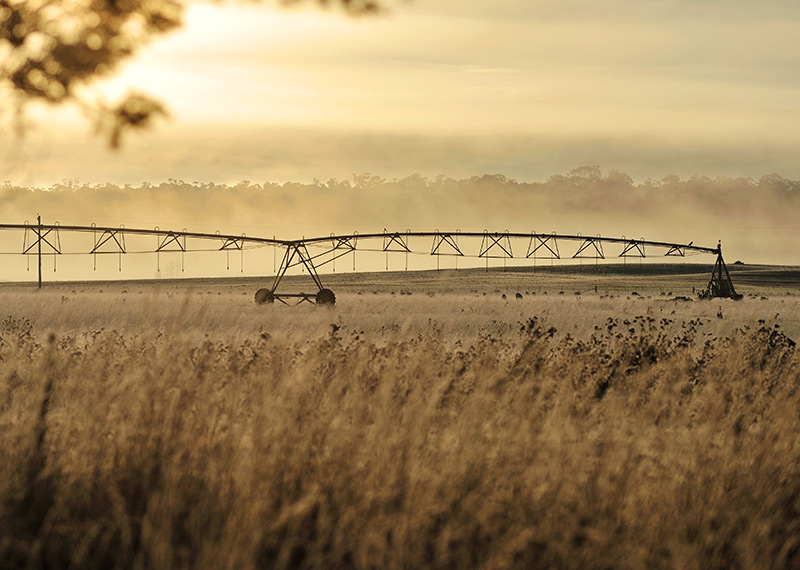
The objective of the audit was to examine whether strategic water procurements by the Department of Agriculture, Water and the Environment were conducted consistent with government policy, were supported by appropriate program design, were planned and executed appropriately, and achieved value for money.
Entity
Department of Agriculture, Water and the Environment
Contact
Please direct enquiries through our contact page.
Performance audit (Auditor-General Report No. 15 of 2008–09)
Published: Thursday 18 December 2008
Published
The objective of the audit was to assess the effectiveness of AIMS administration of its co investment research program.
Entity
Australian Institute of Marine Science
Audit manual
Recent
Updated: Thursday 20 August 2026
Updated
The Performance Statements Audit Services Group (PSASG) volume of the ANAO Audit Manual applies to the performance statements audit activity performed by PSASG.
Contact
Please direct enquiries through our contact page.
Performance audit (Auditor-General Report No. 32 of 2001–02)
Published: Thursday 14 February 2002
Published
This follow-up Audit reviewed the Department of Health and Ageing's implementation of the recommendations of Audit Report No. 36, 1999-2000, Home and Community Care. The objective of the follow-up audit was to assess the extent to which the Department had implemented the nine recommendations of Audit Report No. 36, 1999-2000. The audit examined areas relating to funding, guidance, fees, coordination with other aged and disability care programs, acquittals, accountability and data requirements, and records management.
Entity
Department of Health and Ageing
Events and seminars
Published: Thursday 20 July 2017
Published
The Audit Committee Chairs Forum is a joint initiative of the Department of Finance and the ANAO and includes the general government and non-general government sector Audit Committee Chairs. This communique covers the outcomes of the discussion at the forum on 7 June 2017 including updates from the Auditor-General and the ANAO, and from the Department of Finance.
Contact
Please direct enquiries relating to the audit committee chairs forum through our contact page.
Performance audit (Auditor-General Report No. 40 of 1998–99)
Published: Monday 24 May 1999
Published
The Pharmaceutical Industry Investment Program (PIIP) is a scheme that was introduced to compensate the pharmaceutical industry, in part, for the impact of the Government exercising its monopsony power under the Pharmaceutical Benefits Scheme. The ANAO undertook an audit of the probity of the methodology and procedures applied by the Department in assessment of applicants for PIIP funding. The objectives of the audit were to assist the Department, at its request, in the timely identification of deficiencies in assessing responses from applicants and options for addressing any such deficiencies.
Entity
Department of Industry, Science and Resources
Performance audit (Auditor-General Report No. 44 of 2002–03)
Published: Friday 23 May 2003
Published
The objective of the audit was to determine whether the controls and measures employed by FaCS and Centrelink to deliver Parenting Payment Single (PPS) payments were effective and efficient. To achieve this, the audit focused on four key areas. These were:
- the quality of performance measures used by FaCS and Centrelink;
- the effectiveness of FaCS' methodology for estimating the levels of risk of incorrect payment to PPS customers and the impact of these incorrect payments on the integrity of program outlays;
- the correctness of Centrelink's processing of reassessments; and
- the improvements to preventive controls such as training, guidance material, and the Quality On-Line system.
Entity
Department of Family and Community Services; Centrelink
Speeches and papers
Published: Thursday 12 August 1999
Published
Mr P.J. Barrett (AM) - Auditor-General for Australia, presented at the Health Insurance Commission Senior Management Group
Events and seminars
Published: Friday 4 December 2020
Published
An Audit Committee Chairs Forum was held on Friday, 4 December 2020. The venue was the Australian National Audit Office, 38 Sydney Avenue, Forrest ACT.
The text on this page is the communique from the forum.
Contact
Please direct enquiries through our contact page.
Annual report
Published: Tuesday 14 August 2018
Published
This annual report documents the performance of the Australian National Audit Office (ANAO) in the financial year ending on 30 June 2018. The report addresses all applicable obligations under the Public Governance, Performance and Accountability Act 2013 (PGPA Act); the Public Governance, Performance and Accountability Rule 2014 (PGPA Rule); the Auditor-General Act 1997; the performance measures set out in the outcome and programs framework in the ANAO’s 2017–18 Portfolio Budget Statements (PBS) and the ANAO 2017–18 Corporate Plan and annual reporting requirements set out in other relevant legislation.
Contact
Please direct enquiries relating to annual reports through our contact page.
Events and seminars
Published: Friday 9 July 2021
Published
An Audit Committee Chairs Forum was held on Friday, 9 July 2021. It was both an in-person and virtual event.
The text on this page is the communique from the forum.
Contact
Please direct enquiries through our contact page.
Speeches and papers
Published: Tuesday 4 April 2006
Published
Mr Ian McPhee - Auditor-General for Australia, presented at the Australian Government Procurement Conference
Request for audit
Responded: Friday 26 April 2019
Response provided
The Auditor-General responded on 26 April 2019 to correspondence from Dr Kerryn Phelps AM, MP and co-signatories dated 10 April 2019, requesting that the Auditor-General conduct an investigation to examine campaign advertising.
Contact
Please direct enquiries relating to requests through our contact page.
Audit manual
New
Updated: Thursday 20 August 2026
Updated
The Financial Statements Audit Services Group (FSASG) volume of the ANAO Audit Manual applies to the financial statement audit activity performed by FSASG in collaboration with the Systems Assurance and Data Analytics (SADA) group. Relevant policies and guidance from the FSASG volume are also applied to other assurance work performed by FSASG. Policies and guidance in the FSASG volume address the planning, execution and reporting stages of the financial statement audit process.
Contact
Please direct enquiries through our contact page.
Insights: Audit lessons

Published: Monday 19 November 2018
Published
This edition of audit insights focuses on efficiency in the public sector. Find out more about what we think efficiency looks like, why we think efficiency is important in ensuring that public sector agencies remain sustainable, and some examples from recently tabled audits of what we can learn from others.
Contact
Please direct enquiries through our contact page.
Performance audit (Auditor-General Report No. 37 of 2012–13)
Published: Wednesday 22 May 2013
Published
The audit objective was to assess the effectiveness of the Department of Industry, Innovation, Science, Research and Tertiary Education’s (DIISRTE’s) administration of the Education Investment Fund grants program.
(DIISRTE was the department that had responsibility for the administration of the EIF grants program during the course of the audit. The recommendations and suggestions for improvement are, however, directed to the Department of Industry, Innovation, Climate Change, Science, Research and Tertiary Education because this department now has responsibility for the administration of the program).
Entity
Department of Industry, Innovation, Climate Change, Science, Research and Tertiary Education; Department of Education, Employment and Workplace Relations
Contact
Please direct enquiries relating to reports through our contact page.
Events and seminars
Published: Friday 3 July 2020
Published
An Audit Committee Chairs Forum was held on Friday, 3 July 2020. The forum was held virtually, keeping in line with COVID-19 social distancing rules.
The forum agenda and slides are available in the related documents sections of this events page. The text on this page is the communique from the forum.
Contact
Please direct enquiries through our contact page.
Performance audit (Auditor-General Report No. 7 of 2002–03)
Published: Monday 16 September 2002
Published
In 1997-98, the ANAO audited the Child Support Agency (CSA), making 12 recommendations to improve its operational performance. A related report by the Joint Committee of Public Accounts and Audit supported the general findings of the ANAO audit and reinforced three ANAO recommendations in its own report. The audit examined client service in the CSA by following-up the CSA's implementation of the recommendations contained in these two previous reports and more broadly assessing whether the CSA had improved the management and delivery of its client service sine the previous ANAO audit.
Entity
Department of Family and Community Services
Corporate
Published: Friday 1 November 2024
Published
The ANAO regards integrity as a core value of the organisation — critical in sustaining the confidence of Parliament, strengthening public trust in government and delivering quality audit products. Maintaining strong institutional integrity is critical to the operations and reputation of the ANAO.
The ANAO Integrity Framework provides an overarching structure to the integrity control system, supporting our institution’s integrity. The Framework serves to assist in ethical decision-making and risk, fraud and misconduct management.
Beyond its control system, the ANAO maintains an enduring focus on promoting integrity as a value that is embedded in our work and culture. The ANAO recognises that integrity demands quality not only in our products but also in the behaviours of our people.
The ANAO Integrity Advisor supports the effective and ongoing application of the Integrity Framework by providing advice to staff regarding integrity matters. The Integrity Advisor is responsible for increasing integrity awareness across the organisation and for reporting annually to the ANAO Executive Board of Management on actions taken under the Framework. The Auditor-General publishes the ANAO Integrity Report to provide increased transparency of the measures we undertake to maintain a high-integrity culture in the ANAO.
Contact
Please direct enquiries through our contact page.
Performance audit (Auditor-General Report No. 13 of 2000–01)
Published: Wednesday 4 October 2000
Published
The audit examined a range of issues in relation to the development of certified agreements in the APS with particular emphasis on the link between improved pay and conditions and increased productivity, and the funding of agreements. The objectives of the audit were to:
- provide an overview of the range of wage outcomes included in the first round of APS certified agreements;
- identify the administrative arrangements agencies have in place to measure any improvements in productivity that were linked to pay increases;
- determine how agencies funded their certified agreements;
- review the reporting and accountability arrangements agencies have in place to monitor progress and to evaluate the outcomes of their certified agreements;
- determine the extent to which agencies complied with the employment terms and conditions outlined in their certified agreements that contributed to paying for their agreement or measuring and/or assessing improvements in productivity; and
- examine the role of central coordinating agencies in reviewing agencies' certified agreements.
Entity
Across Agency
Financial statement audit (Auditor-General Report No. 8 of 2022–23)
Published: Wednesday 14 December 2022
Published
This report complements the Interim Report on Key Financial Controls of Major Entities financial statement audit report published in June 2022. It provides a summary of the final results of the audits of the Consolidated Financial Statements for the Australian Government and the financial statements of Australian Government entities for the period ended 30 June 2022.
Entity
Across Entities
Contact
Please direct enquiries through our contact page.
Corporate
Published: Tuesday 25 November 2025
Published
The Australian Public Service Employee Census is an annual survey administered by the Australian Public Service Commission. The survey is used to collect confidential attitude and opinion information from APS employees on issues in the workplace. The survey provides an opportunity for ANAO employees to share their experiences of working within our organisation and the public service. This census action plan outlines the key focus areas for the ANAO in responding to the feedback.
Contact
Please direct enquiries through our contact page.
Performance audit (Auditor-General Report No. 49 of 1998–99)
Published: Tuesday 29 June 1999
Published
The objective was to assess the extent to which staff reductions have been managed in a sound strategic and cost-effective manner consistent with the Government's guidelines and the ANAO's 1996 better practice guide Managing APS Staff Reductions. The audit focussed on 3 agencies - the Australian Taxation Office, the former Department of Primary Industry and Energy, and the former Department of Transport and Regional Development. The ANAO found that the majority of staff reductions were achieved through retrenchment rather than natural attrition; and that decisions on the number of retrenchments were not always supported by an assessment of the impact of the reductions on the agencies' abilities to conduct their business.
Entity
Public Service and Merit Protection Commission and Other Agencies
Financial statement audit (Auditor-General Report No. 22 of 2024–25)
Published: Thursday 6 February 2025
Published
This report complements the Interim Report on Key Financial Controls of Major Entities financial statement audit report published in June 2024. It provides a summary of the final results of the audits of the Consolidated Financial Statements for the Australian Government and the financial statements of Australian Government entities for the period ended 30 June 2024.
Entity
Across Entities
Contact
Please direct enquiries through our contact page.
Financial statement audit (Auditor-General Report No. 24 of 2017–18)
Published: Wednesday 20 December 2017
Published
This report complements the Interim Report on Key Financial Controls of Major Entities financial statement audit report published in June 2017. It provides a summary of the final results of the audits of the Consolidated Financial Statements for the Australian Government and the financial statements of Australian Government entities for the period ended 30 June 2017.
Entity
Across Entities
Contact
Please direct enquiries through our contact page.
Events and seminars
Published: Friday 9 August 2024
Published
An Audit Committee Chairs Forum was held on Friday 12 July 2024. The text on this page is the communique from the forum.
Contact
For any enquiries, please contact External.Relations@anao.gov.au
Performance audit (Auditor-General Report No. 44 of 2003–04)
Published: Tuesday 27 April 2004
Published
The audit examined ATSIS' implementation of recommendations from Audit Report No.39, 1998-1999 National Aboriginal Health Strategy - Delivery of Housing and Infrastructure to Aboriginal and Torres Strait Islander Communities (the previous audit). In addition to assessing ATSIS' progress in implementing the recommendations of the previous audit, this follow-up audit examined ATSIS' performance reporting of the NAHS program, and concluded that the current level of aggregation of performance reporting makes it difficult to identify the particular contribution that the NAHS Program makes in improving services to Indigenous communities.
Entity
Aboriginal and Torres Strait Islander Services