Browse our range of reports and publications including performance and financial statement audit reports, assurance review reports, information reports and annual reports.
Performance audit (Auditor-General Report No. 18 of 1999–2000)
Published: Monday 15 November 1999
Published
Government service delivery through the Internet presents both significant opportunities and challenges in the delivery of on-line services. Depending on the level of sophistication of the application, the Internet allows Commonwealth agencies to publish information, interact with clients in the exchange of information, and/or transact business electronically. The over-all objective of this audit was to determine Commonwealth agencies' preparedness to achieve the Government's goal of all appropriate services being Internet-deliverable by 2001. The audit sought to assess:
- the extent to which agencies considered that they would be able to achieve that goal;
- what type of services agencies were delivering or planning to deliver on the Internet; and
- whether agencies had identified barriers and possible solutions to that delivery.
Entity
Across Agency
Potential topic
Potential topic: 2027-29
Potential
The ANAO could assess establishment of the Defence Delivery Agency to support the delivery of the Australian Government’s future capability requirements. On 1 December 2025, the Minister for Defence and Minister for Defence Industry announced the Government’s intention to establish a new Defence Delivery Agency, led by a National Armaments Director, to strengthen the acquisition and sustainment of defence capability. The new agency will consolidate existing groups within the department – Capability Acquisition and Sustainment Group, Guided Weapons and Explosive Ordnance Group, and Naval Shipbuilding and Sustainment Group. The ANAO could provide independent assurance on the establishment and governance arrangements of the Defence Delivery Agency including oversight, planning and staffing, business risk management and performance measurement and reporting.
Entity
Department of Defence
Contact
Please direct enquiries through our contact page.
Performance audit (Auditor-General Report No. 18 of 2004–05)
Published: Thursday 16 December 2004
Published
The Therapeutic Goods Administration (TGA), a division of the Commonwealth Department of Health and Ageing, is responsible for the regulation of the manufacture and supply of therapeutic goods. The objective of the audit was to assess the TGA's regulation of non-prescription medicinal products. In particular, it reviewed the TGA's systems, procedures and resource management processes used to approve new manufacturers, monitor ongoing manufacturer and product compliance with mandated requirements, and manage non-compliance. The audit made 26 recommendations designed to improve the transparency, quality and reliability of regulatory decisions taken by the TGA and improve its accountability mechanisms by enhancing its management information systems.
Entity
Department of Health and Ageing
Performance audit (Auditor-General Report No. 36 of 2005–06)
Published: Tuesday 2 May 2006
Published
The objective of the audit was to assess the effectiveness of management of the procurement of a major, new capability for the ADF by the DMO and Defence. The audit reviewed the initial capability requirements and approval process; analysed the contract negotiation process; and examined management of the Acquisition and Through-Life-Support Contracts. Coverage of the audit extended from development of the concept for the requirement, to acceptance of deliverables in the period prior to the award of the Australian Military Type Certificate (see shaded area of Figure 1). The audit fieldwork was undertaken during the delivery phase of the Project, following delivery of ARH numbers 1, 2 and 5.
Entity
Department of Defence; Defence Material Organisation
Performance audit (Auditor-General Report No. 29 of 2008–09)
Published: Thursday 23 April 2009
Published
The objective of this performance audit of construction projects on the AusLink National Network was to assess the effectiveness of the administration by DITRDLG in working with the States to deliver the outcomes expected by the Government and the broader community. To inform the audit assessment, the methodology included examination of both Australian Government and State Government records as well as site inspections in relation to 21 projects being delivered in three States (New South Wales (NSW), Queensland and Tasmania). DITRDLG and the respective State road transport authorities were consulted in the selection of projects to be examined in detail.
Entity
Department of Infrastructure, Transport, Regional Development and Local Government
Speeches and papers

Published: Friday 31 March 2017
Published
Grant Hehir, Auditor-General for Australia, attended the XXIII Commonwealth Auditors-General Conference in New Delhi, India, and presented a keynote speech on 22 March 2017 titled Environmental Audit: A Commonwealth Perspective.
Contact
Please direct enquiries relating to speeches through our contact page.
Speeches and papers
Published: Wednesday 22 February 2006
Published
Mr Ian McPhee - Auditor-General for Australia, presented at the Department of the Prime Minister and Cabinet and the Australia New Zealand School of Government Conference
Speeches and papers
Published: Tuesday 1 February 2005
Published
Mr P.J. Barrett (AO) - Auditor-General for Australia, presented at the Commonwealth Auditors-General Conference, Wellington, New Zealand
Speeches and papers
Published: Monday 19 May 2003
Published
Mr P.J. Barrett (AM) - Auditor-General for Australia, presented at the 2nd Annual New Directions in Australian Auditing Accounting Standards Conference
Performance audit (Auditor-General Report No. 3 of 2012–13)
Published: Wednesday 19 September 2012
Published
The objective of the audit was to assess the effectiveness of Regional Australia’s management of the design and implementation of the first application round of the RDAF program.
The establishment of a new infrastructure program to fund projects identified by Regional Development Australia committees in regional areas was one of the initiatives established to deliver on the Government's September 2010 agreement with the Independent Members for Lyne and New England. The program was to fund projects that support the infrastructure needs and economic and community growth of Australia’s regions.
Entity
Department of Regional Australia, Local Government, Arts and Sport
Speeches and papers
Published: Wednesday 20 November 1996
Published
Mr P.J. Barrett (AM) - Auditor-General for Australia, presented to the PAA National Conference - Reshaping the Old: Charting the New - Public Management in the 1990s - Melbourne
Performance audit (Auditor-General Report No. 41 of 2001–02)
Published: Monday 15 April 2002
Published
New transactional banking arrangements for FMA agencies came into effect on 1 July 1999. The audit reviewed selected agencies' implementation and ongoing management of contractual banking arrangements; agencies' tendering for the procurement of banking services; and identified practises that have improved administrative arrangements. The audit examined Finance's role in planning and implementing the new arrangements as well as implementation in the Australian Customs Service (Customs) the Department of Transport and Regional Services (DTRS), the Department of Education, Science and Training (DEST), and the Department of Immigration and Multicultural and Indigenous Affairs (DIMIA).
Entity
Department of Finance and Administration
Potential topic
Potential topic: 2027-29
Potential
The ANAO could assess the implementation of one or more aspects of the Australian Government’s environmental protection law reforms. Environmental protection law reforms were passed by the Australian Parliament on 28 November 2025. These reforms were introduced in response to the statutory review of the Environment Protection and Biodiversity Conservation Act 1999 (EPBC Act) conducted by Professor Graeme Samuel AC in 2020. The review found that ‘Australia’s natural environment and iconic places are in an overall state of decline and are under increasing threat’, including from climate change. The review found that the EPBC Act is ineffective, outdated and in need of fundamental reform to address current and future challenges. The reforms are focused on three ‘pillars’: stronger environmental protection and restoration; more efficient and robust project assessments; and greater accountability and transparency in decision making. Key aspects of the reforms include: the introduction of National Environmental Standards; new assessment pathways for environmental approvals; a new framework for restoration; the establishment of the National Environmental Protection Agency; and change to Environment Information Australia.
Entity
Department of Climate Change, Energy, the Environment and Water
Contact
Please direct enquiries through our contact page.
Performance audit (Auditor-General Report No. 4 of 2007–08)
Published: Wednesday 8 August 2007
Published
The objective of this follow up audit was to examine Customs' implementation of the eight recommendations in the ANAO Report No.16 2004–05 and the two related recommendations from JCPAA Report 404. The audit has had regard to issues affecting the implementation of the recommendations and has taken into account changed circumstances and new administrative arrangements since the previous audit.
Entity
Australian Customs Service
Potential topic
Potential topic: 2026-27
Potential
The ANAO could assess the Department of Climate Change, Energy, the Environment and Water’s administration and operation of the Recycling Modernisation Fund (RMF). The RMF was established in 2020 to support industry to transition to the regulation of waste exports, by increasing Australia’s onshore capacity to collect, reuse, recycle and recover waste materials. The Australian Government has committed to over $200 million towards new and upgraded recycling infrastructure through the RMF, with funding provided to states and territories via the Federation Funding Agreement–Environment and the National Partnership on Recycling Infrastructure.
Entity
Department of Climate Change, Energy, the Environment and Water
Contact
Please direct enquiries through our contact page.
Potential topic
Potential topic: 2027-29
Potential
The ANAO could examine entity administration of selected aspects of the Combatting Antisemitism, Hate and Extremism (Firearms and Customs Laws) Act 2026 including agency advice to the decision maker, on:
- the new power allowing the Minister for Home Affairs, or their delegate, to refuse permission to import a firearm or weapon, or related good, where the importation of that item poses a risk to the health, safety or security of the public or a sector of the public; and/or
- the new power enabling the Minister for Home Affairs to refuse to grant, or to cancel, a visa, on the basis of hate motivated conduct and offences relating to the spread of hatred and extremism;
- implementation by the Australian Border Force of arrangements to give effect to amendments to customs regulations that will prohibit the import and export of violent extremist material and prohibited hate symbols; and/or
- the establishment of a National Gun Buyback Scheme.
Entity
Attorney-General's Department; Department of Home Affairs; Australian Federal Police
Contact
Please direct enquiries through our contact page.
Potential topic
Potential topic: 2027-29
Potential
The ANAO could assess the Department of Treasury’s management and oversight of whether Commonwealth and state and territory objectives ‘to unlock quality, affordable housing supply over the medium term’ are achieved under the National Housing Accord. For example, by examining whether funding mechanisms for affordable housing have been carried out according to expected timeframes and requirements; or how state and territory governments’ implementation schedules are monitored, to ensure delivery of their affordable housing allocations.
The National Housing Accord was established in 2022. The accord aims to address housing supply challenges to ‘ensure Australians have access to safe, stable and affordable housing’ that is also ‘close to work, schools and transport’. This includes commitments for ‘immediate actions’ by the Commonwealth, states and territories to: deliver up to 20,000 new affordable dwellings – of which 10,000 will be delivered by the Commonwealth; collaborate to improve financing for new social and affordable housing projects; improve zoning, planning and land release and make sure the right skills are available and improving access to social and affordable housing. The Commonwealth committed $3.5 billion to state, territory and local governments to support the delivery of homes in line with the Accord’s target.
Housing Australia (HA), formerly the National Housing Finance and Investment Corporation, is the independent national housing authority and supports the delivery of Australian Government programs to improve the supply of social and affordable housing. HA is responsible for administering the Commonwealth’s commitment of 10,000 affordable dwellings under the accord.
Entity
Housing Australia; Department of the Treasury
Contact
Please direct enquiries through our contact page.
Performance audit (Auditor-General Report No. 2 of 1995–96)
Published: Tuesday 22 August 1995
Published
This report has been prepared in response to a resolution of the Senate on 8 December 1994 which referred certain matters relating to the possible sale of ANL Ltd to the Senate Finance and Public Administration References Committee. The resolution directed the Committee to consider a report from the Auditor-General and drew the Auditor-General's attention to a range of specific issues and questions.
Entity
Across Agency
Performance audit (Auditor-General Report No. 65 of 2001–02)
Published: Friday 28 June 2002
Published
The audit reviewed the administrative effectiveness of ComSuper in providing benefits to members of the CSS and PSS. The objectives of the audit were to assess the effectiveness of ComSuper's performance in regard to the establishment of new purchaser/provider arrangements; the integrity of the ComSuper databases for the payment of CSS and PSS benefits; and the accuracy and effectiveness of benefit processing and payment for resignation, retirement and retrenchment.
Entity
ComSuper
Audit Matters
Published: Wednesday 6 August 2025
Published
Welcome to the fourth edition of the ANAO’s Audit Matters newsletter. The purpose of Audit Matters is to provide updates on the ANAO’s work and provide insights on what we are seeing in the Australian Government sector.
Audit Matters complements the range of reports we table in the Parliament as well as our insights products and events and seminars. I hope you find it useful and please forward it on to your colleagues, and encourage them to sign-up for future editions.
Rona Mellor PSM, Deputy Auditor-General
Contact
Please direct enquiries through our contact page or subscribe to receive the email version of Audit Matters in the future.
Performance audit (Auditor-General Report No. 34 of 1999–2000)
Published: Thursday 16 March 2000
Published
In late 1996, the Government announced its commitment to establish new facilities for the National Museum of Australia and the Australian Institute of Aboriginal and Torres Strait Islander Studies on Acton Peninsula in Canberra. The objectives of the audit were to examine the project's compliance with the Commonwealth Procurement Guidelines for the procurement of public works and effectiveness of the project's management.
Entity
Department of Communications, Information Technology and the Arts
Performance audit (Auditor-General Report No. 26 of 2015–16)
Published: Tuesday 15 March 2016
Published
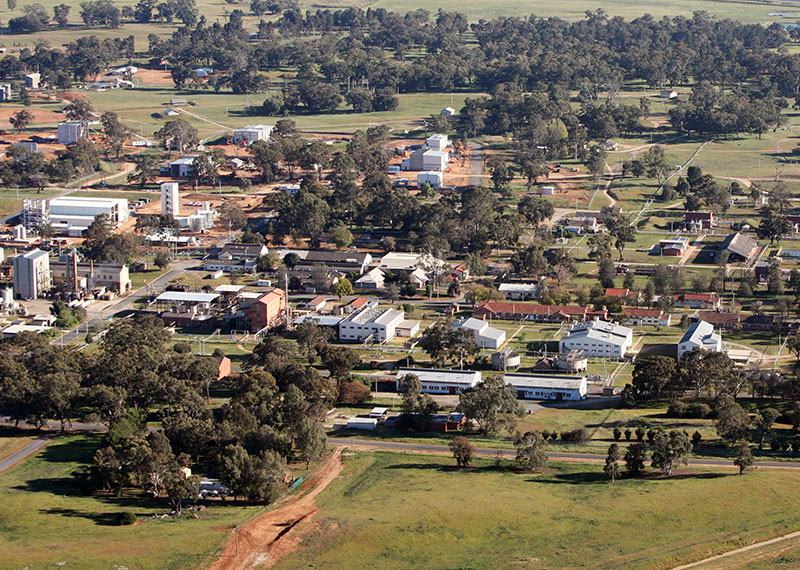
The audit objective is to assess the effectiveness of the Department of Defence's management of the Mulwala Redevelopment Project.
Entity
Department of Defence
Contact
Please direct enquiries relating to reports through our contact page.
Audit Matters
Published: Monday 2 September 2024
Published
Welcome to the inaugural edition of the ANAO’s quarterly Audit Matters newsletter. The purpose of Audit Matters is to inform external audiences — primarily those working in Commonwealth entities — of updates on the ANAO’s work and provide insights on what we are seeing in the Australian Government sector.
Audit Matters complements the range of reports we table in the Parliament as well as our Insights products and events and seminars. I hope you find it useful and please forward it on to your colleagues, and encourage them to sign-up for future editions.
Carla Jago, Acting Deputy Auditor-General
Contact
Please direct enquiries through our contact page or subscribe to receive the email version of Audit Matters in the future.
Performance audit (Auditor-General Report No. 51 of 1999–2000)
Published: Thursday 29 June 2000
Published
The objective of the audit was to examine program management in the Training and Youth Division of the Department of Education, Training and Youth Affairs. In broad terms, the audit focused on the management frameworks at both Divisional and program level. Three of the Division's programs were selected for more detailed review as follows:
- Workplace English Language and Literacy;
- Literacy and Numeracy; and
- Support for New Apprentices.
Entity
Department of Education, Training and Youth Affairs
Performance audit (Auditor-General Report No. 8 of 2023–24)

Published: Monday 11 December 2023
Published
The objective of the audit was to assess whether the design and early implementation of the Australian Government’s response to Recommendation 86 of the Royal Commission into Aged Care Quality and Safety has been effective.
Entity
Department of Health and Aged Care; Aged Care Quality and Safety Commission
Contact
Please direct enquiries through our contact page.
Insights: Audit lessons

Published: Thursday 7 March 2019
Published
This edition of audit insights focuses on quality in the public sector. Quality is an important concept that can be applied to all areas of government business. Quality applied through policy, services, regulations and program design and delivery supports community trust in government. A positive approach to quality, implemented through a quality framework that is embedded into the organisational culture at all levels of a government agency, is essential to meeting community and parliamentary expectations.
Contact
Please direct enquiries through our contact page.
Potential topic
Potential topic: 2027-29
Potential
The ANAO could assess the design and delivery of programs to improve employment outcomes in remote Australia. In 2024 the Australian Government committed to replace the Community Development Program (CDP), with two new programs. The Remote Jobs and Economic Development (RJED) aims to subsidise 6,000 jobs in remote communities. RJED has been allocated $1.006 billion over four years with grant rounds commencing in December 2024. The Remote Australian Employment Service (RAES) commenced on 1 November 2025 and aims to build skills and address barriers to employment for around 40,000 job seekers across 1,200 remote communities. The RAES has been allocated $1.9 billion over five years.
Entity
National Indigenous Australians Agency
Contact
Please direct enquiries through our contact page.
Potential topic
Potential topic: 2027-29
Potential
The ANAO could assess the implementation of REDSPICE to expand the range and sophistication of the Australian Signals Directorate’s intelligence and cyber capabilities. The 2024 National Defence Strategy highlighted that space and cyber capabilities play a significant role in safeguarding national security and listed the continued investment in the Australian Signals Directorate through REDSPICE as a capability investment priority. The REDSPICE program was announced in 2022 with $9.9 billion in funding over ten years. The REDSPICE program includes growing the workforce with 1900 new roles, a three-fold increase in offensive cyber capability, improved foundational technologies (including artificial intelligence) and an increased national and international footprint. The ANAO could examine the objectives of the program and the extent to which those objectives have been achieved.
Entity
Department of Defence
Contact
Please direct enquiries through our contact page.
Potential topic
Potential topic: 2027-29
Potential
The ANAO could assess whether the Department of Defence (Defence) and the Department of Finance (Finance) are effectively managing the divestment of Defence estate holdings identified through the Defence Estate Audit. In response to the 2023 Defence Strategic Review, government commissioned an independent audit of the Defence estate to assess whether the estate footprint was fit for purpose. In February 2026, government announced that it had endorsed the whole or partial divestment of 67 Defence holdings. Finance is responsible for managing the new divestments while Defence is to manage the transition of people and capability from sites. The divestment program involves heritage, remediation, workforce, community and capability considerations. The ANAO could examine whether implementation arrangements support transparent, orderly and value for money disposal outcomes.
Entity
Department of Defence
Contact
Please direct enquiries through our contact page.
Performance audit (Auditor-General Report No. 66 of 2001–02)
Published: Friday 28 June 2002
Published
The audit followed-up the ANAO's original audit report into the aviation safety regulatory activities of the Civil Aviation Safety Authority (CASA) (Audit Report No.19 1999-2000 Aviation Safety Compliance). The objective of the follow-up audit were to determine, in respect of issues addressed by the original audit recommendations, whether CASA has made satisfactory progress to improve its aviation safety surveillance and compliance activities; and whether the introduction of new strategies for further improvement is being appropriately managed.
Entity
Civil Aviation Safety Authority