Browse our range of reports and publications including performance and financial statement audit reports, assurance review reports, information reports and annual reports.
Performance audit (Auditor-General Report No. 43 of 1999–2000)
Published: Thursday 11 May 2000
Published
The objective of the audit was to determine whether Centrelink's planning, monitoring and costing arrangements provide a sound basis to underpin its delivery of quality, cost effective customer services.
Entity
Centrelink
Performance audit (Auditor-General Report No. 38 of 2000–01)
Published: Thursday 24 May 2001
Published
The audit's main objectives were to:
- examine the guidance on the use of confidentiality clauses in contracts and agencies' use of such clauses;
- develop criteria to assist agencies in determining what information in a contract is confidential; and
- assess the effectiveness of the existing accountability and disclosure arrangements for Commonwealth contracts.
Entity
Across Agency
Performance audit (Auditor-General Report No. 5 of 1998–99)
Published: Monday 24 August 1998
Published
The objectives of the audit were to provide assurance to Parliament concerning the adequacy of Commonwealth security planning and preparations for the Games and to identify areas for improvement early enough for any corrective action to be taken.
Entity
Across Agency
Performance audit (Auditor-General Report No. 39 of 2000–01)
Published: Monday 28 May 2001
Published
The audit was conducted as a joint financial statement and performance audit of Centrelink's Information and Technology (I&T) systems. The objective of the financial statement component of the audit was to express an opinion on whether Centrelink could rely on its I&T systems to support production of a reliable set of financial information for the financial statements. The objective of the performance audit component was to determine whether Centrelink's I&T systems outputs adequately met quality and service delivery targets.
Entity
Centrelink
Speeches and papers
Published: Monday 13 September 1999
Published
Mr P.J. Barrett (AM) - Auditor-General for Australia, presented at the Defence and Strategic Studies Course, Australian Defence College, Canberra
Speeches and papers
Published: Thursday 13 February 1997
Published
Mr P.J. Barrett (AM) - Auditor-General for Australia, presented to the Central Agency Broker Seminar - Towards a Best Practice Australian Public Service - Hobart
Performance audit (Auditor-General Report No. 20 of 2025–26)

Published: Tuesday 27 January 2026
Published
The audit objective was to assess the effectiveness of the Department of Social Services’ and Services Australia’s administration of the age pension.
Entity
Services Australia; Department of Social Services
Contact
Please direct enquiries through our contact page.
Performance audit (Auditor-General Report No. 45 of 1997–98)
Published: Thursday 28 May 1998
Published
The objective of the audit was to determine whether the Department of Health and Family Services had managed its coordinating role and implemented its responsibilities under the National Rural Health Strategy efficiently and effectively.
Entity
Department of Health and Family Services
Performance audit (Auditor-General Report No. 32 of 2022–23)

Published: Tuesday 6 June 2023
Published
The objective of this audit was to examine whether Australian Wool Innovation (AWI) is effectively meeting the requirements of the Statutory Funding Agreement (SFA).
Entity
Australian Wool Innovation
Contact
Please direct enquiries through our contact page.
Performance audit (Auditor-General Report No. 32 of 2019–20)

Published: Thursday 16 April 2020
Published
The objective of this audit was to examine the Department of Foreign Affairs and Trade’s (DFAT’s) achievement of value for money objectives in the delivery of Official Development Assistance (aid) through facility arrangements.
Entity
Department of Foreign Affairs and Trade (DFAT)
Contact
Please direct enquiries through our contact page.
Performance audit (Auditor-General Report No. 46 of 2024–25)

Published: Friday 20 June 2025
Published
The objective of the audit was to assess the effectiveness of Airservices’ contract management for the OneSKY program.
Entity
Airservices Australia; Department of Defence
Contact
Please direct enquiries through our contact page.
Performance audit (Auditor-General Report No. 17 of 2023–24)

Published: Thursday 22 February 2024
Published
The objective of this audit was to examine whether the Department of Finance (Finance) has implemented a selection of agreed parliamentary committee and Auditor-General recommendations.
Entity
Department of Finance
Contact
Please direct enquiries through our contact page.
Performance audit (Auditor-General Report No. 48 of 2024–25)

Published: Wednesday 25 June 2025
Published
The objective of the audit was to assess the effectiveness of the NDIA’s management of claimant compliance with NDIS claim requirements.
Entity
National Disability Insurance Agency
Contact
Please direct enquiries through our contact page.
Performance audit (Auditor-General Report No. 28 of 2015–16)
Published: Thursday 28 April 2016
Published
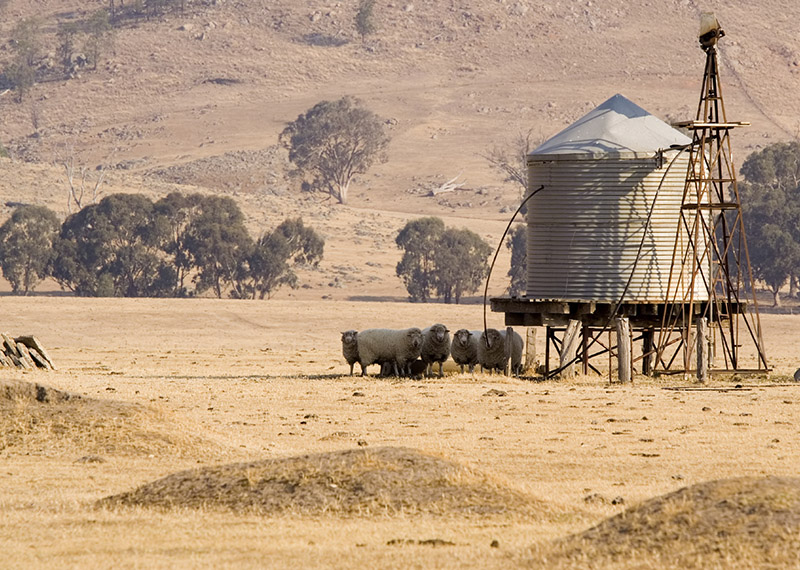
The objective of the audit was to assess the Department of Agriculture and Water Resources' establishment and administration of the Farm Finance and Drought Concessional Loans programs.
Entity
Department of Agriculture and Water Resources
Contact
Please direct enquiries relating to reports through our contact page.
Performance audit (Auditor-General Report No. 51 of 2005–06)
Published: Wednesday 28 June 2006
Published
The audit objectives were to report on the implementation status of the parliamentary resolutions and other actions arising out of the six recommendations made in the final PSC Report, Review by the Parliamentary Service Commissioner of Aspects of the Administration of the Parliament. The audit also broadly examined the impact of implementation of the parliamentary resolutions on aspects of: the level of services provided to the Parliament generally following amalgamation of the three former parliamentary departments into the Department of Parliamentary Services; and accommodation space within Parliament House. The designated audit agency was the Department of Parliamentary Services (DPS).
Entity
Department of Parliamentary Services
Performance audit (Auditor-General Report No. 19 of 2003–04)
Published: Wednesday 17 December 2003
Published
The objective of the audit was to assess whether the property management function, including the management of leases, was being performed efficiently and was providing an effective level of support for the delivery of the organisation's services (outputs). The audit evaluated property management policies and practices across the following dimensions:
- planning and control;
- business processes and practices; and
- information and performance management.
Within each of these areas, a series of desirable proceses and controls (described as the evaluation criteria) were developed to assist in the assessment of each organisation's performance.
Entity
Australian Communications Authority; Australian Film, Television and Radio School; Civil Aviation Safety Authority; Department of Employment and Workplace Relations; National Library of Australia; Department of Finance and Administration
Performance audit (Auditor-General Report No. 2 of 2015–16)

Published: Tuesday 14 July 2015
Published
The objective of the audit was to assess the effectiveness of the Australian Communications and Media Authority’s regulation of unsolicited communications.
Entity
Australian Communications and Media Authority
Contact
Please direct enquiries relating to reports through our contact page.
Performance audit (Auditor-General Report No. 47 of 2002–03)
Published: Friday 13 June 2003
Published
The audit examined the efficiency and effectiveness of the Department of Employment and Workplace Relations' implementation and subsequent management of the Indigenous Employment Policy. The audit sought to determine whether, in relation to the Indigenous Employment Policy, the department had:
- developed appropriate planning processes and performance measures;
- monitored and reported performance results;
- implemented appropriate evaluation and review mechanisms;
- conducted effective marketing and promotion; and
- identified enhancements and addressed performance issues.
Entity
Department of Employment and Workplace Relations
Performance audit (Auditor-General Report No. 43 of 2018–19)

Published: Friday 31 May 2019
Published
The objective of the audit was to assess whether the Department of Infrastructure, Regional Development and Cities had designed and implemented appropriate governance and administration arrangements for the transition and delivery of sustainable reforms to services on Norfolk Island.
Entity
Department of Infrastructure, Regional Development and Cities
Contact
Please direct enquiries through our contact page.
Performance audit (Auditor-General Report No. 50 of 2024–25)

Published: Friday 27 June 2025
Published
The audit objective was to examine the effectiveness of Defence’s sustainment arrangements for Navy’s Canberra class fleet of amphibious assault ships (or LHDs).
Entity
Department of Defence
Contact
Please direct enquiries through our contact page.
Performance audit (Auditor-General Report No. 47 of 2019–20)

Published: Thursday 25 June 2020
Published
The objective of this audit was to assess the effectiveness of the Department of Agriculture, Water and the Environment’s administration of referrals, assessments and approvals of controlled actions under the Environment Protection and Biodiversity Conservation Act 1999.
Entity
Department of Agriculture, Water and the Environment
Contact
Please direct enquiries through our contact page.
Performance audit (Auditor-General Report No. 47 of 2014–15)

Published: Wednesday 10 June 2015
Published
The objective of the audit was to assess the effectiveness of the Department of Immigration and Border Protection’s identity verification arrangements for applicants in the Citizenship Program.
Entity
Department of Immigration and Border Protection
Contact
Please direct enquiries relating to reports through our contact page.
Performance audit (Auditor-General Report No. 3 of 2023–24)

Published: Monday 28 August 2023
Published
The objective of the audit was to assess the effectiveness of the department’s management of non-compliance with the Therapeutic Goods Act 1989 for unapproved therapeutic goods.
Entity
Department of Health and Aged Care
Contact
Please direct enquiries through our contact page.
Performance audit (Auditor-General Report No. 35 of 2008–09)
Published: Thursday 21 May 2009
Published
The objective of the audit was to assess the effectiveness of DIAC's management of MAL. The scope was confined to DIAC's management and use of the system: it did not examine the work of others with an interest in the system, such as security agencies.
Entity
Department of Immigration and Citizenship
Performance audit (Auditor-General Report No. 18 of 2015–16)

Published: Thursday 21 January 2016
Published
The audit objective was to assess the Department of Social Services and the Department of Human Services’ administration of Disability Support Pension eligibility and review processes.
Entity
Department of Social Services; Department of Human Services
Contact
Please direct enquiries relating to reports through our contact page.
Performance audit (Auditor-General Report No. 15 of 2024–25)

Published: Thursday 5 December 2024
Published
The objective of the audit was to assess whether the Murray–Darling Basin Authority (MDBA) had complied with gifts, benefits and hospitality requirements.
Entity
Murray–Darling Basin Authority
Contact
Please direct enquiries through our contact page.
Performance audit (Auditor-General Report No. 47 of 2005–06)
Published: Wednesday 21 June 2006
Published
The objective of the audit was to assess whether FaCSIA administers grants effectively, according to better practice guidelines, and consistently across geographic areas and the range of programmes included in the scope of the audit. The scope of the audit included grants administered by FaCSIA between 1 July 2002 and 30 June 2005, relating to programmes falling within four of the five groups of programmes providing funding for families and communities namely: Community Support; Family Assistance; Childcare Support; and Youth and Student Support. In total, these groups involved total expenditure of some $533 million in 2004–05.
Entity
Department of Families Community Services and Indigenous Affairs
Performance audit (Auditor-General Report No. 27 of 2006–07)
Published: Wednesday 21 February 2007
Published
This audit focuses on the Australian Defence Force's (ADF) Air Combat fleet's logistics support, regular maintenance and structural refurbishment. These activities are collectively referred to as fleet in-service support. The current Defence White Paper states that Air Combat is the most important single capability for the defence of Australia.
The audit objective was to assess the effectiveness of the Air Combat fleet's in-service support arrangements to provide capability for air combat operations. Capital equipment acquisition projects covered by this report are limited to the Hornet and F-111 structural refurbishment projects, which aim to ensure these aircraft remain serviceable until their withdrawal from service.
Entity
Department of Defence; Defence Materiel Organisation
Performance audit (Auditor-General Report No. 26 of 2018–19)

Published: Friday 15 February 2019
Published
The audit objective was to assess the effectiveness of risk management, data monitoring and public reporting arrangements associated with the Australian Government's funding of public hospital services under the 2011 National Health Reform Agreement (NHRA).
Entity
Department of Health; Independent Hospital Pricing Authority; National Health Funding Body
Contact
Please direct enquiries through our contact page.
Performance audit (Auditor-General Report No. 11 of 2014–15)

Published: Wednesday 10 December 2014
Published
The audit objective was to assess the effectiveness and equity of the award of funding under the Clean Technology Program in the context of the program objectives and the Commonwealth’s grants administration framework.
Entity
Department of Industry
Contact
Please direct enquiries relating to reports through our contact page.