Browse our range of reports and publications including performance and financial statement audit reports, assurance review reports, information reports and annual reports.
Performance audit (Auditor-General Report No. 40 of 1999–2000)
Published: Wednesday 26 April 2000
Published
Tactical fighter operations (TFOs) form the basis of Australia's current military capability to ensure air superiority. Air superiority over the Australian territory and maritime approaches is an essential element in Australia's defence strategy. The audit objectives were to:
- assess whether the resources used to provide the F/A-18 tactical fighter force operational capability are managed cost-effectively; and
- identify areas for improvement in the coordination, planning and practices employed in administration of tactical fighter operations.
Entity
Department of Defence
Performance audit (Auditor-General Report No. 14 of 2006–07)
Published: Thursday 7 December 2006
Published
The objective of the audit was to assess whether the APVMA is performing its key regulatory functions effectively. In particular, the audit examined the APVMA's arrangements for:
- planning and overseeing the delivery of regulatory functions;
- registering pesticides and veterinary medicines in a timely manner;
- obtaining external scientific advice to support the registration function;
- monitoring the quality of pesticides and veterinary medicines approved for sale in Australia; and
- administering its cost recovery framework.
Entity
Australian Pesticides and Veterinary Medicines Authority
Performance audit (Auditor-General Report No. 30 of 2010–11)
Published: Thursday 17 February 2011
Published
The audit objective was to assess the effectiveness of the Department of Education, Employment and Workplace Relation's administration of the Digital Education Revolution program, focusing on the major component of the program, the National Secondary Schools Computer Fund.
Entity
Department of Education, Employment and Workplace Relations
Performance audit (Auditor-General Report No. 18 of 2008–09)
Published: Tuesday 3 February 2009
Published
The Australian Political Parties for Democracy Programme is administered by Finance. The programme aims to strengthen democracy internationally by providing support for the international activities of Australia's major political parties. Funding of up to $1 million is provided annually under the programme to each of the Australian Labor Party and to the Liberal Party of Australia. Guidelines for the programme provide for the parties to re-apply for funding each year and set out the criteria against which applications for funding are assessed. The proposed audit would examine the administration of the program by Finance, including the adequacy of assessment of acquittal documentation and requests to roll over funding.
Entity
Department of Finance and Deregulation
Speeches and papers
Published: Thursday 31 July 2014
Published
Mr Mr Ian McPhee - Auditor-General for Australia, participated in a panel discussion at the Australian Government Leadership Network Annual Conference (Queensland)
Performance audit (Auditor-General Report No. 25 of 2004–05)
Published: Tuesday 1 February 2005
Published
The audit examined the relationship between the strategic guidance and capabilities provided by Army, through analysis of the Army capability management and reporting framework. The objectives of the audit were to: Assess Army capability management and reporting processes; determine whether these processes efficiently and effectively manage resources to provide Army capability; and accurately indicate the capability provided by Army.
Entity
Department of Defence
Performance audit (Auditor-General Report No. 38 of 2008–09)
Published: Wednesday 27 May 2009
Published
The objective of the ANAO's audit was to examine the effectiveness of DAFF's implementation and administration of the buyback of fishing concessions under the Securing our Fishing Future structural adjustment package.
Entity
Department of Agriculture, Fisheries and Forestry
Insights: Audit lessons

Published: Monday 29 June 2020
Published
This edition of Audit Insights summarises key messages from Australian National Audit Office (ANAO) performance audits about the management of conflicts of interest by Australian Government entities in relation to procurement activity and grants programs.
Contact
Please direct enquiries about audit insights through our contact page.
Performance audit (Auditor-General Report No. 49 of 2002–03)
Published: Tuesday 17 June 2003
Published
The audit reviewed the Australian Maritime Safety Authority's management of the navigation aids network, which is an important factor in shipping safety. The objectives of the audit were to determine whether AMSA's management of the network provides for the strategic needs of marine navigation in Australian waters, and whether AMSA's management was efficient and effective. The audit focused on AMSA's strategic planning, the management of revenue and expenditure to support the network, its contract management practices, and its accountability and performance reporting arrangements.
Entity
Australian Maritime Safety Authority
Performance audit (Auditor-General Report No. 46 of 1998–99)
Published: Thursday 10 June 1999
Published
Members of the Australian Defence Force (ADF) have informal and formal complaint mechanisms available to them to address grievances. Initially, members are advised to seek resolution of their complaint at the lowest possible level, through the normal command channels and administrative arrangements. A member who is not satisfied that a complaint has been resolved in this manner may use the Redress of Grievance (ROG) system to submit a formal complaint to the commanding officer of the member's unit. The objective of this audit was to ascertain whether the ROG system could be refined to improve the efficiency and timeliness of processing of complaints while preserving the equity and transparency the current system provides.The Redress of Grievance system is clearly time-consuming and resource intensive. Some grievances have taken as long as four years to resolve. Some could be resolved by administrative means rather than through recourse to grievance processes. The system contains various inefficiencies that detract from its cost-effectiveness from the viewpoint of the ADF and individual members. In addition many members are unaware of the system or do not have a high level of confidence in its effectiveness.
Entity
Department of Defence
Major projects report (Auditor-General Report No. 19 of 2020–21)

Published: Monday 30 November 2020
Published
The objective of this report was to provide the Auditor-General’s independent assurance over the status of the selected major projects. The status of the selected major projects is reported in the Statement by the Secretary of Defence and the Project Data Summary Sheets (PDSSs) prepared by Defence. Assurance from the ANAO’s review is conveyed in the Independent Assurance Report by the Auditor-General.
Entity
Department of Defence
Contact
Please direct enquiries through our contact page.
Performance audit (Auditor-General Report No. 24 of 2014–15)
Published: Thursday 26 February 2015
Published
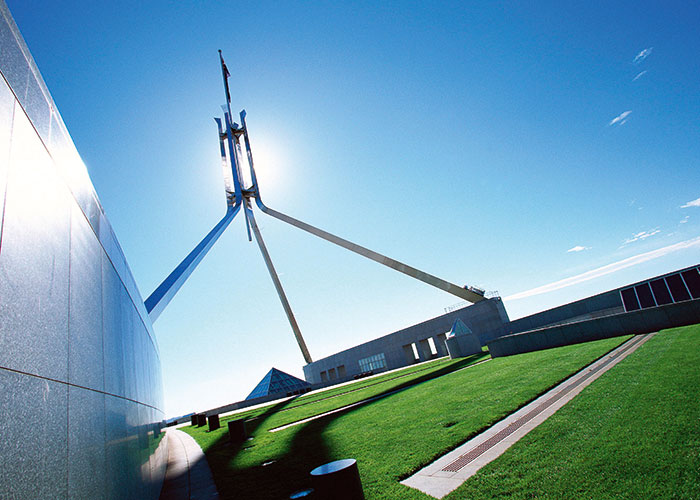
The objective of the audit was to assess the effectiveness of the Department of Parliamentary Services’ management of assets and contracts to support the operations of Parliament House.
Entity
Department of Parliamentary Services
Contact
Please direct enquiries relating to reports through our contact page.
Performance audit (Auditor-General Report No. 27 of 2007–08)
Published: Wednesday 16 April 2008
Published
The objective of the audit was to assess how well EMA is meeting its objective of providing national leadership in the development of measures to reduce risk to communities and manage the consequences of disasters.
Entity
Attorney-General's Department
Performance audit (Auditor-General Report No. 8 of 2013–14)
Published: Wednesday 6 November 2013
Published
The objective of the audit was to examine the effectiveness of the Australian Government Reconstruction Inspectorate, supported by the National Disaster Recovery Taskforce, in providing assurance that value for money is being achieved in respect to Queensland reconstruction projects.
Entity
Department of Infrastructure and Regional Development
Contact
Please direct enquiries relating to reports through our contact page.
Performance audit (Auditor-General Report No. 18 of 1997–98)
Published: Thursday 4 December 1997
Published
The objective of the audit was to determine the extent to which the new Commonwealth services delivery arrangements were implemented efficiently and effectively. The audit focussed on the establishment of Centrelink to deliver services on behalf of purchaser departments and the development of associated purchaser/provider arrangements.
Entity
Centrelink
Performance audit (Auditor-General Report No. 28 of 1998–99)
Published: Monday 21 December 1998
Published
The sale raised gross proceeds of $95.4 million, which was at the upper end of the Business Advisor's estimate for the mid-1997 sale. In addition, it should be noted that the principal financial effect for the Commonwealth was not in the proceeds of the sale but in the termination of ongoing revenue supplements and financial losses. The Commonwealth's direct costs of selling the businesses are estimated to be $9.3 million, or 9.7% of gross proceeds. In addition, the Australian National's financial liabilities totalling $1393 million have been or are being repaid or assumed by the Commonwealth.
Entity
Across Agency
Performance audit (Auditor-General Report No. 5 of 2011–12)
Published: Thursday 8 September 2011
Published
The objective of this audit was to assess how effectively entities had developed and implemented appropriate KPIs to support stated program objectives.
Entity
Australian Customs and Border Protection Service; National Film and Sound Archive; Fair Work Australia; Department of Resources, Energy and Tourism
Major projects report (Auditor-General Report No. 20 of 2011–12)

Published: Tuesday 20 December 2011
Published
The objective of this report is to provide a formal conclusion on the review of the Project Data Summary Sheets by the Auditor-General, including comprehensive information on the status of projects as reflected in the PDSSs prepared by the DMO.
Entity
Defence Materiel Organisation
Performance audit (Auditor-General Report No. 41 of 2000–01)
Published: Tuesday 29 May 2001
Published
Causes and Consequences of Personnel Postings in the Australian Defence Force The audit arose from a Defence Efficiency Review (1997) recommendation that Defence could make savings on the large volume of postings it made every year. The audit examined the posting process and sought to provide assurance that Defence had identified and examined salient postings issues and was addressing them effectively.
Entity
Department of Defence
Performance audit (Auditor-General Report No. 45 of 2000–01)
Published: Tuesday 5 June 2001
Published
The audit reviewed the fraud control arrangements in the Department of Family and Community Services (FaCS), a policy formulation, and advising body and major purchaser of social welfare services from Centrelink. The objective was to assess whether FaCS had:
- implemented appropriate fraud control arrangements in line with the Fraud Control Policy of the Commonwealth and that these arrangements operated effectively in practice; and
- fulfilled its responsibilities as a purchaser of services in relation to fraud control.
This audit is one in a series of fraud control audit and is complemented by a similar audit of Centrelink, a major provider of services on behalf of FaCS.
Entity
Department of Family and Community Services
Assurance review (Auditor-General Report No. 17 of 2017–18)
Published: Tuesday 28 November 2017
Published
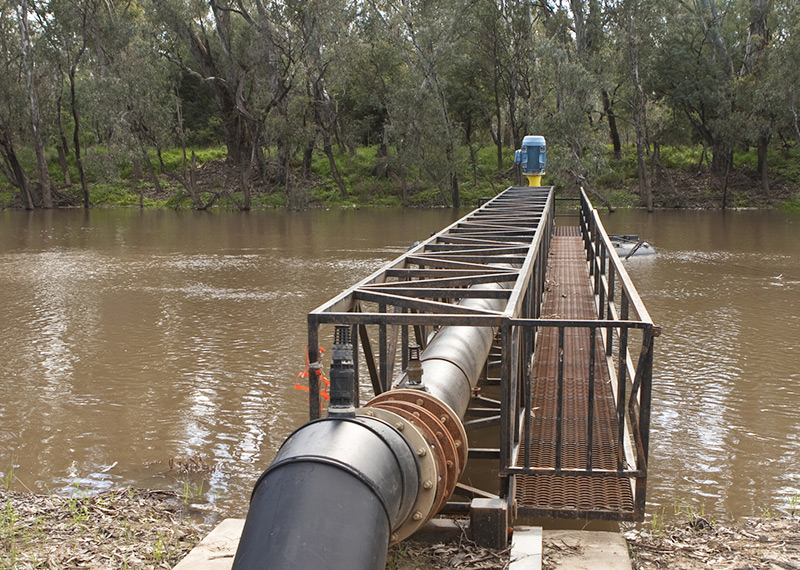
The Auditor-General undertook a limited assurance review of the Department of Agriculture and Water Resources’ assessment of the performance of New South Wales under the National Partnership Agreement on Implementing Water Reform in the Murray-Darling Basin relevant to the protection and use of environmental water for the 2014–15 and 2015–16 financial years.
Entity
Department of Agriculture and Water Resources
Contact
Please direct enquiries through our contact page.
Performance audit (Auditor-General Report No. 8 of 2021–22)

Published: Monday 8 November 2021
Published
The objective of this audit was to assess the effectiveness of the Department of Education, Skills and Employment’s arrangements in administering wage subsidies linked to employment programs.
Entity
Department of Education, Skills and Employment
Contact
Please direct enquiries through our contact page.
Performance audit (Auditor-General Report No. 20 of 1999–2000)
Published: Monday 22 November 1999
Published
Special Benefit is a social security income support payment for people who are unable to support themselves or their dependents, and who are not otherwise entitled to any other income support payment. Its objective is to ensure that such people have adequate levels of income. The objective of the audit was to assess the extent to which new claims for Special Benefit had been determined in compliance with the Social Security Act, the Guide to the Act and other relevant guidelines, and whether Centrelink and FaCS had appropriate procedures to help ensure such compliance.
Entity
Centrelink; Department of Family and Community Services
Performance audit (Auditor-General Report No. 7 of 1998–99)
Published: Monday 7 September 1998
Published
The objective of the audit was to determine the extent to which the new employment services market had been implemented effectively and efficiently in accordance with announced Government policy and timeframe.
Entity
Department of Education, Training and Youth Affairs
Performance audit (Auditor-General Report No. 34 of 2004–05)
Published: Wednesday 9 March 2005
Published
Given the importance of customer feedback to Centrelink's business, the ANAO considered it timely to conduct a series of performance audits relating to Centrelink's customer feedback systems, particularly in relation to its delivery of the services then provided on behalf of FaCS. The overarching objective of this series of ANAO performance audits of Centrelink's customer feedback systems was to assess whether Centrelink has effective processes and systems for gathering, measuring, reporting and responding effectively to customer feedback, including in relation to customer satisfaction with Centrelink services and processes.
Entity
Centrelink
Speeches and papers
Published: Monday 7 July 2008
Published
Mr Ian McPhee - Auditor-General for Australia, presented at the 20th Commonwealth Auditors-General Conference
Performance audit (Auditor-General Report No. 10 of 2014–15)

Published: Tuesday 9 December 2014
Published
The objective of the audit was to assess the effectiveness of the Department of the Environment’s administration of the Biodiversity Fund program.
Entity
Department of the Environment
Contact
Please direct enquiries relating to reports through our contact page.
Performance audit (Auditor-General Report No. 55 of 2002–03)
Published: Tuesday 24 June 2003
Published
The audit reviewed the Australian Taxation Office's fraud prevention and contol arrangements in relation to the Goods and Services Tax. The audit objective was to assess whether the ATO has implemented administratively effective GST fraud control arrangements, consistent with the Commonwealth Fraud Control Guidelines.
Entity
Australian Taxation Office
Performance audit (Auditor-General Report No. 35 of 1999–2000)
Published: Monday 3 April 2000
Published
The audit reviewed the retention of military personnel that are managed by the Australian Defence Force which comprises the three Services. The objective of the audit was to review the management of personnel retention within the ADF with a view to evaluating the measures Defence has in place to monitor and control the flow of trained personnel from the Services
Entity
Department of Defence
Performance audit (Auditor-General Report No. 2 of 2001–02)
Published: Tuesday 10 July 2001
Published
Allegations were made to the Senate Economics References Committee that the Australian Taxation Office and Australian Customs Service (Customs) had failed to pursue several cases of detected sales tax fraud. The Committee believed that this alleged failure may have stemmed from coordination problems between the two agencies. The Committee requested the Auditor-General to investigate this matter and report his findings to the Parliament.
Entity
Australian Customs Service; Australian Taxation Office
Performance audit (Auditor-General Report No. 22 of 2008–09)
Published: Tuesday 17 February 2009
Published
The objective of the audit was to review the effectiveness and efficiency of Centrelink's customer feedback system and the progress Centrelink had made in implementing the recommendations of the 2004–05 audit and the subsequent JCPAA inquiry.
Entity
Centrelink
Performance audit (Auditor-General Report No. 43 of 2009–10)
Published: Wednesday 16 June 2010
Published
The objective of this audit was to examine whether Army effectively administers the Army Individual Readiness Notice to support the achievement of its purpose.
Entity
Department of Defence
Performance audit (Auditor-General Report No. 30 of 2011–12)
Published: Thursday 19 April 2012
Published
The objective of the audit was to assess the effectiveness of the AFP’s administration of the Fighting Terrorism at its Source (FTAS) initiative and related measures.
Entity
Australian Federal Police
Speeches and papers
Published: Wednesday 27 August 1997
Published
Mr P.J. Barrett (AM) - Auditor-General for Australia, presented at a Joint Seminar by IPAA and ASCPAs as part of a Panel Discussion on 'Governance and the Role of the Senior Public Executive', Canberra
Performance audit (Auditor-General Report No. 2 of 2002–03)
Published: Wednesday 24 July 2002
Published
The audit examined the Aboriginal and Torres Strait Islander Commission's (ATSIC's) grant management practices. The audit sought to determine if ATSIC provides fair and equal access to funding, what the risks to the grants program are, if decision-makers receive the key information they need to make informed funding decisions, and if ATSIC staff complying with grants procedures. The ANAO did not examine the appropriateness of the funding decisions made by regional councils.
Entity
Aboriginal and Torres Strait Islander Commission
Speeches and papers
Published: Friday 1 August 1997
Published
Mr P.J. Barrett (AM) - Auditor-General for Australia, presented a speech on the occasion of the release by the Minister for Finance of the Second Trial Unaudited Financial Statements for the Commonwealth of Australia for the year ended 30 June 1996.
Performance audit (Auditor-General Report No. 35 of 2004–05)
Published: Wednesday 9 March 2005
Published
Given the importance of customer feedback to Centrelink's business, the ANAO considered it timely to conduct a series of performance audits relating to Centrelink's customer feedback systems, particularly in relation to its delivery of the services then provided on behalf of FaCS. The overarching objective of this series of ANAO performance audits of Centrelink's customer feedback systems was to assess whether Centrelink has effective processes and systems for gathering, measuring, reporting and responding effectively to customer feedback, including in relation to customer satisfaction with Centrelink services and processes.
Entity
Centrelink
Speeches and papers
Published: Thursday 4 September 2008
Published
Mr Ian McPhee - Auditor-General for Australia, presented at the Public Sector Governance Forum of the Australian Institute of Company Directors and The Institute of Internal Auditors - Australia
Speeches and papers
Published: Wednesday 26 June 2002
Published
Mr P.J. Barrett (AM) - Auditor-General for Australia, presented at the International Quality & Productivity Centre Seminar
Performance audit (Auditor-General Report No. 19 of 1999–2000)
Published: Monday 22 November 1999
Published
The audit reviewed the operations of the Civil Aviation Authority (CASA), which has prime responsibility for regulating aviation safety in Australia. The audit objectives were to assess the efficiency and effectiveness of the management systems and procedures used by CASA to ensure compliance with regulatory controls by Air Operator's Certificate holders operating passenger-carrying aircraft within High Capacity Regular Public Transport; Low Capacity Regular Public Transport and charter industry sectors; and Certificate of Approval holders. Aviation safety compliance includes entry control, surveillance and enforcement.
Entity
Civil Aviation Safety Authority
Performance audit (Auditor-General Report No. 36 of 1998–99)
Published: Wednesday 28 April 1999
Published
The objective of the audit was to assess key aspects of the Australian Taxation Office's administration of the PAYE system in relation to employers' remittances and to identify opportunities for improvement. The audit focussed on four areas:
- remittance monitoring, especially managing late remittances;
- follow-up action for end of year reconciliation, including discrepancies;
- handling compliance intelligence gained from the public; and
- ATO compliance projects.
Entity
Australian Taxation Office
Performance audit (Auditor-General Report No. 25 of 1998–99)
Published: Friday 18 December 1998
Published
The audit reviewed the sale of DASFLEET, a business unit of the Department of Administrative Services, which provided passenger and general commercial vehicle leasing, rental and fleet management and maintenance services. The objectives of the audit were to review the efficiency and effectiveness of the management of the sale.
Entity
Department of Finance; Office of Asset Sales and Information Technology Outsourcing
Annual report
Published: Thursday 25 August 2022
Published
This annual report documents the performance of the Australian National Audit Office (ANAO) in the financial year ended 30 June 2022. The report addresses all applicable obligations under the Public Governance, Performance and Accountability Act 2013; the Public Governance, Performance and Accountability Rule 2014; the Auditor-General Act 1997; the performance measures set out in the outcome and programs framework in the ANAO’s Portfolio Budget Statements 2021–22 and the ANAO Corporate Plan 2021–22; and annual reporting requirements set out in other relevant legislation.
Contact
Please direct enquiries through our contact page.
Performance audit (Auditor-General Report No. 34 of 1999–2000)
Published: Thursday 16 March 2000
Published
In late 1996, the Government announced its commitment to establish new facilities for the National Museum of Australia and the Australian Institute of Aboriginal and Torres Strait Islander Studies on Acton Peninsula in Canberra. The objectives of the audit were to examine the project's compliance with the Commonwealth Procurement Guidelines for the procurement of public works and effectiveness of the project's management.
Entity
Department of Communications, Information Technology and the Arts
Speeches and papers
Published: Thursday 14 February 2002
Published
Mr P.J. Barrett (AM) - Auditor-General for Australia, presented at the Global Working Group Meeting, Wellington, New Zealand
Performance audit (Auditor-General Report No. 63 of 2002–03)
Published: Monday 30 June 2003
Published
The objective of the audit was to assess the Commonwealth's administration of the Automotive Competitiveness and Investment Scheme (ACIS) . The audit reviewed program governance, scheme promotion and registration, management of credit allocations, and compliance processes.
Entity
Department of Industry Tourism and Resources; Australian Customs Service
Performance audit (Auditor-General Report No. 9 of 1998–99)
Published: Monday 28 September 1998
Published
The audit reviewed the accountability framework and performance information of the Australian Sports Commission (ASC). The objective of the audit was to form an opinion on the efficiency and effectiveness of the ASC: accountability arrangements, focussing on key stakeholders such as the Minister and the Parliament; and management information systems, focussing on performance information, in particular key performance indicators; and its use in resource allocation decision-making.
Entity
Australian Sports Commission
Performance audit (Auditor-General Report No. 25 of 2010–11)
Published: Wednesday 2 February 2011
Published
The audit examined the effectiveness of DEEWR's: administrative framework for the program; management of the application, assessment and funding processes; and monitoring of and reporting on the program's performance.
In order to form an opinion against the audit objective, the ANAO primarily conducted fieldwork and documentation reviews at DEEWR's central office. A stratified random sample (in order to provide for representation from states, territories and school sectors) of 74 applications from Rounds 1 and 2 was also selected for detailed examination. Through this sample, the ANAO sought to determine whether funding applications had been assessed in accordance with the established assessment criteria and that quality assurance mechanisms for the assessment process were effective.
Entity
Department of Education, Employment and Workplace Relations
Performance audit (Auditor-General Report No. 16 of 1999–2000)
Published: Monday 15 November 1999
Published
The Superannuation Guarantee, which came into effect on 1 July 1992, was introduced to reduce reliance on the age pension as a means of funding retirement for individuals. The objective of the performance audit was to review the ATO's administration of the Superannuation Guarantee and to identify appropriate opportunities for improvement.
Entity
Australian Taxation Office
Performance audit (Auditor-General Report No. 22 of 2000–01)
Published: Thursday 14 December 2000
Published
The objective of this audit was to establish whether Defence has developed sound fraud control arrangements that are consistent with better practice and fulfil its responsibilities for the protection of public property, revenue, expenditure, and rights and privileges from fraudulent exploitation.
Entity
Department of Defence
Speeches and papers
Published: Tuesday 3 December 2002
Published
Mr P.J. Barrett (AM) - Auditor-General for Australia, presented at the Department of Finance and Administration's Learning Centre Lecture Series
Speeches and papers
Published: Monday 18 May 1998
Published
Mr Ian McPhee - Deputy Auditor-General, presented at the Best Practice Financial Management Seminar, Canberra
Performance audit (Auditor-General Report No. 37 of 2014–15)

Published: Tuesday 19 May 2015
Published
The audit objective was to assess the effectiveness and efficiency of the Department of Human Services’ management of Smart Centres’ Centrelink telephone services.
Entity
Department of Human Services
Contact
Please direct enquiries relating to reports through our contact page.
Performance audit (Auditor-General Report No. 51 of 2003–04)
Published: Friday 11 June 2004
Published
The objectives of this performance audit were to: - review the governance and accountability framework for the Scheme, and - assess the efficiency and effectiveness of Treasury's implementation and management of that framework.
Entity
Department of the Treasury
Performance audit (Auditor-General Report No. 28 of 2004–05)
Published: Monday 21 February 2005
Published
The overall objective of this audit was to assess the management of the physical protection of Australian missions and staff overseas. The high-level criteria for the audit are set out at Appendix 1 of the report.
Entity
Department of Foreign Affairs and Trade; Australian Trade Commission
Performance audit (Auditor-General Report No. 44 of 2012–13)
Published: Thursday 13 June 2013
Published
The objective of the audit was to assess the effectiveness of the Australian Taxation Office's (ATO) management and reporting of selected information relating to the goods and services tax and the fringe benefits tax.
Entity
Australian Taxation Office
Contact
Please direct enquiries relating to reports through our contact page.
Performance audit (Auditor-General Report No. 53 of 2011–12)
Published: Wednesday 27 June 2012
Published
To assess the extent to which agencies create, manage and dispose of records in accordance with key business, legal and policy requirements.
The agencies included in the audit were the: Australian Customs and Border Protection Service (Customs); Department of Immigration and Citizenship (DIAC); and the Department of the Treasury (Treasury). The audit also considered the Archives' response to Recommendation No. 1 from ANAO Audit Report No.6 2006, 07 Recordkeeping including the Management of Electronic Records, including whether they had clarified Australian Government records management requirements for agencies.
Entity
Across agencies
Performance audit (Auditor-General Report No. 19 of 2013–14)
Published: Wednesday 12 February 2014
Published
The objective of the audit was to assess the effectiveness of the Australian Taxation Office’s (ATO’s) complaints and other feedback management systems in supporting service delivery.
Entity
Australian Taxation Office
Contact
Please direct enquiries relating to reports through our contact page.
Performance audit (Auditor-General Report No. 1 of 2010–11)
Published: Thursday 15 July 2010
Published
The objective of the audit was to assess the effectiveness of the selection, implementation, operation and monitoring of FRCs by AGD and FaHCSIA. The three main criteria for this audit assessed whether AGD and FaHCSIA had effectively:
- planned and implemented the FRC initiative, including the FRC selection and funding processes;
- undertaken administration activities to guide the operation and progress of the FRC initiative towards meeting its objectives; and
- monitored, evaluated and reported on the performance of FRCs.
Entity
Attorney-General's DepartmentDepartment of Families, Housing, Community Services and Indigenous Affairs
Performance audit (Auditor-General Report No. 7 of 2024–25)

Published: Wednesday 23 October 2024
Published
The objective of the audit was to assess the effectiveness of the Department of Health and Aged Care’s fraud control arrangements, with a specific focus on the Indigenous Australians’ Health Programme.
Entity
Department of Health and Aged Care
Contact
Please direct enquiries through our contact page.