Browse our range of reports and publications including performance and financial statement audit reports, assurance review reports, information reports and annual reports.
Performance audit (Auditor-General Report No. 7 of 2022–23)

Published: Tuesday 29 November 2022
Published
The audit objective was to examine the effectiveness of the Department of Defence’s administration of the Integrated Investment Program since 2016.
Entity
Department of Defence, Department of Finance
Contact
Please direct enquiries through our contact page.
Performance audit (Auditor-General Report No. 49 of 2014–15)

Published: Wednesday 10 June 2015
Published
The audit objective is to assess the effectiveness of the Department of Agriculture’s administration of the Imported Food Inspection Scheme.
Entity
Department of Agriculture
Contact
Please direct enquiries relating to reports through our contact page.
Financial statement audit (Auditor-General Report No. 20 of 2019–20)
Published: Tuesday 17 December 2019
Published
This report complements the Interim Report on Key Financial Controls of Major Entities financial statement audit report published in June 2019. It provides a summary of the final results of the audits of the Consolidated Financial Statements for the Australian Government and the financial statements of Australian Government entities for the period ended 30 June 2019.
Contact
Please direct enquiries through our contact page.
Performance audit (Auditor-General Report No. 2 of 2022–23)

Published: Monday 15 August 2022
Published
The objective of the audit was to assess the effectiveness of the Australian Taxation Office’s engagement with tax practitioners in achieving efficient and effective taxation and superannuation systems.
Entity
Australian Taxation Office
Contact
Please direct enquiries through our contact page.
Performance audit (Auditor-General Report No. 50 of 2014–15)

Published: Wednesday 10 June 2015
Published
The objective of the audit was to assess the effectiveness of the administration of the Defence Home Ownership Assistance Scheme by the Department of Defence and the Department of Veterans’ Affairs.
Entity
Department of Defence; Department of Veterans' Affairs
Contact
Please direct enquiries relating to reports through our contact page.
Financial statement audit (Auditor-General Report No. 38 of 2019–20)
Published: Thursday 28 May 2020
Published
This report focuses on the results of the interim financial statements audits, including an assessment of entities’ key internal controls, supporting the 2019–20 financial statements audits. This report examines 24 entities, including all departments of state and a number of major Australian government entities. The entities included in the report are selected on the basis of their contribution to the income, expenses, assets and liabilities of the 2018–19 Consolidated Financial Statements (CFS). Significant and moderate findings arising from the interim audits are reported to the responsible Minister(s), and all findings are reported to those charged with governance of each entity.
Contact
Please direct enquiries through our contact page.
Performance audit (Auditor-General Report No. 46 of 2017–18)

Published: Wednesday 13 June 2018
Published
The objective of this audit was to assess whether the National Gallery of Australia (NGA) and the Australian War Memorial (the Memorial) have implemented effective collections management practices.
Entity
Australian War Memorial; National Gallery of Australia
Contact
Please direct enquiries through our contact page.
Performance audit (Auditor-General Report No. 25 of 2022–23)

Published: Wednesday 24 May 2023
Published
The objective of this audit was to assess the effectiveness of the governance of the Tiwi Land Council under the Aboriginal Land Rights (Northern Territory) Act 1976 and the Public Governance, Performance and Accountability Act 2013.
Entity
Tiwi Land Council
Contact
Please direct enquiries through our contact page.
Performance audit (Auditor-General Report No. 26 of 2023–24)

Published: Wednesday 8 May 2024
Published
The objective of this audit was to assess the effectiveness of the Department of Home Affairs’ regulation of migration agents.
Entity
Department of Home Affairs
Contact
Please direct enquiries through our contact page.
Performance audit (Auditor-General Report No. 21 of 2022–23)

Published: Wednesday 10 May 2023
Published
The objective of the audit was to assess the effectiveness of the Department of Defence’s procurement of Hunter class frigates and the achievement of value for money to date.
Entity
Department of Defence
Contact
Please direct enquiries through our contact page.
Financial statement audit (Auditor-General Report No. 33 of 2016–17)

Published: Monday 23 January 2017
Published
This report complements the interim phase report published in August 2016, and provides a summary of the final results of the audits of the Consolidated Financial Statements for the Australian Government and the financial statements of Australian Government entities.
Entity
Across Entities
Performance audit (Auditor-General Report No. 18 of 2018–19)

Published: Monday 17 December 2018
Published
The objective of this audit was to assess the effectiveness of the Clean Energy Regulator’s administration of the Renewable Energy Target scheme.
Entity
Clean Energy Regulator
Contact
Please direct enquiries through our contact page.
Performance audit (Auditor-General Report No. 26 of 2014–15)

Published: Tuesday 10 March 2015
Published
The audit objective was to assess the effectiveness of the Department of Health’s administration of the Medical Specialist Training Program.
Entity
Department of Health
Contact
Please direct enquiries relating to reports through our contact page.
Performance audit (Auditor-General Report No. 32 of 2024–25)

Published: Wednesday 21 May 2025
Published
The objective of the audit was to assess the effectiveness of the Department of Agriculture, Fisheries and Forestry’s management of the biosecurity workforce.
Entity
Department of Agriculture, Fisheries and Forestry
Contact
Please direct enquiries through our contact page.
Performance audit (Auditor-General Report No. 24 of 2016–17)

Published: Wednesday 9 November 2016
Published
The audit objective was to assess the effectiveness to date of the management of the approach to transition the disability services market to the National Disability Insurance Scheme (NDIS) market arrangements.
Entity
Department of Social Services; National Disability Insurance Agency
Contact
Please direct enquiries relating to reports through our contact page.
Performance audit (Auditor-General Report No. 34 of 2019–20)

Published: Thursday 23 April 2020
Published
The audit objective was to assess the effectiveness of the administration of Aboriginal and Torres Strait Islander participation targets in intergovernmental funding agreements in achieving policy objectives.
Entity
Department of Infrastructure, Transport, Regional Development and Communications; National Indigenous Australians Agency
Contact
Please direct enquiries through our contact page.
Performance audit (Auditor-General Report No. 31 of 2022–23)

Published: Monday 5 June 2023
Published
The objective of this audit was to assess the effectiveness of the Department of Health’s administration of the Community Health and Hospitals Program.
Entity
Department of Health and Aged Care
Contact
Please direct enquiries through our contact page.
Performance audit (Auditor-General Report No. 20 of 2014–15)

Published: Thursday 5 February 2015
Published
The objective of the audit was to assess the Australian Customs and Border Protection Service's administration of the Tariff Concession System.
Entity
Australian Customs and Border Protection Service
Contact
Please direct enquiries relating to reports through our contact page.
Performance audit (Auditor-General Report No. 18 of 2022–23)

Published: Thursday 6 April 2023
Published
The audit objective was to examine the appropriateness of the Department of Infrastructure, Transport, Regional Development, Communications and the Arts’ approach to acquiring, managing, and leasing Australian contemporary art in the Artbank collection.
Entity
Department of Infrastructure, Transport, Regional Development, Communications and the Arts
Contact
Please direct enquiries through our contact page.
Annual report
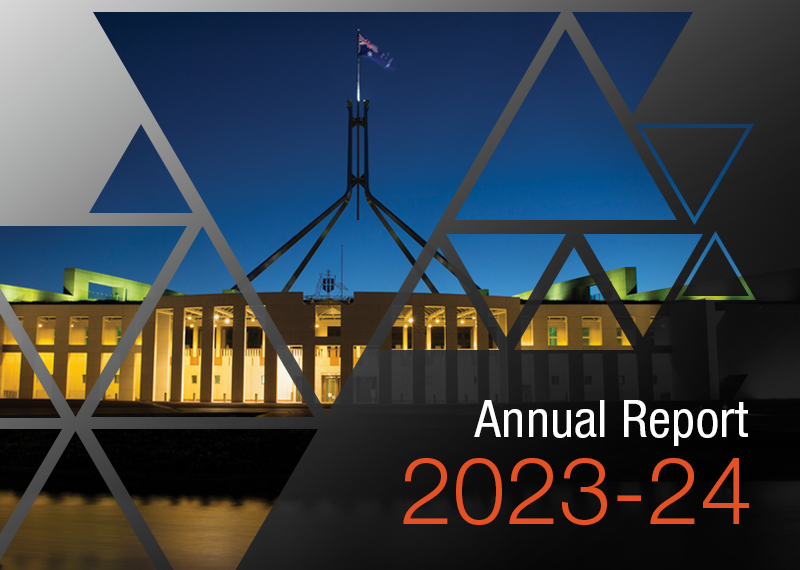
Published: Thursday 29 August 2024
Published
This annual report documents the performance of the Australian National Audit Office (ANAO) in the financial year ended 30 June 2024. The report addresses all applicable obligations under the Public Governance, Performance and Accountability Act 2013; the Public Governance, Performance and Accountability Rule 2014; the Auditor-General Act 1997; the performance measures set out in the outcome and programs framework in the ANAO’s Portfolio Budget Statements 2023–24 and in the ANAO Corporate Plan 2023–24; and annual reporting requirements set out in other relevant legislation.
Contact
Please direct enquiries through our contact page.
Performance audit (Auditor-General Report No. 2 of 2014–15)

Published: Thursday 25 September 2014
Published
The objective of the audit is to assess the effectiveness of the Department of the Prime Minister and Cabinet’s implementation of food security initiatives for remote Indigenous communities.
Entity
Department of the Prime Minister and Cabinet
Contact
Please direct enquiries relating to reports through our contact page.
Financial statement audit (Auditor-General Report No. 40 of 2020–21)
Published: Wednesday 2 June 2021
Published
This report is the first in the series of reports for the 2020–21 financial year and focuses on the results of the interim audits, including an assessment of entities’ key internal controls, supporting the 2020–21 financial statements audits. This report examines 25 entities, including all departments of state and a number of major Australian government entities. The entities included in the report are selected on the basis of their contribution to the income, expenses, assets and liabilities of the 2019–20 Consolidated Financial Statements.
Contact
Please direct enquiries through our contact page.
Performance audit (Auditor-General Report No. 28 of 2025–26)
New

Published: Wednesday 1 April 2026
Published
The objective of the audit was to assess whether the management of funding under the Settlement Engagement and Transition Support program was effective in achieving the program objectives and consistent with the Commonwealth Grant Rules and Principles.
Entity
Department of Home Affairs; Department of Social Services
Contact
Please direct enquiries through our contact page.
Performance audit (Auditor-General Report No. 43 of 2020–21)

Published: Tuesday 8 June 2021
Published
The objective of the audit was to assess the effectiveness of the Australian Federal Police’s framework to ensure the lawful exercise of powers in accordance with applicable legislation.
Entity
Australian Federal Police
Contact
Please direct enquiries through our contact page.
Financial statement audit (Auditor-General Report No. 24 of 2017–18)
Published: Wednesday 20 December 2017
Published
This report complements the Interim Report on Key Financial Controls of Major Entities financial statement audit report published in June 2017. It provides a summary of the final results of the audits of the Consolidated Financial Statements for the Australian Government and the financial statements of Australian Government entities for the period ended 30 June 2017.
Entity
Across Entities
Contact
Please direct enquiries through our contact page.
Performance audit (Auditor-General Report No. 16 of 2022–23)

Published: Monday 27 March 2023
Published
The objective of this audit was to assess the effectiveness of the Department of Home Affairs' management of family-related visas.
Entity
Department of Home Affairs
Contact
Please direct enquiries through our contact page.
Performance audit (Auditor-General Report No. 42 of 2024–25)

Published: Monday 16 June 2025
Published
The objective of the audit was to assess the effectiveness of the management and oversight of compliance activities within the Child Care Subsidy program.
Entity
Department of Education; Services Australia
Contact
Please direct enquiries through our contact page.
Financial statement audit (Auditor-General Report No. 19 of 2018–19)
Published: Monday 17 December 2018
Published
This report complements the Interim Report on Key Financial Controls of Major Entities financial statement audit report published in June 2018. It provides a summary of the final results of the audits of the Consolidated Financial Statements for the Australian Government and the financial statements of Australian Government entities for the period ended 30 June 2018.
Contact
Please direct enquiries through our contact page.
Performance audit (Auditor-General Report No. 10 of 2014–15)

Published: Tuesday 9 December 2014
Published
The objective of the audit was to assess the effectiveness of the Department of the Environment’s administration of the Biodiversity Fund program.
Entity
Department of the Environment
Contact
Please direct enquiries relating to reports through our contact page.
Performance audit (Auditor-General Report No. 26 of 2016–17)

Published: Wednesday 23 November 2016
Published
The objective of the audit was to assess the effectiveness of the Australian Prudential Regulation Authority's processes for the prudential regulation of superannuation entities.
Entity
Australian Prudential Regulation Authority
Contact
Please direct enquiries relating to reports through our contact page.
Performance audit (Auditor-General Report No. 19 of 2025–26)

Published: Wednesday 21 January 2026
Published
The objective of the audit was to assess the effectiveness of partnership arrangements, funding design activities and measurement of progress for schooling and early childhood development commitments under the National Agreement on Closing the Gap.
Entity
Across Entities
Contact
Please direct enquiries through our contact page.
Insights: Audit lessons

Published: Thursday 29 June 2023
Published
This edition of Audit Insights is targeted at Australian Government officials who have responsibility for overseeing or preparing performance information under the Commonwealth Performance Framework. The aim of Audit Insights is to communicate lessons from our audit work and to make it easier for people working within the Australian public sector to apply those lessons. This edition is drawn from audit reports tabled from 2015–16 to 2022–23 into the implementation of the corporate planning and annual performance statements requirements.
Contact
Please direct enquiries through our contact page.
Performance audit (Auditor-General Report No. 4 of 2023–24)

Published: Thursday 31 August 2023
Published
The objective of the audit was to assess the effectiveness of the Department of Social Services’ (DSS’s) and Services Australia’s management of the accuracy and timeliness of welfare payments.
Entity
Services Australia; Department of Social Services
Contact
Please direct enquiries through our contact page.
Performance audit (Auditor-General Report No. 5 of 2013–14)
Published: Tuesday 15 October 2013
Published
The objective of the audit was to assess the effectiveness of the Australian Taxation Office’s administration of the personal services income regime.
Entity
Australian Taxation Office
Contact
Please direct enquiries relating to reports through our contact page.
Performance audit (Auditor-General Report No. 3 of 2001–02)
Published: Tuesday 17 July 2001
Published
Taxation rulings are a key mechanism used by the Australian Taxation Office (ATO) to disseminate the Commissioner of Taxation's interpretative advice on Australian taxation law. The objective of the audit was to:
report to Parliament on the operation of the ATO's administration of taxation rulings (public, private and oral rulings); and where appropriate, make recommendations for improvements, having regard to considerations of: efficiency and effectiveness of the ATO's administration of the rulings system, particularly in relation to the achievement of the objectives set by Parliament for the rulings system; the ATO's systems' capacity to deliver consistency and fairness for taxpayers; and good corporate governance, including the control framework.
Entity
Australian Taxation Office
Performance audit (Auditor-General Report No. 13 of 2005–06)
Published: Tuesday 18 October 2005
Published
The objective of the audit was to assess the administrative effectiveness of the ATO's management of GST compliance in the large business market segment. In conducting the audit the ANAO examined three key areas: governance - ILEC's corporate planning and reporting arrangements relevant to the management of GST compliance in the large business market segment; assessing and identifying compliance risks- how ILEC collects information relating to the large business market segment and how it uses this information to support risk identification and assessment; and managing compliance- compliance planning and the products and processes used by ILEC to manage GST compliance in the large business market segment and evaluating compliance outcomes to support future compliance planning and the targeting of GST compliance risks. In undertaking the audit, the ANAO took account of the findings of previous reviews, in particular the LCCP Review.
Entity
Australian Taxation Office
Performance audit (Auditor-General Report No. 24 of 2002–03)
Published: Friday 20 December 2002
Published
The ANAO assessed agencies' progress in implementing the seven recommendations of Audit Report No.47 of 1998-99, Energy Efficiency in Commonwealth Operations. The Objectives of the follow-up audit were to
(i) asses the extent to which selected Commonwealth agencies have implemented the recommendations of Report No. 47 of 1998-1999, taking account of any changed circumstances or new administrative issues identified as impacting upon implementation of these recommendations; and
(ii) offer continued assurance to the Parliament on the management of Commonwealth agencies' compliance with the Commonwealth energy efficiency requirements, and to identify areas of better practice in energy management by those agencies.
Entity
Across Agency
Performance audit (Auditor-General Report No. 33 of 2008–09)
Published: Wednesday 20 May 2009
Published
The objective of the audit was to assess the effectiveness of the Tax Office's administration of the PRRT. The Australian National Audit Office (ANAO) identified four key areas for review: general administration; compliance; promoting certainty in administering the PRRT; and governance arrangements.
Entity
Australian Taxation Office
Performance audit (Auditor-General Report No. 47 of 1998–99)
Published: Tuesday 15 June 1999
Published
The objectives of the audit were to form an opinion on the management of Commonwealth agencies' compliance with the Commonwealth's energy efficiency requirements and to identify areas for better practice in energy management. The audit focussed on:
- the implementation of the Energy Policy by Commonwealth Agencies; promulgation and coordination of energy use targets;
- energy and associated reporting by Commonwealth agencies;
- identification, examination and analysis of systemic and procedural impediments to achieving the Energy Policy; and
- development and discussion of ways to address these impediments.
Entity
Department of Industry, Science and Resources; Australian Greenhouse Office
Performance audit (Auditor-General Report No. 7 of 2004–05)
Published: Monday 9 August 2004
Published
The objective of the follow-up audit was to assess how well the ATO has implemented the recommendations of Audit Report No.3 of 2001-2002, The Australian Taxation Ofiice's Administration of Taxation Rulings. As part of the audit we also considered the ATO's progress in addressing the JCPAA's suggestions resulting from its review of Report No.3 of 2001-2002.
Entity
Australian Taxation Office
Performance audit (Auditor-General Report No. 2 of 1999–2000)
Published: Thursday 15 July 1999
Published
The effective use of financial information is a critical component of an organisation's performance management framework. The appropriate combination of financial and non-financial data reflects overall organisational performance, and performance at program and work unit levels. The objective of this audit was to assess what financial information is currently used, who uses it and how well it is used. The audit also assessed whether the current processes for defining, accumulating and producing financial information were appropriate for the new accrual based performance management framework, which is to be in place for 1999/2000.
Entity
Across Agency
Annual report
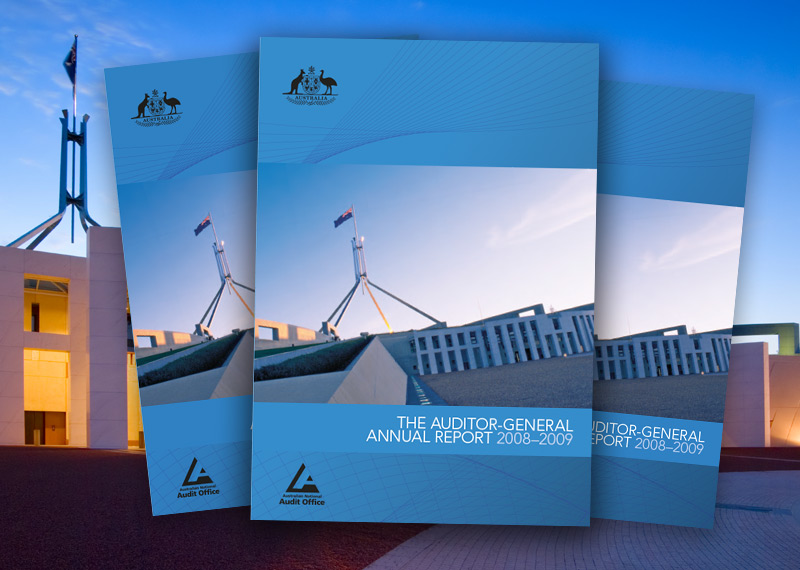
Published: Wednesday 16 September 2009
Published
This annual report documents the performance of the Australian National Audit Office (ANAO) in the financial year ending on 30 June 2009. It includes a foreword by the Auditor-General, an overview of the Office, a report on performance, details about management and accountability, and the financial results.
Performance audit (Auditor-General Report No. 20 of 1997–98)
Published: Thursday 4 December 1997
Published
The objective of the audit was to ascertain how efficiently and effectively the ATO administers sales tax collections. The audit excluded an examination of the Australian Customs Service's sales tax administration, although it did examine coordination and liaison arrangements between the ATO and ACS. The audit approach involved analysing the ATO's performance against the five elements of the ATO's established compliance improvement process, namely:
- interpreting and clarifying sales tax law;
- identifying and understanding clients and markets (enabling tax officers to identify and analyse risks of non-compliance);
- providing education and information to clients regarding sales tax obligations, based on identified compliance risks;
- implementing administrative arrangements which ensure and/or assist taxpayers to meet their obligations; and
- detecting non-compliance and taking action to remedy instances of non-compliance.
Entity
Australian Taxation Office
Performance audit (Auditor-General Report No. 46 of 2000–01)
Published: Wednesday 6 June 2001
Published
The objective of the audit was to report to Parliament on the ATO's management of its performance reporting within the outcomes and outputs framework and to identify potential areas for improvement in specifying, measuring, administering and reporting under that framework.
Entity
Australian Taxation Office
Performance audit (Auditor-General Report No. 37 of 2000–01)
Published: Wednesday 23 May 2001
Published
The audit reviewed the Australian Taxation Office's use of audit of individual taxpayers as part of its approach to encouraging taxpayer compliance. The objective of the audit was to examine the use of audit as an element of the compliance management function within the Individuals Non-Business line of the ATO.
Entity
Australian Taxation Office
Performance audit (Auditor-General Report No. 29 of 1998–99)
Published: Tuesday 22 December 1998
Published
The audit addressed administration of migrant settlement services by DIMA, in particular:
- strategic management, including corporate planning, performance measurement and reporting arrangements; and
- operational management of some of the individual schemes operated by DIMA (the Adult English Migrant Program and Translating Interpreting Services were not covered as part of this audit).
Entity
Department of Immigration and Multicultural Affairs
Performance audit (Auditor-General Report No. 63 of 2001–02)
Published: Thursday 27 June 2002
Published
The objectives of the audit were to assess the administrative and financial effectiveness of the Department of Finance and Administration's (Finance's) management of the Commonwealth's exposure under the DASFLEET Tied Contract; assess the effectiveness of Finance's monitoring of performance of the DASFLEET Tied Contract with Macquarie Fleet; and review the action taken by Finance in response to a recommendation of Audit Report No. 25 1998-99, Sale of DASFLEET.
Entity
Across Agency
Performance audit (Auditor-General Report No. 45 of 2013–14)
Published: Thursday 19 June 2014
Published
The audit objective was to assess the effectiveness of DHS’ implementation of initiatives to support the delivery of services to Indigenous Australians.
Entity
Department of Human Services
Contact
Please direct enquiries relating to reports through our contact page.
Annual report
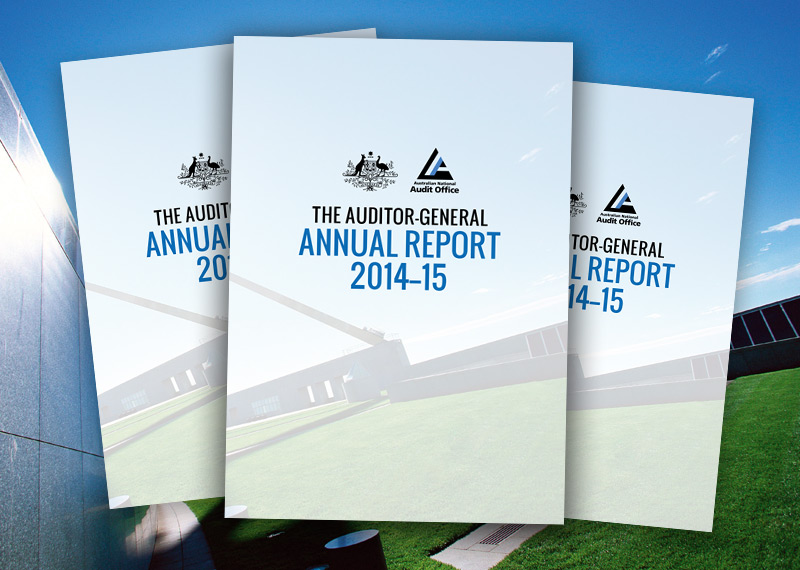
Published: Wednesday 30 September 2015
Published
This annual report documents the performance of the Australian National Audit Office (ANAO) in the financial year ending on 30 June 2015. It addresses the Requirements for Annual Reports for Departments, Executive Agencies and Other Non‑corporate Commonwealth Entities approved by the Joint Committee of Public Accounts and Audit in June 2015; the performance measures set out in the outcome and programs framework in the 2014–15 Portfolio Budget Statements; section 28 of the Auditor‑General Act 1997; and other annual reporting requirements set out in legislation.
Performance audit (Auditor-General Report No. 31 of 2003–04)
Published: Wednesday 25 February 2004
Published
This report relates to the fifth audit of Financial Management and Accountability Act 1997 (FMA Act) agencies' compliance with the Senate Order for Departmental and Agency Contracts, (the Senate Order) to list, on the Internet, contract details for the Financial Year 2002-2003 reporting period. The audit was conducted in accordance with the Senate Order request for the Auditor - General to undertake twice - yearly examinations of agency contracts listed on the Internet, and to report whether there had been any inappropriate use of confidentiality provisions. The objectives of the audit were to assess agency performance in relation to compiling the Internet listings required by the Senate Order and the appropriateness of the use of confidentiality of provisions in Commonwealth contracts.
Entity
Australian Industrial Registry; Australian Taxation Office; Department of Communications Information Technology and the Arts; Department of the Environment and Heritage; Federal Court of Australia; National Office for the Information Economy
Performance audit (Auditor-General Report No. 52 of 2003–04)
Published: Tuesday 15 June 2004
Published
The objective of this audit was to follow up DVA's implementation of the recommendations in Audit Report No. 44, 2000-01, Information Technology in the Department of Veterans' Affairs. The ANAO made two recommendations in the report (the second having five parts). The recommendations addressed the monitoring of IT changes; IT performance information; information systems model documentation; and the facilitation of the interpretation of performance information.
Entity
Department of Veterans' Affairs
Performance audit (Auditor-General Report No. 5 of 2002–03)
Published: Friday 23 August 2002
Published
The audit examined the administrative effectiveness of arrangements between Health and HIC, in relation to the management and administration of the Medicare Benefits Scheme and the Pharmaceutical Benefits Scheme. Health predominantly exercises a policy and leadership role within the health portfolio - HIC delivers a range of health services directly to the public and members of the health industry. Both agencies have stated that they recognise the importance of working together, as partners in their respective roles, to maximise their performance in the achievement of health portfolio outcomes and to discharge their respective responsibilities. This joint commitment is embodied in a written agreement - called the Strategic Partnership Agreement (SPA).
Entity
Department of Health and Aged Care; Health Insurance Commission
Performance audit (Auditor-General Report No. 37 of 2013–14)
Published: Wednesday 11 June 2014
Published
The audit objective was to assess the Department of Employment’s management of the effectiveness and quality of employment services delivered by Job Services Australia providers.
Entity
Department of Employment
Contact
Please direct enquiries relating to reports through our contact page.
Performance audit (Auditor-General Report No. 10 of 2004–05)
Published: Friday 17 September 2004
Published
The objectives of the audit were to assess agency performance in relation to compiling the Internet listings by the Senate Order and the appropriateness of the use of confidentiality in Commonwealth contracts.
Entity
Across Entities
Performance audit (Auditor-General Report No. 19 of 1998–99)
Published: Tuesday 8 December 1998
Published
The objective of the audit was to form an opinion on the administrative effectiveness and efficiency of DHAC's processes for planning the Commonwealth's Aged and Community Care program, in particular, on the questions of how well the planning process has contributed to realising the program objectives of achieving an equitable distribution of places between regions, and selecting suitable service providers.
Entity
Department of Health and Aged Care
Performance audit (Auditor-General Report No. 24 of 1999–2000)
Published: Wednesday 22 December 1999
Published
The audit reviewed the Commonwealth management and regulation of plasma fractionation. The audit objectives were to:
- assess the administrative and financial effectiveness of the Department of Health and Aged Care's contract management of the PFA;
- assess whether the TGA's implementation of post sale regulatory arrangements adequately protects the community's interests; and
- assess the extent to which agencies have implemented the recommendations made in Audit Report No.14 1995-96 concerning funding of plasma products and regulation of plasma products manufactured under the PFA.
Entity
Department of Health and Aged Care
Performance audit (Auditor-General Report No. 56 of 2010–11)
Published: Thursday 23 June 2011
Published
The objective of this audit was to assess the effectiveness of DIAC’s administration of the character requirements of the Citizenship Act.
Entity
Department of Immigration and Citizenship
Performance audit (Auditor-General Report No. 10 of 1997–98)
Published: Tuesday 28 October 1997
Published
The objectives of the audit were to determine the administrative changes made by the Australian Tourist Commission (ATC) to implement the recommendations of recent administrative reviews and to identify how well the ATC is meeting its statutory objectives. The criteria used in conducting the audit included administrative improvements resulting from the ATC's response to recent reviews and the extent to which strategies and performance information address its statutory objectives.
Entity
Australian Tourist Commission
Performance audit (Auditor-General Report No. 57 of 2002–03)
Published: Wednesday 25 June 2003
Published
The audit reviewed the Australian Taxation Office's administration of the payment of tax by non-residents. The audit objectives were to:
- provide Parliament with assurance about how efficiently and effectively the ATO administers the payment of tax in respect of non-residents;
- identify any scope for more effective and efficient administration of the function; and
- identify any opportunities for the cost-effective collection of additional revenue.
Entity
Australian Taxation Office
Performance audit (Auditor-General Report No. 42 of 2003–04)
Published: Friday 16 April 2004
Published
The objectives of the audit were to: assess whether financial delegations associated with the expenditure of public monies were determined, applied and managed in accordance with applicable legislation, Government policy and applicable internal controls; and identify better practices and recommend improvements as necessary to current practices.
Entity
AusAID; Australian Competition and Consumer Commission; ComSuper; Department of the Treasury; Office of the Director of Public Prosecutions; Department of Finance and Administration