Browse our range of reports and publications including performance and financial statement audit reports, assurance review reports, information reports and annual reports.
Performance audit (Auditor-General Report No. 7 of 2006–07)
Published: Tuesday 17 October 2006
Published
The objective of the audit was to assess whether the WHM programme is administered effectively and in accordance with relevant laws and policies. In particular, the ANAO focused on four key areas: the implementation of eWHM visa; authority for the WHM programme; decision-making for WHM visas; and programme performance information. A feature of the audit was the computer-aided scrutiny of over 300 000 visa application records to test DIMA's decision-making processes.
Entity
Department of Immigration and Multicultural Affairs
Performance audit (Auditor-General Report No. 2 of 2004–05)
Published: Thursday 15 July 2004
Published
This audit examined DIMIA's administration of onshore compliance under rhe Migration Act 1958 (Cth) as amended (the Act). In particular, it focused on whether DIMIA had implemented appropriate onshore compliance strategies in regard to people who enter Australia lawfully but whose presence becomes unlawful through: - the expiry of their visa; or - a breach of visa conditions and cancellation of their visa.
Entity
Department of Immigration and Multicultural and Indigenous Affairs
Performance audit (Auditor-General Report No. 2 of 2007–08)
Published: Wednesday 18 July 2007
Published
The objective of this audit is to examine DIAC's implementation of the nine recommendations made in the earlier audit. The audit has also taken into account changed circumstances since the original audit. These include a heightened security environment after 11 September 2001 and the results of other relevant ANAO performance audit and financial statement work. The audit also examined ETA decision-making processes to gain assurance about its robustness in a changing risk environment. This issue came to attention in recent audits of visa management processes.
Entity
Department of Immigration and Citizenship
Performance audit (Auditor-General Report No. 30 of 2008–09)
Published: Wednesday 29 April 2009
Published
The objective of the audit was to assess the arrangements for oversighting the Action Plan and whether the Plan's new measures have been administered effectively to deliver the intended results.
Entity
Attorney-General's Department; Department of Immigration and Citizenship; Australian Federal Police; Department of Families, Housing, Community Services and Indigenous Affairs
Performance audit (Auditor-General Report No. 49 of 2011–12)
Published: Monday 25 June 2012
Published
The objective of the audit was to assess the effectiveness of ASIO’s arrangements for providing timely and soundly based security assessments of individuals to client agencies.
Entity
Australian Security Intelligence Organisation
Performance audit (Auditor-General Report No. 16 of 2022–23)

Published: Monday 27 March 2023
Published
The objective of this audit was to assess the effectiveness of the Department of Home Affairs' management of family-related visas.
Entity
Department of Home Affairs
Contact
Please direct enquiries through our contact page.
Performance audit (Auditor-General Report No. 44 of 2006–07)
Published: Thursday 14 June 2007
Published
The objective of the audit was to assess the effectiveness of the Tribunals' management of their operations. To this end, the audit examined whether the MRT and the RRT:
- have achieved intended operational efficiencies from the introduction of common facilities, services and resourcing;
- have established appropriate arrangements for governance, business planning and guidance of Members and staff, and for performance monitoring and reporting of Tribunal operations;
- finalise cases within Tribunal time and productivity standards; and
- provide applicants with services in accordance with service standards.
The audit covered Tribunal operations for review of visa decisions. The correctness of individual decisions was not assessed as part of the audit.
The audit focused particularly on developments in the Tribunals' management performance in the four year period from 2001–02 to 2004–05.
Entity
Migration Review Tribunal; Refugee Review Tribunal
Performance audit (Auditor-General Report No. 24 of 2007–08)
Published: Tuesday 26 February 2008
Published
The audit objective was to determine whether DIAC's biometrics program had appropriate:
- business review processes (including a business case);
- authorisation;
- business and IT governance arrangements; and
- IT project management and systems development arrangements.
Entity
Department of Immigration and Citizenship
Performance audit (Auditor-General Report No. 35 of 2008–09)
Published: Thursday 21 May 2009
Published
The objective of the audit was to assess the effectiveness of DIAC's management of MAL. The scope was confined to DIAC's management and use of the system: it did not examine the work of others with an interest in the system, such as security agencies.
Entity
Department of Immigration and Citizenship
Performance audit (Auditor-General Report No. 48 of 2006–07)
Published: Friday 22 June 2007
Published
The objective of this audit was to determine the extent to which selected agencies have implemented the two recommendations of the previous audit; and the appropriateness of advice provided by Finance and the ATO. To address this audit objective, the audit assessed:
- the roles of Finance and the ATO in clarifying: the interaction of the PB and SG Act; the ongoing role of the PB Act; and mechanisms to monitor Australian Government organisations' compliance with the PB Act;
- the extent to which Finance and the ATO have provided guidance and other support to assist Australian Government organisations manage and meet statutory superannuation obligations for eligible contractors; and
- whether Australian Government organisations have managed and met statutory superannuation obligations for contractors in past and current contracts.
Entity
NO-DEPTS-LISTED
Performance audit (Auditor-General Report No. 12 of 2021–22)

Published: Wednesday 8 December 2021
Published
The audit objective was to assess the effectiveness of the management of international travel restrictions during the COVID-19 pandemic.
Entity
Across Entities
Contact
Please direct enquiries through our contact page.
Speeches and papers
Published: Wednesday 21 March 2007
Published
Mr Ian McPhee - Auditor-General for Australia, presented at the ACAG Panel Forum, CPA Australia
Annual report
Published: Wednesday 19 September 2007
Published
This annual report documents the performance of the Australian National Audit Office (ANAO) in the financial year ending on 30 June 2007. It includes highlights and areas of focus for the coming year; a forward by the Auditor-General; an overview of the report; a report on performance; details about management and accountability, and the financial statement for the year.
Performance audit (Auditor-General Report No. 17 of 2006–07)
Published: Tuesday 23 January 2007
Published
The Department of the Treasury (the Treasury) manages Australia's relations with the International Monetary Fund (IMF) and various development banks. As of
30 June 2006, the Treasury's administered assets in the IMF and other international financial institutions totalled A$7.1 billion. Liabilities totalled A$4.8 billion. In addition to the liabilities of A$4.8 billion, there were contingent liabilities of A$7.3 billion, comprising uncalled share capital subscriptions.
In October 2002 a performance audit of the Treasury's management of international financial commitments (ANAO Audit Report No.10 of 2002–03 Treasury's Management of International Financial Commitments) was tabled in the Parliament. This audit is a follow-up to that audit. The objective was to assess the progress made by the Treasury in addressing the four major audit findings and two recommendations of the 2002 audit report.
Entity
NO-DEPTS-LISTED
Performance audit (Auditor-General Report No. 41 of 2006–07)
Published: Thursday 31 May 2007
Published
The objective of the audit was to assess the efficiency and the effectiveness of DEWR's administrative oversight for the WfD programme. The components of administration examined included whether:
- the operation of the WfD programme was guided by sound business planning including risk assessment;
- DEWR effectively and efficiently managed, monitored and reported the performance of CWCs in meeting contractual obligations;
- adequate support was provided to DEWR contract managers and account managers to assist in the delivery of WfD outcomes;
- there was evaluation of the performance of CWCs in delivering WfD objectives on behalf of the department;
- DEWR measures the effectiveness of WfD against programme objectives; and
- DEWR had implemented agreed recommendations from the previous WfD audit, where current and relevant.
Entity
NO-DEPTS-LISTED
Performance audit (Auditor-General Report No. 30 of 2006–07)
Published: Wednesday 14 March 2007
Published
The objectives of this follow-up audit were to:
- examine the ATO's implementation of the ten recommendations in The Australian Taxation Office's Management of its Relationship with Tax Practitioners (Audit Report No.19, 2002–03), having regard to any changed circumstances, or new administrative issues, affecting implementation of those recommendations; and
- identify scope for improvement in the ATO's management of its relationship with tax practitioners.
Follow up audits are recognised as an important element of the accountability processes of Commonwealth administration. Parliament looks to the Auditor General to report, from time to time, on the extent to which Commonwealth agencies have implemented recommendations of previous audit reports. Follow up audits keep Parliament informed of progressive improvements and current challenges in areas of Commonwealth administration that have previously been subject to scrutiny through performance audits.
Entity
Australian Taxation Office
Performance audit (Auditor-General Report No. 18 of 2006–07)
Published: Wednesday 24 January 2007
Published
The objectives of this audit were to:
- examine the effectiveness of ASIC's processes for receiving reports of suspected breaches of the Corporations Act; and
- assess the efficiency with which statutory reports are referred and investigated by ASIC.
The audit commenced in February 2006. ANAO undertook an assessment of ASIC's processes for receiving and referring for investigation statutory reports. ANAO also undertook a detailed examination of a random sample of 416 statutory reports received by ASIC in the period 2002–03 to 2004–05.
The audit scope did not extend to the role of the Commonwealth Director of Public Prosecutions in prosecuting offences referred to it by ASIC.
Entity
Australian Securities and Investments Commission
Annual report
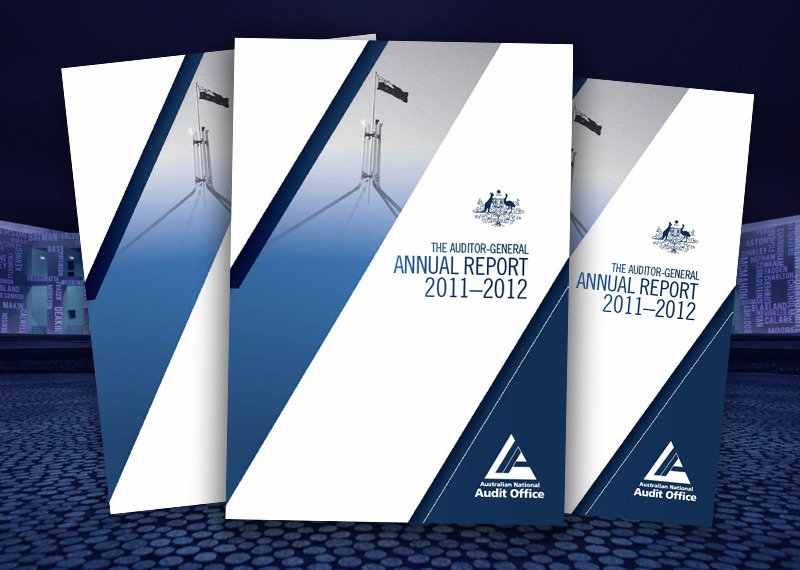
Published: Thursday 27 September 2012
Published
This annual report documents the performance of the Australian National Audit Office (ANAO) in the financial year ending on 30 June 2012. It presents an overview including the role and vision of the Office, a report on performance, details about management and accountability, and the financial results.
Performance audit (Auditor-General Report No. 37 of 2006–07)
Published: Thursday 17 May 2007
Published
The audit objective was to assess the effectiveness of DIAC's administration of the health requirement of the Migration Act 1958 (the Act). To achieve this objective, the ANAO examined whether DIAC was setting and implementing the health requirement in accordance with the Act, the Migration Regulations 1994 (the Regulations), and DIAC's own guidelines.
Entity
Department of Health and Ageing
Performance audit (Auditor-General Report No. 52 of 2006–07)
Published: Thursday 28 June 2007
Published
This is the first of two audit reports concerning the Tax Office's administration of SMSFs pursuant to the provisions of the Superannuation Industry (Supervision) Act 1993.
This audit report examines the efficiency and effectiveness of the Tax Office's approach to regulating and registering self managed superannuation funds. Specifically the ANAO examined the:
- Environment in which SMSFs operate, including the Tax Office's regulatory roles and responsibilities;
- Tax Office's governance of its SMSF regulatory role; and
- Systems, processes and controls the Tax Office uses to register SMSFs, and enforce the lodgement of fund income tax and regulatory returns.
Entity
Australian Taxation Office
Performance audit (Auditor-General Report No. 33 of 2006–07)
Published: Wednesday 18 April 2007
Published
The objective of this follow-up audit was to review Centrelink's progress in implementing the findings and recommendation relating to Centrelink's Customer Charter from Audit Report No.32
2004–05, Centrelink's Customer Charter and Community Consultation Program. This audit covers Centrelink's Customer Charter only and does not follow-up on the findings and recommendation on the Community Consultation Program aspect of the 2004–05 audit report.
Entity
Centrelink
Performance audit (Auditor-General Report No. 16 of 2003–04)
Published: Thursday 4 December 2003
Published
The objectives of the follow-up audit were to assess DFAT's implementation of the six recommendations made by the ANAO in the previous audit. It also sought to determine whether implementation of these recommendations, or alternative action, had improved DFAT's administration of consular services. The audit focused on management processes and supporting systems for the delivery of consular services. It also reviewed DFAT's implementation of recommendations of the Senate Foreign Affairs, Defence and Trade References Committee that were outstanding from the previous audit.
Entity
Department of Foreign Affairs and Trade
Performance audit (Auditor-General Report No. 47 of 2016–17)

Published: Thursday 27 April 2017
Published
The objective of this audit was to assess the effectiveness to date of the implementation of the Tourism 2020 strategy by the Australian Trade and Investment Commission (Austrade) and Tourism Australia.
Entity
Australian Trade and Investment Commission (Austrade); Tourism Australia
Contact
Please direct enquiries relating to reports through our contact page.
Performance audit (Auditor-General Report No. 39 of 2021–22)

Published: Tuesday 21 June 2022
Published
The objective of the audit was to assess the effectiveness of the Department of Foreign Affairs and Trade’s overseas crisis management and response arrangements in meeting the government’s objectives for returning Australians from overseas in response to the COVID-19 global pandemic.
Entity
Department of Foreign Affairs and Trade
Contact
Please direct enquiries through our contact page.
Performance audit (Auditor-General Report No. 44 of 2009–10)
Published: Wednesday 16 June 2010
Published
The audit objective was to assess the Tax Office's effectiveness in administering the tax obligations of non-residents.
Entity
Australian Taxation Office
Performance audit (Auditor-General Report No. 47 of 2004–05)
Published: Tuesday 31 May 2005
Published
The objective of this audit was to the examine action taken by the ATO to improve TFN integrity, particularly through the implementation of the recommendations made in:Report No.37, taking into account any changed circumstances, or new administrative issues, affecting the implementation of those recommendations; and Numbers on the Run, taking into account that the Government has not formally responded to the report at this time.The audit also aimed to identify further opportunities for the ATO to improve the effectiveness and efficiency of the TFN system. The report of this audit is necessarily detailed as it considers each of the recommendations and the extent to which they have been implemented.
Entity
Australian Taxation Office
Performance audit (Auditor-General Report No. 40 of 2006–07)
Published: Wednesday 30 May 2007
Published
The previous audit made ten recommendations to improve Centrelink's review and appeals system. Centrelink agreed to all recommendations. The objective of this follow-up audit was to review Centrelink's progress in implementing the recommendations of Audit Report No.35, Centrelink's Review and Appeals System 2004-05.
Entity
Centrelink
Performance audit (Auditor-General Report No. 36 of 2006–07)
Published: Wednesday 16 May 2007
Published
The audit objectives were to examine if:
- DCITA had effectively planned and administered the HiBIS and BC Stage 1 programs; and
- the programs had achieved their objectives.
The audit focused on DCITA's activities to support the planning, implementation, monitoring and reporting of HiBIS and BC Stage 1 programs.
Entity
NO-DEPTS-LISTED
Performance audit (Auditor-General Report No. 23 of 2007–08)
Published: Thursday 21 February 2008
Published
The objective of the audit was to assess whether selected regulatory agencies have cost recovery procedures and practices which comply with the Government's guidelines. To address this objective, the audit assessed the management of cost recovery against the following criteria:
- regulatory agencies have clear and consistent cost recovery procedures to identify their activities and costs, and set fees and levies;
- regulatory agencies have effectively implemented their cost recovery procedures;
- regulatory agencies regularly monitor and review their cost recovery activities; and
- regulatory agencies regularly report on their cost recovery.
Entity
NO-DEPTS-LISTED
Performance audit (Auditor-General Report No. 43 of 2006–07)
Published: Wednesday 13 June 2007
Published
The objective of this audit was to evaluate whether selected Australian Government agencies were effectively managing security risks arising from the use of contractors. To address this objective, the audit evaluated relevant policies and practices in the audited agencies against a series of minimum requirements in the management of security issues in procurement and contracting activity. These minimum requirements were developed from the guidance and standards contained in the PSM and also from the ANAO's previous protective security audits.
The audit focused on two broad types of contracting arrangements: contracting of security functions; and contracting of any service or business function that requires, or which has the potential to require, contractors to access sensitive or security classified information.
The following Australian Government agencies were involved in this audit:
- Australian Customs Service (Customs);
- Commonwealth Superannuation Administration (ComSuper);
- Department of Finance and Administration (Finance); and
- Department of Foreign Affairs and Trade (DFAT).
In addition, the Attorney-General's Department, which is responsible for the maintenance of the PSM and for providing advice on contemporary protective security policies and practices, was consulted during the audit.
Entity
NO-DEPTS-LISTED
Performance audit (Auditor-General Report No. 46 of 2006–07)
Published: Wednesday 20 June 2007
Published
The objective of this audit was to assess the Department of Industry, Tourism and Resources' management of the Pharmaceuticals Partnerships Program. The audit focused on how the department:
- promoted the Program and assessed applications for funding;
- managed the funding agreements; and
- managed the Program's governance arrangements.
Entity
NO-DEPTS-LISTED
Performance audit (Auditor-General Report No. 32 of 2007–08)
Published: Thursday 8 May 2008
Published
The objective of the audit was to assess the completeness and reliability of the estimates reported in Tax Expenditures Statement 2006 (TES 2006). That is, the audit examined the development and publication of the detailed statement of actual tax expenditures required by Division 2 of Part 5 of the CBH Act. The development and publication of aggregated information on projected tax expenditures included in the Budget Papers pursuant to Division 1 of Part 5 of the CBH Act was not examined.
Entity
Department of Treasury
Financial statement audit (Auditor-General Report No. 25 of 2020–21)
Published: Thursday 17 December 2020
Published
This report complements the Interim Report on Key Financial Controls of Major Entities financial statement audit report published in May 2020. It provides a summary of the final results of the audits of the Consolidated Financial Statements for the Australian Government and the financial statements of Australian Government entities for the period ended 30 June 2020.
Entity
Across Entities
Contact
Please direct enquiries through our contact page.
Performance audit (Auditor-General Report No. 28 of 2006–07)
Published: Thursday 22 February 2007
Published
The objective of the audit was to assess the effectiveness of the major elements of Centrelink's central, strategic level project management arrangements, as defined in the CPMF. It focused on how well:
- the CPMF supports better management and service delivery in Centrelink;
- the CPMF supports project managers and projects to comply with better project management principles, relevant legislation and guidelines; and
- Centrelink monitors project performance and encouraged the attainment of project objectives.
Entity
Centrelink
Performance audit (Auditor-General Report No. 48 of 2024–25)

Published: Wednesday 25 June 2025
Published
The objective of the audit was to assess the effectiveness of the NDIA’s management of claimant compliance with NDIS claim requirements.
Entity
National Disability Insurance Agency
Contact
Please direct enquiries through our contact page.
Performance audit (Auditor-General Report No. 13 of 2006–07)
Published: Tuesday 5 December 2006
Published
The objective of this follow-up audit was to assess the extent to which DVA had implemented the recommendations from the original audit during the period 2002–06, including in its preparation of the IT outsourcing contract which will operate from 2007.
Entity
Department of Veterans' Affairs
Performance audit (Auditor-General Report No. 42 of 2006–07)
Published: Tuesday 12 June 2007
Published
The objective of the audit is to assess the effectiveness of the ATO's administration of debt collection. Micro-business debt is a particular focus of attention. The three key areas examined are:
- strategies–especially the ATO's initiatives trialled in 2006;
- infrastructure–the IT systems, people, policy and processes and risk management framework supporting the collection of debt; and
- management and governance–planning, monitoring and reporting mechanisms and liaison with stakeholders.
The ANAO focused on the work of the campaigns area within the Debt Line, which has collection responsibility for 90 per cent of collectable debt cases and responsibility for other key, centralised functions such as reporting, quality assurance review, consistency and best practice, and the debt collection initiatives.
Entity
NO-DEPTS-LISTED
Performance audit (Auditor-General Report No. 24 of 2006–07)
Published: Wednesday 7 February 2007
Published
The objectives of the audit were to:
- examine Customs' management of the CMR project; and
- determine whether the ICS and CCF met:
- project and operational objectives; and
- user capability and functionality requirements.
Particular emphasis was given to the following areas:
- the project management framework that supported the CMR project;
- implementation arrangements for the ICS; and
- ongoing operational arrangements.
After this audit commenced, Customs engaged Booz Allen Hamilton to undertake a separate review of the ICS. The purpose of that review was to provide Customs with a forward looking report on the lessons to be learned from the implementation of the ICS, its current status and the opportunities to enhance benefits for both Government and industry. The ANAO consulted closely with the Booz Allen Hamilton team and is supportive of the recommendations in their report, which was released in May 2006. The review made thirteen recommendations relating to the ongoing management and governance of the Cargo Management Re-engineering Program at both strategic and tactical levels.
Entity
Australian Customs Service
Performance audit (Auditor-General Report No. 29 of 2006–07)
Published: Wednesday 7 March 2007
Published
The objective of the audit was to assess the implementation and administration of the movement limit and the Slot Management Scheme at Sydney Airport.
The scope of the audit included the development and administration of the SADM Act. The scope also included the development and administration of the relevant legislative instruments and determinations, particularly those which put in place the monitoring and compliance frameworks that support the legislation.
Entity
NO-DEPTS-LISTED
Performance audit (Auditor-General Report No. 48 of 2010–11)
Published: Thursday 16 June 2011
Published
The audit objective was to assess the effectiveness of monitoring arrangements (by the Accreditation Agency) and compliance activities (by DoHA) put in place to achieve residential aged care homes’ compliance with the Accreditation Standards and their other, related, responsibilities under the Act and its associated instruments.
The ANAO’s assessment considered whether:
— a sector-wide compliance strategy was in place and aligned with effective monitoring and compliance activities at the operational level;
— there was a clear articulation of the separat but complementary roles and responsibilities of DoHA and the Accreditation Agency; and
— performance information gathered by both agencies to support public reporting and business improvements was useful and enabled comparison of performance over time.
Entity
Department of Health and Ageing; Aged Care Standards and Accreditation Agency Ltd
Performance audit (Auditor-General Report No. 27 of 2006–07)
Published: Wednesday 21 February 2007
Published
This audit focuses on the Australian Defence Force's (ADF) Air Combat fleet's logistics support, regular maintenance and structural refurbishment. These activities are collectively referred to as fleet in-service support. The current Defence White Paper states that Air Combat is the most important single capability for the defence of Australia.
The audit objective was to assess the effectiveness of the Air Combat fleet's in-service support arrangements to provide capability for air combat operations. Capital equipment acquisition projects covered by this report are limited to the Hornet and F-111 structural refurbishment projects, which aim to ensure these aircraft remain serviceable until their withdrawal from service.
Entity
Department of Defence; Defence Materiel Organisation
Performance audit (Auditor-General Report No. 49 of 2006–07)
Published: Monday 25 June 2007
Published
The objective of the audit was to assess the management practices undertaken by APS agencies to achieve value for money and transparency in dealing with contracts for non-APS workers. The focus of the audit was on circumstances where agencies had a significant reliance on a non-APS workforce to assist in achieving their core functions. Regular reporting by agencies of expenditure on non-APS workers was outside the scope of this audit.
Entity
NO-DEPTS-LISTED
Performance audit (Auditor-General Report No. 12 of 2006–07)
Published: Tuesday 28 November 2006
Published
The audit examined the effectiveness and efficiency of the FAO's management of overpayments, within the FTB Programme. In particular, the ANAO considered the FAO's activities in relation to FTB debt prevention, identification, raising and recovery. The audit also compared the FAO's policy documentation and guidance material for staff, against relevant sections of Family Assistance legislation.
Entity
NO-DEPTS-LISTED
Performance audit (Auditor-General Report No. 9 of 2006–07)
Published: Thursday 26 October 2006
Published
The objective of the audit was to provide an independent assurance on the effectiveness of Defence and DMO's management of the acquisition of the ASLAV capability to Army. The audit examined the initial capability requirements and approval process, the contract negotiation process, and the management of the Project and Contracts by DMO.
Entity
Department of Defence; Defence Materiel Organisation
Performance audit (Auditor-General Report No. 22 of 2006–07)
Published: Tuesday 6 February 2007
Published
The audit objective was to examine progress in the development of an overarching approach and guidance for the management of the Commonwealth's intellectual property (Recommendation No. 2 of Audit Report No. 25 of 2003–04).
Entity
NO-DEPTS-LISTED
Performance audit (Auditor-General Report No. 57 of 2002–03)
Published: Wednesday 25 June 2003
Published
The audit reviewed the Australian Taxation Office's administration of the payment of tax by non-residents. The audit objectives were to:
- provide Parliament with assurance about how efficiently and effectively the ATO administers the payment of tax in respect of non-residents;
- identify any scope for more effective and efficient administration of the function; and
- identify any opportunities for the cost-effective collection of additional revenue.
Entity
Australian Taxation Office
Performance audit (Auditor-General Report No. 8 of 2006–07)
Published: Wednesday 18 October 2006
Published
On 9 May 2006, the Auditor-General advised the then Minister for Transport and Regional Services that he would undertake a performance audit and that the specific audit objectives and approach would be established once officers of the Australian National Audit Office (ANAO) had the opportunity to undertake preliminary enquiries with senior staff in Airservices Australia and the Department of Transport and Regional Services (DOTARS). On 31 May 2006, the Auditor-General designated a performance audit under Section 18 of the Auditor-General Act 1997 (Auditor-General Act). The objectives of the performance audit were to: examine the development and administration by Airservices Australia of its contracts with the Solomon Islands Government for upper airspace management; assess the regularity of payments made under the contracts and steps taken by Airservices Australia in respect of any irregularities; and make recommendations for any improvements in the processes employed by Airservices Australia in developing and administering these and similar contractual arrangements.
Entity
Airservices Australia
Performance audit (Auditor-General Report No. 19 of 2006–07)
Published: Thursday 25 January 2007
Published
The objective of this audit was to determine whether Health adequately assessed the State and Territory Governments' compliance with their obligations under the terms of the AHCAs. In conducting the audit, ANAO addressed the following criteria:
- if Health assessed whether the States and Territories were adhering to the AHCAs clause 6 principles that all eligible persons had equitable access to free public health and emergency services on the basis of clinical need within an appropriate period;
- if Health assessed whether the States and Territories were increasing their own source funding at the rate specified in the AHCAs; and
- if Health assessed whether the States and Territories were meeting the performance reporting requirements set out in the AHCAs.
Entity
NO-DEPTS-LISTED
Performance audit (Auditor-General Report No. 23 of 2006–07)
Published: Tuesday 6 February 2007
Published
The objective of the audit was to assess the application of the outcomes and outputs framework in Australian Government agencies. The audit included a review of:
- the outcomes and outputs of agencies and the integration of the outcomes and outputs framework into agencies' operations;
- the extent to which agencies' performance indicators incorporated better practice characteristics to enable agencies to meet their performance reporting obligations;
- agencies' processes for capturing, monitoring and reporting financial and performance information and the extent to which outcomes and outputs information was used in agency decision-making; and
- the extent that agencies met their external reporting and accountability obligations.
The audit consisted of a survey of 44 agencies subject to the Financial Management and Accountability Act 1997 (FMA Act) undertaken in October 2005 and detailed audit testing in three of those agencies. The purpose of the survey was to provide cross-agency data in relation to agencies' implementation of the framework during the period 2002–03 to 2005–06. The ANAO received responses from all 44 agencies, although not all agencies responded to all questions. The ANAO did not audit the information provided by survey participants and the reported results are based on agencies' responses to the survey.
The agencies at which detailed audit testing was undertaken were:
- Department of Education Science and Training;
- the then Department of the Environment and Heritage; and
- IP Australia.
Entity
NO-DEPTS-LISTED
Performance audit (Auditor-General Report No. 47 of 2006–07)
Published: Thursday 21 June 2007
Published
The objective of the audit was to assess the coordination of Australian Government assistance to Solomon Islands through RAMSI, including the establishment of objectives and an outcomes monitoring framework. In particular, the audit examined arrangements for: coordination between Australian Government agencies; strategic planning and risk management; measuring the effectiveness of RAMSI; and reporting to RAMSI's Australian stakeholders.
Entity
Department of Foreign Affairs and Trade; Australian Agency for International Development
Performance audit (Auditor-General Report No. 50 of 2006–07)
Published: Tuesday 26 June 2007
Published
The objective of the audit was to assess the effectiveness of procedures and processes used by DEST and the ATO to record HECS–HELP student loans. To achieve this, the ANAO assessed the performance of DEST and the ATO against three criteria as follows:
- DEST monitored student contributions set by higher education providers for consistency with Australian Government policy;
- DEST paid HECS–HELP advance payments to higher education providers based on sound estimates, and recorded, reconciled and reported these payments; and
- the ATO has established procedures and processes to correctly record HECS–HELP loans against student tax records.
Entity
NO-DEPTS-LISTED
Performance audit (Auditor-General Report No. 53 of 2006–07)
Published: Friday 29 June 2007
Published
The objective of the audit is to examine and report on the efficiency and effectiveness of AFP's administration and management of its overseas deployments. The audit specifically examines two deployments and focuses on strategic and operational planning and logistics. The audit examines a planned, long-term overseas deployment (as part of the Participating Police Force (PPF) within the Regional Assistance Mission to Solomon Islands (RAMSI)) and a crisis-driven deployment in response to a specific event (Disaster Victim Identification (DVI) assistance to Thailand following the Indian Ocean Tsunamis of 26 December 2004).
Entity
Australian Federal Police
Performance audit (Auditor-General Report No. 35 of 2006–07)
Published: Wednesday 2 May 2007
Published
The audit objective was to assess whether the early stages of DIAC's preparations for the re-tendering of the detention and health services contracts were consistent with sound practice. The audit focused on governance arrangements, in particular the recordkeeping arrangements, roles and responsibilities of personnel, expert advisors and the probity auditor—matters raised in the previous audit report. The audit did not examine the RFT, which is not due to be issued until April 2007.
Entity
NO-DEPTS-LISTED
Performance audit (Auditor-General Report No. 25 of 2006–07)
Published: Thursday 8 February 2007
Published
The objective of this follow-up audit was to assess the extent to which DOTARS had implemented the nine recommendations contained in the original audit.
Entity
NO-DEPTS-LISTED
Performance audit (Auditor-General Report No. 16 of 2006–07)
Published: Wednesday 20 December 2006
Published
The objective of the audit was to assess the ATO's administration of CGT compliance in the individuals market segment. The focus of the audit was the ATO's administration of compliance by individuals with respect to the two most common CGT events: real property and share disposals. The Australian National Audit Office (ANAO) identified three key areas for review:
- governance – the corporate planning and reporting arrangements relevant to the administration of CGT compliance in the individuals market segment, including how these are integrated with the ATO's overall approach to managing CGT;
- identifying and assessing compliance risks – the mechanisms and strategies used to identify and assess CGT compliance risks in the individuals market segment; and
- compliance activities – the products and processes used to manage CGT compliance in the individuals market segment.
Entity
Australian Taxation Office
Performance audit (Auditor-General Report No. 11 of 2006–07)
Published: Thursday 9 November 2006
Published
The objective of this audit was to assess DAFF's management of the contractual arrangements in place to deliver the National Food Industry Strategy. The audit assessed: implementation of the Strategy; financial management;assessment and selection of grants and projects; management of grants and projects; monitoring and verification of contract services; and performance management. The Australian National Audit Office (ANAO) examined a number of FIG applications and projects, one food centre of excellence and a major project under the Food Market Development programme. The audit did not examine the Food Chain programme or DAFF's administration of the Strategy's government-to-government activities.
Entity
NO-DEPTS-LISTED
Performance audit (Auditor-General Report No. 10 of 2006–07)
Published: Tuesday 31 October 2006
Published
The objective of the report is to review the effectiveness of remediation activities put in place by Defence and the DMO to improve the performance of SDSS following the delivery in July 2003 of the SDSS Upgrade Project, with specific attention to the SDSS Get Well Programme. The audit reviewed the outcomes of the Get Well Programme, and assessed how effectively a segment of the Defence supply chain (of which SDSS is one key component) was meeting selected maritime end user capability and reporting requirements. In order to achieve this, the audit reviewed three key maritime combatant forces: COLLINS Class submarines; Adelaide Class Guided Missile Frigates (FFGs); and ANZAC Class Frigates. The ANAO notes that these three capabilities account for some 50 per cent of the Navy's total forecast expenditure for 2006–07.
Entity
Department of Defence; Defence Materiel Organisation
Performance audit (Auditor-General Report No. 52 of 2010–11)
Published: Wednesday 22 June 2011
Published
The objective of the audit was to assess the effectiveness of the ATO’s administration of DGR endorsements and associated arrangements.
Entity
Australian Taxation Office
Performance audit (Auditor-General Report No. 34 of 2006–07)
Published: Tuesday 1 May 2007
Published
The objective of the audit was to assess the effectiveness of the management by Defence and the DMO of the procurement of the modernised High Frequency communication capability for the ADF. The audit focussed on Phase 3A of the Project which commenced in the mid 1990's and involved the selection of the Prime Contractor; negotiation of the Prime Contract and the Network Operation and Support Contract; and the development and implementation of the Communication System.
Entity
Defence Materiel Organisation
Performance audit (Auditor-General Report No. 20 of 2025–26)

Published: Tuesday 27 January 2026
Published
The audit objective was to assess the effectiveness of the Department of Social Services’ and Services Australia’s administration of the age pension.
Entity
Services Australia; Department of Social Services
Contact
Please direct enquiries through our contact page.