Browse our range of reports and publications including performance and financial statement audit reports, assurance review reports, information reports and annual reports.
Government advertising review
Published: Tuesday 8 September 2009
Published
The campaign's objective is to raise awareness and understanding of the Secure and Sustainable Pension reforms announced in the 2009-10 Budget measures, and in particular how they relate to the individual circumstances of current pension recipients for whom English is not a convenient language.
Government advertising review
Published: Thursday 3 September 2009
Published
The campaign's objective is to inform job seekers and employers of the change from the Job Network system to Job Services Australia.
Government advertising review
Published: Thursday 28 May 2009
Published
The campaign for the National STI Prevention Program is designed to inform young Australians aged 15-29 years about the transmission, symptoms, treatment and prevention of STIs, and encourage safe sexual behaviour, to contribute to a reduction in the prevalence of sexually transmissible infections among this age group.
Government advertising review
Published: Tuesday 14 April 2009
Published
The campaign's objectives are to raise awareness of the harms and costs to young people, their families, communities and society associated with drinking to intoxication, to encourage young people and their parents to question the acceptability and impact of intoxicated behaviour, to highlight the influence that parental attitudes to alcohol misuse and adult behaviour and drinking to intoxication can have on others and provide referral and support information for those who recognise a need to seek help.
Government advertising review
Published: Thursday 19 February 2009
Published
The objectives of the campaign are to increase knowledge and awareness, among people for whom English is not a convenient language, of the Education Tax Refund, the need to keep receipts, eligibility requirements, and how to claim the refund, with the overall objective of encouraging eligible Australians to make a claim for a rebate.
Government advertising review
Published: Thursday 29 January 2009
Published
This phase of the campaign (phase two) is designed to communicate information and raise awareness about the First Home Owners Boost amongst potential first home buyers for whom English is not a convenient language.
Government advertising review
Published: Friday 23 January 2009
Published
The objectives of the campaign are to increase knowledge and awareness of the Education Tax Refund, the need to keep receipts, eligibility requirements, and how to claim the refund, with the overall objective of encouraging eligible Australians to make a claim for a rebate.
Government advertising review
Published: Friday 16 January 2009
Published
This phase of the campaign (phase two) is designed to communicate information and raise awareness about the First Home Owners Boost amongst potential first home buyers, through limited media (print/ radio/ digital/ outdoor advertisement) supported by marketing collateral.
Government advertising review
Published: Tuesday 2 December 2008
Published
The campaign's objectives are to raise awareness, among those for whom English is not a convenient language, of the harms and costs to young people, their families, communities and society associated with drinking to intoxication, to encourage young people and their parents to question the acceptability and impact of intoxicated behaviour, to highlight the influence that parental attitudes to alcohol misuse and adult behaviour and drinking to intoxication can have on others and provide referral and support information for those who recognise a need to seek help.
Government advertising review
Published: Tuesday 2 December 2008
Published
The Economic Security Strategy (ESS) campaign is intended to inform the community of aspects of the Australian Government's response to the global financial crisis. This component of the campaign is designed to raise awareness, among those for whom English is not a convenient language, of the financial assistance available, in the form of lump sum payments, and of access and eligibility requirements.
Government advertising review
Published: Thursday 20 November 2008
Published
The ABHI campaign is an information campaign, largely in cooperation with other states (excl Victoria) which promotes improved public health and reduced incidence of chronic disease. This component of the campaign takes a culturally relevant approach and includes advertising content and messages delivered through Indigenous media channels.
Government advertising review
Published: Thursday 20 November 2008
Published
The Economic Security Strategy (ESS) campaign is intended to inform the community of aspects of the Australian Government's response to the global financial crisis. This campaign is designed to raise awareness of the financial assistance, in the form of lump sum payments, including access and eligibility requirements. Phase One is targeted at over five million pensioners, carers, seniors, people with a disability, veterans and families.
Government advertising review
Published: Friday 24 October 2008
Published
The ABHI campaign is an information campaign, largely in cooperation with other states (excl Victoria) which promotes improved public health and reduced incidence of chronic disease. The campaign aims to update public perceptions on lifestyle choices and risk factors leading to obesity and resultant disease. It is anticipated that people will take positive action to be more active and modify their diet, leading to a reduction in instances of diseases.
Performance audit (Auditor-General Report No. 2 of 2017–18)

Published: Tuesday 11 July 2017
Published
The objective of the audit was to assess whether Defence has a fit-for-purpose framework for the management of materiel sustainment.
Entity
Defence
Contact
Please direct enquiries relating to reports through our contact page.
Insights: Audit lessons

Published: Friday 20 July 2018
Published
This edition of audit insights covers audit reports tabled in Parliament during the fourth quarter of 2017–18 with a focus on the key learnings relating to cyber resilience. Cyber security is an increasing risk across government and one that requires attention by Accountable Authorities.
Contact
Please direct enquiries through our contact page.
Performance audit (Auditor-General Report No. 41 of 2021–22)

Published: Thursday 23 June 2022
Published
The audit objective was to assess the Office of the Commonwealth Ombudsman's effectiveness in managing complaints.
Entity
Office of the Commonwealth Ombudsman
Contact
Please direct enquiries through our contact page.
Performance audit (Auditor-General Report No. 2 of 2015–16)

Published: Tuesday 14 July 2015
Published
The objective of the audit was to assess the effectiveness of the Australian Communications and Media Authority’s regulation of unsolicited communications.
Entity
Australian Communications and Media Authority
Contact
Please direct enquiries relating to reports through our contact page.
Performance audit (Auditor-General Report No. 1 of 2019–20)

Published: Thursday 4 July 2019
Published
The objective of this audit was to assess the effectiveness of the management of cyber security risks by three government business enterprises or corporate Commonwealth entities. The entities selected for audit are ASC Pty Ltd, the Australian Postal Corporation and the Reserve Bank of Australia.
Entity
ASC Pty Ltd; Australian Postal Corporation; Reserve Bank of Australia
Contact
Please direct enquiries through our contact page.
Performance audit (Auditor-General Report No. 23 of 2017–18)

Published: Tuesday 19 December 2017
Published
The objective of the audit was to assess whether the contractual arrangements that have been put in place for the delivery of the Moorebank Intermodal Terminal (MIT) will provide value for money and achieve the Australian Government’s policy objectives for the project.
Entity
Moorebank Intermodal Company Limited; Department of Infrastructure and Regional Development; Department of Finance
Contact
Please direct enquiries relating to reports through our contact page.
Performance audit (Auditor-General Report No. 43 of 2022–23)

Published: Wednesday 28 June 2023
Published
The objective of the audit was to assess the effectiveness of the NDIA’s management of assistance with daily life supports.
Entity
National Disability Insurance Agency
Contact
Please direct enquiries through our contact page.
Better practice guide
Updated: Wednesday 29 August 2018
Updated
The purpose of the Australian National Audit Office is to support accountability and transparency in the Australian Government sector through independent reporting to the Parliament, and thereby contribute to improved public sector performance.
The ANAO adopts a range of communication practices to strengthen the impact of its work and facilitate the sharing of audit insights. Communication practices had included the publication of better practice guides on aspects of Commonwealth administration, for the information of Australian Government entities.
The independent Review of Whole-of-Government Internal Regulation recommended that the ANAO take the opportunity to review whether there is a continuing need to develop and maintain separate guidance, where regulators and policy owners have developed or are developing policy guidance material. The ANAO consulted the Australian Parliament and public sector entities, including audit committees within these entities, about the future of better practice guides. The feedback received was that where another entity has produced, or will produce, a similar resource and has committed to continue to do so, the ANAO could add more value by monitoring the effectiveness of this resource. On this basis, the ANAO decided to discontinue and cease distribution of a range of better practice guides from 1 July 2017. Refer to our previously published message from July 2017 (below) for more information about the guides that were removed at this time.
It was also determined in July 2017 that the ANAO would retain three guides and withdraw three guides following a transition period:
Guides to be retained | Guides to be withdrawn following a transition period |
Successful Implementation of Policy Initiatives | Public Sector Financial Statements |
Public Sector Audit Committees | Developing and Managing Contracts |
Public Sector Governance | Administering Regulation |
Since July 2017, the ANAO has continued to work with policy owners as they have developed or revised their guidance material in relation to the six remaining guides.
In April 2018 we sought feedback from the accountable authorities of policy-owning entities on our intention to withdraw the six remaining guides. All relevant entities supported the removal of the guides, although the Department of the Prime Minister and Cabinet raised that the outcome of the work being conducted by the APS Reform Committee may lead to new guidance which supersedes the Successful Implementation of Policy Initiatives guide.
In May 2018 the Auditor-General wrote to the Joint Committee of Public Accounts and Audit (JCPAA) seeking the Committee’s feedback on the proposal to withdraw the remaining better practice guides. The Committee advised:
the JCPAA has no overall objection to the withdrawal of the Better Practice Guides from the ANAO website. We note the ANAO’s commitment to continue to monitor the effectiveness of the replacement guidance material, as appropriate, under its audit program. We further appreciate that the ANAO’s Audit Insights now provide information on audit issues and examples of good practice, as identified through financial statement and performance audit work, by way of shared learnings for all Commonwealth entities.
Considering the feedback from the JCPAA and policy-owning entities’ support, the remaining guides have now been removed from the ANAO website:
- Successful Implementation of Policy Initiatives
- Public Sector Audit Committees
- Public Sector Governance
- Public Sector Financial Statements
- Developing and Managing Contracts
- Administering Regulation
In 2017-18 the ANAO developed audit insights, a new product which identifies and discusses common recurring issues, shortcomings and good practice examples, identified through our financial statement and performance audit work. The objective of audit insights is consistent with the objective of better practice guides: improved public sector administration.
The ANAO will continue to monitor the effectiveness of guidance material, as appropriate, under our audit program.
If you require access to the withdrawn better practice guides listed above, you can find them through the National Library of Australia’s Australian Government Web Archive.
Contact
Please direct enquiries through our contact page.
Performance audit (Auditor-General Report No. 16 of 2022–23)

Published: Monday 27 March 2023
Published
The objective of this audit was to assess the effectiveness of the Department of Home Affairs' management of family-related visas.
Entity
Department of Home Affairs
Contact
Please direct enquiries through our contact page.
Performance audit (Auditor-General Report No. 23 of 2015–16)

Published: Thursday 25 February 2016
Published
The objective of the audit was to assess the effectiveness of the Australian Competition and Consumer Commission in managing compliance with fair trading obligations.
Entity
Australian Competition and Consumer Commission (ACCC)
Contact
Please direct enquiries relating to reports through our contact page.
Performance audit (Auditor-General Report No. 30 of 2020–21)

Published: Tuesday 9 March 2021
Published
The objective of the audit was to examine the effectiveness of the Department of Veterans’ Affairs' (DVA's) planning and management of the Veteran Centric Reform (VCR) program.
Entity
Department of Veterans' Affairs
Contact
Please direct enquiries through our contact page.
About
Updated: Wednesday 17 January 2024
Updated
Information about ANAO events and seminars including the financial and performance reporting forum and the audit committee chairs forum.
Contact
Please direct enquiries through our contact page.
Performance audit (Auditor-General Report No. 27 of 2015–16)

Published: Tuesday 26 April 2016
Published
The audit objective was to assess the effectiveness of the Australian Taxation Office's (ATO) strategies and activities to address the cash and hidden economy.
Entity
Australian Taxation Office
Contact
Please direct enquiries relating to reports through our contact page.
Performance audit (Auditor-General Report No. 3 of 2023–24)

Published: Monday 28 August 2023
Published
The objective of the audit was to assess the effectiveness of the department’s management of non-compliance with the Therapeutic Goods Act 1989 for unapproved therapeutic goods.
Entity
Department of Health and Aged Care
Contact
Please direct enquiries through our contact page.
Performance audit (Auditor-General Report No. 15 of 2014–15)

Published: Wednesday 17 December 2014
Published
The objective of the audit was to assess the effectiveness of the Australian Trade Commission’s administration of the Export Market Development Grants scheme, in providing incentives to small and medium Australian enterprises for the development of export markets.
Entity
Australian Trade Commission (Austrade)
Contact
Please direct enquiries relating to reports through our contact page.
Performance audit (Auditor-General Report No. 1 of 2014–15)

Published: Thursday 18 September 2014
Published
The objective of the audit was to assess the appropriateness of the use and reporting of confidentiality provisions in a sample of Australian Government contracts.
Entity
Across Entities
Contact
Please direct enquiries relating to reports through our contact page.
Performance audit (Auditor-General Report No. 17 of 2021–22)

Published: Thursday 17 February 2022
Published
The objective of this audit was to assess the effectiveness of the Department of Finance and selected entities’ implementation of the Australian Government’s campaign advertising framework.
Entity
Across Entities
Contact
Please direct enquiries through our contact page.
Performance audit (Auditor-General Report No. 45 of 2023–24)

Published: Monday 24 June 2024
Published
The audit objective was to assess the effectiveness of the Department of Defence's (Defence) management of advertising campaigns for Australian Defence Force recruitment.
Entity
Department of Defence
Contact
Please direct enquiries through our contact page.
Performance audit (Auditor-General Report No. 29 of 2024–25)

Published: Monday 31 March 2025
Published
The objective of the audit was to assess the effectiveness of the Department of Finance’s and selected entities’ implementation of the Australian Government’s campaign advertising framework.
Entity
Department of Finance; Australian Electoral Commission; Attorney‐General’s Department; Department of Health and Aged Care
Contact
Please direct enquiries through our contact page.
Performance audit (Auditor-General Report No. 18 of 2020–21)

Published: Thursday 26 November 2020
Published
The objective of the audit was to assess the effectiveness and value for money to date of the Department of Defence’s acquisition of combat reconnaissance vehicles under project Land 400 Phase 2.
Entity
Department of Defence
Contact
Please direct enquiries through our contact page.
Performance audit (Auditor-General Report No. 41 of 2023–24)

Published: Tuesday 18 June 2024
Published
The objective of this audit was to assess whether the Productivity Commission is effectively managing the use of corporate credit cards for official purposes in accordance with legislative and entity requirements.
Entity
Productivity Commission
Contact
Please direct enquiries through our contact page.
Performance audit (Auditor-General Report No. 48 of 2014–15)

Published: Wednesday 10 June 2015
Published
The objective of the audit was to assess whether selected entities had appropriately justified the use of limited tender procurement and whether processes adopted met the requirements of the Commonwealth Procurement Rules.
Entity
Australian Customs and Border Protection Services; Department of Foreign Affairs and Trade; Department of Human Services
Contact
Please direct enquiries relating to reports through our contact page.
Performance audit (Auditor-General Report No. 47 of 2016–17)

Published: Thursday 27 April 2017
Published
The objective of this audit was to assess the effectiveness to date of the implementation of the Tourism 2020 strategy by the Australian Trade and Investment Commission (Austrade) and Tourism Australia.
Entity
Australian Trade and Investment Commission (Austrade); Tourism Australia
Contact
Please direct enquiries relating to reports through our contact page.
Performance audit (Auditor-General Report No. 36 of 2018–19)

Published: Tuesday 30 April 2019
Published
The objective of the audit was to assess the effectiveness of the governance board in the Australian Institute of Marine Science.
Entity
Australian Institute of Marine Science
Contact
Please direct enquiries through our contact page.
Speeches and papers
Published: Monday 25 October 2021
Published
The ANAO provided a case study to SAI Russia, as a follow-up to the Moscow Declaration SAI Russia is publishing a collection of case studies and best practices of strategic approach to public auditing. The case study was titled Using data analytics for risk-based performance audit planning.
Contact
Please direct enquiries through our contact page.
Performance audit (Auditor-General Report No. 43 of 2023–24)

Published: Friday 21 June 2024
Published
The objective of this audit was to assess the effectiveness of the Australian Public Service Commission's (APSC) administration of statutory functions relating to upholding high standards of integrity and ethical conduct in the Australian Public Service (APS).
Entity
Australian Public Service Commission
Contact
Please direct enquiries through our contact page.
Performance audit (Auditor-General Report No. 13 of 2015–16)

Published: Thursday 10 December 2015
Published
The objective of the audit was to assess the effectiveness of the Department of Immigration and Border Protection’s (DIBP) management of compliance with visa conditions. To form a conclusion against this objective, the ANAO assessed whether DIBP:
- effectively manages risk and intelligence related to visa holders’ non-compliance with their visa conditions;
- promotes voluntary compliance through targeted campaigns and services that are appropriate and accessible to the community;
- conducts onshore compliance activities that are effective and appropriately targeted; and
- has effective administrative arrangements to support visa holders’ compliance with their visa conditions.
Entity
Department of Immigration and Border Protection
Contact
Please direct enquiries relating to reports through our contact page.
Performance audit (Auditor-General Report No. 28 of 2024–25)

Published: Wednesday 5 March 2025
Published
The audit objective was to assess the Australian Taxation Office’s effectiveness in managing complaints.
Entity
Australian Taxation Office
Contact
Please direct enquiries through our contact page.
Performance audit (Auditor-General Report No. 20 of 2015–16)

Published: Wednesday 3 February 2016
Published
The audit objective was to assess the effectiveness of Defence’s administration of industry support and skill development programs.
Entity
Department of Defence
Contact
Please direct enquiries relating to reports through our contact page.
Performance audit (Auditor-General Report No. 1 of 2015–16)

Published: Wednesday 8 July 2015
Published
The objective of the audit was to assess the effectiveness of the administration of procurement initiatives to support opportunities for Indigenous Australians.
Entity
Department of Defence; Australian Taxation Office; Department of Human Services; Department of Employment; Department of Industry and Science; and Department of Education and Training
Contact
Please direct enquiries through our contact page.
Performance audit (Auditor-General Report No. 29 of 2017–18)

Published: Tuesday 20 February 2018
Published
The objective of the audit was to assess whether the Australian Taxation Office (ATO) has effectively responded to recent unscheduled information technology (IT) system outages.
Entity
Australian Taxation Office
Contact
Please direct enquiries through our contact page.
About
Updated: Wednesday 21 January 2026
Updated
The ANAO’s primary relationship is with the Australian Parliament, particularly the Joint Committee of Public Accounts and Audit (JCPAA).
The ANAO also has an important relationship with the accountable authorities of Commonwealth entities, who have primary responsibility for and control over public sector entities’ operations. This relationship is supported by the ongoing engagement undertaken with officials of audited entities and audit committees.
Further, the ANAO invests in a number of relationships to support its ability to be a learning organisation through the two-way exchange and sharing of information and practices, and to support other nations through peer-to-peer institutional capacity development. These relationships include the Australasian auditing community as a member of the Australasian Council of Auditors-General (ACAG). The ANAO also has close links with the international and regional auditing community through the International Organisation of Supreme Audit Institutions (INTOSAI) and its regional working groups, and contributes to the delivery of the Australian Government’s aid program in the Indo-Pacific region. The ANAO values its relationships with the Australian Accounting Standards Board (AASB) and the Auditing and Assurance Standards Board (AUASB), in their roles of setting and maintaining professional and ethical standards for the accounting and auditing professions, which underpin the delivery of quality audit services.
Contact
Please direct enquiries through our contact page.
Performance audit (Auditor-General Report No. 13 of 2001–02)
Published: Thursday 20 September 2001
Published
This cross-portfolio audit reviewed the management of Internet security across ten Commonwealth agencies, with the objective of forming an opinion on the adequacy of Internet security management within the selected agencies. The audit pursued two strands - a review of the management systems employed within agencies including the adequacy of risk assessments, security policies and plans, day to day management and business continuity planning in connection with the agencies' Internet presence, and physical testing of the security arrangements of selected Internet sites. Staff from the Defence Signals Directorate were appointed under the Auditor-General Act 1997 to perform the site testing.
Entity
Across Agency
Performance audit (Auditor-General Report No. 45 of 2001–02)
Published: Wednesday 1 May 2002
Published
An Assurance and Control Assessment audit of recordkeeping was undertaken across four Commonwealth organisations to assess whether their recordkeeping policies, systems and processes accord with requirements under the Archives Act 1983, with relevant government policies, and with accepted standards and recordkeeping principles; and to identify better practices and recommend improvements. The audit addressed both electronic and traditional records.
Entity
Across Agency
Performance audit (Auditor-General Report No. 5 of 2020–21)

Published: Thursday 3 September 2020
Published
The objective of this audit was to assess the effectiveness of the Australian Energy Regulator’s regulation of energy markets.
Entity
Australian Energy Regulator
Contact
Please direct enquiries through our contact page.
Performance audit (Auditor-General Report No. 55 of 2016–17)

Published: Tuesday 20 June 2017
Published
The objective of the audit was to assess the effectiveness of the governance of the Northern Land Council in fulfilling its responsibilities and obligations under the Aboriginal Land Rights (Northern Territory) Act 1976, Native Title Act 1993 and Public Governance, Performance and Accountability Act 2013.
Entity
Department of the Prime Minister and Cabinet; Northern Land Council
Contact
Please direct enquiries relating to reports through our contact page.
Performance audit (Auditor-General Report No. 7 of 2003–04)
Published: Wednesday 24 September 2003
Published
The audit reviewed the recordkeeping frameworks of four large Commonwealth organisations. The objective of the audit was to assess whether recordkeeping policies, systems and procedures were in accordance with relevant Government policies, legislation, accepted standards and recordkeeping principles, and applicable organisational controls.
Entity
Centrelink; Department of Agriculture, Fisheries and Forestry; Department of Family and Community Services; Department of Health and Ageing
Performance audit (Auditor-General Report No. 26 of 2004–05)
Published: Thursday 10 February 2005
Published
This audit was designed to identify the methods used by selected agencies to measure the efficiency and effectiveness of their delivery of services through the Internet, and to evaluate the adequacy of these methods. ANAO also identified better practices, lessons learned and opportunities for improvements.
Entity
Austrade; Centrelink; Child Support Agency; Department of Veteran's Affairs; Health and Ageing; National Archives; Finance
Speeches and papers
Published: Wednesday 7 October 2020
Published
The fifteenth Commonwealth Auditor-General of Australia, Grant Hehir, has prepared a mid-term report reflecting on his first five years in the role. The report presents a description and analysis of the role and impact of audit, as well as analysis of the financial audit and performance audit work of the Australian National Audit Office (ANAO). The report concludes with coverage of ANAO continuous improvement activities across audit quality, better communication, transparency, efficiency and workforce capability.
Contact
Please direct enquiries through our contact page.
Performance audit (Auditor-General Report No. 27 of 2003–04)
Published: Tuesday 10 February 2004
Published
The primary objective of the audit was to assess FaCS' management of the Internet portals for which it had responsibility as lead agency, www.youth.gov.au, www.community.gov.au, and www.families.gov.au. The ANAO also included in the audit a website directed towards youth. The source which provided many of the services expected of a portal. The audit considered governance structures for the portals; measurement of efficiency and effectiveness; and control factors, such as change management,security, and legal issues.
Entity
Department of Family and Community Services
Events and seminars
Published: Friday 14 June 2019
Published
An Audit Committee Chairs Forum was held on Wednesday, 14 June 2019 from 10am until 12:30pm. The venue was the Galambany Centre, Department of Finance, One Canberra Avenue, Forrest ACT. The agenda, slides and communique from the forum are available on this events page.
Contact
Please direct enquiries through our contact page.
Performance audit (Auditor-General Report No. 39 of 2001–02)
Published: Thursday 4 April 2002
Published
The audit reviewed the Department of Employment and Workplace Relations (DEWR) management of the provision of employment services information to job seekers up to the point where job seekers are referred to Job Network. The objective of the audit was to examine the administrative effectiveness of DEWR's management of the provision of information to job seekers, focusing on determining what information should be provided, developing an effective means of providing information, and assuring that information is being delivered effectively.
Entity
Department of Employment
Performance audit (Auditor-General Report No. 17 of 2007–08)
Published: Wednesday 19 December 2007
Published
The overall objective of the audit was to assess the effectiveness of Refresh and, in particular:
- the extent to which Centrelink has used the funds invested by the Government to develop its IT capability and realise the anticipated service delivery, financial and other benefits; and
- how Centrelink's programme management approach and Refresh's oversight arrangements have contributed to the achievement of the outcomes of the programme.
Entity
Centrelink
Performance audit (Auditor-General Report No. 33 of 2002–03)
Published: Wednesday 19 March 2003
Published
The objective of the audit was to determine whether DEST has effective governance practices for its IT and e- Business; has adequate systems in place to measure the efficiency and effectiveness of its IT and e-Business; implements and maintains appropriate quality standards within its IT and e-Business systems; and implements proper controls, including risk management, to achieve maximum benefits from its IT and e- Business. The audit examined education and training services provided, or managed, by DEST via IT or the Internet.
Entity
Department of Education Science and Training
Performance audit (Auditor-General Report No. 15 of 2025–26)

Published: Monday 15 December 2025
Published
The audit objective was to examine whether the Office of Parliamentary Counsel’s procurement and contract management of the new Federal Register of Legislation project complied with the Commonwealth Procurement Rules and demonstrated the achievement of value for money.
Entity
Office of Parliamentary Counsel
Contact
Please direct enquiries through our contact page.
Performance audit (Auditor-General Report No. 36 of 2014–15)

Published: Wednesday 6 May 2015
Published
The audit objective was to assess the effectiveness of the Department of Human Services’ administration of the Assistance for Isolated Children Scheme.
Entity
Department of Human Services
Contact
Please direct enquiries relating to reports through our contact page.
Performance audit (Auditor-General Report No. 38 of 2002–03)
Published: Thursday 10 April 2003
Published
The audit reviewed the administration of referrals, assessments and approvals processes under the Environment Protection and Biodiversity Conservation Act 1999. The objective of the audit was to examine and report on the quality and timeliness of environmental assessments and approvals under the Act, as well as on Environment Australia's activities to ensure compliance with the Act.
Entity
Across Agency
Speeches and papers
Published: Thursday 1 September 2005
Published
Mr Ian McPhee - Auditor-General for Australia, presented to the Australian Institute of Company Directors, in conjunction with the Institute of Internal Auditors Australia
Speeches and papers
Published: Thursday 7 April 2005
Published
Mr P.J. Barrett (AO) - Auditor-General for Australia, Opening Address to the inaugural conference of the Risk Management Institution of Australasia - Bringing Risk Management Together - What the Future Holds
Speeches and papers
Published: Thursday 14 February 2002
Published
Mr P.J. Barrett (AM) - Auditor-General for Australia, presented at the Global Working Group Meeting, Wellington, New Zealand
Performance audit (Auditor-General Report No. 9 of 2019–20)

Published: Monday 23 September 2019
Published
The objective of this audit was to assess the effectiveness of the Department of Health’s implementation of the National Ice Action Strategy (NIAS).
Entity
Department of Health
Contact
Please direct enquiries through our contact page.
Performance audit (Auditor-General Report No. 3 of 2001–02)
Published: Tuesday 17 July 2001
Published
Taxation rulings are a key mechanism used by the Australian Taxation Office (ATO) to disseminate the Commissioner of Taxation's interpretative advice on Australian taxation law. The objective of the audit was to:
report to Parliament on the operation of the ATO's administration of taxation rulings (public, private and oral rulings); and where appropriate, make recommendations for improvements, having regard to considerations of: efficiency and effectiveness of the ATO's administration of the rulings system, particularly in relation to the achievement of the objectives set by Parliament for the rulings system; the ATO's systems' capacity to deliver consistency and fairness for taxpayers; and good corporate governance, including the control framework.
Entity
Australian Taxation Office
Performance audit (Auditor-General Report No. 21 of 2014–15)

Published: Tuesday 10 February 2015
Published
The objective of the audit was to assess the effectiveness of the Department of Foreign Affairs and Trade’s delivery of services to Australians travelling or residing abroad.
Entity
Department of Foreign Affairs and Trade
Contact
Please direct enquiries relating to reports through our contact page.
Performance audit (Auditor-General Report No. 42 of 2002–03)
Published: Wednesday 7 May 2003
Published
The audit examined the Aged Care Standards and Accreditation Agency Ltd's management of the residential aged care accreditation process. The audit focused on the Agency's implementation of a process to meet its legislative responsibilities, its business operations, people management, budgeting practices, use of information, and its quality assurance processes.
Entity
Aged Care Standards and Accreditation Agency Ltd
Performance audit (Auditor-General Report No. 27 of 2014–15)

Published: Tuesday 10 March 2015
Published
The objective of the audit was to examine the effectiveness of the Department of Defence’s planning, budgeting and implementation of an electronic health records solution for Defence personnel.
Entity
Department of Defence
Contact
Please direct enquiries relating to reports through our contact page.
Performance audit (Auditor-General Report No. 35 of 2021–22)

Published: Friday 17 June 2022
Published
The objective of the audit was to assess the effectiveness of the governance board in the Commonwealth Superannuation Corporation.
Entity
Commonwealth Superannuation Corporation
Contact
Please direct enquiries through our contact page.
Performance audit (Auditor-General Report No. 14 of 2015–16)

Published: Monday 14 December 2015
Published
The objective of the audit was to assess whether appropriate steps were taken to protect the Commonwealth’s interests and obtain value for money in respect to the:
- approval of $1.5 billion in Commonwealth funding for stage one of the East West Link project, and the June 2014 payment of $500 million of this funding; and
- approval of $1.5 billion in Commonwealth funding for stage two of the East West Link project, and the June 2014 payment of $1 billion of this funding.
Entity
Department of Infrastructure and Regional Development; Infrastructure Australia; Department of the Treasury; Department of the Prime Minister and Cabinet; and Department of Finance.
Contact
Please direct enquiries relating to reports through our contact page.
Performance audit (Auditor-General Report No. 61 of 2016–17)

Published: Thursday 29 June 2017
Published
The objective of the audit was to assess whether the Department of Health effectively procured services to operate a National Cancer Screening Register.
Entity
Department of Health
Contact
Please direct enquiries relating to reports through our contact page.
Performance audit (Auditor-General Report No. 18 of 2016–17)

Published: Tuesday 27 September 2016
Published
The objective of the audit was to assess the appropriateness of the use and reporting of confidentiality provisions in a sample of Australian Government contracts.
Entity
Department of Defence; Department of Foreign Affairs and Trade; Department of Agriculture and Water Resources; Department of Health
Contact
Please direct enquiries relating to reports through our contact page.
Events and seminars
Published: Friday 3 July 2020
Published
An Audit Committee Chairs Forum was held on Friday, 3 July 2020. The forum was held virtually, keeping in line with COVID-19 social distancing rules.
The forum agenda and slides are available in the related documents sections of this events page. The text on this page is the communique from the forum.
Contact
Please direct enquiries through our contact page.
Performance audit (Auditor-General Report No. 24 of 2011–12)
Published: Wednesday 8 February 2012
Published
The audit objectives were:
- to assess the effectiveness of the revised certification process in promoting compliance of government advertising campaigns (campaigns) with the March 2010 Guidelines on Information and Advertising Campaigns by Australian Government Departments and Agencies (2010 Guidelines);
- to assess the effectiveness of agency administration in developing campaigns and implementing key processes against the requirements of the campaign advertising framework;
- to assess the effectiveness of Finance’s administration of the campaign advertising framework; and
- to assess the effect on campaigns of an exemption from the 2010 Guidelines.
Entity
Across Agencies
Performance audit (Auditor-General Report No. 17 of 2024–25)

Published: Thursday 12 December 2024
Published
The objective of the audit was to assess the effectiveness of the management of conflicts of interest by Aboriginal Hostels Limited (AHL), Aboriginal Investment NT and Outback Stores.
Entity
Aboriginal Hostels Limited; Aboriginal Investment NT; Outback Stores Pty Ltd
Contact
Please direct enquiries through our contact page.
Performance audit (Auditor-General Report No. 20 of 2014–15)

Published: Thursday 5 February 2015
Published
The objective of the audit was to assess the Australian Customs and Border Protection Service's administration of the Tariff Concession System.
Entity
Australian Customs and Border Protection Service
Contact
Please direct enquiries relating to reports through our contact page.
Performance audit (Auditor-General Report No. 49 of 2005–06)
Published: Monday 26 June 2006
Published
The objective of the audit was to assess whether DEWR's management and oversight of Job Placement and matching services is effective, in particular, whether: DEWR effectively manages, monitors and reports the performance of JPOs in providing Job Placement services; DEWR effectively manages the provision of matching services (including completion of vocational profiles and provision of vacancy information through auto-matching) to job seekers; Job seeker and vacancy data in DEWR's JobSearch system is high quality and is managed effectively; and DEWR effectively measures, monitors and reports Job Placement service outcomes.
Entity
Department of Employment and Workplace Relations
Speeches and papers
Published: Friday 31 May 2002
Published
Mr P.J. Barrett (AM) - Auditor-General for Australia, presented at the IPAA ACT Division, Half day seminar
Corporate
Published: Thursday 24 October 2019
Published
This is the second e-newsletter of the Commonwealth Auditors General Group. These e-newsletters are a genuine effort to share experiences, challenges and engage in thought-provoking discussions on topics which are common to the fifty-three member countries of the Commonwealth.
Contact
If you have any thoughts on future technical content which you would like to propose, please contact international@nao.gsi.gov.uk
Performance audit (Auditor-General Report No. 19 of 2002–03)
Published: Monday 2 December 2002
Published
The audit examined the ATO's management of its relationship with tax practitioners (tax agents and the wider group of professionals working on taxation matters for clients). However, our main focus was the ATO's management of its relationship with tax agents because they are the core element of the tax practitioner grouping and their role is fundamental to the effective operation of the tax system. The objective of the audit was to assess how well the ATO manages its relationship with tax practitioners, focussing on selected ATO relationships with tax practitioners, in particular its regulatory relationship with tax agents, its service support relationship with tax agents and its relationship with tax agents and members of the wider tax practitioner group in the professional bodies as key stakeholders in tax administration.
Entity
Australian Taxation Office
Speeches and papers
Published: Friday 30 November 2001
Published
Mr P.J. Barrett (AM) - Auditor-General for Australia, presented to the Institute of Public Administration Australia
Speeches and papers
Published: Thursday 22 May 2003
Published
Mr P.J. Barrett (AM) - Auditor-General for Australia, presented to the Queensland Commonwealth Regional Heads Forum 15th Annual Government Business Conference
Performance audit (Auditor-General Report No. 10 of 2019–20)

Published: Monday 30 September 2019
Published
The audit objective was to assess the effectiveness of the Department of Education’s design and governance of the Child Care Package.
Entity
Department of Education
Contact
Please direct enquiries through our contact page.
Performance audit (Auditor-General Report No. 53 of 2003–04)
Published: Thursday 17 June 2004
Published
The overall objective of the audit was to assess CrimTrac's progress in achieving the key deliverables it was established to provide, given that the agency had been in operation for some three years. The Australian Government provided $50 million for the implementation of CrimTrac, with an expectation that significant progress would be made within the first three years. The audit further examined whether CrimTrac had progressed the key deliverables efficiently and effectively, and whether the data either held by CrimTrac, or accessed through CrimTrac, for matching purposes is secure.
Entity
CrimTrac
Performance audit (Auditor-General Report No. 22 of 1999–2000)
Published: Wednesday 22 December 1999
Published
The audit reviewed the operations of the Bureau of Meteorology. The Bureau's functions include the taking and recording of meteorological observations and other observations required for the purposes of meteorology; the forecasting of weather and of the state of the atmosphere; the issue of warnings of weather conditions likely to endanger life or property; the supply, publication and promotion of meteorological information; and cooperation with international meteorological agencies in relation to the functions just listed. The objectives of the audit were to:
- use national and international benchmarks to evaluate the Bureau's performance in terms of timeliness, cost and quality of weather services to meet the needs of clients; and
- assess how well the Bureau is placed in measuring its outputs/outcomes within the context of the Accrual Budgeting Framework.
Entity
Department of the Environment and Heritage
Performance audit (Auditor-General Report No. 31 of 1999–2000)
Published: Wednesday 16 February 2000
Published
The Australian Taxation Office (ATO) is the Commonwealth's principal revenue collection agency. In 1998-99, the ATO accounted for total tax revenue of $135.3 billion. The objective of this audit was to review the ATO's administration of penalties, with particular emphasis on its corporate governance framework and issues relating to consistency, effectiveness and accountability of penalty administration. In particular, the audit examined the administration of two penalty types, Late Lodgement and Tax Shortfall, as case studies.
Entity
Australian Taxation Office
Performance audit (Auditor-General Report No. 15 of 1997–98)
Published: Thursday 27 November 1997
Published
The objective of this audit was to form an opinion on the effectiveness of Internet security measures within the Commonwealth public sector. The second objective was to provide better practice guidance for managing an Internet connection. The audit covered a range of Commonwealth agencies which had established an Internet facility. It specifically addressed the following matters : Internet security policies; site management - including change control processes, virus prevention and detection strategies, and incident response plans; controls over access to the Internet site and to data sources connected to the site; and user education and training.
Entity
Across Agency
Performance audit (Auditor-General Report No. 38 of 2017–18)

Published: Friday 11 May 2018
Published
The objective of the audit was to assess the effectiveness of the Australian Government’s personnel security arrangements for mitigating insider threats.
Entity
Across Entities
Contact
Please direct enquiries through our contact page.
Performance audit (Auditor-General Report No. 33 of 2006–07)
Published: Wednesday 18 April 2007
Published
The objective of this follow-up audit was to review Centrelink's progress in implementing the findings and recommendation relating to Centrelink's Customer Charter from Audit Report No.32
2004–05, Centrelink's Customer Charter and Community Consultation Program. This audit covers Centrelink's Customer Charter only and does not follow-up on the findings and recommendation on the Community Consultation Program aspect of the 2004–05 audit report.
Entity
Centrelink
Speeches and papers
Published: Monday 11 June 2001
Published
Mr P.J. Barrett (AM) - Auditor-General for Australia, presented at the INTOSAI Working Group
Performance audit (Auditor-General Report No. 38 of 2009–10)
Published: Friday 21 May 2010
Published
As part of the ANAO's role in reviewing proposed advertising campaigns for compliance with the June 2008 Guidelines, the Auditor–General advised the JCPAA that the ANAO would provide regular summary reports on its advertising review activities to Parliament. Section 25 of the Auditor General Act 1997 provides for the tabling of such reports.
Entity
Across Agencies
Performance audit (Auditor-General Report No. 28 of 2006–07)
Published: Thursday 22 February 2007
Published
The objective of the audit was to assess the effectiveness of the major elements of Centrelink's central, strategic level project management arrangements, as defined in the CPMF. It focused on how well:
- the CPMF supports better management and service delivery in Centrelink;
- the CPMF supports project managers and projects to comply with better project management principles, relevant legislation and guidelines; and
- Centrelink monitors project performance and encouraged the attainment of project objectives.
Entity
Centrelink
Speeches and papers
Published: Saturday 6 April 2002
Published
Mr P.J. Barrett (AM) - Auditor-General for Australia, presented at a Laboratory for Politicians and Top Managers from Different Public Institutions in Europe
Performance audit (Auditor-General Report No. 8 of 2009–10)
Published: Thursday 29 October 2009
Published
The objective of this audit was to provide a strategic review on the progress of the Tax Office's implementation of the Change Program.
To achieve this, the ANAO examined:
- the planning for, and governance of, the Change Program, particularly in relation to the management of risk and the assurance framework established by the Tax Office, and its management of contractual arrangements for the project;
- implementation issues associated with Releases 1 and 2 of the Change Program, and more specifically in relation to Release 3, the first use of the new ICP system to process FBT returns; and
- the funding of the Change Program, including measurement and attribution of the costs of the project and consideration of any benefits realisation to date.
Entity
Australian Taxation Office
Performance audit (Auditor-General Report No. 34 of 2004–05)
Published: Wednesday 9 March 2005
Published
Given the importance of customer feedback to Centrelink's business, the ANAO considered it timely to conduct a series of performance audits relating to Centrelink's customer feedback systems, particularly in relation to its delivery of the services then provided on behalf of FaCS. The overarching objective of this series of ANAO performance audits of Centrelink's customer feedback systems was to assess whether Centrelink has effective processes and systems for gathering, measuring, reporting and responding effectively to customer feedback, including in relation to customer satisfaction with Centrelink services and processes.
Entity
Centrelink
Major projects report (Auditor-General Report No. 20 of 2024–25)

Published: Wednesday 18 December 2024
Published
Increased transparency and accountability on progress with major Defence equipment acquisitions has been a focus of parliamentary interest for some time. Beginning in 2007–08, an annual program has been established in conjunction with the Department of Defence to enable the ANAO to review and report to the Parliament on the status of major Defence acquisition projects, as set out in the major projects report. The review includes information relating to the cost, schedule and progress towards delivery of required capability of individual projects as at 30 June each year, and is undertaken at the request of the Joint Committee of Public Accounts and Audit.
Entity
Department of Defence
Contact
Please direct enquiries through our contact page.
Performance audit (Auditor-General Report No. 19 of 2015–16)

Published: Tuesday 2 February 2016
Published
The objective of this audit was to assess how effectively the Defence Science and Technology Group (DSTG) administers the science and technology work it undertakes for the Australian Defence Organisation.
Entity
Department of Defence
Contact
Please direct enquiries relating to reports through our contact page.
Performance audit (Auditor-General Report No. 6 of 2016–17)

Published: Wednesday 31 August 2016
Published
The objective of the audit was to assess progress in implementing the corporate plan requirement under the Public Governance, Performance and Accountability Act 2013.
Entity
Across Entities
Contact
Please direct enquiries relating to reports through our contact page.
Performance audit (Auditor-General Report No. 59 of 2002–03)
Published: Friday 27 June 2003
Published
As part of the Government's Taxation Reform Initiatives, the Australian Taxation Office (ATO) was given responsibility for implementing the Australian Business Number (ABN) and Australian Business Register (ABR) initiatives. The objective of the audit was to assess the administrative effectiveness of the ABN registration process and the ATO's implementation and management of the ABR.
Entity
Australian Taxation Office
Performance audit (Auditor-General Report No. 32 of 2020–21)

Published: Friday 19 March 2021
Published
The objective of the audit was to assess the effectiveness of cyber security risk mitigation strategies implemented by selected non-corporate Commonwealth entities to meet mandatory requirements under the Protective Security Policy Framework, and the support provided by the responsible cyber policy and operational entities.
Entity
Across Entities
Contact
Please direct enquiries through our contact page.
Performance audit (Auditor-General Report No. 2 of 2010–11)
Published: Friday 23 July 2010
Published
The objective of this performance audit was to assess the effectiveness of the conduct of the first National Infrastructure Audit and development of the Infrastructure Priority List.
Entity
Infrastructure Australia
Performance audit (Auditor-General Report No. 31 of 2005–06)
Published: Wednesday 1 March 2006
Published
The audit scope covered development of the R2R Program, management of the initial R2R Program and changes made to the Program funding conditions and administrative guidance for Auslink Roads to Recovery. The scope did not include management of Auslink Roads to Recovery. The audit objectives were to: · assess the efficiency and effectiveness of the management of the initial R2R Program; and · identify any opportunities for improvements to management of the Program.
Entity
Department of Transport and Regional Services
Performance audit (Auditor-General Report No. 5 of 2013–14)
Published: Tuesday 15 October 2013
Published
The objective of the audit was to assess the effectiveness of the Australian Taxation Office’s administration of the personal services income regime.
Entity
Australian Taxation Office
Contact
Please direct enquiries relating to reports through our contact page.
Performance audit (Auditor-General Report No. 23 of 2014–15)

Published: Tuesday 17 February 2015
Published
The audit objective was to assess the effectiveness of the establishment, implementation and operation of the Early Years Quality Fund against the requirements of the Early Years Quality Fund Special Account Act 2013 and the Commonwealth grants administration framework.
Entity
Department of Education and Training; Department of Finance; Department of the Prime Minister and Cabinet
Contact
Please direct enquiries relating to reports through our contact page.
Performance audit (Auditor-General Report No. 1 of 2017–18)

Published: Monday 10 July 2017
Published
The objective of the audit was to assess the effectiveness of the Department of the Environment and Energy’s arrangements for the preparation and reporting of Australia’s greenhouse gas emissions estimates and projections.
Entity
Department of the Environment and Energy
Contact
Please direct enquiries relating to reports through our contact page.
Performance audit (Auditor-General Report No. 4 of 2015–16)

Published: Wednesday 30 September 2015
Published
The objective of the audit was to assess the appropriateness of the use and reporting of confidentiality provisions in a sample of Australian Government contracts.
Entity
Department of Finance; Department of the Prime Minister and Cabinet; Department of Social Services; Department of Veterans' Affairs
Contact
Please direct enquiries relating to reports through our contact page.
Speeches and papers
Published: Friday 1 May 2009
Published
Mr Ian McPhee - Auditor-General for Australia, presented at the Institute of Chartered Accountants in Australia, Audit Conference, Melbourne
Performance audit (Auditor-General Report No. 29 of 2010–11)
Published: Wednesday 16 February 2011
Published
The objective of the audit was to examine the effectiveness of the AFP's approach to its management of the implementation of NPIs.
Entity
Australian Federal Police
Performance audit (Auditor-General Report No. 23 of 2006–07)
Published: Tuesday 6 February 2007
Published
The objective of the audit was to assess the application of the outcomes and outputs framework in Australian Government agencies. The audit included a review of:
- the outcomes and outputs of agencies and the integration of the outcomes and outputs framework into agencies' operations;
- the extent to which agencies' performance indicators incorporated better practice characteristics to enable agencies to meet their performance reporting obligations;
- agencies' processes for capturing, monitoring and reporting financial and performance information and the extent to which outcomes and outputs information was used in agency decision-making; and
- the extent that agencies met their external reporting and accountability obligations.
The audit consisted of a survey of 44 agencies subject to the Financial Management and Accountability Act 1997 (FMA Act) undertaken in October 2005 and detailed audit testing in three of those agencies. The purpose of the survey was to provide cross-agency data in relation to agencies' implementation of the framework during the period 2002–03 to 2005–06. The ANAO received responses from all 44 agencies, although not all agencies responded to all questions. The ANAO did not audit the information provided by survey participants and the reported results are based on agencies' responses to the survey.
The agencies at which detailed audit testing was undertaken were:
- Department of Education Science and Training;
- the then Department of the Environment and Heritage; and
- IP Australia.
Entity
NO-DEPTS-LISTED
Performance audit (Auditor-General Report No. 19 of 2004–05)
Published: Friday 17 December 2004
Published
The objective of the Australian National Audit Office (ANAO) was to examine how the ATO manages its responsibilities under the Taxpayers' Charter as an important element of its performance. This involved an examination of the ATO's: systems and processes used to develop, maintain and update the Charter; strategic commitment to implementing the principles of the Charter; integration of Charter principles with its business processes; and monitoring and reporting of its performance against commitments in the Charter.
Entity
Australian Taxation Office
Performance audit (Auditor-General Report No. 33 of 1999–2000)
Published: Monday 13 March 2000
Published
The objective of the performance audit was to assess the administrative effectiveness of DIMA's business entry program against the background of the Business and Temporary Entry program objective, with particular regard to whether:
- the existing performance management mechanisms and compliance monitoring strategies support the achievement of program outcomes and outputs;
- the quality of decision-making;
- business processes facilitate prompt visa decision-making consistent with program objectives; and
- decision-making support mechanisms promote robust and timely decision-making.
Entity
Department of Immigration and Multicultural Affairs
Performance audit (Auditor-General Report No. 49 of 2010–11)
Published: Tuesday 21 June 2011
Published
The objective of the audit was to assess the effectiveness of the ATO’s administration of the Fuel Tax Credits Scheme. Particular emphasis was given to the Fuel Scheme’s governance and reporting arrangements, risk management strategies and compliance management program.
Entity
Australian Taxation Office
Performance audit (Auditor-General Report No. 37 of 2005–06)
Published: Wednesday 3 May 2006
Published
The objective of the audit was to assess whether selected Australian Government entities were effectively supporting their business requirements through planning for, and management of, the acquisition, disposal and use of their IPE assets. The audit reviewed each entity's policies and practices against a series of audit criteria across the following components of asset management: control environment; planning; acquisitions; operations; and disposals.
Entity
Across agencies
Speeches and papers
Published: Monday 20 September 2004
Published
Mr P.J. Barrett (AM) - Auditor-General for Australia, Address to ANZSOG Students at ANU
Performance audit (Auditor-General Report No. 15 of 2022–23)

Published: Wednesday 8 March 2023
Published
The objective of the audit was to assess the effectiveness of the Department of Social Services’ 2020 to 2022 procurement of counselling and support services provided through 1800RESPECT.
Entity
Department of Social Services
Contact
Please direct enquiries through our contact page.
Performance audit (Auditor-General Report No. 34 of 2018–19)
Published: Thursday 18 April 2019
Published
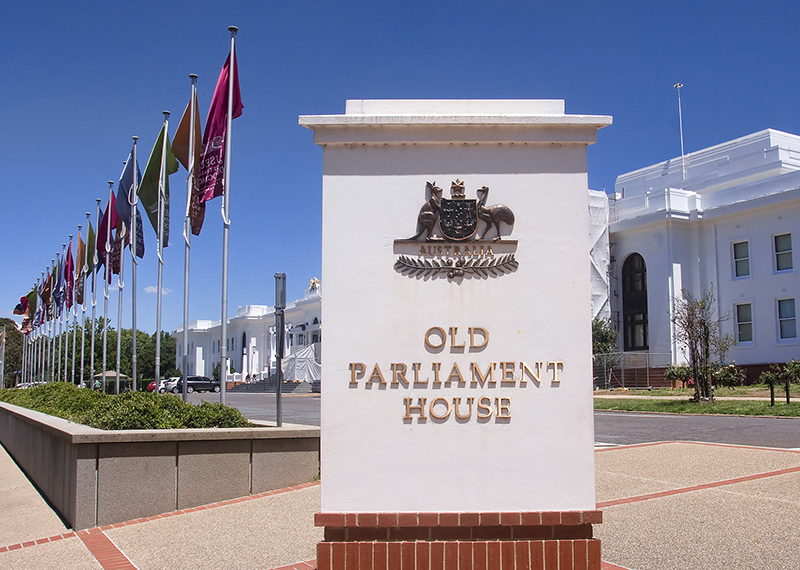
The objective of the audit was to assess the effectiveness of the governance board in Old Parliament House.
Entity
Old Parliament House
Contact
Please direct enquiries through our contact page.
Performance audit (Auditor-General Report No. 37 of 2018–19)

Published: Thursday 2 May 2019
Published
The objective of the audit was to assess the effectiveness of the governance board in the Sydney Harbour Federation Trust.
Entity
Sydney Harbour Federation Trust
Contact
Please direct enquiries through our contact page.
Performance audit (Auditor-General Report No. 12 of 2015–16)

Published: Thursday 3 December 2015
Published
The audit objective was to assess the effectiveness of the Department of Health’s and the Department of Human Services’ management and administration of the Child Dental Benefits Schedule.
Entity
Department of Health; Department of Human Services
Contact
Please direct enquiries relating to reports through our contact page.
Performance audit (Auditor-General Report No. 56 of 2016–17)

Published: Thursday 22 June 2017
Published
The objective of the audit was to assess the effectiveness of the Australian Pesticides and Veterinary Medicines Authority’s (APVMA’s) implementation of reforms to agvet regulation and the extent to which the authority has achieved operational efficiencies and reduced the cost burden on regulated entities.
Entity
Australian Pesticides and Veterinary Medicines Authority
Contact
Please direct enquiries relating to reports through our contact page.
Performance audit (Auditor-General Report No. 2 of 2019–20)

Published: Monday 22 July 2019
Published
The objective of this audit was to assess the effectiveness of Defence’s administration of allowances and entitlements paid to its Australian Public Service (APS) employees.
Entity
Department of Defence
Contact
Please direct enquiries through our contact page.