Browse our range of reports and publications including performance and financial statement audit reports, assurance review reports, information reports and annual reports.
Financial statement audit (Auditor-General Report No. 60 of 2016–17)
Published: Wednesday 28 June 2017
Published
The Australian National Audit Office (ANAO) publishes two reports annually addressing the outcomes of the financial statement audits of Australian government entities and the Consolidated Financial Statements (CFS) of the Australian Government to provide Parliament an independent examination of the financial accounting and reporting of public sector entities. This report focuses on the results of the interim audit phase, including an assessment of entities’ key internal controls, of the 2016–17 financial statements audits of 25 entities including all departments of state and a number of major Australian government entities.
Entity
Across Entities
Contact
Please direct enquiries relating to reports through our contact page.
Other report (Auditor-General Report No. 4 of 2025–26)

Published: Wednesday 29 October 2025
Published
The Australian National Audit Office (ANAO) conducted 44 performance audits across the 2024–25 financial year to provide independent and objective assessments of all or part of an entity’s operations. This report presents themes and insights from the 2024–25 performance audit program, as well as analysis of the outcomes of performance audits between 2020–21 and 2024–25.
Entity
Across Entities
Contact
Please direct enquiries through our contact page.
Performance audit (Auditor-General Report No. 22 of 2014–15)

Published: Tuesday 17 February 2015
Published
The objective of the audit was to assess the effectiveness of the Attorney-General’s Department’s administration of the Indigenous Legal Assistance Programme.
Entity
Attorney-General's Department
Contact
Please direct enquiries relating to reports through our contact page.
Performance audit (Auditor-General Report No. 5 of 2025–26)

Published: Monday 10 November 2025
Published
The audit objective was to assess the effectiveness of the Office’s management of official residences and other assets.
Entity
Office of the Official Secretary to the Governor-General
Contact
Please direct enquiries through our contact page.
Performance audit (Auditor-General Report No. 4 of 2017–18)

Published: Wednesday 12 July 2017
Published
The audit objective was to assess whether the Department of Employment effectively designed and monitors the progress of the jobactive program.
Entity
Department of Employment
Contact
Please direct enquiries relating to reports through our contact page.
Performance audit (Auditor-General Report No. 36 of 2014–15)

Published: Wednesday 6 May 2015
Published
The audit objective was to assess the effectiveness of the Department of Human Services’ administration of the Assistance for Isolated Children Scheme.
Entity
Department of Human Services
Contact
Please direct enquiries relating to reports through our contact page.
Performance audit (Auditor-General Report No. 43 of 2021–22)

Published: Wednesday 29 June 2022
Published
The objective of the audit was to examine the effectiveness of the Department of Defence’s arrangements for the management of contractors.
Entity
Department of Defence
Contact
Please direct enquiries through our contact page.
Performance audit (Auditor-General Report No. 15 of 2003–04)
Published: Monday 1 December 2003
Published
On 2 November 2000, the Senate agreed to a resolution that the Auditor-General be requested to review all expenditures and entitlements accruing to Parliamentarians and Ministers in 1999-2000. The resolution requested that the Auditor-General consider a number of specific matters, and report by 30 June 2001. In the course of that audit, examination of issues relating to Parliamentarians' staff was deferred in order to give the Auditor-General a reasonable chance of reporting reasonably close to the Senate's requested reporting timeframe. ANAO Audit Report No.5 2001-02, Parliamentarians' Entitlements: 1999-2000, was tabled in the Parliament in August 2001. A proposed audit of the administration by Finance of the entitlements of staff engaged under the Members of Parliament (Staff) Act 1984 (MOP(S) Act was included in the ANAO Audit Work Program for 2001-02. The objectives of this performance audit were to: review the effectiveness of the internal control structures in the Department of Finance and Administration (Finance) concerning the administration of entitlements for MOP(S) Act staff; review the effectiveness and efficiency of the procurement and support services Finance provides in relation to MOP(S) Act staff: and identify principles of sound administrative practices to facilitate improved administrative arrangements for the future. The audit covered Finance's administration of payments and services to MOP(S) Act staff during the period 1998-99 to 2001-02. Sub-section 15(c) of the Auditor General Act 1997 precludes an audit of persons who are engaged under the MOP(S) Act. Accordingly, the audit scope did not include examination of the responsibilities of MOP(S) Act staff.
Entity
Department of Finance and Administration
Performance audit (Auditor-General Report No. 26 of 2021–22)
Published: Tuesday 10 May 2022
Published
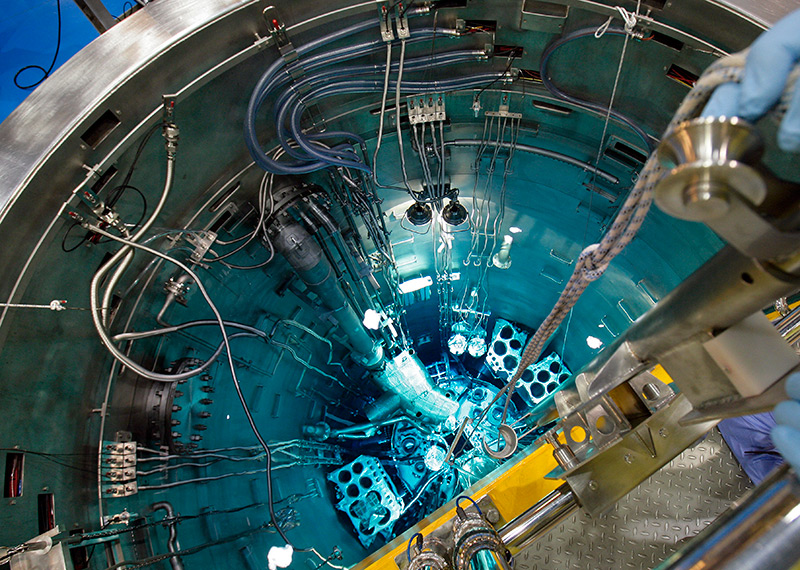
The audit examined the effectiveness of the Australian Nuclear Science and Technology Organisation’s management of assets involved in the manufacture, production and distribution of nuclear medicines.
Entity
Australian Nuclear Science and Technology Organisation
Contact
Please direct enquiries through our contact page.
Performance audit (Auditor-General Report No. 12 of 2025–26)

Published: Tuesday 9 December 2025
Published
The objective of the audit was to assess the effectiveness of Services Australia’s management of the privacy of client information.
Entity
Services Australia
Contact
Please direct enquiries through our contact page.
Performance audit (Auditor-General Report No. 50 of 2014–15)

Published: Wednesday 10 June 2015
Published
The objective of the audit was to assess the effectiveness of the administration of the Defence Home Ownership Assistance Scheme by the Department of Defence and the Department of Veterans’ Affairs.
Entity
Department of Defence; Department of Veterans' Affairs
Contact
Please direct enquiries relating to reports through our contact page.
Performance audit (Auditor-General Report No. 43 of 2022–23)

Published: Wednesday 28 June 2023
Published
The objective of the audit was to assess the effectiveness of the NDIA’s management of assistance with daily life supports.
Entity
National Disability Insurance Agency
Contact
Please direct enquiries through our contact page.
Performance audit (Auditor-General Report No. 10 of 2008–09)
Published: Tuesday 2 December 2008
Published
The objective of this audit was to assess whether the Scheme is being administered effectively by the department. The ANAO focussed on Program Year 1 of the Scheme, 2005–06, and examined DIISR's arrangements for:
- assessing the eligibility of entities to receive grants;
- assessing entities' claims for eligible expenditure;
- adhering to the funding limits for the Scheme when calculating and paying claims, and managing any debts that arise;
- and evaluating and reporting on whether the statutory objective of the Scheme is being met.
The audit did not examine the other components of the 2005–2015 industry assistance package; nor did it examine any of the programs delivered under the previous assistance package (2000–2005).
Entity
Department of Innovation, Industry, Science and Research
Performance audit (Auditor-General Report No. 47 of 2014–15)

Published: Wednesday 10 June 2015
Published
The objective of the audit was to assess the effectiveness of the Department of Immigration and Border Protection’s identity verification arrangements for applicants in the Citizenship Program.
Entity
Department of Immigration and Border Protection
Contact
Please direct enquiries relating to reports through our contact page.
Performance audit (Auditor-General Report No. 43 of 2018–19)

Published: Friday 31 May 2019
Published
The objective of the audit was to assess whether the Department of Infrastructure, Regional Development and Cities had designed and implemented appropriate governance and administration arrangements for the transition and delivery of sustainable reforms to services on Norfolk Island.
Entity
Department of Infrastructure, Regional Development and Cities
Contact
Please direct enquiries through our contact page.
Performance audit (Auditor-General Report No. 43 of 2006–07)
Published: Wednesday 13 June 2007
Published
The objective of this audit was to evaluate whether selected Australian Government agencies were effectively managing security risks arising from the use of contractors. To address this objective, the audit evaluated relevant policies and practices in the audited agencies against a series of minimum requirements in the management of security issues in procurement and contracting activity. These minimum requirements were developed from the guidance and standards contained in the PSM and also from the ANAO's previous protective security audits.
The audit focused on two broad types of contracting arrangements: contracting of security functions; and contracting of any service or business function that requires, or which has the potential to require, contractors to access sensitive or security classified information.
The following Australian Government agencies were involved in this audit:
- Australian Customs Service (Customs);
- Commonwealth Superannuation Administration (ComSuper);
- Department of Finance and Administration (Finance); and
- Department of Foreign Affairs and Trade (DFAT).
In addition, the Attorney-General's Department, which is responsible for the maintenance of the PSM and for providing advice on contemporary protective security policies and practices, was consulted during the audit.
Entity
NO-DEPTS-LISTED
Performance audit (Auditor-General Report No. 28 of 2023–24)

Published: Wednesday 22 May 2024
Published
The objective of this audit was to assess the effectiveness of the design and award of funding for Round 6 of the Mobile Black Spot Program.
Entity
Department of Infrastructure, Transport, Regional Development, Communications and the Arts
Contact
Please direct enquiries through our contact page.
Performance audit (Auditor-General Report No. 29 of 2014–15)

Published: Tuesday 21 April 2015
Published
The objective of the audit was to assess the effectiveness of the arrangements established by the Department of the Environment for the funding and management of the Nimmie-Caira System Enhanced Environmental Water Delivery Project.
Entity
Department of the Environment
Contact
Please direct enquiries relating to reports through our contact page.
Performance audit (Auditor-General Report No. 13 of 2019–20)

Published: Monday 25 November 2019
Published
The audit objective was to assess the effectiveness of the implementation of the My Health Record system under the opt-out model.
Entity
Australian Digital Health Agency; Department of Health
Contact
Please direct enquiries through our contact page.
Performance audit (Auditor-General Report No. 47 of 1997–98)
Published: Tuesday 23 June 1998
Published
The objectives of this audit were to assess, with respect to guarantees, indemnities and letters of comfort:
- changes in the size and nature of the Commonwealth's reported exposure since 30 June 1995;
- the extent of improvement in agencies' management and monitoring of the Commonwealth's exposure to these instruments;
- the approach of agencies to effective risk management and control of Commonwealth exposures to these instruments; and
- whether current reporting practices provide a sufficiently comprehensive coverage for public accountability purposes, at both the agency and whole of government levels.
Entity
Across Agency
Performance audit (Auditor-General Report No. 47 of 2024–25)

Published: Monday 23 June 2025
Published
The objective of the audit was to assess the effectiveness of selected Commonwealth entities’ management of Senior Executive Service conflict of interest requirements.
Entity
Aged Care Quality and Safety Commission; Australian Trade and Investment Commission; Department of Home Affairs
Contact
Please direct enquiries through our contact page.
Speeches and papers
Published: Saturday 21 August 2004
Published
Mr P.J. Barrett (AM) - Auditor-General for Australia, Address to the Challenge of Change : Driving Governance and Accountability CPA Forum 2004
Performance audit (Auditor-General Report No. 22 of 2005–06)
Published: Thursday 22 December 2005
Published
The objective of the audit was to assess and report on the progress being made by agencies subject to the Financial Management & Accountability Act 1997 and entities subject to the Commonwealth Authorities & Companies Act 1997: in realising value for money from the procurement process, with a specific focus on buildings, services and products using whole of life cycle assessments; and in the consideration and management of environmental impacts in specifications and contracts. The emphasis of the audit was on green office procurement and sustainable business practices and the value for money within this context. As such, the audit report provides a status report on the implementation of ESD within the office environment of the Australian Government. The audit used a survey approach in conjunction with selected audit investigations to obtain information across 71 agencies and entities selected on the basis of materiality in procurement and coverage across large, medium and small organisations. The agencies selected represented approximately 35 per cent of all government bodies and over 95 per cent of all procurement spending noted on the Department of Finance and Administration (Finance) database on contracts.
Entity
across agency
Speeches and papers
Published: Thursday 18 March 2004
Published
Mr P.J. Barrett (AM) - Auditor-General for Australia, presented to the National Institute of Governance, University of Canberra
Performance audit (Auditor-General Report No. 42 of 2020–21)

Published: Monday 7 June 2021
Published
The objective of the audit was to assess the Department of Agriculture, Water and the Environment’s effectiveness in responding to non-compliance with plant and animal biosecurity requirements.
Entity
Department of Agriculture, Water and the Environment
Contact
Please direct enquiries through our contact page.
Performance audit (Auditor-General Report No. 49 of 2006–07)
Published: Monday 25 June 2007
Published
The objective of the audit was to assess the management practices undertaken by APS agencies to achieve value for money and transparency in dealing with contracts for non-APS workers. The focus of the audit was on circumstances where agencies had a significant reliance on a non-APS workforce to assist in achieving their core functions. Regular reporting by agencies of expenditure on non-APS workers was outside the scope of this audit.
Entity
NO-DEPTS-LISTED
Performance audit (Auditor-General Report No. 25 of 2014–15)

Published: Thursday 5 March 2015
Published
The audit objective was to assess the effectiveness of the development and administration of the Fifth Community Pharmacy Agreement (5CPA), and the extent to which the 5CPA has met its objectives.
Entity
Department of Health; Department of Human Services; Department of Veterans' Affairs
Contact
Please direct enquiries relating to reports through our contact page.
Performance audit (Auditor-General Report No. 12 of 2024–25)

Published: Monday 11 November 2024
Published
The objective of the audit was to assess the effectiveness of the operations of the boards of four corporate Commonwealth entities in managing conflicts of interest.
Entity
Across entities
Contact
Please direct enquiries through our contact page.
Performance audit (Auditor-General Report No. 1 of 2017–18)

Published: Monday 10 July 2017
Published
The objective of the audit was to assess the effectiveness of the Department of the Environment and Energy’s arrangements for the preparation and reporting of Australia’s greenhouse gas emissions estimates and projections.
Entity
Department of the Environment and Energy
Contact
Please direct enquiries relating to reports through our contact page.
Performance audit (Auditor-General Report No. 39 of 2014–15)
Published: Wednesday 3 June 2015
Published
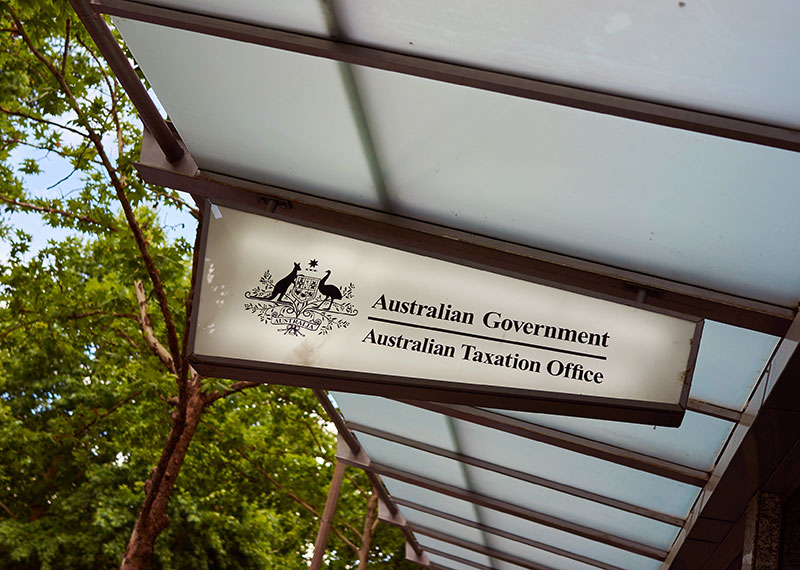
The objective of the audit was to assess the effectiveness of the Australian Taxation Office's activities to promote employer compliance with Superannuation Guarantee obligations.
Entity
Australian Taxation Office
Contact
Please direct enquiries relating to reports through our contact page.