Browse our range of reports and publications including performance and financial statement audit reports, assurance review reports, information reports and annual reports.
Performance audit (Auditor-General Report No. 46 of 2023–24)

Published: Tuesday 25 June 2024
Published
The objective of the audit was to assess whether the Australian Communications and Media Authority (ACMA) had complied with gifts, benefits and hospitality requirements.
Entity
Australian Communications and Media Authority
Contact
Please direct enquiries through our contact page.
Performance audit (Auditor-General Report No. 24 of 2019–20)

Published: Tuesday 28 January 2020
Published
The objective of the audit was to examine the effectiveness and appropriateness of the Department of Defence's management of its public communications and media activities.
Entity
Department of Defence
Contact
Please direct enquiries through our contact page.
Performance audit (Auditor-General Report No. 14 of 2022–23)

Published: Thursday 23 February 2023
Published
The objective of this audit was to examine the effectiveness of the Department of Home Affairs’ management of its public communications and media activities.
Entity
Department of Home Affairs
Contact
Please direct enquiries through our contact page.
Performance audit (Auditor-General Report No. 19 of 2022–23)

Published: Thursday 6 April 2023
Published
The objective of this audit was to assess the effectiveness of procurement complaints handling by the Australian Communications and Media Authority, the Department of Finance, the Department of Industry, Science and Resources and the Reserve Bank of Australia.
Entity
Across Entities
Contact
Please direct enquiries through our contact page.
Performance audit (Auditor-General Report No. 27 of 2001–02)
Published: Monday 17 December 2001
Published
The audit examined the management of software licensing by five Commonwealth agencies. The objective of the audit was to provide assurance to these agencies and the Parliament that:
- effective controls are in place to ensure the physical security of software media;
- the risks associated with the use of illegal software are being effectively managed; and
- compliance with software licence conditions is being adequately monitored.
Entity
Across Agency
Request for audit
Responded: Friday 24 August 2018
Response provided
The Auditor-General responded on 24 August 2018 to a request from Mr Ross Vasta MP dated 30 July 2018, asking that the Auditor-General consider correspondence from the Sporting Shooters Association of Australia (Brisbane) dated 12 July 2018. The association is requesting an audit of the Australian Communications and Media Authority (ACMA) Spectrum Management & Analysis Section project that installed radio monitoring infrastructure on Mount Petrie.
Contact
Please direct enquiries relating to requests for audits through our contact page.
Insights: Audit practice
Published: Wednesday 25 October 2017
Published
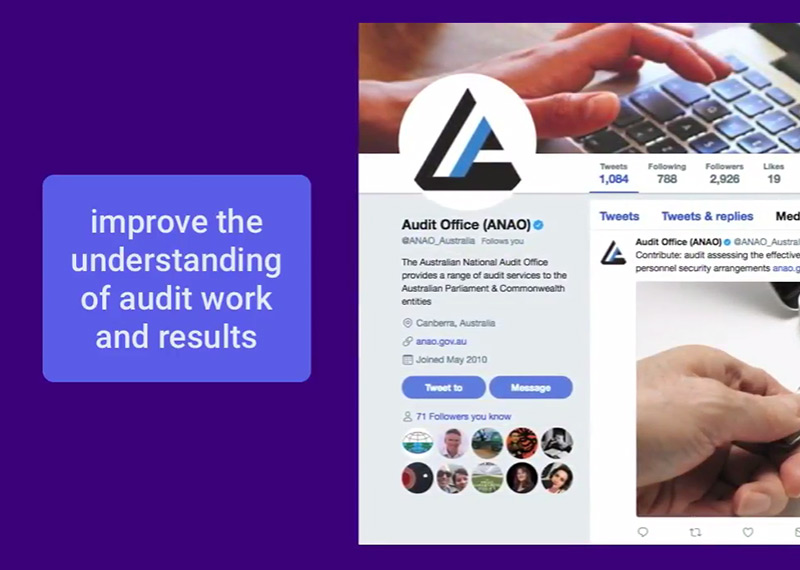
Effective, engaging and accessible communication remains an ongoing focus for the Australian National Audit Office (ANAO), given the important role that we play in providing assurance to the Parliament of Australia, and improving public sector administration.
In this edition of audit insights we discuss our external communication and engagement activities including website email subscriptions, our draft annual audit work program, contribute to an audit, our transparency and accountability initiatives, and social media.
Contact
Please direct enquiries relating to Audit insights through our contact page.
Corporate
New
Updated: Tuesday 17 March 2026
Updated
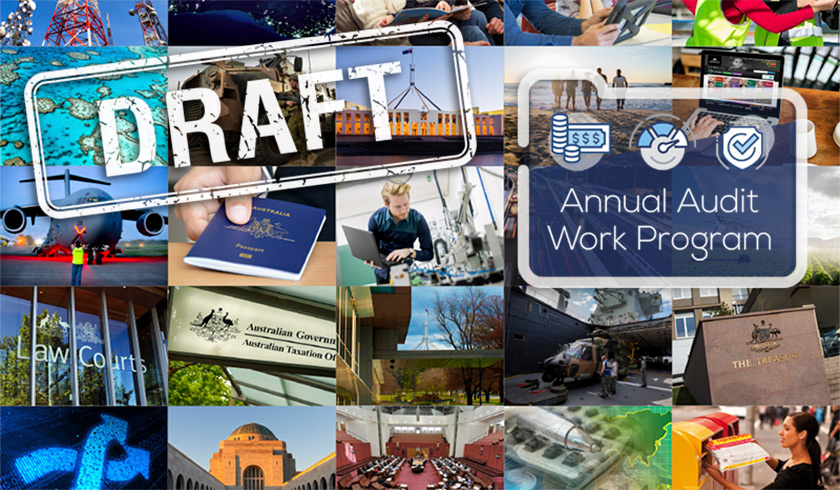
You are invited to contribute to the annual audit work program of the Australian National Audit Office (ANAO). Please review the draft potential performance audit topic list and tell us what you think.
The Auditor-General is an independent officer of the Parliament whose role is to support accountability and transparency in the Australian Government sector by providing independent reporting to the Parliament. The Auditor-General’s reports assist the Parliament to hold government entities accountable and to drive improvements in public administration.
The Auditor-General is assisted by the Australian National Audit Office (ANAO) to conduct a range of audits in Australian Government entities, such as:
- mandated annual financial statements audits, including the audit of the Australian Government’s consolidated financial statements;
- performance audits;
- assurance reviews (including audits by arrangement); and
- audits of the annual performance statements and measures of Commonwealth entities and Commonwealth companies and their subsidiaries.
Since 2007–08, the ANAO has prepared the Defence Major Projects Report (MPR) to enable reporting to the Parliament on the status of major Defence acquisition projects. In March 2026, the Joint Committee of Public Accounts and Audit (JCPAA) announced its decision not to continue the MPR program. Further information is available here.
Contributions must relate to the performance or expenditure of Commonwealth public sector entities. The ANAO does not investigate complaints or disputes, review or provide legal decisions, and does not comment on the merits of government policy and legislation.
While your contribution will be considered and handled with care, we will not provide you with feedback on your submission. The confidentiality of your contribution may be protected by law (see section 36 of the Auditor-General Act 1997). In addition, any personal information gathered by the ANAO will be treated in accordance with the ANAO Privacy Policy.
Please send feedback about this draft program to communication@anao.gov.au. Submissions close on 10 April 2026 at 11:59pm (Australian Eastern Standard Time).
Insights: Audit practice

Published: Wednesday 6 November 2024
Published
This edition is intended for officials within government entities responsible for governance, internal audit or a government activity that may be the subject of an ANAO performance audit. The purpose of Insights: Audit Practice is to explain ANAO methodologies to help entities prepare for an ANAO audit.
Contact
Please direct enquiries through our contact page.
Information report (Auditor-General Report No. 4 of 2025–26)

Published: Wednesday 29 October 2025
Published
The Australian National Audit Office (ANAO) conducted 44 performance audits across the 2024–25 financial year to provide independent and objective assessments of all or part of an entity’s operations. This report presents themes and insights from the 2024–25 performance audit program, as well as analysis of the outcomes of performance audits between 2020–21 and 2024–25.
Entity
Across Entities
Contact
Please direct enquiries through our contact page.
Information report (Auditor-General Report No. 8 of 2024–25)

Published: Thursday 24 October 2024
Published
The ANAO’s performance audit program is one of the main assurance functions of the Auditor-General. The purpose of this information report was to provide analysis of 2023–24 performance audits.
Entity
Across Entities
Contact
Please direct enquiries through our contact page.
Performance audit (Auditor-General Report No. 26 of 2013–14)
Published: Wednesday 23 April 2014
Published
The objective of the audit was to assess the effectiveness of the Department of Human Services' management of Medicare compliance audits.
Entity
Department of Human Services
Contact
Please direct enquiries relating to reports through our contact page.
Performance audit (Auditor-General Report No. 14 of 2007–08)
Published: Thursday 15 November 2007
Published
The audit objective was to assess whether the Regional Partnerships Programme has been effectively managed by DOTARS, including the processes by which:
- applications are sought, received and assessed;
- Funding Agreements with grant recipients are developed and managed; and
- the achievement of project and programme outcomes is monitored and assessed.
Entity
Department of Transport and Regional Services
Insights: Audit practice

Published: Tuesday 24 June 2025
Published
Audit Practice: Auditing Regulatory Activities is intended for senior management and those responsible for managing internal audit within Australian Government entities that have a regulatory function.
Contact
Please direct enquiries through our contact page.
Performance audit (Auditor-General Report No. 8 of 2014–15)

Published: Wednesday 26 November 2014
Published
The audit objective was to assess the effectiveness of the Department of Health’s monitoring and implementation of both ANAO performance audit and internal audit recommendations.
Entity
Department of Health
Contact
Please direct enquiries relating to reports through our contact page.
Information report (Auditor-General Report No. 6 of 2024–25)

Published: Tuesday 22 October 2024
Published
The ANAO responded to the emerging sector-wide risks for public administration by developing a strategy for a program of audits examining the delivery of the Australian Government’s COVID-19 pandemic response (COVID-19 audit strategy). The purpose of this information report was to summarise and consolidate the learnings from the audits and reviews conducted by the ANAO under the COVID-19 audit strategy.
Entity
Across Entities
Contact
Please direct enquiries through our contact page.
Performance audit (Auditor-General Report No. 33 of 2005–06)
Published: Thursday 2 March 2006
Published
The objective of this follow-up audit was to examine the ATO's implementation of the 20 recommendations in: The Administration of Petroleum Excise Collections (Audit Report No.17, 2001(02); and The Administration of Tobacco Excise (Audit Report No. 55, 2001(02), having regard to any changed circumstances, or new administrative issues, affecting implementation of those recommendations. The audit also aimed to identify scope for improvement in the ATO's administration of petroleum and tobacco excise. Follow-up audits are recognised as an important element of the accountability processes of Commonwealth administration. The Parliament looks to the Auditor-General to report, from time to time, on the extent to which Commonwealth agencies have implemented recommendations of previous audit reports. Follow-up audits keep the Parliament informed of progressive improvements and current challenges in areas of Commonwealth administration that have previously been subject to scrutiny through performance audits.
Entity
Australian Taxation Office
Speeches and papers
Published: Friday 24 March 2023
Published
The ANAO provided an article to the March 2023 edition of the PASAI newsletter on the development of a methodology for auditing ethics. The article was titled SAI Australia develops methodology for auditing ethics.
Contact
Please direct enquiries through our contact page.
Performance audit (Auditor-General Report No. 21 of 2013–14)
Published: Thursday 27 February 2014
Published
In 2012–13, the ANAO pilot project to audit Key Performance Indicators(KPIs) was continued with the objective of conducting a review of framework developments, both in terms of the clarity of the policy and guidance issued by Finance and the performance of agencies in applying this policy and guidance, as a basis for implementing a future program of audits; and to further develop and test an audit methodology to address the practical challenges of assessing the appropriateness of KPIs, and their complete and accurate reporting.
Entity
Across Entities
Contact
Michael White, Executive Director, Phone (02) 6203 7393
Audit Matters
Published: Monday 2 September 2024
Published
Welcome to the inaugural edition of the ANAO’s quarterly Audit Matters newsletter. The purpose of Audit Matters is to inform external audiences — primarily those working in Commonwealth entities — of updates on the ANAO’s work and provide insights on what we are seeing in the Australian Government sector.
Audit Matters complements the range of reports we table in the Parliament as well as our Insights products and events and seminars. I hope you find it useful and please forward it on to your colleagues, and encourage them to sign-up for future editions.
Carla Jago, Acting Deputy Auditor-General
Contact
Please direct enquiries through our contact page or subscribe to receive the email version of Audit Matters in the future.
Performance audit (Auditor-General Report No. 42 of 2004–05)
Published: Tuesday 19 April 2005
Published
The objective of this audit was to assess the extent to which the recommendations and major findings of the ANAO's 1999 audit of Commonwealth Debt Management have been addressed, and the impact of any changes.
Entity
Australian Office of Financial Management
Performance audit (Auditor-General Report No. 39 of 2003–04)
Published: Tuesday 6 April 2004
Published
The objective of this audit was to determine the progress made by the AEC in implementing the ANAO's recommendations, taking into account any changed circumstances, or new administrative issues, affecting implementation of those recommendations.
Entity
Australian Electoral Commission
Speeches and papers
Published: Friday 1 May 2009
Published
Mr Ian McPhee - Auditor-General for Australia, presented at the Institute of Chartered Accountants in Australia, Audit Conference, Melbourne
Speeches and papers

Published: Wednesday 8 August 2018
Published
Grant Hehir, Auditor-General for Australia, attended the 18th Meeting of INTOSAI Working Group on Environmental Auditing in Bundung Indonesia in July 2018, and presented a keynote address titled Sharing experience on auditing urban environmental management. The accompanying paper to the speech is available here.
Contact
Please direct enquiries through our contact page.
Performance audit (Auditor-General Report No. 2 of 2010–11)
Published: Friday 23 July 2010
Published
The objective of this performance audit was to assess the effectiveness of the conduct of the first National Infrastructure Audit and development of the Infrastructure Priority List.
Entity
Infrastructure Australia
Performance audit (Auditor-General Report No. 42 of 2005–06)
Published: Thursday 25 May 2006
Published
The follow-up audit assessed the extent to which the Australian Taxation Office (ATO), Department of Health and Ageing (Health), and Medicare Australia had implemented the six recommendations from Audit Report No.47 2001–02, Administration of the 30 Per Cent Private Health Insurance Rebate. The audit also looked at: the implementation of some of the major suggestions for improvement in the original audit; and the current validity of some of the positive major findings from that audit. The audit found that the ATO, Health and Medicare Australia have acted upon the recommendations contained in Audit Report No.47 2001–02 and, overall, the administration of the Rebate is currently being undertaken effectively.
Entity
Australian Taxation Office; Department of Health and Ageing; Medicare Australia
Performance audit (Auditor-General Report No. 42 of 2016–17)

Published: Wednesday 15 March 2017
Published
The audit objective was to re-assess the three entities' compliance with the 'Top Four' mandatory strategies in the Australian Government Information Security Manual (ISM). The audit also aims to examine the typical challenges faced by entities to achieve and maintain their desired ICT security posture.
Entity
Australian Taxation Office; Department of Human Services; Department of Immigration and Border Protection
Contact
Please direct enquiries relating to reports through our contact page.
Performance audit (Auditor-General Report No. 25 of 2012–13)
Published: Wednesday 27 February 2013
Published
The objective of the audit was to assess the effectiveness of Defence’s monitoring of the implementation of ANAO and internal audit recommendations. The audit also examined a sample of ANAO and internal audit recommendations—reported as being complete by Defence—to assess the extent to which these recommendations had been implemented by Defence.
Entity
Department of Defence; Defence Materiel Organisation
Performance audit (Auditor-General Report No. 5 of 2015–16)

Published: Thursday 22 October 2015
Published
The audit objective was to assess the effectiveness of the Department of Veterans’ Affairs monitoring and implementation of ANAO and internal performance audit recommendations.
Entity
Department of Veterans' Affairs
Contact
Please direct enquiries relating to reports through our contact page.
Performance audit (Auditor-General Report No. 40 of 2006–07)
Published: Wednesday 30 May 2007
Published
The previous audit made ten recommendations to improve Centrelink's review and appeals system. Centrelink agreed to all recommendations. The objective of this follow-up audit was to review Centrelink's progress in implementing the recommendations of Audit Report No.35, Centrelink's Review and Appeals System 2004-05.
Entity
Centrelink
Request for audit
Responded: Friday 5 July 2024
Response provided
The acting Auditor-General responded on 24 April 2024 to correspondence from Senator Janet Rice and Senator Penny Allman-Payne dated 27 March 2024, requesting the Auditor-General to conduct an audit of the contract between Miles Morgan Australia and the Department of Health and Aged Care to deliver the Future Fit program.
The acting Auditor-General made a follow-up response to Senator Penny Allman-Payne dated 5 July 2024, on conducting a performance audit into the Administration of the Future Fit Program.
Contact
Please direct enquiries through our contact page.
Speeches and papers
Published: Monday 11 June 2001
Published
Mr P.J. Barrett (AM) - Auditor-General for Australia, presented at the INTOSAI Working Group
Speeches and papers
Published: Monday 19 May 2003
Published
Mr P.J. Barrett (AM) - Auditor-General for Australia, presented at the 2nd Annual New Directions in Australian Auditing Accounting Standards Conference
Performance audit (Auditor-General Report No. 48 of 2006–07)
Published: Friday 22 June 2007
Published
The objective of this audit was to determine the extent to which selected agencies have implemented the two recommendations of the previous audit; and the appropriateness of advice provided by Finance and the ATO. To address this audit objective, the audit assessed:
- the roles of Finance and the ATO in clarifying: the interaction of the PB and SG Act; the ongoing role of the PB Act; and mechanisms to monitor Australian Government organisations' compliance with the PB Act;
- the extent to which Finance and the ATO have provided guidance and other support to assist Australian Government organisations manage and meet statutory superannuation obligations for eligible contractors; and
- whether Australian Government organisations have managed and met statutory superannuation obligations for contractors in past and current contracts.
Entity
NO-DEPTS-LISTED
Performance audit (Auditor-General Report No. 16 of 2003–04)
Published: Thursday 4 December 2003
Published
The objectives of the follow-up audit were to assess DFAT's implementation of the six recommendations made by the ANAO in the previous audit. It also sought to determine whether implementation of these recommendations, or alternative action, had improved DFAT's administration of consular services. The audit focused on management processes and supporting systems for the delivery of consular services. It also reviewed DFAT's implementation of recommendations of the Senate Foreign Affairs, Defence and Trade References Committee that were outstanding from the previous audit.
Entity
Department of Foreign Affairs and Trade
Performance audit (Auditor-General Report No. 15 of 2007–08)
Published: Thursday 29 November 2007
Published
The objective of this follow-up audit is to assess the Tax Office's progress in implementing the recommendations of Audit Report No.59 2002–03, Administration of Australian Business Number Registrations, having regard to any changed circumstances, or new administrative issues, affecting the implementation of those recommendations.
Entity
Australian Taxation Office
Request for audit
Responded: Thursday 14 November 2019
Response provided
The Auditor-General responded on 14 November 2019 to correspondence from the Minister for Finance, Senator the Hon Mathias Cormann, regarding annual performance statements audits. The Minister requested that the Auditor-General conduct a program of pilot assurance audits of annual performance statements of Commonwealth entities subject to the PGPA Act, in consultation with the Joint Committee of Public Accounts and Audit (JCPAA). The Auditor-General has agreed to the request and proposes to conduct a pilot to audit the 2019–20 performance statements of three entities.
Contact
Please direct enquiries through our contact page.
Request for audit
Responded: Wednesday 3 November 2021
Response provided
Following a request from the Minister for Finance in October 2021, the ANAO is expanding the performance statements audit program from three audits to six audits in 2021–22. The ANAO will continue the program of work with Department of Veterans Affairs, the Attorney-General’s Department and the Department of Social Services and will add three new entities, being the Department of Agriculture, Water and the Environment, the Department of Education, Skills and Employment, and the Treasury.
Contact
Please direct enquiries relating to request for audit through our contact page.
Financial statement audit (Auditor-General Report No. 9 of 2023–24)
Published: Thursday 14 December 2023
Published
This report complements the Interim Report on Key Financial Controls of Major Entities financial statement audit report published in May 2023. It provides a summary of the final results of the audits of the Consolidated Financial Statements for the Australian Government and the financial statements of 243 Australian Government entities for the period ended 30 June 2023.
Entity
Across Entities
Contact
Please direct enquiries through our contact page.
Financial statement audit (Auditor-General Report No. 16 of 2014–15)

Published: Thursday 18 December 2014
Published
This report complements the interim phase report published in June 2014 (Audit Report No.44 2013–14), and provides a summary of the final audit results of the audits of the financial statements of 251 Australian Government entities, including the Consolidated Financial Statements for the Australian Government.
Entity
Across Entities
Contact
Please direct enquiries relating to reports through our contact page.
Financial statement audit (Auditor-General Report No. 15 of 2015–16)

Published: Thursday 17 December 2015
Published
This report complements the interim phase report published in June 2015, and provides a summary of the final audit results of the audits of the Consolidated Financial Statements for the Australian Government and the financial statements of 253 Australian Government entities.
Entity
Across Entities
Request for audit
Responded: Wednesday 11 December 2019
Response provided
The Auditor-General responded on 11 December 2019 to correspondence from Senator Kimberley Kitching dated 14 November 2019, requesting that the Auditor-General consider undertaking proposed audits of parliamentary departments listed in the work program.
Contact
Please direct enquiries through our contact page.
Financial statement audit (Auditor-General Report No. 33 of 2016–17)

Published: Monday 23 January 2017
Published
This report complements the interim phase report published in August 2016, and provides a summary of the final results of the audits of the Consolidated Financial Statements for the Australian Government and the financial statements of Australian Government entities.
Entity
Across Entities
About

Updated: Thursday 5 February 2026
Updated
The Auditor-General is assisted by the Australian National Audit Office (ANAO) in delivering against the mandate established by the Auditor-General Act 1997. Under the Act, the ANAO consists of the Auditor-General and staff.
Contact
Please direct enquiries through our contact page.
Performance audit (Auditor-General Report No. 33 of 2006–07)
Published: Wednesday 18 April 2007
Published
The objective of this follow-up audit was to review Centrelink's progress in implementing the findings and recommendation relating to Centrelink's Customer Charter from Audit Report No.32
2004–05, Centrelink's Customer Charter and Community Consultation Program. This audit covers Centrelink's Customer Charter only and does not follow-up on the findings and recommendation on the Community Consultation Program aspect of the 2004–05 audit report.
Entity
Centrelink
Request for audit
Responded: Wednesday 19 August 2020
Response provided
The Auditor-General responded on Thursday 27 February 2020 to correspondence from Mr Andrew Giles MP dated 4 February 2020, requesting that the Auditor-General undertake a performance audit of the Urban Congestion Fund. The fund is administered by the Department of Infrastructure, Transport, Regional Development and Communications. The Auditor-General provided follow-up responses to Mr Giles MP on 24 July 2020 and 19 August 2020.
Contact
Please direct enquiries relating to requests for audit through our contact page.
Speeches and papers
Published: Thursday 11 April 2002
Published
Address by Richard Rundle, Executive Director, Business Assurance Services, at the Security in Government 2002 Conference
Performance audit (Auditor-General Report No. 12 of 2004–05)
Published: Tuesday 19 October 2004
Published
The ANAO Audit Report No. 51 of 2001/02, Research Project Management, Commonwealth Scientific and Industrial Research Organisation, assessed the effectiveness of CSIRO in administering research projects to deliver required results. The audit made nine recommendations designed to improve project management in CSIRO. The purpose of this follow-up audit was to assess the extent to which CSIRO has implemented the recommendations of the previous audit and of the JCPAA.
Entity
Commonwealth Scientific and Industrial Research Organisation
Performance audit (Auditor-General Report No. 2 of 2007–08)
Published: Wednesday 18 July 2007
Published
The objective of this audit is to examine DIAC's implementation of the nine recommendations made in the earlier audit. The audit has also taken into account changed circumstances since the original audit. These include a heightened security environment after 11 September 2001 and the results of other relevant ANAO performance audit and financial statement work. The audit also examined ETA decision-making processes to gain assurance about its robustness in a changing risk environment. This issue came to attention in recent audits of visa management processes.
Entity
Department of Immigration and Citizenship
Performance audit (Auditor-General Report No. 53 of 2002–03)
Published: Monday 23 June 2003
Published
In January 2000, the ANAO published a Better Practice Guide (BPG) Business Continuity Management, Keeping the wheels in motion (the Guide). The Guide established that the objective of Business Continuity Management (BCM) is to ensure the uninterrupted availability of all key business resources required to support essential (or critical) business activities. This is achieved by organisations building resilience (controls and redundancy) into business operations to prevent, or minimise, the likelihood of business continuity risks occuring and, also, developing plans that minimise the impact should they occur. The primary objective of this audit was to examine BCM arrangements across four Commonwealth organisations, to assess whether their existing BCM frameworks ( or frameworks under development) exhibit the principles espoused in the Guide. At the Commonwealth - wide level, the ANAO considered the continuing relevance of the principles presented in the Guide.
Entity
Across Agency
Performance audit (Auditor-General Report No. 13 of 2018–19)

Published: Thursday 29 November 2018
Published
The objective of this audit was to examine if Social Services and Human Services drive improvements in the Disability Support Pension program using data and information from multiple sources, including agreed Auditor-General and parliamentary committee recommendations.
Entity
Department of Human Services; Department of Social Services
Contact
Please direct enquiries through our contact page.
Performance audit (Auditor-General Report No. 38 of 2003–04)
Published: Wednesday 31 March 2004
Published
In April 2002, the ANAO tabled Audit Report No.40 2001-02 Corporate Governance in the Australian Broadcasting Corporation ( the 2002 audit). In August 2003, the ABC submitted a report to the Joint Committee of Public Accounts and Audit (JCPAA) on its progress in implementing the recommendations from the 2002 audit and the JCPAA report. This follow-up audit examined the ABC's implementation of recommendations from both reports, using the ABC's progress report as its base.
Entity
Australian Broadcasting Corporation
Performance audit (Auditor-General Report No. 9 of 2016–17)

Published: Wednesday 31 August 2016
Published
The audit objective was to assess the adequacy and effectiveness of the Department of Health’s implementation of the recommendations made in the ANAO Report No.25 2014–15 Administration of the Fifth Community Pharmacy Agreement.
Entity
Department of Health
Contact
Please direct enquiries relating to reports through our contact page.
Performance audit (Auditor-General Report No. 23 of 2018–19)

Published: Thursday 17 January 2019
Published
The objective of this audit was to assess the extent to which the Department of Agriculture and Water Resources (Agriculture) has addressed the recommendations from ANAO Audit Report No. 46 of 2011–12, Administration of the Northern Australia Quarantine Strategy (NAQS).
Entity
Department of Agriculture and Water Resources
Contact
Please direct enquiries through our contact page.
Speeches and papers
Published: Friday 12 March 2004
Published
Mr P.J. Barrett (AM) - Auditor-General for Australia, presented to the Institute of Chartered Accountants of India
Events and seminars

Published: Wednesday 30 October 2024
Published
The Australian National Audit Office, in partnership with the Australian Capital Territory Audit Office hosted the 12th Meeting of the Pacific Association of Supreme Audit Institution’s (PASAI) Regional Working Group on Environmental Auditing. The meeting was held from 17-19 September 2024 in Canberra, Australia.
Contact
For any enquiries, please contact External.Relations@anao.gov.au
Performance audit (Auditor-General Report No. 41 of 2007–08)
Published: Wednesday 18 June 2008
Published
The objective of this audit was to assess the effectiveness of personnel security arrangements at selected Australian Government organisations, including whether they satisfied the requirements of the PSM.
To address this objective, the audit examined the extent to which the selected organisations implemented the 14 recommendations from the three previous reports.
Entity
NO-DEPTS-LISTED
Performance audit (Auditor-General Report No. 30 of 2006–07)
Published: Wednesday 14 March 2007
Published
The objectives of this follow-up audit were to:
- examine the ATO's implementation of the ten recommendations in The Australian Taxation Office's Management of its Relationship with Tax Practitioners (Audit Report No.19, 2002–03), having regard to any changed circumstances, or new administrative issues, affecting implementation of those recommendations; and
- identify scope for improvement in the ATO's management of its relationship with tax practitioners.
Follow up audits are recognised as an important element of the accountability processes of Commonwealth administration. Parliament looks to the Auditor General to report, from time to time, on the extent to which Commonwealth agencies have implemented recommendations of previous audit reports. Follow up audits keep Parliament informed of progressive improvements and current challenges in areas of Commonwealth administration that have previously been subject to scrutiny through performance audits.
Entity
Australian Taxation Office
Speeches and papers

Published: Friday 31 March 2017
Published
Grant Hehir, Auditor-General for Australia, attended the XXIII Commonwealth Auditors-General Conference in New Delhi, India, and presented a keynote speech on 22 March 2017 titled Environmental Audit: A Commonwealth Perspective.
Contact
Please direct enquiries relating to speeches through our contact page.
Performance audit (Auditor-General Report No. 31 of 2002–03)
Published: Wednesday 5 March 2003
Published
This audit followed up the ANAO's 2000 performance audit report on retention of military personnel (Audit Report No.35 1999-2000 Retention of Military Personnel), which focused on examining whether ADF personnel management practices to retain personnel were commensurate with the cost of recruiting and training new personnel, or whether more cost- effective steps could be taken to reduce the separation rates of desirable personnel. The objective of the follow-up audit was to assess Defence's implementation of recommendations made in the original audit report and their effectiveness in helping Defence control the flow of trained personnel from the Services.
Entity
Department of Defence