Browse our range of reports and publications including performance and financial statement audit reports, assurance review reports, information reports and annual reports.
Audit manual
Updated: Tuesday 9 September 2025
Updated
The Performance Audit Services Group (PASG) volume of the ANAO Audit Manual applies to the performance audit activity performed by PASG in collaboration with the Systems Assurance and Data Analytics (SADA) group. Relevant policies and guidance from the PASG volume are also applied to assurance reviews performed by PASG. Policies and guidance in the PASG volume address the planning, execution and reporting stages of the performance audit process.
Contact
Please direct enquiries through our contact page.
Performance audit (Auditor-General Report No. 7 of 2018–19)

Published: Friday 28 September 2018
Published
The objective of the audit was to assess whether the Department of the Prime Minister and Cabinet effectively manages the Regional Network.
Entity
Department of the Prime Minister and Cabinet
Contact
Please direct enquiries through our contact page.
Performance audit (Auditor-General Report No. 2 of 2024–25)

Published: Wednesday 11 September 2024
Published
The audit objective was to assess the effectiveness of the Department of Defence’s arrangements to manage the security authorisation of its ICT systems.
Entity
Department of Defence
Contact
Please direct enquiries through our contact page.
Performance audit (Auditor-General Report No. 40 of 2022–23)

Published: Thursday 22 June 2023
Published
The objective of this audit was to assess the effectiveness of Comcare’s administration of claims for Australian Government entities under its workers’ compensation scheme.
Entity
Comcare
Contact
Please direct enquiries through our contact page.
Performance audit (Auditor-General Report No. 33 of 2022–23)

Published: Wednesday 7 June 2023
Published
The objective of this audit was to examine the efficiency and economy of the Department of Defence’s management of its general stores inventory.
Entity
Department of Defence
Contact
Please direct enquiries through our contact page.
Corporate
Published: Tuesday 2 July 2019
Published
The ANAO Corporate Plan 2019–20 is the ANAO’s key strategic planning document. It guides our operating environment and sets out how we will deliver on our purpose. This Quality Assurance Framework and Plan complements the Corporate Plan. It describes the ANAO Quality Assurance Framework and reflects the ANAO’s quality assurance strategy and deliverables for the coming year.
Contact
Please direct enquiries through our contact page.
Performance audit (Auditor-General Report No. 41 of 2024–25)

Published: Tuesday 10 June 2025
Published
The objective of the audit was to assess the effectiveness of the governance of the Board of the National Disability Insurance Agency.
Entity
National Disability Insurance Agency
Contact
Please direct enquiries through our contact page.
Performance audit (Auditor-General Report No. 42 of 2016–17)

Published: Wednesday 15 March 2017
Published
The audit objective was to re-assess the three entities' compliance with the 'Top Four' mandatory strategies in the Australian Government Information Security Manual (ISM). The audit also aims to examine the typical challenges faced by entities to achieve and maintain their desired ICT security posture.
Entity
Australian Taxation Office; Department of Human Services; Department of Immigration and Border Protection
Contact
Please direct enquiries relating to reports through our contact page.
Performance audit (Auditor-General Report No. 46 of 2017–18)

Published: Wednesday 13 June 2018
Published
The objective of this audit was to assess whether the National Gallery of Australia (NGA) and the Australian War Memorial (the Memorial) have implemented effective collections management practices.
Entity
Australian War Memorial; National Gallery of Australia
Contact
Please direct enquiries through our contact page.
Performance audit (Auditor-General Report No. 12 of 2024–25)

Published: Monday 11 November 2024
Published
The objective of the audit was to assess the effectiveness of the operations of the boards of four corporate Commonwealth entities in managing conflicts of interest.
Entity
Across entities
Contact
Please direct enquiries through our contact page.
Performance audit (Auditor-General Report No. 15 of 2024–25)

Published: Thursday 5 December 2024
Published
The objective of the audit was to assess whether the Murray–Darling Basin Authority (MDBA) had complied with gifts, benefits and hospitality requirements.
Entity
Murray–Darling Basin Authority
Contact
Please direct enquiries through our contact page.
Performance audit (Auditor-General Report No. 5 of 2002–03)
Published: Friday 23 August 2002
Published
The audit examined the administrative effectiveness of arrangements between Health and HIC, in relation to the management and administration of the Medicare Benefits Scheme and the Pharmaceutical Benefits Scheme. Health predominantly exercises a policy and leadership role within the health portfolio - HIC delivers a range of health services directly to the public and members of the health industry. Both agencies have stated that they recognise the importance of working together, as partners in their respective roles, to maximise their performance in the achievement of health portfolio outcomes and to discharge their respective responsibilities. This joint commitment is embodied in a written agreement - called the Strategic Partnership Agreement (SPA).
Entity
Department of Health and Aged Care; Health Insurance Commission
Corporate

Published: Thursday 20 November 2025
Published
Integrity is a core value of the Australian National Audit Office (ANAO) — critical in sustaining the confidence of Parliament, strengthening public trust in government and delivering quality audit products. Maintaining strong institutional integrity is essential to the operations and reputation of the ANAO.
The ANAO Integrity Framework provides an overarching structure to the integrity control system, supporting our institution’s integrity. The Framework serves to assist in ethical decision-making and risk, fraud and misconduct management.
Beyond its control system, the ANAO maintains an enduring focus on promoting integrity as a value that is embedded in our work and culture. The ANAO recognises that integrity demands quality not only in our products but also in the behaviours of our people.
The ANAO Integrity Advisor supports the effective and ongoing application of the Integrity Framework by providing advice to staff regarding integrity matters. The Integrity Advisor is responsible for increasing integrity awareness across the organisation and for reporting annually to the ANAO Executive Board of Management on actions taken under the Framework. The Auditor-General publishes the ANAO Integrity Report to provide increased transparency of the measures we undertake to maintain a high-integrity culture in the ANAO.
Contact
Please direct enquiries through our contact page.
Request for audit
Responded: Thursday 29 July 2021
Response provided
The Auditor-General responded on 29 July 2021 to correspondence from Ms Michelle Rowland MP and Senator Kimberley Kitching dated 9 July 2021, requesting that the Auditor-General conduct an investigation to examine NBN Co Limited executive bonuses for the 2019–2020 financial year and the legitimacy of the underlying targets to which the bonuses were linked.
Contact
Please direct enquiries relating to requests for audit through our contact page.
Performance audit (Auditor-General Report No. 11 of 2021–22)

Published: Monday 29 November 2021
Published
The audit objective was to assess the effectiveness of the Australian National University’s governance and control framework.
Entity
Australian National University
Contact
Please direct enquiries through our contact page.
Audit manual
Updated: Tuesday 9 September 2025
Updated
The shared content volume of the ANAO Audit Manual applies to all assurance activity performed by the ANAO, including financial statements and performance auditing. The shared volume addresses key matters affecting compliance with the Auditor-General Act 1997 and other aspects of the ANAO’s legislative framework. It sets out the main requirements of the ANAO’s overall system of quality control in accordance with ASQC1 Quality Control for Firms that Perform Audits and Reviews of Financial Reports and Other Financial Information, Other Assurance Engagements and Related Services Engagements.
Contact
Please direct enquiries through our contact page.
Performance audit (Auditor-General Report No. 21 of 2022–23)

Published: Wednesday 10 May 2023
Published
The objective of the audit was to assess the effectiveness of the Department of Defence’s procurement of Hunter class frigates and the achievement of value for money to date.
Entity
Department of Defence
Contact
Please direct enquiries through our contact page.
Request for audit
Responded: Friday 24 July 2020
Response provided
The Auditor-General responded on 20 September 2019 to correspondence from Mr Julian Hill MP dated 3 September 2019, requesting that the Auditor-General conduct an investigation to examine aspects of the family migration program. The Auditor-General provided a follow-up response to Mr Hill MP on 24 July 2020.
Contact
Please direct enquiries relating to requests for audit through our contact page.
Performance audit (Auditor-General Report No. 51 of 2002–03)
Published: Thursday 19 June 2003
Published
Defence has long provided housing assistance for members of the Australian Defence Force (ADF) and their families. In 1988, this function passed to the Defence Housing Authority (DHA), which was established to provide suitable housing to meet Defence's operational needs. In 2000, Defence and DHA signed a Services Agreement valued at $3.5 billion over 10 years. The objective of the audit was to assess whether Defence's management of its housing and relocation services provided for ADF members meets specified requirements; and to make practical recommendations for more efficient, effective and economical use of public resources provided for this purpose.
Entity
Department of Defence
Performance audit (Auditor-General Report No. 24 of 2022–23)

Published: Tuesday 23 May 2023
Published
The objective of this audit was to assess whether the Department of Defence (Defence) is managing its Australian Defence Force health services contract to achieve efficient and effective delivery of the contracted services.
Entity
Department of Defence
Contact
Please direct enquiries through our contact page.
Performance audit (Auditor-General Report No. 47 of 1997–98)
Published: Tuesday 23 June 1998
Published
The objectives of this audit were to assess, with respect to guarantees, indemnities and letters of comfort:
- changes in the size and nature of the Commonwealth's reported exposure since 30 June 1995;
- the extent of improvement in agencies' management and monitoring of the Commonwealth's exposure to these instruments;
- the approach of agencies to effective risk management and control of Commonwealth exposures to these instruments; and
- whether current reporting practices provide a sufficiently comprehensive coverage for public accountability purposes, at both the agency and whole of government levels.
Entity
Across Agency
Performance audit (Auditor-General Report No. 15 of 1997–98)
Published: Thursday 27 November 1997
Published
The objective of this audit was to form an opinion on the effectiveness of Internet security measures within the Commonwealth public sector. The second objective was to provide better practice guidance for managing an Internet connection. The audit covered a range of Commonwealth agencies which had established an Internet facility. It specifically addressed the following matters : Internet security policies; site management - including change control processes, virus prevention and detection strategies, and incident response plans; controls over access to the Internet site and to data sources connected to the site; and user education and training.
Entity
Across Agency
Performance audit (Auditor-General Report No. 1 of 2021–22)

Published: Monday 16 August 2021
Published
The audit objective was to examine the effectiveness to date of the Department of Defence’s administration of the Enterprise Resource Planning (ERP) program, with a focus on ERP Tranche 1 activities.
Entity
Department of Defence
Contact
Please direct enquiries through our contact page.
Performance audit (Auditor-General Report No. 32 of 2023–24)

Published: Thursday 30 May 2024
Published
The objective of this audit was to assess the effectiveness of the Australian Institute for Teaching and School Leadership’s (AITSL) administration of national standards and frameworks.
Entity
Australian Institute for Teaching and School Leadership
Contact
Please direct enquiries through our contact page.
Performance audit (Auditor-General Report No. 36 of 2022–23)

Published: Tuesday 13 June 2023
Published
The objective of this audit was to assess the effectiveness of the Australian Securities and Investments Commission's probity management.
Entity
Australian Securities and Investments Commission
Contact
Please direct enquiries through our contact page.
Performance audit (Auditor-General Report No. 48 of 2010–11)
Published: Thursday 16 June 2011
Published
The audit objective was to assess the effectiveness of monitoring arrangements (by the Accreditation Agency) and compliance activities (by DoHA) put in place to achieve residential aged care homes’ compliance with the Accreditation Standards and their other, related, responsibilities under the Act and its associated instruments.
The ANAO’s assessment considered whether:
— a sector-wide compliance strategy was in place and aligned with effective monitoring and compliance activities at the operational level;
— there was a clear articulation of the separat but complementary roles and responsibilities of DoHA and the Accreditation Agency; and
— performance information gathered by both agencies to support public reporting and business improvements was useful and enabled comparison of performance over time.
Entity
Department of Health and Ageing; Aged Care Standards and Accreditation Agency Ltd
Performance audit (Auditor-General Report No. 25 of 1997–98)
Published: Thursday 18 December 1997
Published
The main objectives of the audit were to examine and form an opinion on:
- the efficiency, economy and administrative effectiveness with which the Commonwealth planned and coordinated implementation of the gun buy-back scheme;
- the management of firearms surrender and destruction in the Australian Capital Territory by the Australian Federal Police; and
- the management of the competitive tendering process for the national public education campaign.
Audit criteria were developed which examined program policy and planning, coordination with and payment of funds to the States.
Entity
Attorney-General's Department
Performance audit (Auditor-General Report No. 33 of 2021–22)

Published: Wednesday 15 June 2022
Published
The audit objective was to examine the effectiveness of Snowy Hydro Limited’s governance arrangements for early implementation of Snowy 2.0, the expansion to the Snowy Hydro Scheme.
Entity
Snowy Hydro Limited
Contact
Please direct enquiries through our contact page.
Performance audit (Auditor-General Report No. 4 of 2024–25)

Published: Monday 23 September 2024
Published
The objective of the audit was to assess the effectiveness of Australian Financial Security Authority’s (AFSA) management of conflicts of interest.
Entity
Australian Financial Security Authority
Contact
Please direct enquiries through our contact page.
Performance audit (Auditor-General Report No. 29 of 2018–19)

Published: Thursday 14 March 2019
Published
The objective of this audit was to examine the efficiency of the Australian Transport Safety Bureau’s (ATSB’s) investigation of transport accidents and safety occurrences.
Entity
Australian Transport Safety Bureau
Contact
Please direct enquiries through our contact page.
Performance audit (Auditor-General Report No. 19 of 2014–15)

Published: Thursday 5 February 2015
Published
The audit objective was to assess the effectiveness of the Department of Defence's management of the disposal of specialist military equipment.
Entity
Department of Defence
Contact
Please direct enquiries relating to reports through our contact page.
Performance audit (Auditor-General Report No. 2 of 2021–22)

Published: Wednesday 8 September 2021
Published
The audit objective was to assess the effectiveness of the Australian Security Intelligence Organisation's workforce planning to support key activities.
Entity
Australian Security Intelligence Organisation
Contact
Please direct enquiries through our contact page.
Performance audit (Auditor-General Report No. 24 of 2021–22)

Published: Thursday 28 April 2022
Published
The objective of the audit was to assess the effectiveness of the Australian Taxation Office's activities in addressing Superannuation Guarantee non-compliance.
Entity
Australian Taxation Office
Contact
Please direct enquiries through our contact page.
Audit manual
Updated: Tuesday 9 September 2025
Updated
The Financial Statements Audit Services Group (FSASG) volume of the ANAO Audit Manual applies to the financial statement audit activity performed by FSASG in collaboration with the Systems Assurance and Data Analytics (SADA) group. Relevant policies and guidance from the FSASG volume are also applied to other assurance work performed by FSASG. Policies and guidance in the FSASG volume address the planning, execution and reporting stages of the financial statement audit process.
Contact
Please direct enquiries through our contact page.
Performance audit (Auditor-General Report No. 9 of 2015–16)

Published: Tuesday 24 November 2015
Published
The audit objectives were to examine the effectiveness of Defence’s management of the test and evaluation (T&E) aspects of its major capital equipment acquisition program; and to report on Defence’s progress in implementing T&E recommendations made in the Senate Foreign Affairs, Defence and Trade References Committee’s August 2012 report, Procurement procedures for Defence capital projects.
Entity
Department of Defence
Contact
Please direct enquiries relating to reports through our contact page.
Performance audit (Auditor-General Report No. 31 of 2019–20)

Published: Thursday 9 April 2020
Published
The objective of the audit was to assess whether Defence Housing Australia administers its functions efficiently and effectively, and in accordance with the Government Business Enterprise guidelines.
Entity
Defence Housing Australia; Department of Defence; Department of Finance
Contact
Please direct enquiries through our contact page.
Financial statement audit (Auditor-General Report No. 7 of 2016–17)

Published: Wednesday 31 August 2016
Published
The Australian National Audit Office (ANAO) publishes two reports annually addressing the outcomes of the financial statement audits of Commonwealth entities, and the Consolidated Financial Statements of the Australian Government, to provide Parliament an independent examination of the financial accounting and reporting of public sector entities. This report focuses on the results of the interim audit phase, including an assessment of entities’ key internal controls, of the 2015–16 financial statements audits of 21 departments and other major General Government Sector (GGS) entities. These entities contribute 95 per cent of GGS revenues and expenses.
Entity
Across Entities
Contact
Please direct enquiries relating to reports through our contact page.
Performance audit (Auditor-General Report No. 40 of 2001–02)
Published: Monday 8 April 2002
Published
The audit was undertaken following advice from the Joint Committee of Public Accounts and Audit (JCPAA) to the Auditor-General that assurance that ABC programming adequately reflects the ABC's Charter was an audit priority of Parliament. The objective of the audit is to provide Parliament with this assurance. The focus of the audit was on the governance arrangements of the ABC Board and management that enable the ABC to demonstrate the extent to which it is achieving its' Charter obligations, and other related statutory requirements, efficiently and effectively. The scope of the audit was as follows:
- Review the ABC's corporate governance framework against better practice models. The ANAO had regard to the ABC's unique role as a national public broadcaster established as a budget funded Commonwealth statutory authority subject to the Commonwealth Authorities and Companies Act 1997.
- Examine the ABC Board's approach to the interpretation of the Charter requirements of the ABC and the setting of strategic directions, and management's administrative arrangements for implementing the strategic directions established by the Board.
- Examine the ABC's performance information framework, the development, documentation and use of performance measures in relation to targets and/or objectives, the monitoring and reporting of performance and its' inter-relationship with the corporate planning and budgetary processes, particularly in relation to the strategic directions set by the Board.
The audit did not examine the overall management of the ABC. In keeping with the audit scope, the audit examined ways in which the ABC aligns its' strategic directions with its' Charter requirements for programs broadcast on radio, television and on-line and assures itself, and Parliament, about the achievement of its' Charter obligations. Further, the audit did not examine the operations of ABC Enterprises or symphony orchestras that operate as ABC-owned subsidiary companies.
Entity
Australian Broadcasting Corporation
Events and seminars
Published: Friday 9 December 2022
Published
An Audit Committee Chairs Forum was held at the Hotel Realm on Friday, 9 December 2022. The communique from the forum is now available here.
Contact
For any enquiries, please contact External.Relations@anao.gov.au
Performance audit (Auditor-General Report No. 34 of 2011–12)
Published: Thursday 24 May 2012
Published
The objective of the audit was to assess the progress of the M113 Upgrade Project (Defence Project: Land 106), including progress in the development of operational capability resulting from the introduction of the upgraded vehicles into service. The high-level audit criteria used to assess the project’s progress and Defence’s effectiveness in administering the M113 Upgrade Project were:
- the degree to which the schedule for the production and delivery of upgraded M113 vehicles to Defence had been recovered in accordance with Defence’s response to the 2008–09 audit report and contractual requirements, as negotiated over the life of the contract;
- Defence’s measurement and allocation of the total cost of the upgrade project; and
- the development of capability arising from the upgrade project.
Entity
Department of Defence, Defence Materiel Organisation
Performance audit (Auditor-General Report No. 17 of 2014–15)

Published: Thursday 18 December 2014
Published
The objective of the audit was to examine the effectiveness of Navy’s strategy for recruiting and retaining personnel with specialist skills. The effective delivery of Navy capability depends on Navy having available sufficient numbers of skilled personnel to operate and maintain its fleet of sea vessels and aircraft, and conduct wide‑ranging operations in dispersed locations. Without the right personnel, Navy capability is reduced. Navy’s budget for 2014–15 included $1.86 billion in employee expenses.
The audit concluded that, in its strategic planning, Navy had identified its key workforce risks and their implications for Navy capability. To address these risks Navy had continued to adhere to its traditional ‘raise, train and sustain’ workforce strategy; developed a broad range of workforce initiatives that complemented its core approach; and sought to establish contemporary workforce management practices. However, long‑standing personnel shortfalls in a number of ‘critical’ employment categories had persisted, and Navy had largely relied on retention bonuses as a short‑ to medium‑term retention strategy.
Navy had developed a broad range of workforce initiatives, some designed specifically to address workforce shortages in its critical employment categories. To date, Navy had primarily relied on paying retention bonuses and other financial incentives; recruiting personnel with prior military experience to work in employment categories with significant workforce shortfalls; and using Navy Reserves in continuous full time roles. Ongoing work was required for Navy to firmly establish a range of promising workforce management practices, including providing the right training at the right time; more flexible approaches to managing individuals’ careers; and improving workplace culture, leadership and relationships. More flexible and tailored workforce management practices could help address the underlying causes of workforce shortfalls, particularly when the traditional approaches were not gaining sufficient traction.
The ANAO made two recommendations aimed at Navy: drawing on external human resource expertise to inform the development and implementation of its revised workforce plan; and evaluating the impact of retention bonuses on the Navy workforce to determine their future role within its overall workforce strategy.
Entity
Department of Defence
Contact
Please direct enquiries relating to reports through our contact page.
Performance audit (Auditor-General Report No. 42 of 2018–19)

Published: Thursday 30 May 2019
Published
The objective of this audit was to assess the effectiveness of the Australian Taxation Office’s (ATO’s) management of small business tax debt arising from compliance activities.
Entity
Australian Taxation Office
Contact
Please direct enquiries through our contact page.
Performance audit (Auditor-General Report No. 11 of 2002–03)
Published: Thursday 3 October 2002
Published
The audit reviewed the effectiveness of HIC's approach to customer service delivery to the Australian public as customers of Medicare. The primary issues examined were whether: . HIC manages its customer service delivery performance effectively;
- HIC's approach to people management adequately supports customer service delivery;
- HIC obtains adequate information from customers on their needs, expectations, and perceptions of HIC's service delivery; and
- HIC provides adequate information to customers on its services and on the service standards that customers should expect.
Entity
Health Insurance Commission
Performance audit (Auditor-General Report No. 9 of 2022–23)

Published: Wednesday 14 December 2022
Published
The objective of this audit was to examine the effectiveness of selected non-corporate Commonwealth entities' arrangements for managing cyber security risks within their procurements and specific contracted providers under the Protective Security Policy Framework (PSPF).
Entity
Australian Federal Police; Australian Taxation Office; Department of Foreign Affairs and Trade
Contact
Please direct enquiries through our contact page.
Performance audit (Auditor-General Report No. 12 of 2020–21)

Published: Monday 12 October 2020
Published
The audit objective was to assess the effectiveness to date of the Department of Defence’s procurement and contract management of the Offshore Patrol Vessel program.
Entity
Department of Defence
Contact
Please direct enquiries through our contact page.
Performance audit (Auditor-General Report No. 47 of 2023–24)

Published: Tuesday 25 June 2024
Published
The audit objective was to assess whether the Department of Defence's (Defence's) arrangements for the operation and maintenance of the Mulwala and Benalla facilities beyond June 2020 were established through appropriate processes and in accordance with the Commonwealth Procurement Rules (CPRs).
Entity
Department of Defence
Contact
Please direct enquiries through our contact page.
Performance audit (Auditor-General Report No. 9 of 2017–18)

Published: Wednesday 27 September 2017
Published
The objective of this audit was to examine whether value for money is being delivered by the Australian Rail Track Corporation’s (ARTC’s) management of the Inland Rail pre‑construction program.
Entity
Australian Rail Track Corporation (ARTC); Department of Infrastructure and Regional Development; Department of Finance
Contact
Please direct enquiries relating to reports through our contact page.
Performance audit (Auditor-General Report No. 43 of 2018–19)

Published: Friday 31 May 2019
Published
The objective of the audit was to assess whether the Department of Infrastructure, Regional Development and Cities had designed and implemented appropriate governance and administration arrangements for the transition and delivery of sustainable reforms to services on Norfolk Island.
Entity
Department of Infrastructure, Regional Development and Cities
Contact
Please direct enquiries through our contact page.
Performance audit (Auditor-General Report No. 30 of 2014–15)

Published: Tuesday 21 April 2015
Published
The audit objective was to examine Defence’s administration of Materiel Sustainment Agreements (MSAs) and the contribution made by MSAs to the effective sustainment of specialist military equipment.
Entity
Department of Defence; Defence Materiel Organisation
Contact
Please direct enquiries relating to reports through our contact page.
Performance audit (Auditor-General Report No. 20 of 2021–22)

Published: Thursday 24 March 2022
Published
The audit objective was to assess the effectiveness of the management of human biosecurity for international air travellers during the COVID-19 pandemic.
Entity
Across Entities
Contact
Please direct enquiries through our contact page.
Performance audit (Auditor-General Report No. 39 of 2014–15)
Published: Wednesday 3 June 2015
Published
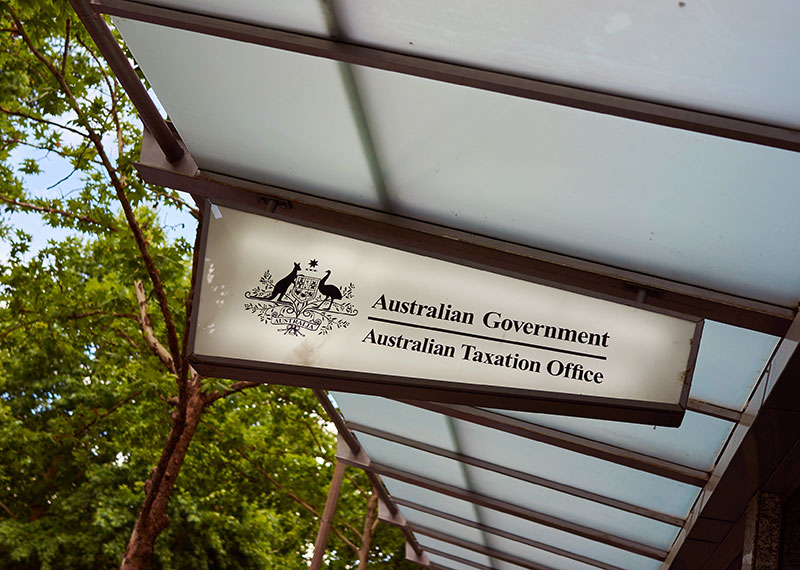
The objective of the audit was to assess the effectiveness of the Australian Taxation Office's activities to promote employer compliance with Superannuation Guarantee obligations.
Entity
Australian Taxation Office
Contact
Please direct enquiries relating to reports through our contact page.
Performance audit (Auditor-General Report No. 8 of 2013–14)
Published: Wednesday 6 November 2013
Published
The objective of the audit was to examine the effectiveness of the Australian Government Reconstruction Inspectorate, supported by the National Disaster Recovery Taskforce, in providing assurance that value for money is being achieved in respect to Queensland reconstruction projects.
Entity
Department of Infrastructure and Regional Development
Contact
Please direct enquiries relating to reports through our contact page.
Performance audit (Auditor-General Report No. 34 of 1997–98)
Published: Tuesday 24 March 1998
Published
The audit reviewed the Defence's $5.05 billion New Submarine Project which commenced in 1982 and involves design and construction of six Collins class submarines and associated supplies and services. The objectives of the audit were to assess project management by the Department's Project Office in the light of accepted better-practice project management techniques. It also aimed to derive lessons learnt and recommendations that could be applied to the Project and to similar Defence projects now and in the future. The audit follows a 1992 audit of the Project by the ANAO and a review by the Joint Committee of Public Accounts in 1995.
Entity
Department of Defence
Performance audit (Auditor-General Report No. 39 of 2018–19)

Published: Wednesday 22 May 2019
Published
The audit’s objective was to determine if the Bureau of Meteorology’s processes support the delivery of effective extreme weather services.
Entity
Bureau of Meteorology
Contact
Please direct enquiries through our contact page.
Performance audit (Auditor-General Report No. 10 of 2014–15)

Published: Tuesday 9 December 2014
Published
The objective of the audit was to assess the effectiveness of the Department of the Environment’s administration of the Biodiversity Fund program.
Entity
Department of the Environment
Contact
Please direct enquiries relating to reports through our contact page.
Performance audit (Auditor-General Report No. 15 of 2021–22)

Published: Thursday 16 December 2021
Published
The objective of the audit was to assess the effectiveness to date of the Department of Defence’s procurement of six evolved Cape class patrol boats.
Entity
Department of Defence
Contact
Please direct enquiries through our contact page.
Request for audit
Responded: Friday 15 October 2021
Response provided
The Auditor-General responded on 13 September 2021 to correspondence from Senator the Hon Eric Abetz dated 17 August 2021, requesting that the Auditor-General conduct an investigation to examine the Australian Broadcasting Corporation's (ABC's) payment of the damages and legal costs of one of its employees in a private defamation proceeding.
The Auditor-General provided a follow-up response to Senator the Hon Eric Abetz on 15 October 2021.
Contact
Please direct enquiries relating to requests for audit through our contact page.
Events and seminars
Published: Friday 5 December 2025
Published
An Audit Committee Chairs Forum was held on Friday 5 December 2025. The text on this page is the communique from the forum.
Contact
For any enquiries, please contact External.Relations@anao.gov.au
Performance audit (Auditor-General Report No. 14 of 1999–2000)
Published: Tuesday 12 October 1999
Published
The audit reviewed Commonwealth debt management procedures. The audit objectives were to:
- review, and consider opportunities to improve, the reporting and disclosure of the Commonwealth's public debt;
- assess the effectiveness of the raising, management and retirement of Commonwealth debt, consistent with an acceptable degree of risk exposure; and
- determine whether there are opportunities to improve the Commonwealth's approach to the raising, management and retirement of Commonwealth debt.
Entity
Across Agency
Performance audit (Auditor-General Report No. 33 of 2024–25)

Published: Wednesday 21 May 2025
Published
The audit objective was to assess the effectiveness of the Department of the Prime Minister and Cabinet’s administration of the IA framework to enable well-informed and transparent Australian Government decision-making.
Entity
Department of the Prime Minister and Cabinet
Contact
Please direct enquiries through our contact page.