Browse our range of reports and publications including performance and financial statement audit reports, assurance review reports, information reports and annual reports.
Performance audit (Auditor-General Report No. 16 of 1997–98)
Published: Sunday 26 October 1997
Published
The objectives of the audit were to examine the benefits of diversity management in the APS and review the progress made towards equity in employment in the APS, including the EEO Program. It included:
- an assessment of the progress towards achieving equity across the APS and by individual agencies;
- an assessment of the quality of agency EEO programs;
- an assessment of the role of the PSMPC in approving agency EEO programs and monitoring trends across the service;
- a consideration of legal obligations and agencies compliance with these; and
- the possible risks to, and opportunities for, equity under the WRA.
The audit concentrated on evidence of overall progress, the relative performance of individual agencies, and the examination of observed and underlying trends.
Entity
Public Service and Merit Protection Commission and Other Agencies
Performance audit (Auditor-General Report No. 34 of 2021–22)

Published: Thursday 16 June 2022
Published
The objective of the audit was to assess the effectiveness of the governance board in the Australian Film, Television and Radio School.
Entity
Australian Film, Television and Radio School
Contact
Please direct enquiries through our contact page.
Performance audit (Auditor-General Report No. 43 of 2008–09)
Published: Tuesday 23 June 2009
Published
The objective of the audit, in examining the construction of the CIIDC, was to assess:
- the adequacy of the planning and delivery processes for the project;
- the value-for-money achieved in the delivery of the project, including with regard to the suitability of the centre for its intended purpose; and
- the extent to which the Public Works Committee Act.
Entity
Department of Finance and Deregulation
Performance audit (Auditor-General Report No. 23 of 2005–06)
Published: Thursday 22 December 2005
Published
This audit is a part of the ANAO's protective security audit coverage. The objective of this audit was to determine whether agencies audited had developed and implemented sound IT security management principles and practices supported by an IT security control framework, in accordance with Australian Government policies and guidelines. The audit at each agency examined the framework for the effective management and control of IT security, including the management of IT operational security controls and, where applicable, was based on the Australian Government protective security and information and communications technology (ICT) security guidelines that were current at that time.
Entity
Across Agency
Performance audit (Auditor-General Report No. 2 of 2007–08)
Published: Wednesday 18 July 2007
Published
The objective of this audit is to examine DIAC's implementation of the nine recommendations made in the earlier audit. The audit has also taken into account changed circumstances since the original audit. These include a heightened security environment after 11 September 2001 and the results of other relevant ANAO performance audit and financial statement work. The audit also examined ETA decision-making processes to gain assurance about its robustness in a changing risk environment. This issue came to attention in recent audits of visa management processes.
Entity
Department of Immigration and Citizenship
Performance audit (Auditor-General Report No. 2 of 2024–25)

Published: Wednesday 11 September 2024
Published
The audit objective was to assess the effectiveness of the Department of Defence’s arrangements to manage the security authorisation of its ICT systems.
Entity
Department of Defence
Contact
Please direct enquiries through our contact page.
Performance audit (Auditor-General Report No. 3 of 2006–07)
Published: Thursday 7 September 2006
Published
The objective of the audit was to examine the effectiveness of Defence's management of the procurement of Minor capital equipment for Army capability. In particular, the audit focussed on the identification and approval of capability requirements; the management of Army Minors Program funding and expenditure; and DMO management of procurement processes for Army Minor projects. The audit focused on projects included in the Program as at 1 July 2005. As at that date, 85 projects were listed. Case studies illustrating particular issues in the management of the Program are profiled throughout the report in the relevant section.
Entity
Department of Defence; Defence Materiel Organisation
Speeches and papers
Published: Monday 8 October 2001
Published
Mr P.J. Barrett (AM) - Auditor-General for Australia, presented at the Third ACAG Conference, Canberra
Performance audit (Auditor-General Report No. 55 of 2003–04)
Published: Wednesday 23 June 2004
Published
The objective of the audit was to assess whether protective security functions in selected organisations were being effectively managed. In considering effectiveness, the audit assessed whether protective security arrangements: - were designed within the context of the business framework and the related security risks identified by the organisation; and - provided an appropriate level of support for the organisation's operations and the delivery of its services.
Entity
Attorney-General’s Department; Department of Family and Community Services; Commonwealth Scientific and Industrial Research Organisation; Special Broadcasting Service Corporation
Performance audit (Auditor-General Report No. 26 of 2015–16)
Published: Tuesday 15 March 2016
Published
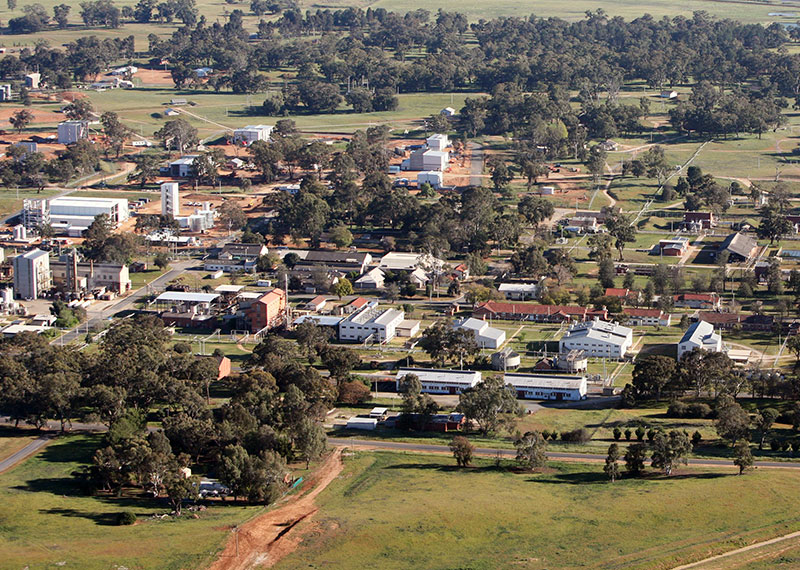
The audit objective is to assess the effectiveness of the Department of Defence's management of the Mulwala Redevelopment Project.
Entity
Department of Defence
Contact
Please direct enquiries relating to reports through our contact page.
Events and seminars
Published: Thursday 20 July 2017
Published
The Audit Committee Chairs Forum is a joint initiative of the Department of Finance and the ANAO and includes the general government and non-general government sector Audit Committee Chairs. This communique covers the outcomes of the discussion at the forum on 7 June 2017 including updates from the Auditor-General and the ANAO, and from the Department of Finance.
Contact
Please direct enquiries relating to the audit committee chairs forum through our contact page.
Speeches and papers
Published: Wednesday 10 October 2001
Published
Mr P.J. Barrett (AM) - Auditor-General for Australia, presented an the Australasian Evaluation Society - International Conference
Financial statement audit (Auditor-General Report No. 20 of 2019–20)
Published: Tuesday 17 December 2019
Published
This report complements the Interim Report on Key Financial Controls of Major Entities financial statement audit report published in June 2019. It provides a summary of the final results of the audits of the Consolidated Financial Statements for the Australian Government and the financial statements of Australian Government entities for the period ended 30 June 2019.
Contact
Please direct enquiries through our contact page.
Financial statement audit (Auditor-General Report No. 19 of 2018–19)
Published: Monday 17 December 2018
Published
This report complements the Interim Report on Key Financial Controls of Major Entities financial statement audit report published in June 2018. It provides a summary of the final results of the audits of the Consolidated Financial Statements for the Australian Government and the financial statements of Australian Government entities for the period ended 30 June 2018.
Contact
Please direct enquiries through our contact page.
Speeches and papers
Published: Wednesday 20 November 1996
Published
Mr P.J. Barrett (AM) - Auditor-General for Australia, presented to the PAA National Conference - Reshaping the Old: Charting the New - Public Management in the 1990s - Melbourne
Performance audit (Auditor-General Report No. 36 of 2007–08)
Published: Thursday 29 May 2008
Published
The objective of the audit was to assess the Tax Office's strategies to address tax haven compliance risks. Particular emphasis was given to the Tax Office's:
- management arrangements relating to the administration of tax haven compliance risks;
- risk management framework for the identification and evaluation of compliance risks, specifically the activities of the Offshore Compliance Program (OCP); and
- risk mitigation strategies.
The audit did not include an examination of cases related to the promoters of tax haven related schemes nor the criminal use of tax havens.
Entity
Australian Taxation Office
Performance audit (Auditor-General Report No. 47 of 2023–24)

Published: Tuesday 25 June 2024
Published
The audit objective was to assess whether the Department of Defence's (Defence's) arrangements for the operation and maintenance of the Mulwala and Benalla facilities beyond June 2020 were established through appropriate processes and in accordance with the Commonwealth Procurement Rules (CPRs).
Entity
Department of Defence
Contact
Please direct enquiries through our contact page.
Performance audit (Auditor-General Report No. 5 of 2024–25)

Published: Monday 21 October 2024
Published
The audit objective was to assess whether the Australian Government has established an appropriate framework for responding to crises.
Entity
Department of the Prime Minister and Cabinet; National Emergency Management Agency
Contact
Please direct enquiries through our contact page.
Performance audit (Auditor-General Report No. 24 of 2012–13)
Published: Tuesday 26 February 2013
Published
The Preparation and Delivery of the Natural Disaster Recovery Work Plans for Queensland and Victoria
The objective of this audit was to assess the extent to which the disaster recovery work plans for Queensland and Victoria were prepared, and appropriate monitoring reports provided, in accordance with the relevant National Partnership Agreement (NPA).
Entity
Department of Regional Australia, Local Government, Arts and Sport
Financial statement audit (Auditor-General Report No. 24 of 2017–18)
Published: Wednesday 20 December 2017
Published
This report complements the Interim Report on Key Financial Controls of Major Entities financial statement audit report published in June 2017. It provides a summary of the final results of the audits of the Consolidated Financial Statements for the Australian Government and the financial statements of Australian Government entities for the period ended 30 June 2017.
Entity
Across Entities
Contact
Please direct enquiries through our contact page.
Performance audit (Auditor-General Report No. 43 of 2003–04)
Published: Friday 23 April 2004
Published
The objective of the audit was to provide assurance to Parliament concerning the adequacy of Defence preparedness management systems and to identify possible areas for improvement. The audit focused on the systems and processes that Defence uses to manage preparedness. We did not review the preparedness levels of specific capabilities, nor did we cover capital acquisition processes. The audit included coverage of: - preparedness systems architecture; - control and direction of preparedness; - coordination among contributors to preparedness; and - performance management and preparedness.
Entity
Department of Defence
Performance audit (Auditor-General Report No. 12 of 2002–03)
Published: Monday 21 October 2002
Published
The IIF program is designed to redress the low level of provision in Australia of high risk venture capital for small new technology - based companies commercialising research and development. The objective of the audit was to determine whether the IIF program was being effectively managed by the Industry Research and Development (IR&D) Board and the Department of Industry, Tourism and Resources to achieve the program objectives. The audit focused on corporate governance arrangements for program administration, the selection process to award licences, the safeguards to protect the Commonwealth's financial interests, management of licence agreements, and program performance management. The audit also examined program results to date from available data.
Entity
Department of Industry, Tourism and Resources; Industry Research and Development Board
Performance audit (Auditor-General Report No. 10 of 2010–11)
Published: Thursday 30 September 2010
Published
The objective of the audit was to examine the effectiveness of Centrelink's approach to investigating and responding to external fraud. The ANAO's assessment was based on four key criteria. In particular, the ANAO assessed whether Centrelink:
- had established a management framework, business systems and guidelines, that support the investigation, prosecution and reporting of fraud;
- had implemented appropriate case selection strategies and controls to ensure resources are targeted to the cases of highest priority;
- complied with relevant external and internal requirements when investigating fraud and referring cases for consideration of prosecution; and
- had implemented an effective training program that supports high quality investigations and prosecution referrals.
Entity
Centrelink
Performance audit (Auditor-General Report No. 23 of 2012–13)
Published: Tuesday 26 February 2013
Published
The objective of this audit was to assess the effectiveness of the Australian Government Reconstruction Inspectorate, supported by the National Disaster Recovery Taskforce, in providing assurance that value for money is being achieved in recovery and reconstruction expenditure in Victoria.
Entity
Department of Regional Australia, Local Government, Arts and Sport
Performance audit (Auditor-General Report No. 24 of 2020–21)

Published: Monday 14 December 2020
Published
The objective of the audit was to assess whether the Australian Taxation Office (ATO) has effectively managed risks related to the rapid implementation of COVID-19 economic response measures.
Entity
Australian Taxation Office
Contact
Please direct enquiries through our contact page.
Performance audit (Auditor-General Report No. 32 of 2007–08)
Published: Thursday 8 May 2008
Published
The objective of the audit was to assess the completeness and reliability of the estimates reported in Tax Expenditures Statement 2006 (TES 2006). That is, the audit examined the development and publication of the detailed statement of actual tax expenditures required by Division 2 of Part 5 of the CBH Act. The development and publication of aggregated information on projected tax expenditures included in the Budget Papers pursuant to Division 1 of Part 5 of the CBH Act was not examined.
Entity
Department of Treasury
Performance audit (Auditor-General Report No. 11 of 2006–07)
Published: Thursday 9 November 2006
Published
The objective of this audit was to assess DAFF's management of the contractual arrangements in place to deliver the National Food Industry Strategy. The audit assessed: implementation of the Strategy; financial management;assessment and selection of grants and projects; management of grants and projects; monitoring and verification of contract services; and performance management. The Australian National Audit Office (ANAO) examined a number of FIG applications and projects, one food centre of excellence and a major project under the Food Market Development programme. The audit did not examine the Food Chain programme or DAFF's administration of the Strategy's government-to-government activities.
Entity
NO-DEPTS-LISTED
Performance audit (Auditor-General Report No. 19 of 2021–22)

Published: Thursday 17 March 2022
Published
The audit objective was to assess the effectiveness and efficiency of the management of threatened species and ecological communities under the Environment Protection and Biodiversity Conservation Act 1999.
Entity
Department of Agriculture, Water and the Environment
Contact
Please direct enquiries through our contact page.
Performance audit (Auditor-General Report No. 53 of 2000–01)
Published: Wednesday 27 June 2001
Published
This performance audit is the first property management audit that the ANAO has conducted since the FMA Act came into effect in 1997, with the associated devolution of responsibility to agency heads. The audit included coverage of office accommodation currently leased in Australia from the private sector. This office accommodation was housing the functions and activities of clerical, technical or professional staff, including conference and meeting rooms and ministerial suites but excluding basements, car parks, theatrettes, and cafeterias.
Entity
Across Agency
Major projects report (Auditor-General Report No. 20 of 2011–12)

Published: Tuesday 20 December 2011
Published
The objective of this report is to provide a formal conclusion on the review of the Project Data Summary Sheets by the Auditor-General, including comprehensive information on the status of projects as reflected in the PDSSs prepared by the DMO.
Entity
Defence Materiel Organisation
Performance audit (Auditor-General Report No. 29 of 2014–15)

Published: Tuesday 21 April 2015
Published
The objective of the audit was to assess the effectiveness of the arrangements established by the Department of the Environment for the funding and management of the Nimmie-Caira System Enhanced Environmental Water Delivery Project.
Entity
Department of the Environment
Contact
Please direct enquiries relating to reports through our contact page.
Performance audit (Auditor-General Report No. 14 of 2019–20)
Published: Wednesday 27 November 2019
Published
The objective of the audit was to examine the effectiveness of the design and implementation of the clear read principle under the Commonwealth Resource Management Framework.
Entity
Across Entities
Contact
Please direct enquiries through our contact page.
Speeches and papers
Published: Tuesday 16 May 2000
Published
Mr P.J. Barrett (AM) - Auditor-General for Australia, presented at the Medibank Private Executive Seminar Breakfast, Perth
Performance audit (Auditor-General Report No. 52 of 2005–06)
Published: Thursday 29 June 2006
Published
The audit objectives were to examine the extent to which selected TSB2 and TSI Response programs: are achieving or had achieved their objectives; and had been administered effectively by DCITA according to better practice principles. To evaluate this aspect, the audit assessed DCITA's compliance with the better practice principles outlined in the Administration of Grants Better Practice Guide (May 2002) produced by the Australian National Audit Office (ANAO). There are 19 separate principles covered under the broad areas of: Planning for effective grant programs; Selecting projects; Managing and monitoring funding deeds; and Evaluating and reporting grant program performance.
Entity
Department of Communications, Information Technology and the Arts
Audit manual
Updated: Tuesday 9 September 2025
Updated
The Performance Audit Services Group (PASG) volume of the ANAO Audit Manual applies to the performance audit activity performed by PASG in collaboration with the Systems Assurance and Data Analytics (SADA) group. Relevant policies and guidance from the PASG volume are also applied to assurance reviews performed by PASG. Policies and guidance in the PASG volume address the planning, execution and reporting stages of the performance audit process.
Contact
Please direct enquiries through our contact page.
Performance audit (Auditor-General Report No. 24 of 2014–15)

Published: Thursday 26 February 2015
Published
The objective of the audit was to assess the effectiveness of the Department of Parliamentary Services’ management of assets and contracts to support the operations of Parliament House.
Entity
Department of Parliamentary Services
Contact
Please direct enquiries relating to reports through our contact page.
Major projects report (Auditor-General Report No. 13 of 2009–10)

Published: Tuesday 24 November 2009
Published
The objective of this report is to provide information, prepared by both the ANAO and DMO, on the performance of major projects as well as providing the Auditor-General’s formal conclusion on the review of the Project Data Summary Sheets (PDSSs) prepared by DMO and contained in this report.
Entity
Defence Materiel Organisation
Performance audit (Auditor-General Report No. 9 of 2007–08)
Published: Thursday 4 October 2007
Published
The audit objective was to assess the effectiveness of DEST's administration of its role in Australian Apprenticeships. To achieve this, the ANAO assessed DEST's performance to determine if DEST:
- monitored whether Australian Apprenticeships was achieving its objectives;
- effectively managed the Australian Apprenticeships Incentives Programme; and
- effectively managed its contracts with Australian Apprenticeships Centres.
Entity
Department of Education, Science and Training
Performance audit (Auditor-General Report No. 55 of 2004–05)
Published: Thursday 23 June 2005
Published
The objective of the audit was to consider the status of workforce planning by APS agencies against the background of the ANAO's 2001 Better Practice Guide Planning for the Workforce of the Future, in light of there commendations made in the MAC Organisational Renewal 2001 and the Senate Finance and Public Administration References Committee report Recruitmentand Training in the Australian Public Service 2003. Workforce planning was defined as a continuous process of shaping the workforce to ensure it is capable of delivering organisational objectives now and in the future.
Entity
Across Entities
Events and seminars
Published: Friday 15 July 2022
Published
An Audit Committee Chairs Forum was held virtually on Friday, 15 July 2022. The text on this page is the communique from the forum.
Contact
For any enquiries, please contact External.Relations@anao.gov.au
Performance audit (Auditor-General Report No. 6 of 2010–11)
Published: Tuesday 21 September 2010
Published
The objective of the audit was to assess the implementation of the Australian Taxation Office's Client Contact – Work Management – Case Management system (CWC). The audit examined four key areas that included:
- progress of the CWC against the endorsed Change Program business case;
- improvements to the productivity and efficiency of tax administration as a result of the implementation of the CWC;
- improvements to client experiences when dealing with the Tax Office as a result of the implementation of the CWC; and
- effects of the CWC implementation, including additional benefits achievable beyond its current capacity to further improve tax administration.
Entity
Australian Taxation Office
Performance audit (Auditor-General Report No. 23 of 2011–12)
Published: Tuesday 7 February 2012
Published
The objective of the audit was to assess the effectiveness of the Department of Climate Change and Energy Efficiency’s implementation and administration of the National Greenhouse and Energy Reporting Scheme.
Entity
Department of Climate Change and Energy Efficiency
Performance audit (Auditor-General Report No. 48 of 2006–07)
Published: Friday 22 June 2007
Published
The objective of this audit was to determine the extent to which selected agencies have implemented the two recommendations of the previous audit; and the appropriateness of advice provided by Finance and the ATO. To address this audit objective, the audit assessed:
- the roles of Finance and the ATO in clarifying: the interaction of the PB and SG Act; the ongoing role of the PB Act; and mechanisms to monitor Australian Government organisations' compliance with the PB Act;
- the extent to which Finance and the ATO have provided guidance and other support to assist Australian Government organisations manage and meet statutory superannuation obligations for eligible contractors; and
- whether Australian Government organisations have managed and met statutory superannuation obligations for contractors in past and current contracts.
Entity
NO-DEPTS-LISTED
Performance audit (Auditor-General Report No. 17 of 1997–98)
Published: Tuesday 25 November 1997
Published
The objectives of the audit were to:
- assess the extent to which major program objectives were achieved;
- identify major strengths and weaknesses related to the economy, effectiveness and efficiency of the program administration; and
- identify areas of improvements and risks which should be addressed in arrangements with a private sector project manager.
Audit criteria were developed to address the areas of program planning and implementation, performance measurement and monitoring, responsiveness to emerging issues, dispute resolution mechanisms, risk management and program improvement measures.
Entity
Department of Transport and Regional Development
Performance audit (Auditor-General Report No. 41 of 2010–11)
Published: Tuesday 17 May 2011
Published
The objective of the audit was to examine the effectiveness of the management of maintenance of the Defence estate, taking particular account of planning and delivery aspects.
The audit examined: Defence’s policies, procedures, processes and supporting tools related to the planning and delivery of the maintenance of the estate; and services provided to Defence by private sector firms in relation to maintenance activities. The audit did not focus on contract management matters, nor on the systems used by Defence to maintain information related to estate maintenance.
Entity
Department of Defence
Performance audit (Auditor-General Report No. 8 of 2018–19)

Published: Tuesday 9 October 2018
Published
The objective of the audit was to assess whether effective arrangements have been established by Finance to achieve value for money outcomes for Commonwealth leased office property.
Entity
Department of Finance
Contact
Please direct enquiries through our contact page.
Speeches and papers
Published: Thursday 16 February 2006
Published
Mr Ian McPhee - Auditor-General for Australia, presented at the Canberra Evaluation Forum
Performance audit (Auditor-General Report No. 32 of 1999–2000)
Published: Thursday 17 February 2000
Published
Industry levies play a significant role in the provision of many public services and fund a range of activities undertaken by regulatory bodies such as the Australian Prudential Regulation Authority (APRA), through to financing reform of the Australian waterfront labour force. The objectives of this audit were to assess:
- the coverage, revenue and expenses of non-primary industry levies;
- the effectiveness of selected entities' financial management of non-primary industry levies; and
- areas of better administrative practice relating to the financial management of non-primary industry levies.
Entity
Across Agency
Audit manual
Updated: Tuesday 9 September 2025
Updated
The Financial Statements Audit Services Group (FSASG) volume of the ANAO Audit Manual applies to the financial statement audit activity performed by FSASG in collaboration with the Systems Assurance and Data Analytics (SADA) group. Relevant policies and guidance from the FSASG volume are also applied to other assurance work performed by FSASG. Policies and guidance in the FSASG volume address the planning, execution and reporting stages of the financial statement audit process.
Contact
Please direct enquiries through our contact page.
Performance audit (Auditor-General Report No. 36 of 2001–02)
Published: Wednesday 13 March 2002
Published
In view of the significant level of investment by Commonwealth agencies in the implementation and production of Financial Management Information Systems (FMISs), the ANAO, in conjunction with Gartner, undertook a benchmarking study within the Commonwealth budget sector with the objective of determining and reporting on FMIS:
- implementation and production costs; and
- implementation timeframes.
The benchmarking study also provides some data on resource support, size, volume and utilisation of the FMIS information. These data and metrics have significant implications for FMIS product selection. This study follows on from ANAO Audit Report No.12 'Selection, Implementation and Management of Financial Management Information Systems in Commonwealth Agencies', which was tabled in September 2001. That report provided details of the results of FMIS selections and implementations across the same eight Commonwealth budget sector agencies (the Commonwealth peer group) considered in this benchmarking study.
Entity
Across Agency
Performance audit (Auditor-General Report No. 44 of 2006–07)
Published: Thursday 14 June 2007
Published
The objective of the audit was to assess the effectiveness of the Tribunals' management of their operations. To this end, the audit examined whether the MRT and the RRT:
- have achieved intended operational efficiencies from the introduction of common facilities, services and resourcing;
- have established appropriate arrangements for governance, business planning and guidance of Members and staff, and for performance monitoring and reporting of Tribunal operations;
- finalise cases within Tribunal time and productivity standards; and
- provide applicants with services in accordance with service standards.
The audit covered Tribunal operations for review of visa decisions. The correctness of individual decisions was not assessed as part of the audit.
The audit focused particularly on developments in the Tribunals' management performance in the four year period from 2001–02 to 2004–05.
Entity
Migration Review Tribunal; Refugee Review Tribunal
Performance audit (Auditor-General Report No. 19 of 2011–12)
Published: Tuesday 20 December 2011
Published
The objective of the audit was to assess the development of Defence’s oversight and management of its portfolio of ICT investments and projects. In particular, the audit examined Defence’s:
- governance, strategic processes and decision-making structures that set out, prioritise and coordinate the integrated ICT reform portfolio and programs;
- ICT risk management and capacity to identify and plan to achieve the benefits of its SRP ICT stream reforms (including methodologies to measure the realisation of savings and non-savings benefits);
- level of portfolio and program management maturity; and
- the impact of improvement efforts on Defence’s ability to deliver the ICT services capacity required to support the SRP.
Entity
Department of Defence
Performance audit (Auditor-General Report No. 17 of 2007–08)
Published: Wednesday 19 December 2007
Published
The overall objective of the audit was to assess the effectiveness of Refresh and, in particular:
- the extent to which Centrelink has used the funds invested by the Government to develop its IT capability and realise the anticipated service delivery, financial and other benefits; and
- how Centrelink's programme management approach and Refresh's oversight arrangements have contributed to the achievement of the outcomes of the programme.
Entity
Centrelink
Performance audit (Auditor-General Report No. 19 of 2007–08)
Published: Tuesday 22 January 2008
Published
The current audit has focussed on Stage 2 of the Scheme. Its objective was to assess whether ACIS is being administered effectively by DIISR and, as relevant, by Customs. In particular, the audit examined the department's arrangements for:
- assessing the eligibility of participants to receive duty credits;
- calculating duty credits accurately and adhering to the funding limits for the Scheme;
- checking the integrity of participants' claims, which are self-assessed;
- accounting for the duty credits transferred to and used at Customs; and
- measuring and reporting on the performance of ACIS.
The audit also followed up on whether the ANAO's previous recommendations have been addressed.
Entity
Department of Innovation, Industry, Science and Research; Australian Customs Service
Performance audit (Auditor-General Report No. 40 of 2000–01)
Published: Monday 28 May 2001
Published
The Department of Immigration and Multicultural Affairs (DIMA), administers the Commonwealth's settlement programs, which seek to assist migrants and refugees to participate in Australian society. Provision of English language training to newly arrived migrants and refugees has been a long standing and significant part of this settlement support, with some 1.5 million new arrivals assisted in this way since 1948. The objective of the audit was to examine DIMA's management of the Adult Migrant English Program Contracts, focusing on performance outcomes; strategic contract management and coordination; program expenditure, with emphasis on contract funding arrangements; and whether contract monitoring and performance information adequately support effective program management. The ANAO made six audit recommendations aimed at improving program performance management and reporting; strategic management and coordination; management of financial risks; and monitoring of contractor performance, which were all accepted by DIMA.
Entity
Department of Immigration and Multicultural Affairs
Speeches and papers
Published: Thursday 17 February 2011
Published
Mr Ian McPhee, PSM - Auditor-General for Australia, presented to the Department of Parliamentary Services
Performance audit (Auditor-General Report No. 63 of 2001–02)
Published: Thursday 27 June 2002
Published
The objectives of the audit were to assess the administrative and financial effectiveness of the Department of Finance and Administration's (Finance's) management of the Commonwealth's exposure under the DASFLEET Tied Contract; assess the effectiveness of Finance's monitoring of performance of the DASFLEET Tied Contract with Macquarie Fleet; and review the action taken by Finance in response to a recommendation of Audit Report No. 25 1998-99, Sale of DASFLEET.
Entity
Across Agency
Performance audit (Auditor-General Report No. 5 of 1999–2000)
Published: Monday 9 August 1999
Published
The audit reviewed the productivity and client service of IP Australia, a division of the Department of Industry, Science and Resources, which provides intellectual property rights in respect of patents, trade marks and designs. The objective of the audit was to examine the effectiveness of IP Australia's management of productivity and client service.
Entity
Department of Industry, Science and Resources
Performance audit (Auditor-General Report No. 31 of 2009–10)
Published: Thursday 22 April 2010
Published
The audit scope covered the management of the AusLink R2R Standard Program and the AusLink R2R Supplementary Program. The scope did not include management of the Nation Building Roads to Recovery Program, which has only recently commenced. The audit objectives were to:
- assess the effectiveness of the management of the AusLink Roads to Recovery Program;
- assess the delivery of the program and management of the funding, including the extent to which the program has provided additional (rather than substitute) funding for land transport infrastructure; and
- identify opportunities for improvements to the management of the program.
Entity
Department of Infrastructure, Transport, Regional Development and Local Government
Performance audit (Auditor-General Report No. 27 of 2011–12)
Published: Tuesday 20 March 2012
Published
The objective of this audit was to assess the efficiency1 and effectiveness of the establishment, implementation and administration of the bike paths component of the Local Jobs stream of the Jobs Fund. A particular focus was on the establishment of program objectives and the extent to which approved grants have demonstrably contributed to the cost-effective achievement of those objectives. The audit approach has been influenced by recent audits of grants administration which have emphasised the importance of transparent and accountable grant decision-making processes to the cost effective achievement of stated program objectives, and having regard for recent government decisions to enhance the framework applying to the administration of grants.
As an economic stimulus program, efficiency was assessed with particular attention to whether the application, assessment, decision-making and funding agreement processes were undertaken in a timely manner. This emphasis was consistent with the criterion adopted by the Government for the design of the stimulus packages established in response to the global financial crisis (see further at paragraph 4.20 of the audit report).
Entity
Department of Regional Australia, Local Government, Arts and Sport and Department of Infrastructure and Transport
Performance audit (Auditor-General Report No. 26 of 2009–10)
Published: Tuesday 20 April 2010
Published
The objective of this audit was to assess the effectiveness of the administration of specific climate change programs by the departments of the Environment, Water, Heritage and the Arts and Resources, Energy and Tourism. In undertaking this audit, particular emphasis was given to the implementation of good administrative practice and the extent to which the program objectives were being met. The audit followed four lines of inquiry:
- development of program objectives and assessment of program risks;
- assessment and approval of competitive grant applications;
- assessment and approval of rebate applications; and
- measurement and reporting of program outcomes.
Entity
Department of the Environment, Water, Heritage and the Arts; Department of Climate Change and Energy Efficiency; Department of Resources, Energy and Tourism
Speeches and papers
Published: Friday 5 November 2004
Published
Mr P.J. Barrett (AM) - Auditor-General for Australia, presented at the 2nd Taipai Corporate Governance Forum
Major projects report (Auditor-General Report No. 17 of 2010–11)

Published: Tuesday 30 November 2010
Published
The objective of this report is to provide comprehensive information on the status of projects as reflected in the Project Data Summary Sheets (PDSSs) prepared by DMO, and a review by the ANAO.
Entity
Defence Materiel Organisation
Audit manual
Updated: Tuesday 9 September 2025
Updated
The shared content volume of the ANAO Audit Manual applies to all assurance activity performed by the ANAO, including financial statements and performance auditing. The shared volume addresses key matters affecting compliance with the Auditor-General Act 1997 and other aspects of the ANAO’s legislative framework. It sets out the main requirements of the ANAO’s overall system of quality control in accordance with ASQC1 Quality Control for Firms that Perform Audits and Reviews of Financial Reports and Other Financial Information, Other Assurance Engagements and Related Services Engagements.
Contact
Please direct enquiries through our contact page.
Speeches and papers
Published: Friday 30 November 2001
Published
Mr P.J. Barrett (AM) - Auditor-General for Australia, presented to the Institute of Public Administration Australia
Performance audit (Auditor-General Report No. 40 of 2010–11)
Published: Tuesday 17 May 2011
Published
The objective of the audit was to assess whether Defence is effectively managing the EO Services Contract.
The audit focused mainly on Defence's contract management framework, including the arrangements to monitor the contractor’s performance in delivering services under the contract. The audit also examined the processes used by Defence to develop the current version of the contract and the extent to which the revised contract, as negotiated in 2006, provides an assurance of better value for money when compared to the original contract signed in 2001.
Entity
Department of Defence
Performance audit (Auditor-General Report No. 47 of 2002–03)
Published: Friday 13 June 2003
Published
The audit examined the efficiency and effectiveness of the Department of Employment and Workplace Relations' implementation and subsequent management of the Indigenous Employment Policy. The audit sought to determine whether, in relation to the Indigenous Employment Policy, the department had:
- developed appropriate planning processes and performance measures;
- monitored and reported performance results;
- implemented appropriate evaluation and review mechanisms;
- conducted effective marketing and promotion; and
- identified enhancements and addressed performance issues.
Entity
Department of Employment and Workplace Relations
Performance audit (Auditor-General Report No. 47 of 2008–09)
Published: Thursday 25 June 2009
Published
The objective of the audit was to examine if AFMA is effectively undertaking its regulatory compliance responsibilities in respect of domestic fishing in Commonwealth fisheries. Particular emphasis was
given to:
- the licensing of fishers and related transaction processing;
- the management of fishing quota by concession holders and AFMA; AFMA's domestic compliance monitoring and
- enforcement activities; and the governance arrangement for domestic fishing compliance.
Entity
Australian Fisheries Management Authority
Performance audit (Auditor-General Report No. 45 of 1999–2000)
Published: Wednesday 31 May 2000
Published
The Commonwealth has significant foreign exchange risk exposures including $A8.4 billion of foreign currency transactions with the Reserve Bank of Australia in 1998-99. Under the Financial Management and Accountability Act and its associated Regulations, all agencies are required to assess and, where possible, manage, foreign exchange risk. The audit reviewed four agencies that have substantial foreign currency payment exposures namely:
- the Department of Defence;
- the Australian Agency for International Development;
- the Department of Foreign Affairs and Trade; and
- the Department of Finance and Administration.
The objective of the audit was to identify and assess the efficiency and cost effectiveness of the management of foreign exchange risk across the selected agencies, also to identify opportunities to improve the management of foreign exchange risk, including any associated potential financial savings that could accrue to the Commonwealth.
Entity
Department of Defence; Australian Agency for International Development; Department of Foreign Affairs and Trade; Department of Finance and Administration
Performance audit (Auditor-General Report No. 17 of 2020–21)

Published: Monday 23 November 2020
Published
The objective of this audit was to assess the effectiveness of the Department of Health’s approach to health provider compliance.
Entity
Department of Health
Contact
Please direct enquiries through our contact page.
Performance audit (Auditor-General Report No. 4 of 2004–05)
Published: Monday 2 August 2004
Published
The audit assessed whether Centrelink effectively manages customer debt, excluding debt relating to Family Tax Benefit, consistently across its network, ensuring integrity of payments made on behalf of the Department of Family and Community Services (FaCS). The audit assessed five components of Centrelink's debt management processes, including administration, prevention, identification, raising and recovery.
Entity
Centrelink
Performance audit (Auditor-General Report No. 24 of 1999–2000)
Published: Wednesday 22 December 1999
Published
The audit reviewed the Commonwealth management and regulation of plasma fractionation. The audit objectives were to:
- assess the administrative and financial effectiveness of the Department of Health and Aged Care's contract management of the PFA;
- assess whether the TGA's implementation of post sale regulatory arrangements adequately protects the community's interests; and
- assess the extent to which agencies have implemented the recommendations made in Audit Report No.14 1995-96 concerning funding of plasma products and regulation of plasma products manufactured under the PFA.
Entity
Department of Health and Aged Care
Performance audit (Auditor-General Report No. 13 of 2014–15)

Published: Tuesday 16 December 2014
Published
The objective of the audit was to assess the effectiveness of the Australian Customs and Border Protection Service's management of the Cape Class patrol boat program.
Entity
Australian Customs and Border Protection Service
Contact
Please direct enquiries relating to reports through our contact page.
Performance audit (Auditor-General Report No. 34 of 2013–14)
Published: Thursday 29 May 2014
Published
The objective of this audit was to assess the effectiveness of arrangements for implementing and monitoring the implementation of ANAO performance audit recommendations in the Department of Agriculture and the Department of Human Services.
Entity
Department of Agriculture, Department of Human Services
Contact
Please direct enquiries relating to reports through our contact page.
Performance audit (Auditor-General Report No. 46 of 2016–17)

Published: Monday 10 April 2017
Published
The objective of this audit was to assess whether the OneSKY tender was conducted so as to provide value with public resources and achieve required timeframes for the effective replacement of the existing air traffic management platforms.
Entity
Airservices Australia; Department of Defence
Contact
Please direct enquiries relating to reports through our contact page.
Performance audit (Auditor-General Report No. 32 of 2011–12)
Published: Thursday 3 May 2012
Published
The audit objective was to assess the effectiveness of the Department of Veterans’ Affairs management of complaints and other feedback to support service delivery. The audit criteria were that DVA has:
- a well-designed framework for managing complaints and other feedback;
- effective processes and practices to manage complaints; and
- appropriately analysed complaints to inform service delivery.
Entity
Department of Veterans' Affairs
Performance audit (Auditor-General Report No. 50 of 2003–04)
Published: Friday 4 June 2004
Published
The objectives of the audit were to assess whether DOTARS had developed and implemented an appropriate framework and procedures to administer lessee obligations entered into as part of the 1997 and 1998 leasehold sales of 17 Federal airports. In particular, the audit sought to: - review DOTARS' monitoring of lessee compliance with the Airport Leases and supporting sale documentation; - examine the effectiveness of the framework and procedures developed by DOTARS to administer lessee development commitments; and assess the impact of changes in the aviation environment on the management and monitoring of lessee obligations.
Entity
Department of Transport and Regional Services
Performance audit (Auditor-General Report No. 8 of 2009–10)
Published: Thursday 29 October 2009
Published
The objective of this audit was to provide a strategic review on the progress of the Tax Office's implementation of the Change Program.
To achieve this, the ANAO examined:
- the planning for, and governance of, the Change Program, particularly in relation to the management of risk and the assurance framework established by the Tax Office, and its management of contractual arrangements for the project;
- implementation issues associated with Releases 1 and 2 of the Change Program, and more specifically in relation to Release 3, the first use of the new ICP system to process FBT returns; and
- the funding of the Change Program, including measurement and attribution of the costs of the project and consideration of any benefits realisation to date.
Entity
Australian Taxation Office
Performance audit (Auditor-General Report No. 62 of 2002–03)
Published: Monday 30 June 2003
Published
The objectives of the audit was to examine the effectiveness and efficiency of DIMIA's decision-making processes and management systems for delivering the parent and partner aspects of the family stream of the Migration Program.
The family stream of Australia's Migration Program enables the reunion of immediate family members of Australian citizens, permanent residents or eligible New Zealand citizens. It consists of four main categories;
- Partner;
- Child;
- Parent; and
- Other family.
Entity
Department of Immigration and Multicultural and Indigenous Affairs
Performance audit (Auditor-General Report No. 58 of 2016–17)

Published: Monday 26 June 2017
Published
The objective of the audit was to examine the implementation of the annual performance statements requirements under the Public Governance, Performance and Accountability Act 2013 and the enhanced Commonwealth performance framework.
Entity
Department of Agriculture and Water Resources; Australian Federal Police; Department of Finance
Contact
Please direct enquiries relating to reports through our contact page.
Performance audit (Auditor-General Report No. 36 of 2024–25)

Published: Monday 26 May 2025
Published
The objective of the audit was to assess the effectiveness of the Australian Taxation Office’s procurement of IT managed services.
Entity
Australian Taxation Office
Contact
Please direct enquiries through our contact page.
Speeches and papers
Published: Monday 4 September 1995
Published
Mr P.J. Barrett (AM) - Auditor-General for Australia, presented to the Australian Society of CPAs, Canberra
Performance audit (Auditor-General Report No. 6 of 2021–22)

Published: Monday 11 October 2021
Published
The audit objective was to assess whether the Department of Home Affairs is effectively managing the Civil Maritime Surveillance Services contract.
Entity
Department of Home Affairs/Australian Border Force
Contact
Please direct enquiries through our contact page.
Performance audit (Auditor-General Report No. 21 of 2000–01)
Published: Thursday 8 February 2001
Published
ANAO found that the actions taken by the Department during the course of the audit to update and improve the Notes on Administration and administrative processes, by commissioning various specialist studies and reviewing governance issues, has established a sound basis for ongoing effective management of the National Highway System. The Department advised ANAO that changes to the Notes on Administration reflect joint work done with the ANAO to identify where improvements could be made and incorporate not only suggestions and recommendations that the ANAO has made in the final report but also during the audit. ANAO considers that the comprehensive revision of the Notes on Administration undertaken by the Department should foster marked improvements in the management of the National Highway System.
Entity
Department of Transport and Regional Services
Financial statement audit (Auditor-General Report No. 17 of 2025–26)

Published: Thursday 18 December 2025
Published
This report complements the Interim Report on Key Financial Controls of Major Entities published in May 2025. It provides a summary of the final results of the audits of the Consolidated Financial Statements for the Australian Government and the financial statements of Australian Government entities for the period ended 30 June 2025.
Entity
Across Entities
Contact
Please direct enquiries through our contact page.
Performance audit (Auditor-General Report No. 26 of 2019–20)

Published: Thursday 27 February 2020
Published
The objective of the audit was to examine the effectiveness of spectrum reallocation to support the deployment of 5G services.
Entity
Department of Infrastructure, Transport, Regional Development and Communications; Australian Communications and Media Authority
Contact
Please direct enquiries through our contact page.
Performance audit (Auditor-General Report No. 27 of 2003–04)
Published: Tuesday 10 February 2004
Published
The primary objective of the audit was to assess FaCS' management of the Internet portals for which it had responsibility as lead agency, www.youth.gov.au, www.community.gov.au, and www.families.gov.au. The ANAO also included in the audit a website directed towards youth. The source which provided many of the services expected of a portal. The audit considered governance structures for the portals; measurement of efficiency and effectiveness; and control factors, such as change management,security, and legal issues.
Entity
Department of Family and Community Services
Performance audit (Auditor-General Report No. 10 of 2003–04)
Published: Monday 27 October 2003
Published
As part of its 2001 inquiry into the recruitment and retention of Australian Defence Force (ADF) personnel, the Senate Foreign Affairs, Defence and Trade References Committee reviewed Defence's contract with Manpower Services (Australia) Pty Ltd for trialling the outsourcing of recruiting services to the ADF. In its subsequent report, the Committee commented that the original contractual arrangements deserved further scrutiny by the ANAO. The objective of the audit was to examine Defence's management of the contractual arrangements for the provision of recruiting services to the ADF. In examining the management of the contract, the ANAO looked at the evaluations conducted at the end of each contractual phase, roles and responsibilities associated with ADF recruiting, and Defence's monitoring of contractual performance and management of risks associated with ADF recruiting.
Entity
Department of Defence
Performance audit (Auditor-General Report No. 11 of 2023–24)

Published: Monday 22 January 2024
Published
The objective of this audit was to assess the effectiveness of Geoscience Australia’s 2020 to 2022 procurement of the Southern Positioning Augmentation Network (SouthPAN).
Entity
Geoscience Australia
Contact
Please direct enquiries through our contact page.
Performance audit (Auditor-General Report No. 45 of 2016–17)

Published: Thursday 30 March 2017
Published
The objective of the audit was to assess whether the procurement by the Department of the Environment and Energy of a replacement Antarctic icebreaking vessel will provide value with public resources.
Entity
Department of the Environment and Energy
Contact
Please direct enquiries relating to reports through our contact page.
Performance audit (Auditor-General Report No. 42 of 2003–04)
Published: Friday 16 April 2004
Published
The objectives of the audit were to: assess whether financial delegations associated with the expenditure of public monies were determined, applied and managed in accordance with applicable legislation, Government policy and applicable internal controls; and identify better practices and recommend improvements as necessary to current practices.
Entity
AusAID; Australian Competition and Consumer Commission; ComSuper; Department of the Treasury; Office of the Director of Public Prosecutions; Department of Finance and Administration
Speeches and papers
Published: Tuesday 26 June 2012
Published
Mr Mr Ian McPhee - Auditor-General for Australia, presented to the Institute of Public Administration Australia, ACT Division
Speeches and papers
Published: Wednesday 29 September 2021
Published
The ANAO, provided a country paper to the 8th ASOSAI Symposium held virtually on 8 September 2021. The paper was titled Responding to disaster and pandemic issues.
Contact
Please direct enquiries through our contact page.
Performance audit (Auditor-General Report No. 32 of 1997–98)
Published: Tuesday 17 February 1998
Published
The objective of the audit was to assess the economy, efficiency and administrative effectiveness, including accountability, of the management of boat people by the Department and the providers of major related services to DIMA such as: the Coastwatch Service within the Australian Customs Service and the Australian Protective Service within the Attorney-General's portfolio. The audit examined key issues in the management of boat people largely from a risk management perspective. The audit conclusions are presented in terms of: the economy, efficiency and administrative effectiveness, including the accountability, of operations; and the administrative functions which support the management of boat people, such as detection, reception of boats and costs.
Entity
Department of Immigration and Multicultural Affairs; Australian Protective Service; Australian Customs Service
Performance audit (Auditor-General Report No. 9 of 2025–26)

Published: Monday 24 November 2025
Published
The objective of the audit was to assess the effectiveness of the Department of Social Services' administration of the National Redress Scheme.
Entity
Department of Social Services
Contact
Please direct enquiries through our contact page.
Performance audit (Auditor-General Report No. 37 of 2010–11)
Published: Tuesday 19 April 2011
Published
The objective of this audit was to examine the effectiveness of Defence’s management of explosive ordnance by the end users of this materiel in Air Force, Army and Navy (the Services). In particular, the focus was on the effectiveness of arrangements for the oversight and physical control of explosive ordnance once it is issued to Service units.
The audit reviewed Defence’s policies, procedures, processes and inventory management systems for explosive ordnance at the unit level in the ADF, from receipt and storage through to the use or return of explosive ordnance.The audit also examined the relationship between the management of explosive ordnance at the unit level and the Explosive Ordnance Services Contract and, where relevant, the regional Garrison Support Services (GSS) Contracts.
Entity
Department of Defence
Performance audit (Auditor-General Report No. 16 of 2005–06)
Published: Thursday 17 November 2005
Published
The audit was conducted at the: Australian Federal Police (AFP) and the Australian Protective Service (PS); Australian Sports Commission (ASC); Department of Communications, Information Technology and the Arts (DoCITA); Department of Family and Community Services (FaCS); and Civil Aviation Safety Authority (CASA). The objectives of the audit were to: determine whether entities had established appropriate arrangements in relation to the management of annual leave For the purposes of this audit the ANAO has used the term ‘annual leave'. However entities refer to this entitlement using other terminology such as recreation leave, planned leave or personal leave. and had effective internal controls over leave processing; assess whether leave had been managed in accordance with the requirements of the respective entity's certified agreement; and identify sound and better practices in the management and processing of leave.
Entity
Across Entities
Performance audit (Auditor-General Report No. 37 of 2005–06)
Published: Wednesday 3 May 2006
Published
The objective of the audit was to assess whether selected Australian Government entities were effectively supporting their business requirements through planning for, and management of, the acquisition, disposal and use of their IPE assets. The audit reviewed each entity's policies and practices against a series of audit criteria across the following components of asset management: control environment; planning; acquisitions; operations; and disposals.
Entity
Across agencies
Performance audit (Auditor-General Report No. 26 of 1996–97)
Published: Tuesday 11 February 1997
Published
The objective of Phase Two of the audit was to examine the efficiency and effectiveness of operations of ATSIC Central, State and Regional Offices in relation to the administration of the Community Development Employment Projects Scheme. The ANAO established key criteria to assess progress against the implementation of the Phase One recommendations and further assess the efficiency and effectiveness of CDEP administration. The main areas examined were: planning, including reports of progress against plans and the development and use of performance information; monitoring, including client feedback and the review process at the Regional Office level; the implementation and effectiveness of management information systems in relation to CDEP; and the development and implementation of quality assuranced processes at State/Regional level.
Entity
Aboriginal and Torres Strait Islander Commission
Performance audit (Auditor-General Report No. 35 of 2007–08)
Published: Thursday 22 May 2008
Published
The objective of the audit was to assess DoHA's administration of building certification of residential aged care homes. The ANAO examined DoHA's arrangements to: plan for, and report on, the certification program; manage the delivery of certification services; and manage stakeholder relations.
The audit did not seek to validate assessments made under the program by DoHA's contracted assessor and, therefore, does not form an opinion on whether residential aged care homes should or should not have been certified.
Entity
Department of Health and Ageing
Performance audit (Auditor-General Report No. 44 of 2003–04)
Published: Tuesday 27 April 2004
Published
The audit examined ATSIS' implementation of recommendations from Audit Report No.39, 1998-1999 National Aboriginal Health Strategy - Delivery of Housing and Infrastructure to Aboriginal and Torres Strait Islander Communities (the previous audit). In addition to assessing ATSIS' progress in implementing the recommendations of the previous audit, this follow-up audit examined ATSIS' performance reporting of the NAHS program, and concluded that the current level of aggregation of performance reporting makes it difficult to identify the particular contribution that the NAHS Program makes in improving services to Indigenous communities.
Entity
Aboriginal and Torres Strait Islander Services
Performance audit (Auditor-General Report No. 32 of 2005–06)
Published: Thursday 2 March 2006
Published
The objective of this audit was to assess DIMIA's management of the tender, evaluation and contract negotiation processes for the Detention Services Contract. Specifically, the audit considered DIMIA's processes for determining value for money based on the department's: evaluation of the request for tender, including the announcement of the preferred tenderer; negotiations with the successful and unsuccessful tenderers; and management of liability, indemnity and insurance.
Entity
Department of Immigration and Multicultural Affairs
Performance audit (Auditor-General Report No. 25 of 2025–26)

Published: Wednesday 18 March 2026
Published
The objective of the audit was to determine whether the Department of Foreign Affairs and Trade effectively conducted procurements for the Security Enhancement Program, achieving value for money and complying with the Commonwealth Procurement Rules.
Entity
Department of Foreign Affairs and Trade
Contact
Please direct enquiries through our contact page.
Performance audit (Auditor-General Report No. 7 of 2022–23)

Published: Tuesday 29 November 2022
Published
The audit objective was to examine the effectiveness of the Department of Defence’s administration of the Integrated Investment Program since 2016.
Entity
Department of Defence, Department of Finance
Contact
Please direct enquiries through our contact page.
Performance audit (Auditor-General Report No. 27 of 2021–22)

Published: Thursday 12 May 2022
Published
The objective of the audit was to assess the effectiveness of administration of physical security in the revised Protective Security Policy Framework.
Entity
Attorney-General’s Department; Services Australia; Department of Social Services
Contact
Please direct enquiries through our contact page.
Performance audit (Auditor-General Report No. 43 of 2006–07)
Published: Wednesday 13 June 2007
Published
The objective of this audit was to evaluate whether selected Australian Government agencies were effectively managing security risks arising from the use of contractors. To address this objective, the audit evaluated relevant policies and practices in the audited agencies against a series of minimum requirements in the management of security issues in procurement and contracting activity. These minimum requirements were developed from the guidance and standards contained in the PSM and also from the ANAO's previous protective security audits.
The audit focused on two broad types of contracting arrangements: contracting of security functions; and contracting of any service or business function that requires, or which has the potential to require, contractors to access sensitive or security classified information.
The following Australian Government agencies were involved in this audit:
- Australian Customs Service (Customs);
- Commonwealth Superannuation Administration (ComSuper);
- Department of Finance and Administration (Finance); and
- Department of Foreign Affairs and Trade (DFAT).
In addition, the Attorney-General's Department, which is responsible for the maintenance of the PSM and for providing advice on contemporary protective security policies and practices, was consulted during the audit.
Entity
NO-DEPTS-LISTED
Performance audit (Auditor-General Report No. 48 of 2024–25)

Published: Wednesday 25 June 2025
Published
The objective of the audit was to assess the effectiveness of the NDIA’s management of claimant compliance with NDIS claim requirements.
Entity
National Disability Insurance Agency
Contact
Please direct enquiries through our contact page.
Speeches and papers
Published: Friday 16 November 2001
Published
Mr P.J. Barrett (AM) - Auditor-General for Australia, presented at the CPA South Australia Annual Congress 2001, 'Riding the Next Wave'
Performance audit (Auditor-General Report No. 58 of 2001–02)
Published: Monday 17 June 2002
Published
The audit sought to assess the efficiency of Defence property management; provide assurance that probity and compliance requirements are being met; and make practical recommendations for enhancing property operations. It focused on Infrastructure Division's property management, with recognition that other areas manage certain property service contracts, such as those for electricity supply and cleaning.
Entity
Department of Defence
Performance audit (Auditor-General Report No. 26 of 2020–21)

Published: Thursday 17 December 2020
Published
The audit’s objective was to assess the effectiveness of the selection, contracting and ongoing management of investments by the Clean Energy Finance Corporation (CEFC) and the extent to which the CEFC is meeting its legislated objective.
Entity
Clean Energy Finance Corporation
Contact
Please direct enquiries through our contact page.
Performance audit (Auditor-General Report No. 37 of 1998–99)
Published: Wednesday 5 May 1999
Published
The purpose of the report was to report to the Parliament on how effectively and efficiently the Australian Taxation Office administers the Tax File Number System, and to identify opportunities for improvement of that system. The ANAO developed a methodological framework for the evaluation of the efficiency and effectiveness of the ATO's administration of the TFN system. The framework examined the TFN system; individuals and their TFNs; TFN withholding tax arrangements; and TFN information matching.
Entity
Australian Taxation Office
Performance audit (Auditor-General Report No. 44 of 2017–18)

Published: Tuesday 29 May 2018
Published
The audit objective was to review the effectiveness of the Department of Defence’s (Defence) arrangements for delivering selected non-platform sustainment.
Entity
Department of Defence
Contact
Please direct enquiries relating to reports through our contact page.
Performance audit (Auditor-General Report No. 24 of 2007–08)
Published: Tuesday 26 February 2008
Published
The audit objective was to determine whether DIAC's biometrics program had appropriate:
- business review processes (including a business case);
- authorisation;
- business and IT governance arrangements; and
- IT project management and systems development arrangements.
Entity
Department of Immigration and Citizenship
Performance audit (Auditor-General Report No. 19 of 1999–2000)
Published: Monday 22 November 1999
Published
The audit reviewed the operations of the Civil Aviation Authority (CASA), which has prime responsibility for regulating aviation safety in Australia. The audit objectives were to assess the efficiency and effectiveness of the management systems and procedures used by CASA to ensure compliance with regulatory controls by Air Operator's Certificate holders operating passenger-carrying aircraft within High Capacity Regular Public Transport; Low Capacity Regular Public Transport and charter industry sectors; and Certificate of Approval holders. Aviation safety compliance includes entry control, surveillance and enforcement.
Entity
Civil Aviation Safety Authority
Performance audit (Auditor-General Report No. 15 of 2007–08)
Published: Thursday 29 November 2007
Published
The objective of this follow-up audit is to assess the Tax Office's progress in implementing the recommendations of Audit Report No.59 2002–03, Administration of Australian Business Number Registrations, having regard to any changed circumstances, or new administrative issues, affecting the implementation of those recommendations.
Entity
Australian Taxation Office
Performance audit (Auditor-General Report No. 30 of 2007–08)
Published: Thursday 24 April 2008
Published
The objective of the audit was to evaluate the Tax Office's corporate management of data matching, including analytics.
The ANAO examined the Tax Office's strategic goals and governance arrangements for data matching and analytics, its compliance with privacy requirements and whether the Tax Office is achieving intended results, which include revenue collection, optimised compliance and provision of improved services to taxpayers.
Tax Office executives have been increasingly drawing on the interrelationships and conceptual commonalities of Tax Office data matching and analytics activity. Accordingly, the audit included these relationships and conceptual commonalities within the scope of the audit. The audit was guided, therefore, by a broader definition of ‘data matching': meaning ‘finding relationships and patterns in large volumes of data'. This includes the more traditional idea of data matching as ‘bringing together data from different sources and comparing it'.
Entity
Australian Taxation Office
Performance audit (Auditor-General Report No. 37 of 1996–97)
Published: Wednesday 18 June 1997
Published
The objective of the audit was to provide assurance about the Australian Taxation Office's risk management approach and to add value to its administration by analysing the economy, efficiency, administrative effectiveness, equity and accountability of the related processes employed within the organisation. The ANAO reviewed the formal risk management process that the ATO uses to deal with all sources of risk for the organisation.
Entity
Australian Taxation Office
Performance audit (Auditor-General Report No. 41 of 2008–09)
Published: Wednesday 17 June 2009
Published
Given the significant expenditure associated with the Super Seasprites, and the problems that the Project had encountered over some time, the ANAO had commenced this performance audit prior to the Government's decision to cancel the Project. The focus of the audit was on Defence's and DMO's administration of the Project. In light of the Government's decision to cancel the Project, the objective of the audit was revised to place greater emphasis on those issues that resulted in the failure of the Project to provide the required capability, and highlighting project management lessons for major Defence acquisitions going forward.Accordingly the audit objective was to:
- identify those factors that contributed to the on-going poor performance of the Project;
- outline measures taken by Defence and DMO in seeking to overcome issues encountered by the Project, and key lessons arising from this project for the benefit of major acquisitions projects generally; and
- determine the capability and cost implications of a project that failed to deliver to expectations.
Entity
Department of Defence
Speeches and papers
Published: Wednesday 27 November 1996
Published
Mr P.J. Barrett (AM) - Auditor-General for Australia, presented to COMNET - Canberra
Performance audit (Auditor-General Report No. 12 of 2007–08)
Published: Thursday 1 November 2007
Published
The objective of the audit was to assess the effectiveness of the Tax Office's compliance approach for high risk income tax refunds in the individuals and micro enterprises market segments. The audit examined three key areas:
management and organisational arrangements relating to high risk income tax refund processes;
processes and procedures for identifying high risk income tax refunds, and the processes and tools used to evaluate and verify taxpayers' entitlements to income tax refunds; and
information technology systems, processes and controls supporting the processing of income tax returns and refunds.
Entity
Australian Taxation Office