Browse our range of reports and publications including performance and financial statement audit reports, assurance review reports, information reports and annual reports.
Performance audit (Auditor-General Report No. 8 of 2025–26)

Published: Monday 24 November 2025
Published
The objective of the audit was to assess whether the Department of Agriculture, Fisheries and Forestry has effective arrangements to comply with domestic and international travel requirements.
Entity
Department of Agriculture, Fisheries and Forestry
Contact
Please direct enquiries through our contact page.
Insights: Audit lessons

Published: Friday 20 June 2025
Published
Records Management is targeted at all Australian Government officials. It also benefits those in information management roles.
Contact
Please direct enquiries through our contact page.
Insights: Audit lessons

Published: Monday 30 June 2025
Published
Governance of Data is targeted at Australian Government officials in information governance roles and those who use data to achieve organisational objectives.
Contact
Please direct enquiries through our contact page.
Performance audit (Auditor-General Report No. 8 of 2019–20)

Published: Monday 9 September 2019
Published
The objective of this audit was to examine whether the Tourist Refund Scheme (TRS) is being effectively administered, with the appropriate management of risks.
Entity
Department of Home Affairs; Department of the Treasury; Australian Taxation Office (ATO)
Contact
Please direct enquiries through our contact page.
Performance audit (Auditor-General Report No. 31 of 2014–15)

Published: Thursday 23 April 2015
Published
The audit objective was to assess the effectiveness of the (former) Department of Industry’s administration of the Australian Apprenticeships Incentives Program.
Entity
Department of Education and Training
Contact
Please direct enquiries relating to reports through our contact page.
Performance audit (Auditor-General Report No. 18 of 2017–18)

Published: Wednesday 6 December 2017
Published
The objective of the audit was to assess the arrangements established by the Department of Education and Training to monitor the impact of Australian Government school funding.
Entity
Department of Education and Training
Contact
Please direct enquiries relating to reports through our contact page.
Information report (Auditor-General Report No. 27 of 2019–20)

Published: Wednesday 11 March 2020
Published
This information report seeks to provide greater transparency on procurement activity in the Australian public sector. This information report is neither an audit nor an assurance review and presents no conclusions or opinions. The report is presented in a variety of ways, including tables and figures, publicly available data from public sector procurement activity recorded in AusTender.
Entity
Across Entities
Contact
Please direct enquiries through our contact page.
Performance audit (Auditor-General Report No. 40 of 2024–25)

Published: Tuesday 3 June 2025
Published
The audit objective was to assess whether selected entities effectively implemented agreed recommendations from Auditor-General Report No. 25 2019–20 Aboriginal and Torres Strait Islander Participation Targets in Major Procurements.
Entity
Across Entities
Contact
Please direct enquiries through our contact page.
Performance audit (Auditor-General Report No. 5 of 2007–08)
Published: Thursday 16 August 2007
Published
The objective of this audit was to assess the progress made by DoHA and Medicare Australia (recommendation 3) in addressing the four recommendations from ANAO Audit Report No.50, 2000–01 designed to improve the administration and performance of NCSP.
Entity
Department of Health and Ageing
Performance audit (Auditor-General Report No. 2 of 2007–08)
Published: Wednesday 18 July 2007
Published
The objective of this audit is to examine DIAC's implementation of the nine recommendations made in the earlier audit. The audit has also taken into account changed circumstances since the original audit. These include a heightened security environment after 11 September 2001 and the results of other relevant ANAO performance audit and financial statement work. The audit also examined ETA decision-making processes to gain assurance about its robustness in a changing risk environment. This issue came to attention in recent audits of visa management processes.
Entity
Department of Immigration and Citizenship
Performance audit (Auditor-General Report No. 34 of 2006–07)
Published: Tuesday 1 May 2007
Published
The objective of the audit was to assess the effectiveness of the management by Defence and the DMO of the procurement of the modernised High Frequency communication capability for the ADF. The audit focussed on Phase 3A of the Project which commenced in the mid 1990's and involved the selection of the Prime Contractor; negotiation of the Prime Contract and the Network Operation and Support Contract; and the development and implementation of the Communication System.
Entity
Defence Materiel Organisation
Performance audit (Auditor-General Report No. 8 of 2005–06)
Published: Friday 26 August 2005
Published
The objective of the audit was to assess the Personnel Management Key Solution Project's planning and approval processes and its contract and project management. The audit addresses the scope of the delivered system, the expectations of end-users, and the system's ability to meet their capability requirements.
Entity
Department of Defence
Performance audit (Auditor-General Report No. 38 of 2003–04)
Published: Wednesday 31 March 2004
Published
In April 2002, the ANAO tabled Audit Report No.40 2001-02 Corporate Governance in the Australian Broadcasting Corporation ( the 2002 audit). In August 2003, the ABC submitted a report to the Joint Committee of Public Accounts and Audit (JCPAA) on its progress in implementing the recommendations from the 2002 audit and the JCPAA report. This follow-up audit examined the ABC's implementation of recommendations from both reports, using the ABC's progress report as its base.
Entity
Australian Broadcasting Corporation
Performance audit (Auditor-General Report No. 9 of 2002–03)
Published: Monday 30 September 2002
Published
The objective of the audit was to assess whether Centrelink's Balanced Scorecard (BSC) was based on key elements of better practice principles and its use assisted Centrelink to understand and communicate its performance against its strategic goals. The audit examined:
- the use of the BSC in setting Centrelink's vision and goals;
- the role of the BSC in planning;
- alignment of the BSC from the top down through the organisation and the interdependencies of scoreboards used by various support units, the definition and use of measures, including target setting and links to goals within the BSC framework; and
- its use in monitoring, reporting and feedback.
Entity
Centrelink
Performance audit (Auditor-General Report No. 53 of 2000–01)
Published: Wednesday 27 June 2001
Published
This performance audit is the first property management audit that the ANAO has conducted since the FMA Act came into effect in 1997, with the associated devolution of responsibility to agency heads. The audit included coverage of office accommodation currently leased in Australia from the private sector. This office accommodation was housing the functions and activities of clerical, technical or professional staff, including conference and meeting rooms and ministerial suites but excluding basements, car parks, theatrettes, and cafeterias.
Entity
Across Agency
Annual report
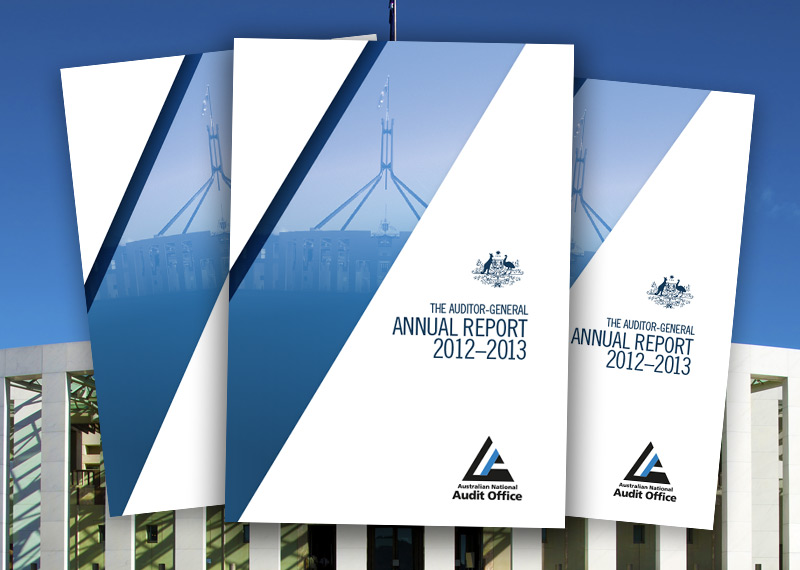
Published: Monday 30 September 2013
Published
This annual report documents the performance of the Australian National Audit Office (ANAO) in the financial year ending on 30 June 2013. It addresses the Requirements for Annual Reports for Departments, Executive Agencies and FMA Act Bodies approved by the Joint Committee of Public Accounts and Audit in June 2013; the performance measures set out in the outcomes and programs framework in the 2012–13 Portfolio Budget Statements; section 28 of the Auditor-General Act 1997; and other annual reporting requirements set out in legislation.
Performance audit (Auditor-General Report No. 35 of 2008–09)
Published: Thursday 21 May 2009
Published
The objective of the audit was to assess the effectiveness of DIAC's management of MAL. The scope was confined to DIAC's management and use of the system: it did not examine the work of others with an interest in the system, such as security agencies.
Entity
Department of Immigration and Citizenship
Performance audit (Auditor-General Report No. 26 of 2010–11)
Published: Wednesday 9 February 2011
Published
The objective of the audit was to assess the effectiveness of DHS' management of the tender process for a replacement BasicsCard to support the delivery of the income management scheme.
In conducting the audit, the Australian National Audit Office (ANAO) assessed the following five key areas of the replacement BasicsCard procurement process, which are described in the Department of Finance and Deregulation's (Finance) Guidance on the Mandatory Procurement Procedures :
• planning for the procurement;
• preparing to approach the market;
• approaching the market;
• evaluating tender submissions; and
• concluding the procurement, including contract negotiation.
Entity
Department of Human Services
Performance audit (Auditor-General Report No. 43 of 2004–05)
Published: Tuesday 17 May 2005
Published
The objective of the audit was to form an opinion about DVA's management of the current and future demand for VHC services. To form an opinion, the Australian National Audit Office (ANAO) examined whether DVA:effectively planned the distribution of VHC resources; distributed VHC resources according to its planning; and monitored and evaluated how effectively it managed the demand for VHC services. To form an opinion against the audit objective, the ANAO interviewed DVA personnel, examined DVA documents, interviewed personnel at a selection of Agencies, Service Providers and stakeholders, and reviewed relevant literature.
Entity
Department of Veterans' Affairs
Speeches and papers
Published: Monday 19 May 2003
Published
Mr P.J. Barrett (AM) - Auditor-General for Australia, presented at the 2nd Annual New Directions in Australian Auditing Accounting Standards Conference
Performance audit (Auditor-General Report No. 58 of 2001–02)
Published: Monday 17 June 2002
Published
The audit sought to assess the efficiency of Defence property management; provide assurance that probity and compliance requirements are being met; and make practical recommendations for enhancing property operations. It focused on Infrastructure Division's property management, with recognition that other areas manage certain property service contracts, such as those for electricity supply and cleaning.
Entity
Department of Defence
Performance audit (Auditor-General Report No. 11 of 2000–01)
Published: Friday 15 September 2000
Published
The audit reviewed Defence's higher-level management of its knowledge system equipment acquisition projects. These amount to $8.5b. The focus of the audit was on the opportunities for Defence to adopt a much more coherent and integrated approach to knowledge systems management prospectively rather than on emphasising current system compatibility issues.
Entity
Department of Defence
Performance audit (Auditor-General Report No. 10 of 1997–98)
Published: Tuesday 28 October 1997
Published
The objectives of the audit were to determine the administrative changes made by the Australian Tourist Commission (ATC) to implement the recommendations of recent administrative reviews and to identify how well the ATC is meeting its statutory objectives. The criteria used in conducting the audit included administrative improvements resulting from the ATC's response to recent reviews and the extent to which strategies and performance information address its statutory objectives.
Entity
Australian Tourist Commission
Performance audit (Auditor-General Report No. 34 of 2014–15)

Published: Thursday 30 April 2015
Published
The objective of the audit was to assess the effectiveness of the Attorney-General’s Department’s administration of the terms of the Natural Disaster Relief and Recovery Arrangements Ministerial determination.
Entity
Attorney-General's Department; Emergency Management Australia
Contact
Please direct enquiries relating to reports through our contact page.
Performance audit (Auditor-General Report No. 40 of 2014–15)

Published: Wednesday 3 June 2015
Published
The audit objective was to assess the effectiveness of the Department of Veterans’ Affairs administration of the Repatriation Transport Scheme.
Entity
Department of Veterans' Affairs
Contact
Please direct enquiries relating to reports through our contact page.
Performance audit (Auditor-General Report No. 22 of 2016–17)

Published: Wednesday 19 October 2016
Published
The objectives of the audit were to:
- assess the effectiveness of the ongoing administration of the Australian Government’s campaign advertising framework; and
- assess the effectiveness of the selected entities’ administration in developing advertising campaigns and implementing key processes against the requirements of the campaign advertising framework applying at the time, and relevant legal and government policy requirements.
Entity
Department of Finance; Department of the Treasury; Department of Education and Training; Department of Immigration and Border Protection
Contact
Please direct enquiries relating to reports through our contact page.
Performance audit (Auditor-General Report No. 44 of 2017–18)

Published: Tuesday 29 May 2018
Published
The audit objective was to review the effectiveness of the Department of Defence’s (Defence) arrangements for delivering selected non-platform sustainment.
Entity
Department of Defence
Contact
Please direct enquiries relating to reports through our contact page.
Performance audit (Auditor-General Report No. 22 of 2017–18)

Published: Tuesday 19 December 2017
Published
The objective of the audit was to assess the effectiveness of Medicare electronic claiming arrangements, including an assessment of the extent to which claiming and processing efficiencies for the Government, health professionals and Medicare customers have been achieved.
Entity
Department of Human Services
Contact
Please direct enquiries relating to reports through our contact page.
Performance audit (Auditor-General Report No. 13 of 2005–06)
Published: Tuesday 18 October 2005
Published
The objective of the audit was to assess the administrative effectiveness of the ATO's management of GST compliance in the large business market segment. In conducting the audit the ANAO examined three key areas: governance - ILEC's corporate planning and reporting arrangements relevant to the management of GST compliance in the large business market segment; assessing and identifying compliance risks- how ILEC collects information relating to the large business market segment and how it uses this information to support risk identification and assessment; and managing compliance- compliance planning and the products and processes used by ILEC to manage GST compliance in the large business market segment and evaluating compliance outcomes to support future compliance planning and the targeting of GST compliance risks. In undertaking the audit, the ANAO took account of the findings of previous reviews, in particular the LCCP Review.
Entity
Australian Taxation Office
Performance audit (Auditor-General Report No. 39 of 1999–2000)
Published: Thursday 13 April 2000
Published
The audit reviewed the coordination of export development and promotion activities across Commonwealth agencies. The objective of the audit was to assess the extent to which export development and promotion activities are managed in a coordinated manner to maximise their effectiveness and transparency, and to minimise duplication. Particular attention was given to:
- Austrade's role in coordinating and advising on the development of export programs across Commonwealth agencies; and
- the design, delivery and evaluation of programs consistent with the Mortimer review design criteria agreed by Government.
Entity
Across Agency
Performance audit (Auditor-General Report No. 34 of 1998–99)
Published: Wednesday 31 March 1999
Published
The objective of the audit was to ascertain and report to Parliament on the Australian Taxation Office's administration of the Fringe Benefits Tax and to identify opportunities for improvement. The ANAO identified five key issues relevant to the effective administration of FBT:
- knowledge of the taxpayer base;
- education of taxpayers;
- client service - advice handling;
- other enforcement activities - audits and reviews; and
- the systems required to support the administration of FBT, including staff skills and training information systems.
Entity
Australian Taxation Office
Performance audit (Auditor-General Report No. 3 of 2009–10)
Published: Tuesday 8 September 2009
Published
The focus of this audit was on those entitlements administered by Finance. Similar to the 2001-02 Audit Report, the audit scope did not include entitlements provided to persons employed under the Members of Parliament (Staff) Act 1984 (MOP(S) Act). It also did not examine the administration of entitlements provided through other agencies (such as Parliamentarians' salary and electorate allowance, which are paid by the Chamber Departments, and entitlements provided to Ministers by their home department).
Entity
Department of Finance and Deregulation
Performance audit (Auditor-General Report No. 24 of 2009–10)
Published: Wednesday 10 March 2010
Published
The objective of this audit was to examine the effectiveness of Defence and the DMO's management of procurement and through life support arrangements to meet the explosive ordnance requirements of the ADF, particularly the non-guided munitions requirements of Army. This included a review of the progress of Defence and the DMO in implementing the recommendations of ANAO Audit Report No.40 2005–06.
Entity
Department of Defence; Defence Materiel Organisation
Performance audit (Auditor-General Report No. 38 of 2010–11)
Published: Wednesday 20 April 2011
Published
The objective of the audit was to assess the effectiveness of annual Certificate of Compliance processes for FMA Act agencies. To form a conclusion against the audit objective, the audit considered: Finance’s administration of the Certificate process at a whole-of-government level; selected agencies’ annual Certificate processes; and, the design and impact of the Certificate.
Entity
Across Agencies
Performance audit (Auditor-General Report No. 25 of 2010–11)
Published: Wednesday 2 February 2011
Published
The audit examined the effectiveness of DEEWR's: administrative framework for the program; management of the application, assessment and funding processes; and monitoring of and reporting on the program's performance.
In order to form an opinion against the audit objective, the ANAO primarily conducted fieldwork and documentation reviews at DEEWR's central office. A stratified random sample (in order to provide for representation from states, territories and school sectors) of 74 applications from Rounds 1 and 2 was also selected for detailed examination. Through this sample, the ANAO sought to determine whether funding applications had been assessed in accordance with the established assessment criteria and that quality assurance mechanisms for the assessment process were effective.
Entity
Department of Education, Employment and Workplace Relations
Performance audit (Auditor-General Report No. 15 of 2010–11)
Published: Thursday 18 November 2010
Published
The objective of the audit was to assess FSANZ's administration of its food standard functions, as specified in the Food Standards Australia New Zealand Act, 1991 (last amended 2007).
Particular emphasis was given to whether:
- FSANZ's performance management and reporting provided effective support and ensures accountability;
- FSANZ effectively administered its food standard development and variation function, including its stakeholder management; and
- FSANZ effectively monitored the implementation of its standards and coordinates relevant jurisdictions to address market failures.
Entity
Food Standards Australia New Zealand
Performance audit (Auditor-General Report No. 46 of 2008–09)
Published: Thursday 25 June 2009
Published
The objectives of this audit were to:
- assess the current status of BCM and EM arrangements in Centrelink and identify opportunities for improvement; and
- review Centrelink's response to the recommendations.
Entity
Centrelink
Performance audit (Auditor-General Report No. 20 of 2005–06)
Published: Tuesday 6 December 2005
Published
The objective of this audit was to assess the Private Health Insurance Administration Council's (PHIAC's) administrative effectiveness as a regulator of private health insurance. In making this assessment, the Australian National Audit Office (ANAO) addressed the following criteria: whether PHIAC monitored compliance with its legislative requirements and analysed related data; whether PHIAC addressed and managed non-compliance with its legislative requirements; and whether PHIAC's governance and organisation supported the performance of its legislative functions. Although the Department of Health and Ageing (Health) also has a role in the regulation of the private health insurance industry under the National Health Act 1953 (Health Act), Health's regulatory activities were outside the scope of this audit.
Entity
Private Health Insurance Administration Council
Performance audit (Auditor-General Report No. 12 of 2003–04)
Published: Wednesday 5 November 2003
Published
The primary objective of the audit was to assess whether the Department of Communications, Information Technology and the Arts (DCITA) and the Department of Transport and Regional Services (DOTARS) were administering a number of grant programs that are designed to enhance telecommunications infrastructure and services in regional, rural and remote areas of Australia according to better practice. The audit was also aimed at determining whether DCITA had implemented the recommendations of an earlier audit of Networking the Nation.
Entity
Department of Communications, Information Technology and the Arts
Performance audit (Auditor-General Report No. 52 of 2002–03)
Published: Friday 20 June 2003
Published
The audit reviewed the management of unscheduled absence in 74 APS agencies. The objective of the audit was to assess the extent and cost of unscheduled absence in the APS; to examine whether unscheduled absence in the APS was being managed efficiently and effectively; and to identify opportunities for improvement.
Entity
Across agency
Performance audit (Auditor-General Report No. 41 of 2002–03)
Published: Wednesday 7 May 2003
Published
Since 2000, there has been a requirement under the Environment Protection and Biodiversity Conservation Act 1999 (EPBC Act) for Commonwealth agencies to report annually on their environmental performance as well as their contribution to Ecologically Sustainable Development (ESD). The audit objective was to examine and report on the quality of Commonwealth agencies' annual reports on ESD and environment performance. The audit reviewed current practice in light of legal requirements, and provided examples of better practice.
Entity
Across Agency
Performance audit (Auditor-General Report No. 27 of 1997–98)
Published: Thursday 18 December 1997
Published
The audit surveyed a wide range of Commonwealth agencies' Year 2000 preparedness, their management of the problem and their application of core corporate governance principles, including risk management disciplines. The scope of the audit reflected the wide ranging ramifications of the Year 2000 problem for agencies' overall functions (whole-of-business) internally as well as in terms of external interactions. The audit objectives were to:
- assess the adequacy of agencies' planning in relation to achieving Year 2000 compliance;
- review and assess agencies' implementation, management and monitoring of Year 2000 compliance strategies;
- review agencies' strategic risk assessments in relation to the Year 2000 changeover; and
- raise surveyed agencies' and other Commonwealth agencies' awareness of the various aspects of the Year 2000 problem.
Entity
Across Agency
Performance audit (Auditor-General Report No. 5 of 2025–26)

Published: Monday 10 November 2025
Published
The audit objective was to assess the effectiveness of the Office’s management of official residences and other assets.
Entity
Office of the Official Secretary to the Governor-General
Contact
Please direct enquiries through our contact page.
Performance audit (Auditor-General Report No. 22 of 2021–22)

Published: Monday 4 April 2022
Published
The objective of the audit was to assess the effectiveness of the Australian Taxation Office's administration of the JobKeeper scheme.
Entity
Department of the Treasury; Australian Taxation Office (ATO)
Contact
Please direct enquiries through our contact page.
Performance audit (Auditor-General Report No. 47 of 2014–15)

Published: Wednesday 10 June 2015
Published
The objective of the audit was to assess the effectiveness of the Department of Immigration and Border Protection’s identity verification arrangements for applicants in the Citizenship Program.
Entity
Department of Immigration and Border Protection
Contact
Please direct enquiries relating to reports through our contact page.
Performance audit (Auditor-General Report No. 29 of 2019–20)

Published: Tuesday 31 March 2020
Published
The objective of the audit was to assess the effectiveness of the Australian Charities and Not-for-profits Commission’s (ACNC’s) regulation of charities.
Entity
Australian Charities and Not-for-profits Commission; Australian Taxation Office
Contact
Please direct enquiries through our contact page.
Performance audit (Auditor-General Report No. 30 of 2018–19)

Published: Monday 18 March 2019
Published
The audit objective was to examine whether the Department of Defence has effective and efficient sustainment arrangements for the Royal Australian Navy’s fleet of eight ANZAC class frigates.
Entity
Department of Defence
Contact
Please direct enquiries through our contact page.
Performance audit (Auditor-General Report No. 33 of 2019–20)

Published: Thursday 16 April 2020
Published
The objective of this audit was to assess the effectiveness of the Tertiary Education Quality and Standards Agency’s (TEQSA’s) regulation of higher education.
Entity
Tertiary Education Quality and Standards Agency
Contact
Please direct enquiries through our contact page.
Performance audit (Auditor-General Report No. 32 of 2019–20)

Published: Thursday 16 April 2020
Published
The objective of this audit was to examine the Department of Foreign Affairs and Trade’s (DFAT’s) achievement of value for money objectives in the delivery of Official Development Assistance (aid) through facility arrangements.
Entity
Department of Foreign Affairs and Trade (DFAT)
Contact
Please direct enquiries through our contact page.
Performance audit (Auditor-General Report No. 3 of 2021–22)

Published: Thursday 9 September 2021
Published
The audit objective was to assess whether the Department of Health is effectively managing financial assistance under the Medical Research Future Fund.
Entity
Department of Health
Contact
Please direct enquiries through our contact page.
Performance audit (Auditor-General Report No. 4 of 2021–22)

Published: Monday 13 September 2021
Published
The objective of this audit was to examine the effectiveness of the Department of Defence's administration of contractual obligations relating to the Defence Industry Security Program.
Entity
Department of Defence
Contact
Please direct enquiries through our contact page.
Information report (Auditor-General Report No. 7 of 2021–22)

Published: Tuesday 19 October 2021
Published
The objectives of this information report are to provide transparency of, and insights on, government grants expense and Commonwealth entities’ self-reporting of grants on GrantConnect.
Entity
Department of Finance
Contact
Please direct enquiries through our contact page.
Performance audit (Auditor-General Report No. 54 of 2013–14)
Published: Thursday 26 June 2014
Published
The objective of the audit was to assess the extent to which agencies have arrangements to establish and use multi-use lists to support value for money, efficiency and effectiveness in procurement.
Entity
Across Agencies
Contact
Please direct enquiries relating to reports through our contact page.
Performance audit (Auditor-General Report No. 53 of 2013–14)
Published: Thursday 26 June 2014
Published
The audit objective was to assess the effectiveness of the Department of Health’s management of the National Medical Stockpile.
Entity
Department of Health
Contact
Please direct enquiries relating to reports through our contact page.
Performance audit (Auditor-General Report No. 26 of 2013–14)
Published: Wednesday 23 April 2014
Published
The objective of the audit was to assess the effectiveness of the Department of Human Services' management of Medicare compliance audits.
Entity
Department of Human Services
Contact
Please direct enquiries relating to reports through our contact page.
Performance audit (Auditor-General Report No. 21 of 2013–14)
Published: Thursday 27 February 2014
Published
In 2012–13, the ANAO pilot project to audit Key Performance Indicators(KPIs) was continued with the objective of conducting a review of framework developments, both in terms of the clarity of the policy and guidance issued by Finance and the performance of agencies in applying this policy and guidance, as a basis for implementing a future program of audits; and to further develop and test an audit methodology to address the practical challenges of assessing the appropriateness of KPIs, and their complete and accurate reporting.
Entity
Across Entities
Contact
Michael White, Executive Director, Phone (02) 6203 7393
Performance audit (Auditor-General Report No. 9 of 2013–14)
Published: Thursday 7 November 2013
Published
The objective of the audit was to assess the effectiveness of the administration of the Australian Prudential Regulation Authority (APRA) financial industry levies.
Entity
Australian Prudential Regulation Authority; Department of the Treasury
Contact
Please direct enquiries relating to reports through our contact page.
Performance audit (Auditor-General Report No. 24 of 2012–13)
Published: Tuesday 26 February 2013
Published
The Preparation and Delivery of the Natural Disaster Recovery Work Plans for Queensland and Victoria
The objective of this audit was to assess the extent to which the disaster recovery work plans for Queensland and Victoria were prepared, and appropriate monitoring reports provided, in accordance with the relevant National Partnership Agreement (NPA).
Entity
Department of Regional Australia, Local Government, Arts and Sport
Performance audit (Auditor-General Report No. 36 of 2011–12)
Published: Wednesday 30 May 2012
Published
The objective of the audit was to assess the implementation and effectiveness of the enhanced grants administration requirements relating to the development and approval of new grant guidelines and revision of existing grant guidelines.
Entity
Department of Finance and Deregulation
Performance audit (Auditor-General Report No. 36 of 2010–11)
Published: Thursday 14 April 2011
Published
The audit objective was to assess the effectiveness of CRS Australia’s delivery of Disability Management Services. In assessing CRS Australia’s performance, the ANAO examined whether:
- services are delivered in accordance with CRS Australia’s operating procedures, which incorporate the Disability Services Standards and the requirements of the DEEWR MOU;
- CRS Australia has an effective client feedback (including complaints) system, which is used to identify and address business risks and areas for improving service delivery; and
- sound governance arrangements (including performance monitoring and reporting) are in place to monitor service delivery.
The audit did not specifically examine issues and information relating to the commercial nature of the business, such as profitability levels and competitive neutrality arrangements.
Entity
Department of Human Services
Performance audit (Auditor-General Report No. 18 of 2010–11)
Published: Wednesday 8 December 2010
Published
The objective of the audit was to assess the administrative effectiveness of FaHCSIA's management of the GBM initiative, and the extent to which the initiative has contributed to improvements in community engagement and government coordination in the Northern Territory.
The audit focused on FaHCSIA's management of the GBM initiative under the NTER. The audit scope did not include additional functions assigned to some GBMs in the Northern Territory under the National Partnership Agreement on Remote Service Delivery (the National Partnership Agreement), or to Australian Government staff with similar roles and functions supporting the implementation of the National Partnership Agreement in Queensland and Western Australia.
Entity
Department of Families, Housing, Community Services and Indigenous Affairs
Performance audit (Auditor-General Report No. 34 of 2009–10)
Published: Tuesday 18 May 2010
Published
The Management and use of Double Taxation Agreement Information Collected through Automatic Exchange
The objective of the audit was to review and assess the use, and management of, automatic exchanges of information under Double Taxation Agreements (DTAs) by the Tax Office.
Entity
Australian Taxation Office
Performance audit (Auditor-General Report No. 36 of 2008–09)
Published: Thursday 21 May 2009
Published
The objective of the audit was to assess the effectiveness of the Department of Immigration and Citizenship's management of the Settlement Grants Program. The ANAO assessed DIAC's performance in terms of how effectively it planned for funding rounds, assessed and allocated grants, monitored and evaluated the program, and managed relationships with its stakeholders. In doing so, the ANAO focused on SGP projects that received funding in the 2007–08.
Entity
Department of Immigration and Citizenship
Performance audit (Auditor-General Report No. 43 of 2007–08)
Published: Tuesday 24 June 2008
Published
The objectives for the audit of the third tranche sale of Telstra shares were to:
- assess the extent to which the Government's sale objectives were achieved, including maximising overall value for money;
- assess the effectiveness of the management of the sale; and
- identify principles of sound administrative practice to facilitate potential improvements in any future asset sales.
Entity
Department of Finance and Deregulation
Performance audit (Auditor-General Report No. 25 of 2003–04)
Published: Thursday 5 February 2004
Published
The audit examined agency approaches to the management of intellectual property under its control, and identified themes common to the management of all types of intellectual property. The audit objective was to:
(i) form an opinion on whether Commonwealth agencies have systems in place to efficiently, effectively and ethically manage their intellectual property assets; and
(ii) identify areas for better practice in intellectual property management by those agencies.
Entity
Australian Nuclear Science and Technology Organisation; Department of Defence
Performance audit (Auditor-General Report No. 20 of 1999–2000)
Published: Monday 22 November 1999
Published
Special Benefit is a social security income support payment for people who are unable to support themselves or their dependents, and who are not otherwise entitled to any other income support payment. Its objective is to ensure that such people have adequate levels of income. The objective of the audit was to assess the extent to which new claims for Special Benefit had been determined in compliance with the Social Security Act, the Guide to the Act and other relevant guidelines, and whether Centrelink and FaCS had appropriate procedures to help ensure such compliance.
Entity
Centrelink; Department of Family and Community Services
Performance audit (Auditor-General Report No. 33 of 1997–98)
Published: Monday 23 February 1998
Published
The objective of this audit was to assess the efficiency and effectiveness of the Commonwealth's management of the Great Barrier Reef as implemented by the Authority. This audit was undertaken because of the environmental significance of the Great Barrier Reef Region; its growing economic importance; recent changes to the Authority's budget arrangements; and because the Authority had not been subject to a performance audit since its establishment approximately 20 years ago.
Entity
Great Barrier Reef Marine Park Authority
Speeches and papers
Published: Thursday 2 October 1997
Published
Mr P.J. Barrett (AM) - Auditor-General for Australia, presented at a Seminar on 'Financial Management and Electronic Government' Kuala Lumpur
Performance audit (Auditor-General Report No. 33 of 2015–16)

Published: Thursday 5 May 2016
Published
The audit objective was to assess whether Defence is effectively controlling the use of Commonwealth credit cards for official purposes in accordance with legislative and policy requirements.
Entity
Department of Defence
Contact
Please direct enquiries relating to reports through our contact page.
Performance audit (Auditor-General Report No. 24 of 2016–17)

Published: Wednesday 9 November 2016
Published
The audit objective was to assess the effectiveness to date of the management of the approach to transition the disability services market to the National Disability Insurance Scheme (NDIS) market arrangements.
Entity
Department of Social Services; National Disability Insurance Agency
Contact
Please direct enquiries relating to reports through our contact page.
Performance audit (Auditor-General Report No. 29 of 2020–21)

Published: Monday 22 February 2021
Published
The objective of this audit was to assess whether the National Library of Australia and National Film and Sound Archive (NFSA) have implemented effective collection management practices.
Entity
Department of Infrastructure, Transport, Regional Development and Communications; National Film and Sound Archive; National Library of Australia
Contact
Please direct enquiries through our contact page.
Performance audit (Auditor-General Report No. 33 of 2020–21)

Published: Monday 29 March 2021
Published
The objective of this audit was to assess the efficiency and effectiveness of the Independent Parliamentary Expenses Authority’s administration of parliamentary expenses.
Entity
Independent Parliamentary Expenses Authority
Contact
Please direct enquiries through our contact page.
Performance audit (Auditor-General Report No. 41 of 2013–14)
Published: Tuesday 17 June 2014
Published
The audit objective was to assess the effectiveness of the Department of Industry's administration of the Commercialisation Australia Program.
Entity
Department of Industry
Contact
Please direct enquiries relating to reports through our contact page.
Performance audit (Auditor-General Report No. 28 of 2013–14)
Published: Wednesday 30 April 2014
Published
The audit objective was to assess the effectiveness of the Department of Human Services’ administration of the child support objection review process.
Entity
Department of Human Services; Department of Social Services
Contact
Please direct enquiries relating to reports through our contact page.
Performance audit (Auditor-General Report No. 25 of 2013–14)
Published: Thursday 17 April 2014
Published
The objective of the audit was to assess the effectiveness of the design and conduct of the funding round for the Building Better Regional Cities Program.
Entity
Department of Social Services; Department of the Environment
Contact
Please direct enquiries relating to reports through our contact page.
Performance audit (Auditor-General Report No. 37 of 2012–13)
Published: Wednesday 22 May 2013
Published
The audit objective was to assess the effectiveness of the Department of Industry, Innovation, Science, Research and Tertiary Education’s (DIISRTE’s) administration of the Education Investment Fund grants program.
(DIISRTE was the department that had responsibility for the administration of the EIF grants program during the course of the audit. The recommendations and suggestions for improvement are, however, directed to the Department of Industry, Innovation, Climate Change, Science, Research and Tertiary Education because this department now has responsibility for the administration of the program).
Entity
Department of Industry, Innovation, Climate Change, Science, Research and Tertiary Education; Department of Education, Employment and Workplace Relations
Contact
Please direct enquiries relating to reports through our contact page.
Performance audit (Auditor-General Report No. 19 of 2012–13)
Published: Thursday 31 January 2013
Published
The audit objective was to assess the effectiveness of FaHCSIA and DHS’ administration of New Income Management in the Northern Territory.
Entity
Department of Families, Housing, Community Services and Indigenous Affairs; Department of Human Services
Performance audit (Auditor-General Report No. 53 of 2011–12)
Published: Wednesday 27 June 2012
Published
To assess the extent to which agencies create, manage and dispose of records in accordance with key business, legal and policy requirements.
The agencies included in the audit were the: Australian Customs and Border Protection Service (Customs); Department of Immigration and Citizenship (DIAC); and the Department of the Treasury (Treasury). The audit also considered the Archives' response to Recommendation No. 1 from ANAO Audit Report No.6 2006, 07 Recordkeeping including the Management of Electronic Records, including whether they had clarified Australian Government records management requirements for agencies.
Entity
Across agencies
Performance audit (Auditor-General Report No. 31 of 2007–08)
Published: Tuesday 29 April 2008
Published
The objective of the audit was to assess whether APS agencies had sound approaches to recruitment, to assist in providing the workforce capability to deliver government programs effectively. Sound approaches to recruitment involve agencies:
- establishing and implementing strategic approaches to recruitment to address current and future workforce priorities and goals;
- managing and supporting recruitment activities through the provision of expert advice and support, legislative and procedural guidance material, and training for staff involved in recruitment activities;
- conducting recruitment activities effectively and in compliance with legislative and administrative requirements; and
- systematically monitoring and evaluating the effectiveness and efficiency of recruitment strategies, policies and activities.
Entity
NO-DEPTS-LISTED
Performance audit (Auditor-General Report No. 38 of 2005–06)
Published: Thursday 4 May 2006
Published
The objective of this audit was to form an opinion on the Australian Research Council's (ARC's) management of research grants. To achieve this, ANAO centred the audit around the following aspects of ARC's grants administration: governance and structure, particularly the roles and responsibilities of those parties involved in administering ARC's grants (Chapter 2); the processes for assessing and selecting ARC grants (Chapter 3);post-award management of grants under the Funding Agreements (Agreements) between ARC and those universities that receive and administer the ARC grants to researchers (Chapter 4); and ARC's monitoring of its grant programs for management, performance improvement and reporting (Chapter 5). In its assessment, ANAO considered ARC's compliance with relevant sections of the Australian Research Council Act 2001 (ARC Act) and the Financial Management and Accountability Act 1997 (FMA Act). The assessment also took account of the ANAO's Better Practice Guides, particularly the Better Practice Guide—Administration of Grants. The audit focused mainly on ARC's administration of Discovery Projects, the largest scheme in ARC's National Competitive Grants Program (NCGP).
Entity
Australian Research Council
Performance audit (Auditor-General Report No. 52 of 2004–05)
Published: Monday 20 June 2005
Published
The objectives of the Australian National Audit Office's (ANAO) performance audit were to: examine the efficiency and effectiveness of agencies' procurement and management of legal services arrangements; determine adherence to Australian Government policy requirements; examine the effectiveness of the OLSC's monitoring of agencies' compliance with Government policy requirements; examine the OLSC's role in assisting agencies to comply with Government policy.
Entity
Across Entities
Performance audit (Auditor-General Report No. 29 of 2003–04)
Published: Friday 20 February 2004
Published
The audit objective was to assess the effectiveness of the National Health and Medical Research Council's governance and administrative systems. In order to achieve this objective, the audit addressed three criteria to determine whether the Council had: identified its legislated responsibilities and monitored its legislative compliance; a sound corporate governance framework to support the performance of its legislated functions; and established robust administrative systems to support the performance of its legislated functions.
Entity
National Health and Medical Research Council; Department of Health and Ageing
Performance audit (Auditor-General Report No. 2 of 2003–04)
Published: Wednesday 13 August 2003
Published
The Audit Activity Report: January to June 2003 summarises the activity and outputs of the Australian National Audit Office for the second half of the 2002-03 reporting year. The Report outlines the key findings of performance and financial control audits, and summarises audits tabled and better practice guides published during January to June 2003.
Entity
Australian National Audit Office; Parliament
Performance audit (Auditor-General Report No. 12 of 2002–03)
Published: Monday 21 October 2002
Published
The IIF program is designed to redress the low level of provision in Australia of high risk venture capital for small new technology - based companies commercialising research and development. The objective of the audit was to determine whether the IIF program was being effectively managed by the Industry Research and Development (IR&D) Board and the Department of Industry, Tourism and Resources to achieve the program objectives. The audit focused on corporate governance arrangements for program administration, the selection process to award licences, the safeguards to protect the Commonwealth's financial interests, management of licence agreements, and program performance management. The audit also examined program results to date from available data.
Entity
Department of Industry, Tourism and Resources; Industry Research and Development Board
Performance audit (Auditor-General Report No. 4 of 2002–03)
Published: Monday 19 August 2002
Published
The report summarises the audit and other related activities of the ANAO in the period January to June 2002. Key issues arising from performance audits tabled in this period are summarised. Appendix 1 of the Activity Report provides a short summary of each of the audits tabled between 1 January 2002 and 30 June 2002.
Entity
Audit Activity Report
Performance audit (Auditor-General Report No. 12 of 2025–26)

Published: Tuesday 9 December 2025
Published
The objective of the audit was to assess the effectiveness of Services Australia’s management of the privacy of client information.
Entity
Services Australia
Contact
Please direct enquiries through our contact page.
Performance audit (Auditor-General Report No. 24 of 2023–24)

Published: Tuesday 30 April 2024
Published
The objective of this audit was to assess the effectiveness of the Clean Energy Regulator’s (CER) issuing, compliance and contracting activities related to Australian Carbon Credit Units.
Entity
Clean Energy Regulator
Contact
Please direct enquiries through our contact page.
Performance audit (Auditor-General Report No. 19 of 2022–23)

Published: Thursday 6 April 2023
Published
The objective of this audit was to assess the effectiveness of procurement complaints handling by the Australian Communications and Media Authority, the Department of Finance, the Department of Industry, Science and Resources and the Reserve Bank of Australia.
Entity
Across Entities
Contact
Please direct enquiries through our contact page.
Performance audit (Auditor-General Report No. 13 of 2014–15)

Published: Tuesday 16 December 2014
Published
The objective of the audit was to assess the effectiveness of the Australian Customs and Border Protection Service's management of the Cape Class patrol boat program.
Entity
Australian Customs and Border Protection Service
Contact
Please direct enquiries relating to reports through our contact page.
Performance audit (Auditor-General Report No. 41 of 2019–20)

Published: Wednesday 17 June 2020
Published
The objective of this audit was to assess the effectiveness of the design and establishment of the Regional Investment Corporation.
Entity
Across Entities
Contact
Please direct enquiries through our contact page.
Performance audit (Auditor-General Report No. 43 of 2020–21)

Published: Tuesday 8 June 2021
Published
The objective of the audit was to assess the effectiveness of the Australian Federal Police’s framework to ensure the lawful exercise of powers in accordance with applicable legislation.
Entity
Australian Federal Police
Contact
Please direct enquiries through our contact page.
Performance audit (Auditor-General Report No. 24 of 2021–22)

Published: Thursday 28 April 2022
Published
The objective of the audit was to assess the effectiveness of the Australian Taxation Office's activities in addressing Superannuation Guarantee non-compliance.
Entity
Australian Taxation Office
Contact
Please direct enquiries through our contact page.
Performance audit (Auditor-General Report No. 42 of 2013–14)
Published: Wednesday 18 June 2014
Published
The objective of the audit was to assess the effectiveness of Agriculture’s and Customs’ arrangements for the targeting and screening of incoming international mail to identify prohibited and restricted goods.
Entity
Department of Agriculture, Australian Customs and Border Protection Service
Contact
Please direct enquiries relating to reports through our contact page.
Performance audit (Auditor-General Report No. 20 of 2013–14)
Published: Thursday 20 February 2014
Published
The objective of the audit was to assess the effectiveness of the Department of Immigration and Border Protection's (DIBP’s) management of the Central Movement Alert List (CMAL) system, having particular regard to the recommendations contained in Audit Report No. 35 of 2008–09.
Entity
Department of Immigration and Border Protection
Contact
Please direct enquiries relating to reports through our contact page.
Performance audit (Auditor-General Report No. 16 of 2013–14)
Published: Wednesday 29 January 2014
Published
The objective of the audit was to assess the effectiveness of the administration of the Smart Grid, Smart City Program, including the establishment, implementation and ongoing management of the program.
Entity
Department of the Environment; Department of Industry
Contact
Please direct enquiries relating to reports through our contact page.
Performance audit (Auditor-General Report No. 7 of 2013–14)
Published: Thursday 31 October 2013
Published
The objective of the audit was to assess the effectiveness of Australia’s arrangements to meet its treaty obligations under three selected treaties:
- International Convention on Civil Liability for Bunker Oil Pollution Damage 2001;
- Agreement between Australia and the International Atomic Energy Agency for the Application of Safeguards in connection with the Treaty on the Non-Proliferation of Nuclear Weapons of 1 July 1968 and Additional Protocol; and
- Convention on the Rights of the Child 1990.
Entity
Across Agencies
Contact
Please direct enquiries relating to reports through our contact page.
Performance audit (Auditor-General Report No. 54 of 2011–12)
Published: Wednesday 27 June 2012
Published
The objective of the audit was to assess the effectiveness of the ATO’s administration of external debt collection arrangements.
Entity
Australian Taxation Office
Performance audit (Auditor-General Report No. 51 of 2010–11)
Published: Tuesday 21 June 2011
Published
To examine the effectiveness of the Department of Health and Ageing’s administration of the Access to Allied Psychological Services Program.
Entity
Department of Health and Ageing
Performance audit (Auditor-General Report No. 47 of 2010–11)
Published: Wednesday 8 June 2011
Published
The objective of the audit was to assess the effectiveness of CSIRO’s development and administration of selected National Research Flagships. In assessing CSIRO’s performance, the ANAO examined whether:
- mechanisms were in place to develop and implement the Flagships, within the context of the broader CSIRO change program;
- governance arrangements for Flagships incorporated sound oversight, planning and reporting arrangements; and
- periodic review activities were used to assess and improve the operation of the Flagships.
Entity
Commonwealth Scientific and Industrial Research Organisation
Performance audit (Auditor-General Report No. 34 of 2010–11)
Published: Thursday 24 March 2011
Published
The Objective of the audit was to assess the administrative effectiveness of GPET's management of the general practice training programs, AGPT and PGPPP, the latter being a responsibility that GPET assumed in 2010.
Entity
General Practice Education and Training Limited
Performance audit (Auditor-General Report No. 1 of 2009–10)
Published: Tuesday 4 August 2009
Published
In two letters dated 19 and 22 June 2009, the Prime Minister requested a performance audit of a range of matters relating to representations to the Treasury regarding automotive finance arrangements for car dealers. In response to these requests, the Auditor-General decided that ANAO would undertake a performance audit under section 18 of the Auditor-General Act 1997 (Auditor-General Act). The audit objective, based on the matters raised in the Prime Minister's correspondence and in the Parliament, was to examine and report on:
- any representations to the Treasury since October 2008 from all sources regarding automotive finance arrangements for car dealers, including any made in relation to John Grant Motors;
- the nature of these representations;
- the manner in which the representations were responded to by officials, having regard to any relevant standards and procedures; and
- any related administrative matters that came to attention.
Entity
Department of the Treasury; Department of the Prime Minister and Cabinet
Performance audit (Auditor-General Report No. 20 of 2002–03)
Published: Tuesday 10 December 2002
Published
The audit reviewed whether DEWR is efficiently and effectively managing the provision of entitlements to eligible former employees under the Employee Entitlements Support Scheme (EESS) and its replacement, the General Employee Entitlements and Redundancy Scheme (GEERS). The audit sought to determine whether DEWR had a mechanism to ensure that claims were properly assessed, taking into account the prevailing risks, whether performance information was adequate, whether relationships with claimants and insolvency practitioners were managed appropriately and whether a cost-effective recovery strategy was in place.
Entity
Department of Employment and Workplace Relations
Performance audit (Auditor-General Report No. 10 of 1998–99)
Published: Monday 19 October 1998
Published
The audit reviewed the processes involved in the sale of one-third of Telstra. The objectives in auditing the sale were to assess the extent to which the Government's sale objectives were achieved; assess the effectiveness of the management of the share offer; assess whether the sale arrangements adequately protected the Commonwealth's interests; and facilitate improved administrative arrangements for future share offers.
Entity
Across Agency
Performance audit (Auditor-General Report No. 20 of 1997–98)
Published: Thursday 4 December 1997
Published
The objective of the audit was to ascertain how efficiently and effectively the ATO administers sales tax collections. The audit excluded an examination of the Australian Customs Service's sales tax administration, although it did examine coordination and liaison arrangements between the ATO and ACS. The audit approach involved analysing the ATO's performance against the five elements of the ATO's established compliance improvement process, namely:
- interpreting and clarifying sales tax law;
- identifying and understanding clients and markets (enabling tax officers to identify and analyse risks of non-compliance);
- providing education and information to clients regarding sales tax obligations, based on identified compliance risks;
- implementing administrative arrangements which ensure and/or assist taxpayers to meet their obligations; and
- detecting non-compliance and taking action to remedy instances of non-compliance.
Entity
Australian Taxation Office
Audit manual
Updated: Tuesday 9 September 2025
Updated
The Financial Statements Audit Services Group (FSASG) volume of the ANAO Audit Manual applies to the financial statement audit activity performed by FSASG in collaboration with the Systems Assurance and Data Analytics (SADA) group. Relevant policies and guidance from the FSASG volume are also applied to other assurance work performed by FSASG. Policies and guidance in the FSASG volume address the planning, execution and reporting stages of the financial statement audit process.
Contact
Please direct enquiries through our contact page.
Performance audit (Auditor-General Report No. 35 of 2022–23)

Published: Wednesday 7 June 2023
Published
The objective of this audit was to assess the effectiveness of the governance of the Northern Land Council under the Aboriginal Land Rights (Northern Territory) Act 1976, Native Title Act 1993 and Public Governance, Performance and Accountability Act 2013.
Entity
Central Land Council
Contact
Please direct enquiries through our contact page.
Performance audit (Auditor-General Report No. 34 of 2017–18)

Published: Tuesday 17 April 2018
Published
The objective of the audit was to assess the effectiveness of Defence’s implementation of the First Principles Review.
Entity
Department of Defence
Contact
Please direct enquiries through our contact page.
Performance audit (Auditor-General Report No. 11 of 2020–21)

Published: Monday 28 September 2020
Published
The ANAO conducted separate audits of the Indigenous Advancement Strategy (IAS) Children and Schooling program and the Safety and Wellbeing program, the findings and conclusions of which are presented in this report. The objective of the audits was to assess the effectiveness of the Department of the Prime Minister and Cabinet’s and the National Indigenous Australians Agency’s administration of the IAS Children and Schooling and the Safety and Wellbeing programs.
Entity
National Indigenous Australians Agency
Contact
Please direct enquiries through our contact page.
Performance audit (Auditor-General Report No. 10 of 2021–22)

Published: Thursday 25 November 2021
Published
The objective of the audit was to assess the effectiveness of Industry Innovation and Science Australia's, the Department of Industry, Science, Energy and Resources', and the Australian Taxation Office's administration of the Research and Development Tax Incentive program.
Entity
Australian Taxation Office; Industry Innovation and Science Australia; Department of Industry, Science, Energy and Resources
Contact
Please direct enquiries through our contact page.
Corporate

Published: Tuesday 6 July 2021
Published
The corporate plan is the ANAO’s primary planning document. Our strategic planning process allows us to continually improve practices and capabilities to demonstrate value in the delivery of services to the Parliament. The corporate plan is complemented by the annual audit work program, which reflects the ANAO’s audit strategy for the coming year.
Contact
Please direct enquiries through our contact page.
Performance audit (Auditor-General Report No. 36 of 2012–13)
Published: Tuesday 21 May 2013
Published
The objective of the audit was to assess the effectiveness of the Commonwealth Environmental Water Office’s administration of environmental water holdings.
Entity
Department of Sustainability, Environment, Water, Population and Communities
Contact
Please direct enquiries relating to reports through our contact page.
Performance audit (Auditor-General Report No. 55 of 2011–12)
Published: Thursday 28 June 2012
Published
The objective of the audit was to assess the effectiveness of the Department of Broadband, Communications and the Digital Economy’s administration of the Household Assistance Scheme.
Entity
Department of Broadband, Communications and the Digital Economy, Department of Human Services
Performance audit (Auditor-General Report No. 50 of 2011–12)
Published: Monday 25 June 2012
Published
The objective of the audit was to assess the effectiveness of Customs and Border Protection's risk-based management of end-to-end processing of incoming international air passengers in achieving border security and passenger facilitation outcomes.
Entity
Australian Customs and Border Protection Service
Performance audit (Auditor-General Report No. 29 of 2011–12)
Published: Tuesday 3 April 2012
Published
The audit objective was to report on the administration of the Australia Network tender process and to identify lessons learned from the conduct of the process to inform future procurement activities.
Entity
Department of Foreign Affairs and Trade, Department of Broadband, Communications and the Digital Economy and Department of the Prime Minister and Cabinet
Performance audit (Auditor-General Report No. 37 of 2010–11)
Published: Tuesday 19 April 2011
Published
The objective of this audit was to examine the effectiveness of Defence’s management of explosive ordnance by the end users of this materiel in Air Force, Army and Navy (the Services). In particular, the focus was on the effectiveness of arrangements for the oversight and physical control of explosive ordnance once it is issued to Service units.
The audit reviewed Defence’s policies, procedures, processes and inventory management systems for explosive ordnance at the unit level in the ADF, from receipt and storage through to the use or return of explosive ordnance.The audit also examined the relationship between the management of explosive ordnance at the unit level and the Explosive Ordnance Services Contract and, where relevant, the regional Garrison Support Services (GSS) Contracts.
Entity
Department of Defence
Performance audit (Auditor-General Report No. 42 of 2009–10)
Published: Thursday 27 May 2010
Published
The objective of this audit was to assess key aspects of Australian Government agencies' fraud control arrangements to effectively prevent, detect and respond to fraud, as outlined in the Guidelines. The scope of the audit included 173 agencies subject to the FMA Act or the CAC Act.
Entity
Attorney-General's Department; Australian Institute of Criminology
Performance audit (Auditor-General Report No. 28 of 2008–09)
Published: Wednesday 22 April 2009
Published
The objective of the audit was to examine the quality and integrity of DVA's income support records and to report on the effectiveness of the department's management of the data and how it impacts on service delivery.
Entity
Department of Veterans' Affairs
Performance audit (Auditor-General Report No. 9 of 2003–04)
Published: Wednesday 22 October 2003
Published
The audit assessed whether Centrelink has effective Business Continuity Management and/or associated risk management procedures and plans in place that: minimise the likelihood of a significant business outage; and in the event of such an outage, minimise disruption of critical services to customers. The audit also assessed whether Centrelink services satisfy special community demands in times of emergency.
Entity
Centrelink
Performance audit (Auditor-General Report No. 62 of 2001–02)
Published: Wednesday 26 June 2002
Published
The objective of this benchmarking study of the finance function was to obtain and report on over time, quantitative and qualitative data, relating to finance function activities as they operate in Commonwealth organisations. Over the three year period of the study, the majority of participating Commonwealth organisations have shown an improvement in their quantitative and/or qualitative benchmark results across the range of finance function activities. The Report does not provide specific reasons for differences in performance. However, it does provide guidance as to some of the better practices that participating organisations, and the wider public sector, may wish to adopt, or adapt in order to achieve improved performance in the activities of the finance function.
Entity
Across Agency
Performance audit (Auditor-General Report No. 26 of 2001–02)
Published: Friday 14 December 2001
Published
This audit is one of a series of fraud control audits undertaken by the ANAO. The audit focussed on Centrelink's arrangements for the prevention, detection and treatment of incorrect payments to its customers. The objective of the audit was to assess whether Centrelink had implemented appropriate fraud control arrangements in line with the Fraud Control Policy of the Commonwealth.
Entity
Centrelink