Browse our range of reports and publications including performance and financial statement audit reports, assurance review reports, information reports and annual reports.
Performance audit (Auditor-General Report No. 6 of 1997–98)
Published: Monday 20 October 1997
Published
The objective of the audit was to review the efficiency and administrative effectiveness of the Commercial Compliance Branch's risk management processes and to establish whether the approach provided a sound foundation for the development and application of risk management across the Australian Customs Service. The ANAO also examined the wider risk management context across ACS in order to appreciate how risk management processes in the Branch related to the agency as a whole.
Entity
Australian Customs Service
Performance audit (Auditor-General Report No. 6 of 2019–20)

Published: Monday 5 August 2019
Published
The objective of the audit was to examine whether selected entities implemented agreed ANAO performance audit, the Joint Committee of Public Accounts and Audit, and other parliamentary committee recommendations.
Entity
Across Entities
Contact
Please direct enquiries through our contact page.
Speeches and papers
Published: Tuesday 2 December 1997
Published
Mr P.J. Barrett (AM) - Auditor-General for Australia, presented at the launch of Comcare/ANAO Better Practice Guide
Speeches and papers
Published: Tuesday 1 May 2001
Published
Mr P.J. Barrett (AM) - Auditor-General for Australia, presented at the IIR Conference 'Risks in Outsourcing in the Public Sector'
Performance audit (Auditor-General Report No. 43 of 2017–18)

Published: Tuesday 29 May 2018
Published
The objective of this audit was to examine the extent to which the Department of Infrastructure and Regional Development, now the Department of Home Affairs (the Department) has implemented the recommendations made by the ANAO in Audit Report #5 2016–17, Passenger Security Screening at Domestic Airports.
Entity
Department of Home Affairs
Contact
Please direct enquiries through our contact page.
Performance audit (Auditor-General Report No. 37 of 2006–07)
Published: Thursday 17 May 2007
Published
The audit objective was to assess the effectiveness of DIAC's administration of the health requirement of the Migration Act 1958 (the Act). To achieve this objective, the ANAO examined whether DIAC was setting and implementing the health requirement in accordance with the Act, the Migration Regulations 1994 (the Regulations), and DIAC's own guidelines.
Entity
Department of Health and Ageing
Performance audit (Auditor-General Report No. 35 of 2003–04)
Published: Wednesday 24 March 2004
Published
This report covers a number of the discretionary compensation and debt relief mechanisms that are available to Commonwealth agencies, where individuals or entities have been disadvantaged by legislation, or actions by agencies or staff, or some other negative circumstances. It deals mainly with two legislative mechanisms, namely, act of grace payments and waivers of debt, and one administrative mechanism, the Compensation for Detriment caused by Defective Administration (CDDA) scheme. This report also briefly covers two other mechanisms, namely ex gratia payments and payments in special circumstances relating to Australian Public Service (APS) employment. The main objective of the audit was to assess whether the management of claims for compensation and debt relief in special circumstances was in accordance with relevant legislative requirements and Commonwealth guidelines, and whether the current administrative policies and procedures were adequate.
Entity
Across Agency
Performance audit (Auditor-General Report No. 39 of 2003–04)
Published: Tuesday 6 April 2004
Published
The objective of this audit was to determine the progress made by the AEC in implementing the ANAO's recommendations, taking into account any changed circumstances, or new administrative issues, affecting implementation of those recommendations.
Entity
Australian Electoral Commission
Annual report
Published: Thursday 16 October 2008
Published
This annual report documents the performance of the Australian National Audit Office (ANAO) in the financial year ending on 30 June 2008. It includes highlights and areas of focus for the coming year; a forward by the Auditor-General; an overview of the report; a report on performance; details about management and accountability, and the financial statement for the year.
Speeches and papers
Published: Thursday 21 February 2008
Published
Mr Ian McPhee - Auditor-General for Australia, presented at the Canberra Evaluation Forum
Performance audit (Auditor-General Report No. 44 of 1999–2000)
Published: Tuesday 16 May 2000
Published
The audit reviewed the management of the first round of Job Network contracts, which focused on Job Matching, Job Search Training and Intensive Assistance. The objective of the audit was to assess the efficiency and effectiveness of the Department of Employment, Workplace Relations and Small Business's management of the first round of employment services contracts. A key part of this examination was to assess the Department's level of confidence that the program was meeting government objectives based on performance and management information.
Entity
Department of Employment, Workplace Relations and Small Business
Performance audit (Auditor-General Report No. 24 of 2016–17)

Published: Wednesday 9 November 2016
Published
The audit objective was to assess the effectiveness to date of the management of the approach to transition the disability services market to the National Disability Insurance Scheme (NDIS) market arrangements.
Entity
Department of Social Services; National Disability Insurance Agency
Contact
Please direct enquiries relating to reports through our contact page.
Performance audit (Auditor-General Report No. 18 of 2005–06)
Published: Wednesday 30 November 2005
Published
The objective of the audit was to assess the administrative effectiveness of the CCAS. The audit focused on the following key areas: targeting non-compliance; real time compliance activity; post transaction compliance activity; and planning and performance evaluation. As the imports phase of the Integrated Cargo System (ICS) was only introduced in October 2005, this system was not reviewed as part of the audit. Our audit programme for 2005–06 includes ICS as a potential audit topic.
Entity
Australian Customs Service
Performance audit (Auditor-General Report No. 4 of 2005–06)
Published: Thursday 4 August 2005
Published
The objectives of the audit were to assess the Commonwealth's management of contractual rights and obligations under the Sale Agreements. In particular the audit sought to: assess the Commonwealth's management of contractual warranties and indemnities; assess DoTARS' management of each purchaser's compliance with contractual commitments to capital expenditure; and examine the effectiveness of the development and management of contractual arrangements for concessional rail passenger travel provided by the Commonwealth.
Entity
Department of Transport and Regional Services; Department of Veterans’ Affairs; Department of Family and Community Services
Performance audit (Auditor-General Report No. 29 of 2009–10)
Published: Wednesday 21 April 2010
Published
The objective of the audit was to assess the effectiveness of AGD's arrangements for coordinating the development of the National Identity Security Strategy.
The ANAO's assessment was based on the following criteria:
- governance arrangements for the NISS;
- progress, to date, of the six NISS elements; and
- AGD's administrative arrangements for developing the NISS.
Entity
Attorney-General's Department
Performance audit (Auditor-General Report No. 8 of 2013–14)
Published: Wednesday 6 November 2013
Published
The objective of the audit was to examine the effectiveness of the Australian Government Reconstruction Inspectorate, supported by the National Disaster Recovery Taskforce, in providing assurance that value for money is being achieved in respect to Queensland reconstruction projects.
Entity
Department of Infrastructure and Regional Development
Contact
Please direct enquiries relating to reports through our contact page.
Performance audit (Auditor-General Report No. 61 of 2001–02)
Published: Tuesday 25 June 2002
Published
This benchmarking study across 14 agencies examined how line managers plan for and manage their staff and how the human resource (HR) function supports them to do that. People management was categorised into nine, practice areas, to enable comparisons between the participating agencies. The study also assessed each people management practice area against four criteria: quality, HR integration, effectiveness & efficiency and business contribution.
Entity
Across Agency
Performance audit (Auditor-General Report No. 23 of 2008–09)
Published: Wednesday 25 February 2009
Published
The audit focussed on performance information reporting by the submarine System Program Offices on reliability, safety systems and logistic support services. In the context of the sustainability arrangements, the audit considered combat system upgrades and personnel escape and rescue systems. Any arrangements that the Commonwealth may be considering regarding the potential sale of ASC were not within the scope of this audit.
Entity
Department of Defence
Speeches and papers
Published: Thursday 20 November 1997
Published
Mr P.J. Barrett (AM) - Auditor-General for Australia, presented to the PA Congress 1997:'CPAs for Today and Tomorrow', Adelaide
Performance audit (Auditor-General Report No. 27 of 1997–98)
Published: Thursday 18 December 1997
Published
The audit surveyed a wide range of Commonwealth agencies' Year 2000 preparedness, their management of the problem and their application of core corporate governance principles, including risk management disciplines. The scope of the audit reflected the wide ranging ramifications of the Year 2000 problem for agencies' overall functions (whole-of-business) internally as well as in terms of external interactions. The audit objectives were to:
- assess the adequacy of agencies' planning in relation to achieving Year 2000 compliance;
- review and assess agencies' implementation, management and monitoring of Year 2000 compliance strategies;
- review agencies' strategic risk assessments in relation to the Year 2000 changeover; and
- raise surveyed agencies' and other Commonwealth agencies' awareness of the various aspects of the Year 2000 problem.
Entity
Across Agency
Performance audit (Auditor-General Report No. 12 of 2010–11)
Published: Friday 15 October 2010
Published
The objective of this audit was to assess key aspects of the establishment and administration of HIP by DEWHA as well as the transition of the program to DCCEE. All phases of the program were examined with particular emphasis for Phase 2 being given to:
- program design and implementation;
- registration and training of installers;
- payment of rebates; and
- the compliance strategy underpinning the program.
Entity
Department of Climate Change and Energy Efficiency; Department of the Environment, Water, Heritage and the Arts; Medicare Australia
Performance audit (Auditor-General Report No. 12 of 1999–2000)
Published: Thursday 14 October 1999
Published
This audit examined the management of contracts for business support processes in eight Commonwealth organisations-six operating under the Financial Management and Accountability Act 1997, and two operating under the Commonwealth Authorities and Companies Act 1997. The objectives of this audit were to:
- provide assurance on the effectiveness of the management of contracted business support processes in selected organisations; and
- identify and disseminate better practices in related contract management.
Entity
Across Agency
Performance audit (Auditor-General Report No. 54 of 2012–13)
Published: Wednesday 26 June 2013
Published
The audit objectives were to assess the effectiveness of:
- selected agencies’ administration in developing advertising campaigns and implementing key processes against the requirements of the Australian Government’s campaign advertising framework, and other key legal and administrative requirements; and
- the ongoing administration of the campaign advertising framework.
Entity
Across Entities
Contact
Please direct enquiries relating to reports through our contact page.
Performance audit (Auditor-General Report No. 20 of 2001–02)
Published: Friday 16 November 2001
Published
The ANAO reviewed arrangements for the development of the department's fraud policy, fraud risk assessment and fraud control plan within the core functional areas of the department that are responsible for these activities. The audit also examined the operational procedures and guidelines that were in place to implement the department's fraud policy. The objective of the audit was to assess whether AFFA has implemented appropriate fraud control arrangements in line with the Fraud Control Policy of the Commonwealth and whether these arrangements operate effectively in practice.
Entity
Agriculture Fisheries and Forestry - Australia
Speeches and papers
Published: Friday 7 November 2003
Published
Mr P.J. Barrett (AM) - Auditor-General for Australia, Occasional Paper
Performance audit (Auditor-General Report No. 22 of 1998–99)
Published: Tuesday 15 December 1998
Published
The audit reviewed six budget-funded agencies (Australian Customs Service, Australian Taxation Office, Centrelink, Department of Defence, Department of Education, Training and Youth Affairs, and Department of Immigration and Multicultural Affairs) and two off-budget entities (Airservices Australia and Reserve Bank of Australia). The ANAO also examined the Office for Government Online's (OGO, formerly the Office of Government Information Technology, or OGIT) whole-of-government coordination of the Commonwealth's Year 2000 efforts.
Entity
Australian Customs Service; Australian Taxation Office; Centrelink; Department of Defence; Department of Education, Training and Youth Affairs; Department of Immigration and Multicultural Affairs
Performance audit (Auditor-General Report No. 32 of 1998–99)
Published: Monday 8 March 1999
Published
The purpose of the audit was to assess whether management of parliamentary workflow by the agencies reviewed was efficient and effective and to identify elements of good practice. In assessing agency effectiveness and efficiency, the audit focussed on issues of client service such as timeliness, quality and cost. It considered also the governance framework and accountability arrangements relevant to parliamentary workflow, as well as more operational considerations including the use of information technology, development of relevant management information and suitable benchmarking processes.
Entity
Centrelink; Department of Defence; Department of Family and Community Services; Department of Health and Aged Care
Performance audit (Auditor-General Report No. 49 of 2011–12)
Published: Monday 25 June 2012
Published
The objective of the audit was to assess the effectiveness of ASIO’s arrangements for providing timely and soundly based security assessments of individuals to client agencies.
Entity
Australian Security Intelligence Organisation
Performance audit (Auditor-General Report No. 37 of 2019–20)

Published: Thursday 28 May 2020
Published
The audit objective was to assess whether the Department of Homes Affairs has appropriately managed the procurement of garrison support and welfare services for offshore processing centres in Nauru and PNG (Manus Island).
Entity
Department of Home Affairs
Contact
Please direct enquiries through our contact page.
Performance audit (Auditor-General Report No. 39 of 2018–19)

Published: Wednesday 22 May 2019
Published
The audit’s objective was to determine if the Bureau of Meteorology’s processes support the delivery of effective extreme weather services.
Entity
Bureau of Meteorology
Contact
Please direct enquiries through our contact page.
Performance audit (Auditor-General Report No. 34 of 2010–11)
Published: Thursday 24 March 2011
Published
The Objective of the audit was to assess the administrative effectiveness of GPET's management of the general practice training programs, AGPT and PGPPP, the latter being a responsibility that GPET assumed in 2010.
Entity
General Practice Education and Training Limited
Performance audit (Auditor-General Report No. 39 of 2004–05)
Published: Wednesday 13 April 2005
Published
The objective of the audit was to assess the ATO's administration of the Surcharge. Specifically, the audit sought to: report on the environment into which the Surcharge was introduced, including the legislative intent behind the Surcharge, and the current Surcharge environment; examine and report on aspects of Surcharge governance; assess the systems, processes and controls the ATO uses to: match Member Contributions Statements (MCS) data with income tax return data using Tax File Numbers (TFNs); process Surcharge information; and issue Surcharge liability assessments. assess the mechanisms the ATO uses to assess, classify, manage and rectify existing Surcharge exceptions, and prevent future exceptions from occurring; and examine the mechanisms and strategies the ATO uses to provide assurance that members and holders of contributions are complying with their Surcharge obligations.
Entity
Australian Taxation Office
Performance audit (Auditor-General Report No. 39 of 2005–06)
Published: Thursday 11 May 2006
Published
The objectives of the audit were to provide assurance that Artbank was effectively meeting its charter of: acquiring art by contemporary artists; expanding the number of public places that Artbank's collection is rented and displayed; and managing its collection and rental scheme. The audit also examined Artbank's governance arrangements, and its programmes for marketing, client development, performance management, budgeting, debt management and also sought client feedback on Artbank's operations via a survey.
Entity
Agriculture Fisheries and Forestry Australia; Department of Communications Information Technology and the Arts
Performance audit (Auditor-General Report No. 44 of 2001–02)
Published: Wednesday 24 April 2002
Published
The audit sought to assess the efficiency and effectiveness of the ADF's management of fuel and lubricants and to identify possible areas for improvement. The audit focused on major aspects of the fuel supply chain, in particular the strategic management of fuel (eg. the coordination of fuel requirements and stockholding policy). The audit also reviewed fuel procurement practices, storage and handling issues. The audit coverage addressed the fuel supply aspects of these matters rather than transport, distribution and equipment issues. Although directed principally towards operational fuels, the audit took into consideration issues associated with ADF's requirement for oils and lubricants.
Entity
Department of Defence
Performance audit (Auditor-General Report No. 32 of 2024–25)

Published: Wednesday 21 May 2025
Published
The objective of the audit was to assess the effectiveness of the Department of Agriculture, Fisheries and Forestry’s management of the biosecurity workforce.
Entity
Department of Agriculture, Fisheries and Forestry
Contact
Please direct enquiries through our contact page.
Performance audit (Auditor-General Report No. 34 of 2011–12)
Published: Thursday 24 May 2012
Published
The objective of the audit was to assess the progress of the M113 Upgrade Project (Defence Project: Land 106), including progress in the development of operational capability resulting from the introduction of the upgraded vehicles into service. The high-level audit criteria used to assess the project’s progress and Defence’s effectiveness in administering the M113 Upgrade Project were:
- the degree to which the schedule for the production and delivery of upgraded M113 vehicles to Defence had been recovered in accordance with Defence’s response to the 2008–09 audit report and contractual requirements, as negotiated over the life of the contract;
- Defence’s measurement and allocation of the total cost of the upgrade project; and
- the development of capability arising from the upgrade project.
Entity
Department of Defence, Defence Materiel Organisation
Performance audit (Auditor-General Report No. 15 of 2019–20)

Published: Thursday 28 November 2019
Published
The objective of this audit was to assess the effectiveness of NBN Co’s service continuity operations relating to the migration of telecommunication services to the National Broadband Network (NBN).
Entity
NBN Co Limited
Contact
Please direct enquiries through our contact page.
Performance audit (Auditor-General Report No. 49 of 2013–14)
Published: Tuesday 24 June 2014
Published
The audit objective was to assess the effectiveness of physical security arrangements in selected Australian Government agencies, including whether applicable Australian Government requirements are being met.
Entity
Australian Crime Commission, Geoscience Australia, Royal Australian Mint
Contact
Please direct enquiries relating to reports through our contact page.
Performance audit (Auditor-General Report No. 27 of 2012–13)
Published: Tuesday 9 April 2013
Published
The audit objective was to assess the effectiveness of DIISTRE’s administration of the Research Block Grant schemes. The department’s performance was assessed against the following criteria:
- the schemes are effectively planned and administered;
- the processes and systems used for calculating and distributing funds reflect the allocation criteria specified for each scheme; and
- compliance with scheme guidelines is monitored and scheme performance and contribution to the broader goals of the RBG program is assessed.
Entity
Department of Industry, Innovation, Climate Change, Science, Research and Tertiary Education
Performance audit (Auditor-General Report No. 50 of 2013–14)
Published: Tuesday 24 June 2014
Published
The audit objective was to assess selected agencies’ compliance with the four mandatory ICT security strategies and related controls in the Australian Government Information Security Manual.
Entity
Across Agencies
Contact
David Gray, Executive Director - Phone (02) 6203 7377
Speeches and papers
Published: Tuesday 24 July 2001
Published
Mr P.J. Barrett (AM) - Auditor-General for Australia, presented at the Public Service and Merit Protection Commission Senior Executive Service (SES) Breakfast Seminar Series
Performance audit (Auditor-General Report No. 42 of 2009–10)
Published: Thursday 27 May 2010
Published
The objective of this audit was to assess key aspects of Australian Government agencies' fraud control arrangements to effectively prevent, detect and respond to fraud, as outlined in the Guidelines. The scope of the audit included 173 agencies subject to the FMA Act or the CAC Act.
Entity
Attorney-General's Department; Australian Institute of Criminology
Performance audit (Auditor-General Report No. 48 of 2011–12)
Published: Friday 22 June 2012
Published
The objective of the audit was to examine the effectiveness of DVA's administration of mental health programs and services to support younger veterans.
Entity
Department of Veterans' Affairs
Performance audit (Auditor-General Report No. 3 of 2002–03)
Published: Wednesday 31 July 2002
Published
HMAS Cerberus is a Navy base situated south-east of Melbourne, Victoria. As a major Navy training establishment, it conducts initial recruit training, and specialist category training in areas such as communications and engineering. The Australian Defence Force (ADF) Schools of Catering and Physical Training are situated there, as is a major health centre for operational and training needs. The health centre and other facilities at HMAS Cerberus were re-developed several years ago. In August 2001, the then Minister for Defence announced that, in response to continuing concern over facilities management at HMAS Cerberus, he had asked the Australian National Audit Office (ANAO) to conduct an independent investigation. The ANAO agreed to review these matters. The objective of the audit was to examine facilities management issues at HMAS Cerberus with a view to clarifying those of concern and ensuring that lessons would be learned from them to assist Defence facilities management generally.
Entity
Department of Defence
Performance audit (Auditor-General Report No. 50 of 2004–05)
Published: Thursday 2 June 2005
Published
The objective of this audit was to assess the administration and implementation of the drought assistance measures. The audit focussed on EC, including prima facie EC, and key aspects of the additional drought assistance measures.
Entity
Department of Agriculture, Fisheries and Forestry; Centrelink; The Department of the Prime Minister and Cabinet
Performance audit (Auditor-General Report No. 17 of 2004–05)
Published: Wednesday 15 December 2004
Published
The objective of the Australian National Audit Office (ANAO) was to examine and report on the planning and corporate governance for the new regional delivery model of the National Action Plan for Salinity and Water Quality (NAP) program, jointly administered by the Department of Agriculture, Fisheries and Forestry and the Department of the Environment and Heritage (the Agencies)
Entity
Department of Agriculture Fisheries and Forestry; Department of the Environment and Heritage
Performance audit (Auditor-General Report No. 12 of 2011–12)
Published: Thursday 10 November 2011
Published
The objective of the audit was to assess the effectiveness of the implementation of the NPARIH in the Northern Territory from the perspective of the Australian Government.
Entity
Department of Families, Housing, Community Services and Indigenous Affairs
Performance audit (Auditor-General Report No. 17 of 2016–17)

Published: Tuesday 20 September 2016
Published
The objective of the audit was to assess the effectiveness of the design process for the Rural Research and Development for Profit Programme, including performance measurement and reporting arrangements.
Entity
Department of Agriculture and Water Resources; Department of the Prime Minister and Cabinet
Contact
Please direct enquiries relating to reports through our contact page.
Performance audit (Auditor-General Report No. 12 of 2001–02)
Published: Thursday 20 September 2001
Published
The objective of the audit was to provide assurance to Parliament on effectiveness of FMIS implementations by:
- evaluating the effectiveness of selection and implementation management; and
- evaluating whether the implemented FMIS met the needs of agencies.
Entity
Across Agency
Performance audit (Auditor-General Report No. 25 of 2023–24)

Published: Wednesday 1 May 2024
Published
The objective of this audit was to assess the effectiveness of NBN Co Limited’s (NBN Co’s) strategies to manage its transition from building to operating the national broadband network.
Entity
NBN Co Limited
Contact
Please direct enquiries through our contact page.
Performance audit (Auditor-General Report No. 32 of 2010–11)
Published: Tuesday 1 March 2011
Published
The objective of the audit was to assess the administrative effectiveness of AGD's management of the Northern Territory Night Patrols Program.
Entity
Attorney-General's Department
Performance audit (Auditor-General Report No. 5 of 2009–10)
Published: Thursday 17 September 2009
Published
The audit objective was to assess DoHA's administration of prudential arrangements for the protection of residential aged care accommodation bonds.
Entity
Department of Health and Ageing
Performance audit (Auditor-General Report No. 30 of 2003–04)
Published: Friday 20 February 2004
Published
The objective of this audit was: to form an opinion on the adequacy of selected agencies' approaches to monitoring and evaluation of government programs and services delivered on the Internet; and to identify better practices and opportunities for improvement. In order to achieve this objective, the audit examined the websites and Internet-delivered services of five agencies.
Entity
Across Entities
Performance audit (Auditor-General Report No. 22 of 2001–02)
Published: Tuesday 4 December 2001
Published
Personnel security, including the security clearance process, is a valuable and essential element of managing the risk inherent in allowing Commonwealth and other personnel access to sensitive information. This audit was designed to review security clearance and vetting policies and practices in a number of Commonwealth organisations and to consider if organisations were managing these processes effectively and efficiently and in accordance with Commonwealth policy, as outlined in the Protective Security Manual.
Entity
Across Agency
Corporate

Published: Thursday 6 July 2023
Published
The ANAO Corporate Plan 2023–24 outlines how we intend to deliver against our purpose over the next four years (2023–24 to 2026–27). The corporate plan is the ANAO’s primary planning document – it outlines our purpose; the dynamic environment in which we operate; our commitment to building capability; and the priorities, activities and performance measures by which we will be held to account. The corporate plan is complemented by the annual audit work program, which reflects the ANAO’s audit strategy for the coming year.
This corporate plan was updated on 26 March 2024:
- organisational structure changes — ‘Professional Services and Relationships Group’ to ‘Professional Services Group’
- Measure 3 — change type from ‘Efficiency / Qualitative’ to ‘Efficiency / Quantitative’
- Measure 15, reporting mechanism 4 — replaced text to reflect updated JCPAA feedback process
- Measure 16, reporting mechanism 3 — replaced references to ‘insights’ with ‘lessons’
Contact
Please direct enquiries through our contact page.
Performance audit (Auditor-General Report No. 33 of 2015–16)

Published: Thursday 5 May 2016
Published
The audit objective was to assess whether Defence is effectively controlling the use of Commonwealth credit cards for official purposes in accordance with legislative and policy requirements.
Entity
Department of Defence
Contact
Please direct enquiries relating to reports through our contact page.
Performance audit (Auditor-General Report No. 32 of 2003–04)
Published: Tuesday 2 March 2004
Published
The audit reviewed the Defence Materiel Organisation's management of the $3.43 billion Wedgetail Airborne Early Warning and Control (AEW&C) project. The Wedgetail project is to provide the Australian Defence Force with an AEW&C capability based on four Boeing 737 AEW&C aircraft and associated supplies and logistic support. At the time of the audit the AEW&C systems were still in their early development phase, and by November 2003, Defence had spent $1.107 billion on the project.
Entity
Department of Defence
Performance audit (Auditor-General Report No. 19 of 2013–14)
Published: Wednesday 12 February 2014
Published
The objective of the audit was to assess the effectiveness of the Australian Taxation Office’s (ATO’s) complaints and other feedback management systems in supporting service delivery.
Entity
Australian Taxation Office
Contact
Please direct enquiries relating to reports through our contact page.
Performance audit (Auditor-General Report No. 13 of 2012–13)
Published: Tuesday 18 December 2012
Published
The objective of the audit was to assess the Australian Federal Police’s management of the delivery of policing services to the Australian Capital Territory.
Entity
Australian Federal Police
Performance audit (Auditor-General Report No. 13 of 1999–2000)
Published: Monday 11 October 1999
Published
The Department of Defence spends some $2.4 billion a year on major equipment acquisition projects. The audit objective was to assess Defence's arrangements for higher-level management of major equipment acquisition projects. The principal aim was to formulate practical recommendations that would both enhance Defence's management of major acquisition projects and provide a degree of assurance about its ongoing apparent capacity to do so efficiently and effectively.
Entity
Department of Defence
Performance audit (Auditor-General Report No. 21 of 2007–08)
Published: Thursday 7 February 2008
Published
The objective of this audit was to assess and report on the administration of the regional delivery of NHT 2 and the NAP.
The scope of the audit encompassed both Environment and DAFF, including the Joint Team of staff from both departments working together under a common management structure for the delivery of both programs. The audit focused on:
- the implementation of the regional delivery arrangements;
- governance and financial management for regional delivery; and
- monitoring, evaluation and reporting on the programs' performance.
Entity
Department of the Environment, Water, Heritage and the Arts; Department of Agriculture, Fisheries and Forestry
Performance audit (Auditor-General Report No. 49 of 2005–06)
Published: Monday 26 June 2006
Published
The objective of the audit was to assess whether DEWR's management and oversight of Job Placement and matching services is effective, in particular, whether: DEWR effectively manages, monitors and reports the performance of JPOs in providing Job Placement services; DEWR effectively manages the provision of matching services (including completion of vocational profiles and provision of vacancy information through auto-matching) to job seekers; Job seeker and vacancy data in DEWR's JobSearch system is high quality and is managed effectively; and DEWR effectively measures, monitors and reports Job Placement service outcomes.
Entity
Department of Employment and Workplace Relations
Performance audit (Auditor-General Report No. 28 of 2005–06)
Published: Tuesday 31 January 2006
Published
The objective of this performance audit was to assess agencies' financial management of, and accountability for, the use of net appropriation agreements to increase available appropriations.
Entity
Across Agencies
Performance audit (Auditor-General Report No. 24 of 2011–12)
Published: Wednesday 8 February 2012
Published
The audit objectives were:
- to assess the effectiveness of the revised certification process in promoting compliance of government advertising campaigns (campaigns) with the March 2010 Guidelines on Information and Advertising Campaigns by Australian Government Departments and Agencies (2010 Guidelines);
- to assess the effectiveness of agency administration in developing campaigns and implementing key processes against the requirements of the campaign advertising framework;
- to assess the effectiveness of Finance’s administration of the campaign advertising framework; and
- to assess the effect on campaigns of an exemption from the 2010 Guidelines.
Entity
Across Agencies
Performance audit (Auditor-General Report No. 47 of 2011–12)
Published: Friday 22 June 2012
Published
The objective of the audit was to assess the effectiveness of the implementation and administration of the Small Business Superannuation Clearing House.
Entity
Department of the Treasury; Department of Human Services; Australian Taxation Office
Performance audit (Auditor-General Report No. 34 of 2005–06)
Published: Thursday 16 March 2006
Published
The objective of this performance audit was to assess whether DIMIA's information systems and business processes are effective in supporting APP to meet its border security and streamlined clearance objectives. In particular, the audit focused on the following: Mandatory APP - Stage 1 (MAPP1) project management; MAPP1 IT development and system performance; APP performance reporting; contract management; and financial management.
Entity
Department of Immigration and Multicultural Affairs
Performance audit (Auditor-General Report No. 46 of 2005–06)
Published: Wednesday 14 June 2006
Published
The objective of this follow-up audit was to review FaCSIA's progress in implementing the recommendations of Audit Report No.17 1999–2000. The focus was whether FaCSIA had maintained or improved its oversight, coordination and administration of the CSHA for both the 1999 CSHA and the 2003 CSHA, in line with the recommendations and findings identified in the previous ANAO audit.
Entity
Department of Families Community Services and Indigenous Affairs
Performance audit (Auditor-General Report No. 30 of 2011–12)
Published: Thursday 19 April 2012
Published
The objective of the audit was to assess the effectiveness of the AFP’s administration of the Fighting Terrorism at its Source (FTAS) initiative and related measures.
Entity
Australian Federal Police
Performance audit (Auditor-General Report No. 43 of 2014–15)
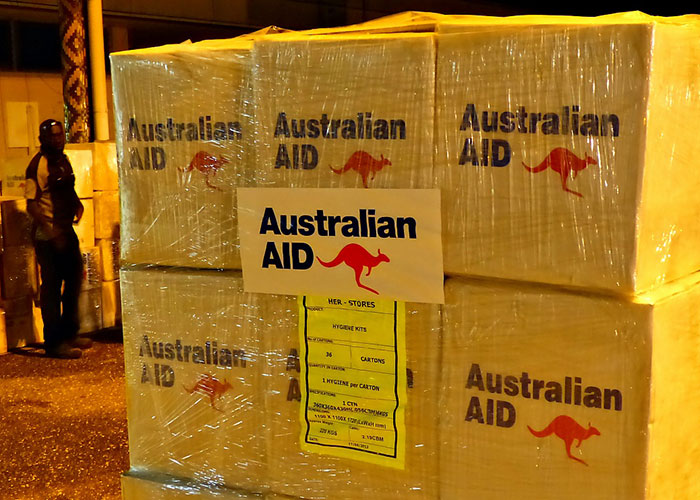
Published: Friday 5 June 2015
Published
The objective of the audit was to assess the effectiveness of the Department of Foreign Affairs and Trade’s management of Australian aid to Vanuatu.
Entity
Department of Foreign Affairs and Trade
Contact
Please direct enquiries relating to reports through our contact page.
Speeches and papers
Published: Tuesday 26 March 1996
Published
Mr P.J. Barrett (AM) - Auditor-General for Australia, presented an address to SES Officers in the Australian Customs Service, Canberra
Performance audit (Auditor-General Report No. 18 of 2012–13)
Published: Wednesday 30 January 2013
Published
The objective of the audit was to assess the effectiveness of FaHCSIA’s administration of Communities for Children under the Family Support Program.
Entity
Department of Families, Housing, Community Services and Indigenous Affairs
Speeches and papers
Published: Thursday 11 April 2002
Published
Address by Richard Rundle, Executive Director, Business Assurance Services, at the Security in Government 2002 Conference
Performance audit (Auditor-General Report No. 20 of 2016–17)

Published: Wednesday 19 October 2016
Published
The audit objective was to assess the departments of Health and Human Services’ administration, including oversight and monitoring arrangements, for the Indemnity Insurance Fund.
Entity
Department of Health; Department of Human Services
Contact
Please direct enquiries relating to reports through our contact page.
Performance audit (Auditor-General Report No. 5 of 2005–06)
Published: Thursday 11 August 2005
Published
The audit objective was to examine whether Health's financial management framework and processes adequately support Health's Secretary, Executive and managers to make informed decisions on the use of Commonwealth resources.
Entity
Department of Health and Ageing
Performance audit (Auditor-General Report No. 44 of 2019–20)

Published: Tuesday 23 June 2020
Published
The objective of this audit was to assess the effectiveness of the Department of Social Services' fraud control arrangements.
Entity
Department of Social Services
Contact
Please direct enquiries through our contact page.
Performance audit (Auditor-General Report No. 47 of 2012–13)
Published: Tuesday 18 June 2013
Published
The objective of the audit was to assess the effectiveness of the Australian Transaction Reports and Analysis Centre's (AUSTRAC) arrangements for processing financial intelligence, to assist domestic partner agencies and international counterparts in their operations and investigations.
Entity
Australian Transaction Reports and Analysis Centre (AUSTRAC)
Contact
Please direct enquiries relating to reports through our contact page.
Performance audit (Auditor-General Report No. 51 of 2001–02)
Published: Thursday 23 May 2002
Published
The objective of this audit was to assess the effectiveness of CSIRO in administering research projects to deliver required results. In particular, the audit examined:
- structures for project management in CSIRO;
- the alignment of project with strategic objectives;
- the adequacy of project planning; and
- CSIRO's approach to assessing project outcomes.
Entity
Commonwealth Scientific and Industrial Research Organisation
Performance audit (Auditor-General Report No. 44 of 2011–12)
Published: Tuesday 19 June 2012
Published
The objective of the audit was to assess the effectiveness of the Department of Health and Ageing's support for improved access to integrated GP and primary healthcare services through its administration of the Primary Care Infrastructure Grants (PCIG) program.
Entity
Department of Health and Ageing
Performance audit (Auditor-General Report No. 48 of 2023–24)

Published: Wednesday 26 June 2024
Published
The objective of the audit was to assess the effectiveness of the transitional arrangements from the Cashless Debit Card (CDC) program to the Enhanced Income Management program.
Entity
Department of Social Services; Services Australia
Contact
Please direct enquiries through our contact page.
Performance audit (Auditor-General Report No. 9 of 2012–13)
Published: Thursday 1 November 2012
Published
The objective of the audit was to assess the management and effectiveness of DCO’s delivery and coordination of support services to ADF families, in particular support services provided when an ADF member is seriously injured or ill, or dies in service.
Entity
Department of Defence, Department of Veterans' Affairs
Performance audit (Auditor-General Report No. 43 of 2019–20)

Published: Monday 22 June 2020
Published
The objective of this audit was to assess the effectiveness of the Department of Home Affairs' fraud control arrangements.
Entity
Department of Home Affairs
Contact
Please direct enquiries through our contact page.
Performance audit (Auditor-General Report No. 6 of 2025–26)

Published: Wednesday 19 November 2025
Published
The objective of the audit was to assess whether the Department of Climate Change, Energy, the Environment and Water is effectively managing the delivery of the program to achieve program outcomes.
Entity
Department of Climate Change, Energy, the Environment and Water
Contact
Please direct enquiries through our contact page.
Performance audit (Auditor-General Report No. 41 of 2003–04)
Published: Thursday 15 April 2004
Published
The objective of the audit was to examine DVA's implementation of the Repatriation health card system, which aims to ensure that veterans can obtain health care through community-based providers and facilities.
Entity
Department of Veterans' Affairs
Performance audit (Auditor-General Report No. 42 of 2019–20)

Published: Friday 19 June 2020
Published
The objective of this audit was to assess the effectiveness of the Department of Foreign Affairs and Trade's fraud control arrangements.
Entity
Department of Foreign Affairs and Trade
Contact
Please direct enquiries through our contact page.
Performance audit (Auditor-General Report No. 37 of 2003–04)
Published: Tuesday 30 March 2004
Published
The Australian Customs Service (Customs) is responsible for managing the integrity of Australia's border. The Australian maritime border is the 200 nautical mile Exclusive Economic Zone (EEZ) around Australia's 37 000 kilometre coastline. The National Marine Unit (NMU) contributes to customs' Civil Maritime Surveillance and Response program. It has eight 35 - metre Bay Class vessels (known as Australian Customs Vessels or ACVs) that are capable of maintaining a strategic presence around the Australian coast. The audit examined the administrative effectiveness of the NMU's surveillance and response operations. Particular emphasis was given to the following areas:
- strategic and tactical taskings;
- crew operations;
- crew training;
- asset management; and
- governance arrangements.
Entity
Australian Customs Service
Performance audit (Auditor-General Report No. 14 of 2011–12)
Published: Wednesday 23 November 2011
Published
The audit objective was to assess the effectiveness of SEWPaC’s management of the IPA program in relation to the two primary targets of the IPA program under the Caring for our Country initiative (2008–13) which are to:
- expand the contribution of the IPA program to the NRS by between eight and 16 million hectares (an increase of at least 40 per cent), of which 1.8 million hectares are to be in northern and remote Australia; and
- ensure the continued use, support and reinvigoration of traditional ecological knowledge to underpin biodiversity conservation in the Plans of Management of 32 newly initiated projects.
Entity
Department of Sustainability, Environment, Water, Population and Communities
Performance audit (Auditor-General Report No. 24 of 2024–25)

Published: Monday 17 February 2025
Published
The objective of this audit was to assess the efficiency and effectiveness of Australian Human Rights Commission’s handling of complaints.
Entity
Australian Human Rights Commission
Contact
Please direct enquiries through our contact page.
Performance audit (Auditor-General Report No. 46 of 2000–01)
Published: Wednesday 6 June 2001
Published
The objective of the audit was to report to Parliament on the ATO's management of its performance reporting within the outcomes and outputs framework and to identify potential areas for improvement in specifying, measuring, administering and reporting under that framework.
Entity
Australian Taxation Office
Performance audit (Auditor-General Report No. 39 of 2001–02)
Published: Thursday 4 April 2002
Published
The audit reviewed the Department of Employment and Workplace Relations (DEWR) management of the provision of employment services information to job seekers up to the point where job seekers are referred to Job Network. The objective of the audit was to examine the administrative effectiveness of DEWR's management of the provision of information to job seekers, focusing on determining what information should be provided, developing an effective means of providing information, and assuring that information is being delivered effectively.
Entity
Department of Employment
Performance audit (Auditor-General Report No. 44 of 1997–98)
Published: Wednesday 13 May 1998
Published
The Australian Diplomatic Communications Network was developed to provide a secure communication and automation capability for domestic offices and overseas posts. The audit focussed on project management of the ADCNET project, and in particular:
- how effectively the ADCNET project was managed;
- how effectively project risks were managed; and
- the extent to which project management processes have established whether ADCNET meets the specifications set by, and the expectations held by, DFAT, as well as any lessons to be learnt for this and other future projects.
Entity
Department of Foreign Affairs and Trade
Performance audit (Auditor-General Report No. 50 of 2012–13)
Published: Thursday 20 June 2013
Published
The objective of the audit was to assess the effectiveness of the Department of Health and Ageing’s administration of the GP Super Clinics program to support improved community access to integrated GP and primary health care services.
Entity
Department of Health and Ageing
Contact
Please direct enquiries relating to reports through our contact page.
Performance audit (Auditor-General Report No. 40 of 2009–10)
Published: Wednesday 26 May 2010
Published
The audit objective was to assess the extent to which Australian Government agencies ensure that service providers are made aware of the core Australian Public Service (APS) Values and Code of Conduct and these arrangements are monitored.
Entity
Department of Agriculture, Fisheries and Forestry; Department of Education, Employment and Workplace Relations; Department of Health and Ageing; Department of Families, Housing, Community Services and Indigenous Affairs
Performance audit (Auditor-General Report No. 4 of 2011–12)
Published: Wednesday 31 August 2011
Published
The audit objective was to assess the effectiveness of DEEWR’s and FaHCSIA’s administration of the Australian Government’s responsibilities under Element 1 of the National Partnership Agreement on Indigenous Economic Participation (including the NT Jobs Package).
Entity
Across Entities
Speeches and papers
Published: Tuesday 13 October 1998
Published
Mr P.J. Barrett (AM) - Auditor-General for Australia, presented at the opening Presentation to Workshop on ANAO Year 2000 Discussion Paper
Performance audit (Auditor-General Report No. 20 of 2012–13)
Published: Tuesday 5 February 2013
Published
The objective of the audit was to assess the effectiveness of the Australian Fisheries Management Authority’s administration of its Domestic Fishing Compliance Program.
Entity
Australian Fisheries Management Authority
Performance audit (Auditor-General Report No. 19 of 2024–25)

Published: Tuesday 17 December 2024
Published
The objective of the audit was to assess the effectiveness of the administration of the Pharmaceutical Benefits Scheme.
Entity
Department of Health and Aged Care; Services Australia
Contact
Please direct enquiries through our contact page.
Performance audit (Auditor-General Report No. 20 of 2007–08)
Published: Wednesday 23 January 2008
Published
The objective of the audit was to examine the accuracy of Medicare claims processing, including the adequacy and operation of relevant manual and system processes. The audit assessed the:
- adequacy and operation of relevant manual and system controls used to support the reliable processing of Medicare claims, and
- accuracy of the assessing and processing of Medicare claims, using Computer Aided Audit Techniques (CAATs).
Entity
Medicare Australia
Performance audit (Auditor-General Report No. 33 of 2002–03)
Published: Wednesday 19 March 2003
Published
The objective of the audit was to determine whether DEST has effective governance practices for its IT and e- Business; has adequate systems in place to measure the efficiency and effectiveness of its IT and e-Business; implements and maintains appropriate quality standards within its IT and e-Business systems; and implements proper controls, including risk management, to achieve maximum benefits from its IT and e- Business. The audit examined education and training services provided, or managed, by DEST via IT or the Internet.
Entity
Department of Education Science and Training
Performance audit (Auditor-General Report No. 1 of 2012–13)
Published: Tuesday 21 August 2012
Published
The objective of the audit was to assess the effectiveness of the Department of Resources, Energy and Tourism’s administration of the Renewable Energy Demonstration Program (REDP), including progress towards achieving the programʹs objectives.
The audit examined whether the department had established effective arrangements to:
- implement REDP, including governance arrangements;
- assess applications for REDP funding assistance and recommend projects to the Minister for funding approval;
- negotiate funding agreements for approved projects; and
- monitor progress towards the achievement of the REDP objective.
Entity
Department of Resources, Energy & Tourism
Performance audit (Auditor-General Report No. 2 of 2004–05)
Published: Thursday 15 July 2004
Published
This audit examined DIMIA's administration of onshore compliance under rhe Migration Act 1958 (Cth) as amended (the Act). In particular, it focused on whether DIMIA had implemented appropriate onshore compliance strategies in regard to people who enter Australia lawfully but whose presence becomes unlawful through: - the expiry of their visa; or - a breach of visa conditions and cancellation of their visa.
Entity
Department of Immigration and Multicultural and Indigenous Affairs
Performance audit (Auditor-General Report No. 34 of 2023–24)

Published: Monday 3 June 2024
Published
The objective of this audit was to assess the effectiveness of the Australian Maritime Safety Authority’s (AMSA) management of the Aids to Navigation maintenance procurement.
Entity
Australian Maritime Safety Authority
Contact
Please direct enquiries through our contact page.
Performance audit (Auditor-General Report No. 33 of 2008–09)
Published: Wednesday 20 May 2009
Published
The objective of the audit was to assess the effectiveness of the Tax Office's administration of the PRRT. The Australian National Audit Office (ANAO) identified four key areas for review: general administration; compliance; promoting certainty in administering the PRRT; and governance arrangements.
Entity
Australian Taxation Office
Performance audit (Auditor-General Report No. 21 of 2017–18)

Published: Wednesday 13 December 2017
Published
The objective of the audit was to examine the effectiveness of the Australian Taxation Office’s use of settlements to resolve taxpayer disputes.
Entity
Australian Taxation Office
Contact
Please direct enquiries relating to reports through our contact page.
Insights: Audit lessons

Published: Friday 17 May 2019
Published
This edition of audit insights outlines key messages from a series of recent audits examining the effectiveness of governance boards in four corporate Commonwealth entities. The audit observations from this series of audits relate primarily to the ‘soft’ attributes of effective governance such as relationships, behaviours and culture, while also recognising the important interplay with the ‘hard’ attributes of governance such as board composition, appointment processes and independence. The key messages may be relevant for the operations of other Commonwealth boards as well as broader governance arrangements in Commonwealth entities.
Contact
Please direct enquiries through our contact page.
Performance audit (Auditor-General Report No. 13 of 2011–12)
Published: Tuesday 22 November 2011
Published
The objective of the audit was to assess the effectiveness of DIT’s and Centrelink’s1 administration of TFES.
[1] From 1 July 2011, Centrelink became a master program within DHS.
Entity
Department of Infrastructure and Transport, Department of Human Services
Performance audit (Auditor-General Report No. 33 of 1997–98)
Published: Monday 23 February 1998
Published
The objective of this audit was to assess the efficiency and effectiveness of the Commonwealth's management of the Great Barrier Reef as implemented by the Authority. This audit was undertaken because of the environmental significance of the Great Barrier Reef Region; its growing economic importance; recent changes to the Authority's budget arrangements; and because the Authority had not been subject to a performance audit since its establishment approximately 20 years ago.
Entity
Great Barrier Reef Marine Park Authority
Performance audit (Auditor-General Report No. 11 of 2020–21)

Published: Monday 28 September 2020
Published
The ANAO conducted separate audits of the Indigenous Advancement Strategy (IAS) Children and Schooling program and the Safety and Wellbeing program, the findings and conclusions of which are presented in this report. The objective of the audits was to assess the effectiveness of the Department of the Prime Minister and Cabinet’s and the National Indigenous Australians Agency’s administration of the IAS Children and Schooling and the Safety and Wellbeing programs.
Entity
National Indigenous Australians Agency
Contact
Please direct enquiries through our contact page.
Performance audit (Auditor-General Report No. 25 of 2022–23)

Published: Wednesday 24 May 2023
Published
The objective of this audit was to assess the effectiveness of the governance of the Tiwi Land Council under the Aboriginal Land Rights (Northern Territory) Act 1976 and the Public Governance, Performance and Accountability Act 2013.
Entity
Tiwi Land Council
Contact
Please direct enquiries through our contact page.
Performance audit (Auditor-General Report No. 52 of 2010–11)
Published: Wednesday 22 June 2011
Published
The objective of the audit was to assess the effectiveness of the ATO’s administration of DGR endorsements and associated arrangements.
Entity
Australian Taxation Office
Performance audit (Auditor-General Report No. 19 of 2010–11)
Published: Thursday 9 December 2010
Published
The audit assessed FaHCSIA's management of AACAP and how the department monitors the contribution the program is making to the improvement of primary and environmental health, and living conditions, in remote Indigenous communities.
The audit examined program delivery under the 2006–2009 MoU, as well as the planning for the 2010 project under the variation to the 2006–2009 MoU. As part of the audit the ANAO considered:
- program strategy and implementation including the roles and responsibilities of the major stakeholders, community selection and scope of works (Chapter 2);
- the financial management of the program and the changing role of the Contracted Program Manager (Chapter 3); and
- performance measures, including FaHCSIA's performance reporting framework, and approach to monitoring and reporting performance against the stated program objectives (Chapter 4).
The audit focused on AACAP in so far as it relates to Indigenous community outcomes. It did not consider the program from the perspective of the Australian Defence Force capability building.
Entity
Department of Families, Housing, Community Services and Indigenous Affairs
Performance audit (Auditor-General Report No. 10 of 2022–23)

Published: Thursday 19 January 2023
Published
The objective of the audit was to assess whether the Department of Health and Aged Care has effectively managed the expansion of telehealth services during and post the COVID-19 pandemic.
Entity
Department of Health and Aged Care
Contact
Please direct enquiries through our contact page.
Performance audit (Auditor-General Report No. 20 of 2006–07)
Published: Tuesday 30 January 2007
Published
The fleet oiler HMAS WESTRALIA was a key element of the Royal Australian Navy (hereafter referred to as ‘Navy') Maritime Operations Support Capability (MOSC) from 1989 until September 2006. WESTRALIA provided logistic support to naval operations and exercises and contributed to Defence international engagement through these activities. The new vessel to replace WESTRALIA is called HMAS SIRIUS and was commissioned by Defence in mid September 2006, which was concurrent with the formal decommissioning of WESTRALIA. This approach was adopted by Defence to ensure that Navy maintained a continuous afloat support capability.
Entity
Defence Materiel Organisation
Performance audit (Auditor-General Report No. 16 of 2009–10)
Published: Wednesday 16 December 2009
Published
The objective of the audit was to assess the ACMA's effectiveness in operating, managing and monitoring the Register, including compliance with legislative requirements.
Entity
The Australian Communications and Media Authority
Performance audit (Auditor-General Report No. 44 of 2010–11)
Published: Thursday 26 May 2011
Published
The objective of the audit was to assess the effectiveness of AusAID’s management of tertiary training assistance.
Entity
Australian Agency for International Development
Performance audit (Auditor-General Report No. 26 of 2011–12)
Published: Thursday 9 February 2012
Published
The objective of the audit was to assess the extent to which FaHCSIA, DEEWR and DoHA seek to reduce service delivery risks posed by capacity constraints in Indigenous organisations.
Entity
Department of Families, Housing, Community Services and Indigenous Affairs, Department of Education, Employment and Workplace Relations and Department of Health and Ageing
Performance audit (Auditor-General Report No. 31 of 2006–07)
Published: Thursday 29 March 2007
Published
The objective of the audit was to assess and report on the administration of the Act by the department in terms of protecting and conserving threatened species and threatened ecological communities in Australia.
Entity
Department of the Environment and Water Resources
Performance audit (Auditor-General Report No. 3 of 2010–11)
Published: Tuesday 27 July 2010
Published
The objective of the audit was to assess whether the Strategic Projects component of the Regional and Local Community Infrastructure Program has been effectively designed and administered.
Entity
Department of Infrastructure, Transport, Regional Development and Local Government
Performance audit (Auditor-General Report No. 10 of 2021–22)

Published: Thursday 25 November 2021
Published
The objective of the audit was to assess the effectiveness of Industry Innovation and Science Australia's, the Department of Industry, Science, Energy and Resources', and the Australian Taxation Office's administration of the Research and Development Tax Incentive program.
Entity
Australian Taxation Office; Industry Innovation and Science Australia; Department of Industry, Science, Energy and Resources
Contact
Please direct enquiries through our contact page.
Performance audit (Auditor-General Report No. 57 of 2010–11)
Published: Tuesday 28 June 2011
Published
The objective of the audit was to report on the effectiveness of Defence’s approach to the acceptance into service of Navy capability, and to identify where better practice may be used by CDG, DMO and Navy.
Entity
Department of Defence; Defence Materiel Organisation
Performance audit (Auditor-General Report No. 26 of 2005–06)
Published: Wednesday 25 January 2006
Published
The ANAO conducted fieldwork in each of the audited agencies to identify the processes they used to design and review forms. The ANAO also identified the extent to which the agencies' forms are available online and their approaches to placing forms online.
Entity
Australian Bureau of Statistics; Centrelink; Child Support Agency; Medicare Australia