Browse our range of reports and publications including performance and financial statement audit reports, assurance review reports, information reports and annual reports.
Performance audit (Auditor-General Report No. 39 of 2004–05)
Published: Wednesday 13 April 2005
Published
The objective of the audit was to assess the ATO's administration of the Surcharge. Specifically, the audit sought to: report on the environment into which the Surcharge was introduced, including the legislative intent behind the Surcharge, and the current Surcharge environment; examine and report on aspects of Surcharge governance; assess the systems, processes and controls the ATO uses to: match Member Contributions Statements (MCS) data with income tax return data using Tax File Numbers (TFNs); process Surcharge information; and issue Surcharge liability assessments. assess the mechanisms the ATO uses to assess, classify, manage and rectify existing Surcharge exceptions, and prevent future exceptions from occurring; and examine the mechanisms and strategies the ATO uses to provide assurance that members and holders of contributions are complying with their Surcharge obligations.
Entity
Australian Taxation Office
Speeches and papers
Published: Wednesday 7 October 2020
Published
The fifteenth Commonwealth Auditor-General of Australia, Grant Hehir, has prepared a mid-term report reflecting on his first five years in the role. The report presents a description and analysis of the role and impact of audit, as well as analysis of the financial audit and performance audit work of the Australian National Audit Office (ANAO). The report concludes with coverage of ANAO continuous improvement activities across audit quality, better communication, transparency, efficiency and workforce capability.
Contact
Please direct enquiries through our contact page.
Performance audit (Auditor-General Report No. 48 of 2003–04)
Published: Thursday 27 May 2004
Published
The objective of the performance audit was to report to Parliament our assessment as to how well the ATO manages and uses the AIIR data in taxation administration. The ANAO considered the following four key areas in addressing the audit objective. 1. Governance arrangements within the ATO, focussing on whole of ATO and whole-of-government aspects of the AIIR data, as distinct from solely business line applications. 2. Receipt of AIIR data and how well the ATO facilitates the collection of complete and valid AIIR data from investment bodies 3. Management of AIIR data through the construction by the ATO of valid entity records by using the AIIR data in conjunction with existing ATO client identification master files. 4: Use of the AIIR data on a systematic basis to inform active compliance activities.
Entity
Australian Taxation Office
Major projects report (Auditor-General Report No. 20 of 2024–25)

Published: Wednesday 18 December 2024
Published
Increased transparency and accountability on progress with major Defence equipment acquisitions has been a focus of parliamentary interest for some time. Beginning in 2007–08, an annual program has been established in conjunction with the Department of Defence to enable the ANAO to review and report to the Parliament on the status of major Defence acquisition projects, as set out in the major projects report. The review includes information relating to the cost, schedule and progress towards delivery of required capability of individual projects as at 30 June each year, and is undertaken at the request of the Joint Committee of Public Accounts and Audit.
Entity
Department of Defence
Contact
Please direct enquiries through our contact page.
Performance audit (Auditor-General Report No. 18 of 2003–04)
Published: Wednesday 10 December 2003
Published
The Australian National Audit Office (ANAO) completed a performance audit of the ATO's use of AUSTRAC data in August 2000, titled The AustralianTaxation Office's Use of AUSTRAC Data, Audit Report No. 7 2000-2001. It found that the ATO had used AUSTRAC data to achieve a significant improvement in the collection of taxation revenue. The ANAO considered that the ATO could build on this success by using AUSTRAC data more effectively at both the strategic and operational levels. The audit made six recommendations. The ATO agreed with all recommendations. The objective of this follow-up performance audit was to assess the ATO's progress in implementing the recommendations of Audit Report No 7 2000-2001, The Australian Taxation Office's Use of AUSTRAC Data.
Entity
Australian Taxation Office
Performance audit (Auditor-General Report No. 55 of 2016–17)

Published: Tuesday 20 June 2017
Published
The objective of the audit was to assess the effectiveness of the governance of the Northern Land Council in fulfilling its responsibilities and obligations under the Aboriginal Land Rights (Northern Territory) Act 1976, Native Title Act 1993 and Public Governance, Performance and Accountability Act 2013.
Entity
Department of the Prime Minister and Cabinet; Northern Land Council
Contact
Please direct enquiries relating to reports through our contact page.
Performance audit (Auditor-General Report No. 52 of 2006–07)
Published: Thursday 28 June 2007
Published
This is the first of two audit reports concerning the Tax Office's administration of SMSFs pursuant to the provisions of the Superannuation Industry (Supervision) Act 1993.
This audit report examines the efficiency and effectiveness of the Tax Office's approach to regulating and registering self managed superannuation funds. Specifically the ANAO examined the:
- Environment in which SMSFs operate, including the Tax Office's regulatory roles and responsibilities;
- Tax Office's governance of its SMSF regulatory role; and
- Systems, processes and controls the Tax Office uses to register SMSFs, and enforce the lodgement of fund income tax and regulatory returns.
Entity
Australian Taxation Office
Performance audit (Auditor-General Report No. 40 of 2007–08)
Published: Wednesday 11 June 2008
Published
The objective of this audit was to assess the Tax Office's implementation of the nine recommendations of Audit Report No.19 2004–05 Taxpayers' Charter, having regard to any changed circumstances affecting the implementation of the recommendations. This involved an examination of the Tax Office's:
- systems and processes used to develop, maintain and update the Charter;
- strategic commitment to implementing the principles of the Charter;
- integration of Charter principles with its business processes;
- systems for resolving disputes according to Charter principles; and
- monitoring and reporting of its performance against commitments in the Charter.
Entity
Australian Taxation Office
Performance audit (Auditor-General Report No. 28 of 2000–01)
Published: Wednesday 7 February 2001
Published
The report summarises the audit and other related activities of the ANAO in the period June to December 2000. It provides a consolidated report of the ANAO's integrated audit products tabled during the period. Key issues examined in the ANAO's performance audit activity in the period were:
- risk management in a corporate governance framework;
- outsourcing and asset sales;
- contract management;
- service delivery;
- data management/management information systems; and
- legislative implementation.
The report also summarised the results of a report summarising the final results of the audits of the financial statements of Commonwealth entities; and dealt with issues regarding financial management issues, controls and processes arising from the financial audit activities conducted during the period.
Entity
Audit Activity Report
Speeches and papers
Published: Thursday 21 August 2003
Published
Mr P.J. Barrett (AO) - Auditor-General for Australia, presented at the National Institute for Governance Seminar, Canberra
Corporate

Published: Friday 1 December 2023
Published
The ANAO regards integrity as a core value of the organisation — critical in sustaining the confidence of Parliament, strengthening public trust in government and delivering quality audit products. Maintaining strong institutional integrity is critical to the operations and reputation of the ANAO.
The ANAO Integrity Framework provides an overarching structure to the integrity control system, supporting our institution’s integrity. The framework serves to assist in ethical decision making and risk, fraud and misconduct management.
Beyond its control system, the ANAO maintains an enduring focus on promoting integrity as a value that is embedded in our work and culture. The ANAO recognises that integrity demands quality not only in our products but also in the behaviours of our people.
The ANAO Integrity Advisor supports the effective and ongoing application of the Integrity Framework by providing advice to staff regarding integrity matters. The Integrity Advisor is responsible for increasing integrity awareness across the organisation and for reporting annually to the ANAO Executive Board of Management on actions taken under the Framework. The Auditor-General has published the ANAO Integrity Framework and Report for 2022–23 to provide increased transparency of the measures we undertake to maintain a high-integrity culture in the ANAO.
Contact
Please direct enquiries through our contact page.
Performance audit (Auditor-General Report No. 29 of 2009–10)
Published: Wednesday 21 April 2010
Published
The objective of the audit was to assess the effectiveness of AGD's arrangements for coordinating the development of the National Identity Security Strategy.
The ANAO's assessment was based on the following criteria:
- governance arrangements for the NISS;
- progress, to date, of the six NISS elements; and
- AGD's administrative arrangements for developing the NISS.
Entity
Attorney-General's Department
Performance audit (Auditor-General Report No. 17 of 2018–19)

Published: Monday 17 December 2018
Published
The objective of the audit was to continue to examine the progress of the implementation of the annual performance statements requirements under the Public Governance, Performance and Accountability Act 2013 (PGPA Act) and the Public Governance, Performance and Accountability Rule 2014 (PGPA Rule) by selected entities.
Entity
Across Entities
Contact
Please direct enquiries through our contact page.
Performance audit (Auditor-General Report No. 3 of 2019–20)

Published: Tuesday 23 July 2019
Published
The objective of the audit was to examine the effectiveness of Defence’s quarterly performance report as a mechanism to inform senior stakeholders about risks and issues in the delivery of capability to the Australian Defence Force.
Entity
Department of Defence
Contact
Please direct enquiries through our contact page.
Performance audit (Auditor-General Report No. 25 of 2012–13)
Published: Wednesday 27 February 2013
Published
The objective of the audit was to assess the effectiveness of Defence’s monitoring of the implementation of ANAO and internal audit recommendations. The audit also examined a sample of ANAO and internal audit recommendations—reported as being complete by Defence—to assess the extent to which these recommendations had been implemented by Defence.
Entity
Department of Defence; Defence Materiel Organisation
Performance audit (Auditor-General Report No. 36 of 2024–25)

Published: Monday 26 May 2025
Published
The objective of the audit was to assess the effectiveness of the Australian Taxation Office’s procurement of IT managed services.
Entity
Australian Taxation Office
Contact
Please direct enquiries through our contact page.
Speeches and papers
Published: Tuesday 11 February 2003
Published
Mr P.J. Barrett (AM) - Auditor-General for Australia, presented to the Australian Communications Authority's Business Planning Workshop
Performance audit (Auditor-General Report No. 1 of 2023–24)

Published: Tuesday 15 August 2023
Published
The objective of the audit was to assess the effectiveness of the governance of the Northern Land Council under the Aboriginal Land Rights (Northern Territory) Act 1976, the Native Title Act 1993 and the Public Governance, Performance and Accountability Act 2013.
Entity
Northern Land Council
Contact
Please direct enquiries through our contact page.
Performance audit (Auditor-General Report No. 28 of 2024–25)

Published: Wednesday 5 March 2025
Published
The audit objective was to assess the Australian Taxation Office’s effectiveness in managing complaints.
Entity
Australian Taxation Office
Contact
Please direct enquiries through our contact page.
Corporate
Published: Monday 11 December 2023
Published
Quality in the delivery of the ANAO’s audit services is critical in supporting the integrity of our audit reports and maintaining the confidence of the Parliament and public sector entities. The ANAO corporate plan is the ANAO’s primary planning document. It outlines our purpose; the dynamic environment in which we operate; our commitment to building capability; and the priorities, activities and performance measures by which we will be held to account. The ANAO quality management framework and plan complements the corporate plan. It describes the ANAO’s system of quality management and reflects the ANAO’s responses to identified quality risks.
The ANAO Quality Management Framework is the ANAO’s established system of quality management to provide the Auditor-General with reasonable assurance that the ANAO complies with the ANAO Auditing Standards and applicable legal and regulatory requirements, and reports issued by the ANAO are appropriate in the circumstances.
This audit quality report sets out the Auditor-General’s evaluation on the implementation and operating effectiveness of the ANAO Quality Management Framework. The report:
- provides transparency in respect of the processes, policies, and procedures that support each element of the ANAO Quality Management Framework;
- outlines ANAO performance against benchmarks on audit quality indicators; and
- outlines the ANAO’s performance against the quality assurance strategy and deliverables set out in the Quality Management Framework and Plan 2022–23.
Contact
Please direct enquiries through our contact page.
Corporate
Published: Friday 1 November 2024
Published
Quality in the delivery of the ANAO’s audit services is critical in supporting the integrity of our audit reports and maintaining the confidence of the Parliament and public sector entities. The ANAO Corporate Plan is the ANAO's primary planning document. It outlines our purpose; the dynamic environment in which we operate; our commitment to building capability; and the priorities, activities and performance measures by which we will be held to account. The ANAO Quality Management Framework and Plan complements the Corporate Plan. It describes the ANAO’s system of quality management and reflects the ANAO's responses to identified quality risks.
The ANAO Quality Management Framework is the ANAO’s established system of quality management to provide the Auditor-General with reasonable assurance that the ANAO complies with the ANAO Auditing Standards and applicable legal and regulatory requirements, and reports issued by the ANAO are appropriate in the circumstances.
This Audit Quality Report sets out the Auditor-General’s evaluation on the implementation and operating effectiveness of the ANAO Quality Management Framework. The report:
- provides transparency in respect of the processes, policies, and procedures that support each element of the ANAO Quality Management Framework;
- outlines ANAO performance against benchmarks on audit quality indicators; and
- outlines the ANAO’s performance against the quality assurance strategy and deliverables set out in the Quality Management Framework and Plan 2023–24.
Contact
Please direct enquiries through our contact page.
Performance audit (Auditor-General Report No. 51 of 2000–01)
Published: Friday 15 June 2001
Published
This audit followed up the ANAO's 1997 performance audit report on ADF health services (Audit Report No.34 1996-97 Australian Defence Force Health Services), which focused on the delivery of non-operational health services to entitled members. The objective of the follow-up audit was to assess Defence's implementation of recommendations made in the original audit report and their effectiveness in improving ADF health services.
Entity
Department of Defence
Corporate
Published: Monday 20 October 2025
Published
Quality in the delivery of the ANAO’s audit services is critical in supporting the integrity of our audit reports and maintaining the confidence of the Parliament and public sector entities. The ANAO Corporate Plan is the ANAO’s primary planning document. It outlines our purpose; the dynamic environment in which we operate; our commitment to building capability; and the priorities, activities and performance measures by which we will be held to account. The ANAO Quality Management Framework and Plan complements the Corporate Plan. It describes the ANAO’s system of quality management and reflects the ANAO’s responses to identified quality risks.
The ANAO Quality Management Framework is the ANAO’s established system of quality management to provide the Auditor-General with reasonable assurance that the ANAO complies with the ANAO Auditing Standards and applicable legal and regulatory requirements, and reports issued by the ANAO are appropriate in the circumstances.
This Audit Quality Report sets out the Auditor-General’s evaluation on the implementation and operating effectiveness of the ANAO Quality Management Framework. The report:
- provides transparency in respect of the processes, policies, and procedures that support each element of the ANAO Quality Management Framework;
- outlines ANAO performance against benchmarks on audit quality indicators; and
- outlines the ANAO’s performance against the quality assurance strategy and deliverables set out in the Quality Management Framework and Plan 2024-25.
Contact
Please direct enquiries through our contact page.
Performance audit (Auditor-General Report No. 54 of 2012–13)
Published: Wednesday 26 June 2013
Published
The audit objectives were to assess the effectiveness of:
- selected agencies’ administration in developing advertising campaigns and implementing key processes against the requirements of the Australian Government’s campaign advertising framework, and other key legal and administrative requirements; and
- the ongoing administration of the campaign advertising framework.
Entity
Across Entities
Contact
Please direct enquiries relating to reports through our contact page.
Performance audit (Auditor-General Report No. 29 of 2002–03)
Published: Friday 7 February 2003
Published
The Audit Activity Report: July-December 2002 summarises performance audit, financial audit and other related activities for the ANAO for the period. The key issues arising from the performance audits are summarised against the ANAO themes. The appendices in the report provide a short summary of each of the audits tabled for this period, the audits in progress as at 1 January 2003 and a list of the presentations and papers given by the Auditor-General and ANAO staff.
Entity
Audit Activity Report
Performance audit (Auditor-General Report No. 36 of 2021–22)

Published: Monday 20 June 2022
Published
The objective of the audit was to assess the effectiveness of the governance board in Hearing Australia.
Entity
Hearing Australia
Contact
Please direct enquiries through our contact page.
Performance audit (Auditor-General Report No. 42 of 2016–17)

Published: Wednesday 15 March 2017
Published
The audit objective was to re-assess the three entities' compliance with the 'Top Four' mandatory strategies in the Australian Government Information Security Manual (ISM). The audit also aims to examine the typical challenges faced by entities to achieve and maintain their desired ICT security posture.
Entity
Australian Taxation Office; Department of Human Services; Department of Immigration and Border Protection
Contact
Please direct enquiries relating to reports through our contact page.
Performance audit (Auditor-General Report No. 15 of 2010–11)
Published: Thursday 18 November 2010
Published
The objective of the audit was to assess FSANZ's administration of its food standard functions, as specified in the Food Standards Australia New Zealand Act, 1991 (last amended 2007).
Particular emphasis was given to whether:
- FSANZ's performance management and reporting provided effective support and ensures accountability;
- FSANZ effectively administered its food standard development and variation function, including its stakeholder management; and
- FSANZ effectively monitored the implementation of its standards and coordinates relevant jurisdictions to address market failures.
Entity
Food Standards Australia New Zealand
Speeches and papers
Published: Sunday 29 February 2004
Published
Mr P.J. Barrett (AM) - Auditor-General for Australia, presented at the MBA Governance Students at Macquarie University Graduate School of Management
Performance audit (Auditor-General Report No. 30 of 2006–07)
Published: Wednesday 14 March 2007
Published
The objectives of this follow-up audit were to:
- examine the ATO's implementation of the ten recommendations in The Australian Taxation Office's Management of its Relationship with Tax Practitioners (Audit Report No.19, 2002–03), having regard to any changed circumstances, or new administrative issues, affecting implementation of those recommendations; and
- identify scope for improvement in the ATO's management of its relationship with tax practitioners.
Follow up audits are recognised as an important element of the accountability processes of Commonwealth administration. Parliament looks to the Auditor General to report, from time to time, on the extent to which Commonwealth agencies have implemented recommendations of previous audit reports. Follow up audits keep Parliament informed of progressive improvements and current challenges in areas of Commonwealth administration that have previously been subject to scrutiny through performance audits.
Entity
Australian Taxation Office
Performance audit (Auditor-General Report No. 54 of 2003–04)
Published: Friday 18 June 2004
Published
The objective of the audit was to assess the effectiveness of DIMIA's management of its detention agreements with ACM to operate Australia's mainland immigration detention centres. In particular, the ANAO examined: DIMIA's strategic approach to the management and coordination of the contract; how DIMIA defined the services to be delivered by ACM; the systems in place to monitor and report against contract performance; the effectiveness of controls over contract payment arrangements; and DIMIA's management of infrastructure through the detention agreements.
Entity
Department of Immigration and Multicultural and Indigenous Affairs
Performance audit (Auditor-General Report No. 2 of 2010–11)
Published: Friday 23 July 2010
Published
The objective of this performance audit was to assess the effectiveness of the conduct of the first National Infrastructure Audit and development of the Infrastructure Priority List.
Entity
Infrastructure Australia
Performance audit (Auditor-General Report No. 21 of 2013–14)
Published: Thursday 27 February 2014
Published
In 2012–13, the ANAO pilot project to audit Key Performance Indicators(KPIs) was continued with the objective of conducting a review of framework developments, both in terms of the clarity of the policy and guidance issued by Finance and the performance of agencies in applying this policy and guidance, as a basis for implementing a future program of audits; and to further develop and test an audit methodology to address the practical challenges of assessing the appropriateness of KPIs, and their complete and accurate reporting.
Entity
Across Entities
Contact
Michael White, Executive Director, Phone (02) 6203 7393
Performance audit (Auditor-General Report No. 43 of 2010–11)
Published: Wednesday 25 May 2011
Published
The objective of the audit was to examine whether the UP and CPP services provided by the Australian Federal Police Protection Service are being managed effectively. In particular, the audit examined:
- whether the Protection function has been effectively integrated into the AFP, and sound arrangements are in place to strategically plan Protection services and manage risks;
- whether Protection staff have access to appropriate training and guidance; and
- the management arrangements for UP and CPP services.
Entity
Australian Federal Police
Performance audit (Auditor-General Report No. 14 of 2022–23)

Published: Thursday 23 February 2023
Published
The objective of this audit was to examine the effectiveness of the Department of Home Affairs’ management of its public communications and media activities.
Entity
Department of Home Affairs
Contact
Please direct enquiries through our contact page.
Performance audit (Auditor-General Report No. 24 of 2008–09)
Published: Thursday 5 March 2009
Published
The objective of the audit was to assess the effectiveness of the procurement and contracting associated with:
- the design, development and delivery of government advertising campaigns by Commonwealth departments; and
- the operation of the Central Advertising System (CAS).
Entity
Department of the Prime Minister and Cabinet; Department of Finance and Deregulation; Department of Education, Employment and Workplace Relations; Department of Health and Ageing; Attorney-General's Department
Performance audit (Auditor-General Report No. 37 of 2001–02)
Published: Friday 15 March 2002
Published
This was a follow-up of Audit Report No. 40 of 1997-98, Purchase of Hospital Services from State Governments. That audit examined the administration by the Department of Veterans' Affairs of the Purchase of Hospital Services from State Governments. The objective of this audit was to assess the extent to which the Department had implemented the nine recommendations of Report No. 40, taking account of any changed circumstances or administrative issues that the Department identified as affecting their implementation; and to offer continued assurance to the Parliament on the management of the purchase of hospital services.
Entity
Department of Veterans' Affairs
Performance audit (Auditor-General Report No. 37 of 2016–17)
Published: Thursday 9 February 2017
Published
The audit objective was to examine the effectiveness of the Australian Taxation Office's monitoring and implementation of recommendations about its administration made by the ANAO and parliamentary committees
Entity
Australian Taxation Office
Contact
Please direct enquiries relating to reports through our contact page.
Performance audit (Auditor-General Report No. 33 of 2003–04)
Published: Wednesday 3 March 2004
Published
The audit reviewed the ATO's collection and management of activity statement information. The audit paid particular regard to:
- the environment into which activity statements were introduced;
- taxpayer concerns with activity statement administration;
- the mechanisms the ATO uses to capture and process activity statements;
- the change processes the ATO uses to change and test activity statement IT systems; and
- the management methodology used to report on, and assess the performance of, activity statement related systems and processes.
Entity
Australian Taxation Office
Performance audit (Auditor-General Report No. 3 of 1998–99)
Published: Wednesday 12 August 1998
Published
This is a follow-up audit to Audit Report No. 16, 1995-1996, Assessable Government Industry Assistance. This audit examined whether the Australian Taxation Office (ATO) had implemented the appropriate balance of compliance strategies to ensure that Australian Government Industry Assistance (AGIA) is adequately identified, disclosed to the ATO, and the revenue collected in an efficient and administratively effective manner. The objective of this audit was to report on the action taken by the Australian Taxation Office in addressing the recommendations of the 1996 Audit Report.
Entity
Australian Taxation Office
Annual report
Published: Monday 30 September 2013
Published
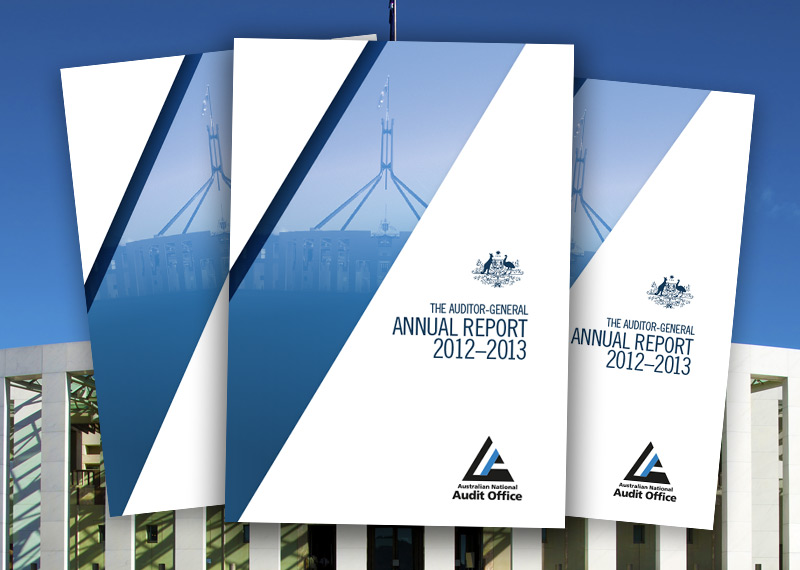
This annual report documents the performance of the Australian National Audit Office (ANAO) in the financial year ending on 30 June 2013. It addresses the Requirements for Annual Reports for Departments, Executive Agencies and FMA Act Bodies approved by the Joint Committee of Public Accounts and Audit in June 2013; the performance measures set out in the outcomes and programs framework in the 2012–13 Portfolio Budget Statements; section 28 of the Auditor-General Act 1997; and other annual reporting requirements set out in legislation.
Annual report
Published: Tuesday 30 September 2014
Published
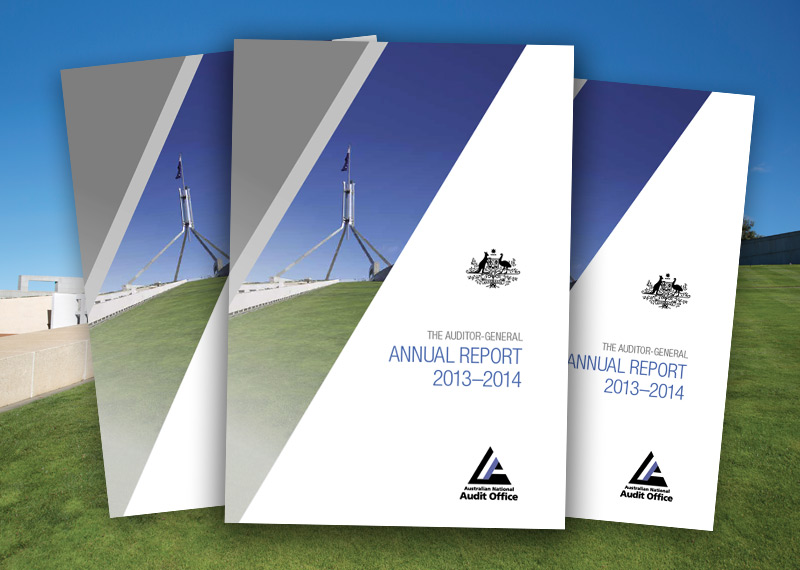
This annual report documents the performance of the Australian National Audit Office (ANAO) in the financial year ending on 30 June 2014. It addresses the Requirements for Annual Reports for Departments, Executive Agencies and FMA Act Bodies approved by the Joint Committee of Public Accounts and Audit in May 2014; the performance measures set out in the outcome and programs framework in the 2013–14 Portfolio Budget Statements; section 28 of the Auditor-General Act 1997; and other annual reporting requirements provided for in legislation.
Performance audit (Auditor-General Report No. 2 of 2022–23)

Published: Monday 15 August 2022
Published
The objective of the audit was to assess the effectiveness of the Australian Taxation Office’s engagement with tax practitioners in achieving efficient and effective taxation and superannuation systems.
Entity
Australian Taxation Office
Contact
Please direct enquiries through our contact page.
Performance audit (Auditor-General Report No. 32 of 2001–02)
Published: Thursday 14 February 2002
Published
This follow-up Audit reviewed the Department of Health and Ageing's implementation of the recommendations of Audit Report No. 36, 1999-2000, Home and Community Care. The objective of the follow-up audit was to assess the extent to which the Department had implemented the nine recommendations of Audit Report No. 36, 1999-2000. The audit examined areas relating to funding, guidance, fees, coordination with other aged and disability care programs, acquittals, accountability and data requirements, and records management.
Entity
Department of Health and Ageing
Insights: Audit lessons

Published: Wednesday 30 June 2021
Published
This edition of Audit Insights considers the approaches entities are taking to implement parliamentary and ANAO recommendations to improve public administration practices and outcomes. It updates and replaces the edition published in November 2019 and draws on audit reports released since then.
Parliamentary committee inquiries and ANAO performance audits identify risks to the successful delivery of outcomes and generally provide recommendations to address them. Tabling an agreed response to a parliamentary committee recommendation formalises government or entity commitment to the Parliament to implement the agreed action. Similarly, ANAO performance audit reports are prepared for presentation to Parliament and agreement to implement a recommendation made in an ANAO report is therefore a commitment to the Parliament.
Contact
Please direct enquiries through our contact page.
Speeches and papers
Published: Thursday 12 August 1999
Published
Mr P.J. Barrett (AM) - Auditor-General for Australia, presented at the Health Insurance Commission Senior Management Group
Annual report
Published: Wednesday 30 September 2015
Published
This annual report documents the performance of the Australian National Audit Office (ANAO) in the financial year ending on 30 June 2015. It addresses the Requirements for Annual Reports for Departments, Executive Agencies and Other Non‑corporate Commonwealth Entities approved by the Joint Committee of Public Accounts and Audit in June 2015; the performance measures set out in the outcome and programs framework in the 2014–15 Portfolio Budget Statements; section 28 of the Auditor‑General Act 1997; and other annual reporting requirements set out in legislation.
Performance audit (Auditor-General Report No. 21 of 2023–24)

Published: Thursday 11 April 2024
Published
The objective of this audit was to assess whether the Australian War Memorial is effectively managing the development project.
Entity
Australian War Memorial
Contact
Please direct enquiries through our contact page.
Performance audit (Auditor-General Report No. 23 of 2011–12)
Published: Tuesday 7 February 2012
Published
The objective of the audit was to assess the effectiveness of the Department of Climate Change and Energy Efficiency’s implementation and administration of the National Greenhouse and Energy Reporting Scheme.
Entity
Department of Climate Change and Energy Efficiency
Performance audit (Auditor-General Report No. 33 of 2011–12)
Published: Tuesday 22 May 2012
Published
The objective of the audit was to assess the effectiveness of DFAT's implementation of biometric technology to meet international requirements for enhanced passport security. In particular, the audit examined whether:
- Australian ePassports meet international requirements, and coordination with Australian stakeholders is effective;
- Australian biometric passport technology is fit for purpose and has enhanced passport security;
- personal data on the passport microchip is secure and DFAT maintains an appropriate focus on both protecting privacy and client satisfaction; and
- arrangements are in place to evaluate the effectiveness of the ePassport and to monitor risks.
Entity
Department of Foreign Affairs and Trade
Performance audit (Auditor-General Report No. 42 of 2009–10)
Published: Thursday 27 May 2010
Published
The objective of this audit was to assess key aspects of Australian Government agencies' fraud control arrangements to effectively prevent, detect and respond to fraud, as outlined in the Guidelines. The scope of the audit included 173 agencies subject to the FMA Act or the CAC Act.
Entity
Attorney-General's Department; Australian Institute of Criminology
Performance audit (Auditor-General Report No. 23 of 2003–04)
Published: Thursday 29 January 2004
Published
The audit sought to assess how well the Australian Taxation Office (ATO) manages aggressive tax planning. We did this by exploring the nature of aggressive tax planning and the ATO's approach to its management. In the latter context, we looked at:
- the ATO's previous experience with aggressive tax planning and action on previous significant external reviews, particularly dealing with mass marketed investment schemes;
- strategy and operations, intelligence gathering and use; and the identification and management of promoters given their significant role in aggressive tax planning.
Entity
Australian Taxation Office
Performance audit (Auditor-General Report No. 19 of 2011–12)
Published: Tuesday 20 December 2011
Published
The objective of the audit was to assess the development of Defence’s oversight and management of its portfolio of ICT investments and projects. In particular, the audit examined Defence’s:
- governance, strategic processes and decision-making structures that set out, prioritise and coordinate the integrated ICT reform portfolio and programs;
- ICT risk management and capacity to identify and plan to achieve the benefits of its SRP ICT stream reforms (including methodologies to measure the realisation of savings and non-savings benefits);
- level of portfolio and program management maturity; and
- the impact of improvement efforts on Defence’s ability to deliver the ICT services capacity required to support the SRP.
Entity
Department of Defence
Performance audit (Auditor-General Report No. 33 of 2021–22)

Published: Wednesday 15 June 2022
Published
The audit objective was to examine the effectiveness of Snowy Hydro Limited’s governance arrangements for early implementation of Snowy 2.0, the expansion to the Snowy Hydro Scheme.
Entity
Snowy Hydro Limited
Contact
Please direct enquiries through our contact page.
Performance audit (Auditor-General Report No. 30 of 2007–08)
Published: Thursday 24 April 2008
Published
The objective of the audit was to evaluate the Tax Office's corporate management of data matching, including analytics.
The ANAO examined the Tax Office's strategic goals and governance arrangements for data matching and analytics, its compliance with privacy requirements and whether the Tax Office is achieving intended results, which include revenue collection, optimised compliance and provision of improved services to taxpayers.
Tax Office executives have been increasingly drawing on the interrelationships and conceptual commonalities of Tax Office data matching and analytics activity. Accordingly, the audit included these relationships and conceptual commonalities within the scope of the audit. The audit was guided, therefore, by a broader definition of ‘data matching': meaning ‘finding relationships and patterns in large volumes of data'. This includes the more traditional idea of data matching as ‘bringing together data from different sources and comparing it'.
Entity
Australian Taxation Office
Speeches and papers

Published: Wednesday 8 August 2018
Published
Grant Hehir, Auditor-General for Australia, attended the 18th Meeting of INTOSAI Working Group on Environmental Auditing in Bundung Indonesia in July 2018, and presented a keynote address titled Sharing experience on auditing urban environmental management. The accompanying paper to the speech is available here.
Contact
Please direct enquiries through our contact page.
Speeches and papers
Published: Wednesday 18 April 2001
Published
Mr P.J. Barrett (AM) - Auditor-General for Australia, presented at the MinterEllison Seminar Series
Performance audit (Auditor-General Report No. 40 of 2024–25)

Published: Tuesday 3 June 2025
Published
The audit objective was to assess whether selected entities effectively implemented agreed recommendations from Auditor-General Report No. 25 2019–20 Aboriginal and Torres Strait Islander Participation Targets in Major Procurements.
Entity
Across Entities
Contact
Please direct enquiries through our contact page.
Speeches and papers
Published: Friday 24 November 1995
Published
Mr P.J. Barrett (AM) - Auditor-General for Australia, presented to the ASCPA Annual Public Sector Accounting Convention, Canberra
Performance audit (Auditor-General Report No. 6 of 2025–26)

Published: Wednesday 19 November 2025
Published
The objective of the audit was to assess whether the Department of Climate Change, Energy, the Environment and Water is effectively managing the delivery of the program to achieve program outcomes.
Entity
Department of Climate Change, Energy, the Environment and Water
Contact
Please direct enquiries through our contact page.
Performance audit (Auditor-General Report No. 43 of 2003–04)
Published: Friday 23 April 2004
Published
The objective of the audit was to provide assurance to Parliament concerning the adequacy of Defence preparedness management systems and to identify possible areas for improvement. The audit focused on the systems and processes that Defence uses to manage preparedness. We did not review the preparedness levels of specific capabilities, nor did we cover capital acquisition processes. The audit included coverage of: - preparedness systems architecture; - control and direction of preparedness; - coordination among contributors to preparedness; and - performance management and preparedness.
Entity
Department of Defence
Performance audit (Auditor-General Report No. 10 of 2007–08)
Published: Wednesday 17 October 2007
Published
The audit objective was to assess how four key departments: Education, Science and Training (DEST); Employment and Workplace Relations (DEWR); Families, Community Services and Indigenous Affairs (FaCSIA); and Health and Ageing (DoHA) are implementing the Government's policy objective for Indigenous service delivery.
Entity
NO-DEPTS-LISTED
Performance audit (Auditor-General Report No. 3 of 2001–02)
Published: Tuesday 17 July 2001
Published
Taxation rulings are a key mechanism used by the Australian Taxation Office (ATO) to disseminate the Commissioner of Taxation's interpretative advice on Australian taxation law. The objective of the audit was to:
report to Parliament on the operation of the ATO's administration of taxation rulings (public, private and oral rulings); and where appropriate, make recommendations for improvements, having regard to considerations of: efficiency and effectiveness of the ATO's administration of the rulings system, particularly in relation to the achievement of the objectives set by Parliament for the rulings system; the ATO's systems' capacity to deliver consistency and fairness for taxpayers; and good corporate governance, including the control framework.
Entity
Australian Taxation Office
Performance audit (Auditor-General Report No. 35 of 2018–19)

Published: Friday 26 April 2019
Published
The objective of this audit was to examine the effectiveness of the governance arrangements for the Special Broadcasting Service Corporation (SBS).
Entity
Special Broadcasting Service Corporation
Contact
Please direct enquiries through our contact page.
Performance audit (Auditor-General Report No. 4 of 2011–12)
Published: Wednesday 31 August 2011
Published
The audit objective was to assess the effectiveness of DEEWR’s and FaHCSIA’s administration of the Australian Government’s responsibilities under Element 1 of the National Partnership Agreement on Indigenous Economic Participation (including the NT Jobs Package).
Entity
Across Entities
Performance audit (Auditor-General Report No. 10 of 2011–12)
Published: Thursday 3 November 2011
Published
The audit objective was to assess the effectiveness of DEEWR‘s administration of the initial phases of the NP ECE. The high-level criteria used to make this assessment were the appropriateness of DEEWR‘s:
- establishment of a sound foundation for implementation, including implementation plans, monitoring arrangements and an Indigenous strategy for universal access; and
- ongoing monitoring and support activities, including assessing progress reports, making payments, maintaining relationships, improving data quality and public reporting.
Entity
Department of Education, Employment and Workplace Relations
Major projects report (Auditor-General Report No. 19 of 2020–21)

Published: Monday 30 November 2020
Published
The objective of this report was to provide the Auditor-General’s independent assurance over the status of the selected major projects. The status of the selected major projects is reported in the Statement by the Secretary of Defence and the Project Data Summary Sheets (PDSSs) prepared by Defence. Assurance from the ANAO’s review is conveyed in the Independent Assurance Report by the Auditor-General.
Entity
Department of Defence
Contact
Please direct enquiries through our contact page.
Performance audit (Auditor-General Report No. 16 of 1997–98)
Published: Sunday 26 October 1997
Published
The objectives of the audit were to examine the benefits of diversity management in the APS and review the progress made towards equity in employment in the APS, including the EEO Program. It included:
- an assessment of the progress towards achieving equity across the APS and by individual agencies;
- an assessment of the quality of agency EEO programs;
- an assessment of the role of the PSMPC in approving agency EEO programs and monitoring trends across the service;
- a consideration of legal obligations and agencies compliance with these; and
- the possible risks to, and opportunities for, equity under the WRA.
The audit concentrated on evidence of overall progress, the relative performance of individual agencies, and the examination of observed and underlying trends.
Entity
Public Service and Merit Protection Commission and Other Agencies
Performance audit (Auditor-General Report No. 15 of 2009–10)
Published: Thursday 26 November 2009
Published
The objective of this audit is to assess whether AusAID's management of the expanding aid program supports delivery of effective aid. The audit focuses on progress of AusAID's internal reforms to achieve this objective.
Entity
AusAID
Performance audit (Auditor-General Report No. 52 of 2002–03)
Published: Friday 20 June 2003
Published
The audit reviewed the management of unscheduled absence in 74 APS agencies. The objective of the audit was to assess the extent and cost of unscheduled absence in the APS; to examine whether unscheduled absence in the APS was being managed efficiently and effectively; and to identify opportunities for improvement.
Entity
Across agency
Performance audit (Auditor-General Report No. 31 of 2024–25)

Published: Tuesday 20 May 2025
Published
The objective of the audit was to examine the effectiveness of the Department of Defence’s administration of contractual obligations to maximise Australian industry participation.
Entity
Department of Defence
Contact
Please direct enquiries through our contact page.
Performance audit (Auditor-General Report No. 43 of 2020–21)

Published: Tuesday 8 June 2021
Published
The objective of the audit was to assess the effectiveness of the Australian Federal Police’s framework to ensure the lawful exercise of powers in accordance with applicable legislation.
Entity
Australian Federal Police
Contact
Please direct enquiries through our contact page.
Performance audit (Auditor-General Report No. 33 of 2018–19)

Published: Wednesday 10 April 2019
Published
The objective of the audit was to examine the effectiveness of governance and integrity arrangements for the Northern Australia Infrastructure Facility (NAIF).
Entity
Northern Australia Infrastructure Facility
Contact
Please direct enquiries through our contact page.
Speeches and papers
Published: Thursday 18 October 2001
Published
Mr P.J. Barrett (AM) - Auditor-General for Australia, presented to the Senior Staff of the Board of Audit - Tokyo, Japan
Major projects report (Auditor-General Report No. 16 of 2025–26)

Published: Wednesday 17 December 2025
Published
Increased transparency and accountability on progress with major Defence equipment acquisitions has been a focus of parliamentary interest for some time. Beginning in 2007–08, an annual program has been established in conjunction with the Department of Defence to enable the ANAO to review and report to the Parliament on the status of major Defence acquisition projects, as set out in the major projects report. The review includes information relating to the cost, schedule and progress towards delivery of required capability of individual projects at 30 June each year, and is undertaken at the request of JCPAA.
Entity
Department of Defence
Contact
Please direct enquiries through our contact page.
Performance audit (Auditor-General Report No. 35 of 2003–04)
Published: Wednesday 24 March 2004
Published
This report covers a number of the discretionary compensation and debt relief mechanisms that are available to Commonwealth agencies, where individuals or entities have been disadvantaged by legislation, or actions by agencies or staff, or some other negative circumstances. It deals mainly with two legislative mechanisms, namely, act of grace payments and waivers of debt, and one administrative mechanism, the Compensation for Detriment caused by Defective Administration (CDDA) scheme. This report also briefly covers two other mechanisms, namely ex gratia payments and payments in special circumstances relating to Australian Public Service (APS) employment. The main objective of the audit was to assess whether the management of claims for compensation and debt relief in special circumstances was in accordance with relevant legislative requirements and Commonwealth guidelines, and whether the current administrative policies and procedures were adequate.
Entity
Across Agency
Performance audit (Auditor-General Report No. 50 of 2017–18)

Published: Tuesday 26 June 2018
Published
The audit objective was to assess the effectiveness of the Department of Health's design, implementation and administration of primary healthcare under the Indigenous Australians' Health Program (IAHP).
Entity
Department of Health
Contact
Please direct enquiries through our contact page.
Performance audit (Auditor-General Report No. 48 of 2013–14)
Published: Monday 23 June 2014
Published
The objective of the audit was to assess the effectiveness of the administration of the Australian Business Register.
Entity
Australian Taxation Office, Australian Securities and Investments Commission, Department of Industry
Contact
Please direct enquiries relating to reports through our contact page.
Performance audit (Auditor-General Report No. 8 of 2014–15)

Published: Wednesday 26 November 2014
Published
The audit objective was to assess the effectiveness of the Department of Health’s monitoring and implementation of both ANAO performance audit and internal audit recommendations.
Entity
Department of Health
Contact
Please direct enquiries relating to reports through our contact page.
Performance audit (Auditor-General Report No. 21 of 2011–12)
Published: Tuesday 24 January 2012
Published
The objective of the audit was to assess the implementation and effectiveness of the enhanced grants administration requirements for:
- reporting to the Finance Minister on the awarding of grants within their own electorate by Ministers who are Members of the House of Representatives;
- reporting to the Finance Minister on instances where Ministers have decided to approve a particular grant which the relevant agency has recommended be rejected; and
- the website reporting of grants awarded.
Entity
Department of Climate Change and Energy Efficiency; Department of Families, Housing, Community Services and Indigenous Affairs; Department of Infrastructure and Transport; Department of Regional Australia, Regional Development and Local Government
Performance audit (Auditor-General Report No. 2 of 2021–22)

Published: Wednesday 8 September 2021
Published
The audit objective was to assess the effectiveness of the Australian Security Intelligence Organisation's workforce planning to support key activities.
Entity
Australian Security Intelligence Organisation
Contact
Please direct enquiries through our contact page.
Performance audit (Auditor-General Report No. 12 of 2005–06)
Published: Thursday 13 October 2005
Published
The objectives of the audit were to: assess the effectiveness of the key evaluation methods used to review the efficacy of the Australian Government's national counter-terrorism coordination arrangements; and examine the effectiveness of the links between the key evaluation methods, and how the key evaluation methods contribute to the process of continuous improvement.
Entity
Attorney General's Department; The Department of the Prime Minister and Cabinet
Performance audit (Auditor-General Report No. 64 of 2001–02)
Published: Friday 28 June 2002
Published
The objective of the audit was to examine and report on the key management factors that assist in ensuring value for money in learning and development.
Entity
Across Agency
Performance audit (Auditor-General Report No. 32 of 2023–24)

Published: Thursday 30 May 2024
Published
The objective of this audit was to assess the effectiveness of the Australian Institute for Teaching and School Leadership’s (AITSL) administration of national standards and frameworks.
Entity
Australian Institute for Teaching and School Leadership
Contact
Please direct enquiries through our contact page.
Speeches and papers
Published: Wednesday 26 April 2000
Published
Mr P.J. Barrett (AM) - Auditor-General for Australia, presented an Occasional Paper
Performance audit (Auditor-General Report No. 13 of 2008–09)
Published: Tuesday 16 December 2008
Published
The audit objective was to assess how well agencies manage their websites. Particular attention was given to the audited agencies' website purposes, risk management and planning, policies, content management procedures, and performance monitoring and reporting. These elements provide the framework for the design, implementation and operation of websites.
Entity
Australian Bureau of Statistics; Department of Agriculture, Fisheries and Forestry; Department of Foriegn Affairs and Trade
Performance audit (Auditor-General Report No. 31 of 2017–18)

Published: Wednesday 7 March 2018
Published
The objective of this audit was to examine the effectiveness of the Australian Federal Police in managing employee mental health.
Entity
Australian Federal Police (AFP)
Contact
Please direct enquiries relating to reports through our contact page.
Performance audit (Auditor-General Report No. 34 of 2002–03)
Published: Monday 24 March 2003
Published
This audit followed up the ANAO's 1999 performance audit report on the Commonwealth's planning and response mechanisms to deal with exotic and new endemic pest and emergencies in the animal and plant sectors (Audit Report No 9 1999-2000 Managing Pest and Disease Emergencies). The previous audit made nine recommendations to improve planning and response strategies for emergencies; better coordination; diagnostic support; and appropriate monitoring and surveillance. The objective of the follow-up audit was to assess AFFA's implementation of the recommendations, and whether implementation of these recommendations, or appropriate alternative measures, has improved the Commonwealth's planning and response strategies for pest and disease emergencies. The ANAO also observed and assessed relevant parts of the September 2002 foot and mouth disease simulation, Exercise Minotaur.
Entity
Agriculture Fisheries and Forestry - Australia Department of Agriculture
Speeches and papers
Published: Monday 3 February 2003
Published
Mr P.J. Barrett (AM) - Auditor-General for Australia, presented to the Australasian Council of Public Accounts Committees (ACPAC)
Performance audit (Auditor-General Report No. 48 of 2004–05)
Published: Thursday 2 June 2005
Published
The objective of the audit was to assess the administrative effectiveness of DEST's support for the Australian education and training export industry, including its regulatory and associated roles, and how it monitors and reports on its performance in undertaking these roles.
Entity
Department of Education Science and Training
Performance audit (Auditor-General Report No. 15 of 2023–24)

Published: Monday 12 February 2024
Published
The objective of this audit was to assess the effectiveness of the Australian Taxation Office’s management and oversight of fraud control arrangements for the administration of the Goods and Services Tax (GST).
Entity
Australian Taxation Office
Contact
Please direct enquiries through our contact page.
Performance audit (Auditor-General Report No. 22 of 2020–21)

Published: Thursday 10 December 2020
Published
The audit examined whether the COVID-19 National Medical Stockpile (NMS) procurement requirement was met through effective planning and governance arrangements.
Entity
Department of Health; Department of Industry, Science, Energy and Resources
Contact
Please direct enquiries through our contact page.
Performance audit (Auditor-General Report No. 10 of 2019–20)

Published: Monday 30 September 2019
Published
The audit objective was to assess the effectiveness of the Department of Education’s design and governance of the Child Care Package.
Entity
Department of Education
Contact
Please direct enquiries through our contact page.
Performance audit (Auditor-General Report No. 34 of 2013–14)
Published: Thursday 29 May 2014
Published
The objective of this audit was to assess the effectiveness of arrangements for implementing and monitoring the implementation of ANAO performance audit recommendations in the Department of Agriculture and the Department of Human Services.
Entity
Department of Agriculture, Department of Human Services
Contact
Please direct enquiries relating to reports through our contact page.
Speeches and papers
Published: Thursday 13 February 1997
Published
Mr P.J. Barrett (AM) - Auditor-General for Australia, presented to the Central Agency Broker Seminar - Towards a Best Practice Australian Public Service - Hobart
Performance audit (Auditor-General Report No. 24 of 2009–10)
Published: Wednesday 10 March 2010
Published
The objective of this audit was to examine the effectiveness of Defence and the DMO's management of procurement and through life support arrangements to meet the explosive ordnance requirements of the ADF, particularly the non-guided munitions requirements of Army. This included a review of the progress of Defence and the DMO in implementing the recommendations of ANAO Audit Report No.40 2005–06.
Entity
Department of Defence; Defence Materiel Organisation
Performance audit (Auditor-General Report No. 16 of 2008–09)
Published: Monday 22 December 2008
Published
The objective of the audit was to assess the adequacy and effectiveness of the BCM practices and procedures within the Tax Office in preparing for, or responding to, disruptions to ‘business as usual' operations.
Entity
Australian Taxation Office
Major projects report (Auditor-General Report No. 9 of 2008–09)

Published: Thursday 27 November 2008
Published
This first Assurance Report on the status of selected Defence equipment acquisition projects, which has the support of the Parliament and the Government, represents a substantial step towards improving transparency and public accountability in major Defence procurement projects. It is the pilot of an annual Defence Materiel Organisation (DMO) Major Projects Report, and was developed in conjunction with the DMO. It covers the cost, schedule and capability progress achieved by nine DMO projects, which had an approved budget totalling $13.535 billion as at 30 June 2008.
This report is organised into three parts. Part 1 comprises an ANAO overview and Auditor–General's Foreword. Part 2 comprises the Major Projects Report prepared by DMO, including an overview reflecting DMO's perspective on their business and on the nine projects included in the. Part 3 incorporates the Auditor-General's Review Report, the statement by the CEO DMO, and the information prepared by DMO in the form of standardised Project Data Summary Sheets covering each of the nine pilot projects.
In the next 12 months, the ANAO will review 15 DMO projects planned for inclusion in the 2008-09 DMO Major Projects Report, with the number of projects rising to 30 projects in subsequent years. The ANAO will also work with DMO to refine the approach adopted for providing assurance on each project's progress toward achieving Final Operational Capability. The ANAO will also consider the inclusion of an analysis of each project's emerging trends, as appropriate, to complement DMO's intention to provide improved analysis of project management performance regarding all projects included in the Major Projects Report.
Entity
Defence Materiel Organisation
Performance audit (Auditor-General Report No. 25 of 1997–98)
Published: Thursday 18 December 1997
Published
The main objectives of the audit were to examine and form an opinion on:
- the efficiency, economy and administrative effectiveness with which the Commonwealth planned and coordinated implementation of the gun buy-back scheme;
- the management of firearms surrender and destruction in the Australian Capital Territory by the Australian Federal Police; and
- the management of the competitive tendering process for the national public education campaign.
Audit criteria were developed which examined program policy and planning, coordination with and payment of funds to the States.
Entity
Attorney-General's Department
Speeches and papers
Published: Tuesday 4 April 2006
Published
Mr Ian McPhee - Auditor-General for Australia, presented at the Australian Government Procurement Conference
Speeches and papers
Published: Friday 21 June 2002
Published
Mr P.J. Barrett (AM) - Auditor-General for Australia, presented at the Senate Occasional Lecture Series
Performance audit (Auditor-General Report No. 47 of 2004–05)
Published: Tuesday 31 May 2005
Published
The objective of this audit was to the examine action taken by the ATO to improve TFN integrity, particularly through the implementation of the recommendations made in:Report No.37, taking into account any changed circumstances, or new administrative issues, affecting the implementation of those recommendations; and Numbers on the Run, taking into account that the Government has not formally responded to the report at this time.The audit also aimed to identify further opportunities for the ATO to improve the effectiveness and efficiency of the TFN system. The report of this audit is necessarily detailed as it considers each of the recommendations and the extent to which they have been implemented.
Entity
Australian Taxation Office
Performance audit (Auditor-General Report No. 4 of 2000–01)
Published: Monday 14 August 2000
Published
This report summarises audit and other related activities of the Australian National Audit Office in the period January to June 2000.
Entity
Audit Activity Report
Performance audit (Auditor-General Report No. 36 of 2022–23)

Published: Tuesday 13 June 2023
Published
The objective of this audit was to assess the effectiveness of the Australian Securities and Investments Commission's probity management.
Entity
Australian Securities and Investments Commission
Contact
Please direct enquiries through our contact page.
Performance audit (Auditor-General Report No. 36 of 1997–98)
Published: Monday 2 March 1998
Published
This report is the second in a series of reports to be tabled at six-monthly intervals. It summarises the audit and other activities of the ANAO in the period July to December 1997.
Entity
Audit Activity Report
Performance audit (Auditor-General Report No. 45 of 2013–14)
Published: Thursday 19 June 2014
Published
The audit objective was to assess the effectiveness of DHS’ implementation of initiatives to support the delivery of services to Indigenous Australians.
Entity
Department of Human Services
Contact
Please direct enquiries relating to reports through our contact page.
Performance audit (Auditor-General Report No. 33 of 2009–10)
Published: Wednesday 5 May 2010
Published
The audit objective was to examine the effectiveness of the department's establishment of the P21 element of the BER program. The focus of the audit was on: the establishment of administrative arrangements for BER P21 in accordance with government policy; the assessment and approval of funding allocations; and the arrangements to monitor and report BER P21 progress and achievement of broader program outcomes. An examination of individual BER P21 projects was outside the scope of the audit.
Entity
Department of Education, Employment and Workplace Relations
Speeches and papers
Published: Friday 11 March 2011
Published
Mr Ian McPhee, PSM - Auditor-General for Australia, presented at the CPA Australia, International Public Sector Convention, Melbourne
Performance audit (Auditor-General Report No. 41 of 2009–10)
Published: Wednesday 26 May 2010
Published
The audit objective was to assess whether agreements between Australian Government (Commonwealth) agencies reflect sound administrative practices. To meet this objective, the audit reviewed current government policy and a range of better practice guidelines, conducted interviews with agencies and examined cross-agency agreements, to formulate suitable audit criteria and subsequently develop better practice principles.
Entity
Across Entities
Annual report
Published: Thursday 7 September 2006
Published
This annual report documents the performance of the Australian National Audit Office (ANAO) in the financial year ending on 30 June 2006. It includes highlights and areas of focus for the coming year; a forward by the Auditor-General; an overview of the report; a report on performance; details about management and accountability, and the financial statement for the year.
Annual report
Published: Tuesday 7 October 2003
Published
This annual report documents the performance of the Australian National Audit Office (ANAO) in the financial year ending on 30 June 2003. It includes a comment by the Auditor-General; an overview of the report; a report on performance; details about management and accountability, and the financial statement for the year.
Performance audit (Auditor-General Report No. 53 of 2012–13)
Published: Tuesday 25 June 2013
Published
The objective of the audit was to assess the effectiveness of agencies’ arrangements for monitoring and implementing ANAO performance audit recommendations.
Entity
Department of Education, Employment and Workplace Relations (DEEWR); Department of Families, Housing, Community Services and Indigenous Affairs (FaHCSIA); Department of Finance and Deregulation (DoFD); Department of Infrastructure and Transport (DIT)
Contact
Please direct enquiries relating to reports through our contact page.
Annual report
Published: Wednesday 19 September 2007
Published
This annual report documents the performance of the Australian National Audit Office (ANAO) in the financial year ending on 30 June 2007. It includes highlights and areas of focus for the coming year; a forward by the Auditor-General; an overview of the report; a report on performance; details about management and accountability, and the financial statement for the year.
Events and seminars

Published: Wednesday 30 October 2024
Published
The Australian National Audit Office, in partnership with the Australian Capital Territory Audit Office hosted the 12th Meeting of the Pacific Association of Supreme Audit Institution’s (PASAI) Regional Working Group on Environmental Auditing. The meeting was held from 17-19 September 2024 in Canberra, Australia.
Contact
For any enquiries, please contact External.Relations@anao.gov.au
Performance audit (Auditor-General Report No. 39 of 2021–22)

Published: Tuesday 21 June 2022
Published
The objective of the audit was to assess the effectiveness of the Department of Foreign Affairs and Trade’s overseas crisis management and response arrangements in meeting the government’s objectives for returning Australians from overseas in response to the COVID-19 global pandemic.
Entity
Department of Foreign Affairs and Trade
Contact
Please direct enquiries through our contact page.
Performance audit (Auditor-General Report No. 29 of 2007–08)
Published: Wednesday 23 April 2008
Published
The objective of the audit was to review the effectiveness of the department's administration of the PSPI. To achieve this, the ANAO considered the department's program planning and design, service delivery arrangements and monitoring, review and reporting activities. The decision which resulted in the replacement of ASSPA with PSPI was a policy decision of the Government and, thus, was beyond the scope of this audit.
Entity
Department of Education, Employment and Workplace Relations
Performance audit (Auditor-General Report No. 28 of 1999–2000)
Published: Thursday 3 February 2000
Published
This report summarises audit and other related activities of the Australian National Audit Office in the period July to December 1999.
Entity
Across Agency
Request for audit
Responded: Thursday 13 May 2021
Response provided
The Auditor-General responded on 13 May 2021 to correspondence from Senator Janet Rice dated 16 April 2021, requesting that the Auditor-General conduct an investigation to examine the Commonwealth’s responsibilities in relation to Regional Forest Agreements, including monitoring implementation, coordinating annual reports and conducting reviews.
Contact
Please direct enquiries relating to requests for audit through our contact page.
Performance audit (Auditor-General Report No. 46 of 2014–15)

Published: Tuesday 9 June 2015
Published
The audit objective was to examine the effectiveness of the Department of Human Services’ administration of the Australian Childhood Immunisation Register.
Entity
Department of Human Services
Contact
Please direct enquiries relating to reports through our contact page.
Performance audit (Auditor-General Report No. 4 of 2002–03)
Published: Monday 19 August 2002
Published
The report summarises the audit and other related activities of the ANAO in the period January to June 2002. Key issues arising from performance audits tabled in this period are summarised. Appendix 1 of the Activity Report provides a short summary of each of the audits tabled between 1 January 2002 and 30 June 2002.
Entity
Audit Activity Report