Browse our range of reports and publications including performance and financial statement audit reports, assurance review reports, information reports and annual reports.
Annual report
Published: Monday 30 September 2013
Published
This annual report documents the performance of the Australian National Audit Office (ANAO) in the financial year ending on 30 June 2013. It addresses the Requirements for Annual Reports for Departments, Executive Agencies and FMA Act Bodies approved by the Joint Committee of Public Accounts and Audit in June 2013; the performance measures set out in the outcomes and programs framework in the 2012–13 Portfolio Budget Statements; section 28 of the Auditor-General Act 1997; and other annual reporting requirements set out in legislation.
Performance audit (Auditor-General Report No. 52 of 2013–14)
Published: Wednesday 25 June 2014
Published
The audit objective was to assess the Department of Defence’s progress in delivering Multi-Role Helicopters (MRH90 aircraft) to the ADF through AIR 9000 Phases 2, 4 and 6, within approved cost, schedule and performance parameters.
Entity
Department of Defence; Defence Materiel Organisation
Contact
Please direct enquiries relating to reports through our contact page.
Financial statement audit (Auditor-General Report No. 17 of 2025–26)

Published: Thursday 18 December 2025
Published
This report complements the Interim Report on Key Financial Controls of Major Entities published in May 2025. It provides a summary of the final results of the audits of the Consolidated Financial Statements for the Australian Government and the financial statements of Australian Government entities for the period ended 30 June 2025.
Entity
Across Entities
Contact
Please direct enquiries through our contact page.
Performance audit (Auditor-General Report No. 36 of 2003–04)
Published: Thursday 25 March 2004
Published
The audit assessed the Commonwealth's administration of the two major elements of the Dairy Industry Adjustment Package; the Dairy Structural Adjustment Program (DSAP) and the supplementary Dairy Assitance Program (SDA). The audit addressed the implementation and delivery of the programs, governance arrangements and the management of the Dairy Structural Adjustment Fund.
Entity
Department of Agriculture Fisheries and Forestry; Dairy Adjustment Package
Performance audit (Auditor-General Report No. 19 of 2007–08)
Published: Tuesday 22 January 2008
Published
The current audit has focussed on Stage 2 of the Scheme. Its objective was to assess whether ACIS is being administered effectively by DIISR and, as relevant, by Customs. In particular, the audit examined the department's arrangements for:
- assessing the eligibility of participants to receive duty credits;
- calculating duty credits accurately and adhering to the funding limits for the Scheme;
- checking the integrity of participants' claims, which are self-assessed;
- accounting for the duty credits transferred to and used at Customs; and
- measuring and reporting on the performance of ACIS.
The audit also followed up on whether the ANAO's previous recommendations have been addressed.
Entity
Department of Innovation, Industry, Science and Research; Australian Customs Service
Performance audit (Auditor-General Report No. 11 of 2012–13)
Published: Tuesday 27 November 2012
Published
The objective of this audit was to assess the efficiency and effectiveness of the establishment, implementation and administration of the quarantined heritage component of the Local Jobs stream of the Jobs Fund. A particular focus was on the establishment of program objectives and the extent to which approved grants have demonstrably contributed to the cost-effective achievement of those objectives. The audit approach has been influenced by recent audits of grants administration which have emphasised the importance of transparent and accountable grant decision-making processes to the cost effective achievement of stated program objectives, and having regard for recent government decisions to enhance the framework applying to the administration of grants.
Entity
Department of Sustainability, Environment, Water, Population and Communities
Performance audit (Auditor-General Report No. 27 of 2005–06)
Published: Monday 30 January 2006
Published
Parliamentary Committees, particularly Senate Estimates Committees, have for many years taken an interest in the use of consultants by Australian government agencies. In this context, and having regard to the extent of expenditure by FMA Act agencies on consultants, the objective of this audit was to assess the accuracy and completeness of Australian government agencies' reporting of expenditure on consultants.
Entity
across agency
Annual report
Published: Wednesday 30 September 2015
Published
This annual report documents the performance of the Australian National Audit Office (ANAO) in the financial year ending on 30 June 2015. It addresses the Requirements for Annual Reports for Departments, Executive Agencies and Other Non‑corporate Commonwealth Entities approved by the Joint Committee of Public Accounts and Audit in June 2015; the performance measures set out in the outcome and programs framework in the 2014–15 Portfolio Budget Statements; section 28 of the Auditor‑General Act 1997; and other annual reporting requirements set out in legislation.
Speeches and papers
Published: Tuesday 24 July 2001
Published
Mr P.J. Barrett (AM) - Auditor-General for Australia, presented at the Public Service and Merit Protection Commission Senior Executive Service (SES) Breakfast Seminar Series
Performance audit (Auditor-General Report No. 29 of 2007–08)
Published: Wednesday 23 April 2008
Published
The objective of the audit was to review the effectiveness of the department's administration of the PSPI. To achieve this, the ANAO considered the department's program planning and design, service delivery arrangements and monitoring, review and reporting activities. The decision which resulted in the replacement of ASSPA with PSPI was a policy decision of the Government and, thus, was beyond the scope of this audit.
Entity
Department of Education, Employment and Workplace Relations
Performance audit (Auditor-General Report No. 4 of 2011–12)
Published: Wednesday 31 August 2011
Published
The audit objective was to assess the effectiveness of DEEWR’s and FaHCSIA’s administration of the Australian Government’s responsibilities under Element 1 of the National Partnership Agreement on Indigenous Economic Participation (including the NT Jobs Package).
Entity
Across Entities
Corporate

Published: Thursday 28 March 2024
Published
The Australian National Audit Office Enterprise Agreement 2024–2027 was approved by the Fair Work Commission (FWC) on 22 March 2024 and operates from 29 March 2024. The agreement will nominally expire on 28 February 2027. The signatories page of this agreement is available on the FWC website.
Contact
Please direct enquiries through our contact page.
Performance audit (Auditor-General Report No. 14 of 2012–13)
Published: Tuesday 18 December 2012
Published
The audit objective was to assess the effectiveness of FWO’s administration of education and compliance services in relation to the Fair Work Act 2009.
Entity
Office of the Fair Work Ombudsman
Performance audit (Auditor-General Report No. 43 of 2009–10)
Published: Wednesday 16 June 2010
Published
The objective of this audit was to examine whether Army effectively administers the Army Individual Readiness Notice to support the achievement of its purpose.
Entity
Department of Defence
Performance audit (Auditor-General Report No. 22 of 2022–23)

Published: Tuesday 16 May 2023
Published
The objective of this audit was to examine whether the selected entities within the Attorney-General’s portfolio have implemented all agreed recommendations from parliamentary committee and Auditor-General reports within the scoped timeframe.
Entity
Australian Federal Police; Attorney-General’s Department; Commonwealth Director of Public Prosecutions
Contact
Please direct enquiries through our contact page.
Performance audit (Auditor-General Report No. 45 of 2009–10)
Published: Thursday 17 June 2010
Published
The objective of the audit was to assess whether Defence effectively managed the procurement process for services related to the recruitment of personnel to the ADF and the introduction of a new service provider.
Entity
Department of Defence
Performance audit (Auditor-General Report No. 47 of 2003–04)
Published: Tuesday 25 May 2004
Published
In the current audit, the objectives were to provide assurance to the Parliament on the adequacy of the measures and plans instituted by Defence to ensure that the combat aircrew workforce meets military preparedness requirements in the future, and to identify possible areas for improvement.
Entity
Department of Defence
Performance audit (Auditor-General Report No. 37 of 2012–13)
Published: Wednesday 22 May 2013
Published
The audit objective was to assess the effectiveness of the Department of Industry, Innovation, Science, Research and Tertiary Education’s (DIISRTE’s) administration of the Education Investment Fund grants program.
(DIISRTE was the department that had responsibility for the administration of the EIF grants program during the course of the audit. The recommendations and suggestions for improvement are, however, directed to the Department of Industry, Innovation, Climate Change, Science, Research and Tertiary Education because this department now has responsibility for the administration of the program).
Entity
Department of Industry, Innovation, Climate Change, Science, Research and Tertiary Education; Department of Education, Employment and Workplace Relations
Contact
Please direct enquiries relating to reports through our contact page.
Performance audit (Auditor-General Report No. 24 of 2001–02)
Published: Monday 10 December 2001
Published
Major capital equipment contributes importantly to the capabilities of the Australian Defence Force (ADF) to achieve the Defence mission, that is, the defence of Australia and its national interests. The Defence Materiel Organisation (DMO) is the relatively new Defence organisation responsible for the acquisition and through-life support of Defence equipment and systems. DMO's stated purpose is to equip and sustain the ADF. In 2001-02, it will spend $2.9 billion on progressing some 270 major capital equipment acquisition projects. This preliminary study for the audit focused on DMO reporting on the status of major equipment acquisition projects.
Entity
Department of Defence
Performance audit (Auditor-General Report No. 7 of 2011–12)
Published: Thursday 22 September 2011
Published
The focus of this audit is the IEP stream of the Jobs Fund. Separate performance audits are underway that are examining the establishment, implementation and administration of the separate components of the Local Jobs stream of the Jobs Fund.
Entity
Department of Infrastructure and Transport
Performance audit (Auditor-General Report No. 1 of 2006–07)
Published: Wednesday 30 August 2006
Published
The objective of the audit was to assess the effectiveness of AGD's administration of grants provided under the Respondents Scheme. The audit considered the context within which the Respondents Scheme operates and focused on assessing the administration of the scheme including its financial management within AGD.
Entity
Attorney General's Department
Performance audit (Auditor-General Report No. 53 of 2003–04)
Published: Thursday 17 June 2004
Published
The overall objective of the audit was to assess CrimTrac's progress in achieving the key deliverables it was established to provide, given that the agency had been in operation for some three years. The Australian Government provided $50 million for the implementation of CrimTrac, with an expectation that significant progress would be made within the first three years. The audit further examined whether CrimTrac had progressed the key deliverables efficiently and effectively, and whether the data either held by CrimTrac, or accessed through CrimTrac, for matching purposes is secure.
Entity
CrimTrac
Performance audit (Auditor-General Report No. 42 of 2005–06)
Published: Thursday 25 May 2006
Published
The follow-up audit assessed the extent to which the Australian Taxation Office (ATO), Department of Health and Ageing (Health), and Medicare Australia had implemented the six recommendations from Audit Report No.47 2001–02, Administration of the 30 Per Cent Private Health Insurance Rebate. The audit also looked at: the implementation of some of the major suggestions for improvement in the original audit; and the current validity of some of the positive major findings from that audit. The audit found that the ATO, Health and Medicare Australia have acted upon the recommendations contained in Audit Report No.47 2001–02 and, overall, the administration of the Rebate is currently being undertaken effectively.
Entity
Australian Taxation Office; Department of Health and Ageing; Medicare Australia
Performance audit (Auditor-General Report No. 22 of 2007–08)
Published: Thursday 14 February 2008
Published
The objective of this performance audit was to assess the effectiveness of the administration of grants made to the ARTC. The audit involved an examination of DOTARS' administration of the grant funding approved for, and paid to, the ARTC (in respect of both the grants paid for projects approved under legislation and the three special grants). It also involved consideration of the role of Finance and the Department of the Prime Minister and Cabinet (PM&C) in advising on the special grant funding and (in respect of Finance) the payment and reporting arrangements for the grants. The audit was conducted under Section 18 of the Auditor-General Act 1997.
Entity
Department of Infrastructure, Transport, Regional Development and Local Government
Performance audit (Auditor-General Report No. 44 of 2009–10)
Published: Wednesday 16 June 2010
Published
The audit objective was to assess the Tax Office's effectiveness in administering the tax obligations of non-residents.
Entity
Australian Taxation Office
Performance audit (Auditor-General Report No. 34 of 2011–12)
Published: Thursday 24 May 2012
Published
The objective of the audit was to assess the progress of the M113 Upgrade Project (Defence Project: Land 106), including progress in the development of operational capability resulting from the introduction of the upgraded vehicles into service. The high-level audit criteria used to assess the project’s progress and Defence’s effectiveness in administering the M113 Upgrade Project were:
- the degree to which the schedule for the production and delivery of upgraded M113 vehicles to Defence had been recovered in accordance with Defence’s response to the 2008–09 audit report and contractual requirements, as negotiated over the life of the contract;
- Defence’s measurement and allocation of the total cost of the upgrade project; and
- the development of capability arising from the upgrade project.
Entity
Department of Defence, Defence Materiel Organisation
Performance audit (Auditor-General Report No. 38 of 2007–08)
Published: Wednesday 4 June 2008
Published
The objective of this audit was to assess the effectiveness of DEEWR's administration of Job Network service fees. The ANAO examined DEEWR's arrangements to:
- specify the nature and level of services to be supplied by JNMs and to communicate this to the JNMS;
- calculate and pay service fees in accordance with the Employment Services Contract (ESC) 2006–2009 it has with JNMs; and
- obtain assurance that JNMs have delivered services in accordance with the contract.
Entity
Department of Education, Employment and Workplace Relations
Performance audit (Auditor-General Report No. 1 of 2000–01)
Published: Monday 24 July 2000
Published
The audit was structured to provide an overview of the administration of Commonwealth assistance to the agrifood industry. In particular, the ANAO sought to form a view on the extent to which four key agencies (Agriculture, Fisheries and Forestry-Australia, the Department of Foreign Affairs and Trade, the Department of Transport and Regional Services and Austrade) are able to demonstrate their success in achieving the Government's objectives for the Australian agrifood industry by assessing agencies' agrifood-related: planned outcomes; performance information; and reporting.
Entity
Agriculture Fisheries and Forestry - Australia; Australian Trade Commission; Department of Foreign Affairs and Trade; Department of Transport and Regional Services
Performance audit (Auditor-General Report No. 5 of 2011–12)
Published: Thursday 8 September 2011
Published
The objective of this audit was to assess how effectively entities had developed and implemented appropriate KPIs to support stated program objectives.
Entity
Australian Customs and Border Protection Service; National Film and Sound Archive; Fair Work Australia; Department of Resources, Energy and Tourism
Performance audit (Auditor-General Report No. 45 of 2010–11)
Published: Tuesday 31 May 2011
Published
The objective of the audit was to assess the effectiveness of the Tax Office’s administration of the LCT, including aspects of the tax administered by Customs on behalf of the Tax Office.
Entity
Australian Taxation Office
Performance audit (Auditor-General Report No. 50 of 1997–98)
Published: Thursday 25 June 1998
Published
The audit assessed the effectiveness of the governance framework for the management of the transition from the existing red meat industry structures to new structures which increased industry's role in self determination and self regulation and minimised the involvement of Government. Matters considered included the effectiveness of:
- planning for the implementation of the new arrangements;
- management of the risks associated with the implementation of the new arrangements;
- management structures used in the transition arrangements; and
- accountability arrangements for ongoing Commonwealth involvement.
Entity
Across Agency
Performance audit (Auditor-General Report No. 31 of 2012–13)
Published: Thursday 2 May 2013
Published
The objective of this audit was to examine the effectiveness of the Department of Families, Housing, Community Services and Indigenous Affairs’ administration of the National Partnership Agreement on Homelessness (NPAH), including monitoring and reporting of progress against the objective and outcomes of the agreement.
Entity
Department of Families, Housing, Community Services and Indigenous Affairs
Contact
Please direct enquiries relating to reports through our contact page.
Performance audit (Auditor-General Report No. 31 of 2003–04)
Published: Wednesday 25 February 2004
Published
This report relates to the fifth audit of Financial Management and Accountability Act 1997 (FMA Act) agencies' compliance with the Senate Order for Departmental and Agency Contracts, (the Senate Order) to list, on the Internet, contract details for the Financial Year 2002-2003 reporting period. The audit was conducted in accordance with the Senate Order request for the Auditor - General to undertake twice - yearly examinations of agency contracts listed on the Internet, and to report whether there had been any inappropriate use of confidentiality provisions. The objectives of the audit were to assess agency performance in relation to compiling the Internet listings required by the Senate Order and the appropriateness of the use of confidentiality of provisions in Commonwealth contracts.
Entity
Australian Industrial Registry; Australian Taxation Office; Department of Communications Information Technology and the Arts; Department of the Environment and Heritage; Federal Court of Australia; National Office for the Information Economy
Performance audit (Auditor-General Report No. 12 of 2012–13)
Published: Wednesday 5 December 2012
Published
The audit objective was to assess the effectiveness of the Department of Health and Ageing and the Australian National Preventive Health Agency in fulfilling the Commonwealth’s role in implementing the Council of Australian Government’s National Partnership Agreement on Preventive Health, to achieve the Agreement’s objectives, outcomes and outputs, including supporting all Australians to reduce their risk of chronic disease.
Entity
Australian National Preventive Health Agency; Department of Health and Ageing
Performance audit (Auditor-General Report No. 4 of 2013–14)
Published: Thursday 26 September 2013
Published
The audit objective was to assess the appropriateness of the use and reporting of confidentiality provisions in Australian Government contracts for the 2012 calendar year reporting period.
Entity
Attorney-General's Department; Australian Transaction Reports and Analysis Centre; ComSuper; Department of Health and Ageing
Contact
Please direct enquiries relating to reports through our contact page.
Performance audit (Auditor-General Report No. 2 of 2011–12)
Published: Thursday 25 August 2011
Published
This audit is the thirteenth in a series of audits that have fulfilled the Senate’s request for the Auditor-General to provide an annual report on agencies’ compliance with the Order, since it was introduced in 2001. The audit objective was to assess the appropriateness of the use and reporting of confidentiality provisions in Australian Government contracts.
Entity
Australian Communications and Media Authority (ACMA); Department of Climate Change and Energy Efficiency (DCCEE); Department of Finance and Deregulation; Murray-Darling Basin Authority (MDBA)
Performance audit (Auditor-General Report No. 5 of 2013–14)
Published: Tuesday 15 October 2013
Published
The objective of the audit was to assess the effectiveness of the Australian Taxation Office’s administration of the personal services income regime.
Entity
Australian Taxation Office
Contact
Please direct enquiries relating to reports through our contact page.
Performance audit (Auditor-General Report No. 38 of 2009–10)
Published: Friday 21 May 2010
Published
As part of the ANAO's role in reviewing proposed advertising campaigns for compliance with the June 2008 Guidelines, the Auditor–General advised the JCPAA that the ANAO would provide regular summary reports on its advertising review activities to Parliament. Section 25 of the Auditor General Act 1997 provides for the tabling of such reports.
Entity
Across Agencies
Performance audit (Auditor-General Report No. 2 of 2012–13)
Published: Thursday 30 August 2012
Published
To assess the effectiveness of the Department of Broadband, Communications and the Digital Economy’s (DBCDE’s) administration of the Regional Backbone Blackspots Program (RBBP), involving the establishment and ongoing management of the program.
Entity
Department of Broadband and Communications and the Digital Economy
Performance audit (Auditor-General Report No. 34 of 2007–08)
Published: Wednesday 21 May 2008
Published
The objective of the audit was to determine the effectiveness of DoHA's administration of the MoU between the Government and the pathology profession, including monitoring whether the MoU is achieving its objectives
Entity
Department of Health and Ageing
Performance audit (Auditor-General Report No. 43 of 2012–13)
Published: Wednesday 12 June 2013
Published
The objective of the audit was to assess the efficiency and effectiveness of the establishment, implementation and administration of the general component of the Local Jobs stream of the Jobs Fund, with a particular focus on the establishment of program objectives and the extent to which approved grants have demonstrably contributed to the cost-effective achievement of those objectives.
Entity
Department of Education, Employment and Workplace Relations
Contact
Please direct enquiries relating to reports through our contact page.
Performance audit (Auditor-General Report No. 29 of 2011–12)
Published: Tuesday 3 April 2012
Published
The audit objective was to report on the administration of the Australia Network tender process and to identify lessons learned from the conduct of the process to inform future procurement activities.
Entity
Department of Foreign Affairs and Trade, Department of Broadband, Communications and the Digital Economy and Department of the Prime Minister and Cabinet
Performance audit (Auditor-General Report No. 31 of 2008–09)
Published: Friday 8 May 2009
Published
The objective of this audit was to assess Army's progress in addressing the issues previously identified in Defence reviews and ANAO audits as affecting the Army Reserve's capability; and Identify the extent that the Army Reserve is capable of contributing to contemporary Australian Defence Force capability requirements through fulfilling its assigned roles and tasks.
Entity
Department of Defence
Performance audit (Auditor-General Report No. 29 of 2005–06)
Published: Wednesday 15 February 2006
Published
The audit examined aspects of the integrity and management of customer data stored on ISIS. In particular, the audit considered measures of data accuracy, completeness and reliability. The scope of the audit also extended to aspects of Centrelink's IT control environment - in particular, controls over data entry.
Entity
Centrelink
Annual report
Published: Thursday 27 September 2012
Published
This annual report documents the performance of the Australian National Audit Office (ANAO) in the financial year ending on 30 June 2012. It presents an overview including the role and vision of the Office, a report on performance, details about management and accountability, and the financial results.
Annual report
Published: Tuesday 7 October 2003
Published
This annual report documents the performance of the Australian National Audit Office (ANAO) in the financial year ending on 30 June 2003. It includes a comment by the Auditor-General; an overview of the report; a report on performance; details about management and accountability, and the financial statement for the year.
Annual report
Published: Wednesday 16 September 2009
Published
This annual report documents the performance of the Australian National Audit Office (ANAO) in the financial year ending on 30 June 2009. It includes a foreword by the Auditor-General, an overview of the Office, a report on performance, details about management and accountability, and the financial results.
Annual report
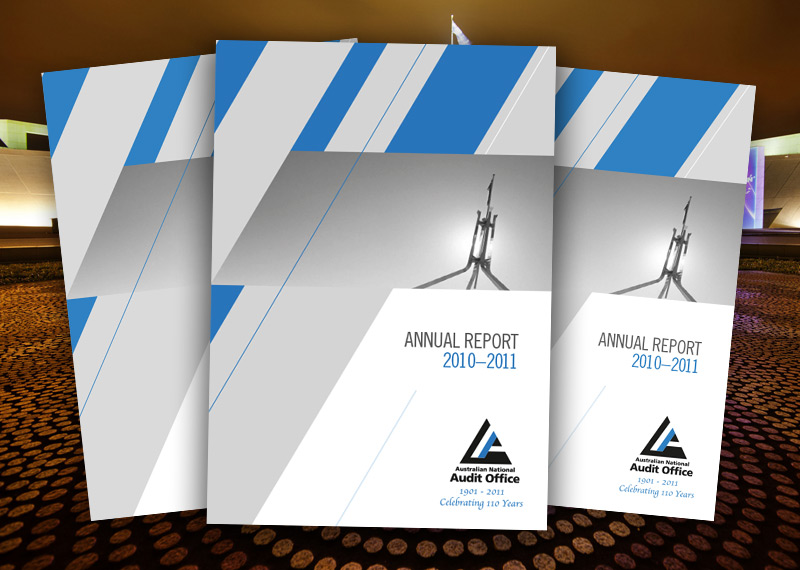
Published: Friday 30 September 2011
Published
This annual report documents the performance of the Australian National Audit Office (ANAO) in the financial year ending on 30 June 2011. It includes a foreword by the Auditor-General, an overview including the role and vision of the Office, a report on performance, details about management and accountability, and the financial results.
Performance audit (Auditor-General Report No. 47 of 2010–11)
Published: Wednesday 8 June 2011
Published
The objective of the audit was to assess the effectiveness of CSIRO’s development and administration of selected National Research Flagships. In assessing CSIRO’s performance, the ANAO examined whether:
- mechanisms were in place to develop and implement the Flagships, within the context of the broader CSIRO change program;
- governance arrangements for Flagships incorporated sound oversight, planning and reporting arrangements; and
- periodic review activities were used to assess and improve the operation of the Flagships.
Entity
Commonwealth Scientific and Industrial Research Organisation
Performance audit (Auditor-General Report No. 43 of 2005–06)
Published: Wednesday 31 May 2006
Published
The overall objective of the audit was to assess whether the RSS Programme is effective and efficient in providing assurance on the levels of payment error and the resultant risks to the integrity of Australian Government outlays for payments administered by Centrelink. Specifically, the audit assessed whether: the RSS Programme meets the objectives outlined for it in the Portfolio Budget Statements under which funding was provided; there is an adequate methodology underpinning the RSS reviews; the RSS reviews are conducted effectively and efficiently, and adequate quality assurance mechanisms exist to assure the results obtained from the RSS reviews; and reporting by the agencies of the results of the RSS Programme is adequate and takes into consideration the issues identified in Audit Report No. 44 2002–03 Review of the Parenting Payment Single Program, and Audit Report No. 17 2002–03 Age Pension Entitlements.
Entity
Department of Family Community Services and Indigenous Affairs; Department of Employment and Workplace Relations; Department of Education Science and Training; Centrelink
Annual report
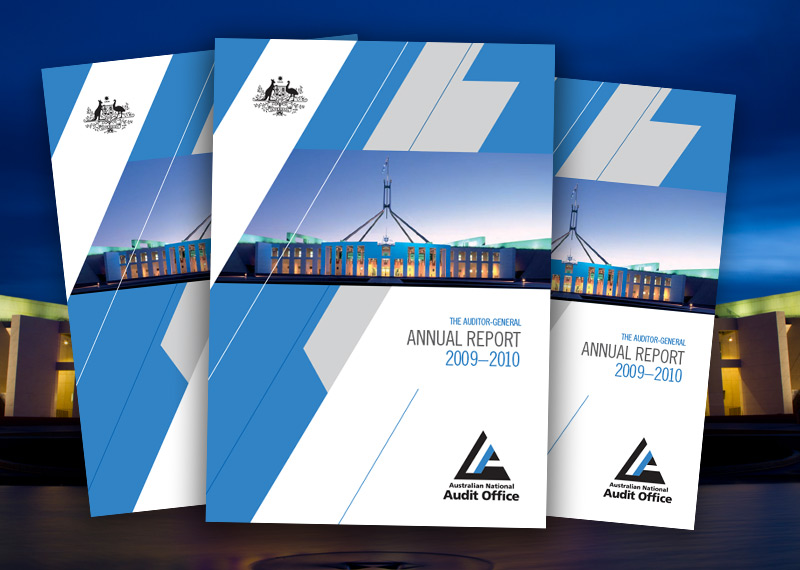
Published: Thursday 30 September 2010
Published
This annual report documents the performance of the Australian National Audit Office (ANAO) in the financial year ending on 30 June 2010. It includes a foreword by the Auditor-General, an overview including the role and responsibilities and vision of the Office, a report on performance, details about management and accountability, and the financial results.
Annual report
Published: Wednesday 19 September 2007
Published
This annual report documents the performance of the Australian National Audit Office (ANAO) in the financial year ending on 30 June 2007. It includes highlights and areas of focus for the coming year; a forward by the Auditor-General; an overview of the report; a report on performance; details about management and accountability, and the financial statement for the year.
Performance audit (Auditor-General Report No. 20 of 1997–98)
Published: Thursday 4 December 1997
Published
The objective of the audit was to ascertain how efficiently and effectively the ATO administers sales tax collections. The audit excluded an examination of the Australian Customs Service's sales tax administration, although it did examine coordination and liaison arrangements between the ATO and ACS. The audit approach involved analysing the ATO's performance against the five elements of the ATO's established compliance improvement process, namely:
- interpreting and clarifying sales tax law;
- identifying and understanding clients and markets (enabling tax officers to identify and analyse risks of non-compliance);
- providing education and information to clients regarding sales tax obligations, based on identified compliance risks;
- implementing administrative arrangements which ensure and/or assist taxpayers to meet their obligations; and
- detecting non-compliance and taking action to remedy instances of non-compliance.
Entity
Australian Taxation Office
Performance audit (Auditor-General Report No. 35 of 2012–13)
Published: Thursday 16 May 2013
Published
The audit objective was to assess whether Australian Government agencies were effectively controlling the use of credit cards for official purposes.
Entity
Australian Trade Commission; Department of the Prime Minister and Cabinet; Geoscience Australia
Contact
Please direct enquiries relating to reports through our contact page.
Annual report
Published: Tuesday 28 September 2004
Published
This annual report documents the performance of the Australian National Audit Office (ANAO) in the financial year ending on 30 June 2004. It includes highlights and areas of focus for the year; an introduction by the Auditor-General; an overview of the report; a report on performance; details about management and accountability, and the financial statement for the year.
Annual report
Published: Thursday 7 September 2006
Published
This annual report documents the performance of the Australian National Audit Office (ANAO) in the financial year ending on 30 June 2006. It includes highlights and areas of focus for the coming year; a forward by the Auditor-General; an overview of the report; a report on performance; details about management and accountability, and the financial statement for the year.
Performance audit (Auditor-General Report No. 45 of 1998–99)
Published: Wednesday 2 June 1999
Published
The audit is a follow-up to Audit Report 12, 1995-96 Risk Management by Commonwealth Consumer Product Safety Regulators. The objectives of this follow-up audit were to determine the extent to which ANZFA had implemented the agreed recommendations contained in the 1995 Audit Report, and to determine the effectiveness of the implemented recommendations in improving food safety regulation.
Entity
Australian New Zealand Food Authority
Performance audit (Auditor-General Report No. 4 of 1998–99)
Published: Monday 10 August 1998
Published
The objective of the audit was to evaluate the efficiency and effectiveness of Austrade's management of customer services to Australian exporters, with particular reference to:
- performance as a customer-focused organisation;
- achievement of quality customer service through its client service initiatives; and
- measurement and evaluation of its customer service performance.
Entity
Australian Trade Commission
Annual report
Published: Thursday 26 September 2002
Published
This annual report documents the performance of the Australian National Audit Office (ANAO) in the financial year ending on 30 June 2002. It includes a comment by the Auditor-General on Audit independence and effectiveness; an overview of the Auditor-General’s role and responsibilities; a report on performance; details about management and accountability, and the financial statement for the year.
Performance audit (Auditor-General Report No. 29 of 1998–99)
Published: Tuesday 22 December 1998
Published
The audit addressed administration of migrant settlement services by DIMA, in particular:
- strategic management, including corporate planning, performance measurement and reporting arrangements; and
- operational management of some of the individual schemes operated by DIMA (the Adult English Migrant Program and Translating Interpreting Services were not covered as part of this audit).
Entity
Department of Immigration and Multicultural Affairs
Speeches and papers
Published: Friday 13 October 1995
Published
Mr P.J. Barrett (AM) - Auditor-General for Australia, presented to the International Consortium on Governmental Financial Management - Washington
Performance audit (Auditor-General Report No. 5 of 1999–2000)
Published: Monday 9 August 1999
Published
The audit reviewed the productivity and client service of IP Australia, a division of the Department of Industry, Science and Resources, which provides intellectual property rights in respect of patents, trade marks and designs. The objective of the audit was to examine the effectiveness of IP Australia's management of productivity and client service.
Entity
Department of Industry, Science and Resources
Performance audit (Auditor-General Report No. 24 of 2012–13)
Published: Tuesday 26 February 2013
Published
The Preparation and Delivery of the Natural Disaster Recovery Work Plans for Queensland and Victoria
The objective of this audit was to assess the extent to which the disaster recovery work plans for Queensland and Victoria were prepared, and appropriate monitoring reports provided, in accordance with the relevant National Partnership Agreement (NPA).
Entity
Department of Regional Australia, Local Government, Arts and Sport
Performance audit (Auditor-General Report No. 27 of 2011–12)
Published: Tuesday 20 March 2012
Published
The objective of this audit was to assess the efficiency1 and effectiveness of the establishment, implementation and administration of the bike paths component of the Local Jobs stream of the Jobs Fund. A particular focus was on the establishment of program objectives and the extent to which approved grants have demonstrably contributed to the cost-effective achievement of those objectives. The audit approach has been influenced by recent audits of grants administration which have emphasised the importance of transparent and accountable grant decision-making processes to the cost effective achievement of stated program objectives, and having regard for recent government decisions to enhance the framework applying to the administration of grants.
As an economic stimulus program, efficiency was assessed with particular attention to whether the application, assessment, decision-making and funding agreement processes were undertaken in a timely manner. This emphasis was consistent with the criterion adopted by the Government for the design of the stimulus packages established in response to the global financial crisis (see further at paragraph 4.20 of the audit report).
Entity
Department of Regional Australia, Local Government, Arts and Sport and Department of Infrastructure and Transport
Annual report
Published: Wednesday 28 September 2005
Published
This annual report documents the performance of the Australian National Audit Office (ANAO) in the financial year ending on 30 June 2005. It includes highlights and areas of focus for the year; a forward by the Auditor-General; an overview of the report; a report on performance; details about management and accountability, and the financial statement for the year.
Performance audit (Auditor-General Report No. 30 of 1996–97)
Published: Wednesday 30 April 1997
Published
The objective of the audit was to examine the effectiveness of key elements of the management and control frameworks established by ANU to support administration and the achievement of the ANU's objectives. The audit focused on an analysis of the administrative framework and, in particular, aspects of corporate governance that were identified as being central to good management; such as effective controls, transparent planning, regular reporting, and performance assessment.
Entity
Across Agency
Speeches and papers
Published: Tuesday 16 September 1997
Published
Mr P.J. Barrett (AM) - Auditor-General for Australia - Speaking Notes used for presentation to the Australian Bureau of Statistics SES and Middle Management Group
Performance audit (Auditor-General Report No. 23 of 2012–13)
Published: Tuesday 26 February 2013
Published
The objective of this audit was to assess the effectiveness of the Australian Government Reconstruction Inspectorate, supported by the National Disaster Recovery Taskforce, in providing assurance that value for money is being achieved in recovery and reconstruction expenditure in Victoria.
Entity
Department of Regional Australia, Local Government, Arts and Sport
Performance audit (Auditor-General Report No. 44 of 2003–04)
Published: Tuesday 27 April 2004
Published
The audit examined ATSIS' implementation of recommendations from Audit Report No.39, 1998-1999 National Aboriginal Health Strategy - Delivery of Housing and Infrastructure to Aboriginal and Torres Strait Islander Communities (the previous audit). In addition to assessing ATSIS' progress in implementing the recommendations of the previous audit, this follow-up audit examined ATSIS' performance reporting of the NAHS program, and concluded that the current level of aggregation of performance reporting makes it difficult to identify the particular contribution that the NAHS Program makes in improving services to Indigenous communities.
Entity
Aboriginal and Torres Strait Islander Services
Performance audit (Auditor-General Report No. 2 of 1996–97)
Published: Thursday 8 August 1996
Published
The objective of the audit was to examine the effectiveness of the management and control framework established by the Australian National Training Authority to assist its administration and achievement of its objectives. The ANAO's investigation was limited to an analysis of ANTA's internal administrative framework. The audit work focused on key components of the framework: planning, monitoring, and financial and control frameworks.
Entity
Across Agency
Performance audit (Auditor-General Report No. 15 of 2007–08)
Published: Thursday 29 November 2007
Published
The objective of this follow-up audit is to assess the Tax Office's progress in implementing the recommendations of Audit Report No.59 2002–03, Administration of Australian Business Number Registrations, having regard to any changed circumstances, or new administrative issues, affecting the implementation of those recommendations.
Entity
Australian Taxation Office
Performance audit (Auditor-General Report No. 54 of 2002–03)
Published: Monday 23 June 2003
Published
The audit examined the management of computer software assets at four Commonwealth bodies. It focused on the capitalisation of software for the purposes of annual financial reporting. The specific objectives were to: determine whether the selected bodies had established effective internal control frameworks for the capitalisation of externally acquired and internally developed software; and assess whether software costs were capitalised in accordance with organisational policy, accounting standards and relevant legislation.
Entity
Across Agency
Performance audit (Auditor-General Report No. 8 of 2013–14)
Published: Wednesday 6 November 2013
Published
The objective of the audit was to examine the effectiveness of the Australian Government Reconstruction Inspectorate, supported by the National Disaster Recovery Taskforce, in providing assurance that value for money is being achieved in respect to Queensland reconstruction projects.
Entity
Department of Infrastructure and Regional Development
Contact
Please direct enquiries relating to reports through our contact page.
Performance audit (Auditor-General Report No. 18 of 2000–01)
Published: Thursday 30 November 2000
Published
The audit assessed the management by ISR and, in particular, by AusIndustry of the implementation of the changes arising from the Government's December 1997 policy statement in Investing for Growth. This statement required ISR to separate administration of policy from the delivery of products and to improve its service to customers through a ‘one stop shop' approach and by streamlining its processes. The audit focussed in particular on the overall strategic management of the change process by AusIndustry; the detailed implementation of the new service delivery arrangements, notably the separation of policy and product delivery; and the implementation of the enhanced customer focus.
Entity
Department of Industry, Science and Resources
Speeches and papers
Published: Wednesday 24 May 2000
Published
Mr P.J. Barrett (AM) - Auditor-General for Australia, presented at the Association of Risk and Insurance Managers of Australasia - South Australia Chapter
Performance audit (Auditor-General Report No. 17 of 2001–02)
Published: Friday 26 October 2001
Published
The audit's objective was to assess, and report to Parliament on, the ATO's administration of petroleum excise collections. The audit examined whether the ATO had implemented effectively administrative arrangements for the collection of petroleum excise since the transfer of the function from Customs in 1999. Areas that were examined relating to administration of petroleum excise were:
- governance arrangements;
- licensing arrangements;
- compliance management;
- investigations; and
- revenue management.
The audit also reviewed the role of Customs in performing functions directly related to petroleum excise collections and key elements of the management relationship between the ATO and Customs in this area.
Entity
Australian Taxation Office
Performance audit (Auditor-General Report No. 10 of 2004–05)
Published: Friday 17 September 2004
Published
The objectives of the audit were to assess agency performance in relation to compiling the Internet listings by the Senate Order and the appropriateness of the use of confidentiality in Commonwealth contracts.
Entity
Across Entities
Performance audit (Auditor-General Report No. 32 of 2001–02)
Published: Thursday 14 February 2002
Published
This follow-up Audit reviewed the Department of Health and Ageing's implementation of the recommendations of Audit Report No. 36, 1999-2000, Home and Community Care. The objective of the follow-up audit was to assess the extent to which the Department had implemented the nine recommendations of Audit Report No. 36, 1999-2000. The audit examined areas relating to funding, guidance, fees, coordination with other aged and disability care programs, acquittals, accountability and data requirements, and records management.
Entity
Department of Health and Ageing
Performance audit (Auditor-General Report No. 66 of 2001–02)
Published: Friday 28 June 2002
Published
The audit followed-up the ANAO's original audit report into the aviation safety regulatory activities of the Civil Aviation Safety Authority (CASA) (Audit Report No.19 1999-2000 Aviation Safety Compliance). The objective of the follow-up audit were to determine, in respect of issues addressed by the original audit recommendations, whether CASA has made satisfactory progress to improve its aviation safety surveillance and compliance activities; and whether the introduction of new strategies for further improvement is being appropriately managed.
Entity
Civil Aviation Safety Authority
Performance audit (Auditor-General Report No. 7 of 2012–13)
Published: Wednesday 3 October 2012
Published
The objective of the audit was to assess the effectiveness of the Department of Education, Employment and Workplace Relations' administration of the Community Support Program. The program aims to improve access to child care, especially in areas where the market would otherwise fail to provide services.
Entity
Department of Education, Employment and Workplace Relations
Performance audit (Auditor-General Report No. 11 of 1996–97)
Published: Thursday 17 October 1996
Published
Grants Scheme in Audit Report No.33 of 1993-94. The major recommendations in that report related to:
- improved quality of claims and control measures;
- optimisation of management planning and control;
- rationalisation of the strategic planning structure;
- improved responsiveness of the scheme; and
- improved accountability to Parliament.
The objective of this follow-up audit was to form an opinion on Austrade's progress with implementing the recommendations of Audit Report No.33 of 1993-94.
Entity
Australian Trade Commission
Performance audit (Auditor-General Report No. 5 of 2007–08)
Published: Thursday 16 August 2007
Published
The objective of this audit was to assess the progress made by DoHA and Medicare Australia (recommendation 3) in addressing the four recommendations from ANAO Audit Report No.50, 2000–01 designed to improve the administration and performance of NCSP.
Entity
Department of Health and Ageing
Performance audit (Auditor-General Report No. 45 of 2003–04)
Published: Thursday 29 April 2004
Published
The objective of the current audit was to assess Army's progress in implementing the ANAO recommendations and to examine and assess any developments in relation to AIRN since the 1999?2000 audit report and the 2001 JCPAA report. Army updated AIRN policy in 2001 and 2004, and the ANAO has assessed, where appropriate, the implementation of the 1999?2000 audit recommendations for these two policy reissues.
Entity
Department of Defence
Performance audit (Auditor-General Report No. 52 of 2000–01)
Published: Monday 18 June 2001
Published
The audit reviewed the operation of the payment of accounts function in 8 Commonwealth organisations against their internal control framework. The main objectives of the audit were to determine whether organisations had implemented appropriate risk management strategies for the processing of accounts and whether payment for goods ans services had been properly authorised. The audit also reviewed progress since the payment of accounts audit undertaken in 1996 ( Audit Report No. 16, 1996-97, Financial Control and Administration Audit, Payment of Accounts).
Entity
Across Agency
Performance audit (Auditor-General Report No. 28 of 2002–03)
Published: Friday 7 February 2003
Published
The audit assessed the operations of the four Northern Territory Land Councils which provide a range of services to Aboriginal people under the Aboriginal Land Rights (Northern Territory) Act 1976. The audit also assessed the Aboriginal and Torres Strait Islander Commision's (ATSIC) administration of the Aboriginals Benefit Account, which provides funding to the Land Councils under the same Act. The objectives of the audit were to assess:
- whether the governance arrangements used by ATSIC and the Land Councils are appropriate;
- whether ATSIC meets its legislative requirements concerning the Aboriginals Benefit Account in an effective and efficient way; and
- whether the Land Councils are effective and efficient in managing their recourses to meet the objectives of the Aboriginal Land Rights (Northern Territory) Act 1976.
Entity
Aboriginal and Torres Strait Islander Commission; Anindilyakwa Land Council; Central Land Council; Northern Land Council; Tiwi Land Council
Performance audit (Auditor-General Report No. 7 of 2000–01)
Published: Tuesday 29 August 2000
Published
The audit objective was to examine the administrative effectiveness of the ATO's use of AUSTRAC data. The audit reviewed the use of AUSTRAC data across three of the ATO Business Service Lines (BSLs) namely, Large Business and International (LB&I), Small Business (SB) and Individuals Non Business (INB). These are the most significant BSLs in terms of revenue collection. The audit focussed on the ATO's use of AUSTRAC data at the strategic and operational levels and its management of AUSTRAC data. Aspects examined include the ATO's relationship with AUSTRAC as well as training, data quality, data privacy and security issues.
Entity
Australian Taxation Office
Performance audit (Auditor-General Report No. 46 of 2002–03)
Published: Friday 6 June 2003
Published
Australian Industry Involvement Program. Department of Defence The audit examined the management by Defence of its Australian Industry Involvement (AII) Program. AII is the major program through which Defence gives effect to government policy on Australian industry. The objective of the audit was to assess the extent to which the AII Program has achieved its two policy objectives, which are to :
- develop and sustain strategically important capabilities in Australian industry to support Australian Defence Force operations and Defence capability development; and
- maximise Australian industry involvement in Defence's procurement of goods and services, consistent with the government procurement policy objective of achieving best value for money to the Commonwealth.
Entity
Department of Defence
Performance audit (Auditor-General Report No. 33 of 1999–2000)
Published: Monday 13 March 2000
Published
The objective of the performance audit was to assess the administrative effectiveness of DIMA's business entry program against the background of the Business and Temporary Entry program objective, with particular regard to whether:
- the existing performance management mechanisms and compliance monitoring strategies support the achievement of program outcomes and outputs;
- the quality of decision-making;
- business processes facilitate prompt visa decision-making consistent with program objectives; and
- decision-making support mechanisms promote robust and timely decision-making.
Entity
Department of Immigration and Multicultural Affairs
Performance audit (Auditor-General Report No. 12 of 1997–98)
Published: Thursday 13 November 1997
Published
The objective of the audit was to evaluate the Department's performance in pursuit of selected PBS program objectives and outcomes, including to investigate and evaluate the economy, efficiency, administrative effectiveness and accountability of the management of the listing process as a significant element of the program. This involved a review of the developments in the listing process over recent years including: the establishment of a comprehensive database of major applications for PBS listing between 1991 and 1996, which facilitated a detailed analysis of the time taken to list drugs on the PBS schedule; a technical consultancy into the DHFS' Guidelines to industry for preparation of applications for PBS listing, and into the use of the economic analysis in assessing proposals for PBS listing; and a review of the selection process including the operations of the PBS advisory committees.
Entity
Department of Health and Family Services
Performance audit (Auditor-General Report No. 49 of 1999–2000)
Published: Thursday 29 June 2000
Published
The objective of the audit was to form an opinion on the adequacy of the Indigenous Land Corporation's (ILC's) operations and performance in: assisting Aboriginal persons and Torres Strait Islanders to acquire land; and assisting Aboriginal persons and Torres Strait Islanders to manage indigenous-held land; so as to provide economic, environmental, social or cultural benefits for Aboriginal persons and Torres Strait Islanders.
Entity
Across Agency
Performance audit (Auditor-General Report No. 16 of 1998–99)
Published: Monday 23 November 1998
Published
The primary objective of the audit was to assess the economy, efficiency and effectiveness of DoTRD's implementation of Annex 17 in the Australian aviation environment. The ANAO concluded that DoTRD has established a regulatory regime which ensures Australia's compliance with the standards embodied in Annex 17. However, there are areas where Australia's aviation security regime can be strengthened even further including; developing a more robust approach to risk management, developing a longer-term perspective to DoTRD's planning structure, development of proactive alliances with aviation regulators in neighbouring countries in the Asia-Pacific region, further improvement of the airport audit process, development and implementation of an evaluation strategy, development of a formal transparent approach to enforcement.
Entity
Department of Transport and Regional Services
Performance audit (Auditor-General Report No. 1 of 1997–98)
Published: Tuesday 26 August 1997
Published
This report is an information document summarising the audit activities of the ANAO in the period January to June 1997.
Entity
Audit Activity Report
Performance audit (Auditor-General Report No. 4 of 2002–03)
Published: Monday 19 August 2002
Published
The report summarises the audit and other related activities of the ANAO in the period January to June 2002. Key issues arising from performance audits tabled in this period are summarised. Appendix 1 of the Activity Report provides a short summary of each of the audits tabled between 1 January 2002 and 30 June 2002.
Entity
Audit Activity Report
Performance audit (Auditor-General Report No. 25 of 2000–01)
Published: Wednesday 20 December 2000
Published
The study examined aggregated benchmarking measures of cost, efficiency quality and better practice for nineteen Commonwealth organisations and compared the results with that of an international group. The objective of the study was to obtain and report on over time quantitative and qualitative data relating to finance function activities as they operate in Commonwealth organisations.
Entity
Across Agency
Performance audit (Auditor-General Report No. 2 of 2003–04)
Published: Wednesday 13 August 2003
Published
The Audit Activity Report: January to June 2003 summarises the activity and outputs of the Australian National Audit Office for the second half of the 2002-03 reporting year. The Report outlines the key findings of performance and financial control audits, and summarises audits tabled and better practice guides published during January to June 2003.
Entity
Australian National Audit Office; Parliament
Performance audit (Auditor-General Report No. 29 of 2002–03)
Published: Friday 7 February 2003
Published
The Audit Activity Report: July-December 2002 summarises performance audit, financial audit and other related activities for the ANAO for the period. The key issues arising from the performance audits are summarised against the ANAO themes. The appendices in the report provide a short summary of each of the audits tabled for this period, the audits in progress as at 1 January 2003 and a list of the presentations and papers given by the Auditor-General and ANAO staff.
Entity
Audit Activity Report
Annual report
Published: Thursday 16 October 2008
Published
This annual report documents the performance of the Australian National Audit Office (ANAO) in the financial year ending on 30 June 2008. It includes highlights and areas of focus for the coming year; a forward by the Auditor-General; an overview of the report; a report on performance; details about management and accountability, and the financial statement for the year.
Performance audit (Auditor-General Report No. 21 of 2001–02)
Published: Tuesday 20 November 2001
Published
The audit reviewed the policy advising functions of the Departments of Education, Training and Youth Affairs, Employment, Workplace Relations and Small Business, and Family and Community Services. The objective of the audit was to determine whether departmental quality management systems for policy advising were appropriate and the advice provided met expected standards for policy outputs.
Entity
Department of Education Training and Youth Affairs; Department of Employment Workplace Relations and Small Business; Department of Family and Community Services
Performance audit (Auditor-General Report No. 31 of 2001–02)
Published: Wednesday 13 February 2002
Published
The report summarises the audit and other related activities of the ANAO in the period July to December 2001. Key issues arising from performance audits tabled in this period are summarised.
Entity
Audit Activity Report
Performance audit (Auditor-General Report No. 35 of 1998–99)
Published: Monday 19 April 1999
Published
The audit objective was to determine the DVA's performance in the economy, efficiency and administrative effectiveness of the delivery of income support payments to veterans and war widows. It was found that overall, DVA is paying the correct pension to the correct people in a timely fashion within the required accuracy levels.
Entity
Department of Veterans' Affairs
Performance audit (Auditor-General Report No. 26 of 2002–03)
Published: Thursday 16 January 2003
Published
The main objectives of the audit were to examine DOTARS' response to the heightened threat environment following the events of 11 September 2001, and to determine the extent to which DOTARS' monitoring and compliance regime ensures that the aviation industry complies with its security obligations. The scope of the audit included:
- the respective roles and responsibilities of the organisations involved in aviation security;
- the setting of security settings; DOTARS' monitoring of airport, airline and cargo security;
- the action DOTARS takes in response to security breaches; and
- evaluation of aviation security.
Entity
Department of Transport and Regional Services
Speeches and papers
Published: Friday 26 February 2010
Published
Mr Ian McPhee - Auditor-General for Australia, presented at the Canberra Evaluation Forum, The Lobby, Canberra
Speeches and papers
Published: Friday 23 August 2002
Published
Mr P.J. Barrett (AM) - Auditor-General for Australia, presented at the Forum of Commonwealth Agencies Seminar, Sydney, NSW
Major projects report (Auditor-General Report No. 20 of 2011–12)

Published: Tuesday 20 December 2011
Published
The objective of this report is to provide a formal conclusion on the review of the Project Data Summary Sheets by the Auditor-General, including comprehensive information on the status of projects as reflected in the PDSSs prepared by the DMO.
Entity
Defence Materiel Organisation
Major projects report (Auditor-General Report No. 12 of 2013–14)

Published: Tuesday 17 December 2013
Published
The objective of this report is to provide the Auditor-General’s independent assurance over the status of selected Major Projects, as reflected in the Project Data Summary Sheets (PDSSs) prepared by the DMO, and the Statement by the Chief Executive Officer (CEO) DMO. Assurance from the ANAO’s review of the preparation of the PDSSs by the Defence Materiel Organisation (DMO) is conveyed in the Auditor-General’s Independent Review Report, prepared pursuant to the endorsed Guidelines, contained in Part 3.
Entity
Defence Materiel Organisation
Contact
Michael White, Executive Director, Phone: (02) 6203 7393
Speeches and papers
Published: Thursday 12 February 2015
Published
Mr Mr Ian McPhee, AO PSM - Auditor-General for Australia, presented an Australian Country Paper at the 6th ASOSAI Symposium in Kuala Lumpur, Malaysia
Performance audit (Auditor-General Report No. 54 of 2013–14)
Published: Thursday 26 June 2014
Published
The objective of the audit was to assess the extent to which agencies have arrangements to establish and use multi-use lists to support value for money, efficiency and effectiveness in procurement.
Entity
Across Agencies
Contact
Please direct enquiries relating to reports through our contact page.
Performance audit (Auditor-General Report No. 1 of 1998–99)
Published: Friday 3 July 1998
Published
The audit reviewed the corporate governance framework of the Australian Electoral Commisson (AEC). The objective of the audit was to review whether the AEC's corporate governance framework was sound.
Entity
Australian Electoral Commission
Performance audit (Auditor-General Report No. 51 of 2000–01)
Published: Friday 15 June 2001
Published
This audit followed up the ANAO's 1997 performance audit report on ADF health services (Audit Report No.34 1996-97 Australian Defence Force Health Services), which focused on the delivery of non-operational health services to entitled members. The objective of the follow-up audit was to assess Defence's implementation of recommendations made in the original audit report and their effectiveness in improving ADF health services.
Entity
Department of Defence
Speeches and papers
Published: Friday 16 November 2001
Published
Mr P.J. Barrett (AM) - Auditor-General for Australia, presented at the CPA South Australia Conference 2001
Speeches and papers
Published: Friday 21 June 2002
Published
Mr P.J. Barrett (AM) - Auditor-General for Australia, presented at the Senate Occasional Lecture Series
Performance audit (Auditor-General Report No. 15 of 2002–03)
Published: Tuesday 29 October 2002
Published
The audit reviewed the extent to which the Department of Health and Ageing (Health) had implemented the recommendations of Audit Report No. 13 of 1998-1999, Aboriginal and Torres Strait Islander Health Program, taking account of any changed circumstances or new administrative issues identified as impacting the implementation of these recommendations.
Entity
Department of Health and Ageing; Aboriginal and Torres Strait Islander Commission
Speeches and papers
Published: Tuesday 3 June 1997
Published
Mr P.J. Barrett (AM) - Auditor-General for Australia, presented to the Australian Taxation Office Staff Conference, Canberra
Speeches and papers
Published: Tuesday 17 September 2002
Published
Mr P.J. Barrett (AM) - Auditor-General for Australia, presented at the House of Representatives Occasional Seminar Series
Speeches and papers
Published: Friday 31 May 2002
Published
Mr P.J. Barrett (AM) - Auditor-General for Australia, presented at the IPAA ACT Division, Half day seminar
Performance audit (Auditor-General Report No. 9 of 2001–02)
Published: Thursday 16 August 2001
Published
The audit examined some key aspects of HRD in relation to Centrelink's Customer Service Officers (CSOs). The objective of the audit was to determine whether Centrelink had appropriate systems and strategies in place to ensure that its CSOs had access to the skills and knowledge necessary to meet expected levels of performance and customer service.
Entity
Centrelink
Performance audit (Auditor-General Report No. 33 of 1998–99)
Published: Tuesday 9 March 1999
Published
This report summarises audit and other related activities of the Australian National Audit Office in the period July to December 1998.
Entity
Audit Activity Report
Speeches and papers
Published: Tuesday 19 May 1998
Published
Mr P.J. Barrett (AM) - Auditor-General for Australia, presented at the Senior Executive Leadership Program - Preparatory day, Hill Station, Canberra
Speeches and papers
Published: Friday 31 May 2002
Published
Mr P.J. Barrett (AM) - Auditor-General for Australia, presented an Occasional Paper
Performance audit (Auditor-General Report No. 13 of 1998–99)
Published: Thursday 12 November 1998
Published
The objective of the audit was to form an opinion on the administrative effectiveness, efficiency and accountability of the Department of Health and Aged Care's delivery of health services to the Aboriginal and Torres Strait Islander population.
Entity
Department of Health and Aged Care