Browse our range of reports and publications including performance and financial statement audit reports, assurance review reports, information reports and annual reports.
Performance audit (Auditor-General Report No. 9 of 1999–2000)
Published: Wednesday 25 August 1999
Published
The audit reviewed management of the Commonwealth's role in preparing for, and managing, pest and disease emergencies requiring a rapid response. The audit focused on the role of the Department of Agriculture, Fisheries and Forestry -Australia (AFFA), which is the Commonwealth Department with primary portfolio responsibility for coordinating the national and international response to an emergency. The audit did not address preventative measures such as quarantine and border controls; controlled release of exotic diseases or pests; or emergencies associated with previously known endemic diseases, food safety or chemical residue issues.
Entity
Agriculture, Fisheries and Forestry - Australia
Performance audit (Auditor-General Report No. 1 of 2023–24)

Published: Tuesday 15 August 2023
Published
The objective of the audit was to assess the effectiveness of the governance of the Northern Land Council under the Aboriginal Land Rights (Northern Territory) Act 1976, the Native Title Act 1993 and the Public Governance, Performance and Accountability Act 2013.
Entity
Northern Land Council
Contact
Please direct enquiries through our contact page.
Performance audit (Auditor-General Report No. 5 of 2008–09)
Published: Thursday 25 September 2008
Published
The audit objective was to assess whether all agencies compiled Internet listings as required by the Senate Order, and to examine the appropriateness of the use, by selected agencies, of confidentiality provisions.
Entity
Across Agencies
Request for audit
Responded: Monday 22 August 2016
Response provided
The Auditor-General responded on 22 August 2016 to correspondence from Senator Nick Xenophon on 20 May 2016 requesting a performance audit of the Command and Control System selection for the SEA 1000 Future Submarine Project.
Contact
Please direct enquiries relating to requests for audit through our contact page.
Performance audit (Auditor-General Report No. 45 of 2012–13)
Published: Monday 17 June 2013
Published
The audit objective was to assess the administrative effectiveness of the Department of Education, Employment and Workplace Relations(DEEWR), Department of Human Services (DHS) partnership arrangement in supporting the delivery of employment programs.
Entity
Department of Education, Employment and Workplace Relations; Department of Human Services
Contact
Please direct enquiries relating to reports through our contact page.
Performance audit (Auditor-General Report No. 27 of 1997–98)
Published: Thursday 18 December 1997
Published
The audit surveyed a wide range of Commonwealth agencies' Year 2000 preparedness, their management of the problem and their application of core corporate governance principles, including risk management disciplines. The scope of the audit reflected the wide ranging ramifications of the Year 2000 problem for agencies' overall functions (whole-of-business) internally as well as in terms of external interactions. The audit objectives were to:
- assess the adequacy of agencies' planning in relation to achieving Year 2000 compliance;
- review and assess agencies' implementation, management and monitoring of Year 2000 compliance strategies;
- review agencies' strategic risk assessments in relation to the Year 2000 changeover; and
- raise surveyed agencies' and other Commonwealth agencies' awareness of the various aspects of the Year 2000 problem.
Entity
Across Agency
Performance audit (Auditor-General Report No. 44 of 2010–11)
Published: Thursday 26 May 2011
Published
The objective of the audit was to assess the effectiveness of AusAID’s management of tertiary training assistance.
Entity
Australian Agency for International Development
Performance audit (Auditor-General Report No. 47 of 2018–19)

Published: Tuesday 18 June 2019
Published
The objective of this audit was to examine the effectiveness of the design and implementation of the Department of the Prime Minister and Cabinet’s (PM&C’s) evaluation framework for the Indigenous Advancement Strategy (IAS), in achieving its purpose to ensure that evaluation is high quality, ethical, inclusive and focused on improving outcomes for Indigenous Australians.
Entity
Department of the Prime Minister and Cabinet
Contact
Please direct enquiries through our contact page.
Performance audit (Auditor-General Report No. 10 of 2007–08)
Published: Wednesday 17 October 2007
Published
The audit objective was to assess how four key departments: Education, Science and Training (DEST); Employment and Workplace Relations (DEWR); Families, Community Services and Indigenous Affairs (FaCSIA); and Health and Ageing (DoHA) are implementing the Government's policy objective for Indigenous service delivery.
Entity
NO-DEPTS-LISTED
Performance audit (Auditor-General Report No. 40 of 2025–26)
New

Published: Monday 22 June 2026
Published
The objective of the audit was to assess whether the Department of Defence has complied with gifts, benefits and hospitality requirements.
Entity
Department of Defence
Contact
Please direct enquiries through our contact page.
Work program
Updated: Friday 6 February 2026
Updated
Meaningful performance information and reporting is essential to good management and the effective stewardship of public resources. Appropriate and meaningful performance information can show that the entity is committed to long-term proper use and management of public resources, which would include effectively achieving results to create long lasting positive impacts for Australians (and other people who interact with the Australian Government).
Contact
Feedback is welcome and can be provided to the ANAO via email.
Performance audit (Auditor-General Report No. 15 of 2024–25)

Published: Thursday 5 December 2024
Published
The objective of the audit was to assess whether the Murray–Darling Basin Authority (MDBA) had complied with gifts, benefits and hospitality requirements.
Entity
Murray–Darling Basin Authority
Contact
Please direct enquiries through our contact page.
Request for audit
Responded: Thursday 24 September 2015
Response provided
The Auditor-General (A/g) responded on 24 September 2015 to correspondence from Senator Glenn Lazarus on 10 September 2015 regarding National Stronger Regions Fund.
Contact
Please direct enquiries relating to requests for audit through our contact page.
Performance audit (Auditor-General Report No. 6 of 1996–97)
Published: Thursday 12 September 1996
Published
The objectives for the audit were to examine Commonwealth guarantees, indemnities and letters of comfort in relation to:
- the potential size of the Commonwealth's exposure to these instruments;
- the extent to which the overall exposures of the Commonwealth are managed and monitored;
- the adequacy of administrative reporting arrangements;
- areas of better administrative practice relating to their management; and
- to raise agencies' awareness of appropriate risk management and accountability practices in relation to these instruments.
The audit set out to quantify the Commonwealth's exposure to guarantees, indemnities and letters of comfort.
Entity
Across Agency
Performance audit (Auditor-General Report No. 21 of 2025–26)

Published: Thursday 29 January 2026
Published
The objective of the audit was to assess whether Services Australia has effective arrangements to comply with domestic and international travel requirements.
Entity
Services Australia
Contact
Please direct enquiries through our contact page.
Performance audit (Auditor-General Report No. 1 of 1995–96)
Published: Monday 31 July 1995
Published
This is a report of an audit by the ANAO of the Australian Taxation Office's Income Matching System (IMS). The IMS is a computer-based system which identifies discrepancies between information in tax returns and external data. The main income types covered are dividends, interest, wages and salaries, pensions and benefits and prescribed payments. It also generates unmatched data and cases where assessments have not yet been issued.
Entity
Australian Taxation Office
Performance audit (Auditor-General Report No. 13 of 2003–04)
Published: Friday 7 November 2003
Published
The objective of the audit was to form an opinion on ATSIS' management of the Law and Justice Program, having particular regard to the relative needs of Aboriginal and Torres Strait Islander peoples. The audit focused primarily on how effectively ATSIS manages and delivers the provision of legal services to Aboriginal and Torres Strait Islander people. The audit was desgined to compelement but not to reproduce previous audit and other evaluation activity relevant to the Program.
Entity
Aboriginal and Torres Strait Islander Services
Request for audit

Responded: Tuesday 26 April 2016
Response provided
Response completed as a limited scope assurance review.
The Auditor-General responded on 26 April 2016 to correspondence from Mr Pat Conroy MP on 16 February 2016 regarding the government advertising campaign Welcome to the Ideas Boom.
Contact
Please direct enquiries relating to requests for audit through our contact page.
Performance audit (Auditor-General Report No. 54 of 2011–12)
Published: Wednesday 27 June 2012
Published
The objective of the audit was to assess the effectiveness of the ATO’s administration of external debt collection arrangements.
Entity
Australian Taxation Office
Performance audit (Auditor-General Report No. 4 of 2012–13)
Published: Thursday 20 September 2012
Published
The objective of the audit was to assess the appropriateness of the use and reporting of confidentiality provisions in Australian Government contracts for 2011.
Entity
Across Agencies
Request for audit

Responded: Thursday 14 January 2016
Response provided
Response completed as a limited scope assurance review.
The Auditor-General responded on 14 January 2016 to correspondence from the Hon Catherine King MP on 22 October 2015, on the project agreement for the Health and Hospitals Fund – 2010 Regional Priority Round Project in Palmerston.
Contact
Please direct enquiries relating to requests for audit through our contact page.
Speeches and papers
Published: Tuesday 5 October 2004
Published
Mr P.J. Barrett (AO) - Auditor-General for Australia, presented at the UN Results Based Management Seminar
Performance audit (Auditor-General Report No. 45 of 2009–10)
Published: Thursday 17 June 2010
Published
The objective of the audit was to assess whether Defence effectively managed the procurement process for services related to the recruitment of personnel to the ADF and the introduction of a new service provider.
Entity
Department of Defence
Performance audit (Auditor-General Report No. 16 of 2013–14)
Published: Wednesday 29 January 2014
Published
The objective of the audit was to assess the effectiveness of the administration of the Smart Grid, Smart City Program, including the establishment, implementation and ongoing management of the program.
Entity
Department of the Environment; Department of Industry
Contact
Please direct enquiries relating to reports through our contact page.
Annual report
Published: Wednesday 14 September 2016
Published
This annual report documents the performance of the Australian National Audit Office (ANAO) in the financial year ending 30 June 2016. It addresses all applicable obligations under the Public Governance, Performance and Accountability Act 2013 and the Auditor-General Act 1997, the performance measures set out in the outcome and programs framework in the ANAO’s 2015–16 Portfolio Budget Statements and the ANAO’s 2015–19 Corporate Plan and annual reporting requirements set out in other legislation.
Contact
Please direct enquiries relating to annual reports through our contact page.
Performance audit (Auditor-General Report No. 17 of 2023–24)

Published: Thursday 22 February 2024
Published
The objective of this audit was to examine whether the Department of Finance (Finance) has implemented a selection of agreed parliamentary committee and Auditor-General recommendations.
Entity
Department of Finance
Contact
Please direct enquiries through our contact page.
Annual report
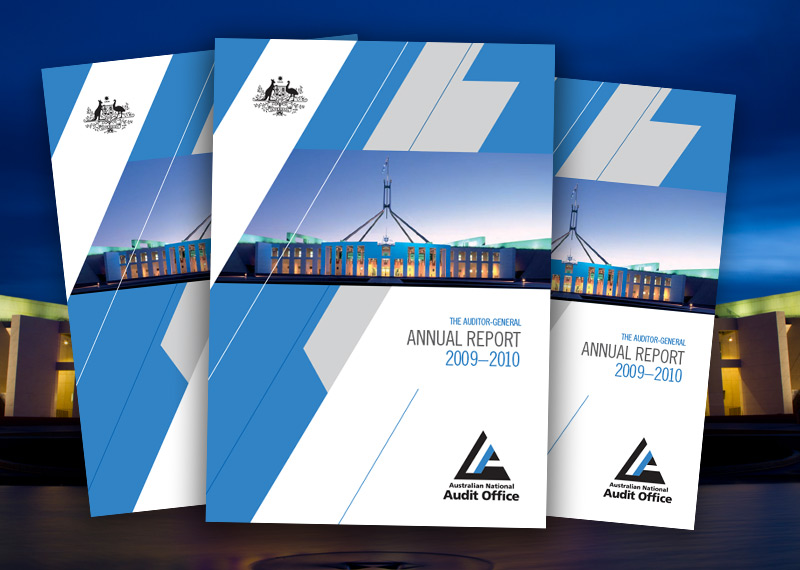
Published: Thursday 30 September 2010
Published
This annual report documents the performance of the Australian National Audit Office (ANAO) in the financial year ending on 30 June 2010. It includes a foreword by the Auditor-General, an overview including the role and responsibilities and vision of the Office, a report on performance, details about management and accountability, and the financial results.
Performance audit (Auditor-General Report No. 4 of 2008–09)
Published: Wednesday 24 September 2008
Published
The audit objective was to form an opinion on the administrative effectiveness of the arrangements between DEEWR (previously DEWR) and Centrelink for the delivery of working age employment services under the Business Partnership Agreement (BPA).
Entity
Department of Education, Employment and Workplace Relations; Centrelink
Performance audit (Auditor-General Report No. 9 of 2024–25)

Published: Tuesday 29 October 2024
Published
The objective of the audit was to assess the effectiveness of the National Health and Medical Research Council’s fraud control arrangements.
Entity
National Health and Medical Research Council
Contact
Please direct enquiries through our contact page.
Performance audit (Auditor-General Report No. 3 of 2018–19)

Published: Wednesday 22 August 2018
Published
The objective of this audit was to examine the design and conduct of the award of funding under the Community Development Grants Program (CDGP).
Entity
Department of Infrastructure, Regional Development and Cities
Contact
Please direct enquiries through our contact page.
Performance audit (Auditor-General Report No. 56 of 2003–04)
Published: Thursday 24 June 2004
Published
The objective of this audit was to assess the extent to which PV applications in Australia are processed in accordance with relevant laws and policies, and whether DIMIA employs appropoiate mechanisms to ensure compliance with those laws and policies.
Entity
Department of Immigration and Multicultural and Indigenous Affairs
Performance audit (Auditor-General Report No. 22 of 2011–12)
Published: Tuesday 7 February 2012
Published
The objective of the audit was to examine the effectiveness of the administration of the Gateway review process by Finance and FMA Act agencies. The audit also examined the extent to which those Gateway reviews that have been conducted have contributed to improvements in the delivery of major projects undertaken by FMA Act agencies.
Entity
Department of Finance and Deregulation
Performance audit (Auditor-General Report No. 41 of 2023–24)

Published: Tuesday 18 June 2024
Published
The objective of this audit was to assess whether the Productivity Commission is effectively managing the use of corporate credit cards for official purposes in accordance with legislative and entity requirements.
Entity
Productivity Commission
Contact
Please direct enquiries through our contact page.
Performance audit (Auditor-General Report No. 41 of 1999–2000)
Published: Friday 28 April 2000
Published
The Commonwealth has significant involvement in national emergency management arrangements through its roles in planning, coordination between agencies, operational response, financial support, education and training, public awareness and research activities. The objectives of this performance audit were to identify the Commonwealth's current emergency management arrangements; to provide assurance to Parliament concerning the adequacy of the arrangements; and to highlight areas for improvement.
Entity
Across Agency
Performance audit (Auditor-General Report No. 8 of 2008–09)
Published: Tuesday 11 November 2008
Published
The objective of the follow up audit was to assess the extent to which Customs has implemented seven of the previous audit's recommendations; the two recommendations relating to strategic and tactical taskings and dissemination of intelligence will be considered in the context of the planned performance audit of Illegal Foreign Fishing in Australia's Northern Waters.
Entity
Australian Customs Service
Performance audit (Auditor-General Report No. 13 of 2006–07)
Published: Tuesday 5 December 2006
Published
The objective of this follow-up audit was to assess the extent to which DVA had implemented the recommendations from the original audit during the period 2002–06, including in its preparation of the IT outsourcing contract which will operate from 2007.
Entity
Department of Veterans' Affairs
Request for audit
Responded: Tuesday 15 September 2015
Response provided
The Auditor-General (A/g) responded on 15 September 2015 to correspondence from the Hon Dr Sharman Stone MP on 11 September 2015 regarding Murray-Darling Basin Authority's (MDBA) implementation of the Basin Plan.
Contact
Please direct enquiries relating to requests for audit through our contact page.
Performance audit (Auditor-General Report No. 33 of 2003–04)
Published: Wednesday 3 March 2004
Published
The audit reviewed the ATO's collection and management of activity statement information. The audit paid particular regard to:
- the environment into which activity statements were introduced;
- taxpayer concerns with activity statement administration;
- the mechanisms the ATO uses to capture and process activity statements;
- the change processes the ATO uses to change and test activity statement IT systems; and
- the management methodology used to report on, and assess the performance of, activity statement related systems and processes.
Entity
Australian Taxation Office
Performance audit (Auditor-General Report No. 5 of 2020–21)

Published: Thursday 3 September 2020
Published
The objective of this audit was to assess the effectiveness of the Australian Energy Regulator’s regulation of energy markets.
Entity
Australian Energy Regulator
Contact
Please direct enquiries through our contact page.
Performance audit (Auditor-General Report No. 21 of 2020–21)

Published: Monday 7 December 2020
Published
The objective of the audit was to examine the Department of Defence’s (Defence's) implementation of agreed recommendations made in Auditor-General Report No. 38 of 2017–18 Mitigating Insider Threats through Personnel Security and the related report provided to ministers under section 37(5) of the Auditor-General Act 1997, and by the Parliament’s Joint Committee of Public Accounts and Audit (JCPAA) in Report 479 of 2019 Australian Government Security Arrangements.
Entity
Department of Defence
Contact
Please direct enquiries through our contact page.
Performance audit (Auditor-General Report No. 47 of 2019–20)

Published: Thursday 25 June 2020
Published
The objective of this audit was to assess the effectiveness of the Department of Agriculture, Water and the Environment’s administration of referrals, assessments and approvals of controlled actions under the Environment Protection and Biodiversity Conservation Act 1999.
Entity
Department of Agriculture, Water and the Environment
Contact
Please direct enquiries through our contact page.
Performance audit (Auditor-General Report No. 30 of 2022–23)

Published: Thursday 1 June 2023
Published
The objective of this audit was to assess the effectiveness of the Australian Prudential Regulation Authority's probity management.
Entity
Australian Prudential Regulation Authority
Contact
Please direct enquiries through our contact page.
Performance audit (Auditor-General Report No. 32 of 1997–98)
Published: Tuesday 17 February 1998
Published
The objective of the audit was to assess the economy, efficiency and administrative effectiveness, including accountability, of the management of boat people by the Department and the providers of major related services to DIMA such as: the Coastwatch Service within the Australian Customs Service and the Australian Protective Service within the Attorney-General's portfolio. The audit examined key issues in the management of boat people largely from a risk management perspective. The audit conclusions are presented in terms of: the economy, efficiency and administrative effectiveness, including the accountability, of operations; and the administrative functions which support the management of boat people, such as detection, reception of boats and costs.
Entity
Department of Immigration and Multicultural Affairs; Australian Protective Service; Australian Customs Service
Performance audit (Auditor-General Report No. 18 of 2020–21)

Published: Thursday 26 November 2020
Published
The objective of the audit was to assess the effectiveness and value for money to date of the Department of Defence’s acquisition of combat reconnaissance vehicles under project Land 400 Phase 2.
Entity
Department of Defence
Contact
Please direct enquiries through our contact page.
Performance audit (Auditor-General Report No. 2 of 1997–98)
Published: Wednesday 24 September 1997
Published
The audit reviewed the application by the Department of Finance and the portfolio departments of the 1993 Accountability and Ministerial Oversight Arrangements for Government Business Enterprises and any statutory monitoring and reporting requirements applying to the selected GBEs provided under their own establishing legislation. The objectives of the audit were to examine:
- the effectiveness of the GBE monitoring arrangements in providing appropriate performance information to the Government;
- the extent to which agencies and the selected GBEs comply with the monitoring arrangements and legislative requirements; and
- whether the GBE monitoring system provides an effective level of accountability to Ministers and to the Parliament.
Entity
Across Agency
Speeches and papers
Published: Thursday 22 May 2003
Published
Mr P.J. Barrett (AM) - Auditor-General for Australia, presented to the Queensland Commonwealth Regional Heads Forum 15th Annual Government Business Conference
Corporate

Published: Thursday 20 November 2025
Published
Integrity is a core value of the Australian National Audit Office (ANAO) — critical in sustaining the confidence of Parliament, strengthening public trust in government and delivering quality audit products. Maintaining strong institutional integrity is essential to the operations and reputation of the ANAO.
The ANAO Integrity Framework provides an overarching structure to the integrity control system, supporting our institution’s integrity. The Framework serves to assist in ethical decision-making and risk, fraud and misconduct management.
Beyond its control system, the ANAO maintains an enduring focus on promoting integrity as a value that is embedded in our work and culture. The ANAO recognises that integrity demands quality not only in our products but also in the behaviours of our people.
The ANAO Integrity Advisor supports the effective and ongoing application of the Integrity Framework by providing advice to staff regarding integrity matters. The Integrity Advisor is responsible for increasing integrity awareness across the organisation and for reporting annually to the ANAO Executive Board of Management on actions taken under the Framework. The Auditor-General publishes the ANAO Integrity Report to provide increased transparency of the measures we undertake to maintain a high-integrity culture in the ANAO.
Contact
Please direct enquiries through our contact page.
Request for audit
Responded: Thursday 24 September 2015
Response provided
The Auditor-General (A/g) responded on 24 September 2015 to correspondence from the Hon Warren Truss MP on 18 September 2015 regarding probity and conflict of interest arrangements in place for the OneSKY Australia programme being led by Airservices Australia.
Contact
Please direct enquiries relating to requests for audit through our contact page.
Performance audit (Auditor-General Report No. 2 of 2005–06)
Published: Friday 15 July 2005
Published
The objective of this follow-up audit was to assess the extent to which APRA has implemented recommendations regarding the supervisory framework and cross-border banking made in ANAO's 2001 audit of bank prudential supervision.
Entity
Australian Prudential Regulation Authority
Performance audit (Auditor-General Report No. 21 of 2009–10)
Published: Thursday 4 February 2010
Published
The objective of this audit was to assess whether the WSA program has been administered effectively by the NWC/DEWHA, as relevant, and is achieving its stated program objective. Specifically, the ANAO examined whether:
- funding proposals have been assessed and approved in a fair, consistent manner and in accordance with applicable criteria, program guidelines and better practice;
- appropriate funding arrangements have been established with proponents, having regard to the size of the grant, the type of entity involved and the nature of the project; and
- DEWHA (and previously the NWC) is actively monitoring whether proponents are complying with their obligations, and grant payments are made only in accordance with funding agreements.
More broadly, the audit examined DEWHA's strategy for evaluating and reporting on the long-term benefits of the program.
Entity
Department of the Environment, Water, Heritage and the Arts; National Water Commission
Speeches and papers
Published: Monday 15 April 2013
Published
Mr Mr Ian McPhee - Auditor-General for Australia, presentation to the Global Working Group of Auditors-General
Performance audit (Auditor-General Report No. 2 of 2020–21)

Published: Thursday 16 July 2020
Published
The objective of the audit was to examine whether strategic water procurements by the Department of Agriculture, Water and the Environment were conducted consistent with government policy, were supported by appropriate program design, were planned and executed appropriately, and achieved value for money.
Entity
Department of Agriculture, Water and the Environment
Contact
Please direct enquiries through our contact page.
Corporate
Published: Friday 1 November 2024
Published
The ANAO regards integrity as a core value of the organisation — critical in sustaining the confidence of Parliament, strengthening public trust in government and delivering quality audit products. Maintaining strong institutional integrity is critical to the operations and reputation of the ANAO.
The ANAO Integrity Framework provides an overarching structure to the integrity control system, supporting our institution’s integrity. The framework serves to assist in ethical decision-making and risk, fraud and misconduct management.
Beyond its control system, the ANAO maintains an enduring focus on promoting integrity as a value that is embedded in our work and culture. The ANAO recognises that integrity demands quality not only in our products but also in the behaviours of our people.
The ANAO Integrity Advisor supports the effective and ongoing application of the Integrity Framework by providing advice to staff regarding integrity matters. The Integrity Advisor is responsible for increasing integrity awareness across the organisation and for reporting annually to the ANAO Executive Board of Management on actions taken under the Framework. The Auditor-General publishes the ANAO Integrity Framework and annual Integrity Report to provide increased transparency of the measures we undertake to maintain a high-integrity culture in the ANAO.
Contact
Please direct enquiries through our contact page.
Corporate

Published: Thursday 20 November 2025
Published
The ANAO regards integrity as a core value of the organisation — critical in sustaining the confidence of Parliament, strengthening public trust in government and delivering quality audit products. Maintaining strong institutional integrity is critical to the operations and reputation of the ANAO.
The ANAO Integrity Framework provides an overarching structure to the integrity control system, supporting our institution’s integrity. The framework serves to assist in ethical decision-making and risk, fraud and misconduct management.
Beyond its control system, the ANAO maintains an enduring focus on promoting integrity as a value that is embedded in our work and culture. The ANAO recognises that integrity demands quality not only in our products but also in the behaviours of our people.
The ANAO Integrity Advisor supports the effective and ongoing application of the Integrity Framework by providing advice to staff regarding integrity matters. The Integrity Advisor is responsible for increasing integrity awareness across the organisation and for reporting annually to the ANAO Executive Board of Management on actions taken under the Framework. The Auditor-General publishes the ANAO Integrity Framework and annual Integrity Report to provide increased transparency of the measures we undertake to maintain a high-integrity culture in the ANAO.
Contact
Please direct enquiries through our contact page.
Performance audit (Auditor-General Report No. 45 of 2024–25)

Published: Thursday 19 June 2025
Published
The objective of the audit was to assess the effectiveness of Creative Australia’s fraud and corruption control arrangements.
Entity
Creative Australia
Contact
Please direct enquiries through our contact page.
Request for audit
Responded: Wednesday 23 September 2015
Response provided
The Auditor-General (A/g) responded on 23 September 2015 to correspondence from Mr Tim Watts MP on 28 August 2015 regarding Liberal Party misappropriation of parliamentary entitlements.
Contact
Please direct enquiries relating to requests for audit through our contact page.
Request for audit
Responded: Tuesday 8 March 2016
Response provided
The Auditor-General responded on 8 March 2016 to correspondence from the Hon Dr Sharman Stone MP on 18 February 2016 regarding Goulburn Murray Water Connections Project 2 (GMWCP2).
Contact
Please direct enquiries relating to requests for audit through our contact page.
Performance audit (Auditor-General Report No. 43 of 2020–21)

Published: Tuesday 8 June 2021
Published
The objective of the audit was to assess the effectiveness of the Australian Federal Police’s framework to ensure the lawful exercise of powers in accordance with applicable legislation.
Entity
Australian Federal Police
Contact
Please direct enquiries through our contact page.
Performance audit (Auditor-General Report No. 6 of 2016–17)

Published: Wednesday 31 August 2016
Published
The objective of the audit was to assess progress in implementing the corporate plan requirement under the Public Governance, Performance and Accountability Act 2013.
Entity
Across Entities
Contact
Please direct enquiries relating to reports through our contact page.
Request for audit
Responded: Thursday 29 July 2021
Response provided
The Auditor-General responded on 29 July 2021 to correspondence from Ms Michelle Rowland MP and Senator Kimberley Kitching dated 9 July 2021, requesting that the Auditor-General conduct an investigation to examine NBN Co Limited executive bonuses for the 2019–2020 financial year and the legitimacy of the underlying targets to which the bonuses were linked.
Contact
Please direct enquiries relating to requests for audit through our contact page.