Browse our range of reports and publications including performance and financial statement audit reports, assurance review reports, information reports and annual reports.
Work program

Updated: Friday 11 July 2025
Updated
Provides an overview of the annual audit work program including the purpose and key features, and how the program is developed and delivered. Information about the development of the annual audit work program includes details of environmental scanning, topic development, coverage review, consultation, final review and audit selection.
Contact
Please direct enquiries relating to the annual audit work program (AAWP) through our contact page.
Corporate

Published: Tuesday 6 July 2021
Published
The annual audit work program (AAWP) is designed to reflect the ANAO’s audit strategy and inform the Parliament, government entities and the public of the planned audit coverage for the Australian Government sector. The AAWP is also designed to anticipate and respond to current and emerging risks and challenges impacting on public administration.
Contact
Please direct enquiries through our contact page.
Insights: Audit practice
Published: Thursday 26 April 2018
Published
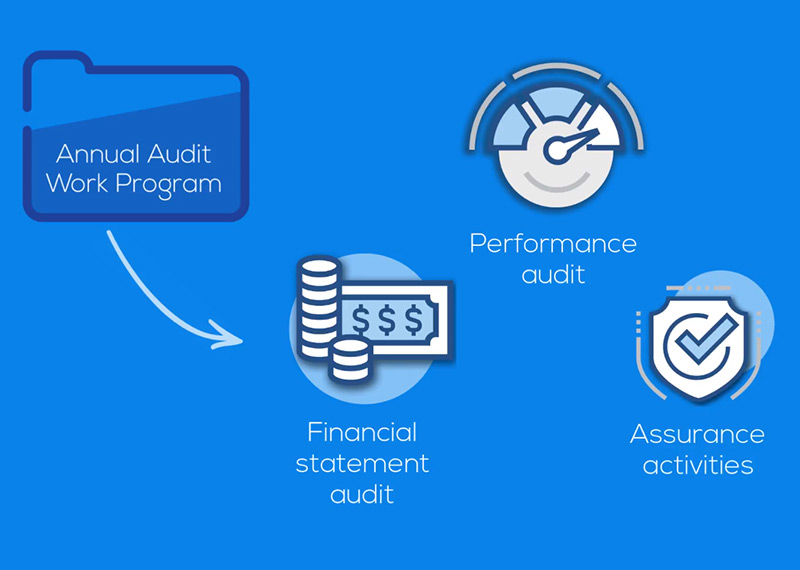
The Auditor-General publishes an annual audit work program in July each year, which takes regard of the priorities of the Parliament as outlined in the Auditor-General Act. The purpose of the program is to inform the Parliament, government sector entities and the public of the audits we propose to deliver throughout the financial year. The program covers financial statement and performance audits, and other assurance activities.
Contact
Please direct enquiries relating to audit insights through our contact page.
Corporate
New
Updated: Tuesday 17 March 2026
Updated
You are invited to contribute to the annual audit work program of the Australian National Audit Office (ANAO). Please review the draft potential performance audit topic list and tell us what you think.
The Auditor-General is an independent officer of the Parliament whose role is to support accountability and transparency in the Australian Government sector by providing independent reporting to the Parliament. The Auditor-General’s reports assist the Parliament to hold government entities accountable and to drive improvements in public administration.
The Auditor-General is assisted by the Australian National Audit Office (ANAO) to conduct a range of audits in Australian Government entities, such as:
- mandated annual financial statements audits, including the audit of the Australian Government’s consolidated financial statements;
- performance audits;
- assurance reviews (including audits by arrangement); and
- audits of the annual performance statements and measures of Commonwealth entities and Commonwealth companies and their subsidiaries.
Since 2007–08, the ANAO has prepared the Defence Major Projects Report (MPR) to enable reporting to the Parliament on the status of major Defence acquisition projects. In March 2026, the Joint Committee of Public Accounts and Audit (JCPAA) announced its decision not to continue the MPR program. Further information is available here.
Contributions must relate to the performance or expenditure of Commonwealth public sector entities. The ANAO does not investigate complaints or disputes, review or provide legal decisions, and does not comment on the merits of government policy and legislation.
While your contribution will be considered and handled with care, we will not provide you with feedback on your submission. The confidentiality of your contribution may be protected by law (see section 36 of the Auditor-General Act 1997). In addition, any personal information gathered by the ANAO will be treated in accordance with the ANAO Privacy Policy.
Please send feedback about this draft program to communication@anao.gov.au. Submissions close on 10 April 2026 at 11:59pm (Australian Eastern Standard Time).
Request for audit
Responded: Friday 22 April 2022
Response provided
The Auditor-General responded on 22 April 2022 to correspondence from Senator the Hon Eric Abetz dated 28 March 2022, requesting that the ABC’s defamation case payment be included as a topic in the ANAO’s Annual Audit Work Program 2022–23.
Contact
Please direct enquiries relating to requests for audit through our contact page.
Performance audit (Auditor-General Report No. 49 of 2020–21)

Published: Tuesday 29 June 2021
Published
The objective of the audit was to examine the effectiveness of planning and delivery of the security upgrade capital works program at Parliament House by the Department of Parliamentary Services.
Entity
Department of Parliamentary Services
Contact
Please direct enquiries through our contact page.
Request for audit
Responded: Wednesday 3 November 2021
Response provided
Following a request from the Minister for Finance in October 2021, the ANAO is expanding the performance statements audit program from three audits to six audits in 2021–22. The ANAO will continue the program of work with Department of Veterans Affairs, the Attorney-General’s Department and the Department of Social Services and will add three new entities, being the Department of Agriculture, Water and the Environment, the Department of Education, Skills and Employment, and the Treasury.
Contact
Please direct enquiries relating to request for audit through our contact page.
Performance audit (Auditor-General Report No. 15 of 2001–02)
Published: Tuesday 2 October 2001
Published
In August 1997, Works Australia, a former business unit of the former Department of Administrative Services,was sold by the then Office of Asset Sales (OAS). For a price of $4.2 million, the purchaser acquired the assets of Works Australia and accepted certain liabilities. At the time the sale was completed, Works Australia held $43.7 million in cash belonging to Commonwealth agencies (known as client advances). ANAO programmed an audit to examine oversight of the post-sale contractual arrangements for each of the 307 Commonwealth client advances totalling $43.7 million transferred to the purchaser and found that the $43.7 million in client advances transferred to the purchaser of Works Australia in August 1997 has been effectively accounted for as of July 2001 by the Commonwealth agencies concerned. In addition, the relevant financial security arrangements over the Works Australia client advances have been effectively administered in accordance with the terms and conditions of the Works Australia Sale Agreement by Finance.
Entity
Across Agency
Request for audit
Responded: Wednesday 11 December 2019
Response provided
The Auditor-General responded on 11 December 2019 to correspondence from Senator Kimberley Kitching dated 14 November 2019, requesting that the Auditor-General consider undertaking proposed audits of parliamentary departments listed in the work program.
Contact
Please direct enquiries through our contact page.
Performance audit (Auditor-General Report No. 6 of 2011–12)
Published: Thursday 15 September 2011
Published
The audit objective was to assess the effectiveness of DEEWR’s administration of FWEIP. The three high level criteria that were used to make this assessment were the appropriateness of DEEWR’s:
- program planning and design;
- selection and engagement of providers; and
- program monitoring, reporting and evaluation.
Entity
Department of Education, Employment and Workplace Relations
Performance audit (Auditor-General Report No. 9 of 2010–11)
Published: Wednesday 29 September 2010
Published
On 3 February 2010, Senator Christine Milne wrote to the Auditor General raising concerns about DEWHA's administration of the Green Loans program and requesting a performance audit of the program. Issues raised included: uncapped assessor numbers; problems with the delivery of the program; the quality of assessor training and assessments provided to households; the lack of an audit facility within the program; and equitable access to work under the program.
In light of Senator Milne's request and other concerns in relation to the administration of the program, the Auditor-General agreed on 25 February 2010 to conduct a performance audit of the program. The objective of the audit was to examine key aspects of the establishment and administration of the Green Loans program by DEWHA and the program's transition to DCCEE. Particular emphasis was given to the program's three main elements:
- training, registration and contracting of assessors;
- scheduling, conduct, and reporting of home sustainability assessments, and the associated payments to assessors; and
- provision of green loans to householders, and the associated payments to participating financial institutions.
The audit also examined the extent to which steps had been taken by DEWHA and DCCEE to assess whether the Green Loans program was achieving its objectives.
Entity
Department of the Environment, Water, Heritage and the Arts; Department of Climate Change and Energy Efficiency
Performance audit (Auditor-General Report No. 6 of 2010–11)
Published: Tuesday 21 September 2010
Published
The objective of the audit was to assess the implementation of the Australian Taxation Office's Client Contact – Work Management – Case Management system (CWC). The audit examined four key areas that included:
- progress of the CWC against the endorsed Change Program business case;
- improvements to the productivity and efficiency of tax administration as a result of the implementation of the CWC;
- improvements to client experiences when dealing with the Tax Office as a result of the implementation of the CWC; and
- effects of the CWC implementation, including additional benefits achievable beyond its current capacity to further improve tax administration.
Entity
Australian Taxation Office
Performance audit (Auditor-General Report No. 19 of 2010–11)
Published: Thursday 9 December 2010
Published
The audit assessed FaHCSIA's management of AACAP and how the department monitors the contribution the program is making to the improvement of primary and environmental health, and living conditions, in remote Indigenous communities.
The audit examined program delivery under the 2006–2009 MoU, as well as the planning for the 2010 project under the variation to the 2006–2009 MoU. As part of the audit the ANAO considered:
- program strategy and implementation including the roles and responsibilities of the major stakeholders, community selection and scope of works (Chapter 2);
- the financial management of the program and the changing role of the Contracted Program Manager (Chapter 3); and
- performance measures, including FaHCSIA's performance reporting framework, and approach to monitoring and reporting performance against the stated program objectives (Chapter 4).
The audit focused on AACAP in so far as it relates to Indigenous community outcomes. It did not consider the program from the perspective of the Australian Defence Force capability building.
Entity
Department of Families, Housing, Community Services and Indigenous Affairs
Performance audit (Auditor-General Report No. 5 of 2010–11)
Published: Wednesday 15 September 2010
Published
The objective of the audit was to assess DoHA's effectiveness:
- in undertaking PIP program planning, program monitoring and review; and
- with Medicare Australia, in ensuring PIP program delivery to general practices and their medical practitioners.
In undertaking the audit, the ANAO considered the 12 incentives that comprised the PIP up to August 2009. The three most recently introduced incentives at the time of audit fieldwork, namely, Domestic Violence, GP Aged Care Access and eHealth incentives, were examined in greater detail and formed case studies to support audit analysis. The ANAO also sought views on the program administration from industry, including from general practices directly through an online survey.
With regard to accreditation of general practice, the audit scope did not include an assessment of the Standards nor the work of the bodies that undertake accreditation of general practices. The ANAO's focus on general practice accreditation related to DoHA's management of program entry criteria.
Entity
Department of Health and AgeingMedicare Australia
Audit Matters
Published: Friday 19 December 2025
Published
Welcome to the last edition of Audit Matters for 2025. I’ve provided some insights in this edition which may help you to focus on a few areas of audit interest in the new year.
Audit work, as you know, is ongoing. We’ll start tabling reports again in mid-late January 2026. Next year you’ll also see some shorter performance audit reports, as part of a trial we’re undertaking to bring reports to the Parliament more quickly. Thanks to those agencies who have worked with us as we trial this new approach. We’re also doing some important work on how we approach performance statements audits in the 21 entities subject to this process. Watch out for our summary report on performance statements early in 2026 — you can subscribe to be notified of release on our website.
I wish you and your teams a restful break over the holiday season after a big year in the public sector. I look forward to seeing you in 2026.
Rona Mellor PSM, Deputy Auditor-General
Contact
Please direct enquiries through our contact page or subscribe to receive the email version of Audit Matters in the future.
Events and seminars

Published: Wednesday 30 October 2024
Published
The Australian National Audit Office, in partnership with the Australian Capital Territory Audit Office hosted the 12th Meeting of the Pacific Association of Supreme Audit Institution’s (PASAI) Regional Working Group on Environmental Auditing. The meeting was held from 17-19 September 2024 in Canberra, Australia.
Contact
For any enquiries, please contact External.Relations@anao.gov.au
Insights: Audit practice

Published: Wednesday 6 November 2024
Published
This edition is intended for officials within government entities responsible for governance, internal audit or a government activity that may be the subject of an ANAO performance audit. The purpose of Insights: Audit Practice is to explain ANAO methodologies to help entities prepare for an ANAO audit.
Contact
Please direct enquiries through our contact page.
Audit Matters
Published: Wednesday 6 August 2025
Published
Welcome to the fourth edition of the ANAO’s Audit Matters newsletter. The purpose of Audit Matters is to provide updates on the ANAO’s work and provide insights on what we are seeing in the Australian Government sector.
Audit Matters complements the range of reports we table in the Parliament as well as our insights products and events and seminars. I hope you find it useful and please forward it on to your colleagues, and encourage them to sign-up for future editions.
Rona Mellor PSM, Deputy Auditor-General
Contact
Please direct enquiries through our contact page or subscribe to receive the email version of Audit Matters in the future.
Audit Matters
Published: Monday 2 September 2024
Published
Welcome to the inaugural edition of the ANAO’s quarterly Audit Matters newsletter. The purpose of Audit Matters is to inform external audiences — primarily those working in Commonwealth entities — of updates on the ANAO’s work and provide insights on what we are seeing in the Australian Government sector.
Audit Matters complements the range of reports we table in the Parliament as well as our Insights products and events and seminars. I hope you find it useful and please forward it on to your colleagues, and encourage them to sign-up for future editions.
Carla Jago, Acting Deputy Auditor-General
Contact
Please direct enquiries through our contact page or subscribe to receive the email version of Audit Matters in the future.
Corporate
Published: Wednesday 1 July 2020
Published
The corporate plan is the ANAO’s primary planning document. Our strategic planning process allows us to continually improve practices and capabilities to demonstrate value in the delivery of services to the Parliament. The corporate plan is complemented by the annual audit work program, which reflects the ANAO’s audit strategy for the coming year.
Contact
Please direct enquiries about our corporate plan through our contact page.
Corporate
Published: Tuesday 6 July 2021
Published
The corporate plan is the ANAO’s primary planning document. Our strategic planning process allows us to continually improve practices and capabilities to demonstrate value in the delivery of services to the Parliament. The corporate plan is complemented by the annual audit work program, which reflects the ANAO’s audit strategy for the coming year.
Contact
Please direct enquiries through our contact page.
Corporate
Published: Monday 1 July 2019
Published
The corporate plan is the ANAO’s primary planning document. Our strategic planning process allows us to continually improve practices and capabilities to demonstrate value in the delivery of services to the Parliament. The corporate plan is complemented by the annual audit work program, which reflects the ANAO’s audit strategy for the coming year.
Contact
Please direct enquiries about our corporate plan through our contact page.
Corporate

Published: Wednesday 19 July 2017
Published
The ANAO 2017–18 Corporate Plan is the ANAO's key strategic planning document. It guides our operating environment and sets out how we will deliver on our purpose. The corporate plan is complemented by the annual audit work program which reflects the ANAO's strategy and deliverables for the coming year.
Contact
Please direct enquiries about our corporate plan through our contact page.
Corporate
Published: Thursday 5 July 2018
Published
The ANAO Corporate Plan 2018–19 is the ANAO's key strategic planning document. It guides our operating environment and sets out how we will deliver on our purpose. The corporate plan is complemented by the annual audit work program which reflects the ANAO's audit strategy and deliverables for the coming year.
Contact
Please direct enquiries about our corporate plan through our contact page.
Insights: Audit lessons

Published: Friday 28 June 2024
Published
This edition of Audit Lessons is targeted at those responsible for administering or overseeing grants programs. The aim of Audit Lessons is to communicate lessons from our audit work and to make it easier for people working within the Australian public sector to apply those lessons.
Contact
Please direct enquiries through our contact page.
Performance audit (Auditor-General Report No. 20 of 2008–09)
Published: Thursday 5 February 2009
Published
The second audit, which is the subject of this report, is a broader and more in-depth cross-portfolio audit. Its objective was to assess:
- the planning and delivery of capital works projects by proponent agencies;
- the extent to which projects have delivered on what was intended; and
- the extent to which proponent agencies have complied with the requirements of the Public Works Committee Act 1969 and approved procedures.
Entity
Across Agencies
Insights: Audit lessons

Published: Tuesday 9 January 2024
Published
The aim of Insights: Audit Lessons is to communicate lessons from our audit work and to make it easier for people working within the Australian public sector to apply those lessons.
This edition of Insights: Audit Lessons is targeted at risk practitioners and officials responsible for government operations, projects, programs, services and regulatory activities. It would also be useful for accountable authorities, their senior executives and audit and risk committees.
Contact
Please direct enquiries through our contact page.
Performance audit (Auditor-General Report No. 28 of 2007–08)
Published: Tuesday 22 April 2008
Published
The objective of the audit was to review selected Defence public works projects submitted in the three year period ending mid 2007 to assess whether they had been submitted in accordance with the Committee's prevailing requirements for notification and review prior to entering into financial commitments for public works. The audit also examined the procedures applied by Defence to refer public works projects to the Committee, and identified administrative practices that may improve adherence with relevant legislative and administrative referral requirements.
Entity
Department of Defence
Performance audit (Auditor-General Report No. 1 of 2005–06)
Published: Thursday 7 July 2005
Published
A performance audit of the management of the Detention Centre Contracts was listed in the 2003-04 Audit Work Program as a potential audit. The audit work program proposed that the audit would be conducted in two parts. The first part would focus on DIMIA's management of the detention centre contracts with the then detention service provider, GEO Australia. The second part would concentrate on how well any lessons learned from the first contract, were translated into improvements with the new contract. The original objective of this second ANAO audit was to assess DIMIA's management of detention services through the Contract, including the tender process, transition period and implementation of lessons learned from the previous contract.
Entity
Department of Immigration and Multicultural and Indigenous Affairs
Performance audit (potential)
Potential audit: 2025-26
Potential
This audit would examine whether the Pacific Maritime Security Program has been designed and implemented effectively.
The 2023 Defence Strategic Review and 2024 National Defence Strategy emphasised the increasing economic, military and strategic competition in the Indo-Pacific and re-iterated the strategic importance of Defence’s Pacific Maritime Security Program. The program commenced in 2015 with the award of two contracts to Austal, comprising a construction contract for 24 Guardian Class Patrol Boats to be gifted to 12 Pacific Island countries and a sustainment contract for in-service support work for seven years. As of November 2024, 22 of the boats had been delivered and the reported values of the contracts were $493.8 million and $172.7 million, respectively. Other aspects of the program involve the provision of related infrastructure, disposal of the 22 previously gifted vessels and deployment of 33 technical advisors to assist with capacity building in the Pacific Island countries. This audit would include examining the objectives of the program and the extent to which those objectives have been achieved.
Entity
Department of Defence
Contact
Please direct enquiries through our contact page.
Request for audit
Responded: Friday 5 July 2024
Response provided
The acting Auditor-General responded on 24 April 2024 to correspondence from Senator Janet Rice and Senator Penny Allman-Payne dated 27 March 2024, requesting the Auditor-General to conduct an audit of the contract between Miles Morgan Australia and the Department of Health and Aged Care to deliver the Future Fit program.
The acting Auditor-General made a follow-up response to Senator Penny Allman-Payne dated 5 July 2024, on conducting a performance audit into the Administration of the Future Fit Program.
Contact
Please direct enquiries through our contact page.
Performance audit (Auditor-General Report No. 21 of 2007–08)
Published: Thursday 7 February 2008
Published
The objective of this audit was to assess and report on the administration of the regional delivery of NHT 2 and the NAP.
The scope of the audit encompassed both Environment and DAFF, including the Joint Team of staff from both departments working together under a common management structure for the delivery of both programs. The audit focused on:
- the implementation of the regional delivery arrangements;
- governance and financial management for regional delivery; and
- monitoring, evaluation and reporting on the programs' performance.
Entity
Department of the Environment, Water, Heritage and the Arts; Department of Agriculture, Fisheries and Forestry
Performance audit (Auditor-General Report No. 30 of 2024–25)

Published: Monday 14 April 2025
Published
The objective of the audit was to assess the effectiveness of the Office of the Fair Work Ombudsman’s exercise of its regulatory functions.
Entity
Office of the Fair Work Ombudsman
Contact
Please direct enquiries through our contact page.
Performance audit (Auditor-General Report No. 28 of 2009–10)
Published: Wednesday 21 April 2010
Published
During the preparation of the ANAO's Planned Audit Work Program 2006–07, JSCEM suggested that the ANAO consider a possible performance audit into the efficiency and effectiveness of the AEC's management of elections. JSCEM's suggestion was considered in the planning and preparation for this performance audit, which focuses primarily on the AEC's administration of the CEA in the lead-up to and conduct of the 2007 general election.
Entity
Australian Electoral Commission
Performance audit (Auditor-General Report No. 48 of 2006–07)
Published: Friday 22 June 2007
Published
The objective of this audit was to determine the extent to which selected agencies have implemented the two recommendations of the previous audit; and the appropriateness of advice provided by Finance and the ATO. To address this audit objective, the audit assessed:
- the roles of Finance and the ATO in clarifying: the interaction of the PB and SG Act; the ongoing role of the PB Act; and mechanisms to monitor Australian Government organisations' compliance with the PB Act;
- the extent to which Finance and the ATO have provided guidance and other support to assist Australian Government organisations manage and meet statutory superannuation obligations for eligible contractors; and
- whether Australian Government organisations have managed and met statutory superannuation obligations for contractors in past and current contracts.
Entity
NO-DEPTS-LISTED
Request for audit
Responded: Thursday 14 November 2019
Response provided
The Auditor-General responded on 14 November 2019 to correspondence from the Minister for Finance, Senator the Hon Mathias Cormann, regarding annual performance statements audits. The Minister requested that the Auditor-General conduct a program of pilot assurance audits of annual performance statements of Commonwealth entities subject to the PGPA Act, in consultation with the Joint Committee of Public Accounts and Audit (JCPAA). The Auditor-General has agreed to the request and proposes to conduct a pilot to audit the 2019–20 performance statements of three entities.
Contact
Please direct enquiries through our contact page.
Performance audit (Auditor-General Report No. 8 of 2010–11)
Published: Thursday 23 September 2010
Published
The audit examined the effectiveness of DEEWR's administrative arrangements supporting the delivery of Indigenous childcare services through MACS and crèches, including the approaches DEEWR uses to monitor the achievement of the BBF sub-program objective.
In conducting the audit, the Australian National Audit Office (ANAO) reviewed three key areas:
- program administration—DEEWR's administrative systems and processes supporting the delivery of Indigenous childcare services through MACS and crèches and the broader BBF sub-program;
- management of service provider funding agreements—DEEWR's systems and processes for managing MACS and crèche service providers' funding agreements; and
- monitoring and reporting performance—the effectiveness of DEEWR's processes for monitoring the performance of service providers, and the achievement of the outputs and outcomes of the BBF sub-program.
The ANAO sought not to duplicate the work of DEEWR's Internal Audit function, and in doing so referred to the findings of the recent internal audit review of the CCSSP, where these were relevant and appropriate.
Entity
Department of Education, Employment and Workplace Relations
Performance audit (Auditor-General Report No. 28 of 2015–16)
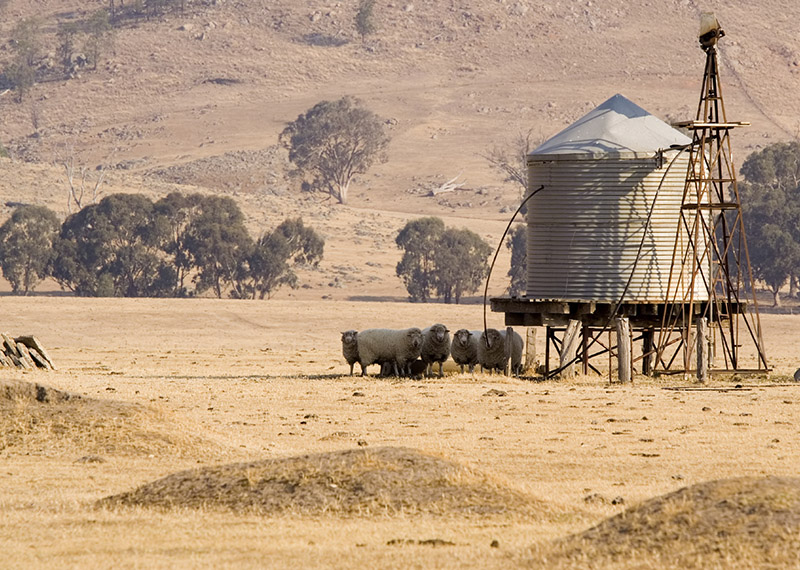
Published: Thursday 28 April 2016
Published
The objective of the audit was to assess the Department of Agriculture and Water Resources' establishment and administration of the Farm Finance and Drought Concessional Loans programs.
Entity
Department of Agriculture and Water Resources
Contact
Please direct enquiries relating to reports through our contact page.
Request for audit
Responded: Tuesday 2 July 2024
Response provided
The Auditor-General wrote to the Minister for Finance on 21 June 2024 to advise of the outcomes of the 2023–24 annual performance statements audit program, and a proposal for expanding the program of audits in 2024–25 and the following two financial years. The Minister for Finance responded on 2 July 2024 supporting the proposal. The Minister for Finance's full response is provided below.
Contact
Please direct enquiries through our contact page.
Request for audit
Responded: Monday 16 January 2023
Response provided
The Auditor-General wrote to the Minister for Finance on 25 October 2022 to advise of the outcomes of the 2021–22 annual performance statements audit program, and a proposal for expanding the program of audits in 2022–23 and the following two financial years. The Minister for Finance responded on 16 January 2023 supporting the proposal. The Minister for Finance's full response is provided below.
Contact
Please direct enquiries through our contact page.
Performance audit (Auditor-General Report No. 26 of 2000–01)
Published: Friday 22 December 2000
Published
The Defence Estate comprises the land, buildings and other facilities that Defence uses across Australia. These facilities are vital to achieving the Defence mission - to prevent or defeat the use of armed force against Australia and its interests. The Estate has a gross replacement value of $14.8 billion. Defence Estate Organisation's (DEO's) Facilities Operations (FACOPS) Program delivers general maintenance and minor new works to Defence facilities on a regional basis across the country. DEO's Estate Operations and Planning Branch and its nine Regional Estate Centres are responsible for the FACOPS Program. Resources available for the Program have been reduced in recent years. The total DEO budget for 2000-01, which includes funds for capital works, facilities operations and property management, is $2.6 billion. Of this total, the FACOPS Program has a cash allocation of $213 million and an additional $15.6 million for employee expenses associated with the Program's 283 staff. The objective of the audit was to assess the efficiency and effectiveness of selected Defence facilities operations, including tendering and contracting, with a view to adding value with practical recommendations for enhancing operations.
Entity
Department of Defence
Speeches and papers
Published: Wednesday 8 November 1995
Published
Mr P.J. Barrett (AM) - Auditor-General for Australia, presented at a Seminar for ANAO staff on Working with Parliamentary Committees. Parliamentary Education Office. The Commonwealth Parliament. Canberra
Performance audit (Auditor-General Report No. 29 of 2023–24)

Published: Tuesday 28 May 2024
Published
The objective of this audit was to assess the effectiveness of the National Indigenous Australians Agency’s (NIAA’s) processes to design and transition to a new remote employment program.
Entity
National Indigenous Australians Agency
Contact
Please direct enquiries through our contact page.
Request for audit
Responded: Tuesday 18 July 2023
Response provided
The Auditor-General wrote to the Minister for Finance on 26 June 2023 to advise of the outcomes of the 2022–23 annual performance statements audit program, and a proposal for expanding the program of audits in 2023–24 and the following two financial years. The Minister for Finance responded on 18 July 2023 supporting the proposal. The Minister for Finance's full response is provided below.
Contact
Please direct enquiries through our contact page.
Insights: Audit practice
Published: Wednesday 25 October 2017
Published
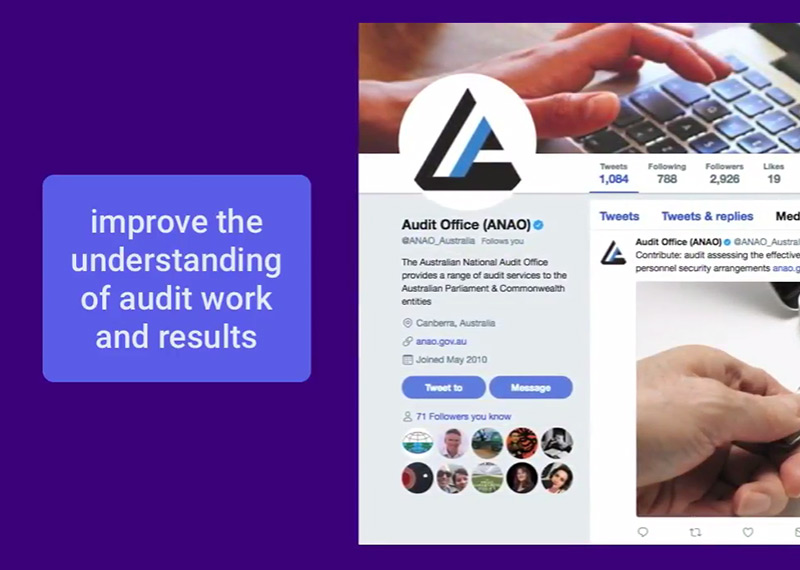
Effective, engaging and accessible communication remains an ongoing focus for the Australian National Audit Office (ANAO), given the important role that we play in providing assurance to the Parliament of Australia, and improving public sector administration.
In this edition of audit insights we discuss our external communication and engagement activities including website email subscriptions, our draft annual audit work program, contribute to an audit, our transparency and accountability initiatives, and social media.
Contact
Please direct enquiries relating to Audit insights through our contact page.
Corporate
Published: Thursday 6 July 2023
Published
The ANAO Corporate Plan 2023–24 outlines how we intend to deliver against our purpose over the next four years (2023–24 to 2026–27). The corporate plan is the ANAO’s primary planning document – it outlines our purpose; the dynamic environment in which we operate; our commitment to building capability; and the priorities, activities and performance measures by which we will be held to account. The corporate plan is complemented by the annual audit work program, which reflects the ANAO’s audit strategy for the coming year.
This corporate plan was updated on 26 March 2024:
- organisational structure changes — ‘Professional Services and Relationships Group’ to ‘Professional Services Group’
- Measure 3 — change type from ‘Efficiency / Qualitative’ to ‘Efficiency / Quantitative’
- Measure 15, reporting mechanism 4 — replaced text to reflect updated JCPAA feedback process
- Measure 16, reporting mechanism 3 — replaced references to ‘insights’ with ‘lessons’
Contact
Please direct enquiries through our contact page.
Performance audit (Auditor-General Report No. 27 of 2025–26)
New

Published: Tuesday 31 March 2026
Published
The audit objective was to assess the design and implementation of the Safer Local Roads and Infrastructure Program (SLRIP).
Entity
Department of Infrastructure, Transport, Regional Development, Communications, Sport and the Arts
Contact
Please direct enquiries through our contact page.
Performance audit (Auditor-General Report No. 11 of 2020–21)

Published: Monday 28 September 2020
Published
The ANAO conducted separate audits of the Indigenous Advancement Strategy (IAS) Children and Schooling program and the Safety and Wellbeing program, the findings and conclusions of which are presented in this report. The objective of the audits was to assess the effectiveness of the Department of the Prime Minister and Cabinet’s and the National Indigenous Australians Agency’s administration of the IAS Children and Schooling and the Safety and Wellbeing programs.
Entity
National Indigenous Australians Agency
Contact
Please direct enquiries through our contact page.
Performance audit (Auditor-General Report No. 31 of 2023–24)

Published: Wednesday 29 May 2024
Published
The objective of this audit was to assess the effectiveness of the design of the Growing Regions Program.
Entity
Department of Infrastructure, Transport, Regional Development, Communication and the Arts; Department of Industry, Science and Resources
Contact
Please direct enquiries through our contact page.
Performance audit (Auditor-General Report No. 12 of 2010–11)
Published: Friday 15 October 2010
Published
The objective of this audit was to assess key aspects of the establishment and administration of HIP by DEWHA as well as the transition of the program to DCCEE. All phases of the program were examined with particular emphasis for Phase 2 being given to:
- program design and implementation;
- registration and training of installers;
- payment of rebates; and
- the compliance strategy underpinning the program.
Entity
Department of Climate Change and Energy Efficiency; Department of the Environment, Water, Heritage and the Arts; Medicare Australia
Performance audit (Auditor-General Report No. 15 of 2005–06)
Published: Tuesday 15 November 2005
Published
The objective of the audit was to assess the Commonwealth's administration of the grants component of the R&D Start program. Lessons for the new Commercial Ready program have been identified in the audit. Accordingly, recommendations arising from this audit are directed, when appropriate, to the Commercial Ready program. As most financial assistance is in the form of grants, the loans component of the program was excluded from the audit.
Entity
Department of Industry Tourism and Resources; Industry Research and Development Board
Performance audit (potential)
Potential audit: 2025-26
Potential
This audit would assess the effectiveness of the administration of grants awarded under the Safe Places Emergency Accommodation Program (Safe Places), including compliance with the Commonwealth Grants Rules and Principles, and management of the grants across the Safe Places program life cycle.
Safe Places is a capital works program funding the building, renovation or purchase of emergency accommodation for women and children experiencing family and domestic violence. There have been two rounds of funding. Under successive National Plans to Reduce Violence against Women and their Children, the Australian Government has committed over $170 million over seven years to Safe Places ($72.6 million for round 1 from 2020–21 to 2024–25, and $100 million for round 2 from 2022–23 to 2026–2027). The first round of grants, awarded in 2020, was intended to deliver new emergency and crisis accommodation for women and children experiencing domestic and family violence. The second round of grants, was awarded in 2024 and was designed to focus on improving access to appropriate emergency accommodation for First Nations women and children, women and children from culturally and linguistically diverse backgrounds, and women and children with disability.
Entity
Department of the Treasury
Contact
Please direct enquiries through our contact page.
Performance audit (Auditor-General Report No. 2 of 2018–19)

Published: Tuesday 21 August 2018
Published
The audit objective was to assess the effectiveness of the Attorney-General’s Department’s design of the Data Retention Industry Grants program, including performance monitoring, reporting, evaluation and assurance arrangements.
Entity
Attorney-General's Department
Contact
Please direct enquiries through our contact page.
Information report (Auditor-General Report No. 8 of 2024–25)

Published: Thursday 24 October 2024
Published
The ANAO’s performance audit program is one of the main assurance functions of the Auditor-General. The purpose of this information report was to provide analysis of 2023–24 performance audits.
Entity
Across Entities
Contact
Please direct enquiries through our contact page.
Speeches and papers
Published: Wednesday 7 February 1996
Published
Mr P.J. Barrett (AM) - Auditor-General for Australia, presented to the Corporate Management Network Meeting, Rydges Lakeside, Canberra
Performance audit (Auditor-General Report No. 40 of 2003–04)
Published: Tuesday 13 April 2004
Published
The objective of the audit was to assess the effectiveness of Health's management of the MPSP and the RHSP. To achieve the audit's objective, the ANAO examined whether Health; had an effective approach to planning the programs; had an effective approach to delivering the programs; effectively used performance information to manage the programs; and effectively managed its relationship with all stakeholders of the programs.
Entity
Department of Health and Ageing
Performance audit (Auditor-General Report No. 26 of 2009–10)
Published: Tuesday 20 April 2010
Published
The objective of this audit was to assess the effectiveness of the administration of specific climate change programs by the departments of the Environment, Water, Heritage and the Arts and Resources, Energy and Tourism. In undertaking this audit, particular emphasis was given to the implementation of good administrative practice and the extent to which the program objectives were being met. The audit followed four lines of inquiry:
- development of program objectives and assessment of program risks;
- assessment and approval of competitive grant applications;
- assessment and approval of rebate applications; and
- measurement and reporting of program outcomes.
Entity
Department of the Environment, Water, Heritage and the Arts; Department of Climate Change and Energy Efficiency; Department of Resources, Energy and Tourism
Performance audit (Auditor-General Report No. 35 of 2015–16)
Published: Thursday 5 May 2016
Published
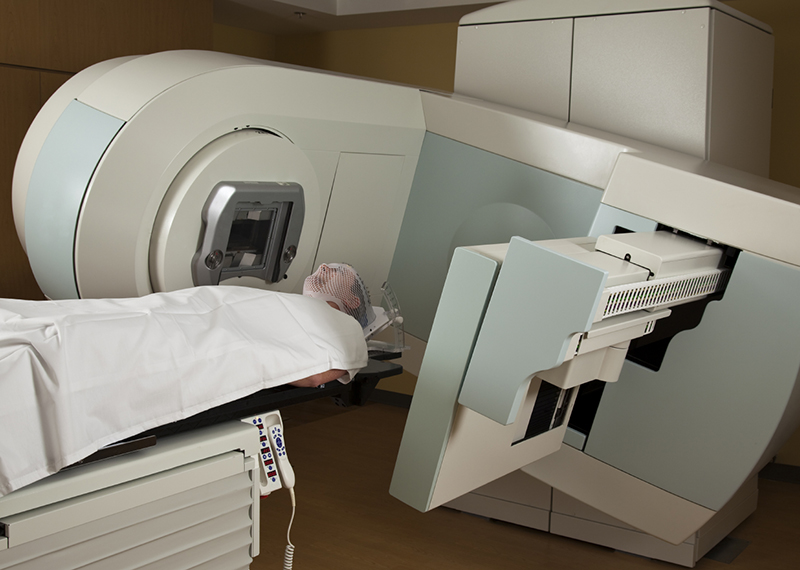
The audit objective was to assess the effectiveness of the Department of Health's and the Department of Human Services' administration of the Radiation Oncology Health Program Grants Scheme.
Entity
Department of Health; Department of Human Services
Contact
Please direct enquiries relating to reports through our contact page.
Performance audit (Auditor-General Report No. 22 of 2019–20)

Published: Tuesday 14 January 2020
Published
The audit objective was to examine the effectiveness of the Department of Defence's administration of the Future Submarine Program to date.
Entity
Department of Defence
Contact
Please direct enquiries through our contact page.
Performance audit (Auditor-General Report No. 31 of 2009–10)
Published: Thursday 22 April 2010
Published
The audit scope covered the management of the AusLink R2R Standard Program and the AusLink R2R Supplementary Program. The scope did not include management of the Nation Building Roads to Recovery Program, which has only recently commenced. The audit objectives were to:
- assess the effectiveness of the management of the AusLink Roads to Recovery Program;
- assess the delivery of the program and management of the funding, including the extent to which the program has provided additional (rather than substitute) funding for land transport infrastructure; and
- identify opportunities for improvements to the management of the program.
Entity
Department of Infrastructure, Transport, Regional Development and Local Government