Browse our range of reports and publications including performance and financial statement audit reports, assurance review reports, information reports and annual reports.
Performance audit (Auditor-General Report No. 18 of 2003–04)
Published: Wednesday 10 December 2003
Published
The Australian National Audit Office (ANAO) completed a performance audit of the ATO's use of AUSTRAC data in August 2000, titled The AustralianTaxation Office's Use of AUSTRAC Data, Audit Report No. 7 2000-2001. It found that the ATO had used AUSTRAC data to achieve a significant improvement in the collection of taxation revenue. The ANAO considered that the ATO could build on this success by using AUSTRAC data more effectively at both the strategic and operational levels. The audit made six recommendations. The ATO agreed with all recommendations. The objective of this follow-up performance audit was to assess the ATO's progress in implementing the recommendations of Audit Report No 7 2000-2001, The Australian Taxation Office's Use of AUSTRAC Data.
Entity
Australian Taxation Office
Performance audit (Auditor-General Report No. 13 of 2006–07)
Published: Tuesday 5 December 2006
Published
The objective of this follow-up audit was to assess the extent to which DVA had implemented the recommendations from the original audit during the period 2002–06, including in its preparation of the IT outsourcing contract which will operate from 2007.
Entity
Department of Veterans' Affairs
Speeches and papers

Published: Friday 31 March 2017
Published
Grant Hehir, Auditor-General for Australia, attended the XXIII Commonwealth Auditors-General Conference in New Delhi, India, and presented a keynote speech on 22 March 2017 titled Environmental Audit: A Commonwealth Perspective.
Contact
Please direct enquiries relating to speeches through our contact page.
Performance audit (planned)
Planned
The objective of this audit is to assess the effectiveness of the design and delivery of the Leaving Violence Program national program.
Entity
Department of Social Services
Contact
Please direct enquiries through our contact page.
Request for audit
Recent
Responded: Friday 24 April 2026
Response provided
The Auditor-General responded on 24 April 2026 to correspondence from Senator Andrew Bragg dated 27 March 2026, requesting that the Auditor-General conduct an investigation to assess the implementation of the EPBC changes.
Contact
Please direct enquiries through our contact page.
Request for audit
Responded: Monday 28 April 2025
Response provided
The Auditor-General responded on 28 April 2025 to correspondence from Senator the Hon Anne Ruston dated 31 March 2025, requesting that the Auditor-General conduct an investigation to examine a grant awarded to the Gallipoli Turkish Cultural Foundation.
Contact
Please direct enquiries through our contact page.
Request for audit
Responded: Wednesday 20 December 2023
Response provided
The Auditor-General responded on 20 December 2023 to correspondence from Ms Zali Steggall MP dated 15 December 2023, requesting that the Auditor-General conduct a review of the Proceeds of Crime Act 2002, administered by the Attorney-General’s Department.
Contact
Please direct enquiries through our contact page.
Request for audit
Responded: Wednesday 16 September 2020
Response provided
The Auditor-General responded on 21 August 2020 to correspondence from the Hon Mark Butler MP dated 26 July 2020, requesting that the Auditor-General review the integrity of the Supporting Reliable Energy Infrastructure Program, in particular with reference to the grant to Shine Energy. The Auditor-General provided a follow-up response on 16 September 2020.
Contact
Please direct enquiries relating to requests through our contact page.
Performance audit (Auditor-General Report No. 41 of 2004–05)
Published: Friday 15 April 2005
Published
The objective of the audit was to evaluate the policies and practices of selected organisations to determine whether they had established sound arrangements for, and maintained effective control over, the administration of security incidents and investigations.
Entity
Australian Crime Commission; Australian Customs Service; Australian Maritime Safety Authority; Child Support Agency; Department of Finance and Administration; Attorney-General’s Department
Speeches and papers
Published: Monday 7 July 2008
Published
Mr Ian McPhee - Auditor-General for Australia, presented at the 20th Commonwealth Auditors-General Conference
Performance audit (Auditor-General Report No. 30 of 2008–09)
Published: Wednesday 29 April 2009
Published
The objective of the audit was to assess the arrangements for oversighting the Action Plan and whether the Plan's new measures have been administered effectively to deliver the intended results.
Entity
Attorney-General's Department; Department of Immigration and Citizenship; Australian Federal Police; Department of Families, Housing, Community Services and Indigenous Affairs
Request for audit
Responded: Friday 24 July 2020
Response provided
The Auditor-General responded on 25 May 2020 to correspondence from Senator Katy Gallagher dated 4 May 2020, requesting that the Auditor-General conduct an investigation to examine the effectiveness of the Commonwealth Government’s debt management given the significant and rapidly increasing Commonwealth government debt levels as a result of the COVID-19 pandemic. The Auditor-General provided a follow-up response to Senator Gallagher on 24 July 2020.
Contact
Please direct enquiries relating to requests for audit through our contact page.
Events and seminars
Published: Friday 4 March 2016
Published
On 23 February 2016 the ANAO held its first CFO Forum - The Results of the 2014-15 Financial Statement audits. The Forum presented an opportunity to provide an overview of the end of year report tabled in Parliament in December 2015, the issues which arose during 2014-15, and the focus areas for the ANAO’s reporting to Parliament in 2015-16.
Contact
Please direct enquiries relating to our chief financial officer forum through our contact page.
Government advertising review
Published: Thursday 16 April 2009
Published
The aim of the campaign is to contribute to a reduction in the uptake of methamphetamines and other illicit drugs among young Australians, by raising awareness of the harms associated with drug use and by encouraging and supporting decisions not to use. It is also intended to encourage young people using methamphetamines to reconsider their use and direct them to relevant support, counselling and treatment services.
Annual report
Published: Thursday 24 August 2023
Published
This annual report documents the performance of the Australian National Audit Office (ANAO) in the financial year ended 30 June 2023. The report addresses all applicable obligations under the Public Governance, Performance and Accountability Act 2013; the Public Governance, Performance and Accountability Rule 2014; the Auditor-General Act 1997; the performance measures set out in the outcome and programs framework in the ANAO’s Portfolio Budget Statements 2022–23 and in the ANAO Corporate Plan 2022–23; and annual reporting requirements set out in other relevant legislation.
Contact
Please direct enquiries through our contact page.
Financial statement audit (Auditor-General Report No. 18 of 2007–08)

Published: Thursday 20 December 2007
Published
This report complements the interim phase report, Audit Report No.51 2006–07 Interim Phase of the Audit of Financial Statements of General Government Sector Entities for the Year Ending 30 June 2007, and provides a summary of the final audit results of the audits of the financial statements of all Australian Government entities, including the Consolidated Financial Statements for the Australian Government.
Entity
NO-DEPTS-LISTED
Request for audit
Responded: Wednesday 23 January 2019
Response provided
The Auditor-General responded on 20 April 2018 to correspondence from Mr Stephen Jones MP dated 26 March 2018, requesting that the Auditor-General conduct an investigation to examine the awarding of a grant under the Regional Jobs and Investment Package program in Tropical North Queensland. The Acting Auditor-General followed-up on 23 January 2019 to advise Mr Jones that an audit of the Regional Jobs and Investment Packages has now commenced.
Contact
Please direct enquiries relating to requests for audit through our contact page.
Request for audit
Responded: Wednesday 23 January 2019
Response provided
The Auditor-General responded on 20 April 2018 to correspondence from the Hon. Dr Mike Kelly MP dated 6 April 2018, requesting an audit of the administration of the Regional Jobs and Investment Packages (RJIP) program, specifically as it relates to the allocation of grant funding between electorates. The Acting Auditor-General followed-up on 23 January 2019 to advise Dr Kelly that an audit of the Regional Jobs and Investment Packages has now commenced.
Contact
Please direct enquiries through our contact page.
Request for audit
Responded: Monday 29 April 2019
Response provided
The Auditor-General responded on 10 May 2018 to correspondence from Senators Patrick, Griff, Hanson-Young and Bernardi, Ms Rebekha Sharkie MP and the Hon. Tony Burke MP dated 24 April 2018, requesting that the Auditor-General conduct an investigation to examine the purchases of water for environmental flows in the Murray-Darling Basin. The Auditor-General provided a follow-up response on 29 April 2019.
Contact
Please direct enquiries through our contact page.
Request for audit
Responded: Tuesday 28 November 2017
Response provided
The Auditor-General responded to, and then followed-up, correspondence from the Hon. Tony Burke MP dated 25 July 2017, requesting that the Auditor-General conduct an investigation into allegations arising out of a recent Four Corners program concerning the Murray-Darling Basin.
Contact
Please direct enquiries relating to requests for audit through our contact page.
Government advertising review
Published: Monday 15 February 2010
Published
The overall aim of the campaign activity is to contribute to a reduction in the uptake and prevalence of smoking among young Australians.
Government advertising review
Published: Friday 15 May 2009
Published
The campaign for the National STI Prevention Program is designed to inform young Australians aged 15-29 years about the transmission, symptoms, treatment and prevention of STIs, and encourage safe sexual behaviour to contribute to a reduction in the prevalence of sexually transmissible infections among this age group.
Government advertising review
Published: Thursday 23 April 2009
Published
Electronic Medicare claiming allows patients to claim their Medicare rebate electronically at the doctor's surgery. The purpose of the campaign is to increase public awareness and use of this scheme and to encourage medical service providers such as doctor's surgeries to take up the scheme.
Government advertising review
Published: Monday 18 August 2008
Published
In February 2008, the Government agreed its Climate Change Policy Framework built on three pillars: reducing Australia's greenhouse gas emissions; adapting to climate change that we can't avoid; and helping to shape a global solution. Phase One of the campaign is the Householder Action advertising campaign, designed to empower householders to take action on climate change and to inform the community about measures for compensating low income households.
Performance audit (Auditor-General Report No. 37 of 2005–06)
Published: Wednesday 3 May 2006
Published
The objective of the audit was to assess whether selected Australian Government entities were effectively supporting their business requirements through planning for, and management of, the acquisition, disposal and use of their IPE assets. The audit reviewed each entity's policies and practices against a series of audit criteria across the following components of asset management: control environment; planning; acquisitions; operations; and disposals.
Entity
Across agencies
Performance audit (Auditor-General Report No. 46 of 2004–05)
Published: Tuesday 31 May 2005
Published
Following on from the 2002 audit, the ANAO decided to conduct an audit of trust monies in entities operating under the Commonwealth Authorities and Companies Act 1997 (CAC Act). The objectives of the current audit were to: · assess whether the selected entities were managing trust monies in accordance with legal and administrative requirements and better practice principles; · identify better practice in the management of trust monies; and · as necessary, recommend improvements in the controls and practices relating to the management of trust monies.
Entity
Across agency
Corporate
Published: Monday 19 October 2020
Published
The ANAO Quality Assurance Framework is the system of quality control that the ANAO has established to provide the Auditor-General with reasonable assurance that the ANAO complies with the ANAO standards and applicable legal and regulatory requirements and reports issued by the ANAO are appropriate in the circumstances.
The Audit Quality Report demonstrates the ANAO assessment of the implementation and operating effectiveness of the elements of the ANAO Quality Assurance Framework. The report provides transparency in respect of the processes, policies, and procedures that support each element of the ANAO Quality Assurance Framework, and reports audit quality indicators measuring ANAO performance against target benchmarks.
This report also includes the achievement of the quality assurance strategy and deliverables set out in the ANAO Quality Assurance Framework and Plan 2019–20.
Contact
Please direct enquiries through our contact page.
Performance audit (Auditor-General Report No. 49 of 2014–15)

Published: Wednesday 10 June 2015
Published
The audit objective is to assess the effectiveness of the Department of Agriculture’s administration of the Imported Food Inspection Scheme.
Entity
Department of Agriculture
Contact
Please direct enquiries relating to reports through our contact page.
Speeches and papers
Published: Wednesday 21 April 2010
Published
Mr Ian McPhee - Auditor-General for Australia, presented at the CPA Australia - CFO Public Sector Lunch
Speeches and papers
Published: Friday 18 May 2007
Published
Mr Ian McPhee - Auditor-General for Australia, presented at the Queensland Regional Heads Forum
Financial statement audit (Auditor-General Report No. 22 of 2003–04)

Published: Friday 9 January 2004
Published
The report summarises the final results of the audits of the financial statements of Australian Government entities, being the second report this year on financial statements for the period ended 30 June 2003. It complements Audit Report No.61 2002-2003 Control Structures as part of the Audit of Financial Statements of Major Commonwealth Entities for the Year Ending 30 June 2003.
Entity
Across Agency
Government advertising review
Published: Thursday 28 May 2009
Published
The campaign for the National STI Prevention Program is designed to inform young Australians aged 15-29 years about the transmission, symptoms, treatment and prevention of STIs, and encourage safe sexual behaviour, to contribute to a reduction in the prevalence of sexually transmissible infections among this age group.
Information report (Auditor-General Report No. 8 of 2024–25)

Published: Thursday 24 October 2024
Published
The ANAO’s performance audit program is one of the main assurance functions of the Auditor-General. The purpose of this information report was to provide analysis of 2023–24 performance audits.
Entity
Across Entities
Contact
Please direct enquiries through our contact page.
Performance audit (Auditor-General Report No. 15 of 2014–15)

Published: Wednesday 17 December 2014
Published
The objective of the audit was to assess the effectiveness of the Australian Trade Commission’s administration of the Export Market Development Grants scheme, in providing incentives to small and medium Australian enterprises for the development of export markets.
Entity
Australian Trade Commission (Austrade)
Contact
Please direct enquiries relating to reports through our contact page.
Performance audit (Auditor-General Report No. 25 of 2001–02)
Published: Tuesday 11 December 2001
Published
The audit process involved an assessment of the accounts receivable function in eight Commonwealth organisations. The objectives of the audit were to assess whether the processing, collection and overall management of the accounts receivable function was being performed in accordance with applicable legislation, government policy, applicable internal controls, and identify better practices in accounts receivable activities.
Entity
Across Agency
Speeches and papers
Published: Friday 16 November 2001
Published
Mr P.J. Barrett (AM) - Auditor-General for Australia, presented at the CPA South Australia Annual Congress 2001, 'Riding the Next Wave'
Performance audit in-progress

Due to table: November 2026
Open for contribution
The objective of this audit is to assess the effectiveness of public reporting on domestic, family and sexual violence expenditure under the National Plan to End Violence against Women and Children 2022–2032.
Entity
Department of Social Services
Contact
Please direct enquiries through our contact page.
Performance audit in-progress
New
Due to table: April 2027
Open for contribution
The objective of this audit is to assess the effectiveness of the design and delivery of the Leaving Violence Program regional trials.
Entity
Department of Social Services
Contact
Please direct enquiries through our contact page.
Insights: Audit lessons
Published: Tuesday 21 November 2017
Published
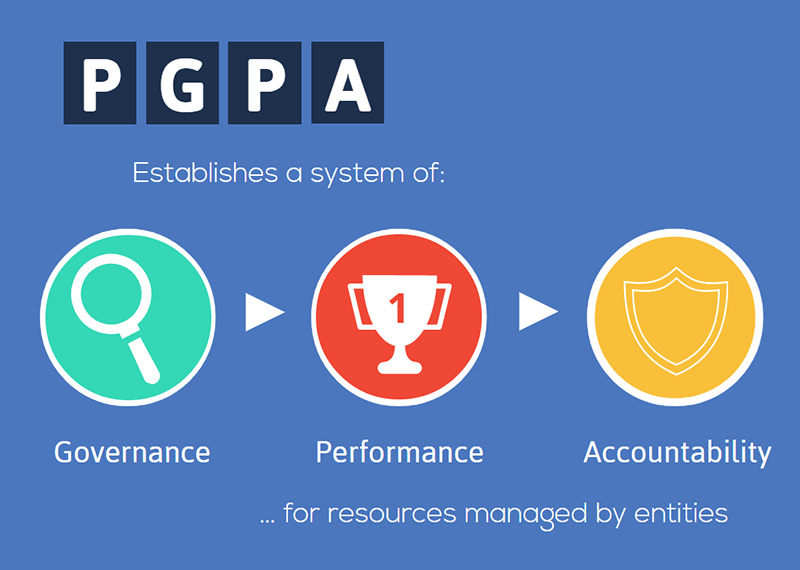
The Commonwealth Parliament regulates Australian Government entities through the Public Governance, Performance and Accountability Act — the PGPA Act. The Act establishes a system of governance, performance and accountability for resources managed by entities. This edition of audit insights looks at recent ANAO audit activity reviewing entities implementation of key components of the PGPA: risk management, corporate planning and performance statements.
Contact
Please direct enquiries relating to audit insights through our contact page.
Performance audit (Auditor-General Report No. 30 of 2023–24)

Published: Tuesday 28 May 2024
Published
The objective of this audit is to assess the effectiveness of the Department of Climate Change, Energy, the Environment and Water's (DCCEEW) corporate plan as its primary planning document in accordance with the Public Governance, Performance and Accountability Act 2013.
Entity
Department of Climate Change, Energy, the Environment and Water
Contact
Please direct enquiries through our contact page.
Performance audit (Auditor-General Report No. 20 of 2017–18)

Published: Tuesday 12 December 2017
Published
The audit objective was to assess the effectiveness of the Department of Industry, Innovation and Science in administering the low emission technologies for fossil fuels (LETFF) program.
Entity
Department of Industry, Innovation and Science
Contact
Please direct enquiries relating to reports through our contact page.
Performance audit (Auditor-General Report No. 44 of 2018–19)

Published: Thursday 6 June 2019
Published
The objective of this audit was to assess the effectiveness of the Export Finance and Insurance Corporation (Efic).
Entity
Export Finance and Insurance Corporation
Contact
Please direct enquiries through our contact page.
Performance audit (Auditor-General Report No. 1 of 2019–20)

Published: Thursday 4 July 2019
Published
The objective of this audit was to assess the effectiveness of the management of cyber security risks by three government business enterprises or corporate Commonwealth entities. The entities selected for audit are ASC Pty Ltd, the Australian Postal Corporation and the Reserve Bank of Australia.
Entity
ASC Pty Ltd; Australian Postal Corporation; Reserve Bank of Australia
Contact
Please direct enquiries through our contact page.
Performance audit (Auditor-General Report No. 26 of 2019–20)

Published: Thursday 27 February 2020
Published
The objective of the audit was to examine the effectiveness of spectrum reallocation to support the deployment of 5G services.
Entity
Department of Infrastructure, Transport, Regional Development and Communications; Australian Communications and Media Authority
Contact
Please direct enquiries through our contact page.
Performance audit (Auditor-General Report No. 19 of 2023–24)

Published: Tuesday 27 February 2024
Published
The objective of this audit was to assess the effectiveness of the Department of Health and Aged Care’s (DHAC) performance management of the Primary Health Network program.
Entity
Department of Health and Aged Care
Contact
Please direct enquiries through our contact page.
Request for audit
Recent
Responded: Thursday 23 April 2026
Response provided
The Auditor-General responded on 23 April 2026 to correspondence from the President of the Senate dated 1 April 2026, regarding a resolution agreed by the Senate requesting that the Auditor-General reinstate the annual major projects report.
Contact
Please direct enquiries through our contact page.
Financial statement audit (Auditor-General Report No. 56 of 2004–05)

Published: Friday 24 June 2005
Published
This report presents the results of the interim phase of the 2004-2005 financial statement audits. The audits have encompassed a review of governance arrangements related to entities' financial management responsibilities, and an examination of internal control, including information technology system controls for all portfolio departments and other major General Government Sector entities as at 31 March 2005. An examination of such issues is designed to assess the reliance that can be placed on internal controls to produce complete and accurate information for financial reporting purposes. All ANAO findings have been reported to entities and summary reports provided to the relevant Minister(s).
Entity
Across Agency
Performance audit (Auditor-General Report No. 32 of 2003–04)
Published: Tuesday 2 March 2004
Published
The audit reviewed the Defence Materiel Organisation's management of the $3.43 billion Wedgetail Airborne Early Warning and Control (AEW&C) project. The Wedgetail project is to provide the Australian Defence Force with an AEW&C capability based on four Boeing 737 AEW&C aircraft and associated supplies and logistic support. At the time of the audit the AEW&C systems were still in their early development phase, and by November 2003, Defence had spent $1.107 billion on the project.
Entity
Department of Defence
Performance audit (Auditor-General Report No. 23 of 2016–17)

Published: Monday 7 November 2016
Published
The objective of this audit was to examine the effectiveness of the Department of Social Services’ administration of NRAS allocations; processing of market rent valuations, statements of compliance and incentive payments; and the supporting business systems and processes.
Entity
Department of Social Services
Contact
Please direct enquiries relating to reports through our contact page.
Performance audit (Auditor-General Report No. 12 of 2016–17)

Published: Thursday 1 September 2016
Published
The objective of the audit was to assess the effectiveness of the design of, and award of funding under, the Living Safe Together grants programme.
Entity
Attorney-General's Department
Contact
Please direct enquiries relating to reports through our contact page.
Performance audit (Auditor-General Report No. 5 of 2018–19)
Published: Tuesday 4 September 2018
Published
The objective of the audit was to assess whether the Australian Bureau of Statistics (ABS) has established effective risk management arrangements to support the implementation of the Statistical Business Transformation Program.
Entity
Australian Bureau of Statistics (ABS)
Contact
Please direct enquiries through our contact page.
Performance audit (Auditor-General Report No. 52 of 2003–04)
Published: Tuesday 15 June 2004
Published
The objective of this audit was to follow up DVA's implementation of the recommendations in Audit Report No. 44, 2000-01, Information Technology in the Department of Veterans' Affairs. The ANAO made two recommendations in the report (the second having five parts). The recommendations addressed the monitoring of IT changes; IT performance information; information systems model documentation; and the facilitation of the interpretation of performance information.
Entity
Department of Veterans' Affairs
Performance audit (Auditor-General Report No. 6 of 2005–06)
Published: Thursday 18 August 2005
Published
The objective of this audit was to assess whether DEWR had implemented ESC3 and its computer system EA3000, efficiently and effectively. The primary focus is on the period of change from the previous employment services contract to ESC3 and the first full year of its operation, 2003-04. The scope of the audit was limited to the implementation of Job Network services under ESC3, the introduction of the supporting computer application, EA3000, and DEWR's use of modelling to estimate the effects of the APM. The audit did not test the effectiveness of the APM. DEWR has a plan to evaluate the new model. A separate, concurrent ANAO audit assessed DEWR's oversight of Job Network services to job seekers.
Entity
Department of Employment and Workplace Relations; Centrelink
Request for audit
Responded: Thursday 11 May 2023
Response provided
The Auditor-General responded on 6 April 2023 to correspondence from Senator Andrew Bragg dated 8 March 2023, requesting that the Auditor-General conduct an investigation into the costs of the ongoing legal dispute concerning the Commonwealth and Dr Monique Ryan MP. The Auditor-General responded on 11 May 2023 to follow-up correspondence from Senator Bragg dated 18 April 2023, requesting a timeline for finalisation of the 2022–23 financial statements audit of the Department of Finance.
The Auditor-General responded on 15 December 2023 regarding the ANAO enquiries and that the results are published in the Auditor-General Report No.9 (2023-24) Audits of the Financial Statements of Australian Government Entities ended 30 June 2023 that tabled in the Parliament on 14 December 2023.
Contact
Please direct enquiries relating to requests for audit through our contact page.
Financial statement audit (Auditor-General Report No. 22 of 2010–11)

Published: Thursday 16 December 2010
Published
This report complements the interim phase report, and provides a summary of the final audit results of the audits of the financial statements of all Australian Government entities, including the Consolidated Financial Statements for the Australian Government.
Entity
across agencies
Performance audit (Auditor-General Report No. 24 of 2021–22)

Published: Thursday 28 April 2022
Published
The objective of the audit was to assess the effectiveness of the Australian Taxation Office's activities in addressing Superannuation Guarantee non-compliance.
Entity
Australian Taxation Office
Contact
Please direct enquiries through our contact page.
Performance audit (Auditor-General Report No. 1 of 2005–06)
Published: Thursday 7 July 2005
Published
A performance audit of the management of the Detention Centre Contracts was listed in the 2003-04 Audit Work Program as a potential audit. The audit work program proposed that the audit would be conducted in two parts. The first part would focus on DIMIA's management of the detention centre contracts with the then detention service provider, GEO Australia. The second part would concentrate on how well any lessons learned from the first contract, were translated into improvements with the new contract. The original objective of this second ANAO audit was to assess DIMIA's management of detention services through the Contract, including the tender process, transition period and implementation of lessons learned from the previous contract.
Entity
Department of Immigration and Multicultural and Indigenous Affairs
Performance audit (Auditor-General Report No. 12 of 2002–03)
Published: Monday 21 October 2002
Published
The IIF program is designed to redress the low level of provision in Australia of high risk venture capital for small new technology - based companies commercialising research and development. The objective of the audit was to determine whether the IIF program was being effectively managed by the Industry Research and Development (IR&D) Board and the Department of Industry, Tourism and Resources to achieve the program objectives. The audit focused on corporate governance arrangements for program administration, the selection process to award licences, the safeguards to protect the Commonwealth's financial interests, management of licence agreements, and program performance management. The audit also examined program results to date from available data.
Entity
Department of Industry, Tourism and Resources; Industry Research and Development Board
Performance audit (Auditor-General Report No. 21 of 2001–02)
Published: Tuesday 20 November 2001
Published
The audit reviewed the policy advising functions of the Departments of Education, Training and Youth Affairs, Employment, Workplace Relations and Small Business, and Family and Community Services. The objective of the audit was to determine whether departmental quality management systems for policy advising were appropriate and the advice provided met expected standards for policy outputs.
Entity
Department of Education Training and Youth Affairs; Department of Employment Workplace Relations and Small Business; Department of Family and Community Services
Performance audit (Auditor-General Report No. 43 of 2000–01)
Published: Friday 1 June 2001
Published
The audit examined the design, management and reporting of performance information for the Natural Heritage Trust (NHT) which is administered by the Commonwealth Departments of Environment and Heritage, and Agriculture, Fisheries and Forestry. The objective of the audit was to examine and report on the performance information used to support the administration of $1.5 billion in Commonwealth financial assistance; and compliance with legislative requirements for performance monitoring and reporting.
Entity
Agriculture Fisheries and Forestry - Australia; Department of the Environment and Heritage; Department of Agriculture
Financial statement audit (Auditor-General Report No. 51 of 2006–07)

Published: Wednesday 27 June 2007
Published
This report presents the results of the interim phase of the 2006–07 financial statement audits of all portfolio departments and other major General Government Sector (GGS) agencies that collectively represent 95 per cent of total GGS revenues and expenses.
Entity
NO-DEPTS-LISTED
Financial statement audit (Auditor-General Report No. 42 of 2008–09)

Published: Monday 22 June 2009
Published
Under section 57 of the Financial Management and Accountability Act 1997 (FMA Act) the Auditor-General is required to report each year to the relevant Minister, on whether the financial statements of agencies have been prepared in accordance with the Finance Minister's Orders (FMOs) and whether they give a true and fair view of the matters required by those Orders.
Our interim audits of agencies encompass a review of governance arrangements related to agencies' financial reporting responsibilities, and an examination of relevant internal controls, including information technology system controls. An examination of such issues is designed to assess the reliance that can be placed on internal controls to produce complete and accurate information for financial reporting purposes.
Entity
Across Agencies
Financial statement audit (Auditor-General Report No. 17 of 2011–12)

Published: Thursday 15 December 2011
Published
The ANAO is responsible for the audits of the financial statements of all Australian Government entities. This report provides a summary of the final audit results of these entities, including the Consolidated Financial Statements for the Australian Government.
The paragraphs numbered 5.213 to 5.216 in relation to Defence Housing Australia were tabled as an addendum to the Report.
A correction to the third bullet point of paragraph 5.120 was tabled as a corrigendum to the Report.
Entity
Cross Agencies
Financial statement audit (Auditor-General Report No. 48 of 2005–06)

Published: Thursday 22 June 2006
Published
The focus of this report is on the year end results of the financial statement audits of all general purpose reporting entities for the 2005–06 financial year. Financial management issues (where relevant) arising out of the audits and their relationship to internal control structures are also included in this report.
Entity
Across agency
Request for audit
Responded: Friday 29 March 2019
Response provided
The Auditor-General responded on 29 March 2019 to correspondence from Ms Cathy McGowan AO MP dated 5 March 2019, requesting that the Auditor-General investigate the conduct of a range of parties in relation to the announcement of grants under Round 3, Building Better Regions Fund.
Contact
Please direct enquiries relating to requests through our contact page.
Performance audit (Auditor-General Report No. 9 of 2019–20)

Published: Monday 23 September 2019
Published
The objective of this audit was to assess the effectiveness of the Department of Health’s implementation of the National Ice Action Strategy (NIAS).
Entity
Department of Health
Contact
Please direct enquiries through our contact page.
Performance audit (Auditor-General Report No. 8 of 2001–02)
Published: Thursday 9 August 2001
Published
The objective of the audit was to assess whether the disposal of 'infrastructure, plant and equipment' assets was being carried out in accordance with Government policy, relevant aspects of the asset management principles, and applicable internal controls. The scope of the audit covered all aspects of the disposal process from initial planning through to the receipt of proceeds and evaluation of the outcome. The audit examined eight organisations, which are not named in the report.
Entity
Across Agency
Performance audit (Auditor-General Report No. 18 of 2000–01)
Published: Thursday 30 November 2000
Published
The audit assessed the management by ISR and, in particular, by AusIndustry of the implementation of the changes arising from the Government's December 1997 policy statement in Investing for Growth. This statement required ISR to separate administration of policy from the delivery of products and to improve its service to customers through a ‘one stop shop' approach and by streamlining its processes. The audit focussed in particular on the overall strategic management of the change process by AusIndustry; the detailed implementation of the new service delivery arrangements, notably the separation of policy and product delivery; and the implementation of the enhanced customer focus.
Entity
Department of Industry, Science and Resources
Audit Matters
Recent
Published: Friday 1 May 2026
Published
Welcome to the first edition of Audit Matters for 2026. This edition covers findings from the 2024–25 performance statements audit program, and our series of performance audits on compliance with domestic and international travel requirements. It also outlines key messages from our performance audit examining three outcome areas of the Closing the Gap national agreement — specifically, areas in schooling and early childhood development. You’ll also find updates on our latest insights product and on the development of our upcoming annual audit work program, including the future of the major projects report and auditing in the Defence space.
Across this work, a consistent theme continues to emerge: the importance of getting the basics right. In a constrained environment, our audits continue to identify gaps in foundational practices such as record keeping, procurement and grants administration. These are not new issues, but they remain central to effective public administration and to maintaining trust in the use of public resources, particularly with the public sector’s focus on delivery. Getting the basics right, and knowing that you are, is a key issue to keep an eye on.
Related to this is the importance of lawfulness as a core governance principle. Our audit work continues to highlight that compliance with legislative and policy frameworks is not simply procedural — it underpins integrity, accountability and public confidence in government institutions.
This edition of Audit Matters will be my last as I prepare to retire from the APS on 1 May. I have been privileged to enjoy an expansive career across the public sector — in particular with many outstanding colleagues at the ANAO and beyond — and I wish the next Deputy Auditor-General all the best. Carla Jago will act as Deputy Auditor-General while the Auditor-General makes arrangements to fill the position.
Rona Mellor PSM, Deputy Auditor-General
Contact
Please direct enquiries through our contact page or subscribe to receive the email version of Audit Matters in the future.
Request for audit
Responded: Monday 2 December 2024
Response provided
The Auditor-General responded on 2 December 2024 to correspondence from Dr Helen Haines MP dated 4 November 2024, requesting that the Auditor-General conduct an investigation on the actions and decisions of the Priority Community Infrastructure Program (PCIP) and Investing in Our Communities Program (IOCP).
Contact
Please direct enquiries through our contact page.
Performance audit (Auditor-General Report No. 36 of 2004–05)
Published: Wednesday 9 March 2005
Published
Given the importance of customer feedback to Centrelink's business, the ANAO considered it timely to conduct a series of performance audits relating to Centrelink's customer feedback systems, particularly in relation to its delivery of the services then provided on behalf of FaCS. The overarching objective of this series of ANAO performance audits of Centrelink's customer feedback systems was to assess whether Centrelink has effective processes and systems for gathering, measuring, reporting and responding effectively to customer feedback, including in relation to customer satisfaction with Centrelink services and processes.
Entity
Centrelink
Performance audit (Auditor-General Report No. 33 of 2004–05)
Published: Wednesday 9 March 2005
Published
Given the importance of customer feedback to Centrelink's business, the ANAO considered it timely to conduct a series of performance audits relating to Centrelink's customer feedback systems, particularly in relation to its delivery of the services then provided on behalf of FaCS. The overarching objective of this series of ANAO performance audits of Centrelink's customer feedback systems was to assess whether Centrelink has effective processes and systems for gathering, measuring, reporting and responding effectively to customer feedback, including in relation to customer satisfaction with Centrelink services and processes.
Entity
Centrelink
Speeches and papers
Published: Tuesday 4 April 2006
Published
Mr Ian McPhee - Auditor-General for Australia, presented at the Australian Government Procurement Conference
Performance audit (Auditor-General Report No. 24 of 2005–06)
Published: Monday 23 January 2006
Published
The audit objective was to assess the effectiveness of DMO's JORN and JFASmaintenance and support arrangements. The audit examined the maintenanceand operation of the JORN and JFAS radars, and their facilities.
Entity
Department of Defence
Financial statement audit (Auditor-General Report No. 16 of 2012–13)

Published: Thursday 20 December 2012
Published
The ANAO is responsible for the audits of the financial statements of all Australian Government entities. This report provides a summary of the final audit results of these entities, including the Consolidated Financial Statements for the Australian Government.
Entity
Across Agencies
Request for audit
Responded: Friday 19 March 2021
Response provided
The Auditor-General responded on 11 December 2020 to correspondence from the Hon Richard Marles MP dated 16 November 2020, requesting that the Auditor-General conduct an investigation to examine the Future Submarine and Future Frigate programs.
The Auditor-General provided a follow-up response to Mr Marles on 19 March 2021.
Contact
Please direct enquiries relating to requests through our contact page.
Performance audit (Auditor-General Report No. 15 of 2004–05)
Published: Tuesday 23 November 2004
Published
The audit examined the financial management of all Special Appropriations in the period 1998-99 to 2002-03, with the exception of those related to Special Accounts and those administered by Government Business Enterprises. The audit objectives were to: identity all Special Appropriations and ascertain which entities are responsible for their financial management and reporting; and assess entities' financial management and reporting of Special Appropriations against the Commonwealth's financial management and reporting frameworks.
Entity
Across Entities
Performance audit (Auditor-General Report No. 44 of 2022–23)

Published: Wednesday 28 June 2023
Published
This audit examined the effectiveness of the National Archives of Australia’s implementation of the Building Trust policy and selected entities’ management of information assets (records, information and data).
Entity
Australian National Maritime Museum; National Archives of Australia; Department of the Prime Minister and Cabinet
Contact
Please direct enquiries through our contact page.
Speeches and papers
Published: Wednesday 6 August 2003
Published
Mr P.J. Barrett (AM) - Auditor-General for Australia, presented at the InfoHRM Conference, Gold Coast
Performance audit (Auditor-General Report No. 27 of 2025–26)

Published: Tuesday 31 March 2026
Published
The audit objective was to assess the design and implementation of the Safer Local Roads and Infrastructure Program (SLRIP).
Entity
Department of Infrastructure, Transport, Regional Development, Communications, Sport and the Arts
Contact
Please direct enquiries through our contact page.
Corporate
Published: Monday 20 October 2025
Published
Quality in the delivery of the ANAO’s audit services is critical in supporting the integrity of our audit reports and maintaining the confidence of the Parliament and public sector entities. The ANAO Corporate Plan is the ANAO’s primary planning document. It outlines our purpose; the dynamic environment in which we operate; our commitment to building capability; and the priorities, activities and performance measures by which we will be held to account. The ANAO Quality Management Framework and Plan complements the Corporate Plan. It describes the ANAO’s system of quality management and reflects the ANAO’s responses to identified quality risks.
The ANAO Quality Management Framework is the ANAO’s established system of quality management to provide the Auditor-General with reasonable assurance that the ANAO complies with the ANAO Auditing Standards and applicable legal and regulatory requirements, and reports issued by the ANAO are appropriate in the circumstances.
This Audit Quality Report sets out the Auditor-General’s evaluation on the implementation and operating effectiveness of the ANAO Quality Management Framework. The report:
- provides transparency in respect of the processes, policies, and procedures that support each element of the ANAO Quality Management Framework;
- outlines ANAO performance against benchmarks on audit quality indicators; and
- outlines the ANAO’s performance against the quality assurance strategy and deliverables set out in the Quality Management Framework and Plan 2024-25.
Contact
Please direct enquiries through our contact page.
Performance audit (Auditor-General Report No. 29 of 2015–16)

Published: Wednesday 4 May 2016
Published
The audit objective was to assess the effectiveness of selected departments’ implementation of deregulation initiatives.
Entity
Department of the Prime Minister and Cabinet; Department of Communications and the Arts; Department of Health; Department of Industry, Innovation and Science
Contact
Please direct enquiries relating to reports through our contact page.
Performance audit (Auditor-General Report No. 59 of 2016–17)

Published: Tuesday 27 June 2017
Published
The objective of the audit was to assess the effectiveness of the Department of Human Services’ implementation of myGov as at November 2016.
Entity
Department of Human Services; Digital Transformation Agency (DTA); Australian Taxation Office (ATO)
Contact
Please direct enquiries relating to reports through our contact page.
Performance audit (Auditor-General Report No. 48 of 2020–21)

Published: Tuesday 29 June 2021
Published
The audit objective was to examine the effectiveness of the Australian Skills Quality Authority’s planning and implementation of reform to the regulation of the vocational education and training sector.
Entity
Australian Skills Quality Authority
Contact
Please direct enquiries through our contact page.
Corporate
Published: Thursday 5 July 2018
Published
The ANAO Corporate Plan 2018–19 is the ANAO's key strategic planning document. It guides our operating environment and sets out how we will deliver on our purpose. The corporate plan is complemented by the annual audit work program which reflects the ANAO's audit strategy and deliverables for the coming year.
Contact
Please direct enquiries about our corporate plan through our contact page.
Events and seminars
Published: Friday 5 December 2025
Published
An Audit Committee Chairs Forum was held on Friday 5 December 2025. The text on this page is the communique from the forum.
Contact
For any enquiries, please contact External.Relations@anao.gov.au
Financial statement audit (Auditor-General Report No. 51 of 2011–12)

Published: Tuesday 26 June 2012
Published
The objective of the audit was to report the results of the interim phase of the audit of the 2011-12 financial statements of major General Government Sector agencies.
Entity
Across agencies
Financial statement audit (Auditor-General Report No. 58 of 2003–04)

Published: Wednesday 30 June 2004
Published
This report updates the ANAO's assessment of audit findings relating to major entity internal control structures, including governance arrangements, information systems and control procedures through to March 2004. The findings summarised in this report arise from the interim phase of the financial statement audits of major Australian Government entities for 2003/2004. Examinations of such findings are designed to assess the reliance that can be placed on control structures to produce complete, accurate and valid information for financial reporting purposes.
Entity
Across Agency
Events and seminars
Published: Friday 9 July 2021
Published
An Audit Committee Chairs Forum was held on Friday, 9 July 2021. It was both an in-person and virtual event.
The text on this page is the communique from the forum.
Contact
Please direct enquiries through our contact page.
Request for audit
Responded: Friday 3 July 2020
Response provided
The Auditor-General responded on 27 February 2020 to correspondence from senators Larissa Waters and Janet Rice dated 14 February 2020, requesting that the Auditor-General conduct an investigation to examine the decision-making process under the Community Development Grants Programme.
The Auditor-General responded on 3 July 2020 to follow-up correspondence from senators Larissa Waters and Janet Rice dated 9 June 2020, requesting that the Auditor-General reconsider including a review of the decision-making process under the Community Development Grants Programme as part of the ANAO 2020-21 Annual Audit Work Program.
Contact
Please direct enquiries relating to requests for audit through our contact page.
Performance audit (Auditor-General Report No. 25 of 2006–07)
Published: Thursday 8 February 2007
Published
The objective of this follow-up audit was to assess the extent to which DOTARS had implemented the nine recommendations contained in the original audit.
Entity
NO-DEPTS-LISTED
Performance audit (Auditor-General Report No. 21 of 2006–07)
Published: Wednesday 31 January 2007
Published
The objective of the audit was to:
- assess, in a selection of FMA Act and CAC Act agencies, how well the revised Commonwealth Procurement Guidelines had been implemented; and
- identify any better practice or common problem areas to assist other agencies in their future procurement activities.
The audit focused on procurement requirements that had changed as a result of the revised CPGs, rather than being a more general audit of compliance with all procurement requirements.
The audit was conducted in the following entities:
- Australian Federal Police;
- Bureau of Meteorology;
- Commonwealth Scientific and Industrial Research Organisation (CSIRO);
- Department of Defence;
- Department of Education, Science & Training;
- Family Court of Australia; and
- National Museum of Australia.
Entity
NO-DEPTS-LISTED
Performance audit (Auditor-General Report No. 56 of 2003–04)
Published: Thursday 24 June 2004
Published
The objective of this audit was to assess the extent to which PV applications in Australia are processed in accordance with relevant laws and policies, and whether DIMIA employs appropoiate mechanisms to ensure compliance with those laws and policies.
Entity
Department of Immigration and Multicultural and Indigenous Affairs
Performance audit (Auditor-General Report No. 19 of 2003–04)
Published: Wednesday 17 December 2003
Published
The objective of the audit was to assess whether the property management function, including the management of leases, was being performed efficiently and was providing an effective level of support for the delivery of the organisation's services (outputs). The audit evaluated property management policies and practices across the following dimensions:
- planning and control;
- business processes and practices; and
- information and performance management.
Within each of these areas, a series of desirable proceses and controls (described as the evaluation criteria) were developed to assist in the assessment of each organisation's performance.
Entity
Australian Communications Authority; Australian Film, Television and Radio School; Civil Aviation Safety Authority; Department of Employment and Workplace Relations; National Library of Australia; Department of Finance and Administration
Performance audit (Auditor-General Report No. 24 of 2025–26)

Published: Thursday 12 March 2026
Published
The objective of the audit was to assess the effectiveness of the Department of Climate Change, Energy, the Environment and Water’s and the Australian Renewable Energy Agency’s delivery of the Community Batteries for Household Solar program.
Entity
Department of Climate Change, Energy, the Environment & Water; Australian Renewable Energy Authority
Contact
Please direct enquiries through our contact page.
Performance audit (Auditor-General Report No. 6 of 2025–26)

Published: Wednesday 19 November 2025
Published
The objective of the audit was to assess whether the Department of Climate Change, Energy, the Environment and Water is effectively managing the delivery of the program to achieve program outcomes.
Entity
Department of Climate Change, Energy, the Environment and Water
Contact
Please direct enquiries through our contact page.
Performance audit (Auditor-General Report No. 5 of 2007–08)
Published: Thursday 16 August 2007
Published
The objective of this audit was to assess the progress made by DoHA and Medicare Australia (recommendation 3) in addressing the four recommendations from ANAO Audit Report No.50, 2000–01 designed to improve the administration and performance of NCSP.
Entity
Department of Health and Ageing
Performance audit (Auditor-General Report No. 15 of 2005–06)
Published: Tuesday 15 November 2005
Published
The objective of the audit was to assess the Commonwealth's administration of the grants component of the R&D Start program. Lessons for the new Commercial Ready program have been identified in the audit. Accordingly, recommendations arising from this audit are directed, when appropriate, to the Commercial Ready program. As most financial assistance is in the form of grants, the loans component of the program was excluded from the audit.
Entity
Department of Industry Tourism and Resources; Industry Research and Development Board
Performance audit (Auditor-General Report No. 37 of 2002–03)
Published: Thursday 3 April 2003
Published
The objective of this audit was to assess whether DFAT had effective processes for issuing passports in Australia. In particular, the audit focussed on whether DFAT had effective strategies for managing passport services; provided quality client service; and had effective and secure processes for passport issue to entitled persons.
Entity
Department of Foreign Affairs and Trade
Performance audit (Auditor-General Report No. 6 of 2002–03)
Published: Thursday 29 August 2002
Published
The ANAO reviewed arrangements for the development of the department's fraud policy, fraud risk assessment and fraud control plan within the core functional areas of the department that are responsible for these activities. The audit also examined the operational procedures and guidelines that were in place to implement the departments' fraud policy. The objective of the audit was to assess whether DVA has implemented appropriate fraud control arrangements in line with the Fraud Control Policy of the Commonwealth and whether these arrangements operate effectively in practice.
Entity
Department of Veterans' Affairs
Performance audit (Auditor-General Report No. 47 of 2010–11)
Published: Wednesday 8 June 2011
Published
The objective of the audit was to assess the effectiveness of CSIRO’s development and administration of selected National Research Flagships. In assessing CSIRO’s performance, the ANAO examined whether:
- mechanisms were in place to develop and implement the Flagships, within the context of the broader CSIRO change program;
- governance arrangements for Flagships incorporated sound oversight, planning and reporting arrangements; and
- periodic review activities were used to assess and improve the operation of the Flagships.
Entity
Commonwealth Scientific and Industrial Research Organisation
Performance audit (Auditor-General Report No. 8 of 2007–08)
Published: Wednesday 3 October 2007
Published
The objective of the audit was to determine whether the POI information recorded by Centrelink accords with relevant policy and thereby effectively supports informed decision-making regarding eligibility for the payment of various benefits to Centrelink customers
Entity
Centrelink; Department of Human Services
Performance audit (Auditor-General Report No. 6 of 2001–02)
Published: Thursday 9 August 2001
Published
This follow-up audit reviewed the operations of the Australian Fisheries Management Authority (AFMA) which is responsible for ensuring the sustainable use and efficient management of Commonwealth fisheries resources. The objective of this follow-up audit was to assess the extent to which AFMA addressed the issues that gave rise to the recommendations of ANAO Report No.32 1995-96, and the related recommendations of the House of Representatives Standing Committee Report 1997, that were supported by the Government.
The follow-up audit focussed on the key issues identified in the recommendations and grouped these in the themes of:
- strategic and performance management;
- management of the advisory process;
- implementation of fisheries management methods;
- managing AFMA's environmental responsibilities as they relate to Commonwealth fisheries
management; - compliance, monitoring and enforcement responsibilities; and
- management of information and research.
Entity
Australian Fisheries and Management Authority
Speeches and papers
Published: Wednesday 24 May 2000
Published
Mr P.J. Barrett (AM) - Auditor-General for Australia, presented at the Association of Risk and Insurance Managers of Australasia - South Australia Chapter
Performance audit (Auditor-General Report No. 2 of 2016–17)

Published: Wednesday 31 August 2016
Published
The audit objective was to assess the effectiveness of the Australian Taxation Office's External Compliance Assurance Process pilot conducted with large business taxpayers.
Entity
Australian Taxation Office
Contact
Please direct enquiries relating to reports through our contact page.
Corporate
Published: Friday 1 November 2024
Published
The ANAO regards integrity as a core value of the organisation — critical in sustaining the confidence of Parliament, strengthening public trust in government and delivering quality audit products. Maintaining strong institutional integrity is critical to the operations and reputation of the ANAO.
The ANAO Integrity Framework provides an overarching structure to the integrity control system, supporting our institution’s integrity. The framework serves to assist in ethical decision-making and risk, fraud and misconduct management.
Beyond its control system, the ANAO maintains an enduring focus on promoting integrity as a value that is embedded in our work and culture. The ANAO recognises that integrity demands quality not only in our products but also in the behaviours of our people.
The ANAO Integrity Advisor supports the effective and ongoing application of the Integrity Framework by providing advice to staff regarding integrity matters. The Integrity Advisor is responsible for increasing integrity awareness across the organisation and for reporting annually to the ANAO Executive Board of Management on actions taken under the Framework. The Auditor-General publishes the ANAO Integrity Framework and annual Integrity Report to provide increased transparency of the measures we undertake to maintain a high-integrity culture in the ANAO.
Contact
Please direct enquiries through our contact page.
Corporate

Published: Thursday 20 November 2025
Published
The ANAO regards integrity as a core value of the organisation — critical in sustaining the confidence of Parliament, strengthening public trust in government and delivering quality audit products. Maintaining strong institutional integrity is critical to the operations and reputation of the ANAO.
The ANAO Integrity Framework provides an overarching structure to the integrity control system, supporting our institution’s integrity. The framework serves to assist in ethical decision-making and risk, fraud and misconduct management.
Beyond its control system, the ANAO maintains an enduring focus on promoting integrity as a value that is embedded in our work and culture. The ANAO recognises that integrity demands quality not only in our products but also in the behaviours of our people.
The ANAO Integrity Advisor supports the effective and ongoing application of the Integrity Framework by providing advice to staff regarding integrity matters. The Integrity Advisor is responsible for increasing integrity awareness across the organisation and for reporting annually to the ANAO Executive Board of Management on actions taken under the Framework. The Auditor-General publishes the ANAO Integrity Framework and annual Integrity Report to provide increased transparency of the measures we undertake to maintain a high-integrity culture in the ANAO.
Contact
Please direct enquiries through our contact page.
Performance audit (Auditor-General Report No. 53 of 2004–05)
Published: Tuesday 21 June 2005
Published
The objective of the audit was to express an opinion on the effectiveness of HOP management having regard to: compliance with applicable Australian Government policies; compliance with internal guidelines to assist loans officers to assess applications and manage loans; and programme performance reporting.
Entity
Indigenous Business Australia
Performance audit (Auditor-General Report No. 30 of 2004–05)
Published: Wednesday 2 March 2005
Published
The objective of this audit was to assess ARPANSA's management of the regulation of Commonwealth radiation and nuclear activities to ensure the safety of their radiation facilities and sources.
Entity
Australian Radiation Proctection and Nuclear Safety Agency
Performance audit (Auditor-General Report No. 25 of 2004–05)
Published: Tuesday 1 February 2005
Published
The audit examined the relationship between the strategic guidance and capabilities provided by Army, through analysis of the Army capability management and reporting framework. The objectives of the audit were to: Assess Army capability management and reporting processes; determine whether these processes efficiently and effectively manage resources to provide Army capability; and accurately indicate the capability provided by Army.
Entity
Department of Defence
Performance audit (Auditor-General Report No. 53 of 2003–04)
Published: Thursday 17 June 2004
Published
The overall objective of the audit was to assess CrimTrac's progress in achieving the key deliverables it was established to provide, given that the agency had been in operation for some three years. The Australian Government provided $50 million for the implementation of CrimTrac, with an expectation that significant progress would be made within the first three years. The audit further examined whether CrimTrac had progressed the key deliverables efficiently and effectively, and whether the data either held by CrimTrac, or accessed through CrimTrac, for matching purposes is secure.
Entity
CrimTrac
Performance audit (Auditor-General Report No. 47 of 2003–04)
Published: Tuesday 25 May 2004
Published
In the current audit, the objectives were to provide assurance to the Parliament on the adequacy of the measures and plans instituted by Defence to ensure that the combat aircrew workforce meets military preparedness requirements in the future, and to identify possible areas for improvement.
Entity
Department of Defence
Performance audit (Auditor-General Report No. 5 of 2024–25)

Published: Monday 21 October 2024
Published
The audit objective was to assess whether the Australian Government has established an appropriate framework for responding to crises.
Entity
Department of the Prime Minister and Cabinet; National Emergency Management Agency
Contact
Please direct enquiries through our contact page.
Performance audit (Auditor-General Report No. 25 of 2023–24)

Published: Wednesday 1 May 2024
Published
The objective of this audit was to assess the effectiveness of NBN Co Limited’s (NBN Co’s) strategies to manage its transition from building to operating the national broadband network.
Entity
NBN Co Limited
Contact
Please direct enquiries through our contact page.
Performance audit (Auditor-General Report No. 12 of 2023–24)

Published: Wednesday 24 January 2024
Published
The objective of this audit was to assess the effectiveness of the Department of Finance’s administration of the Parliamentary Expenses Management System project.
Entity
Department of Finance
Contact
Please direct enquiries through our contact page.
Performance audit (Auditor-General Report No. 13 of 2015–16)

Published: Thursday 10 December 2015
Published
The objective of the audit was to assess the effectiveness of the Department of Immigration and Border Protection’s (DIBP) management of compliance with visa conditions. To form a conclusion against this objective, the ANAO assessed whether DIBP:
- effectively manages risk and intelligence related to visa holders’ non-compliance with their visa conditions;
- promotes voluntary compliance through targeted campaigns and services that are appropriate and accessible to the community;
- conducts onshore compliance activities that are effective and appropriately targeted; and
- has effective administrative arrangements to support visa holders’ compliance with their visa conditions.
Entity
Department of Immigration and Border Protection
Contact
Please direct enquiries relating to reports through our contact page.
Performance audit (Auditor-General Report No. 20 of 2016–17)

Published: Wednesday 19 October 2016
Published
The audit objective was to assess the departments of Health and Human Services’ administration, including oversight and monitoring arrangements, for the Indemnity Insurance Fund.
Entity
Department of Health; Department of Human Services
Contact
Please direct enquiries relating to reports through our contact page.
Request for audit
Responded: Friday 24 July 2020
Response provided
The Auditor-General responded on 20 September 2019 to correspondence from Mr Julian Hill MP dated 3 September 2019, requesting that the Auditor-General conduct an investigation to examine aspects of the family migration program. The Auditor-General provided a follow-up response to Mr Hill MP on 24 July 2020.
Contact
Please direct enquiries relating to requests for audit through our contact page.
Performance audit (Auditor-General Report No. 27 of 2006–07)
Published: Wednesday 21 February 2007
Published
This audit focuses on the Australian Defence Force's (ADF) Air Combat fleet's logistics support, regular maintenance and structural refurbishment. These activities are collectively referred to as fleet in-service support. The current Defence White Paper states that Air Combat is the most important single capability for the defence of Australia.
The audit objective was to assess the effectiveness of the Air Combat fleet's in-service support arrangements to provide capability for air combat operations. Capital equipment acquisition projects covered by this report are limited to the Hornet and F-111 structural refurbishment projects, which aim to ensure these aircraft remain serviceable until their withdrawal from service.
Entity
Department of Defence; Defence Materiel Organisation
Performance audit (Auditor-General Report No. 43 of 2003–04)
Published: Friday 23 April 2004
Published
The objective of the audit was to provide assurance to Parliament concerning the adequacy of Defence preparedness management systems and to identify possible areas for improvement. The audit focused on the systems and processes that Defence uses to manage preparedness. We did not review the preparedness levels of specific capabilities, nor did we cover capital acquisition processes. The audit included coverage of: - preparedness systems architecture; - control and direction of preparedness; - coordination among contributors to preparedness; and - performance management and preparedness.
Entity
Department of Defence