Browse our range of reports and publications including performance and financial statement audit reports, assurance review reports, information reports and annual reports.
Insights: Audit lessons
Published: Friday 17 May 2019
Published
This edition of audit insights outlines key messages from a series of recent audits examining the effectiveness of governance boards in four corporate Commonwealth entities. The audit observations from this series of audits relate primarily to the ‘soft’ attributes of effective governance such as relationships, behaviours and culture, while also recognising the important interplay with the ‘hard’ attributes of governance such as board composition, appointment processes and independence. The key messages may be relevant for the operations of other Commonwealth boards as well as broader governance arrangements in Commonwealth entities.
Contact
Please direct enquiries through our contact page.
Insights: Audit lessons

Published: Tuesday 23 June 2026
Published
Audit Lessons — Official Travel is aimed at officials who undertake, manage or oversee domestic and international travel arrangements in Australian Government entities.
Contact
Please direct enquiries through our contact page.
Insights: Audit lessons

Published: Thursday 20 March 2025
Published
Audit Lessons — Management of Corporate Credit Cards is intended for officials working in financial management or governance roles with responsibility for the management of corporate credit cards.
Contact
Please direct enquiries through our contact page.
- The adequate and timely implementation of agreed audit recommendations is an important element of realising the full benefit of those recommendations. It also serves to demonstrate the entity’s commitment to improving public administration and being accountable to parliament.

- An effective audit committee is central to an entity’s third line of defence, and should provide independent assurance to the accountable authority that governance, risk management and internal controls are effective. Accountable authorities should ensure their audit committees cover the range of functions required of them under the Public Governance, Performance and Accountability Rule 2014.

- Accountable authorities and audit committees play a key role in fostering and maintaining a culture of fraud awareness and prevention. Where programs involve payments going to providers, there should be organisational commitment to the prevention and detection of fraud and the identification and remediation of provider non-compliance. Strong leadership will champion continuous improvement to frameworks and processes through lessons learned.

- Board committees should receive reporting that relates to the range of functions set out in their charters to ensure they can support the board in the way intended. This is critical for audit committees in performing their required functions under the Public Governance, Performance and Accountability Act 2013.

Speeches and papers
Published: Wednesday 7 October 2020
Published
The fifteenth Commonwealth Auditor-General of Australia, Grant Hehir, has prepared a mid-term report reflecting on his first five years in the role. The report presents a description and analysis of the role and impact of audit, as well as analysis of the financial audit and performance audit work of the Australian National Audit Office (ANAO). The report concludes with coverage of ANAO continuous improvement activities across audit quality, better communication, transparency, efficiency and workforce capability.
Contact
Please direct enquiries through our contact page.
Insights: Audit lessons

Published: Thursday 2 April 2026
Published
Fraud and Corruption Control Arrangements is targeted at Australian Government officials responsible for fraud and corruption control arrangements, and those engaged in program and policy delivery, including in grants administration and regulatory contexts.
Contact
Please direct enquiries through our contact page.
Insights: Audit lessons

Published: Monday 30 June 2025
Published
Governance of Data is targeted at Australian Government officials in information governance roles and those who use data to achieve organisational objectives.
Contact
Please direct enquiries through our contact page.
Insights: Audit lessons

Published: Friday 20 June 2025
Published
Records Management is targeted at all Australian Government officials. It also benefits those in information management roles.
Contact
Please direct enquiries through our contact page.
Performance audit in-progress

Due to table: April 2027
Open for contribution
The objective of this audit is to assess the effectiveness of the design and delivery of the Leaving Violence Program regional trials.
Entity
Department of Social Services
Contact
Please direct enquiries through our contact page.
Insights: Audit lessons

Published: Thursday 14 January 2021
Published
This edition of Audit Insights summarises key messages for all Australian Government entities from a series of recent Australian National Audit Office (ANAO) performance audits assessing the planning and implementation of regulation activities. It discusses the importance of using available data and intelligence information to develop and execute risk-based regulatory activities targeted in proportion to the impacts of non-compliance.
Contact
Please direct enquiries through our contact page.
Performance audit in-progress

Due to table: March 2027
Open for contribution
The objective of this audit is to assess the efficiency of the Department of Finance’s management of the Comcover insurance fund.
Entity
Department of Finance
Contact
Please direct enquiries through our contact page.
Performance audit in-progress
Due to table: March 2027
Open for contribution
The objective of this audit is to examine the effectiveness of the award of funding for Medicare Urgent Care Clinics.
Entity
Department of Health, Disability and Ageing
Contact
Please direct enquiries through our contact page.
Performance audit in-progress
Due to table: May 2027
Open for contribution
The objective of this audit is to assess the effectiveness of the management of investments for the Rewiring the Nation (RTN) fund.
Entity
Department of Climate Change, Energy, the Environment and Water; Clean Energy Finance Corporation
Contact
Please direct enquiries through our contact page.
Performance audit in-progress
Due to table: February 2027
Report preparation
The objective of this audit is to assess the effectiveness of Services Australia’s management of Centrelink automated decision-making.
Entity
Services Australia
Contact
Please direct enquiries through our contact page.
Performance audit in-progress

Due to table: February 2027
Open for contribution
The objective of this audit is to assess whether there are effective arrangements to manage the delivery risks to the Inland Rail project.
Entity
Australian Rail Track Corporation
Contact
Please direct enquiries through our contact page.
Performance audit in-progress

Due to table: January 2027
Report preparation
The objective of this audit is to assess the effectiveness of the Department of the Treasury’s (Treasury) stewardship of the Federation Funding Agreement framework.
Entity
Department of the Treasury
Contact
Please direct enquiries through our contact page.
Performance audit in-progress

Due to table: March 2027
Report preparation
The objective of this audit is to assess the effectiveness of the Department of Finance’s (Finance) administration of the Digital ID Program (program).
Entity
Department of Finance
Contact
Please direct enquiries through our contact page.
Performance audit in-progress

Due to table: December 2026
Report preparation
The objective of this audit is to examine the effectiveness of the Attorney General’s Department’s (the department) administration of the Modern Slavery Act 2018.
Entity
Attorney-General’s Department
Contact
Please direct enquiries through our contact page.
Performance audit in-progress

Due to table: November 2026
Report preparation
The objective of this audit is to assess the effectiveness of Services Australia’s use of its enforcement powers for child support debt.
Entity
Services Australia
Contact
Please direct enquiries through our contact page.
Performance audit in-progress

Due to table: November 2026
Report preparation
The objective of this audit is to assess whether strategic coordination of market stewardship activities in the care and support economy is effective.
Entity
Department of the Prime Minister and Cabinet; Australian Public Service Commission; Department of Education; Department of Health, Disability and Ageing; National Disability Insurance Agency
Contact
Please direct enquiries through our contact page.
Performance audit in-progress

Due to table: February 2027
Report preparation
The objective of this audit is to assess the effectiveness of the Department of Education’s (Education) delivery of agreements under the Federation Funding Agreements framework.
Entity
Department of Education
Contact
Please direct enquiries through our contact page.
Performance audit in-progress
Due to table: May 2027
Open for contribution
The objective of this audit is to assess whether the Australian Taxation Office’s (ATO) Personal Income Tax Compliance Program is efficient.
Entity
Australian Taxation Office
Contact
Please direct enquiries through our contact page.
Performance audit in-progress
Due to table: August 2027
Open for contribution
The objective of this audit is to assess the effectiveness of the Department of Defence’s (Defence) acquisition of the MQ-4C Triton unmanned aircraft system.
Entity
Department of Defence
Contact
Please direct enquiries through our contact page.
Performance audit in-progress
Due to table: May 2027
Open for contribution
The objective of this audit is to assess the effectiveness of the Department of Defence’s (Defence) development and delivery of the MQ-28A Ghost Bat capability.
Entity
Department of Defence
Contact
Please direct enquiries through our contact page.
Performance audit in-progress
Due to table: April 2027
Open for contribution
The objective of this audit is to assess the effectiveness of the Department of Defence’s (Defence) delivery of the Enhanced Defence High Frequency Communications System.
Entity
Department of Defence
Contact
Please direct enquiries through our contact page.
Performance audit in-progress

Due to table: March 2027
Open for contribution
The objective of this audit is to assess the effectiveness of the Australian Taxation Office’s (ATO) regulation of self-managed superannuation funds (SMSFs).
Entity
Australian Taxation Office
Contact
Please direct enquiries through our contact page.
Performance audit in-progress
Due to table: January 2027
Report preparation
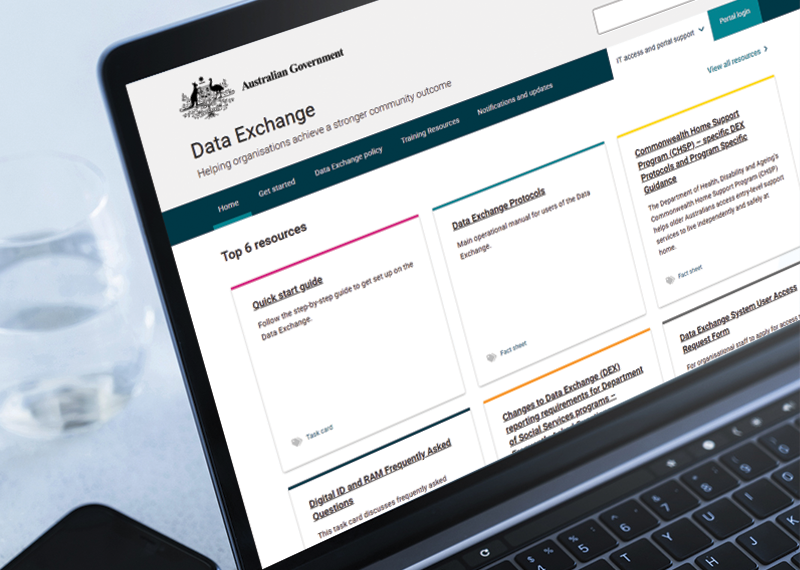
The objective of this audit is to examine the effectiveness of the Department of Social Services’ (DSS) management of performance reporting through the Data Exchange (DEX).
Entity
Department of Social Services
Contact
Please direct enquiries through our contact page.
Performance audit in-progress
Due to table: April 2027
Open for contribution
The objective of this audit is to determine whether Services Australia is effectively managing privileged user access to mitigate cyber security risks.
Entity
Services Australia
Contact
Please direct enquiries through our contact page.
Performance audit in-progress

Due to table: March 2027
Open for contribution
The objective of this audit is to assess the effectiveness of the Department of Defence’s (Defence) management of its capability investment priorities through the Integrated Investment Program since 2024.
Entity
Department of Defence
Contact
Please direct enquiries through our contact page.
Performance audit in-progress

Due to table: December 2026
Report preparation
The objective of this audit is to examine the effectiveness of the Pacific Australia Labour Mobility (PALM) scheme management by the Department of Employment and Workplace Relations (DEWR).
Entity
Department of Employment and Workplace Relations
Contact
Please direct enquiries through our contact page.
Performance audit in-progress
Due to table: June 2027
Open for contribution
The objective of this audit is to assess whether Defence Housing Australia (DHA) is effectively planning and delivering housing supply to meet the needs of the Department of Defence.
Entity
Defence Housing Australia
Contact
Please direct enquiries through our contact page.
Performance audit in-progress
Due to table: April 2027
Open for contribution
The objective of this audit is to determine whether the Australian Taxation Office (ATO) is effectively managing privileged user access to mitigate cyber security risks.
Entity
Australian Taxation Office
Contact
Please direct enquiries through our contact page.
Performance audit in-progress
Due to table: April 2027
Open for contribution
The objective of this audit is to determine whether the Department of Home Affairs (DHA) is effectively managing privileged user access to mitigate cyber security risks.
Entity
Department of Home Affairs
Contact
Please direct enquiries through our contact page.
Performance audit in-progress
Recent
Due to table: April 2027
Open for contribution
The objective of this audit is to assess the effectiveness of the Department of Industry, Science and Resources’ (DISR) oversight of the rehabilitation of the Ranger Uranium Mine in relation to risk management.
Entity
Department of Industry, Science and Resources
Contact
Please direct enquiries through our contact page.
Performance audit in-progress
Due to table: April 2027
Open for contribution
The objective of this audit is to assess whether the Australian Taxation Office (ATO) has effective arrangements to sustain its business-critical ICT systems.
Entity
Australian Taxation Office
Contact
Please direct enquiries through our contact page.
Performance audit in-progress

Due to table: November 2026
Report preparation
The objective of this audit is to assess the effectiveness of the National Disability Insurance Agency’s (NDIA) design and implementation of the Participants, Platforms and Processes program (program) (including the PACE system).
Entity
National Disability Insurance Agency
Contact
Please direct enquiries through our contact page.
Performance audit in-progress

Due to table: December 2026
Report preparation
The objective of this audit is to assess whether the award of funding under Department of Defence’s (Defence’s) Industry grants programs was consistent with the Commonwealth Grant Rules and Guidelines (CGRGs).
Entity
Department of Defence; Department of Industry, Science and Resources
Contact
Please direct enquiries through our contact page.
Performance audit in-progress
Due to table: June 2027
Open for contribution
The objective of this audit is to assess the effectiveness of the Department of Agriculture, Fisheries and Forestry’s (DAFF) management of the post entry quarantine (PEQ) facility in protecting Australia from pests and disease.
Entity
Department of Agriculture, Fisheries and Forestry
Contact
Please direct enquiries through our contact page.
Financial statement audit (Auditor-General Report No. 47 of 2017–18)
Published: Thursday 14 June 2018
Published
The Australian National Audit Office (ANAO) publishes two reports annually addressing the outcomes of the financial statement audits of Australian government entities and the Consolidated Financial Statements (CFS) of the Australian Government, to provide the Parliament of Australia with an independent examination of the financial accounting and reporting of public sector entities. This report focused on the results of the interim audit phase, including an assessment of entities’ key internal controls, of the 2017–18 financial statements audits of a range of entities including all departments of state and a number of major Australian government entities.
Entity
Across Entities
Contact
Please direct enquiries through our contact page.
Performance audit in-progress

Due to table: January 2027
Report preparation
The objective of this audit is to examine whether the National Anti-Corruption Commission (NACC) effectively conducts procurement activities, demonstrating the achievement of value for money and complying with the Commonwealth Procurement Rules (CPRs).
Entity
National Anti-Corruption Commission
Contact
Please direct enquiries through our contact page.
Performance audit in-progress
Due to table: March 2027
Open for contribution
The objective of this audit is to assess whether the Department of Home Affairs is effectively managing the SmartGate contracts to achieve value for money through secure, fast and efficient facilitation of travellers across Australia’s borders.
Entity
Department of Home Affairs
Contact
Please direct enquiries through our contact page.
Performance audit in-progress
Recent
Due to table: August 2027
Open for contribution
The objective of this audit is to assess whether the Department of Home Affairs’ approaches to market for new aerial surveillance services contracts positioned the department to achieve value for money, consistent with the Commonwealth Procurement Rules.
Entity
Department of Home Affairs
Contact
Please direct enquiries through our contact page.
Financial statement audit (Auditor-General Report No. 60 of 2016–17)
Published: Wednesday 28 June 2017
Published
The Australian National Audit Office (ANAO) publishes two reports annually addressing the outcomes of the financial statement audits of Australian government entities and the Consolidated Financial Statements (CFS) of the Australian Government to provide Parliament an independent examination of the financial accounting and reporting of public sector entities. This report focuses on the results of the interim audit phase, including an assessment of entities’ key internal controls, of the 2016–17 financial statements audits of 25 entities including all departments of state and a number of major Australian government entities.
Entity
Across Entities
Contact
Please direct enquiries relating to reports through our contact page.
Performance audit in-progress
Due to table: March 2027
Open for contribution
The objective of this audit is to assess whether the Australian Border Force’s management of critical incidents is effective in providing a safe environment for persons in immigration detention and is consistent with achieving value for money from service provider contracts.
Entity
Department of Home Affairs
Contact
Please direct enquiries through our contact page.
Performance audit in-progress
Recent
Due to table: November 2027
Open for contribution
The objective of this audit is to assess whether the Department of Home Affairs’ conduct of tender evaluation for the new surveillance services contracts enabled it to select the candidates that offered the best value for money, consistent with the Commonwealth Procurement Rules.
Entity
Department of Home Affairs
Contact
Please direct enquiries through our contact page.
Performance audit in-progress

Due to table: November 2026
Report preparation
The objective of this audit is to examine whether compliance with Australia’s autonomous sanctions is being effectively administered so as to prevent the provision of material assistance to regimes engaged in violations of international standards and norms, including human rights abuses, acts of aggression and destabilising actions.
Entity
Department of Foreign Affairs and Trade
Contact
Please direct enquiries through our contact page.
Financial statement audit (Auditor-General Report No. 46 of 2018–19)
Published: Thursday 13 June 2019
Published
This report focuses on the results of the interim audits, including an assessment of entities’ key internal controls, supporting the 2018–19 financial statements audits. It examines 26 entities, including all departments of state and a number of major Australian government entities. The entities included in the report are selected on the basis of their contribution to the income, expenses, assets and liabilities of the 2017–18 Consolidated Financial Statements of the Australian Government (CFS). Significant and moderate findings arising from the interim audits are reported to the responsible Minister(s), and all findings are reported to those charged with governance of each entity.
Entity
Across Entities
Contact
Please direct enquiries through our contact page.
Performance audit in-progress

Due to table: March 2027
Report preparation
The objective of this audit is to assess whether the Director of National Parks (the Director) is effectively managing Commonwealth national parks in conjunction with relevant boards of management, including by implementing the recommendations from Auditor-General Report No.49 2018–19 Management of Commonwealth National Parks.
Entity
Director of National Parks
Contact
Please direct enquiries through our contact page.
Financial statement audit (Auditor-General Report No. 42 of 2023–24)
Published: Thursday 20 June 2024
Published
The ANAO prepares two reports annually that provide insights at a point in time to the financial statements risks, governance arrangements and internal control frameworks of Commonwealth entities, drawing on information collected during our audits.
This report is the first of the two reports and focuses on the results of the interim financial statements audits, including an assessment of entities’ key internal controls, supporting the 2023–24 financial statements audits. This report examines 27 entities, including all: departments of state; the Department of Parliamentary Services; and other Commonwealth entities that significantly contribute to the revenues, expenses, assets and liabilities within the 2022–23 Australian Government Consolidated Financial Statements (CFS). The National Indigenous Australians Agency is also included in this report given the role it plays working across government with indigenous communities and stakeholders.
Entity
Across Entities
Contact
Please direct enquiries through our contact page.
Corporate

Published: Wednesday 6 July 2022
Published
The corporate plan is the ANAO’s primary planning document — it outlines our purpose; the dynamic environment in which we operate; our commitment to building capability; and the priorities, activities and performance measures by which we will be held to account.
The plan highlights our desire to engage positively and transparently in delivering audit and support services to the Parliament. In addition, the plan details our approach to risk management, which is critical to successfully meeting our responsibilities in providing professional and independent audits to the Parliament.
The corporate plan is complemented by the annual audit work program, which reflects the ANAO’s audit strategy for the coming year.
Contact
Please direct enquiries through our contact page.
Financial statement audit (Auditor-General Report No. 26 of 2022–23)
Published: Thursday 25 May 2023
Published
This report is the first of two reports each year and focuses on the results of the interim audits, including an assessment of entities’ key internal controls, supporting the 2022–23 financial statements audits. This report examines 27 entities, including all departments of state and a number of major Australian government entities. The majority of entities included in the report are selected on the basis of their contribution to the income, expenses, assets and liabilities of the 2021–22 Consolidated Financial Statements.
Contact
Please direct enquiries through our contact page.
Financial statement audit (Auditor-General Report No. 40 of 2020–21)
Published: Wednesday 2 June 2021
Published
This report is the first in the series of reports for the 2020–21 financial year and focuses on the results of the interim audits, including an assessment of entities’ key internal controls, supporting the 2020–21 financial statements audits. This report examines 25 entities, including all departments of state and a number of major Australian government entities. The entities included in the report are selected on the basis of their contribution to the income, expenses, assets and liabilities of the 2019–20 Consolidated Financial Statements.
Contact
Please direct enquiries through our contact page.
Performance audit in-progress

Due to table: December 2026
Report preparation
The objective of this audit is to assess the effectiveness of the Department of Veterans’ Affairs’ (DVA’s) management of the compensation claims.
Entity
Department of Veterans' Affairs
Contact
Please direct enquiries through our contact page.
Performance audit in-progress

Due to table: March 2027
Report preparation
The objective of this audit is to assess whether evaluation of Australian Government programs aimed at First Nations peoples is fit for the purpose of continuous improvement, accountability and decision-making.
Entity
See page for details
Contact
Please direct enquiries through our contact page.
Corporate
Published: Wednesday 6 July 2022
Published
Quality in the delivery of the ANAO’s audit services is critical in supporting the integrity of our audit reports and maintaining the confidence of the Parliament and public sector entities. The ANAO Corporate Plan 2022–23 is the ANAO’s primary planning document. It outlines our purpose; the dynamic environment in which we operate; our commitment to building capability; and the priorities, activities and performance measures by which we will be held to account. This Quality Assurance Framework and Plan complements the Corporate Plan. It describes the ANAO Quality Assurance Framework and reflects the ANAO’s quality assurance strategy and deliverables for the coming year.
The ANAO Quality Assurance Framework is the ANAO’s established system of quality control to provide the Auditor-General with reasonable assurance that the ANAO complies with the ANAO Auditing Standards and applicable legal and regulatory requirements, and reports issued by the ANAO are appropriate in the circumstances.
The Quality Assurance Strategy and Plan component of this document identifies the key activities that the ANAO conducts to provide the Auditor-General with confidence that the controls established within the Quality Assurance Framework are implemented and operating effectively.
The ANAO reports on the audit quality indicators that measure the ANAO performance against target benchmarks in the annual Audit Quality Report published on the ANAO website. The Audit Quality Report also provides transparency with respect to the processes, policies and procedures that support each element of the ANAO Quality Assurance Framework and the achievement of the quality assurance strategy and deliverables set out in the Quality Assurance Framework and Plan.
Contact
Please direct enquiries through our contact page.
Financial statement audit (Auditor-General Report No. 38 of 2019–20)
Published: Thursday 28 May 2020
Published
This report focuses on the results of the interim financial statements audits, including an assessment of entities’ key internal controls, supporting the 2019–20 financial statements audits. This report examines 24 entities, including all departments of state and a number of major Australian government entities. The entities included in the report are selected on the basis of their contribution to the income, expenses, assets and liabilities of the 2018–19 Consolidated Financial Statements (CFS). Significant and moderate findings arising from the interim audits are reported to the responsible Minister(s), and all findings are reported to those charged with governance of each entity.
Contact
Please direct enquiries through our contact page.
Insights: Audit lessons

Published: Tuesday 29 October 2024
Published
This edition is targeted at those responsible for implementing internal policies and controls on the receipt of gifts, benefits and hospitality in Australian Government entities. The aim of Audit Lessons is to communicate lessons from our audit work and to make it easier for people working within the Australian public sector to apply those lessons.
Contact
Please direct enquiries through our contact page.