Browse our range of reports and publications including performance and financial statement audit reports, assurance review reports, information reports and annual reports.
Performance audit (Auditor-General Report No. 41 of 2024–25)

Published: Tuesday 10 June 2025
Published
The objective of the audit was to assess the effectiveness of the governance of the Board of the National Disability Insurance Agency.
Entity
National Disability Insurance Agency
Contact
Please direct enquiries through our contact page.
Performance audit (Auditor-General Report No. 5 of 2023–24)

Published: Tuesday 5 September 2023
Published
The objective of this audit was to examine whether compliance with trade measurement in Australia is being effectively administered.
Entity
Department of Industry, Science and Resources
Contact
Please direct enquiries through our contact page.
Performance audit (Auditor-General Report No. 14 of 2003–04)
Published: Friday 28 November 2003
Published
The Survey of Fraud Control Arrangements in APS agencies was conducted to identify improvements made by agencies since the 1999 survey, and in response to the revised Commonwealth Fraud Control Guidelines released in May 2002. Its objective was to assess the key aspects of fraud control arrangements in place across the APS against the Commonwealth Fraud Control Guidelines 2002.
Entity
Across Entities
Speeches and papers
Published: Tuesday 5 October 2004
Published
Mr P.J. Barrett (AO) - Auditor-General for Australia, presented at the UN Results Based Management Seminar
Speeches and papers
Published: Sunday 29 February 2004
Published
Mr P.J. Barrett (AM) - Auditor-General for Australia, presented at the MBA Governance Students at Macquarie University Graduate School of Management
Performance audit (Auditor-General Report No. 58 of 2001–02)
Published: Monday 17 June 2002
Published
The audit sought to assess the efficiency of Defence property management; provide assurance that probity and compliance requirements are being met; and make practical recommendations for enhancing property operations. It focused on Infrastructure Division's property management, with recognition that other areas manage certain property service contracts, such as those for electricity supply and cleaning.
Entity
Department of Defence
Speeches and papers
Published: Thursday 18 October 2001
Published
Mr P.J. Barrett (AM) - Auditor-General for Australia, presented to the Senior Staff of the Board of Audit - Tokyo, Japan
Performance audit (Auditor-General Report No. 30 of 2000–01)
Published: Wednesday 7 March 2001
Published
The audit examined the efficiency and effectiveness of DEWRSBs administrative arrangements for the Work for the Dole Programme. The audit focused on the Community Work Coordinator tender assessment process, selection of projects, contract management arrangements and the mechanisms used for measuring the performance of the Programme against its objectives.
Entity
Department of Employment Workplace Relations and Small Business
Performance audit (Auditor-General Report No. 44 of 2019–20)

Published: Tuesday 23 June 2020
Published
The objective of this audit was to assess the effectiveness of the Department of Social Services' fraud control arrangements.
Entity
Department of Social Services
Contact
Please direct enquiries through our contact page.
Corporate
Published: Monday 26 September 2022
Published
Quality in the delivery of the ANAO’s audit services is critical in supporting the integrity of our audit reports and maintaining the confidence of the Parliament and public sector entities.
The Australian National Audit Office (ANAO) Corporate Plan is the ANAO’s key strategic planning document. It guides our operating environment and sets out how we will deliver on our purpose. The Quality Assurance Framework and Plan complements the Corporate Plan.
The ANAO Quality Assurance Framework is the system of quality control that the ANAO has established to provide the Auditor-General with reasonable assurance that the ANAO complies with the ANAO standards and applicable legal and regulatory requirements, and reports issued by the ANAO are appropriate in the circumstances.
This Audit Quality Report demonstrates the ANAO assessment of the implementation and operating effectiveness of the elements of the ANAO Quality Assurance Framework. The report provides transparency in respect of the processes, policies, and procedures that support each element of the ANAO Quality Assurance Framework, and outlines audit quality indicators measuring ANAO performance against target benchmarks. This report also includes the achievement of the quality assurance strategy and deliverables set out in the Quality Assurance Framework and Plan 2021–22.
Contact
Please direct enquiries through our contact page.
Performance audit (Auditor-General Report No. 25 of 2017–18)

Published: Monday 22 January 2018
Published
The audit objective was to assess whether the Australian Electoral Commission appropriately established and managed the contracts for the transportation of completed ballot papers and the Senate scanning solution for the 2016 Federal Election.
Entity
Australian Electoral Commission
Contact
Please direct enquiries through our contact page.
Performance audit (Auditor-General Report No. 21 of 2017–18)

Published: Wednesday 13 December 2017
Published
The objective of the audit was to examine the effectiveness of the Australian Taxation Office’s use of settlements to resolve taxpayer disputes.
Entity
Australian Taxation Office
Contact
Please direct enquiries relating to reports through our contact page.
Performance audit (Auditor-General Report No. 46 of 2019–20)

Published: Thursday 25 June 2020
Published
Implementation of ANAO and Parliamentary Committee Recommendations — Education and Health Portfolios
The audit objective was to examine whether selected entities in the Health and Education portfolios implemented the Joint Committee of Public Accounts and Audit and other parliamentary inquiry report recommendations and agreed ANAO performance audit recommendations.
Entity
Across Entities
Contact
Please direct enquiries through our contact page.
Corporate
Published: Monday 24 June 2024
Published
The Procedures for Determining Breaches of the (APS) Code of Conduct must be complied with in determining whether an Australian Public Service (APS) employee has breached the Code of Conduct (the Code) set out in section 13 of the Public Service Act 1999 (PS Act), and in determining what, if any, sanction is to be imposed on an APS employee who has breached the Code of Conduct.
Performance audit (Auditor-General Report No. 11 of 2006–07)
Published: Thursday 9 November 2006
Published
The objective of this audit was to assess DAFF's management of the contractual arrangements in place to deliver the National Food Industry Strategy. The audit assessed: implementation of the Strategy; financial management;assessment and selection of grants and projects; management of grants and projects; monitoring and verification of contract services; and performance management. The Australian National Audit Office (ANAO) examined a number of FIG applications and projects, one food centre of excellence and a major project under the Food Market Development programme. The audit did not examine the Food Chain programme or DAFF's administration of the Strategy's government-to-government activities.
Entity
NO-DEPTS-LISTED
Performance audit (Auditor-General Report No. 39 of 2004–05)
Published: Wednesday 13 April 2005
Published
The objective of the audit was to assess the ATO's administration of the Surcharge. Specifically, the audit sought to: report on the environment into which the Surcharge was introduced, including the legislative intent behind the Surcharge, and the current Surcharge environment; examine and report on aspects of Surcharge governance; assess the systems, processes and controls the ATO uses to: match Member Contributions Statements (MCS) data with income tax return data using Tax File Numbers (TFNs); process Surcharge information; and issue Surcharge liability assessments. assess the mechanisms the ATO uses to assess, classify, manage and rectify existing Surcharge exceptions, and prevent future exceptions from occurring; and examine the mechanisms and strategies the ATO uses to provide assurance that members and holders of contributions are complying with their Surcharge obligations.
Entity
Australian Taxation Office
Performance audit (Auditor-General Report No. 20 of 2004–05)
Published: Tuesday 21 December 2004
Published
The audit concluded that the ATO has an administratively effective framework for managing the Energy Grants (Credits) Scheme (EGCS), introduced in mid-2003. The planning, monitoring and reporting framework is structured and appropriate, the risk and compliance management framework is generally well-developed and the processes and controls framework is comprehensive. Changes in the Scheme, as foreshadowed in Government's Energy White Paper, Securing Australia's Energy Future, present the opportunity to enhance the transparency of Scheme objectives and develop ways to evaluate performance against these objectives
Entity
Australian Taxation Office
Annual report
Published: Thursday 26 September 2002
Published
This annual report documents the performance of the Australian National Audit Office (ANAO) in the financial year ending on 30 June 2002. It includes a comment by the Auditor-General on Audit independence and effectiveness; an overview of the Auditor-General’s role and responsibilities; a report on performance; details about management and accountability, and the financial statement for the year.
Annual report
Published: Thursday 25 August 2022
Published
This annual report documents the performance of the Australian National Audit Office (ANAO) in the financial year ended 30 June 2022. The report addresses all applicable obligations under the Public Governance, Performance and Accountability Act 2013; the Public Governance, Performance and Accountability Rule 2014; the Auditor-General Act 1997; the performance measures set out in the outcome and programs framework in the ANAO’s Portfolio Budget Statements 2021–22 and the ANAO Corporate Plan 2021–22; and annual reporting requirements set out in other relevant legislation.
Contact
Please direct enquiries through our contact page.
Performance audit (Auditor-General Report No. 11 of 2023–24)

Published: Monday 22 January 2024
Published
The objective of this audit was to assess the effectiveness of Geoscience Australia’s 2020 to 2022 procurement of the Southern Positioning Augmentation Network (SouthPAN).
Entity
Geoscience Australia
Contact
Please direct enquiries through our contact page.
Performance audit (Auditor-General Report No. 45 of 2022–23)

Published: Thursday 29 June 2023
Published
The objective of this audit was to examine the effectiveness of the Department of Defence’s development and implementation of Australia’s approach to providing military assistance to the Government of Ukraine.
Entity
Department of Defence
Contact
Please direct enquiries through our contact page.
Performance audit (Auditor-General Report No. 29 of 2014–15)

Published: Tuesday 21 April 2015
Published
The objective of the audit was to assess the effectiveness of the arrangements established by the Department of the Environment for the funding and management of the Nimmie-Caira System Enhanced Environmental Water Delivery Project.
Entity
Department of the Environment
Contact
Please direct enquiries relating to reports through our contact page.
Performance audit (Auditor-General Report No. 35 of 2020–21)

Published: Wednesday 5 May 2021
Published
The objective of the audit was to examine whether the design and early delivery of the Australian Government's $443.3 million partnership with the Great Barrier Reef Foundation has been effective.
Entity
Great Barrier Reef Foundation
Contact
Please direct enquiries through our contact page.
Performance audit (Auditor-General Report No. 8 of 2021–22)

Published: Monday 8 November 2021
Published
The objective of this audit was to assess the effectiveness of the Department of Education, Skills and Employment’s arrangements in administering wage subsidies linked to employment programs.
Entity
Department of Education, Skills and Employment
Contact
Please direct enquiries through our contact page.
Insights: Audit lessons

Published: Wednesday 14 June 2023
Published
This edition of Audit Insights is targeted at Australian Government officials who have responsibility for the implementation of cyber security controls or strategy for government systems. The aim is to communicate lessons from our audit work to make it easier for people working within the Australian public sector to apply those lessons. It is drawn from audit reports tabled in 2019–20, 2020–21 and 2022–23 into management of cyber security risks.
Contact
Please direct enquiries through our contact page.
Events and seminars
Published: Tuesday 7 August 2018
Published
The Audit Committee Chairs Forum is a joint initiative of the Department of Finance and the ANAO and includes the general government and non-general government sector Audit Committee Chairs. This communique covers the outcomes of the discussion at the forum on 15 June 2018 including updates from the Auditor-General and the ANAO, and from the Department of Finance.
Contact
Please direct enquiries through our contact page.
Corporate
Published: Thursday 30 November 2017
Published
The Australian National Audit Office provided a submission on 10 November 2017 to the statutory review of the Public Governance, Performance and Accountability Act 2013 (PGPA Act) and Public Governance, Performance and Accountability Rule 2014 (PGPA Rule).
Contact
Please direct enquiries through our contact page.
Performance audit (Auditor-General Report No. 9 of 2006–07)
Published: Thursday 26 October 2006
Published
The objective of the audit was to provide an independent assurance on the effectiveness of Defence and DMO's management of the acquisition of the ASLAV capability to Army. The audit examined the initial capability requirements and approval process, the contract negotiation process, and the management of the Project and Contracts by DMO.
Entity
Department of Defence; Defence Materiel Organisation
Performance audit (Auditor-General Report No. 49 of 2003–04)
Published: Monday 31 May 2004
Published
The audit objective was to provide independent assurance to the Parliament on the effectiveness of Australian Public Service organisations in the use and management of the HRIS to satisfy mandatory reporting requirements, as well as provide meaningful information to management. The audit also considered the use of employee self service facilities offered by the HRIS, which has the capacity to provide staff with access to their personal information, reduce manual processing and streamline processing.
Entity
Australian Sports Commission; Australian Securities and Investments Commission; Attorney-General’s Department; Department of Education, Science and Training
Performance audit (Auditor-General Report No. 9 of 2003–04)
Published: Wednesday 22 October 2003
Published
The audit assessed whether Centrelink has effective Business Continuity Management and/or associated risk management procedures and plans in place that: minimise the likelihood of a significant business outage; and in the event of such an outage, minimise disruption of critical services to customers. The audit also assessed whether Centrelink services satisfy special community demands in times of emergency.
Entity
Centrelink
Speeches and papers
Published: Monday 15 October 2007
Published
Mr Ian McPhee - Auditor-General for Australia, presented at the Australian Institute of Project Management, Hobart
Speeches and papers
Published: Thursday 1 September 2005
Published
Mr Ian McPhee - Auditor-General for Australia, presented to the Australian Institute of Company Directors, in conjunction with the Institute of Internal Auditors Australia
Audit manual
Updated: Tuesday 9 September 2025
Updated
The Financial Statements Audit Services Group (FSASG) volume of the ANAO Audit Manual applies to the financial statement audit activity performed by FSASG in collaboration with the Systems Assurance and Data Analytics (SADA) group. Relevant policies and guidance from the FSASG volume are also applied to other assurance work performed by FSASG. Policies and guidance in the FSASG volume address the planning, execution and reporting stages of the financial statement audit process.
Contact
Please direct enquiries through our contact page.
Performance audit (Auditor-General Report No. 17 of 2014–15)

Published: Thursday 18 December 2014
Published
The objective of the audit was to examine the effectiveness of Navy’s strategy for recruiting and retaining personnel with specialist skills. The effective delivery of Navy capability depends on Navy having available sufficient numbers of skilled personnel to operate and maintain its fleet of sea vessels and aircraft, and conduct wide‑ranging operations in dispersed locations. Without the right personnel, Navy capability is reduced. Navy’s budget for 2014–15 included $1.86 billion in employee expenses.
The audit concluded that, in its strategic planning, Navy had identified its key workforce risks and their implications for Navy capability. To address these risks Navy had continued to adhere to its traditional ‘raise, train and sustain’ workforce strategy; developed a broad range of workforce initiatives that complemented its core approach; and sought to establish contemporary workforce management practices. However, long‑standing personnel shortfalls in a number of ‘critical’ employment categories had persisted, and Navy had largely relied on retention bonuses as a short‑ to medium‑term retention strategy.
Navy had developed a broad range of workforce initiatives, some designed specifically to address workforce shortages in its critical employment categories. To date, Navy had primarily relied on paying retention bonuses and other financial incentives; recruiting personnel with prior military experience to work in employment categories with significant workforce shortfalls; and using Navy Reserves in continuous full time roles. Ongoing work was required for Navy to firmly establish a range of promising workforce management practices, including providing the right training at the right time; more flexible approaches to managing individuals’ careers; and improving workplace culture, leadership and relationships. More flexible and tailored workforce management practices could help address the underlying causes of workforce shortfalls, particularly when the traditional approaches were not gaining sufficient traction.
The ANAO made two recommendations aimed at Navy: drawing on external human resource expertise to inform the development and implementation of its revised workforce plan; and evaluating the impact of retention bonuses on the Navy workforce to determine their future role within its overall workforce strategy.
Entity
Department of Defence
Contact
Please direct enquiries relating to reports through our contact page.
Performance audit (Auditor-General Report No. 3 of 2015–16)

Published: Thursday 13 August 2015
Published
The objective of this audit was to assess the effectiveness of the Great Barrier Reef Marine Park Authority’s regulation of permits and approvals within the Great Barrier Reef Marine Park.
Entity
Great Barrier Reef Marine Park Authority
Contact
Please direct enquiries relating to reports through our contact page.
Performance audit (Auditor-General Report No. 30 of 2020–21)

Published: Tuesday 9 March 2021
Published
The objective of the audit was to examine the effectiveness of the Department of Veterans’ Affairs' (DVA's) planning and management of the Veteran Centric Reform (VCR) program.
Entity
Department of Veterans' Affairs
Contact
Please direct enquiries through our contact page.
Performance audit (Auditor-General Report No. 10 of 2003–04)
Published: Monday 27 October 2003
Published
As part of its 2001 inquiry into the recruitment and retention of Australian Defence Force (ADF) personnel, the Senate Foreign Affairs, Defence and Trade References Committee reviewed Defence's contract with Manpower Services (Australia) Pty Ltd for trialling the outsourcing of recruiting services to the ADF. In its subsequent report, the Committee commented that the original contractual arrangements deserved further scrutiny by the ANAO. The objective of the audit was to examine Defence's management of the contractual arrangements for the provision of recruiting services to the ADF. In examining the management of the contract, the ANAO looked at the evaluations conducted at the end of each contractual phase, roles and responsibilities associated with ADF recruiting, and Defence's monitoring of contractual performance and management of risks associated with ADF recruiting.
Entity
Department of Defence
Performance audit (Auditor-General Report No. 42 of 2002–03)
Published: Wednesday 7 May 2003
Published
The audit examined the Aged Care Standards and Accreditation Agency Ltd's management of the residential aged care accreditation process. The audit focused on the Agency's implementation of a process to meet its legislative responsibilities, its business operations, people management, budgeting practices, use of information, and its quality assurance processes.
Entity
Aged Care Standards and Accreditation Agency Ltd
Performance audit (Auditor-General Report No. 20 of 2025–26)

Published: Tuesday 27 January 2026
Published
The audit objective was to assess the effectiveness of the Department of Social Services’ and Services Australia’s administration of the age pension.
Entity
Services Australia; Department of Social Services
Contact
Please direct enquiries through our contact page.
Corporate

Published: Tuesday 25 November 2025
Published
The Australian Public Service Employee Census is an annual survey administered by the Australian Public Service Commission. The survey is used to collect confidential attitude and opinion information from APS employees on issues in the workplace. The survey provides an opportunity for ANAO employees to share their experiences of working within our organisation and the public service. This census action plan outlines the key focus areas for the ANAO in responding to the feedback.
Contact
Please direct enquiries through our contact page.
Request for audit

Responded: Thursday 1 August 2013
Response provided
The Auditor-General responded on 1 August 2013 to correspondence from Senator Nick Xenophon of 22 July 2013 on the By boat, no visa advertising campaign.
Contact
Please direct enquiries relating to requests for audit through our contact page.
Performance audit (Auditor-General Report No. 16 of 2004–05)
Published: Tuesday 14 December 2004
Published
The objective of the audit was to assess the administrative effectiveness of Customs' Container Examination Facilities. Particular emphasis was given to the following areas: target selection processes; target development strategies; intervention processes; and facilities operation.
Entity
Australian Customs Service
Performance audit (Auditor-General Report No. 41 of 2003–04)
Published: Thursday 15 April 2004
Published
The objective of the audit was to examine DVA's implementation of the Repatriation health card system, which aims to ensure that veterans can obtain health care through community-based providers and facilities.
Entity
Department of Veterans' Affairs
Events and seminars
Published: Friday 15 July 2022
Published
An Audit Committee Chairs Forum was held virtually on Friday, 15 July 2022. The text on this page is the communique from the forum.
Contact
For any enquiries, please contact External.Relations@anao.gov.au
Performance audit (Auditor-General Report No. 44 of 2010–11)
Published: Thursday 26 May 2011
Published
The objective of the audit was to assess the effectiveness of AusAID’s management of tertiary training assistance.
Entity
Australian Agency for International Development
Speeches and papers
Published: Thursday 16 February 2006
Published
Mr Ian McPhee - Auditor-General for Australia, presented at the Canberra Evaluation Forum
Performance audit (Auditor-General Report No. 17 of 2024–25)

Published: Thursday 12 December 2024
Published
The objective of the audit was to assess the effectiveness of the management of conflicts of interest by Aboriginal Hostels Limited (AHL), Aboriginal Investment NT and Outback Stores.
Entity
Aboriginal Hostels Limited; Aboriginal Investment NT; Outback Stores Pty Ltd
Contact
Please direct enquiries through our contact page.
Performance audit (Auditor-General Report No. 26 of 2018–19)

Published: Friday 15 February 2019
Published
The audit objective was to assess the effectiveness of risk management, data monitoring and public reporting arrangements associated with the Australian Government's funding of public hospital services under the 2011 National Health Reform Agreement (NHRA).
Entity
Department of Health; Independent Hospital Pricing Authority; National Health Funding Body
Contact
Please direct enquiries through our contact page.
Performance audit (Auditor-General Report No. 15 of 2021–22)

Published: Thursday 16 December 2021
Published
The objective of the audit was to assess the effectiveness to date of the Department of Defence’s procurement of six evolved Cape class patrol boats.
Entity
Department of Defence
Contact
Please direct enquiries through our contact page.
Performance audit (Auditor-General Report No. 42 of 2024–25)

Published: Monday 16 June 2025
Published
The objective of the audit was to assess the effectiveness of the management and oversight of compliance activities within the Child Care Subsidy program.
Entity
Department of Education; Services Australia
Contact
Please direct enquiries through our contact page.
Performance audit (Auditor-General Report No. 47 of 2020–21)

Published: Monday 28 June 2021
Published
The objective of this audit was to assess the effectiveness of the administration of the commuter car park projects within the Urban Congestion Fund.
Entity
Department of Infrastructure, Transport, Regional Development and Communications
Contact
Please direct enquiries through our contact page.
Performance audit (Auditor-General Report No. 8 of 2020–21)

Published: Thursday 17 September 2020
Published
The objective of this audit was to examine the effectiveness of the Australian Electoral Commission’s management of financial disclosures required under Part XX of the Commonwealth Electoral Act 1918, including the extent to which the AEC is achieving accurate and complete financial disclosures.
Entity
Australian Electoral Commission
Contact
Please direct enquiries through our contact page.
Performance audit (Auditor-General Report No. 28 of 2003–04)
Published: Thursday 12 February 2004
Published
The report summarises performance audit, financial statement audit and other related activities for the ANAO for the period July to December 2003. The key issues arising from performance audits tabled in this period are summarised against the ANAO themes. The report also summarises financial audits and other financial audit activities conducted by the ANAO during the period July to December 2003. It discusses significant issues such as the: consolidated financial statements and the final budget outcome; harmonisation of Australian Generally accepted accounting practices and Government Finance Statistics; adoption of International Financial Reporting Standards; timing for Financial Statements Preparation; and the audit of the CFS 2002-03.
Entity
ANAO
Performance audit (Auditor-General Report No. 40 of 2005–06)
Published: Wednesday 17 May 2006
Published
The objective of the audit was to examine processes used by Defence and the DMO to procure explosive ordnance for the ADF, with an emphasis on Army requirements. The audit reviewed the extent to which the DMO effectively translated the explosive ordnance requirements of the ADF, and particularly of Army, into procurement and through life support arrangements.
Entity
Department of Defence; Defence Materiel Organisation
Performance audit (Auditor-General Report No. 29 of 2005–06)
Published: Wednesday 15 February 2006
Published
The audit examined aspects of the integrity and management of customer data stored on ISIS. In particular, the audit considered measures of data accuracy, completeness and reliability. The scope of the audit also extended to aspects of Centrelink's IT control environment - in particular, controls over data entry.
Entity
Centrelink
Events and seminars

Published: Tuesday 28 August 2018
Published
The Australian National Audit Office (ANAO) is hosting the 21st Pacific Association of Supreme Audit Institutions (PASAI) Congress 28–30 August 2018.
Performance audit (Auditor-General Report No. 10 of 2017–18)

Published: Wednesday 27 September 2017
Published
The audit objective was to assess the effectiveness of the design process and monitoring arrangements for the National Innovation and Science Agenda by the relevant entities.
Entity
Department of the Prime Minister and Cabinet; Department of Industry, Innovation and Science; Innovation and Science Australia
Contact
Please direct enquiries relating to reports through our contact page.
Performance audit (Auditor-General Report No. 48 of 2018–19)

Published: Wednesday 19 June 2019
Published
The objective of this audit was to assess the effectiveness of the Australian Reinsurance Pool Corporation’s (ARPC) management of the Terrorism Reinsurance Scheme.
Entity
Australian Reinsurance Pool Corporation
Contact
Please direct enquiries through our contact page.
Request for audit
Responded: Monday 26 August 2024
Response provided
The acting Auditor-General responded on 26 August 2024 to correspondence from the Hon Paul Fletcher MP dated 30 July 2024 and follow-up correspondence dated 14 August 2024, requesting that the Auditor-General conduct an investigation into the investment in PsiQuantum announced by the Australian and Queensland governments on 30 April 2024.
Contact
Please direct enquiries through our contact page.
Performance audit (Auditor-General Report No. 18 of 2005–06)
Published: Wednesday 30 November 2005
Published
The objective of the audit was to assess the administrative effectiveness of the CCAS. The audit focused on the following key areas: targeting non-compliance; real time compliance activity; post transaction compliance activity; and planning and performance evaluation. As the imports phase of the Integrated Cargo System (ICS) was only introduced in October 2005, this system was not reviewed as part of the audit. Our audit programme for 2005–06 includes ICS as a potential audit topic.
Entity
Australian Customs Service
Performance audit (Auditor-General Report No. 15 of 2003–04)
Published: Monday 1 December 2003
Published
On 2 November 2000, the Senate agreed to a resolution that the Auditor-General be requested to review all expenditures and entitlements accruing to Parliamentarians and Ministers in 1999-2000. The resolution requested that the Auditor-General consider a number of specific matters, and report by 30 June 2001. In the course of that audit, examination of issues relating to Parliamentarians' staff was deferred in order to give the Auditor-General a reasonable chance of reporting reasonably close to the Senate's requested reporting timeframe. ANAO Audit Report No.5 2001-02, Parliamentarians' Entitlements: 1999-2000, was tabled in the Parliament in August 2001. A proposed audit of the administration by Finance of the entitlements of staff engaged under the Members of Parliament (Staff) Act 1984 (MOP(S) Act was included in the ANAO Audit Work Program for 2001-02. The objectives of this performance audit were to: review the effectiveness of the internal control structures in the Department of Finance and Administration (Finance) concerning the administration of entitlements for MOP(S) Act staff; review the effectiveness and efficiency of the procurement and support services Finance provides in relation to MOP(S) Act staff: and identify principles of sound administrative practices to facilitate improved administrative arrangements for the future. The audit covered Finance's administration of payments and services to MOP(S) Act staff during the period 1998-99 to 2001-02. Sub-section 15(c) of the Auditor General Act 1997 precludes an audit of persons who are engaged under the MOP(S) Act. Accordingly, the audit scope did not include examination of the responsibilities of MOP(S) Act staff.
Entity
Department of Finance and Administration
Performance audit (Auditor-General Report No. 42 of 2018–19)

Published: Thursday 30 May 2019
Published
The objective of this audit was to assess the effectiveness of the Australian Taxation Office’s (ATO’s) management of small business tax debt arising from compliance activities.
Entity
Australian Taxation Office
Contact
Please direct enquiries through our contact page.
Performance audit (Auditor-General Report No. 4 of 2014–15)

Published: Wednesday 5 November 2014
Published
The objective of the audit was to assess the adequacy and effectiveness of the Australian Electoral Commission’s implementation of those recommendations made in Report No. 28 2009–10 relating to:
- a more strategic approach to election workforce planning;
- the suitability and accessibility of polling booths and fresh scrutiny premises; and
- the transport and storage of completed ballot papers, in respect to matters not fully addressed in ANAO Audit Report No.31 2013–14.
Entity
Australian Electoral Commission
Contact
Please direct enquiries relating to reports through our contact page.
Performance audit (Auditor-General Report No. 12 of 2011–12)
Published: Thursday 10 November 2011
Published
The objective of the audit was to assess the effectiveness of the implementation of the NPARIH in the Northern Territory from the perspective of the Australian Government.
Entity
Department of Families, Housing, Community Services and Indigenous Affairs
Performance audit (Auditor-General Report No. 46 of 2010–11)
Published: Tuesday 31 May 2011
Published
The objective of the audit was to assess the effectiveness of DIAC’s management of the student visa program. Three key areas were examined in the audit: the processing of student visa applications; ensuring compliance with student visa conditions; and cooperation between DIAC and DEEWR.
Entity
Department of Immigration and Citizenship
Performance audit (Auditor-General Report No. 45 of 2009–10)
Published: Thursday 17 June 2010
Published
The objective of the audit was to assess whether Defence effectively managed the procurement process for services related to the recruitment of personnel to the ADF and the introduction of a new service provider.
Entity
Department of Defence
Performance audit (Auditor-General Report No. 33 of 2003–04)
Published: Wednesday 3 March 2004
Published
The audit reviewed the ATO's collection and management of activity statement information. The audit paid particular regard to:
- the environment into which activity statements were introduced;
- taxpayer concerns with activity statement administration;
- the mechanisms the ATO uses to capture and process activity statements;
- the change processes the ATO uses to change and test activity statement IT systems; and
- the management methodology used to report on, and assess the performance of, activity statement related systems and processes.
Entity
Australian Taxation Office
Performance audit (Auditor-General Report No. 1 of 2025–26)

Published: Monday 11 August 2025
Published
The objective of the audit was to examine the effectiveness of the implementation of frameworks to support ethical behaviours within the Department of Employment and Workplace Relations.
Entity
Department of Employment and Workplace Relations
Contact
Please direct enquiries through our contact page.
Performance audit (Auditor-General Report No. 27 of 2022–23)

Published: Tuesday 30 May 2023
Published
The objective of this audit was to examine the effectiveness of the National Indigenous Australians Agency’s management of provider fraud and non-compliance risks.
Entity
National Indigenous Australians Agency
Contact
Please direct enquiries through our contact page.
Performance audit (Auditor-General Report No. 29 of 2021–22)

Published: Thursday 2 June 2022
Published
The objective of the audit was to examine the effectiveness of the Department of Social Services' administration of the Cashless Debit Card program, including implementation of the recommendations made in Auditor-General Report No.1 2018–19, The Implementation and Performance of the Cashless Debit Card Trial.
Entity
Services Australia; Department of Social Services
Contact
Please direct enquiries through our contact page.
Performance audit (Auditor-General Report No. 9 of 2018–19)

Published: Thursday 11 October 2018
Published
The objective of the audit was to assess the Moorebank Intermodal Company’s achievement of value for money and management of probity in its operations and procurement activities.
Entity
Moorebank Intermodal Company Limited (MIC); Department of Finance
Contact
Please direct enquiries through our contact page.
Performance audit (Auditor-General Report No. 9 of 2021–22)

Published: Wednesday 24 November 2021
Published
The objective of the audit was to examine the Department of Agriculture, Water and the Environment’s effectiveness in implementing the Regional Land Partnerships program.
Entity
Department of Agriculture, Water and the Environment
Contact
Please direct enquiries through our contact page.
Financial statement audit (Auditor-General Report No. 40 of 2020–21)
Published: Wednesday 2 June 2021
Published
This report is the first in the series of reports for the 2020–21 financial year and focuses on the results of the interim audits, including an assessment of entities’ key internal controls, supporting the 2020–21 financial statements audits. This report examines 25 entities, including all departments of state and a number of major Australian government entities. The entities included in the report are selected on the basis of their contribution to the income, expenses, assets and liabilities of the 2019–20 Consolidated Financial Statements.
Contact
Please direct enquiries through our contact page.
Performance audit (Auditor-General Report No. 15 of 2025–26)

Published: Monday 15 December 2025
Published
The audit objective was to examine whether the Office of Parliamentary Counsel’s procurement and contract management of the new Federal Register of Legislation project complied with the Commonwealth Procurement Rules and demonstrated the achievement of value for money.
Entity
Office of Parliamentary Counsel
Contact
Please direct enquiries through our contact page.
Performance audit (Auditor-General Report No. 37 of 2018–19)

Published: Thursday 2 May 2019
Published
The objective of the audit was to assess the effectiveness of the governance board in the Sydney Harbour Federation Trust.
Entity
Sydney Harbour Federation Trust
Contact
Please direct enquiries through our contact page.
Performance audit (Auditor-General Report No. 29 of 2018–19)
Published: Thursday 14 March 2019
Published
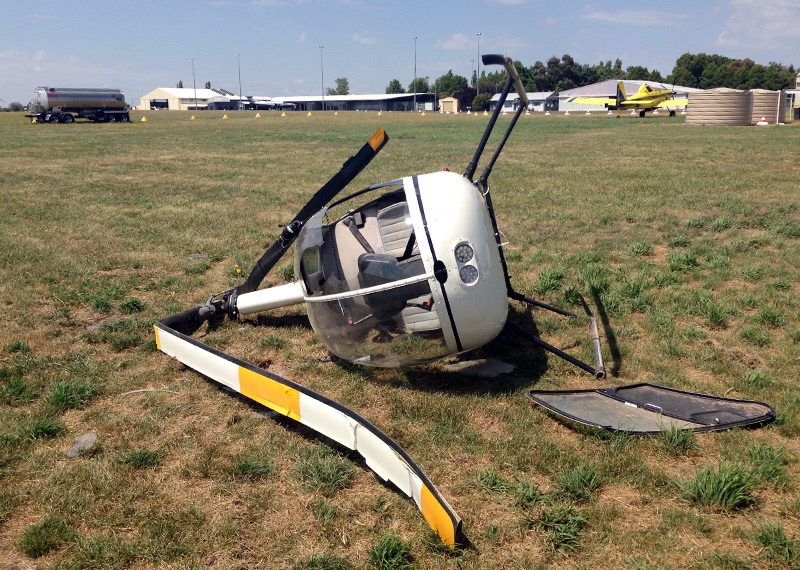
The objective of this audit was to examine the efficiency of the Australian Transport Safety Bureau’s (ATSB’s) investigation of transport accidents and safety occurrences.
Entity
Australian Transport Safety Bureau
Contact
Please direct enquiries through our contact page.
Corporate

Published: Wednesday 1 July 2020
Published
The corporate plan is the ANAO’s primary planning document. Our strategic planning process allows us to continually improve practices and capabilities to demonstrate value in the delivery of services to the Parliament. The corporate plan is complemented by the annual audit work program, which reflects the ANAO’s audit strategy for the coming year.
Contact
Please direct enquiries about our corporate plan through our contact page.
Corporate
Published: Monday 1 July 2019
Published
The corporate plan is the ANAO’s primary planning document. Our strategic planning process allows us to continually improve practices and capabilities to demonstrate value in the delivery of services to the Parliament. The corporate plan is complemented by the annual audit work program, which reflects the ANAO’s audit strategy for the coming year.
Contact
Please direct enquiries about our corporate plan through our contact page.
Performance audit (Auditor-General Report No. 37 of 2003–04)
Published: Tuesday 30 March 2004
Published
The Australian Customs Service (Customs) is responsible for managing the integrity of Australia's border. The Australian maritime border is the 200 nautical mile Exclusive Economic Zone (EEZ) around Australia's 37 000 kilometre coastline. The National Marine Unit (NMU) contributes to customs' Civil Maritime Surveillance and Response program. It has eight 35 - metre Bay Class vessels (known as Australian Customs Vessels or ACVs) that are capable of maintaining a strategic presence around the Australian coast. The audit examined the administrative effectiveness of the NMU's surveillance and response operations. Particular emphasis was given to the following areas:
- strategic and tactical taskings;
- crew operations;
- crew training;
- asset management; and
- governance arrangements.
Entity
Australian Customs Service
Speeches and papers
Published: Thursday 7 April 2005
Published
Mr P.J. Barrett (AO) - Auditor-General for Australia, Opening Address to the inaugural conference of the Risk Management Institution of Australasia - Bringing Risk Management Together - What the Future Holds
Performance audit (Auditor-General Report No. 46 of 2009–10)
Published: Tuesday 22 June 2010
Published
The objective of the audit was to assess the Child Support Agency's effectiveness in managing the implementation of the Building a Better Child Support Agency program.
Entity
Department of Human Services
Performance audit (Auditor-General Report No. 65 of 2001–02)
Published: Friday 28 June 2002
Published
The audit reviewed the administrative effectiveness of ComSuper in providing benefits to members of the CSS and PSS. The objectives of the audit were to assess the effectiveness of ComSuper's performance in regard to the establishment of new purchaser/provider arrangements; the integrity of the ComSuper databases for the payment of CSS and PSS benefits; and the accuracy and effectiveness of benefit processing and payment for resignation, retirement and retrenchment.
Entity
ComSuper
Speeches and papers
Published: Saturday 6 April 2002
Published
Mr P.J. Barrett (AM) - Auditor-General for Australia, presented at a Laboratory for Politicians and Top Managers from Different Public Institutions in Europe
Speeches and papers
Published: Friday 30 November 2001
Published
Mr P.J. Barrett (AM) - Auditor-General for Australia, presented to the Institute of Public Administration Australia
Performance audit (Auditor-General Report No. 2 of 2001–02)
Published: Tuesday 10 July 2001
Published
Allegations were made to the Senate Economics References Committee that the Australian Taxation Office and Australian Customs Service (Customs) had failed to pursue several cases of detected sales tax fraud. The Committee believed that this alleged failure may have stemmed from coordination problems between the two agencies. The Committee requested the Auditor-General to investigate this matter and report his findings to the Parliament.
Entity
Australian Customs Service; Australian Taxation Office
Speeches and papers
Published: Wednesday 26 April 2000
Published
Mr P.J. Barrett (AM) - Auditor-General for Australia, presented an Occasional Paper
Performance audit (Auditor-General Report No. 22 of 2023–24)

Published: Wednesday 17 April 2024
Published
The objective of this audit was to assess the effectiveness of the Australian Taxation Office’s (ATO) management of transfer pricing for related party debt.
Entity
Australian Taxation Office
Contact
Please direct enquiries through our contact page.
Performance audit (Auditor-General Report No. 19 of 2021–22)

Published: Thursday 17 March 2022
Published
The audit objective was to assess the effectiveness and efficiency of the management of threatened species and ecological communities under the Environment Protection and Biodiversity Conservation Act 1999.
Entity
Department of Agriculture, Water and the Environment
Contact
Please direct enquiries through our contact page.
Insights: Audit lessons

Published: Thursday 14 January 2021
Published
This edition of Audit Insights summarises key messages for all Australian Government entities from a series of recent Australian National Audit Office (ANAO) performance audits assessing the planning and implementation of regulation activities. It discusses the importance of using available data and intelligence information to develop and execute risk-based regulatory activities targeted in proportion to the impacts of non-compliance.
Contact
Please direct enquiries through our contact page.
Performance audit (Auditor-General Report No. 8 of 2011–12)
Published: Wednesday 12 October 2011
Published
This audit focuses on the NBA’s role in managing the nations blood supply, bearing in mind the NBA’s legislative responsibilities, national policy objectives and ongoing blood sector reforms.
Entity
National Blood Authority
Performance audit (Auditor-General Report No. 22 of 2021–22)

Published: Monday 4 April 2022
Published
The objective of the audit was to assess the effectiveness of the Australian Taxation Office's administration of the JobKeeper scheme.
Entity
Department of the Treasury; Australian Taxation Office (ATO)
Contact
Please direct enquiries through our contact page.
Performance audit (Auditor-General Report No. 27 of 2018–19)

Published: Wednesday 20 February 2019
Published
The objective of the audit was to assess the effectiveness of arrangements for monitoring, evaluating and reporting progress towards Closing the Gap in Aboriginal and Torres Strait Islander disadvantage.
Entity
Department of the Prime Minister and Cabinet; Productivity Commission
Contact
Please direct enquiries through our contact page.
Performance audit (Auditor-General Report No. 32 of 2019–20)

Published: Thursday 16 April 2020
Published
The objective of this audit was to examine the Department of Foreign Affairs and Trade’s (DFAT’s) achievement of value for money objectives in the delivery of Official Development Assistance (aid) through facility arrangements.
Entity
Department of Foreign Affairs and Trade (DFAT)
Contact
Please direct enquiries through our contact page.
Performance audit (Auditor-General Report No. 26 of 2020–21)

Published: Thursday 17 December 2020
Published
The audit’s objective was to assess the effectiveness of the selection, contracting and ongoing management of investments by the Clean Energy Finance Corporation (CEFC) and the extent to which the CEFC is meeting its legislated objective.
Entity
Clean Energy Finance Corporation
Contact
Please direct enquiries through our contact page.
Request for audit
Responded: Thursday 12 April 2018
Response provided
The Auditor-General responded on 23 November 2017 to correspondence from Senators Abetz, Paterson and Reynolds dated 27 October 2017, requesting that the Auditor-General undertake an examination of the administration and governance arrangements relating to the Student Services and Amenities Fee (SSAF). Following a request from Senator Abetz on 17 January 2018 for a more detailed response, the Auditor-General followed-up on 5 April 2018.
Contact
Please direct enquiries relating to requests for audit through our contact page.
Performance audit (Auditor-General Report No. 55 of 2004–05)
Published: Thursday 23 June 2005
Published
The objective of the audit was to consider the status of workforce planning by APS agencies against the background of the ANAO's 2001 Better Practice Guide Planning for the Workforce of the Future, in light of there commendations made in the MAC Organisational Renewal 2001 and the Senate Finance and Public Administration References Committee report Recruitmentand Training in the Australian Public Service 2003. Workforce planning was defined as a continuous process of shaping the workforce to ensure it is capable of delivering organisational objectives now and in the future.
Entity
Across Entities
Performance audit (Auditor-General Report No. 54 of 2003–04)
Published: Friday 18 June 2004
Published
The objective of the audit was to assess the effectiveness of DIMIA's management of its detention agreements with ACM to operate Australia's mainland immigration detention centres. In particular, the ANAO examined: DIMIA's strategic approach to the management and coordination of the contract; how DIMIA defined the services to be delivered by ACM; the systems in place to monitor and report against contract performance; the effectiveness of controls over contract payment arrangements; and DIMIA's management of infrastructure through the detention agreements.
Entity
Department of Immigration and Multicultural and Indigenous Affairs
Audit manual
Updated: Tuesday 9 September 2025
Updated
The shared content volume of the ANAO Audit Manual applies to all assurance activity performed by the ANAO, including financial statements and performance auditing. The shared volume addresses key matters affecting compliance with the Auditor-General Act 1997 and other aspects of the ANAO’s legislative framework. It sets out the main requirements of the ANAO’s overall system of quality control in accordance with ASQC1 Quality Control for Firms that Perform Audits and Reviews of Financial Reports and Other Financial Information, Other Assurance Engagements and Related Services Engagements.
Contact
Please direct enquiries through our contact page.
Performance audit (Auditor-General Report No. 23 of 2018–19)

Published: Thursday 17 January 2019
Published
The objective of this audit was to assess the extent to which the Department of Agriculture and Water Resources (Agriculture) has addressed the recommendations from ANAO Audit Report No. 46 of 2011–12, Administration of the Northern Australia Quarantine Strategy (NAQS).
Entity
Department of Agriculture and Water Resources
Contact
Please direct enquiries through our contact page.
Performance audit (Auditor-General Report No. 22 of 2014–15)

Published: Tuesday 17 February 2015
Published
The objective of the audit was to assess the effectiveness of the Attorney-General’s Department’s administration of the Indigenous Legal Assistance Programme.
Entity
Attorney-General's Department
Contact
Please direct enquiries relating to reports through our contact page.
Performance audit (Auditor-General Report No. 13 of 2019–20)

Published: Monday 25 November 2019
Published
The audit objective was to assess the effectiveness of the implementation of the My Health Record system under the opt-out model.
Entity
Australian Digital Health Agency; Department of Health
Contact
Please direct enquiries through our contact page.
Performance audit (Auditor-General Report No. 35 of 2021–22)

Published: Friday 17 June 2022
Published
The objective of the audit was to assess the effectiveness of the governance board in the Commonwealth Superannuation Corporation.
Entity
Commonwealth Superannuation Corporation
Contact
Please direct enquiries through our contact page.
Performance audit (Auditor-General Report No. 52 of 2013–14)
Published: Wednesday 25 June 2014
Published
The audit objective was to assess the Department of Defence’s progress in delivering Multi-Role Helicopters (MRH90 aircraft) to the ADF through AIR 9000 Phases 2, 4 and 6, within approved cost, schedule and performance parameters.
Entity
Department of Defence; Defence Materiel Organisation
Contact
Please direct enquiries relating to reports through our contact page.
Performance audit (Auditor-General Report No. 18 of 2025–26)

Published: Wednesday 21 January 2026
Published
The objective of the audit was to assess whether Australian Criminal Intelligence Commission has effective arrangements to comply with domestic and international travel legislative and entity requirements.
Entity
Australian Criminal Intelligence Commission
Contact
Please direct enquiries through our contact page.
Corporate

Published: Thursday 20 November 2025
Published
Integrity is a core value of the Australian National Audit Office (ANAO) — critical in sustaining the confidence of Parliament, strengthening public trust in government and delivering quality audit products. Maintaining strong institutional integrity is essential to the operations and reputation of the ANAO.
The ANAO Integrity Framework provides an overarching structure to the integrity control system, supporting our institution’s integrity. The Framework serves to assist in ethical decision-making and risk, fraud and misconduct management.
Beyond its control system, the ANAO maintains an enduring focus on promoting integrity as a value that is embedded in our work and culture. The ANAO recognises that integrity demands quality not only in our products but also in the behaviours of our people.
The ANAO Integrity Advisor supports the effective and ongoing application of the Integrity Framework by providing advice to staff regarding integrity matters. The Integrity Advisor is responsible for increasing integrity awareness across the organisation and for reporting annually to the ANAO Executive Board of Management on actions taken under the Framework. The Auditor-General publishes the ANAO Integrity Report to provide increased transparency of the measures we undertake to maintain a high-integrity culture in the ANAO.
Contact
Please direct enquiries through our contact page.
Performance audit (Auditor-General Report No. 3 of 2024–25)

Published: Wednesday 18 September 2024
Published
The objective of this audit is to assess whether the Department of Infrastructure, Transport, Regional Development, Communications and the Arts effectively managed the approval and administration of the Australian Government’s $2.2 billion funding commitment towards Suburban Rail Loop East.
Entity
Department of Infrastructure, Transport, Regional Development, Communications and the Arts; Infrastructure Australia
Contact
Please direct enquiries through our contact page.
Events and seminars
Published: Friday 3 July 2020
Published
An Audit Committee Chairs Forum was held on Friday, 3 July 2020. The forum was held virtually, keeping in line with COVID-19 social distancing rules.
The forum agenda and slides are available in the related documents sections of this events page. The text on this page is the communique from the forum.
Contact
Please direct enquiries through our contact page.
Performance audit (Auditor-General Report No. 43 of 2005–06)
Published: Wednesday 31 May 2006
Published
The overall objective of the audit was to assess whether the RSS Programme is effective and efficient in providing assurance on the levels of payment error and the resultant risks to the integrity of Australian Government outlays for payments administered by Centrelink. Specifically, the audit assessed whether: the RSS Programme meets the objectives outlined for it in the Portfolio Budget Statements under which funding was provided; there is an adequate methodology underpinning the RSS reviews; the RSS reviews are conducted effectively and efficiently, and adequate quality assurance mechanisms exist to assure the results obtained from the RSS reviews; and reporting by the agencies of the results of the RSS Programme is adequate and takes into consideration the issues identified in Audit Report No. 44 2002–03 Review of the Parenting Payment Single Program, and Audit Report No. 17 2002–03 Age Pension Entitlements.
Entity
Department of Family Community Services and Indigenous Affairs; Department of Employment and Workplace Relations; Department of Education Science and Training; Centrelink
Performance audit (Auditor-General Report No. 45 of 2004–05)
Published: Friday 27 May 2005
Published
The audit focuses on DMO's equipment acquisition and support, at the system program management level. The objective of the audit was to assess the adequacy of Defence's capital equipment project definition, approval, acquisition and logistics support management. The SPOs subject to audit are:Aerospace Systems Division's Tactical Fighter Systems Program Office (TFSPO), which is responsible for acquisition and logistics support management of the Air Force's F/A-18 and Hawk 127 fleets and associated equipment. TFSPO is located at Williamtown, NSW; Land Systems Division's Track Manoeuvre Systems Program Office (TMSPO), which is responsible for the acquisition and logistics support management of Army's Leopard Tanks and M113 Armed Personnel Carrier fleets. TMSPO is located in Melbourne;Electronic and Weapon Systems Division's Over-the-Horizon Radar Systems Program Office (OTHRSPO), which is responsible for acquisition and logistics support management of the Jindalee Operational Radar Network (JORN) and Jindalee OTHR systems. OTHRSPO is located within the Defence Science and Technology Organisation (DSTO) precinct at Edinburgh, South Australia; and Maritime Systems Division's Fast Frigate Guided System Program Office (FFGSPO), which is responsible for the support and upgrade of the Navy's FFG fleet. FFGSPO is located at Garden Island, Sydney.In view of the significant role that DMO's SPOs play in managing major capital equipment acquisition projects, the audit includes a case study of the $1.448 billion Fast Frigate Guided (FFG) Upgrade Project. A high level of audit assurance is not able to be provided on the FFG Upgrade Project given deficiencies in the FFGSPO information management systems and deficiencies in the level of design and development disclosure provided to SPO personnel by the FFG Upgrade Prime Contractor. The ANAO was unable to access appropriate audit evidence on the financial expenditure associated with the FFG Upgrade Project, and the Project's approved Equipment Acquisition Strategy.
Entity
Department of Defence
Performance audit (Auditor-General Report No. 27 of 2004–05)
Published: Tuesday 15 February 2005
Published
The overal objective of the Australian National Audit Office (ANAO) audit was to determine the efficiency and effectiveness of the conversion to digital broadcasting by the national broadcasters. This encompasses, among other things, addressing the request from the former Minister for Communications, Information Technology and the Arts (the Minister) for an audit of the actual cost of digital conversion, the sources of funds applied and the efficiency of funds utilisation. It also involved an examination of the broadcasters' management processes to deliver their Strategies and to 'minimise the call on the Budget'.
Entity
Australian Broadcasting Agency and Special Broadcasting Service Corporation
Performance audit (Auditor-General Report No. 23 of 2008–09)
Published: Wednesday 25 February 2009
Published
The audit focussed on performance information reporting by the submarine System Program Offices on reliability, safety systems and logistic support services. In the context of the sustainability arrangements, the audit considered combat system upgrades and personnel escape and rescue systems. Any arrangements that the Commonwealth may be considering regarding the potential sale of ASC were not within the scope of this audit.
Entity
Department of Defence
Performance audit (Auditor-General Report No. 29 of 2003–04)
Published: Friday 20 February 2004
Published
The audit objective was to assess the effectiveness of the National Health and Medical Research Council's governance and administrative systems. In order to achieve this objective, the audit addressed three criteria to determine whether the Council had: identified its legislated responsibilities and monitored its legislative compliance; a sound corporate governance framework to support the performance of its legislated functions; and established robust administrative systems to support the performance of its legislated functions.
Entity
National Health and Medical Research Council; Department of Health and Ageing
Performance audit (Auditor-General Report No. 59 of 2001–02)
Published: Thursday 20 June 2002
Published
The overall objective of the audit was to assess AusAID's management of commercial contracts to deliver Australia's overseas aid program. To this end, the audit examined whether:
- there are sound supporting structures for contract management;
- AusAid effectively manages risks;
- contracts clearly define deliverables;
- services are delivered and payments are made in accordance with the contract;
- there are appropriate arrangements to manage contractor performance;
- strategies appropriately assess and allocate risk between AusAid and contractors; and
- contracts deliver the desired aid outcomes.
Entity
Australian Agency for International Development (AusAID)
Performance audit (Auditor-General Report No. 25 of 2019–20)

Published: Thursday 20 February 2020
Published
The objective of this audit was to assess the effectiveness of the administration of the mandatory minimum requirements for Aboriginal and Torres Strait Islander participation in major government procurements in achieving policy objectives.
Entity
Across Entities
Contact
Please direct enquiries through our contact page.
Performance audit (Auditor-General Report No. 21 of 2019–20)

Published: Wednesday 18 December 2019
Published
The audit assessed the effectiveness of the rural research and development corporations’ management of probity.
Entity
Across Entities
Contact
Please direct enquiries through our contact page.
Performance audit (Auditor-General Report No. 44 of 2020–21)

Published: Thursday 17 June 2021
Published
The audit objective was to examine the effectiveness of the Great Barrier Reef Marine Park Authority’s regulation of permits and approvals, including its implementation of recommendations from Auditor-General Report No.3 of 2015–16 Regulation of Great Barrier Reef Marine Park Permits and Approvals.
Entity
Great Barrier Reef Marine Park Authority
Contact
Please direct enquiries through our contact page.
Speeches and papers
Published: Wednesday 13 December 2017
Published
Grant Hehir, Auditor-General for Australia, presented at the Australian National Centre for Audit & Assurance Research (ANCAAR) 15th ANCAAR Audit Research Forum on 1 December 2017.
Contact
Please direct enquiries through our contact page.
Performance audit (Auditor-General Report No. 24 of 2006–07)
Published: Wednesday 7 February 2007
Published
The objectives of the audit were to:
- examine Customs' management of the CMR project; and
- determine whether the ICS and CCF met:
- project and operational objectives; and
- user capability and functionality requirements.
Particular emphasis was given to the following areas:
- the project management framework that supported the CMR project;
- implementation arrangements for the ICS; and
- ongoing operational arrangements.
After this audit commenced, Customs engaged Booz Allen Hamilton to undertake a separate review of the ICS. The purpose of that review was to provide Customs with a forward looking report on the lessons to be learned from the implementation of the ICS, its current status and the opportunities to enhance benefits for both Government and industry. The ANAO consulted closely with the Booz Allen Hamilton team and is supportive of the recommendations in their report, which was released in May 2006. The review made thirteen recommendations relating to the ongoing management and governance of the Cargo Management Re-engineering Program at both strategic and tactical levels.
Entity
Australian Customs Service
Performance audit (Auditor-General Report No. 36 of 2005–06)
Published: Tuesday 2 May 2006
Published
The objective of the audit was to assess the effectiveness of management of the procurement of a major, new capability for the ADF by the DMO and Defence. The audit reviewed the initial capability requirements and approval process; analysed the contract negotiation process; and examined management of the Acquisition and Through-Life-Support Contracts. Coverage of the audit extended from development of the concept for the requirement, to acceptance of deliverables in the period prior to the award of the Australian Military Type Certificate (see shaded area of Figure 1). The audit fieldwork was undertaken during the delivery phase of the Project, following delivery of ARH numbers 1, 2 and 5.
Entity
Department of Defence; Defence Material Organisation
Corporate
Published: Thursday 24 October 2019
Published
This is the second e-newsletter of the Commonwealth Auditors General Group. These e-newsletters are a genuine effort to share experiences, challenges and engage in thought-provoking discussions on topics which are common to the fifty-three member countries of the Commonwealth.
Contact
If you have any thoughts on future technical content which you would like to propose, please contact international@nao.gsi.gov.uk