Browse our range of reports and publications including performance and financial statement audit reports, assurance review reports, information reports and annual reports.
Speeches and papers
Published: Wednesday 10 March 1999
Published
Mr P.J. Barrett (AM) - Auditor-General for Australia, presented at the IPAA Conference, Canberra
Performance audit (Auditor-General Report No. 57 of 2016–17)

Published: Thursday 22 June 2017
Published
The objective of the audit was to assess the effectiveness of the Department of Health's strategies for managing a communicable disease emergency.
Entity
Department of Health
Contact
Please direct enquiries relating to reports through our contact page.
Performance audit (Auditor-General Report No. 44 of 2001–02)
Published: Wednesday 24 April 2002
Published
The audit sought to assess the efficiency and effectiveness of the ADF's management of fuel and lubricants and to identify possible areas for improvement. The audit focused on major aspects of the fuel supply chain, in particular the strategic management of fuel (eg. the coordination of fuel requirements and stockholding policy). The audit also reviewed fuel procurement practices, storage and handling issues. The audit coverage addressed the fuel supply aspects of these matters rather than transport, distribution and equipment issues. Although directed principally towards operational fuels, the audit took into consideration issues associated with ADF's requirement for oils and lubricants.
Entity
Department of Defence
Financial statement audit (Auditor-General Report No. 47 of 2017–18)
Published: Thursday 14 June 2018
Published
The Australian National Audit Office (ANAO) publishes two reports annually addressing the outcomes of the financial statement audits of Australian government entities and the Consolidated Financial Statements (CFS) of the Australian Government, to provide the Parliament of Australia with an independent examination of the financial accounting and reporting of public sector entities. This report focused on the results of the interim audit phase, including an assessment of entities’ key internal controls, of the 2017–18 financial statements audits of a range of entities including all departments of state and a number of major Australian government entities.
Entity
Across Entities
Contact
Please direct enquiries through our contact page.
Major projects report (Auditor-General Report No. 13 of 2021–22)

Published: Monday 13 December 2021
Published
The major projects report (MPR) is an annual review of the Department of Defence’s major defence equipment acquisitions, undertaken at the request of the Parliament’s Joint Committee of Public Accounts and Audit (JCPAA).
The purpose of the MPR is to provide information and assurance to the Parliament on the performance of selected acquisitions as at 30 June 2021. This is the 14th MPR since its commencement in 2007–08.
Entity
Department of Defence
Contact
Please direct enquiries through our contact page.
Performance audit (Auditor-General Report No. 13 of 2008–09)
Published: Tuesday 16 December 2008
Published
The audit objective was to assess how well agencies manage their websites. Particular attention was given to the audited agencies' website purposes, risk management and planning, policies, content management procedures, and performance monitoring and reporting. These elements provide the framework for the design, implementation and operation of websites.
Entity
Australian Bureau of Statistics; Department of Agriculture, Fisheries and Forestry; Department of Foriegn Affairs and Trade
Performance audit (Auditor-General Report No. 22 of 2020–21)

Published: Thursday 10 December 2020
Published
The audit examined whether the COVID-19 National Medical Stockpile (NMS) procurement requirement was met through effective planning and governance arrangements.
Entity
Department of Health; Department of Industry, Science, Energy and Resources
Contact
Please direct enquiries through our contact page.
Performance audit (Auditor-General Report No. 47 of 2013–14)
Published: Monday 23 June 2014
Published
The audit objective was to determine whether Australian Government agencies were implementing appropriate policies and processes to identify and manage conflicts of interest.
Entity
Across Agencies
Contact
Please direct enquiries relating to reports through our contact page.
Performance audit (Auditor-General Report No. 16 of 2008–09)
Published: Monday 22 December 2008
Published
The objective of the audit was to assess the adequacy and effectiveness of the BCM practices and procedures within the Tax Office in preparing for, or responding to, disruptions to ‘business as usual' operations.
Entity
Australian Taxation Office
Performance audit (Auditor-General Report No. 16 of 1997–98)
Published: Sunday 26 October 1997
Published
The objectives of the audit were to examine the benefits of diversity management in the APS and review the progress made towards equity in employment in the APS, including the EEO Program. It included:
- an assessment of the progress towards achieving equity across the APS and by individual agencies;
- an assessment of the quality of agency EEO programs;
- an assessment of the role of the PSMPC in approving agency EEO programs and monitoring trends across the service;
- a consideration of legal obligations and agencies compliance with these; and
- the possible risks to, and opportunities for, equity under the WRA.
The audit concentrated on evidence of overall progress, the relative performance of individual agencies, and the examination of observed and underlying trends.
Entity
Public Service and Merit Protection Commission and Other Agencies
Performance audit (Auditor-General Report No. 33 of 2017–18)

Published: Wednesday 28 March 2018
Published
The objective of the audit was to continue to examine the progress of the implementation of the annual performance statements requirements under the PGPA Act and the PGPA Rule by the selected entities. The audit was also designed to:
- provide insights to entities more broadly, to encourage improved performance; and
- continue the development of the ANAO’s methodology to support the possible future implementation of annual audits of performance statements.
Entity
Across Entities
Contact
Please direct enquiries through our contact page.
Performance audit (Auditor-General Report No. 14 of 1999–2000)
Published: Tuesday 12 October 1999
Published
The audit reviewed Commonwealth debt management procedures. The audit objectives were to:
- review, and consider opportunities to improve, the reporting and disclosure of the Commonwealth's public debt;
- assess the effectiveness of the raising, management and retirement of Commonwealth debt, consistent with an acceptable degree of risk exposure; and
- determine whether there are opportunities to improve the Commonwealth's approach to the raising, management and retirement of Commonwealth debt.
Entity
Across Agency
Performance audit (Auditor-General Report No. 21 of 2012–13)
Published: Monday 11 February 2013
Published
The objective of the audit was to assess the effectiveness of DIAC’s management of individual management services provided to people in immigration detention.
Entity
Department of Immigration and Citizenship
Performance audit (Auditor-General Report No. 24 of 2002–03)
Published: Friday 20 December 2002
Published
The ANAO assessed agencies' progress in implementing the seven recommendations of Audit Report No.47 of 1998-99, Energy Efficiency in Commonwealth Operations. The Objectives of the follow-up audit were to
(i) asses the extent to which selected Commonwealth agencies have implemented the recommendations of Report No. 47 of 1998-1999, taking account of any changed circumstances or new administrative issues identified as impacting upon implementation of these recommendations; and
(ii) offer continued assurance to the Parliament on the management of Commonwealth agencies' compliance with the Commonwealth energy efficiency requirements, and to identify areas of better practice in energy management by those agencies.
Entity
Across Agency
Performance audit (Auditor-General Report No. 12 of 2006–07)
Published: Tuesday 28 November 2006
Published
The audit examined the effectiveness and efficiency of the FAO's management of overpayments, within the FTB Programme. In particular, the ANAO considered the FAO's activities in relation to FTB debt prevention, identification, raising and recovery. The audit also compared the FAO's policy documentation and guidance material for staff, against relevant sections of Family Assistance legislation.
Entity
NO-DEPTS-LISTED
Performance audit (Auditor-General Report No. 28 of 2010–11)
Published: Tuesday 15 February 2011
Published
The objective of the audit was to assess if DBCDE had effectively managed the ABG program, and the extent to which the program was achieving its stated objectives. The audit examined DBCDE's activities supporting the planning, implementation, monitoring and performance reporting for the ABG program from its commencement in April 2007 to June 2010.
Entity
Department of Broadband, Communications and the Digital Economy
Insights: Audit lessons

Published: Monday 30 June 2025
Published
Governance of Data is targeted at Australian Government officials in information governance roles and those who use data to achieve organisational objectives.
Contact
Please direct enquiries through our contact page.
Performance audit (Auditor-General Report No. 35 of 2013–14)
Published: Wednesday 4 June 2014
Published
The objective of the audit was to assess the effectiveness of the ATO’s activities to promote tax compliance by high wealth individuals.
Entity
Australian Taxation Office
Contact
Please direct enquiries relating to reports through our contact page.
Performance audit (Auditor-General Report No. 34 of 2002–03)
Published: Monday 24 March 2003
Published
This audit followed up the ANAO's 1999 performance audit report on the Commonwealth's planning and response mechanisms to deal with exotic and new endemic pest and emergencies in the animal and plant sectors (Audit Report No 9 1999-2000 Managing Pest and Disease Emergencies). The previous audit made nine recommendations to improve planning and response strategies for emergencies; better coordination; diagnostic support; and appropriate monitoring and surveillance. The objective of the follow-up audit was to assess AFFA's implementation of the recommendations, and whether implementation of these recommendations, or appropriate alternative measures, has improved the Commonwealth's planning and response strategies for pest and disease emergencies. The ANAO also observed and assessed relevant parts of the September 2002 foot and mouth disease simulation, Exercise Minotaur.
Entity
Agriculture Fisheries and Forestry - Australia Department of Agriculture
Performance audit (Auditor-General Report No. 19 of 2013–14)
Published: Wednesday 12 February 2014
Published
The objective of the audit was to assess the effectiveness of the Australian Taxation Office’s (ATO’s) complaints and other feedback management systems in supporting service delivery.
Entity
Australian Taxation Office
Contact
Please direct enquiries relating to reports through our contact page.
Performance audit (Auditor-General Report No. 49 of 2001–02)
Published: Monday 13 May 2002
Published
The audit reviewed Commonwealth National Parks involving total assets of $105 million with net operating costs of $41.77 million. Nineteen Commonwealth reserves are declared comprising six terrestrial national parks, one botanic garden and twelve marine parks and reserves totalling some 23 million hectares across Australia, its external territories and Commonwealth marine areas. The objective of the audit was to examine and report on the adequacy of the planning, management and reporting systems which support the Director of National Parks in the achievement of required functions under relevant legislation and agreed outputs and outcomes.
Entity
Department of the Environment and Heritage
Performance audit (Auditor-General Report No. 43 of 2011–12)
Published: Tuesday 19 June 2012
Published
The objective of the audit was to assess the effectiveness of FaHCSIA's management of the Australian Government's responsibilities under the NPARSD. In this respect the ANAO considered whether:
- planning processes enabled effective establishment of the remote service delivery model;
- implementation of the key elements of the remote service delivery model effectively addressed the quality and timing requirements of the NPARSD; and
- performance measurement systems were developed to enable the parties to the agreement to assess whether the NPARSD objectives are being met.
Entity
Department of Families, Housing, Community Services and Indigenous Affairs
Performance audit (Auditor-General Report No. 16 of 2010–11)
Published: Thursday 25 November 2010
Published
The objective of the audit was to assess whether, in relation to appeals to the SSAT and the AAT, Centrelink undertakes its role effectively, so as to support the timely implementation of the Tribunals' decisions about customers' entitlements. In assessing Centrelink's performance, the ANAO examined whether:
- the information provided by Centrelink, in relation to appeals to the SSAT and the AAT, effectively supported customers' and Tribunals' decision-making;
- the relationships and administrative arrangements between Centrelink, DEEWR and FaHCSIA supported the effective management of the appeal process and the capture of issues that may have broader implications for legislation, policy and service delivery; and
- Centrelink implemented SSAT and AAT decisions in an effective and timely manner.
The audit focused on the external review and appeal mechanisms and completes the cycle of audits on Centrelink's review and appeal system. The audit examined those appeals where an implementation action was required and did not consider SSAT and AAT appeals that were dismissed, withdrawn or were not within the Tribunals' jurisdiction.
Entity
Centrelink; Department of Education, Employment and Workplace Relations; Department of Families, Housing, Community Services and Indigenous Affairs
Performance audit (Auditor-General Report No. 24 of 2023–24)

Published: Tuesday 30 April 2024
Published
The objective of this audit was to assess the effectiveness of the Clean Energy Regulator’s (CER) issuing, compliance and contracting activities related to Australian Carbon Credit Units.
Entity
Clean Energy Regulator
Contact
Please direct enquiries through our contact page.
Performance audit (Auditor-General Report No. 38 of 2013–14)
Published: Thursday 12 June 2014
Published
The objective of the audit was to assess the establishment of the National Offshore Petroleum Safety and Environmental Management Authority and the effectiveness of its regulatory function.
Entity
National Offshore Petroleum Safety and Environmental Management Authority
Contact
Please direct enquiries relating to reports through our contact page.
Audit manual
Updated: Tuesday 9 September 2025
Updated
The shared content volume of the ANAO Audit Manual applies to all assurance activity performed by the ANAO, including financial statements and performance auditing. The shared volume addresses key matters affecting compliance with the Auditor-General Act 1997 and other aspects of the ANAO’s legislative framework. It sets out the main requirements of the ANAO’s overall system of quality control in accordance with ASQC1 Quality Control for Firms that Perform Audits and Reviews of Financial Reports and Other Financial Information, Other Assurance Engagements and Related Services Engagements.
Contact
Please direct enquiries through our contact page.
Performance audit (Auditor-General Report No. 5 of 2005–06)
Published: Thursday 11 August 2005
Published
The audit objective was to examine whether Health's financial management framework and processes adequately support Health's Secretary, Executive and managers to make informed decisions on the use of Commonwealth resources.
Entity
Department of Health and Ageing
Performance audit (Auditor-General Report No. 7 of 2013–14)
Published: Thursday 31 October 2013
Published
The objective of the audit was to assess the effectiveness of Australia’s arrangements to meet its treaty obligations under three selected treaties:
- International Convention on Civil Liability for Bunker Oil Pollution Damage 2001;
- Agreement between Australia and the International Atomic Energy Agency for the Application of Safeguards in connection with the Treaty on the Non-Proliferation of Nuclear Weapons of 1 July 1968 and Additional Protocol; and
- Convention on the Rights of the Child 1990.
Entity
Across Agencies
Contact
Please direct enquiries relating to reports through our contact page.
Performance audit (Auditor-General Report No. 10 of 2022–23)

Published: Thursday 19 January 2023
Published
The objective of the audit was to assess whether the Department of Health and Aged Care has effectively managed the expansion of telehealth services during and post the COVID-19 pandemic.
Entity
Department of Health and Aged Care
Contact
Please direct enquiries through our contact page.
Financial statement audit (Auditor-General Report No. 51 of 2011–12)

Published: Tuesday 26 June 2012
Published
The objective of the audit was to report the results of the interim phase of the audit of the 2011-12 financial statements of major General Government Sector agencies.
Entity
Across agencies
Performance audit (Auditor-General Report No. 11 of 2007–08)
Published: Wednesday 31 October 2007
Published
The audit follows on from Audit Report No. 45 2004-2005, Management of Selected Defence Systems Program Offices, May 2005. That report is being considered by the JCPAA, as part of its current inquiry into Defence Financial Management and Equipment Acquisition at the Department of Defence and DMO.
Entity
Department of Defence; Defence Materiel Organisation
Performance audit (Auditor-General Report No. 18 of 2015–16)

Published: Thursday 21 January 2016
Published
The audit objective was to assess the Department of Social Services and the Department of Human Services’ administration of Disability Support Pension eligibility and review processes.
Entity
Department of Social Services; Department of Human Services
Contact
Please direct enquiries relating to reports through our contact page.
Performance audit (Auditor-General Report No. 33 of 2011–12)
Published: Tuesday 22 May 2012
Published
The objective of the audit was to assess the effectiveness of DFAT's implementation of biometric technology to meet international requirements for enhanced passport security. In particular, the audit examined whether:
- Australian ePassports meet international requirements, and coordination with Australian stakeholders is effective;
- Australian biometric passport technology is fit for purpose and has enhanced passport security;
- personal data on the passport microchip is secure and DFAT maintains an appropriate focus on both protecting privacy and client satisfaction; and
- arrangements are in place to evaluate the effectiveness of the ePassport and to monitor risks.
Entity
Department of Foreign Affairs and Trade
Performance audit (Auditor-General Report No. 28 of 2011–12)
Published: Thursday 29 March 2012
Published
The objective of the audit was to assess the effectiveness of Centrelink’s QOL control, which supports the integrity of payments administered by DHS on behalf of the Australian Government.
Entity
Department of Human Services
Financial statement audit (Auditor-General Report No. 42 of 2023–24)
Published: Thursday 20 June 2024
Published
The ANAO prepares two reports annually that provide insights at a point in time to the financial statements risks, governance arrangements and internal control frameworks of Commonwealth entities, drawing on information collected during our audits.
This report is the first of the two reports and focuses on the results of the interim financial statements audits, including an assessment of entities’ key internal controls, supporting the 2023–24 financial statements audits. This report examines 27 entities, including all: departments of state; the Department of Parliamentary Services; and other Commonwealth entities that significantly contribute to the revenues, expenses, assets and liabilities within the 2022–23 Australian Government Consolidated Financial Statements (CFS). The National Indigenous Australians Agency is also included in this report given the role it plays working across government with indigenous communities and stakeholders.
Entity
Across Entities
Contact
Please direct enquiries through our contact page.
Performance audit (Auditor-General Report No. 38 of 2010–11)
Published: Wednesday 20 April 2011
Published
The objective of the audit was to assess the effectiveness of annual Certificate of Compliance processes for FMA Act agencies. To form a conclusion against the audit objective, the audit considered: Finance’s administration of the Certificate process at a whole-of-government level; selected agencies’ annual Certificate processes; and, the design and impact of the Certificate.
Entity
Across Agencies
Performance audit (Auditor-General Report No. 28 of 2001–02)
Published: Friday 21 December 2001
Published
This benchmarking study surveyed the roles and functions of CFOs from 15 Commonwealth organisations in 2000-2001. It also involved the CFOs providing self-assessments in response to questions about their role, responsibilities, priorities and challenges. In particular the study sought to identify: ·
- the skills, qualifications and experience of Commonwealth CFOs; ·
- the CFOs perceptions of their roles, responsibilities and priorities, and how these may have changed in relation to previous studies and available Andersen Global Best Practices (from the Andersen Global Best Practices® knowledge base); and ·
- how Commonwealth CFOs viewed and used information technology to achieve their financial management objectives.
Entity
Across Agency
Performance audit (Auditor-General Report No. 1 of 2010–11)
Published: Thursday 15 July 2010
Published
The objective of the audit was to assess the effectiveness of the selection, implementation, operation and monitoring of FRCs by AGD and FaHCSIA. The three main criteria for this audit assessed whether AGD and FaHCSIA had effectively:
- planned and implemented the FRC initiative, including the FRC selection and funding processes;
- undertaken administration activities to guide the operation and progress of the FRC initiative towards meeting its objectives; and
- monitored, evaluated and reported on the performance of FRCs.
Entity
Attorney-General's DepartmentDepartment of Families, Housing, Community Services and Indigenous Affairs
Performance audit (Auditor-General Report No. 36 of 2009–10)
Published: Wednesday 19 May 2010
Published
The scope of the audit covered Centrelink's emergency management framework and community recovery assistance operations in general, with a specific focus on the 2009 North Queensland floods and Victorian bushfires. FaHCSIA's role during those disaster events was also considered as it played a key role in establishing the policy parameters of the services Centrelink delivered and addressing issues arising from policy implementation.
Entity
Centrelink; Department of Families, Housing, Community Services and Indigenous Affairs
Speeches and papers
Published: Sunday 29 February 2004
Published
Mr P.J. Barrett (AM) - Auditor-General for Australia, presented at the MBA Governance Students at Macquarie University Graduate School of Management
Performance audit (Auditor-General Report No. 25 of 2018–19)
Published: Monday 11 February 2019
Published
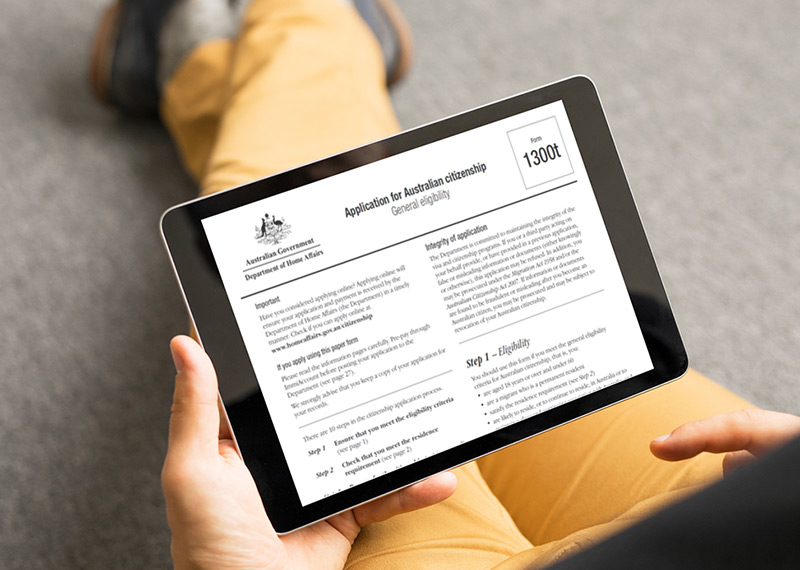
The objective of the audit was to examine the efficiency of the processing of applications for citizenship by conferral by the Department of Home Affairs.
Entity
Department of Home Affairs
Contact
Please direct enquiries through our contact page.
Performance audit (Auditor-General Report No. 41 of 2018–19)
Published: Wednesday 29 May 2019
Published
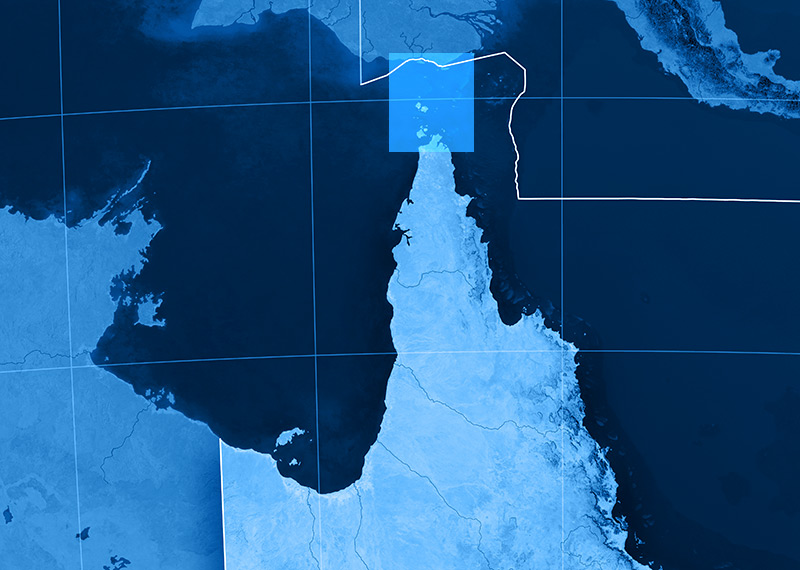
The objective of the audit was to assess the effectiveness of the coordination arrangements of key Australian Government entities operating in Torres Strait.
Entity
Across entities
Contact
Please direct enquiries through our contact page.
Performance audit (Auditor-General Report No. 16 of 2011–12)
Published: Thursday 8 December 2011
Published
The objective of the audit was to assess the effectiveness of the ATO’s compliance management approach in the SME market.
Entity
Australian Taxation Office
Performance audit (Auditor-General Report No. 9 of 2000–01)
Published: Wednesday 6 September 2000
Published
The audit reviewed the implementation of the Whole-of-Government Information Technology Infrastructure Consolidation and Outsourcing Initiative (IT Initiative). The objectives of the audit were to examine the administrative and financial effectiveness of the implementation of the IT Initiative, with the focus being on the first four tenders conducted. Accordingly, the audit assessed:
- the effectiveness of the overall planning and implementation of the IT Initiative, taking into account the tendering, contracting and monitoring processes undertaken in respect of Cluster 3, DEETYA/EN, ATO and Group 5;
- the extent to which those latter processes have contributed to the achievement of the objectives of the IT Initiative; and
- the extent to which the Commonwealth's interests have been adequately protected within this context.
Entity
Across Agency
Performance audit (Auditor-General Report No. 11 of 2000–01)
Published: Friday 15 September 2000
Published
The audit reviewed Defence's higher-level management of its knowledge system equipment acquisition projects. These amount to $8.5b. The focus of the audit was on the opportunities for Defence to adopt a much more coherent and integrated approach to knowledge systems management prospectively rather than on emphasising current system compatibility issues.
Entity
Department of Defence
Performance audit (Auditor-General Report No. 38 of 2024–25)

Published: Wednesday 28 May 2025
Published
The audit objective was to assess the effectiveness of the framework in place to have a regulatory Ministerial Statement of Expectations and a responding Statement of Intent in place.
Entity
Across Entities
Contact
Please direct enquiries through our contact page.
Performance audit (Auditor-General Report No. 50 of 2018–19)
Published: Tuesday 25 June 2019
Published
The objective of this audit was to examine the effectiveness of the National Disability Insurance Agency’s (NDIA) fraud control program and its compliance with the Commonwealth Fraud Control Framework.
Entity
National Disability Insurance Agency
Contact
Please direct enquiries through our contact page.
Performance audit (Auditor-General Report No. 18 of 1998–99)
Published: Monday 7 December 1998
Published
Consistent with the ANAO's practices, and in response to a request from AusAID, a follow-up audit was conducted in the period May to November 1998 to assess the extent of implementation of the recommendations of a 1996 audit into the Management of Funding to Non-Government Organisations (NGOs)and whether the implementation of recommendations has effectively improved the management of funding to NGOs. The ANAO examined AusAID's key funding accountability documentation, tested the revised accountability arrangements and consulted a number of key stakeholders, including NGO representatives.
Entity
Australian Agency for International Development (AusAID)
Performance audit (Auditor-General Report No. 26 of 2024–25)

Published: Monday 24 February 2025
Published
The objective of the audit was to assess whether the Australian Taxation Office has effective arrangements in place to support the adoption of Artificial Intelligence.
Entity
Australian Taxation Office
Contact
Please direct enquiries through our contact page.
Performance audit (Auditor-General Report No. 49 of 2023–24)

Published: Thursday 27 June 2024
Published
The objective of this audit was to assess the effectiveness of the Australian Research Council’s (ARC) management of corporate credit cards.
Entity
Australian Research Council
Contact
Please direct enquiries through our contact page.
Performance audit (Auditor-General Report No. 11 of 2002–03)
Published: Thursday 3 October 2002
Published
The audit reviewed the effectiveness of HIC's approach to customer service delivery to the Australian public as customers of Medicare. The primary issues examined were whether: . HIC manages its customer service delivery performance effectively;
- HIC's approach to people management adequately supports customer service delivery;
- HIC obtains adequate information from customers on their needs, expectations, and perceptions of HIC's service delivery; and
- HIC provides adequate information to customers on its services and on the service standards that customers should expect.
Entity
Health Insurance Commission
Performance audit (Auditor-General Report No. 54 of 2004–05)
Published: Wednesday 22 June 2005
Published
A Health Care Card (HCC) is one of three types of concession cards issued by Centrelink for the Australian Government. The objectives of the audit were to assess: the effectiveness of whole of government approaches to administering HCCs by FaCS, Centrelink, Health and HIC; the adequacy ofperformance information relating to HCCs, including monitoring the use of the card and its budgetary impact, as well as the cost of administering HCCs; and the effectiveness of controls relating to the issue, maintenance and cancellation of the HCC; and to limit its incorrect or fraudulent use.
Entity
Health Insurance Commission; Department of Health and Ageing; Centrelink; Department of Family and Community Services
Performance audit (Auditor-General Report No. 45 of 2024–25)

Published: Thursday 19 June 2025
Published
The objective of the audit was to assess the effectiveness of Creative Australia’s fraud and corruption control arrangements.
Entity
Creative Australia
Contact
Please direct enquiries through our contact page.
Performance audit (Auditor-General Report No. 62 of 2002–03)
Published: Monday 30 June 2003
Published
The objectives of the audit was to examine the effectiveness and efficiency of DIMIA's decision-making processes and management systems for delivering the parent and partner aspects of the family stream of the Migration Program.
The family stream of Australia's Migration Program enables the reunion of immediate family members of Australian citizens, permanent residents or eligible New Zealand citizens. It consists of four main categories;
- Partner;
- Child;
- Parent; and
- Other family.
Entity
Department of Immigration and Multicultural and Indigenous Affairs
Performance audit (Auditor-General Report No. 24 of 2008–09)
Published: Thursday 5 March 2009
Published
The objective of the audit was to assess the effectiveness of the procurement and contracting associated with:
- the design, development and delivery of government advertising campaigns by Commonwealth departments; and
- the operation of the Central Advertising System (CAS).
Entity
Department of the Prime Minister and Cabinet; Department of Finance and Deregulation; Department of Education, Employment and Workplace Relations; Department of Health and Ageing; Attorney-General's Department
Performance audit (Auditor-General Report No. 16 of 2007–08)
Published: Friday 30 November 2007
Published
The objective of the audit was to examine the integrity of electronic records stored on the CSA's database—Cuba—and to report on the effectiveness of CSA's management of the data.
Entity
Department of Human Services; Child Support Agency
Performance audit (Auditor-General Report No. 25 of 2023–24)

Published: Wednesday 1 May 2024
Published
The objective of this audit was to assess the effectiveness of NBN Co Limited’s (NBN Co’s) strategies to manage its transition from building to operating the national broadband network.
Entity
NBN Co Limited
Contact
Please direct enquiries through our contact page.
Performance audit (Auditor-General Report No. 30 of 2019–20)

Published: Thursday 2 April 2020
Published
The objective of this audit was to examine the effectiveness of bilateral agreement arrangements between Services Australia and other entities.
Entity
Across Entities
Contact
Please direct enquiries through our contact page.
Performance audit (Auditor-General Report No. 8 of 2009–10)
Published: Thursday 29 October 2009
Published
The objective of this audit was to provide a strategic review on the progress of the Tax Office's implementation of the Change Program.
To achieve this, the ANAO examined:
- the planning for, and governance of, the Change Program, particularly in relation to the management of risk and the assurance framework established by the Tax Office, and its management of contractual arrangements for the project;
- implementation issues associated with Releases 1 and 2 of the Change Program, and more specifically in relation to Release 3, the first use of the new ICP system to process FBT returns; and
- the funding of the Change Program, including measurement and attribution of the costs of the project and consideration of any benefits realisation to date.
Entity
Australian Taxation Office
Performance audit (Auditor-General Report No. 24 of 2006–07)
Published: Wednesday 7 February 2007
Published
The objectives of the audit were to:
- examine Customs' management of the CMR project; and
- determine whether the ICS and CCF met:
- project and operational objectives; and
- user capability and functionality requirements.
Particular emphasis was given to the following areas:
- the project management framework that supported the CMR project;
- implementation arrangements for the ICS; and
- ongoing operational arrangements.
After this audit commenced, Customs engaged Booz Allen Hamilton to undertake a separate review of the ICS. The purpose of that review was to provide Customs with a forward looking report on the lessons to be learned from the implementation of the ICS, its current status and the opportunities to enhance benefits for both Government and industry. The ANAO consulted closely with the Booz Allen Hamilton team and is supportive of the recommendations in their report, which was released in May 2006. The review made thirteen recommendations relating to the ongoing management and governance of the Cargo Management Re-engineering Program at both strategic and tactical levels.
Entity
Australian Customs Service
Annual report

Published: Tuesday 23 September 2025
Published
This annual report documents the performance of the Australian National Audit Office (ANAO) in the financial year ended 30 June 2025. The report addresses all applicable obligations under the Public Governance, Performance and Accountability Act 2013; the Public Governance, Performance and Accountability Rule 2014; the Auditor-General Act 1997; the performance measures set out in the outcome and programs framework in the ANAO’s Portfolio Budget Statements 2024–25 and in the ANAO Corporate Plan 2024–25; and annual reporting requirements set out in other relevant legislation.
Contact
Please direct enquiries through our contact page.
Financial statement audit (Auditor-General Report No. 60 of 2016–17)
Published: Wednesday 28 June 2017
Published
The Australian National Audit Office (ANAO) publishes two reports annually addressing the outcomes of the financial statement audits of Australian government entities and the Consolidated Financial Statements (CFS) of the Australian Government to provide Parliament an independent examination of the financial accounting and reporting of public sector entities. This report focuses on the results of the interim audit phase, including an assessment of entities’ key internal controls, of the 2016–17 financial statements audits of 25 entities including all departments of state and a number of major Australian government entities.
Entity
Across Entities
Contact
Please direct enquiries relating to reports through our contact page.
Performance audit (Auditor-General Report No. 4 of 2003–04)
Published: Thursday 28 August 2003
Published
The audit reviewed the efficiency and effectiveness of the Department of Health and Ageing's (Health's) planning and conduct of the review undertaken to determine the recommendation to the Government on whether or not to exercise the extension option available to the Commonwealth under the Plasma Fractionation Agreement with CSL Limited. The audit was undertaken in response to a recommendation of the Joint Committee of Public Accounts and Audit.
Entity
Department of Health and Ageing
Performance audit (Auditor-General Report No. 34 of 2014–15)
Published: Thursday 30 April 2015
Published
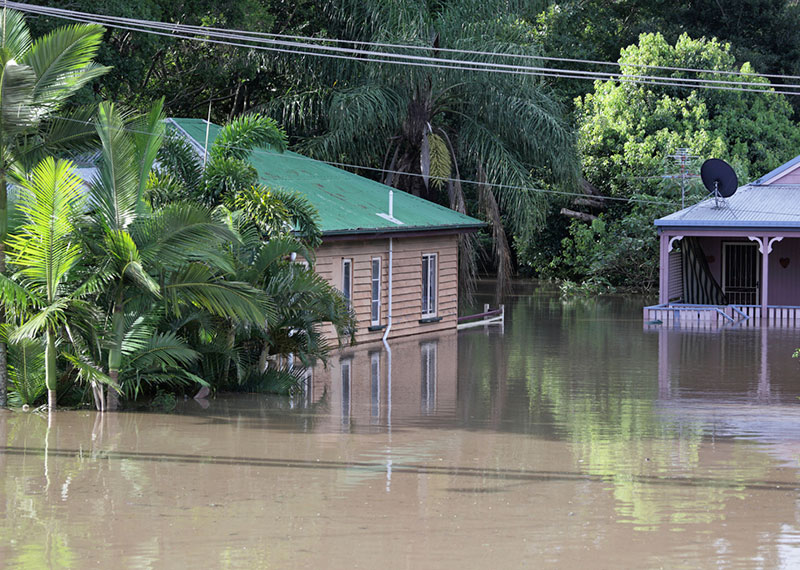
The objective of the audit was to assess the effectiveness of the Attorney-General’s Department’s administration of the terms of the Natural Disaster Relief and Recovery Arrangements Ministerial determination.
Entity
Attorney-General's Department; Emergency Management Australia
Contact
Please direct enquiries relating to reports through our contact page.
Performance audit (Auditor-General Report No. 5 of 2022–23)

Published: Wednesday 21 September 2022
Published
The objective of the audit was to assess the effectiveness of the Digital Transformation Agency’s procurement of ICT-related services.
Entity
Digital Transformation Agency
Contact
Please direct enquiries through our contact page.
Performance audit (Auditor-General Report No. 42 of 2019–20)

Published: Friday 19 June 2020
Published
The objective of this audit was to assess the effectiveness of the Department of Foreign Affairs and Trade's fraud control arrangements.
Entity
Department of Foreign Affairs and Trade
Contact
Please direct enquiries through our contact page.
Performance audit (Auditor-General Report No. 40 of 1999–2000)
Published: Wednesday 26 April 2000
Published
Tactical fighter operations (TFOs) form the basis of Australia's current military capability to ensure air superiority. Air superiority over the Australian territory and maritime approaches is an essential element in Australia's defence strategy. The audit objectives were to:
- assess whether the resources used to provide the F/A-18 tactical fighter force operational capability are managed cost-effectively; and
- identify areas for improvement in the coordination, planning and practices employed in administration of tactical fighter operations.
Entity
Department of Defence
Performance audit (Auditor-General Report No. 43 of 2013–14)
Published: Wednesday 18 June 2014
Published
The objective of the audit was to assess the effectiveness of the Department of the Environment’s regulation of proponents’ compliance with Part 9 of the Environment Protection and Biodiversity Conservation Act 1999.
Entity
Department of the Environment
Contact
Please direct enquiries relating to reports through our contact page.
Annual report
Published: Tuesday 14 August 2018
Published
This annual report documents the performance of the Australian National Audit Office (ANAO) in the financial year ending on 30 June 2018. The report addresses all applicable obligations under the Public Governance, Performance and Accountability Act 2013 (PGPA Act); the Public Governance, Performance and Accountability Rule 2014 (PGPA Rule); the Auditor-General Act 1997; the performance measures set out in the outcome and programs framework in the ANAO’s 2017–18 Portfolio Budget Statements (PBS) and the ANAO 2017–18 Corporate Plan and annual reporting requirements set out in other relevant legislation.
Contact
Please direct enquiries relating to annual reports through our contact page.
Performance audit (Auditor-General Report No. 29 of 2006–07)
Published: Wednesday 7 March 2007
Published
The objective of the audit was to assess the implementation and administration of the movement limit and the Slot Management Scheme at Sydney Airport.
The scope of the audit included the development and administration of the SADM Act. The scope also included the development and administration of the relevant legislative instruments and determinations, particularly those which put in place the monitoring and compliance frameworks that support the legislation.
Entity
NO-DEPTS-LISTED
Performance audit (Auditor-General Report No. 6 of 2025–26)

Published: Wednesday 19 November 2025
Published
The objective of the audit was to assess whether the Department of Climate Change, Energy, the Environment and Water is effectively managing the delivery of the program to achieve program outcomes.
Entity
Department of Climate Change, Energy, the Environment and Water
Contact
Please direct enquiries through our contact page.
Performance audit (Auditor-General Report No. 35 of 2008–09)
Published: Thursday 21 May 2009
Published
The objective of the audit was to assess the effectiveness of DIAC's management of MAL. The scope was confined to DIAC's management and use of the system: it did not examine the work of others with an interest in the system, such as security agencies.
Entity
Department of Immigration and Citizenship
Performance audit (Auditor-General Report No. 27 of 2003–04)
Published: Tuesday 10 February 2004
Published
The primary objective of the audit was to assess FaCS' management of the Internet portals for which it had responsibility as lead agency, www.youth.gov.au, www.community.gov.au, and www.families.gov.au. The ANAO also included in the audit a website directed towards youth. The source which provided many of the services expected of a portal. The audit considered governance structures for the portals; measurement of efficiency and effectiveness; and control factors, such as change management,security, and legal issues.
Entity
Department of Family and Community Services
Performance audit (Auditor-General Report No. 24 of 2015–16)

Published: Tuesday 1 March 2016
Published
The audit objective was to assess the effectiveness of the Department of Social Services' administration of Early Intervention Services for Children with Disability.
Entity
Department of Social Services
Contact
Please direct enquiries relating to reports through our contact page.
Performance audit (Auditor-General Report No. 4 of 2017–18)

Published: Wednesday 12 July 2017
Published
The audit objective was to assess whether the Department of Employment effectively designed and monitors the progress of the jobactive program.
Entity
Department of Employment
Contact
Please direct enquiries relating to reports through our contact page.
Performance audit (Auditor-General Report No. 49 of 2014–15)

Published: Wednesday 10 June 2015
Published
The audit objective is to assess the effectiveness of the Department of Agriculture’s administration of the Imported Food Inspection Scheme.
Entity
Department of Agriculture
Contact
Please direct enquiries relating to reports through our contact page.
Performance audit (Auditor-General Report No. 27 of 2014–15)

Published: Tuesday 10 March 2015
Published
The objective of the audit was to examine the effectiveness of the Department of Defence’s planning, budgeting and implementation of an electronic health records solution for Defence personnel.
Entity
Department of Defence
Contact
Please direct enquiries relating to reports through our contact page.
Performance audit (Auditor-General Report No. 39 of 2019–20)

Published: Thursday 4 June 2020
Published
The objective of this audit was to assess whether the Commonwealth Scientific and Industrial Research Organisation (CSIRO) designed and is implementing its property investment strategy in a way that is delivering the intended benefits, and how any lessons learned are being reflected in a new strategy that is being developed.
Entity
Commonwealth Scientific and Industrial Research Organisation (CSIRO)
Contact
Please direct enquiries through our contact page.
Performance audit (Auditor-General Report No. 36 of 2014–15)

Published: Wednesday 6 May 2015
Published
The audit objective was to assess the effectiveness of the Department of Human Services’ administration of the Assistance for Isolated Children Scheme.
Entity
Department of Human Services
Contact
Please direct enquiries relating to reports through our contact page.
Performance audit (Auditor-General Report No. 33 of 2007–08)
Published: Thursday 15 May 2008
Published
The objective of the audit was to assess the effectiveness of the NCA's management of its asset portfolio. This included examining its asset management systems and the management of selected contracts that the NCA has in place to maintain specific assets.
Entity
National Capital Authority
Performance audit (Auditor-General Report No. 40 of 2023–24)

Published: Tuesday 18 June 2024
Published
The objective of this audit was to assess whether the Federal Court of Australia is effectively managing the use of corporate credit cards for official purposes in accordance with legislative and entity requirements.
Entity
Federal Court of Australia
Contact
Please direct enquiries through our contact page.
Major projects report (Auditor-General Report No. 12 of 2022–23)

Published: Thursday 9 February 2023
Published
Increased transparency and accountability on progress with major Defence equipment acquisitions has been a focus of parliamentary interest for some time. Beginning in 2007–08, an annual program has been established in conjunction with the Department of Defence to enable the ANAO to review and report to the Parliament on the status of major Defence acquisition projects, as set out in the Major Projects Report. The review includes information relating to the cost, schedule and progress towards delivery of required capability of individual projects as at 30 June each year, and is undertaken at the request of the Joint Committee of Public Accounts and Audit.
Entity
Department of Defence
Contact
Please direct enquiries through our contact page.
Performance audit (Auditor-General Report No. 22 of 2013–14)
Published: Thursday 6 March 2014
Published
The objective of the audit was to report on the progress of the current phase of the Air Warfare Destroyer (AWD) Program, which is known as SEA 4000 Phase 3–Build. This phase commenced in June 2007, and covers the finalisation of the detailed design, the signing of the Alliance and Platform System Design contracts, and the construction and delivery of the ships by the Industry Participants to the Defence Materiel Organisation (DMO).
Entity
Department of Defence; Defence Materiel Organisation
Contact
Please direct enquiries relating to reports through our contact page.
Performance audit (Auditor-General Report No. 39 of 2007–08)
Published: Thursday 5 June 2008
Published
The objective of this follow-up audit is to examine DEEWR's implementation of the six recommendations made in the ANAO's 2003 report. This audit has had regard to the issues underlying the recommendations, and new administrative issues affecting their implementation.
Entity
Department of Education, Employment and Workplace Relations
Performance audit (Auditor-General Report No. 47 of 2014–15)

Published: Wednesday 10 June 2015
Published
The objective of the audit was to assess the effectiveness of the Department of Immigration and Border Protection’s identity verification arrangements for applicants in the Citizenship Program.
Entity
Department of Immigration and Border Protection
Contact
Please direct enquiries relating to reports through our contact page.
Performance audit (Auditor-General Report No. 45 of 2018–19)

Published: Thursday 13 June 2019
Published
The objective of this audit was to assess the effectiveness of the Department of Social Services’ role in implementing the National Plan to Reduce Violence Against Women and their Children 2010–2022 (the National Plan).
Entity
Department of Social Services
Contact
Please direct enquiries through our contact page.
Performance audit (Auditor-General Report No. 30 of 2008–09)
Published: Wednesday 29 April 2009
Published
The objective of the audit was to assess the arrangements for oversighting the Action Plan and whether the Plan's new measures have been administered effectively to deliver the intended results.
Entity
Attorney-General's Department; Department of Immigration and Citizenship; Australian Federal Police; Department of Families, Housing, Community Services and Indigenous Affairs
Performance audit (Auditor-General Report No. 8 of 2003–04)
Published: Monday 20 October 2003
Published
The audit is a follow-up of ANAO Audit Report No.33 of 1997-98, which assessed the effectiveness and efficiency of the Commonwealth's management of the Great Barrier Reef and made seven recommendations for improvement. The objective of the follow-up audit was to assess the extent to which the Great Barrier Reef Marine Park Authority, which is responsible for advising the Commonwealth on the care and developement of the Marine Park, has implemented the recommendations of the earlier audit.
Entity
The Great Barrier Reef Marine Park Authority
Performance audit (Auditor-General Report No. 39 of 2012–13)
Published: Tuesday 28 May 2013
Published
The audit objective was to assess the effectiveness of AusAID’s management of infrastructure aid to Indonesia, with a particular focus on the Eastern Indonesia National Roads Improvement Project and the Indonesia Infrastructure Initiative.
Entity
Australian Agency for International Development (AusAID)
Contact
Please direct enquiries relating to reports through our contact page.
Performance audit (Auditor-General Report No. 13 of 2000–01)
Published: Wednesday 4 October 2000
Published
The audit examined a range of issues in relation to the development of certified agreements in the APS with particular emphasis on the link between improved pay and conditions and increased productivity, and the funding of agreements. The objectives of the audit were to:
- provide an overview of the range of wage outcomes included in the first round of APS certified agreements;
- identify the administrative arrangements agencies have in place to measure any improvements in productivity that were linked to pay increases;
- determine how agencies funded their certified agreements;
- review the reporting and accountability arrangements agencies have in place to monitor progress and to evaluate the outcomes of their certified agreements;
- determine the extent to which agencies complied with the employment terms and conditions outlined in their certified agreements that contributed to paying for their agreement or measuring and/or assessing improvements in productivity; and
- examine the role of central coordinating agencies in reviewing agencies' certified agreements.
Entity
Across Agency
Performance audit (Auditor-General Report No. 25 of 2007–08)
Published: Wednesday 27 February 2008
Published
The objective of the audit was to examine the effectiveness of the Department of Health and Ageing's administration of the Round the Clock Medicare: Investing in After Hours General Practice Services program.
Entity
Department of Health and Ageing
Performance audit (Auditor-General Report No. 1 of 2018–19)

Published: Tuesday 17 July 2018
Published
The objective of the audit was to assess the Department of Social Services’ (Social Services) implementation and evaluation of the Cashless Debit Card trial.
Entity
Department of Social Services
Contact
Please direct enquiries through our contact page.
Performance audit (Auditor-General Report No. 10 of 2006–07)
Published: Tuesday 31 October 2006
Published
The objective of the report is to review the effectiveness of remediation activities put in place by Defence and the DMO to improve the performance of SDSS following the delivery in July 2003 of the SDSS Upgrade Project, with specific attention to the SDSS Get Well Programme. The audit reviewed the outcomes of the Get Well Programme, and assessed how effectively a segment of the Defence supply chain (of which SDSS is one key component) was meeting selected maritime end user capability and reporting requirements. In order to achieve this, the audit reviewed three key maritime combatant forces: COLLINS Class submarines; Adelaide Class Guided Missile Frigates (FFGs); and ANZAC Class Frigates. The ANAO notes that these three capabilities account for some 50 per cent of the Navy's total forecast expenditure for 2006–07.
Entity
Department of Defence; Defence Materiel Organisation
Performance audit (Auditor-General Report No. 24 of 2004–05)
Published: Thursday 27 January 2005
Published
Medicare is Australia's universal health insurance scheme. Underpinning Medicare is one of Australia's largest and more complex computer databases the Medicare enrolment database. At the end of 2004 the Medicare enrolment database contained information on over 24 million individuals. This audit examines the quality of data stored on that database and how the Health Insurance Commission (HIC) manages the data.
Entity
Health Insurance Commission; Medicare Australia; Human Services
Performance audit (Auditor-General Report No. 26 of 2016–17)

Published: Wednesday 23 November 2016
Published
The objective of the audit was to assess the effectiveness of the Australian Prudential Regulation Authority's processes for the prudential regulation of superannuation entities.
Entity
Australian Prudential Regulation Authority
Contact
Please direct enquiries relating to reports through our contact page.
Performance audit (Auditor-General Report No. 18 of 2025–26)

Published: Wednesday 21 January 2026
Published
The objective of the audit was to assess whether Australian Criminal Intelligence Commission has effective arrangements to comply with domestic and international travel legislative and entity requirements.
Entity
Australian Criminal Intelligence Commission
Contact
Please direct enquiries through our contact page.
Performance audit (Auditor-General Report No. 23 of 2001–02)
Published: Friday 7 December 2001
Published
The audit reviewed the broadcasting planning and licensing operations of the Australian Broadcasting Authority, which is responsible for planning the availability of segments of the broadcasting services bands used by radio and television for analogue and digital broadcasting. The objective was to assess the ABA's management of licence area planning and the subsequent issue of broadcasting licences, focussing on analogue radio planning and identifying improved administrative practices, where possible, together with the main factors that have contributed to the delays to date in achieving the planning timetable.
Entity
Australian Broadcasting Authority
Performance audit (Auditor-General Report No. 2 of 2021–22)

Published: Wednesday 8 September 2021
Published
The audit objective was to assess the effectiveness of the Australian Security Intelligence Organisation's workforce planning to support key activities.
Entity
Australian Security Intelligence Organisation
Contact
Please direct enquiries through our contact page.
Performance audit (Auditor-General Report No. 40 of 2012–13)
Published: Thursday 30 May 2013
Published
The objective of the audit was to assess the effectiveness of the Department of Human Services' arrangements for engaging and managing External Collection Agencies to recover debts arising from Centrelink payments.
Entity
Department of Human Services
Contact
Please direct enquiries relating to reports through our contact page.
Performance audit (Auditor-General Report No. 1 of 2017–18)

Published: Monday 10 July 2017
Published
The objective of the audit was to assess the effectiveness of the Department of the Environment and Energy’s arrangements for the preparation and reporting of Australia’s greenhouse gas emissions estimates and projections.
Entity
Department of the Environment and Energy
Contact
Please direct enquiries relating to reports through our contact page.
Speeches and papers
Published: Thursday 18 October 2001
Published
Mr P.J. Barrett (AM) - Auditor-General for Australia, presented to the Senior Staff of the Board of Audit - Tokyo, Japan
Performance audit (Auditor-General Report No. 7 of 2014–15)

Published: Wednesday 26 November 2014
Published
The objective of the audit was to assess how effectively and efficiently the Australian Taxation Office managed contact centres as part of its overall service delivery.
Entity
Australian Taxation Office
Contact
Please direct enquiries relating to reports through our contact page.
Speeches and papers
Published: Wednesday 26 April 2000
Published
Mr P.J. Barrett (AM) - Auditor-General for Australia, presented an Occasional Paper
Speeches and papers
Published: Thursday 25 May 2000
Published
Mr P.J. Barrett (AM) - Auditor-General for Australia, presented at the Government in Excellence Summit 2000 - Reinventing Government - A Manifesto for Achieving Excellence and Managing for Results; Singapore
Performance audit (Auditor-General Report No. 33 of 2014–15)

Published: Wednesday 29 April 2015
Published
The audit objective was to assess the effectiveness of the Australian Organ and Tissue Donation and Transplantation Authority's administration of community awareness, professional education and donor family support activities intended to increase organ an
Entity
Australian Organ and Tissue Donation and Transplantation Authority
Contact
Please direct enquiries relating to reports through our contact page.
Performance audit (Auditor-General Report No. 56 of 2003–04)
Published: Thursday 24 June 2004
Published
The objective of this audit was to assess the extent to which PV applications in Australia are processed in accordance with relevant laws and policies, and whether DIMIA employs appropoiate mechanisms to ensure compliance with those laws and policies.
Entity
Department of Immigration and Multicultural and Indigenous Affairs
Performance audit (Auditor-General Report No. 41 of 1997–98)
Published: Wednesday 15 April 1998
Published
The ANAO first examined asset management in the general government sector in 1995. The outcome of that review was presented in Audit Report No. 27, 1995-96, Asset Management. The primary objectives of the current review were to:
- ascertain the degree of acceptance of the previous audit recommendations;
- establish the extent to which organisations were managing their assets in accordance with the asset management principles espoused in the Asset Management Handbook; and
- examine any central coordination initiatives in asset management.
Meeting these objectives permits the ANAO to express an updated opinion on the state of asset management in the general government sector other than for specialised military equipment.
Entity
Across Agency
Performance audit (Auditor-General Report No. 49 of 2009–10)
Published: Thursday 24 June 2010
Published
The objective of the audit was to assess whether Defence is effectively managing the delivery of health services to ADF personnel in Australia (chiefly Garrison Health Services).
Entity
Department of Defence
Performance audit (Auditor-General Report No. 29 of 2023–24)

Published: Tuesday 28 May 2024
Published
The objective of this audit was to assess the effectiveness of the National Indigenous Australians Agency’s (NIAA’s) processes to design and transition to a new remote employment program.
Entity
National Indigenous Australians Agency
Contact
Please direct enquiries through our contact page.
Performance audit (Auditor-General Report No. 5 of 2015–16)

Published: Thursday 22 October 2015
Published
The audit objective was to assess the effectiveness of the Department of Veterans’ Affairs monitoring and implementation of ANAO and internal performance audit recommendations.
Entity
Department of Veterans' Affairs
Contact
Please direct enquiries relating to reports through our contact page.
Performance audit (Auditor-General Report No. 59 of 2004–05)
Published: Thursday 30 June 2005
Published
The objectives of this performance audit were to provide assurance that there were effective measures in place to safeguard the national collections and that institutions had processes in place to provide access to them. The ANAO also examined the extent to which the national cultural institutions have implemented the eleven recommendations from the previous report, Safeguarding Our National Collections (Audit Report No.8 1998-99).
Entity
Department of Communications, Technology and the Arts
Performance audit (Auditor-General Report No. 26 of 1996–97)
Published: Tuesday 11 February 1997
Published
The objective of Phase Two of the audit was to examine the efficiency and effectiveness of operations of ATSIC Central, State and Regional Offices in relation to the administration of the Community Development Employment Projects Scheme. The ANAO established key criteria to assess progress against the implementation of the Phase One recommendations and further assess the efficiency and effectiveness of CDEP administration. The main areas examined were: planning, including reports of progress against plans and the development and use of performance information; monitoring, including client feedback and the review process at the Regional Office level; the implementation and effectiveness of management information systems in relation to CDEP; and the development and implementation of quality assuranced processes at State/Regional level.
Entity
Aboriginal and Torres Strait Islander Commission
Performance audit (Auditor-General Report No. 8 of 2025–26)

Published: Monday 24 November 2025
Published
The objective of the audit was to assess whether the Department of Agriculture, Fisheries and Forestry has effective arrangements to comply with domestic and international travel requirements.
Entity
Department of Agriculture, Fisheries and Forestry
Contact
Please direct enquiries through our contact page.
Performance audit (Auditor-General Report No. 8 of 2004–05)
Published: Friday 13 August 2004
Published
DFAT is responsible for implementing the Government's foreign and trade policy decisions. The objective of the audit was to assess DFAT's management of bilateral relations and to identify any scope for improvement.
Entity
Department of Foreign Affairs and Trade
Performance audit (Auditor-General Report No. 11 of 2018–19)

Published: Monday 12 November 2018
Published
The objective of this audit was to assess the effectiveness of the Department of Education and Training’s design and implementation of the Vocational Education and Training (VET) Student Loans program.
Entity
Department of Education and Training
Contact
Please direct enquiries through our contact page.
Performance audit (Auditor-General Report No. 7 of 2024–25)

Published: Wednesday 23 October 2024
Published
The objective of the audit was to assess the effectiveness of the Department of Health and Aged Care’s fraud control arrangements, with a specific focus on the Indigenous Australians’ Health Programme.
Entity
Department of Health and Aged Care
Contact
Please direct enquiries through our contact page.
Performance audit (Auditor-General Report No. 29 of 2010–11)
Published: Wednesday 16 February 2011
Published
The objective of the audit was to examine the effectiveness of the AFP's approach to its management of the implementation of NPIs.
Entity
Australian Federal Police
Performance audit (Auditor-General Report No. 30 of 2012–13)
Published: Wednesday 1 May 2013
Published
The objective of the audit was to assess the effectiveness of Customs and Border Protection’s arrangements for managing the safe and secure storage and disposal of detained goods.
Entity
Australian Customs and Border Protection Service
Performance audit (Auditor-General Report No. 31 of 2000–01)
Published: Thursday 29 March 2001
Published
The audit reviewed the Department of Foreign Affairs and Trade's administration of consular services. It focussed on DFAT's travel advice to alert Australians to potential travel risks; case management systems to record and monitor action on more complex consular cases; performance information for the management of consular services; and contingency planning for major consular incidents. The audit also reviewed action taken by DFAT and other agencies to implement the recommendations of a 1997 Senate Committee report on consular services.
Entity
Department of Foreign Affairs and Trade
Speeches and papers
Published: Wednesday 18 April 2001
Published
Mr P.J. Barrett (AM) - Auditor-General for Australia, presented at the MinterEllison Seminar Series